Fuel Purchase Rebates for Pilots

AOPA changes its program, I go to BP.

For years, I’ve been using my AOPA MasterCard to purchase fuel at FBOs. At first, the program offered 3% rebate on all purchases at participating FBOs. Then that percentage jumped to 5%. Since it cost nothing for an FBO to participate, just about all of them did.

Among the participating FBOs were flight schools. I earned rebate dollars on all of my helicopter flight training. Since most flight schools also do maintenance, I also earned rebates on most of my helicopter maintenance and repairs. Now we’re talking big bucks. With an annual inspection costing $2,000 or more, 5% is a truly welcome discount.

The AOPA rebate program had two problems, as far as I was concerned:

  • Rebates were not automatic. You had to go to the MBNA Web site (later the BofA Web site) to indicate which transactions were eligible. Although they probably assumed you’d look up all the FBOs in their list, I never did. I just checked off all the transactions — after all, I only used the card to buy aviation-related things — and let them figure out what was eligible or not. It was a pain in the butt because it required a trip to the Web site each month. If you forgot, that was okay — you could always do it later. But it was an extra step just to get the money.
  • Rebates were limited to $250 per year. If you do the math, that means only $5,000 of purchases could earn the rebate. I’d easily reach the limit by September or October each year. A helicopter flight student could reach it in a month or two, depending on his schedule. It would have been nicer if there were no limit.

On the plus side, the rebates, once requested and verified, showed up on the following credit card statement as a reduction of the account balance. I liked to think about it as a fuel discount and that’s how I accounted for it in my accounting records — a reduction of fuel expenses.

Well, the AOPA MasterCard moved to BofA when BofA bought MBNA. (Sounds like alphabet soup.) And they — either AOPA or BofA — decided to change the program. They now have some kind of point system that you can use to buy merchandise. Or something like that. Frankly, I didn’t look into the details. I don’t want points. I want dollars. I want to reduce my operating expenses.

Meanwhile, when I switched my maintenance to Silver State in Mesa (at Williams Gateway airport), I discovered that BP, which the FBO there represents, had a 5% rebate credit card with no limit that applied a sliding scale rate to purchases: 5% of BP purchases (at airports or auto gas stations), 2% of travel and dining, and 1% of other expenditures. Since BP is relatively common around airports, I signed up for the card and got it. Now I use that for most of my aviation-related expenses.

Well, it turns out that this Rebate program isn’t quite as convenient as it could be, either. (I think that’s how they get you — make it such a pain in the butt that you don’t bother claiming the rebate.) In order to get the rebate I have to:

  1. Create an account on the Chase.com Web site. (A one-time deal.)
  2. Log into my account periodically.
  3. Navigate to the Claim My Rewards area, which isn’t exactly easy to find.
  4. Use a shopping cart to “buy” rewards using my earned points. The options are a $25 BP Card (costing 25 points) that can only be used at BP gas stations (like I want one of those), a $25 check (costing 25 points), or a donation to charity (costing 25 points). Of course, since you can only buy in increments of 25 points, you’ll always have a balance leftover.
  5. Wait for the check(s) to arrive.
  6. Take the check(s) to the bank and deposit them.

Obviously, this isn’t the best solution either. But it does reduce my operating costs, so I do get the desired end result.

What I should do is look for a good rebate card that works everywhere and doesn’t make you work to get the rebate dollars. I’m sure they’re out there, but since I really hate applying for and having credit cards, I haven’t looked for them. I guess that should go on my To Do list for this year, right after clean off my desk.

Any suggestions? Use the Comments feature to let us know.

Tips for Becoming a Good Blogger

From MPDailyFix.com.

Tim Jackson at MPDailyFix.com wrote an article back in November titled “What Does It Mean to Be a ‘Good Blogger’?“that I just stumbled upon. In it, he provides five tips for better blogging. Here they are with my take on them; you should read Tim’s article for his take.

  • Know your topic. You really shouldn’t write authoritatively about a topic when you don’t know enough about the topic to do so. Opinion is one thing, but if it’s based on facts, get the facts straight. That means doing your homework. These days, that’s easy — you’re sitting in front of a computer connected to the Internet, aren’t you? Use Wikipedia, Google, or your favorite search engine to find articles that explain things you aren’t sure about. This really hits home with me today because just yesterday I was blasted for not knowing off the top of my head that Apple sells a “two-button” mouse. I was familiar with the Mighty Mouse product but did not know all of its features. I corrected myself in the very next post, but that wasn’t enough for some readers. Ouch!
  • Know your audience. This one is extremely difficult for me, primarily because this site covers so many topics: support for my books and articles, stories about flying, information about writing, opinions, articles about travel, and stories about the things that go on in my life. Exactly who does this blog appeal to? I have no idea. But I can use stats or metrics to learn more about what people are reading when they come here. For example, yesterday’s article “Apple’s ‘Two-Button’ Mouse” was a huge hit with visitors, getting hundreds of page views and nine comments in a matter of hours. (Huge numbers for this site.) Articles about blogging and statistics also seem to do very well. Is that what my audience wants? Perhaps I should deliver more. But I’ve also decided to install polling software that asks readers which topics interest the most. That might help, too.
  • Read other blogs and leave comments on them. This is something I’ve been working hard to squeeze into my schedule. I’ve found that RSS reader software (I use Endo) is very helpful because it delivers articles or summaries of articles right to one central location. I can spend a few minutes browsing through the inbox, then follow links to the original articles. That’s how I found the article I’m discussing here. This is time consuming but it has three major benefits: (1) I learn a lot about the topics I’m following, (2) I get fodder for articles on this blog (or at least links for my automated del.icio.us links posts (see This just in…), and (3) I’m able to become part of the blogging community. (More on that in a moment.)
  • Follow the links. This isn’t a huge deal for me, since I don’t have many incoming links. Yet. But it is important to see who is linking to your site. Sadly, many of the incoming links appear to be from sites trying to up their Google ranking by linking to other sites. But when I do follow a quality link, it’s good to see that someone else has appreciated what I’ve written. And that brings us to Tim’s last tip.
  • Say thanks. This is a great way to become part of the blogging community. When someone has linked to one of your posts, it’s always nice to say thanks. Not only does this make the person on the other end feel good about sharing your work with other readers, but it builds community. This morning provided a great example of this in my e-mail inbox: I had a thank you note from the author of one of the articles I’d blogged about yesterday. She’d spent a few moments on my site and had some positive things to say about the Contact Me page, which has always been a sore subject. It was nice of her to take the time to write and even nicer to get some positive feedback about my rather strict contact policies.

Again, this is my take on Tim’s five tips. To read Tim’s take and the comments left by readers on his site, read his article.

And I’d love to get some comments about this topic here. Use the Comments link.

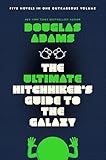
The Ultimate Hitchhiker's Guide to the Galaxy

An interesting — if not extremely weird — read.

The Ultimate Hitchhiker's Guide to the GalaxyI’d read The Hitchhiker’s Guide to the Galaxy some time ago and probably even read a few of its sequels. But when The Ultimate Hitchhiker’s Guide to the Galaxy was released, I added it to my Amazon.com wish list. Within two weeks, I had it in my hot little hands.

Douglas Adams has a great sense of humor and a wonderful way with words. There’s a joke in every paragraph, if not every line, of the book. The story is a mish-mash of science fiction/time-travel adventures that are beyond far-fetched. The result: a fun read that’ll entertain, enlighten, and confuse you.

Back from Vacation

Well, not really vacation…more like a bunch of visits.

If you’re wondering why this blog has been so quiet lately, it’s because I was away on what I thought might be a vacation. It turned out to be a bunch of visits to friends and family in Florida, which is actually a very different thing.

I brought my laptop with me on the trip, but none of the places I stayed had a wireless Internet connection for me. I wasn’t interested in dialing up and I didn’t have an Ethernet cable with me (almost brought one, though) to connect to a friend’s DSL router. In fact, the first time I got on the ‘Net was while waiting for our delayed plane out of Jacksonville, FL. They have free wireless Internet there — a great thing that every major airport should have — and I sucked down a week’s worth of e-mail before climbing on board the plane.

Marco Island BeachOur trip to Florida started in Fort Myers. We can’t fly direct from Phoenix to that airport so we flew Continental and stopped over in Houston. We arrived late at night, rented a car (can you believe they gave me a PT Cruiser?), and drove to our first host’s house on Marco Island, about 60 miles south. Will is Mike’s former partner (now retired) and Annette is his wife, who was also the bookkeeper for the company. He sold the company a few years back and the buyer bought out Mike’s share. Will and Annette bought a home on Marco Island, right on one of the many canals there. We got to stay in one of their guest rooms.

Stan's Idle House RestaurantWe wound up staying there for four nights, which I think is the most number of nights we’d ever stayed at someone’s house. It was very comfortable. Each day, we’d do something different — breakfast at the country club followed by a walk on the beach and a visit to Stan’s Idle Hour Restaurant, a boat ride to a lunch spot, a walk around the Naples historic and shopping areas (nearly indistinguishable, although several blocks apart). I took photos, but not many.

On Wednesday, we headed out early for a long drive to my Mom’s house in the St. Augustine area. Imagine Florida — a long peninsula of land. Marco Island is near the bottom, on the west side. St. Augustine is on the top, on the east side. I don’t know how many miles we covered, but it was a long drive.

Along the way, we stopped at my Dad’s house. He lives in Ft. Pierce, which is a little less than halfway up the peninsula, on the east side. About halfway to my Mom’s place. We had a short visit with him and his wife that included lunch out at a marina and homemade cream puffs for dessert. They have four cats and it’s a lucky thing that we went out for lunch. Mike is allergic to cats and he had some breathing trouble for a while after we left.

We hit traffic on I-95 just 20 miles short of my Mom’s place, but managed to get there just after 7 PM. A leg of lamb dinner awaited us.

We camped out in the guest bedroom my Mom had designed into the house for my grandmother. We call it Grandma’s room. It’s not a big room, but it’s at the end of a private hallway with its own bathroom and has its own private entrance to the pool area. Although my grandmother stayed there a few times, she never moved in. She’s gone now and her room is the most coveted of the guest rooms.

Flagler CollegeOn Thanksgiving morning, Mike and I took a walk around St. Augustine, which I believe is the oldest city in the U.S. Lots of great architecture. This photo shows Flagler College.

Thanksgiving was nice at my Mom’s house. She had another couple over to join us, so there was just six of us. And a ton of food. Turkey, stuffing (you might call it dressing), mashed potatoes, yams, mushrooms, artichoke, turnips, broccoli (from her garden, picked moments before cooking), peas and carrots, cranberries, gravy, and rolls. For desert, there were pies and bread pudding. When her friends left at around 7 PM, another few friends arrived. Dessert lasted about 2 hours, which is how dessert should last in a perfect world.

On Friday, we packed up and went to Orlando. I’d bought my Mom and Stepdad tickets to see Cirque du Soleil at Downtown Disney. Since the show was at 9 PM, I also got a pair of hotel rooms at the nearby Buena Vista Palace. We had an excellent (and terribly expensive!) dinner at Wolfgang Puck’s before the show. The show was great. This is the fifth Cirque du Soleil show I’ve seen and I’ve never been disappointed. This was the first for my parents, and they were delighted.

Blue Spring State ParkThe next day was my Stepdad’s 70th birthday. We’d done all our celebrating the night before, so there wasn’t anything special planned. On our way back from Orlando to St. Augustine, we stopped at Blue Spring State Park to see the manatees that hang out there. Although we could clearly see them lounging in the water, we didn’t get any close views (or photos). But we did have a nice walk in the jungle-like forest around the spring.

Our return flight to Phoenix (by way of Houston) was from Jacksonville. We got home just after sunset.

And that’s my week, in a nutshell.

Podcast Stuff

Maria Speaks Episode 31: Podcast Stuff.

This episode marks my return to Maria Speaks after a two-month break. It covers my change in podcasting technique, a new video podcast I just created for Flying M Air, and the podcasts I subscribe to.

Transcript:

Hi, I’m Maria Langer. Welcome to Episode 31 of Maria Speaks: Podcast Stuff.

I just spent the past three hours redoing the Maria Speaks podcast. I used to publish it with Blogger and FeedBurner. Now, since my personal Web site is blog-based using WordPress, I cut Blogger out of the picture. It took me three hours to create or modify blog entries to embed my thirty existing podcast entries on this site. Well, twenty-nine. One of them covered an eBook I no longer distribute, so it didn’t link to it.

I developed this new method of podcasting — new to me, I should say — to reduce the amount of work required to publish a podcast and keep all podcast information together. I used to use a WordPress plugin called podPress, but I removed all references to it and disabled it today. Keep it simple — that’s what I decided. And the technique I worked out is relatively simple, utilizing an existing WordPress blog and FeedBurner. I wrote about it in an article to be published soon by Informit.com. When it comes out, I’ll link to it on the Aritcles page of my Web site and create a podcast based on its content.

For some reason, my “Maria Speaks” podcast has more subscribers than ever. That makes me wonder, since I haven’t released a podcast episode since September, and that episode was a bit more commercial than I like. This time last year, I was releasing one or two episodes per week. I ran out of steam last December and have been releasing them far less frequently. Still, my subscriber numbers have been climbing steadily. It doesn’t make sense to me, but it did convince me to release more content. The way I see it, when all these new subscribers start getting the new content, they’ll either like it and stick around or not like it and leave.

In the meantime, I started a new video podcast in October for my helicopter charter company, Flying M Air. I have literally thousands of photographs taken throughout the southwest, in places I fly to. I also have photos taken by my husband and by professional photographer and Bigfoot Hunter, Richard Noll.

Rick accompanied me on a test run of Flying M Air’s Southwest Circle Helicopter Adventure. The deal we struck was that in return for all all-expense paid trip, he’d let me share copyright on all the video and still images he took. While he has the ability to sell these images as stock photos or use them in other projects, I have the ability to use them in marketing material to help sell the excursions and in articles I plan to write for publication about the trip. It was a win-win deal. Richard took lots of pictures from the air, which is something I simply can’t do while I’m flying. He also took video images with something a few clicks better than the little Canon digital video cameras I have. I’m still going through the over 1,000 still images and 3 to 4 hours of video he left on my MacBook Pro’s hard disk before departing back to the Seattle area.

I decided to turn my library of photos into video brochures for Flying M Air’s tours, charters, and excursions. The result is “Come Fly With Us!” (subscribe), which currently has three episodes. Another episode will be released Monday. (That’s one of the good things about my new podcast publishing technique; I can schedule a publication date and time. This makes it possible to record several podcast episodes at once and release them periodically over time.)

Part of the learning experience for creating this new podcast was finding legal music to play while the images were showing. I wasted a lot of time looking. Some sites promoting “royalty-free” music for podcasts required that you buy the songs to use them. That wouldn’t have been so bad if the songs were sold at iTunes prices or even a few bucks, but they were asking for $25 or $39 dollars per song. I use each song on just one video podcast episode and plan to release new titles once a week until I run out of material. That music was simply over my budget.

The much hyped GarageBand.com promised royalty-free, free downloads music. But the vast majority of artists didn’t allow free downloads of their songs. And since I was looking for relatively mellow instrumentals — you know, mood music — I had trouble finding what I wanted there in the first place.

I finally wound up on MagnaTune.com. I heard about it during an interview with the site’s founder, John Buckman, that Miraz had referred me to. MagnaTune predates iTunes by about two weeks. Although it has a limited number of artists on board, it offers very reasonable licensing of its music for podcast use. I’ve been getting tunes for my “Come Fly with Us!” podcasts from MagnaTunes since then and giving credit to the artists at the end of each video. I hope they sell some music.

Speaking of music, if you’ve been listening to Maria Speaks for a while now, you may have noticed that I changed the “theme song” for this podcast. The reason: I had a one-year licensing agreement with FreePlay Music for the old tune, Floater. Last year, when I bought that license, it cost $25/year, which I thought was reasonable. When I went to renew, the price had gone up to $100/year. I guess they decided to cash in when podcasting took off. That’s above my budget for a free podcast that doesn’t even earn any advertising revenue, so I decided to find a new tune. The new tune is is a segment from a nameless bit that I got off a public domain music CD I acquired back in 1996. I spent about an hour yesterday going through the one thousand plus songs on that CD set to pick this one. I’m not sure how much I really like it, but I do need something for my opening and closing credits.

The main topic of this podcast episode was supposed to be a quick discussion of some of the podcasts I listen to regularly. So let me dive into that for a few minutes.

I want to start off by telling you what I don’t listen to. I don’t like podcasts that mix discussion and “Garage Band” music. For example, I used to listen to a podcast about words hosted by two guys who seemed to guess more about word origins than actually research them. They’d pick few words or phrases and do a 40-minute podcast about them. The way they’d stretch out that podcast is by inserting a few Garage Band songs into it. Trouble was, their taste in music was nothing like mine, so I found myself having to fast forward through the music filler to get to the discussion meat. Fast forwarding is not always easy when you’re listening on an iPod and driving in traffic. When I realized that the content I was interested in wasn’t that good to begin with, I dropped the podcast. Ditto for the writing podcast some woman was doing. I wasn’t listening to hear music. I was listening to hear content. If the content was music related, the music would make sense. But it wasn’t and it didn’t.

In general, I don’t listen to music podcasts at all. Finding new music is low on my priority list. So if you you think you might find some tips for new and exciting music podcasts here, you will be disappointed.

What I do like listening to is podcasts that can enlighten me, teach me new things, or make me laugh with intelligent humor. I listen to podcasts primarily when I’m driving or flying, although I do have a i-Fusion speaker thing that makes it easy to listen when I’m working in the kitchen, making dinner or tidying up. So if I can be trapped in a place doing a relatively mindless thing and listen to something that’ll expand my horizons or make me laugh, I’m pretty happy.

That said, here’s a brief summary of some of the podcasts I listen to. You can find links to these podcasts on the transcript for this podcast. Go to www.aneclecticmind.com and click the Podcast link in the navigation bar to find it.

First on the list are a handful National Public Radio (or NPR) podcasts. There are 355 of these podcasts and I’ve tried at least 20 of them. I listen to five of them regularly.

  • NPR: Story of the Day is a daily selection of a story from NPR’s programming. These stories are wide-ranging in topics: business, war, travel, entertainment — you name it.
  • NPR: Business Story of the Day is a daily selection of a business story from NPR’s programming. Stories cover anything business related, from Silicon Valley news bits to global oil production information and lots of stuff in between. It keeps me informed about the business world.
  • NPR: Satire from the Unger Report is a weekly podcast of satire by Brian Unger. It’ll make you laugh — and think.
  • NPR: Wait Wait…Don’t Tell Me! is a weekly radio quiz show about the news. It has a panel of three celebrities (no, not the kind in People magazine) and call-in contestants. The questions and answers lean toward the comical, so the show is extremely entertaining.
  • NPR: Sunday Puzzle is a weekly podcast of word games with an NPR host, Will Shortz (of the New York Times), and a telephone contestant.

I’ve tried other NPR podcasts, but eventually lost interest in them. And as I prepared this list, I noticed a bunch of new ones to try out. So I might report on some additional podcasts from NPR in the future.

I also listen to American Public Media (APM) Future Tense. It’s a great podcast with short episodes about technology topics.

I listen to three PBS podcasts:

  • American Experience is a podcast with short episodes about historical topics. Recent episodes included the Gold Rush and New York.
  • NOVA is a podcast of brief stories from the NOVA science television show.
  • NOW is a podcast of rather lengthy stories form the NOW news television show. Sometimes the stories interest me and I listen to them. Other times, the stories don’t interest me and I just delete them.

I also watch a NOVA video podcast, which I find excellent. It combines science information with video and still images in a 2 to 3 minute podcast. I like some episodes so much that I save them as movies on my iPod so I can show them to others.

Speaking of video podcasts, I also subscribe to a number of others:

  • GARY-PAUL TV is a video podcast of weird stuff published by Gary-Paul Prince of Peachpit Press. My favorite episode, which I’ve saved as a movie for future viewing, is “Drinking and Driving Texas Style.”
  • Comedy Central: Stand-Up is a video podcast of stand up comedy segments. I only like about half of these, but the ones I like arae really good, so I keep checking in.
  • National Geographic Video Shorts are short video segments from National Geographic television shows.

I also used to enjoy a video podcast called CockpitCast, which showed video out the front window of various commuter jets as they landed at airports in western U.S. cities, but there hasn’t been a new release in a long time, so I don’t know if the pilots are still doing it.

Another aviation podcast I enjoy is Betty in the Sky with a Suitcase. Betty is a flight attendant who loves to travel. She brings along her tape recorded and gets stories from other flight attendants, pilots, and people at the places she flies to. The stories are great but the audio quality is pretty bad sometimes. Still, I think it’s worth a listen. My favorite story? The one where a passenger who died of natural causes during a flight was not declared dead until after the flight was more than halfway to its destination.

For tech news and info, I’ve been trying two Wired magazine podcasts:

  • Wired Magazine is a podcast of short pieces from Wired magazine columns.
  • Wired News is a podcast of short news stories from Wired magazine.

I also subscribe to Slate magazine‘s Daily podcast, which includes interviews about Slate’s online pieces as well as audio versions of some of Slate’s online pieces. It gives me a chance to “read” Slate without having to visit the site. Of course, I only get a small portion of the thoughtful gems available online. I used to subscribe to Slate’s Explainer podcast, but have given it up because the topics weren’t all that interesting to me. You might like them, though, so check them and out see for yourself.

I subscribe to the WordPress podcast because of my interest in WordPress software. I admit that I’ve downloaded all episodes and have listened to just three of them. I think the podcast is good, but I have to be in the right frame of mind to listen to them.

The same goes for the Podcasting Underground podcast. Good, informative stuff, but I have to be in the mood to listen to information about podcasting.

For politics, I listen to a pair of real left-wingers. Sorry, but I am not a conservative at all, neo or otherwise.

  • Real Time with Bill Maher is an hour-long podcast of Maher’s HBO television series. He does an interview and then discusses one or more current political topics with a panel of three that usually includes one celebrity entertainer and one political figure. His panels always include someone sitting on the right, so both sides are represented. While I don’t agree with everything I hear, I like to hear the various viewpoints on current political topics. New Rules is a much shorter podcast that includes just the New Rules he lists at the end of his show.
  • MSNBC Countdown with Keith Olbermann is a collection of Olbermann segments from his MSNBC Countdown television show. Olbermann is a Bush basher — do doubt about it — and it amazes me that he says some of the things he says. It’s a real example of the First Amendment in action — if Olbermann said these kinds of things just once in a place like North Korea or Iran or Iraq under Saddam Hussein, he would have been shot dead for treason. But in our country, we’re allowed to voice all kinds of opinions. Olbermann’s aren’t the kind that’ll ever get on Fox News. My favorite bit? The count of times our president said “Stay the course” after Tony Snow told the press he’d only said it eight times. Classic reporting.

I also started listening to Penn Jillette’s weekday radio show on FreeFM, PennRadio. Penn Jillette is the big, fast-talking guy from the magic duo of Penn and Teller. An atheist (his Nevada license plate is the word “ATHEIST”) and libertarian, he definitely has some non-standard views of politics. But he also covers non-political topics. I don’t enjoy all of Penn’s podcast episodes — I probably delete about half of them without listening to more than a few minutes — but I like enough of them to keep my subscription. One of my favorite episodes was his interview of Phyllis Diller (who I didn’t even know was still alive). Ms. Diller had some fascinating stories to tell and I was especially touched by Penn’s patience when her memory failed her more than once during the interview.

And finally, one of the first podcasts I ever subscribed to, podictionary. This daily podcast, with 2 to 5 minute episodes, discusses the origin of a word or phrase. A weekly digest version is also available. Many, many thanks to Charles Hodgson for his dedication to the subject of word history.

Now you know what I’m listening to. What are you listening to? Share your comments and suggestions with me and other listeners by posting your comments on the transcript for this episode. Go to www.aneclecticmind.com, click the Podcasts link in the navigation bar, and scroll down until you find the “Episode 31: Podcast Stuff” entry. Or just use the Search box to search for the number 31. Then use the Comments link at the bottom of the entry to read other people’s comments and add your own.

And as always, thanks for listening. More later.