Grammar Is Important

Note: Okay, so I’m recycling this one. It first appeared on May 10, 2007. In the past few days, it’s gotten a few comments. And since I’m thinking about writing — being in the middle of a book revision for my 70th book — it’s the kind of thing that I would write now –that is, if I had time to write. But I do have time to recycle, so here it is again. If you’ve already read it, why not read it again? I did and I liked it better this time around. – Maria

Some advice for people who want to make money as a writer.

I’ve been writing for a living since 1990, when I quit my day job to become a freelance writer. Since then, I’ve written 68 books and literally hundreds of articles about using computers and other topics.

One thing that amazes me is the number of people who claim they want to be writers but can’t get something as simple as grammar even close to right.

I’m Not Perfect, But I’m Okay

Okay, so here’s my disclaimer: I never claim to have perfect grammar. On the whole, my grammar is pretty good — certainly better than average — but this isn’t because I study grammar. It’s because I read a lot and always have. I believe that reading teaches good (or decent) grammar simply by example.

I use Microsoft Word with the spelling checker turned on (mostly to catch typos, but I admit my spelling skills have slipped over the years) and the grammar checker turned off. My grammar skills are better than the checker inside Word and I consistently find errors in its preprogrammed logic when it’s turned on.

My opinion: Anyone who must rely on a computerized grammar checker to get grammar right should not pursue a career as a writer.

(Allow me to digress for a moment. Back in the early 90s, when I was struggling to make my writing career work, a friend of mine was working as a temp for a company that hired out people with computer expertise. She encouraged me to check out the temp company and sign up. I went to their office in Manhattan with a copy of my first book in my briefcase. Silly me: I thought being a published author would help me get my foot in the door. They made me fill out a form that had the same exact information as my resumé — I never could figure out the bullsh*t of making a person rewrite his resumé on an application form — and then gave me a grammar test. Yes, a grammar test. They wanted to see if I could write. I guess carrying around a 450 page book with my name on the cover wasn’t enough evidence for them. So I took the test. And can you believe it? I got one of the 20 questions wrong. It was the old who’s vs. whose. To this day, I still struggle with that one. In case you’re wondering, they never called me. And I admit I’m pretty glad about that. The whole experience was completely demeaning.)

An Example of a Wannabe Writer Who Needs Help

A while back, I received a communication from a blog reader who wanted to be a writer. Here’s what she wrote:

Thanks for sharing how you make it as a writer. I have always had the dream of being a writer, but just never seem to get with the program.

This is America so I ask my self why not write. I really don”t have a style of my own yet so it will be easier for me to do things the way that publisher want them done.

I just need a topic, or an area of intrest. I heard it said that after you get a topic you will write. (Hope this is true.)

I draw your attention to the second paragraph’s first sentence. Not only does this wannabe spell myself as my self, but she’s completely screwed up punctuation in the sentence, leaving the reader to figure out what she means. The disagreement between noun (publisher) and verb (want instead of wants) could be a typo, but I can tell you right now that publishers don’t want typos.

The third paragraph (also with a typo in the word intrest which should be interest), also has a grammar problem. Can you spot it? Think about it.

Take My Advice

If you want to be a professional writer — that is, if you want to write and get paid for it — you need to understand the basic rules of grammar.

Here are three tips for improving your grammar:

  • Read. Read a lot. Read good quality writing. There’s plenty of it online, on quality publications such as newspaper Web sites, Slate.com, Salon.com, and numerous others. All of these sites have editors who check the grammar, spelling, and punctuation of the writers. Don’t read just blogs. The average blogger is not a writer and very few blogs are edited. Worse yet, many bloggers have their own “style” that shuns standard grammar and spelling.
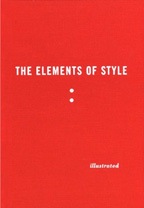
  • Elements of StyleIf you still think you need help, read a grammar or style book. Lots of people like the Elements of Style by William Strunk Jr. and E.B. White. (I prefer the illustrated hardcover version.) But there are lots of other books out there. The Elephants of Style by Bill Walsh is lots of fun and very educational. Go to a bookstore (you know, the place you hope to find your name on the cover of a book) and check the Reference or Writing sections. You’ll find plenty of options.
  • When you finish writing something, read it out loud. Unless the language you’re writing in is not your first language, grammatical errors should jump off the page at you as you read them. Simply said: Your writing should sound good when you read it aloud. That’s not just grammar, either. It’s also the rhythm of your writing, the combination of long and short sentences. That’s something that comes with a lot of experience as a writer.
Don’t worry about developing your own personal writing style. It’ll come to you — if you don’t try to force it. Learn the basics first.

Then just write, write, write — until you get it right.

The Children of Men

Futuristic social commentary by P.D. James.

The Children of MenI just finished The Children of Men by P.D. James. James, who normally writes mysteries featuring her series detective, Adam Dalgliesh, wrote instead of a futuristic world 25 years after the birth of the last-born child. In the world of this book, there are no children, no babies, and no hope for new human life.

James paints a sad picture of that world. Schools are converted into housing for the elderly, colleges now teach courses of interest to adults who don’t have their time occupied by their offspring. Playgrounds are gone. The government is trying to centralize the population in big cities so it’s easier to provide services as the population dwindles and only a handful of elderly people are left.

[This might sound weird, but it reminded me a bit of the retirement town I live in. Of course, there are some children and young people here, but the majority of residents and voters are retired so there isn’t much emphasis on things that would benefit young people. The local school board, for example, was unable to pass a school bond in the most recent vote — people don’t want to foot the bill for education when they don’t have kids in the system. The local Center for the Arts released its 2007/2008 schedule last month, and for the first time since opening about 5 years ago, there isn’t a single family-oriented program on the schedule. Are they giving up on children here in Wickenburg?]

The book has a hero: 50-year-old Theo. Theo is first cousin of the Warden of England, Xan, a self-made dictator first elected as Prime Minister years ago. Xan makes extreme decisions that benefit the apathetic public, by enhancing safety and reducing the cost and bother of supporting the aging population. But a handful of people aren’t happy with his decisions and want to stop him. They go to Theo, hoping he can convince Xan to change things. To say much more would be a spoiler, but I will mention that there appears to be hope for the world when a woman becomes pregnant.

Netflix, Inc.Ad

I enjoyed the book’s fast pace after its initially slow start. A lot of background information was presented in the form of Theo’s personal diary before a third person narrator stepped in and picked up the story. It wasn’t a long book — I read it over a weekend — and the pages turned quickly. Now I’m waiting for the movie based on the book to appear in a Netflix envelope in my mailbox. I have a feeling that the movie will be a lot more exciting than the book, focusing on the events that occur after the pregnancy is discovered, Hollywoodized for maximum visual impact.

Did I like the book? Yes, I did. It made me think. And in today’s world of eye candy entertainment, that’s saying a lot.

On College Reunions

Apathy and death among Hofstra University’s Class of 1982.

Yesterday’s mail brought a big white envelope from Hofstra University, my alma mater. May 20 was the 25th anniversary of my graduating class, the Class of 1982. Although I was tempted to make the cross-country trek to Long Island, NY from my home in Arizona, I’d scheduled a helicopter rides gig for May 19 in Yarnell and preferred to do that. I’m glad I did.

A few months before the event, Hofstra’s Alumni Association sent out a survey form requesting bios from class members. Proud of what I’ve done since my college years, I promptly filled mine out and returned it to the school. They wanted a digital photo to go with it, but I forgot to go online (as they requested) and upload a suitable image.

My College Years

Understand this: my college years were among the most difficult yet enjoyable years of my life. Difficult primarily because of the expense. Hofstra, a private school, was getting about $120 per credit in those days. While I know that’s nothing compared to today’s tuitions, that $1800 to $2200 per semester tuition bill (plus books plus room and board) was killing me. The deal I cut with my parents was that each of them (they were divorced) would cough up 1/3 and I’d put in the final third. I consider myself lucky for being able to get that much from them. I also consider myself lucky for getting two scholarships that knocked more than $1000 off the annual tuition fee. So yes — I only had to come up with about $1200 a year. But I had to work two part-time minimum wage jobs (at less than $3/hour, if I recall) to make that and the money I needed to keep my car running and food in my mouth. I was 20 when I graduated and, by that point, I’d already worked harder than anyone else I knew.

(I was also incredibly thin at one point, weighing in at only 105 pounds. I ate little and worked hard and simply couldn’t keep the weight on. At 5’8″ tall, I looked terrible — absolutely skeletal. It took the school’s meal plan and those delicious hot rolls at dinner to fatten me back up.)

I’m not complaining about the hard work or financial situation. I believe in working hard to get ahead. And 25 years later, I still believe it. Too many people are looking for a free ride. Too many people spend more effort trying to get away with as little real work as possible than actually doing the work they’re being paid to do. And then they wonder why they’re not getting anywhere in life, why the promotions are always going to someone else, or why they’re first in line for layoff when their company starts sending jobs to India and Pakistan.

I also think that everyone should be a little needy at least once in their life. Back in those days, having $20 in my pocket made me rich. The money I made went to my tuition bill, to feed myself (until I got on that meal plan and my parents picked up 2/3 the cost), and to put gas in my car. (I drove a 1970 VW bug and gas cost 70¢ per gallon.) Most of my friends were in a similar situation, although I think I was the only one footing part of the bill for my education. We learned how far you could stretch a dollar and how important it was not to waste money on things we didn’t really need. I think that’s a lesson many of today’s kids could learn from. When you have to earn every dollar you spend, that dollar becomes a lot more valuable.

As for my college years being the most enjoyable of my life — well, that might be a bit of an exaggeration, but it’s mostly true. It gave me my first taste of real freedom — and real responsibility. I learned how to have fun and take care of the things I had to do to stay in school, get decent grades, and earn enough money to get by. I had a lot of friends — mostly people like me. I never joined a sorority, but I did become part of the yearbook staff as a photographer. I spent my off-hours during the day in the school’s game room, shooting pool with some friends and becoming a reasonably good pinball player. In the evening, we’d head over to a local bar, which had excellent french onion soup for just a buck and cheap beer on Thursday nights. We also hit the Ambassador Diner in Hempstead periodically for greasy but excellent batter dipped onion rings. Almost all of my friends were guys, but there was no sex between us. (I’ve always been “one of the guys” and I still am.) I dated two different guys while in college and, unlike so many of the girls at Hofstra for their “MRS” degree, wound up single when I graduated at the age of 20 with a BBA in accounting. That was fine with me.

Affection for My Alma Matter? I Don’t Think So.

I never really felt any affection for Hofstra. It seemed like every time I turned around, they had their hands out for money. I nearly got kicked out for late payment of tuition twice, yet they never failed to send requests for donations to my family. I get those requests now. They come to my house with full-color booklets about the newest on campus building and latest event, along with a summary of what the entire alumni student body has been up to — well, at least those members who bothered to provide updates. I used to provide updates once in a while, announcing a new book or providing information about my latest endeavor. They even featured my helicopter charter business in one issue. But the way I saw it, I struggled enough to pay them when I was a student and they never cut me any slack when I had trouble coming up with the dough. I didn’t owe them a thing.

I’m Not the Only One Who Doesn’t Care. But at Least I’m Still Breathing.

But when the reunion material arrived, I decided to fill it out and return it. I was curious about my classmates, curious about what they’d been up to all these years. I even toyed with the idea of blowing off my helicopter gig and going out for the reunion.

But when the reunion materials arrived today, I was glad I’d made the decision I’d made. Accompanying the “sorry we missed you” letter and donation request form was a thin booklet titled, Congratulations to the Class of 1982 on your 25th Anniversary. In it were photos as “bios” from 59 students (including me). I’d known two of them well — one of them is my step cousin. The photos were right out of the yearbook, with current photos added for the folks who had bothered to send them. Few had. Most bios lacked any amount of imagination, simply stating what degree the person had earned during his stay at Hofstra and whether he had gone on to earn additional degrees. Marriages to college sweethearts were mentioned more than a few times. Women were sure to mention how many kids they had. It was pretty boring stuff; only about 5 people wrote bios that actually brought readers up to date. (I was one of them, as you probably guessed.)

What was more tragic was the “In Memoriam” page after the bios. It listed 54 classmates that are no longer walking on this earth. 54! Sheesh! Almost as many dead ones as ones who bothered to respond to the reunion notice. And remember, this is a 25-year anniversary — not a 50-year. Most of my classmates are under 50. That means that at 54 of them died before their 50th birthday.

Now I don’t know how many people were in the class of 1982. I know that the School of Business, which was my slot at the graduation ceremonies, had hundreds of students in it. There had to be at least 2,000 students in the entire class. And the alumni association got reunion responses for just 113 of them — 54 of which were dead. Can you say apathy? And I thought I was alone in my feelings — or lack thereof — for the school.

And how many people actually showed up for the May 20 party? I hope they didn’t rent a big hall.

The Yellow-Lighted Bookshop

A memoir, a history, by Lewis Buzbee.

The Yellow-Lighted BookshopIn clearing out my reading pile, I stumbled upon The Yellow-Lighted Bookshop by Lewis Buzbee. I read this book several months ago, then put it aside with a mental note to write up some comments in my blog.

I’ve been incredibly busy lately and not focused on what I’ve been reading. As a matter of fact, I’ve been having some trouble getting back into reading these days. My “To Read” pile is tall, but for some reason, I’m not impelled to read any of the books on it. And every time I pass a bookstore, I have trouble keeping myself from dropping in.

That’s why this passage from the first chapter of Buzbee’s work really hits home:

For the last several days I’ve had the sudden and general urge to buy a new book. I’ve stopped off at a few bookstores around the city, and while I’ve looked at hundreds and hundreds of books in that time, I have not found the one book that will satisfy my urge. It’s not as if I don’t have anything to read; there’s a tower of perfectly good unread books next to my bed, not to mention the shelves of books in the living room I’ve been meaning to reread. I find myself, maddeningly, hungry for the next one, as yet unknown. I no longer try to analyze this hunger; I capitulated long ago to the book lust that’s afflicted me most of my life. I know enough about the course of the disease to know I’ll discover something soon.

In The Yellow-Lighted Bookshop, Buzbee, a former bookseller, writes about his life with books, taking detours along the way to discuss the history of books, printing, publishing, and and the book selling industry. Chapters cover the business of books — including the surprising (for some) truth about what an author earns on each book sold and the impact that large booksellers (think Barnes and Noble and Borders) and online booksellers (think Amazon.com) have on the industry.

The Yellow-Lighted Bookshop is a look into a life where books are more than just bunches of paper with words on them. Educational, amusing, insightful — the book will appeal to any book lover in a way that few other books can.

I highly recommend it.

Being a Responsible Blogger

With regular readers comes responsibility.

This morning, I noted that the feed for this blog has exceeded 100 subscribers. The 100 mark is a milestone for any blogger, and it’s no different for me — even though I’ve been at it for some time now.

I’ve been blogging for over three years and my blog doesn’t exactly follow all of the “rules” of blogging. I’m talking about the “stick to one topic” rule and “blog multiple times a day” rule. People say rules are meant to be broken, but that’s not why I break these rules. I just blog the way I want to blog and don’t really pay attention to the rules.

My Original Blog as a Separate Entity

My blog started out as a separate entity from my personal Web site, a way to share whatever I was thinking about or doing with people who might be interested. It was a personal journal, slightly filtered for the public. It was a way for me to record my life so I’d have something to look back on in the distant future. I didn’t care if anyone read it and was often surprised when someone I knew commented about something I’d written in my blog.

Back in those days, my blog wasn’t something I worked hard at; the entries just came out of me, like one-sided conversations with friends. Perhaps it has something to do with my solitary work habits — many people gather around the “water cooler” at work to trade stories about their weekends or opinions about world affairs. There’s no water cooler in my office and no co-workers to chat with. My blog may have been my outlet for all these pent-up stories.

Blog + Site = ?

A little over a year ago, I combined my blog with my personal Web site. I did it to make my life a little easier. I’d already decided to use WordPress as my Web site building tool. Why not just make my personal blog part of the site?

My Web site has been around in one form or another since 1994. I built it to experiment with Web publishing and soon expanded it to provide a sort of online résumé and support for my books. Support for my books often meant additional tips and longer articles about some of the software I’ve written about. This is fresh content of interest to people who use that software, even if they don’t buy or read my corresponding books. Since writing this content is relatively easy for me, I have no problem offering it free to anyone who wants it (as long as they don’t steal it and pass it off as their own; see my © page).

One of the great things about blogging software is that it automatically displays the newest content on the Home page and archives older content by category and date. In the old days, I’d have to manually create new pages for every article I wanted to put on my Web site and then add links to them. It was time consuming, to say the least. Sometimes too time consuming to share even the quickest little tip with visitors. So I didn’t publish very many articles. But the time-consuming, hand-coding aspect of my site is gone, and it takes just minutes to put any content online, whether it’s a link to an interesting podcast I just listened to about iPod microphones or a multi-part series of articles explaining how to use WordPress as a content management system.

What’s odd about the merging of the two sites is that my personal blog entries now commingle on the Home page with my book support entries. So these 100+ subscribers are seeing (and possibly reading) all kinds of stuff coming out of my head. (Now that’s a scary thought!)

My Responsibility

As my blog/site audience grows, my responsibility to provide good content for readers also grows.

The way I see it, when only a half-dozen people read my blog regularly, it was okay to bore them with stories about my horse eating corn cob stuff out of the bottom of my bird’s cage or rants about the quality of “news” coverage. Now, with over 100 regular readers, I need to think more about what would interest my audience and concentrate on producing the articles they want to read. (You can help me by voting on this poll.)

And that’s when blogging becomes work. That isn’t necessarily a bad thing, but it does take more effort on my part.

And it may push me far from the original purpose of my blog: a journal of my life. That’s something to think about, too.

The Other Blogs

I just want to take a moment here to comment on some of the other blogs I’ve seen out there. The vast majority of them are a complete waste of bandwidth. Some exist to echo the sentiments of others and show very little original thought. Others are complete blather, written in a style that makes me mourn for the failure of our educational system. Like chat room comments. Ugh. I don’t see why people waste their time writing this crap and really can’t see why people waste their time reading it.

But there is a small percentage of blogs that provide good, informative, or at least interesting content, written in a way that’s easy to read and understand. Those are the blogs that serious bloggers should be reading and learning from. Those are the blogs we should try to emulate, not by simply copying or linking to content, but by adding our own original material to the blogoshere.

That’s my goal and my responsibility as a blogger. If you’re a blogger, is it yours, too?