2010: My Year in Flights

I was all over the place.

I thought I’d take a moment to blog about some of the flying I did this past year. LogTen Pro, the software I blogged about yesterday, makes keeping track of my flying activities a lot easier to summarize.

The Big Picture

I flew a total of 207.3 hours in 2010 with exactly 300 takeoffs and landings. Nine takeoffs were at night while 13 landings were at night — this inequality occurs, in part, because of long flights that begin just before dawn or just before dusk. But I only flew 5.1 hours at night.

Flights by MonthMy flights are spread out over the entire year, with February, March, September, and October my busiest months. LogTen Pro created this graph for me so I could visualize it.
Some Details

I broke my flight time down into different types that I want to track:

  • 71.5 hours Solo. Solo flight time is the time I was on board all alone. Much of this time was spent repositioning the aircraft for a flight. I often offer this time at low rates on Flying M Air’s Web site, but seldom have people take advantage of it. Their loss. I don’t mind flying alone. I suspect I have an unusually high percentage of solo flight time for a helicopter pilot.
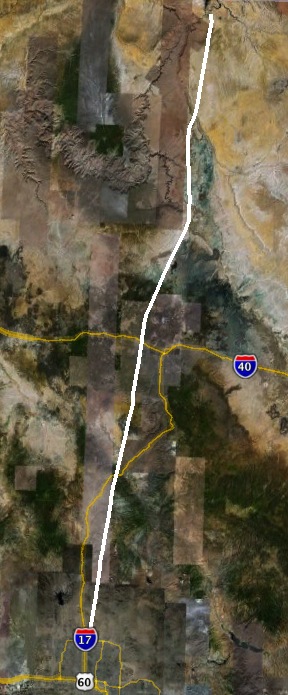
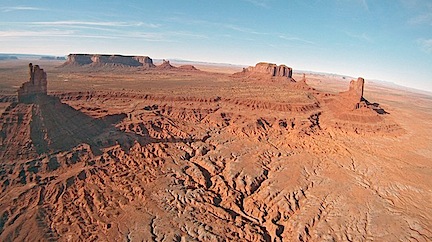
  • 89.4 hours Cross Country. For helicopters, cross-country flight time is considered anything over 25 miles. This number includes only flights that landed at least 25 miles from the starting point. It does not include flights where I flew at least 25 miles away and then came back to the same airport or another one nearby. I did make several very long cross-country flights last year, including flights between Phoenix and Seattle and flights from the Phoenix area to Lake Powell, Monument Valley, Las Vegas, and Blythe, CA.
  • 30.2 hours High DA/Mountain. I track high density altitude/mountain flying because it’s important to some employers. The definition I use is flights that begin or end at an airport at 5000 feet density altitude or higher and the part of that flight spent over that DA. So if I flew from Wickenburg (2400 feet elevation) to Prescott (5000 feet elevation) and was over 5,000 feet for about half of that 30-minute flight, I’d log .2 or .3 for High DA/Mountain flying. All of the flights I did when I flew at the Grand Canyon were High DA/Mountain flights because I started and ended at 6300 feet and never got any lower. If I started at a low elevation and landed at a low elevation, however, I probably wouldn’t log any high flying in between unless it was either very high flying or involved crossing mountains, etc. I know this is subjective and not perfect, but I’m really not required to log this at all, so I do it my own way just to get a ballpark idea.

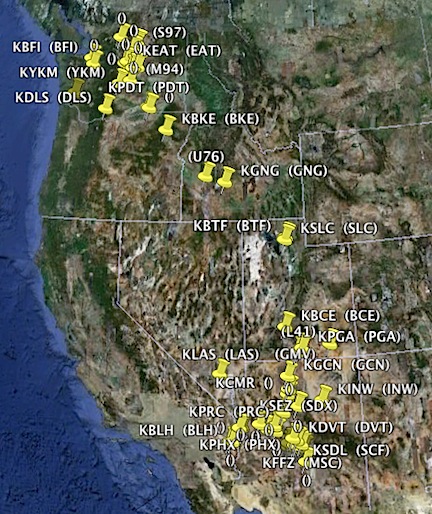
Landing ZonesI landed at 52 different places in Arizona, California, Nevada, Utah, Idaho, Oregon, and Washington. 16 of these landing zones were off-airport, although two of them were official helipads registered with the FAA. These numbers do not include about a dozen off-airport landing zones I used during one mine survey job in March; it just wasn’t worth logging them all. This Google Earth map shows where they were, using data from LogTen Pro. (Seriously: isn’t this cool?)
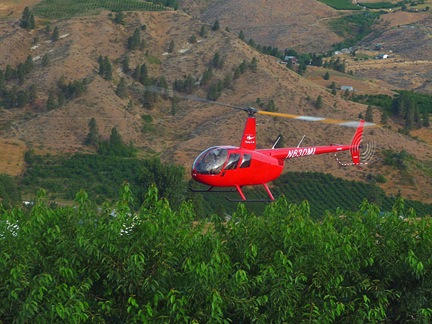
I only flew one aircraft: my R44 Raven II.

The Flights

A look at my logbook reveals a wide variety of flight types:

  • Day Trips to Grand Canyon, Sedona, and Meteor Crater/La Posada. This is something Flying M Air offers and I’m pretty sure we’re the only operator in the Phoenix area that does so at a reasonable price. Truth is, I’ll take you anywhere I’m allowed to — which is almost anywhere in the 48 contiguous states — for the day if you pay me to. These are the trips I offers, so these are the trips I sell. Sure do wish someone would ask for something different once in a while. If I spent any more time at the Grand Canyon, I could probably get a part time job as a tour guide there.
  • Phoenix Tours. This is Flying M Air’s “cheap flight.” Frankly, it isn’t worth going to the airport for less than an hour of flight time, so this is the lowest price tour I sell. It’s a great flight around the city and I customize it for clients, partially to make them happy and partially to make it more interesting for me. One of these custom flights required me to visit several specific GPS locations, four of which were inside class Bravo (PHX) or class delta (CHD) airspace. That was a challenging flight.
  • Moonlight Dinner Tours. I only did one of these last year, but it was a biggie: the guy popped the question and the gal said yes. What’s especially memorable about this flight is that I picked them up and dropped them off at the Sky Harbor helipad, which is between the runways and always a fun challenge.
  • Monument ValleySouthwest Circle Helicopter Adventure. I only did one of these last year, with a nice couple from Tucson. (In 2009, I did four of them and I have one scheduled (so far) for 2011.) This is a six-day excursion with overnight stops at Sedona, Grand Canyon, Lake Powell (at Page), Monument Valley, and, on this particular trip, Winslow (which I actually prefer over Flagstaff, the usual stop). This was the first trip where I actually had to alter my course and change tour reservations due to weather — the second day had low clouds and rain that cleared out later in the day. You can find photos from this trip here.
  • Las Vegas Weekend. I took two women up to Las Vegas for the weekend. It was a nice flight and a relatively nice weekend away, despite some mechanical problems.
  • Video flights at the Best in the Desert (BITD) Parker 425 race. Last year was my third year at the race. It’s my favorite annual gig and I’m only sorry that it’s just one day a year. I flew three videographers last year, chasing race trucks through the desert. (The aerial shots in the video here were made from my helicopter.) Of course, the last videographer let his seatbelt hang out the door, causing damage that cost $2K to repair. I won’t let that happen again.

  • Wine Shopping. I took some regular clients on a wine shopping trip from Wickenburg to Scottsdale. They bought four cases of wine and we managed to fit them all in back under and on the third passenger seat. We named our “passenger” Bacchus.
  • Mine Survey. I took five different people (on multiple flights) to test soil samples on various mine sites not far from Blythe, CA. Although the logged time didn’t add up very much — each flight segment was less than 10 minutes — the waiting time sure did. I was satisfactorily compensated, so that’s not an issue. Now I bring my iPad on all flights so I have something to keep me occupied while clients are out doing their thing.
  • Equipment Testing. I actually did two of these gigs, each over multiple days, out in the desert west of Wickenburg. It required the client to hook up some communications equipment on the helicopter and me to fly as specified so they could test range, etc. There was a lot of flying, a lot of landing, and a lot of waiting. On the first gig, we brought our truck and new fifth wheel trailer out into the desert and camped. The truck had my fuel transfer system on board, which made it unnecessary to go back to Wickenburg for fuel. It gave us a good opportunity to test out the trailer before I used it that summer.
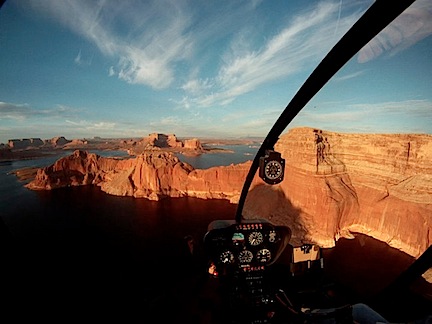
  • Over Lake PowellPhoto and video flights. I did a bunch of photo flights in the Phoenix area, north of Phoenix, south of Phoenix, and all the way up at Lake Powell. In fact, I spent a total of 45.4 hours (according to LogTen Pro’s summary of my remarks field) doing photo and video flights last year. I even got to do one flight with my new Moitek Gyro-stabilized Video Camera Mount.
  • Cherry DryingCherry Drying. I spent more time drying cherries this year than I did in the previous two years combined — but it still only added up to 20 hours over 11 weeks. Anyone who thinks drying cherries is a good way to build time is very wrong. (If you’re a pilot interested in cherry drying, read this.)
  • Rides. I did rides at one public event and one private one last year. I also did a few odd rides here and there, mostly for folks I owed favors to. I figure I took about 40 helicopter “virgins” up for their first ride, along with at least 30 others who had already been in a helicopter.
  • Golf Ball Drops. I did two drops in 2010 and I’m starting to get good at it. On the last drop, I got one ball in the cup and another right on the cup rim.
  • Ash Scattering. I did only one of these in 2010, but that’s okay. Although I don’t mind doing them, I don’t particularly like them. Good part: family happy to have complied with wishes of deceased. Bad part: Climbing to altitude and worrying about packet of ashes breaking open and getting into my air intake (again). This flight went well and the folks were happy. For two of them, it was their first ever helicopter flight.
  • Fun. I did some flights just for fun, mostly in Washington state. I sure do love flying up and down the Columbia River. I also enjoy low-level flight over the empty desert.

Not a Bad Year

I’ve been averaging 200 hours a year — except for the year I flew at the Grand Canyon, which was considerably higher — since I began flying. I have the huge chore ahead of me of entering all that flight time into LogTen Pro. I figure I’ll do a few months a week. I’ll likely finish up over the summer when I’m back in Washington waiting for it to rain.

When I’m done, I’m sure I’ll show off my stats here.

LogTen Pro

A mini software review for pilots.

LogTen ProAt the end of 2010, nudged by the availability of a coupon code for 30% (I think) off, I purchased the Mac and iPad versions of LogTen Pro. This program, published by Coradine Aviation Systems, is designed primarily for airline pilots to log their flight time, trips, duty time, expenses, and other data. It can then generate any number of reports, including FAA-approved logbook pages and duty sheets. Of course, pilots with Macs don’t only live in the US, so LogTen Pro supports multiple countries and the reports needed to satisfy their own FAA-equivalent organizations.

Although, on the surface, LogTen Pro seems like overkill for logging pilot hours, its true power lies in the fact that you don’t need to log everything it lets you. For example, LogTen Pro enables you to log flight date, aircraft N-number, duty time in, hobbs out, time out, from airport, to airport, time in, hobbs in, and duty time out. That’s the kind of information an airline pilot might need or want to log. But, in reality, how many people really track that much information about their flights? LogTen Pro is perfectly satisfied just taking the flight date, N-number, from airport, to airport, and total time flown. And of course, you can log day vs. night time, VFR vs. IFR time, etc.

In other words, you can log as little or as much information as you like.

iPad version of LogTen ProOf course, the iPad version (shown here with a screen shot of all my 2010 activity) syncs with the Mac version, so I can log time on the go and sync it all up when I get back to my office. Or I can pull old log entries out of my paper logbook and enter them in my Mac and then sync it all to my iPad.

While LogTen Pro is a bit weak on logging helicopter flight time — for example, it supports the Rotorcraft category but did not include a Helicopter class (although, for some reason, it did have gyroplane; go figure) — it is highly customizable. I simply used one of the undefined Class fields to create a Helicopter class in my copy of the software. Although this is calculated properly in the logbook reports as is, I can also create custom log book pages that eliminate columns I don’t need and expand on ones I’m interested in tracking, such as High DA/Mountain (another custom field I created) or Turbine helicopter.

I could go on for thousands of words about this software — there’s a lot to it. But it would be better to let you view the Guided Tour and just try the software for yourself. If you’re a pilot with a Mac, iPhone, or iPad, download the demo version of the software and see what you think. If you’re geeky and love stats like I do, I think you’ll be sold.

Why Shop Online?

Save money, save time, get what you want.

The best way to explain is with yet another of my long stories. I’ll try to keep it brief.

Our Phoenix condo is a sort of bachelor pad where Mike and our roommate Matt live during the week. I’m also down there on and off at various times of the week. It has five rooms: living room, dining room, kitchen, and two bedrooms. We furnished it simply with a mixture of old and new (mostly Ikea) furniture. We “decorated” it by putting a few enlarged photos on the walls.

It’s passable, but nothing special.

The Blinds

One of the things that always bothered me was the blinds. The apartment has four sliding glass doors that lead out to its two patios. The ones in the living room and master bedroom are triple doors with the middle door that slides. On both doors are off-the-shelf vinyl vertical blinds that don’t fit quite right and look, frankly, like crap.

I’ve been wanting to replace the blinds on these two doors since Mike bought the apartment. This week, I decided to support the local economy by having a local blinds company put them in for us. I used Google Maps to find a company nearby, called, and got an appointment for an in-home consultation today.

The saleswoman arrived on time with her computer and some samples. I was disappointed to learn that the fabric blinds I wanted would be very costly, so I took her advice and went with vinyl blinds. Of course, the colors I wanted weren’t available anymore either, so I had to pick different colors. She measured and did the math. The total was over $1,200, with “free” installation.

For two sets of blinds.

To my credit, I didn’t choke or pass out from sticker shock. Instead, I told her I’d “present” her estimate to my husband.

(Women always have this option if they don’t want to say no immediately. They can pretend their husband has to make the decision and later say that their husband said no.)

BlindsA while later, I got online. I went to SelectBlinds.com, an online seller of all kinds of blinds. I looked at their wide variety of styles and colors. I called their toll-free number and asked a few questions. And then I ordered the fabric blinds I wanted in the colors I wanted. With the 30% off coupon right on their home page, the blinds cost $359 delivered. The only reason it cost that much was because the 108-inch length of the blinds required a $70 shipping surcharge.

I’d saved over $800 by ordering online.

Yes, I know my husband will have to install them. I think he’s up to the task. But even if I did have to hire a handyman, I’m sure it wouldn’t cost $800 to get the blinds installed.

The Photos

Another thing I’ve been wanting to fix up in the condo are the photos. When Mike first bought the place, I bought a bunch of plain black frames with off-white mats at Ikea. I then began filling the frames with enlargements of some of my favorite photos.

Trouble is, the off-white mat looked pretty crappy. It kind of took the steam out of my photo project and, after filling only two frames with 20 x 30 prints, I stopped.

I’d done some research at Aaron Brothers, a local framing shop, and discovered that new mats would cost a small fortune — about three times the price of the prints! I got the same general pricing information at Michaels, another local place that does framing. Suddenly, it seemed that my inexpensive photo framing project would be very costly.

But today, I got online. I went to PictureFrames.com, which can cut mats to any size you like. I had some trouble deciding what color to use — I have absolutely no creative design skills. I knew I wanted all the mats to be the same color, no matter what the print was. I wanted consistency.

I discovered that if I pretended I wanted to order a framed print, I could upload an image, choose a mat, and choose a frame. I could then see how they looked together. Doing this, I decided that a dark gray frame would give me the neutral color I wanted while complementing the photo. (My artist friend, Janet, later confirmed this after I sent he screen shots of the previews.) I was able to preview four photographs with the gray mat/black frame combination.

Preview Frame

Framed PrintOnce I’d decided on a mat color, it was just a matter of entering the measurements for each of the mats I’d need. I ordered a total of eight mats in four different sizes, ranging from outside measurements of only 8 x 11 to 30 x 40.

Before checking out, I poked around the Internet and found a free shipping coupon code for PictureFrames.com. When I applied it, it saved me over $20 in shipping charges. The total cost of the eight mats came to about $100.

Of course, I didn’t have all the prints I wanted, so I also went online to my Zenfolio photo gallery, Flying M Photos, and chose four new prints: two 16×24 and two 8×12. You can see one of them here in the mocked up frame. The total cost of that, with shipping, was under $50.

Zenfolio now offers framing with mats (the mats are new and still very limited); in the future, I’ll likely buy the prints framed and matted to save the bother of doing it myself.

Shopping Done

I expect the prints and mats to arrive within the next week or so. I’ll assemble them and put them up on the walls. With luck, the new blinds will arrive around the same time and Mike will put them up. Together, they’ll give the apartment a more finished look.

I do wish I could have bought these things locally to support the local economy. But should I have spent two or three times what I did — literally hundreds of dollars more? I don’t think so.

What do you think?

The Two Antelope Canyons

You must see at least one of them when you’re at Lake Powell.

Antelope Canyon SquareI’m working on an itinerary for a Flying M Air excursion client. They’ve decided to customize their Southwest Circle Helicopter Adventure to add another day at Page, AZ, as well as an overnight stay at Bullfrog Basin about halfway up Lake Powell.

One of the things they wanted to add to their trip was a visit to Lower Antelope Canyon. The trip includes a visit to Upper Antelope Canyon, which is the attraction that gets the most visits. I felt it important to explain the difference between these two places and provide additional information on how they could be visited. I figured this information might help others plan their visit to the Page area.

Antelope Canyon: An Overview

Let’s start with an overview of what Antelope Canyon is and how it was formed.

Upper Antelope CanyonAntelope Canyon was formed mostly by the action of water in Antelope Creek, a south-to-north arroyo southeast of Page, AZ on the Navajo Reservation. During heavy rains to the south, the normally dry creek bed turns into a stream of water that rushes northward, sometimes at dangerous flood stage levels. (Indeed, 11 tourists were killed in Lower Antelope Canyon during a flash flood in 1997.)

Lower Antelope CanyonOver time, the water has carved a series of narrow slot canyons through the red rock sandstone. Two of these slots are open to the public. Upper Antelope Canyon is south of route 98 (see top satellite photo); Lower Antelope Canyon is north of route 98 (see bottom satellite photo). Examination of satellite images of the area show additional slot canyons along Antelope Creek, but they are not open to the public.

Both canyons have restricted access. You must pay a fee to the Navajo Nation and enter the canyon with a Navajo guide.

Both canyons have smooth, carved, Navajo sandstone walls that are quite beautiful. Antelope Canyon is one of the most photographed locations in the area.

Upper Antelope Canyon

Antelope CanyonUpper Antelope Canyon is, by far, the more visited of the two. I think there are two reasons for this:

  • Tour companies based a few miles away in Page take groups of tourists directly to the mouth of the canyon, making access convenient.
  • The floor of Upper Antelope Canyon is generally level, making the canyon very accessible, even to those who are less physically fit.

Upper Antelope Canyon is about 600 feet long, carved through what looks (from the air) like a single sandstone formation. Much of the canyon is so narrow that you can touch both walls with your hands at the same time. The downsteam opening of the canyon is bright with three big “rooms.” The rest of the canyon is much darker and narrower.

Most of the photos you see of Antelope Canyon were shot in Upper Antelope Canyon. At certain times of the day and year, shafts of light come down into the canyon. Photographers often kick up sand or dust into the light shafts for interesting photographic effects.

There are two ways to visit Upper Antelope Canyon:

  • Sign up for a tour with a Page-based tour company. The fee they charge covers the fee to the Navajo Nation as well as their fee for guide service. They will provide transportation from their location in town to the mouth of Upper Antelope Canyon, usually in a large, open-backed truck with bench seats. Your driver/guide will then walk you through the canyon. Afterwards, you’ll have about an hour to explore it on your own.
  • Drive up to the park entrance on Route 98, not far from the power plant. Pay a park entrance fee and park your car. Then pay a fee to tour the canyon. You can then wait on benches there until a tour is ready to go and climb aboard the same kind of open-backed truck to reach the mouth of the canyon. The driver/guide will walk you through the canyon and give you about an hour to explore it on your own.

They’re basically the same experience, but one requires you to wait outdoors in a relatively unpleasant environment while waiting for your tour to depart.

If you’re wondering which one is cheaper, there really isn’t much of a difference in price. I prefer using a tour company based in town, strictly for convenience. If you do decide to use a tour company, I recommend Antelope Canyon Tours.

You cannot drive your car to the mouth of the canyon. You must go with a guide.

If you are interested in photographing Upper Antelope Canyon, you must read this.

Lower Antelope Canyon

Lower EntranceLower Antelope Canyon has far fewer visitors than Upper. Unlike Upper, no tour companies — at least none to my knowledge — visit it. In addition, the canyon itself requires a decent amount of physical fitness. There are ladders, narrow passages, and various places where scrambling on the smooth sandstone is necessary. Heck, even the opening of the canyon, where you descend into a crack in the rock (shown here) seems designed to keep certain folks out: a fatty simply wouldn’t fit through it.

Lower Antelope CanyonThe great thing about Lower Antelope Canyon, however, is that you have up to four hours to explore it pretty much on your own. This gives you plenty of time to shoot photos or lose yourself in thought between the smooth sandstone walls. Because there are far fewer visitors, it’s a more relaxed and pleasant place to visit. You can probably guess that I prefer it.

Lower Antelope Canyon is only accessible by driving up to the parking area, paying the fee, and getting a guide to take you down. Sometimes a guide will take you straight down; other times they make you wait. The entrance to the canyon is walking distance from parking. The guide does not stay with you. Although you’re limited to four hours in the canyon, there’s no one keeping track. You can exit the canyon the same way you entered or climb out on a series of well-built ladders on the far end and walk back along the east wall of the canyon.

Visiting Both

My clients want to visit both, which I think is a great idea. What better way to appreciate the difference between them?

Of course, since they are separate, there’s no easy way to visit both. You can save the park entrance fee — which I believe is about $6 — if you drive to Upper and then visit Lower on the same day. If you’re interested in photography, however, that means that you might not get the best light for both canyons. It all depends upon the time of year and angle of the sun. We’ll be there in March when the sun is nearly straight overhead at noon; midday seems like a good time to visit.

Pilot Flying Fears?

Education is the best way to deal with safety concerns — especially if you’re a pilot.

I recently took part in a forum discussion that revolved around safety issues. The person who started the discussion, a helicopter pilot training to be a CFI, was concerned about the possibility of flight schools emphasizing the fun part of flying without adequately addressing the dangers. It wasn’t a failure to teach emergency procedures that bothered him. It was the attitude of flight schools and CFIs. He worried that flight schools, in an attempt to keep enrollment high, were failing to make students understand just how dangerous flying helicopters can be.

While I’ll agree that flying helicopters is dangerous, I also agree that driving a car or or crossing the street is dangerous. In fact, you stand a far more likely chance of being injured or killed in a motor vehicle than in an aircraft. The pilot who started this discussion knows this, but he still wonders whether flight schools should be making student pilots more cognizant of the dangers, especially early on in training.

I understood his point of view, but I really don’t know firsthand how much his flight school is downplaying the dangers. The general feeling I came away from after reading his comments was that he had a fear of flying. (This turned out not to be the case.) While it’s always good for a pilot to be afraid of what could happen, there comes a point where the level of fear becomes unhealthy. Yes, it’s true that pilots need to be mentally prepared to react to an emergency within seconds. But no, we don’t need to spend every moment of every flight actively thinking about all the emergencies that could ruin our day — or end our life.

Experiences Teach

I flew with a 300-hour pilot a few years ago. He’d gone through training and was a CFI looking for a job. (I have flown with quite a few CFIs looking for jobs, but that’s another story.) We were on a cross-country, time-building flight in my R44. I would eventually fly a total of 20 hours with him.

Early on in our first flight, I learned that his CFI, who was the flight school’s Chief Flight Instructor, had been killed in a rather disturbing fiery crash. Although she had over 2,000 hours of flight time, she had only 24 hours in the helicopter make and model. On that fateful day, the NTSB concluded that the accident was caused by:

The pilot’s improper planning/decision in attempting a downwind takeoff under high density altitude conditions that resulted in a loss of control and impact with terrain. Contributing to the accident were the helicopter’s gross weight in excess of the maximum hover out of ground effect limit, a high density altitude, and the gusty tailwind.

(I don’t really want to discuss this accident here; I think deserves a discussion of its own elsewhere in this blog and hope to address it in the months to come.)

Near GormanIt soon became apparent to me that the pilot was unusually fearful of flying in the mountains. Our route required us to fly west from Wickenburg, AZ to the California coast near San Luis Obispo. He started fretting about the mountains ahead of us while we were still in the flat deserts of Southern California. The mountains he was worried about showed elevations of 5,000 to 8,000 feet on the chart; we’d be flying over a road that ran in a relatively straight and wide canyon. That part of the flight turned out to be uneventful and he seemed genuinely relieved when it was finished.

Monterey BayOddly, later in the flight, when the Monterey tower instructed us to cut across Monterey Bay at an altitude of only 700 feet, I was pretty freaked out. Here we were, in a single-engine helicopter flying far from gliding distance of land, without pop-out floats or personal floatation devices. My companion, on the other hand, was perfectly at ease. In fact, I think he thought me cowardly when I asked Monterey tower for clearance to fly closer to shore.

This is a great example of how experience teaches. My companion was a “sea level pilot,” who did all of his training — and flying — in the watery areas around Seattle. He was comfortable with water and low-lying lands, but he was fearful of the conditions that had taken the life of someone he knew very well. I was a desert pilot with most of my experience flying over dry land, much it in high density altitude situations, including more than 350 hours flying tours over the Grand Canyon at 7500 feet or higher. I was comfortable flying over most kinds of terrain at just about any altitude but very fearful of flying over water.

(Nowadays, I wear a PFD when doing any extended flying over water and require my passengers to do the same.)

Learn from Other People’s Mistakes

Back in the forum, I began wondering if the pilot who had started the thread was concerned because he’d lost someone close to him in a crash — much like my cross-country companion had. (That turned out not to be the case.) I said:

If a person thinks too much about the danger of ANYTHING, they won’t be comfortable doing it. I admit that I don’t concern myself with it. I do everything I can to fly safely and maintain a safe aircraft. I’m confident in my abilities and never push the envelope of comfort more than I absolutely need to. I don’t fly around thinking that at any moment, something bad could happen. If I did, I’d hate flying and I’d likely be a horrible pilot.

Later, in the same post, I said:

You might also consider reading NTSB reports for helicopter accidents. What you’ll find is that most accidents are caused by pilot errors. REALLY. Reading those reports will help you learn what mistakes others have made so you’ll avoid them in the future.

He saw these two comments as conflicting and replied that I couldn’t really say that I wasn’t concerned with danger if I was reading accident reports.

My response was:

You need to understand that it’s BECAUSE I read the NTSB reports that I’m NOT overly concerned with the dangers of flying. The NTSB reports educate me about what can happen when you do something dumb: fly too heavy for your type of operation, perform maneuvers beyond the capabilities of your aircraft, fly into clouds or wires, etc. Each time I read a report and understand the chain of events that caused the accident, I file that info into my head and know to avoid the same situation.

I went on to say a lot more about what I’ve learned from NTSB reports. I read them for helicopter accidents at least once a month. Another pilot in the forum said he does the same thing — in fact, he even has a browser bookmark that’ll pull up the reports by month! I cannot say enough about the usefulness of these accident reports for training and awareness.

Unanswered Questions Can Fuel Fear

As I look back now on the flights I took with that mountain-fearful CFI — with the forum discussion in mind — I’m wondering whether the flight school had properly debriefed its students after the loss of the Chief Flight Instructor.

What had the flight school told him and the other pilots? Had they told him what caused the crash? I know that back then, before the NTSB report was issued, the flight school was in denial about the aircraft being overweight for the operation. Had they told their students anything at all? Were my companion and the other pilots and student pilots at that flight school left to wonder how such a great, experienced pilot could have been involved in a crash in the mountains?

Were his unanswered questions fueling his fear?

Another thing I suggested in the forum is that flight schools might want to conduct monthly seminars that students are required to attend as part of ground school training. Get all the students and CFIs into a classroom or meeting room with a few knowledgable, experienced pilots at the front of the room. Pick 3 to 5 recent helicopter accidents for which the cause is known. Talk them out. Explain what went wrong and what could have prevented the accident. Don’t point fingers; present facts.

Why don’t flight schools do this? Could it be because of what this forum pilot originally said: flight schools don’t want to scare off students by discussing dangers? If so, they’re doing their students — and the rest of the aviation community — a serious disservice.

Education and Experience are the Answers

Nowadays, if you want a job as a pilot carrying passengers for hire, you’ll need at least 1,000 hours of experience as a pilot in command. (Yes, I know some companies will take less, but those are few and far between.) There’s a reason for this: they want pilots who have experience flying. Experience leads to skills, knowledge, and confidence.

Some people think 1,000 hours is an arbitrary number and frankly, I have to agree. My first 500 hours were very different from the average CFI’s first 500 hours — in some respects, my experiences are “better,” while in other respects, a CFI’s experiences are “better.” But I also can’t see any other easy way to gauge a job applicant’s level of experience.

But it isn’t just experience that makes a pilot a good pilot. It’s also knowledge and attitude. Both of these things could be the end product of a flight school’s training program.

Many flight schools seem satisfied getting students and putting them through a “program” with just enough skills and knowledge to pass a check ride. Many students, who don’t know any better, are more interested in the cheapest way to get their ratings than the quality of the training.

I believe that with better quality training and better quality experience, less hours of experience should be necessary to have and prove good piloting skills. I also believe that pilots with better quality training and experience will have a better, safer attitude toward their responsibilities as a pilot.

It’s not a matter of teaching new pilots to be fearful of what could happen by stressing the dangers of flying. It’s a matter of educating about dangers — and how to avoid them.

What do you think?