Five Reasons Why My Next Phone Will Be an iPhone

Yes, I finally took the plunge.

Regular readers of this blog think I hate the iPhone. That is not the case. I hate AT&T. From their crappy coverage to their even crappier customer service, I won’t voluntarily give that company another dime of my money ever again. Hell, when I made my split with them years ago, I even sold my stock.

I actually like the iPhone. And, since buying an iPad last April, I like it even more. After all, isn’t an iPad like a big, fat iPhone without calling capabilities or a camera?

I was eligible for a new phone on my Verizon plan on December 23. I’d been considering several Android phones and the Motorola Droid 2 was likely to be the winner.

And then the Verizon iPhone announcement came.

I gave it a lot of thought. I was worried that Verizon would attempt to squeeze higher fees out of customers for the privilege of using the most coveted smartphone in the world. So I waited to learn more about pricing, etc. Hell, I’d lived with the BlackBerry — which still worked fine — for nearly two years; I could wait another few weeks.

Eligible for UpgradeThis morning, I went online to the Verizon site. When I logged in, I was greeted with a message telling me that as a “valued customer,” I was eligible to upgrade to an iPhone first and could get the phone as soon as February 10. I followed a trail of information by clicking a bunch of buttons. I was surprised that the 16GB iPhone 4 would cost me the same as the Droid 2. I clicked some more. I was surprised that an unlimited voice/text plan was available. And that adding up the plans I needed would cost me less per month than I was already paying with my 2-year-old BlackBerry Storm.

When I began entering a credit card number, I knew they had me. Moments later, it was too late to turn back.

But I do have five valid reasons why my next phone will be an iPhone.

  • Smart Phone. It was absolutely necessary for me to buy a smartphone — and the iPhone is one hell of a smart phone. It gives me access to my address book and calendar data and lets me add the apps that I needed to get my work done. And there are plenty of apps. (No, Angry Birds will never be installed on any of my devices.)
  • Easy Syncing. The iPhone will sync address book, calendar, and e-mail data transparently with my Macs. The Droid would have required 3rd party software or clunky syncing with Google services that I don’t currently use. The syncing alone was enough to sell me on the phone, even if it cost more.
  • Familiar Interface. I have an iPad. I struggled with the interface for a short time when it was new. Why? Because it’s based on the iPhone interface, which I didn’t know. So my knowledge of the iPad interface means I already know 95% of what I need to use the iPhone. I admit that I dreaded facing the learning process for an Android phone; now I don’t have to worry about it.
  • The price is right. The iPhone cost me the same as the Droid would have but gives me so much more (see previous three bullets).
  • I am an Apple User (and stockholder). I’ve been using Macs since 1989 and have been writing about them since 1991. People who know me for my Mac-related work are always shocked to learn that I don’t have an iPhone. It isn’t individualism, I tell them. It’s the simple fact that AT&T cannot deliver the kind of service I need for my only means of communication. (Yes, we dumped the land lines at least two years ago.) Now I can meet the expectations of my peers without sacrificing my own communication needs.

February 10 is just a week away. Four years and two phones — Palm Treo 700p and BlackBerry Storm — after the original iPhone was announced, I’m finally joining the throng.

I feel oddly unexcited. Could it be because I know what so many others won’t admit?

It’s just a phone.

February Needs More Days

We are experiencing scheduling difficulties. Please stand by.

Ever have one of those months where there just aren’t enough days? We all say that about February — mostly because it usually only has 28 of them — but even if it had its full share, it wouldn’t be enough. Mine is booked solid.

Want a glimpse of what my work/personal life is like right about now? Here’s the bullet point edition:

  • I have two chapters left to write on a book I’ve been struggling to finish since November. Part of the problem was that my editor didn’t seem to take much interest in the project, which led me to feel much the same way. Now, of course, they want it done already (as they should) and I also feel the same way.
  • One of my other publishers suggested a topic for a brand new book for them. I need to come up with an outline and make contact with the public relations person for the software company to see what kind of support I might be able to get from them.
  • That same publisher is gearing me up for a revision of my Mac OS X book for Lion. That book, which I also do layout for, has a brand new look, requiring a new template and mindset.
  • Another publisher is making noises about another revision for another project. I’m think it might be pretty far out on the horizon, but I need to chat with them about needs and scheduling.
  • AircraftOwner Online has announced that my monthly article deadline is now the 12th of the month rather than month-end.
  • I’m under contract to write two more articles (that I keep putting aside) for a Web publication. I won’t get paid for the first one I wrote (last year) until I hand in these two.
  • One of my aerial survey clients wants a 1-2 day wildlife survey flight in northern Arizona next week. (This just popped up today.)
  • One of my aerial photo clients has booked a 4-day photo flight in Arizona and Utah for mid-month. The flight requires me to obtain permits for flying low level in three different national parks. (And yes, one of them is the Grand Canyon. Wish me luck.)
  • I have to drop off my helicopter for its 100-hour inspection in Mesa, AZ; a few days later, I have to pick it back up. I also have to hope there’s nothing wrong with it that would prevent me from picking it up on time.
  • I have an FAA Part 135 check flight scheduled near month-end.
  • I have a day trip to Sedona scheduled near month-end.
  • I have a week-long vacation in the Bahamas with my husband. (A business trip for him; a chance to breathe for me.)
  • I have to drop off and then pick up Alex the Bird from his boarding facility before and after the vacation.

Get the idea?

You might have noticed that blogging does not appear anywhere on this list. That’s not a mistake. Blogging falls very low on the priority list. So low, it doesn’t even appear on lists. So this might be the only original blog post you see for quite a while.

Just thought it fair to warn you. This is going to be a very long short month.

And who says freelancers don’t work hard for a living?

The State of Macworld Expo

The end of an era? Looks that way to me.

When Apple announced, two years ago, that it would no longer attend Macworld Expo, lots of people said the announcement was Macworld Expo’s death knell. Like some other people, I thought that opinion was a both harsh and premature.

I don’t think that anymore.

On Friday, I did a presentation as a member of the Macworld Expo Conference faculty for the first time in at least eight years. I used to speak at Macworld Expo all the time, having at least one session in San Francisco and Boston (and later, New York) and even Toronto from about 1993 through 2002 or so. Back in the early 2000s, IDG took over the show and the conference management changed. They also went off in a new direction that stressed the creative aspects of working with the Mac. I was always more of a productivity person, so I didn’t fit in.

I still went to the show once in a while, but not very often. I came a few years ago, mostly to meet with one of my publishers. But that was it.

Looking back at it, I realize that I was deep in the Mac world at Apple’s first peak in popularity. The shows — especially in San Francisco — were huge. The very biggest shows took up both exhibit halls of Moscone Conference Center. All the big vendors were there — Apple, Microsoft, Adobe, Macromedia, Claris (later FileMaker), Quark — the list goes on and on. The show floor was buzzing all day long. The noise was deafening and there was a pure adrenaline rush on first entering the exhibit hall. And the products introduced! Even my husband talks about innovations like the Video Toaster (which, ironically, I believe ran on an Amiga). I remember all of Apple’s big hardware and software releases and the software demos that were both educational and entertaining. And how could I forget the Boston show where Mac OS 8 went on sale and my first Mac OS Visual QuickStart Guide sold out?

Afterwards, the parties would start. They were amazing affairs — the Exploratorium is a good example; the party sponsors rented the entire facility, leaving us to wander around and play with the exhibits. There was headliner entertainment, too: one year was Chris Isaac at one party and Jefferson Airplane at another. There were cruises and bungee jumps at Boston Harbor. There were full food, open bar parties at the top of the Fairmont in San Francisco. As one of the B+ list speakers/authors (in those days, anyway), I’d party hop with my peers. I remember one year bouncing from one party to the next with Bob Levitus, who always managed to get into all the parties, whether he had tickets or not.

Things change. Apple took a serious downturn. Things looked bad. Then Steve Jobs came back. The original iMac breathed new life into the company. More products followed. I remember seeing hundreds of buses all over San Francisco skinned with images of five colors of iMacs. But despite Apple’s subsequent successes, Macworld Expo was never quite the same. The show began to shrink.

What I saw on the show floor this year was a shock. The show was tiny — by old standards — occupying about half of one floor at the relatively new Moscone West building. At least 80% of the items on display could be classified as accessories — mostly protective or decorative covers — for the iPad and iPhone. There were very few Macintosh items.

Macworld Expo had become iAccessoryworld Expo.

Although most of the folks I spoke to about their thoughts on this matter seemed to agree with me — some more strongly than others — the members of the Macintosh press that I met there were surprisingly upbeat about it. One of them even commented that Microsoft’s support for the show is a good sign. Support for the show? They didn’t even have a booth! Having a party for a chosen few and being one of the sponsors on another party isn’t the kind of support I’d be upbeat about.

If I had travelled to San Francisco for the sole purpose of seeing the show floor — as I know many people did in the past — I would have been sorely disappointed. Disappointed enough to demand my money back. What I wouldn’t be able to get back was the travel time and expense and the three hours of my life spent trying to understand how so many accessory developers could think there was a market for yet another version of an iPad case. Or skin. Or screen protector.

The real value in Macworld Expo was the conference sessions — now more than ever. The conference management assembled a collection of experts — some old timers like me, some younger and newer to Mac OS (and iOS, of course) — and offered a variety of interesting tracks and sessions for Mac, iPhone, and iPad users.

My session about building your iPad for business was relatively well attended — the room was about half full. I received a handful of follow-up questions and a polite round of applause at the conclusion of my talk. Several of the attendees came up to the front of the room to thank me or offer complements. It was like the old days, but on a much smaller scale.

After all, Friday’s room could have held only about 100 people when, in the past, I did sessions that packed a room that seated more than 300.

And the meeting room area at Macworld Expo used to be busier than a high school hallway between classes each time a session let out. Now only a few dozen people meandered about, shuffling from room to room.

At least these people got something worthwhile for their money.

I know these are harsh words and, as a member of the Mac community with a long Macworld Expo history, it’s hard for me to type them. The conference faculty was treated quite well, with generously filled swag bags, a comfortable place to rest between sessions, and both breakfast and lunch every day. The session rooms were relatively well equipped. It’s hard to share negative opinions about Macworld Expo when IDG staff responsible for the conference part of the show treated me well. But if this blog post precludes me from ever speaking again at a Macworld Expo, so be it. I don’t sugar coat anything and I’m certainly not going to sugar coat this.

While I realize that the old days are long gone, I think that if IDG can’t do better than what I experienced this past week in San Francisco, they should throw in the towel on Macworld Expo and concentrate on better ways to share valuable information with Mac OS and iOS users.

A New Camera

Will it take my photography to the next level or have I gone as far as I can go?

Desert Still LifeLast spring, I shot one of what I consider one of my best photographs. I’d been “photojeeping” out in the desert when the hedgehog cacti were blooming. I stopped the Jeep on the two-track I’d been following, grabbed my tripod, camera, and cable release, and set off on foot across a relatively flat area peppered with pink blossoms. When I saw this cactus, my eye began a search for an interesting composition. I had to get down on the ground, with my tripod’s legs as short as they could go, to frame this shot. Although I let the camera handle the exposure (as I usually do), I fine-tuned the focus and depth of field using aperture settings. Said simply: I put a lot of effort into this shot — a lot more than I usually do.

And I was very pleased with the results.

Until I looked more closely at the photo in Photoshop, using 100% magnification. That’s when I could clearly see that the image lacked the kind of sharpness I wanted in my photos. It was as if nothing in the photo was in clear focus. Given the depth of field, that just didn’t seem possible.

I had done just about everything in my power to get the best shot I could and I’d fallen short of desired results. It was like being slapped in the face.

Nikkor 16-85mm LensI started doing research. I knew it wasn’t the lenses I was using — this particular image was shot with my Nikon 16-85mm f/3.5-5.6G AF-S DX ED VR Nikkor lens, which was still relatively new at the time. Although this is not a top-of-the-line Nikon lens, it is not a junk lens. The low ISO settings on the camera should have prevented the graininess I observed. That left the camera or me.

I didn’t think it was the camera. After all, I’d come into photography the old fashioned way: using film. When dealing with film, the camera is just a mechanical device to get the exposure — at least at the level of camera I could afford. The lens handles the clarity of the image, so we normally put our money into good optics. Processing and printing (in the case of prints) are also important for the final result.

So it must be me, I reasoned. I resolved to try harder.

Time passed. I took a lot of photos. I started getting accustomed to disappointment. It was taking a lot of the joy out of photography. I’d do a shoot at an amazing place and get ho-hum images.

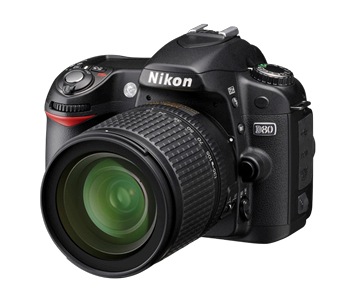
Nikon D80Then I started thinking more about the camera. I knew that my Nikon D80, which I’d had since 2007, had a 10.2 megapixel Nikon DX format CCD imaging sensor. Newer cameras offered higher resolutions (more megapixels or “piglets,” as my family calls them). They also offered different sensors. My husband’s D90, for example, has a 12.3-megapixel DX-format CMOS imaging sensor. And I knew that there were also cameras that had film-frame size sensors. Why the differences? Did it really matter? I began to get an education about how cameras differ in the world of digital photography.

By the autumn of 2010, I was convinced I needed a different camera. I was limited, however, because I already had a huge investment in Nikkor DX-compatible lenses. That meant that I couldn’t go with a film-frame size sensor in a new camera without buying new lenses. That also meant that any thoughts of jumping the good ship Nikon and boarding the S.S. Canon were not entertained. (Don’t get me wrong: Canon makes excellent equipment, too. But I know Nikon and have an investment in Nikon equipment; it makes no sense for me to switch.)

In November, I went to Tempe Camera to learn more. I was about 75% ready to plunk down up to $1500 for a new camera. But the sales guy educated me some more. Although I’d always seen my husband’s D90 as a minor upgrade to my D80, the sales guy told me that the software was far superior in the D90. I’d get better, clearer images from a D90.

Of course, my husband already had a D90, so it didn’t make sense to buy another one. I’d give it a go with his camera.

That didn’t work. When we went shooting together, he wanted to use his camera. Can you blame him? So I’d be stuck with mine and wouldn’t get the opportunity I needed to experiment with a different camera.

Nikon D7000I heard about the Nikon D7000 in, of all places, Wilson Camera on Camelback Road in Phoenix. We’d gone in there to get passport photos taken and the guy at the counter had been almost drooling over the D7000. I started doing some research. I liked what I read. Not only was it another [big] step above Mike’s D90, but Ken Rockwell, a highly respected camera reviewer, said:

The D7000 is Nikon’s most advanced camera at any price. The fact that it sells for $1,200 make [sic] it a no-brainer, which is why it’s sold out. The D7000 is Nikon’s best DSLR ever.

Holy cow. That was quite a statement.

I did more research on Nikon’s Web site. (That site, by the way, is an excellent and well-designed source of information about Nikon products and photography in general.) I liked the feature list. Better sensor, higher resolution images, programmable custom settings, more scene modes, true 1080p video capabilities — hell, it could even do time-lapse photography without an add-on intervalometer. There are a lot more features; if you’re interested I highly recommend reading up on Nikon’s Web site.

But Mr. Rockwell wasn’t kidding when he said the camera was sold out. Once I decided I wanted one, I spent two hours trying to track one down. Amazon.com was selling one for $100 above retail price. (I don’t pay more than retail for anything; heck, I seldom pay retail for anything.) Tempe Camera only had a kit, which came with the Nikkor 18-105mm lens. I don’t have that lens but I don’t need it either — and was not interested in spending $300 more for the camera with lens. A dozen calls all reported out of stock, although many dealers were willing to let me place an order anyway. But like the true American I am, I wanted immediate gratification — or as close to it as I could get. I was going to San Francisco in a few days and planned to use my new camera there.

I wound up on J&R’s Web site. I used to shop in the J&R store on Park Row when I worked in downtown Manhattan years ago. This was back in the mid 1980s, before digital cameras, when personal computers were in their infancy. J&R then was what chains like Best Buy and Fry’s Electronics are now. (Would love to walk through J&R again; maybe the next time I’m in New York I’ll make the trip down there.) I’d bought other camera and computer equipment from them in the past. Their Web site said they were out of stock on a D7000 body only, but I called anyway. The guy who answered in Maspeth, NY (in the borough of Queens, in case you’re wondering) said a shipment had just come in and the Web site evidently hadn’t been updated yet. They were selling at retail. Brand new, in an unopened box, packaged for U.S. sales. (I asked, of course; I know what goes on among some NYC camera dealers.) Free shipping would get it to me by Friday or Monday. I asked how much overnight shipping would cost. $27.27. Sold!

I expect it to arrive this afternoon.

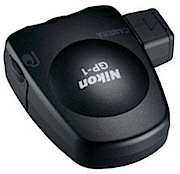
Nikon GP-1 GPSIn a fit of crazy shopping mania, I also ordered the Nikon GP-1 GPS from Amazon.com. This device, which can attach to the camera’s hot shoe, will automatically geotag my images. This will seriously reduce my geotagging workflow and ensure that all of my photos are properly tagged. I even coughed up the $4 for overnight shipping to get that today.

Once I get the camera and learn to use it, the ball will be in my court. No more excuses; I’ll have good camera equipment and should be able to take better photos. If I can’t — well, I’ll only have myself to blame.

It’ll be interesting to see whether this camera takes me to the next level as a photographer. I’ve got my fingers crossed.
So You Want to Be a Helicopter Pilot, Part 4: Choose a Reputable Flight School

Get what you pay for.

The quality of your training will be determined by your flight school. And believe me, you want the best training you can get.

Some Basic Tips

Here’s a bunch of tips for choosing a flight school; sadly, most of them are “don’ts” because of the kinds of marketing tactics some schools use:

  • Don’t be lured by ads for cheap training with promises of jobs at 300 hours of flight time. These schools are not interested in turning out quality pilots. They’re interested in attracting as many wannabes as possible to fill out their bottom line.
  • Don’t get fooled by schools that make verbal promises about hiring all graduates as flight instructors. A verbal promise isn’t worth more than the paper it’s written on. Many flight schools will tell you anything you want to hear to get you to sign up. Besides, wouldn’t you rather get trained at a school that chooses the best CFIs as instructors than the one who takes any CFI as an instructor? And do you really think they can hire all of their graduates? What happens when graduates hired as CFIs outnumber students? How many hours of flying will you get then?
  • Don’t look at the biggest or smallest schools. Look at schools somewhere in the middle. These are the ones where you’ll have the benefit of several CFIs on staff while still getting some level of personal attention.
  • Check into the experience of the training staff. Find out how many hours of flight time the chief flight instructor and some of the other flight instructors have. Find out whether any of them have real-life flying experience. Flight schools that offer tour and charter services also offer opportunities for their CFIs to get the kind of experience they’ll use in future jobs.
  • Once you’ve got the flight schools narrowed down to one or two, talk to some of the students and flight instructors there. See what they think. Try to get the contact information for one or two graduates who have moved on to see whether they thought their training at the school helped them succeed.

Don’t be lazy and take shortcuts here. Your future starts with your training. Do your homework. You’ll be amazed by what you learn.

Equipment

Learn to Fly Here SignThere are a lot of people who make a big deal over the kind of equipment used for flying. There are three basic helicopters used for training: Robinson R22, Schweitzer Schweizer 269/300 (which has a bunch of other names), and Enstrom F28F and 280FX. News flash: They’re all good.

The R22 is an extremely “squirrelly” helicopter. It really takes all of your attention to fly. Its two-bladed system makes it unsafe for aggressive or low-G maneuvers, but ground resonance is not an issue. Robinsons are widely respected and widely used in flight schools.

I can’t speak firsthand about the Schweitzer Schweizer since I’ve never flown one. I know that as a helicopter with a fully articulated rotor system, it’s capable of performing far more aggressive maneuvers than a Robinson. I’m not sure if that’s a good thing. It is susceptible to ground resonance. I have heard that its glide slope in autorotation is steeper than an R22 but can’t back that up with facts and figures.

I have flown an Enstrom and, in all honesty, I wasn’t impressed. The excessive vibrations really turned me off, but that could have been caused by the blades being out of balance or some other maintenance issue on that particular aircraft. It also has a fully articulated rotor system, but I can’t recall hearing anything about one getting into ground resonance. I don’t know enough about its flight characteristics to pass judgement on it.

Most pilots favor the helicopter they trained on. That’s true with me. Not only did I learn in an R22, but I owned an R22 Beta II for four years and put at least 1,000 hours on it. But who knows? If I’d trained in a 300, I might have all kinds of love for it instead.

I’m hoping that folks reading this who have more knowledge about the other two aircraft will comment on their experiences. (Warning: I will not allow an equipment-bashing comment thread to form for this post. Present facts about what you know; not hearsay about what you don’t.)

I certainly don’t think you should pass up a flight school because of the brand of its equipment. The age, maintenance quality, and condition is far more important. You want a flight school with its own hangar and maintenance facility. You might even want to take a look at it to make sure it’s relatively neat and clean and the mechanics look like they know what they’re doing. A place with friendly mechanics who are willing to talk to you when you have a mechanical problem or question will certainly help you get more out of your flight training.

There’s one other thing to keep in mind. Some flight schools have one or two turbine helicopters on hand that they use for charter work or even training. When trying to get you to sign with them, they might hint or even promise that they’ll give you a certain number of hours of turbine flight time. Get any promises in writing. It is not uncommon for flight schools to give students the impression they’d get turbine transition training in a package deal and then, for some reason, not provide it. Either the aircraft was down for maintenance or there were too many other pilots queued up for time in it or there was an additional fee that was never discussed. If a turbine aircraft is dangled like a carrot in front of you, get all the facts about flying it before signing up.

Beware of Package Deals

And that brings up the topic of package deals. My advice is this: Do not sign with a school that forces you to enter into a contract for all training and pay them a bunch of money up front. (This was also pointed out by Damien in comments for Part 2 of this series, which discussed funding your flight training.) You do not want to be contractually tied to any flight school (at least not without a contractual way out that won’t cost you anything) and you certainly don’t want them getting money upfront (beyond reasonable prepayments) for services yet to be rendered.

If there’s anything the Silver State debacle taught us, it’s that flight schools aren’t always around forever. If they fold with your money, you’re out of luck.

Equally important is that if you decide after a few weeks or months of training that you don’t like the flight school and want to continue training elsewhere, you have the freedom to do so. And believe me; this happens more often than you think.

Networking Potential

Keith, who has far more experience flying far more equipment in far more places than me, pointed out in comments to my earlier post about age:

I know several aspiring pilots who I have counseled about the helicopter business but I hesitate to recommend a school to them. My usual advice on schools has been pick the best ranked school that provides the greatest possible chance to get that first job.

It is a little discouraging to me to have to tell an aspiring career pilot that all the good grades, excellent flight reviews and mind numbing study may come to not if they don’t make that first job happen for themselves. Perseverance helps but choosing the right place to train and the connections and recommendations that come from certain schools and/or instructors might make all the difference. It is still a small industry where more positions are gained through personal recommendations and associations than any quantity of paper credentials. Your reputation in this industry begins at day one and for good or bad will follow you your entire career.

This is excellent advice for career pilots. I know of at least once school — now defunct — that had a terrible reputation for training. It got so bad that many employers would simply not consider any pilot that had that flight school listed on a resume. That’s a difficult hurdle to jump when you’re just starting out.

But I think what Keith’s saying goes beyond just choosing a flight school. I think it also has to do with how you represent yourself throughout training and your first few jobs. That’s attitude and I’ll cover that next.