Reason Triumphs

The Scopes III trial ends.

From the New York Times:

HARRISBURG, PA., Dec. 20 – A federal judge ruled today that it is unconstitutional for a Pennsylvania school district to present intelligent design as an alternative to evolution in high school biology courses because intelligent design is a religious viewpoint that advances “a particular version of Christianity.”

Thank heaven! (Pun intended.) I was beginning to think the country was regressing back to a 21st century version of the Dark Ages.

I have all kinds of respect for people’s religious beliefs. Religion is important to many people. It forms the bedrock of their personal belief systems and guides their everyday actions. But when religious beliefs contradict science, I’m on the side of science.

It doesn’t bother me to imagine that I’m the product of millions of years of evolution. It doesn’t bother me to know that one of my ancestors was a squiggly thing in the ocean and another was an ape-like creature that couldn’t stand quite upright. Science has produced all kinds of theories that make evolution feasible and there is enough evidence to satisfy me. Evidently, there’s enough evidence to satisfy a judge, too.

We should be teaching science in public schools, not religion. Religion should be taught at home and at church and at church-sponsored education, like Sunday School. Parents and religious leaders are better suited to answering questions about religion. Science teachers are better suited for answering questions about science. It makes sense.

Of course, I do have a good friend who believes that the earth is only 7,000 years old. (I think that’s his number.) It doesn’t matter that there’s all kinds of scientific evidence to prove that it’s billions of years old. My friend says 7,000 years and he truly believes it. That’s part of his religion. And who am I to tell him he’s wrong?

Not a science teacher.

Anyway, I’m not surprised that the trial ended the way it did. It makes sense to me. But Mike said tonight at dinner that he was relieved. Relieved? How could it not end on the side of reason? How could a government built upon separation of church and state settle for anything less?

A Trip Back East

Some photos from a trip back to New Jersey and New York for the Thanksgiving Holidays.

I didn’t want to go, but Mike talked me into it. Then we made flight reservations before I could change my mind. It would be a short trip. I’d fly out on Wednesday and return on Saturday. Only three nights, and those would be made comfortable with a room at the Glenpointe Marriott in Teaneck, NJ. Dinner with my family at my brother’s house in New Jersey on Thursday, dinner with Mike’s family at a restaurant in Queens on Friday, Dim Sum with family and friends in Ft. Lee, NJ on Saturday morning.

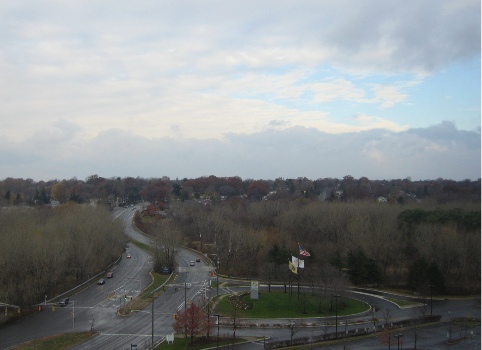
The New York/New Jersey metro area where I grew up and lived most of my life is very different from Wickenburg, AZ, where I live now. So different that I decided to take some photos to try to document some of the differences. I could have done better, but this is what I’ve got to share. This is the view from our hotel room in Teaneck, NJ, on Thursday morning. It had snowed and rained during the night and it was bitter cold that day.

This looks out to the southwest. As you can see, there are lots of tall trees, but they’re pretty much bare in late November. The overall effect is gray. A gray day with gray skies, gray trees, and gray pavement. I hated the gray of the New York metro area in the winter months. But it was the cold that finally chased me out of the area.

Photo

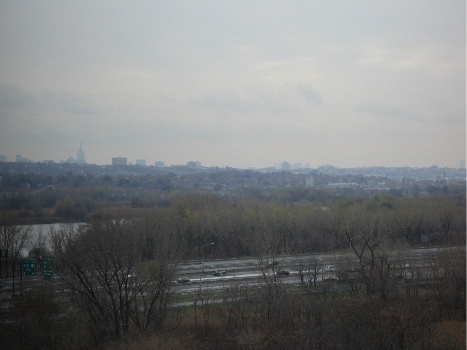
Here’s another look from our hotel room window. This view looks toward the southeast. The highway in the foreground is I-95, which stretches from Maine to Florida. The body of water is some marshland that might just be close enough to the Meadowlands to be considered part of it. The gray buildings poking into the gray sky are the skyscrapers of New York City off in the distance. The pointy one on the left is the Empire State Building, which is now the tallest building in New York again. It formerly held that title from 1934 to 1977, when the World Trade Center was completed. With the WTC gone, this depression-era building is once again the tallest in the city.

Photo

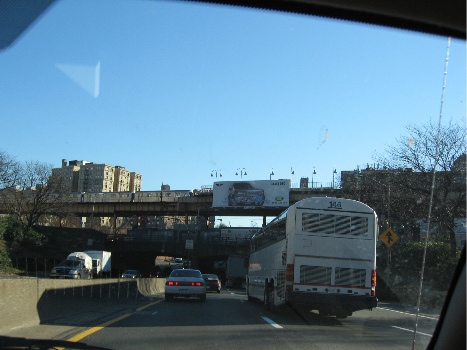
On Friday, we drove to Queens. Here’s a snapshot taken on the Cross Bronx Expressway, which goes from the George Washington Bridge (on the Hudson River), across the top of Manhattan and the middle of the Bronx, to two of the bridges to Long Island: the Whitestone and the Throgs Neck. When I was growing up, this area of the Bronx was filled with burned-out building shells, and we’d often see broken-down or abandoned cars being stripped on the side of the road as we drove through. But the buildings have they’ve since been renovated and people live there once again. Don’t get the idea that this is an up-and-coming area of New York, though. It’s still a poor, crime-ridden area. Ever read Bright Lights, Big City?

Photo

I forgot to take photos the day before, on the way to my brother’s house. We took the New Jersey Turnpike (I-95 down) and there are lots of weird scenic things along that, like the big gas tanks that appeared in a scene of Stephen King’s The Stand and Newark Liberty International Airport. Next time.

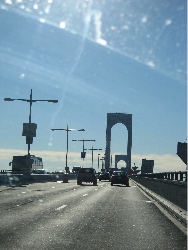
Here’s a pretty poor photo of the roadway on the Whitestone Bridge.

Photo

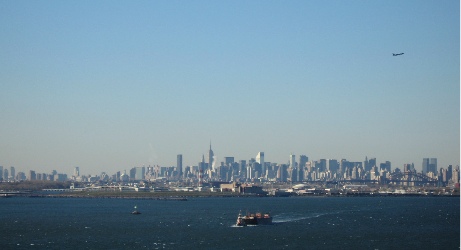
There are three bridges that’ll get you from the Bronx to Queens and Long Island and they’re all pretty similar in appearance: single-span suspension bridges. The Triboro Bridge has some nice art deco touches that make it my favorite of the three bridges, but that one’s much closer to Manhattan, which was out of our way. The Throgs Neck bridge has great views of the Long Island Sound which, in the summer, is full of sailboats and very picturesque. Of course, the Whitestone Bridge does offer the best long-distance views of Manhattan. I took a bunch of photos and this one was the best. It really gives you the flavor of new York from a distance. The tugboat with barge in the foreground, the plane departing La Guardia Airport (out of this shot on the left), and the huge cluster of buildings in midtown Manhattan. You can clearly see the Empire State Building almost dead center and CitiCorp Center (look for the slanted roof to the right). Astoria, Queens is in the foreground, on the other side of the water. And you can just about see the heavy black bridge of the train trestle that parallels the Triboro Bridge. If the World Trade Center were still standing, its towers would appear to the far left in this photo.

Photo

If you’ve never been to New York and you have the opportunity to visit, don’t pass it up. New York is like no other place on earth. As I was telling a Phoenix cab driver just the other day, it’s one of the few U.S. cities that blend old and new in a way that leaves you breathless. Go downtown, to the Wall Street area, and see exactly what they mean by the “Canyons of Wall Street.” The streets are so narrow and the buildings are so tall that light rarely gets down to the street. Although midtown has more tall buildings, the streets are a bit wider. You won’t believe the crowds walking the streets during a weekday lunch hour, the sea of yellow cabs, the bicycle messengers, the street vendors. This time of year, they’re roasting chestnuts near Rockefeller Center and steam is rising from manhole covers and vents on the street.

I do love New York, but I don’t have enough money to live there the way I want to. And New York is one of the grayest places I know.

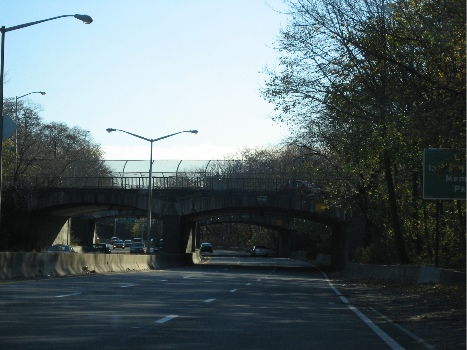
We didn’t get into the city during this trip. Next time I go back, I’ll take some photos. But you might have to wait a few years. Once in Queens, we hopped on the Cross Island Parkway to go to Mike’s Mom’s apartment. I took this shot out the front window of the car. It’s an interesting example of one of Robert Moses’s parkways. He built them all over Long Island — Queens is on the eastern end of Long Island — and this was probably one of his first. One of the trademarks of his roadways was his stone overpasses. They all look pretty much the same, but they’re really nicely executed. When you look at this photo, it’s hard to imagine that tens of thousands of people live within a mile of where it was taken.

Photo

This stretch of roadway is sunken in and surrounded by trees. Mike and I had our first apartment together about 5 miles further down this road, in Bayside. We had a wonderful view of Littleneck Bay (you’ve heard, perhaps, of Littleneck clams?), but had to listen to a never-ending stream of cars going by far beneath our terrace.

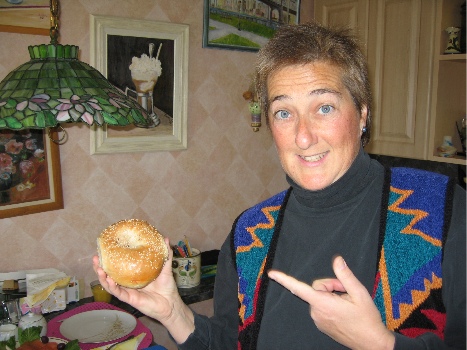
At Mike’s mom’s place, we had bagels for breakfast. This is a photo of me holding a real New York bagel. Notice that it is large and plump. The outside is crusty and the inside is moist and almost doughy. It doesn’t have blueberries or cranberries or any other type of berry in it. This one has sesame seeds (my personal favorite), but they also come plain, egg, poppy seed, salt, pumpernickel, onion, cinnamon raisin, or everything. Everything means seeds, onion, and salt and is a real assault to the taste buds. A common way for a New Yorker to eat a bagel is to slice it open and toast it, then cover each half with cream cheese and slices of lox (smoked salmon). Some people add red onions, capers, and/or tomatoes. (I don’t like tomatoes on my bagels.) A quick spread of cream cheese is referred to as a “schmear” in New York; I prefer a more generous helping. You can’t get a good bagel anywhere outside of the New York metro area, although you can get decent ones here and there. Einstein Brothers makes a decent bagel. Bagels do not come in the grocery freezer section; anything you find there that is labeled a bagel is a mere imitation.

Photo

The next time you go to New York, have a bagel as described above. It’s part of the New York experience and should be required for all serious visitors. And, while you’re at it, take a ride down to the Lower East Side and have a corned beef, pastrami, and tongue on rye sandwich at Katz’s Deli. Get that with mustard. Do not ask for it with mayonnaise; you will be forcibly removed from the premises and publicly laughed at out on the street. A Dr. Brown’s Creme soda is a nice accompaniment — and don’t forget the kosher pickle. Leave the Carnegie Deli for the tourists. What you’ll learn — among other things — is how to properly make a sandwich. There should be more meat than bread. That’s something they just don’t get outside the New York metro area.

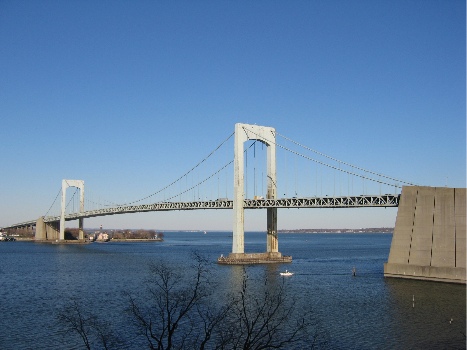
But I digress, again. This is a photo of the Throgs Neck Bridge, taken from Mike’s mom’s patio. She’s on the 7th floor and has a nice view out this way. Beyond the bridge is the Long Island Sound. Imagine it with lots of sailboats and you’re imagining the view on a summer Sunday afternoon. Put some green leaves in the tree in the foreground to complete the picture.

Photo

As you can see, it isn’t always grey in New York in the winter. Friday was a very nice day, although it was still bitter cold, with temperatures in the 30s and enough wind to make it feel a lot colder. Of course, it did get gray again on the next day.

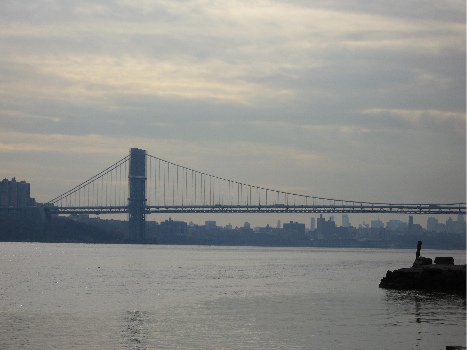
Here’s a look at the George Washington Bridge from the foot of the Palisades. The Palisades, in case you’re wondering, are a line of cliffs along the Hudson River in New Jersey. This photo was taken from a boat basin/park area almost directly across the river from the northernmost end of Manhattan. The view is to the southeast.

Photo

The GW Bridge has two decks — upper and lower — and is a major route between New Jersey and eastern New York. It’s actually the first bridge you get to if you sail up the river from New York Harbor. The next bridge is the Tappan Zee, which is at least 20 miles further upriver. To cross the river closer to downtown Manhattan, you can use one of two tunnels: the Lincoln (midtown at around 30th Street) and the Holland (downtown at around Houston).

When I was growing up in New Jersey, my family had a small boat that we used to take out in the river. I’ve been around Manhattan by boat more times than I can count. It’s a neat trip that you can do on the Circle Line tour boats. We also took a few perilous trips into New York Harbor and around the Statue of Liberty. I say perilous because our boat was really small and the water can get rough out in the harbor. I also remember going past Ellis Island long before it was fixed up and opened to the public. I’ve never been on the island, though.

Anyway, all those boat trips started at the base of the George Washington Bridge, on the New Jersey side. I can still remember the smell of the water at low tide, and the look of all those exposed barnacles. And the way the boat floated up and down as it was loosely tied at the boarding area. We didn’t swim in the river back in those days — it was too polluted south of the Tappan Zee — but we did fish in it, although we never ate any of the fish we caught.

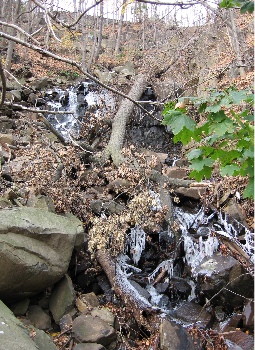
Here’s a shot of one of the “waterfalls” coming down the Palisades to the Hudson River. It’s really probably just runoff from a storm drain, but when we were kids, it was a waterfall and it was one of the most beautiful things we’d ever seen. My family often drove along the river’s shore road on Sunday outings. That’s back in the days when taking a drive in the family car was a cheap and fun day out. There were no malls, no computer games, no cell phones. We’d get in the car and go for a drive and drink up everything we saw out the window. If it was autumn, we’d go to a place called Tices Farms, which had apples and doughnuts (note the spelling) and cider and pumpkins for sale. When I got out of the car to take this photo, the smell of wet leaves brought me back to a time when we would rake them into huge piles and take turns jumping in them. Leave stems would stick in our sweaters and hair and we’d be breathless in the cool autumn sun. I don’t know if you can see it clearly, but there’s ice in the water in this photo. We’re talking cold enough to make a waterfall freeze. Cold.

Photo

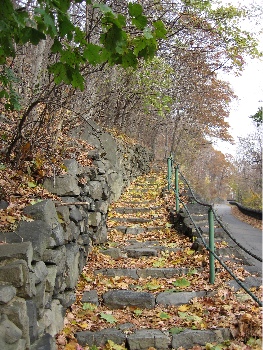
The Palisades area of Bergen County in New Jersey is one of its more historic areas. Originally settled by the Dutch in the 1600s, it was a hotbed of activity during the Revolutionary War. Posted alongside roads all over the area are “Washington’s Retreat Route” signs. Yes. This is the area George Washington retreated from when we weren’t doing very well in the first war with the Brits. Why we need that on signs is beyond me. But the area is also full of walking trails that were probably built during the depression. In more than a few places, you can find stairways and paths that climb the Palisades. This is one example, that follows the road for a short distance before cutting right up the cliff. We did a lot of hiking in the area when we lived there. The views from the top of the Palisades are magnificent.

Photo

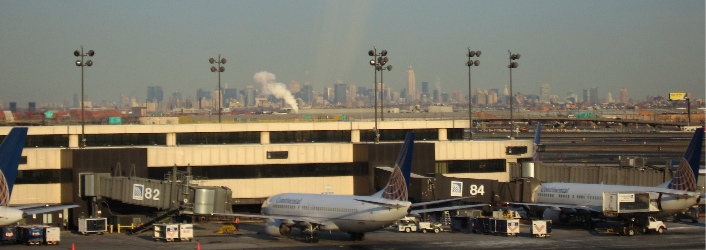
I took the shot that appears below from the AirTrain that travels around Newark Airport. That’s New York in the background.
Photo

This photo reminds me of a visit by one of my editors when we still lived in New Jersey. I picked him up at the airport and was driving north along the New Jersey turnpike toward our house. He looked off to the right as we climbed a bit of highway that passed over the marshes at the Meadowlands and said, “What city is that?” He was looking at New York. That’s when I realized that the skyline I’d grown up with wasn’t nearly as familiar to everyone else.

Am I homesick? Maybe a bit. Would I go back to live there again? Nope.

Been there, done that.
The Weather

It’s all relative.

One of the reasons I left the New York City metro area years ago and moved to Arizona was the weather. The winters in the New York area were just too darn cold. I recall getting ready to go to work one winter morning and glancing out the window at the thermometer to find it reading -7°F. (That’s -22°C for you metric folks.) There was an icicle hanging from it.

The winters were gray, too. By November, the trees would be bare and their trunks and branches were gray. The sky was gray. When it snowed, the snow turned gray. Even the grass seemed gray. It would stay like that until May when the trees budded up again.

One year, it snowed not long after New Years and there was snow on the ground for a full two months. Gray snow.

I don’t like cold weather and I found the gray depressing.

So I moved to Arizona. Winter days here in Wickenburg are quite mild — often warm enough for a T-shirt. Winter nights are cold, sometimes getting down into the mid 20s. The desert depends on the sun for heat and the sun doesn’t disappoint. It’s sunny most days. When the sun sets, the temperature can easily drop 20°F in less than an hour.

The sun does its work only too well in the summer time. It gets hot. Hotter than I bargained for. Hotter than hell for at least two months out of the year. Don’t be lured to Arizona by cheap hotel rates in July and August. Even the people who live here wouldn’t come here then.

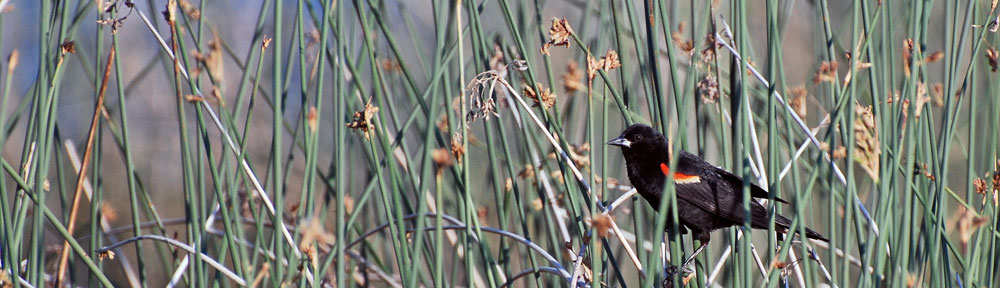
Arizona SunriseYesterday and today, it was overcast. It’s been making great sunrises (like the one in this photo, taken out the front of my house this morning) and sunsets.
Today it actually rained.

Rain is a big deal in Arizona. We can go literally months without any rain. This was probably the first rain in at least a month.

For the past two days, the sky has been gray. I’m glad, though, because the sky is blue and clear so often that gray makes a nice change. Everyone I spoke to today pretty much felt the same way. “I hope it rains,” one main said, looking up at the sky.

It had already rained once, but that’s never enough. In Arizona, we hope it rains all day long.

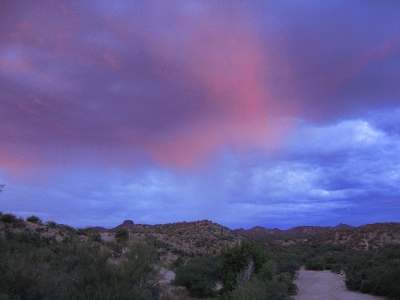
Arizona SunriseYou can hope for rain all you want in Arizona because you’re not likely to get it. Sometimes, when it rains, the air is so dry that the rain dries up before it hits the ground. You can actually see it falling under the cloud, but it disappears before making anything wet. The phenomena is called virga and I think I’ve seen enough of it to last a lifetime. You can see some in this picture, looking pink because of the rising sun. (This picture was taken out my back door yesterday morning.) Sometimes you can actually smell the rain and still not feel a drop. What a tease that is.
The rain does have an interesting smell here. Not at all like back east and nothing like the ocean. Mostly, it’s the smell of the creosote bush. I think it’s the smell of the rain that I like the most. Last night, we slept with the bedroom door open to the patio. This morning, the rain smell was the first thing I noticed. Nice.

Is it possible for the weather in a place to be too nice? I think so.

When you look forward to a rainy day just to have a break from all the good weather, I think that’s proof enough that you’re getting too much of a good thing.

Back to the Desert

Day 13 brings me to the mountainous desert around Salt Lake.

Despite my less than perfect accommodations, I slept reasonably well. I think it’s because of the sound of flowing water that came in through the door to the back deck. I’d left the door open a few inches, trusting the lock on the screen door to keep out any hotel guests who might be wandering around on the deck. I was in the end room, so the chance of someone walking by my door on their way to another room was remote.

I showered. It was the first motel shower I’d encountered in a long time that couldn’t keep a steady water temperature. Every time one of my neighbors flushed the toilet, I’d come close to getting scalded. The third time this happened, I shut the water off and called it quits.

I packed up the car, checked out, and headed south on 89. I had a Doubleshot to meet my caffeine needs. (My friend Lorna, who has been reading these entries faithfully from her home in Maine, e-mailed me to ask what a Doubleshot is. In case you don’t know, here’s the scoop. A Doubleshot is a canned Starbucks coffee drink. It’s an easy way to get a caffeine fix when I’m on the road. I usually buy a couple of them when I’m in a supermarket and keep them in my cooler. When I can’t find decent coffee elsewhere, I drink a doubleshot. I don’t really like them — they’re too sweet for my taste — but they’re easy.)The road began by following the Snake River through a canyon. When it reached the town of Alpine, WY, the Snake River curved to the northwest while I headed south. Alpine was a nice little town with a lot of tasteful new construction and small businesses. The town was very quiet — it wasn’t even 8 AM yet. I almost passed a drive-up coffee stand. When I spotted it, I hit my brakes hard and pulled in for a latte.

The building was tall and it was quite a reach up to the woman inside it. My Clarkston reused coffee grinds experience had left me a little leery of coffee stands, but I had nothing to worry about here. The woman, who was very friendly, made me an excellent large triple latte. I asked her whether she owned the booth and she told me she didn’t. In fact, it was her last day at work. She was moving back to Spokane, WA. The woman who owned the booth was doing okay, but it was hard to do well in the town because of its heavy Mormon population. I later discovered that Mormons don’t drink coffee. I guess a coffee shop in a Mormon town would be like opening up a pork store in New York’s Lower East Side.

From Alpine, I headed due south on 89, which lies on the east side of the Wyoming/Idaho border. I was in farmland again, but at an elevation well over 5,000 feet. Wheat and alfalfa seemed to be the big crops. One alfalfa field had just been cut — probably the previous day — and the smell of the fresh alfalfa was rich and sweet.

I think I was in Afton when I saw the car wash and pulled in. I’d managed to call Megg on my cell phone and arrange to go to her house in North Salt Lake City that afternoon. My car was dirty and I didn’t want to make a bad impression. So I washed it for the third time on my trip. This time, it was the dirtiest it had been so far. The bug situation in Idaho, Montana, and Wyoming is bad and the front of the car was pretty much plastered with dead bugs of all shapes, sizes, and colors. It took six minutes worth of car wash time to get it all off. I dried it with my rags and dusted off the dashboard. Much better.

I crossed into Idaho at Geneva Summit, which was 6,938 feet. That put me into a long valley with a succession of towns: Montpelier, Ovid, Paris, St. Charles, Fish Haven, and Garden City. Every town I drove through was remarkably quiet — nothing seemed to be open. Except the church, of course. All the church parking lots were full and I saw more than a few well-dressed people out on the streets, walking to or from church. Things changed a bit when I got near Bear Lake. Lots of people were out and about at the lake, in boats and in public access areas. There was a lot of housing on the lake side of the road with plenty of Private and No Beach Access signs to keep people out.

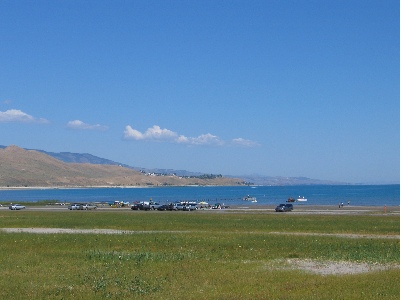
Bear Lake

Somewhere between Fish Haven and Garden City, I passed into Utah, the ninth state I’d visited on my trip. At Garden City, I got on route 30 and followed that around the south end of the lake. I climbed a hill and immediately realized that I had slipped into high desert terrain. The vegetation on both sides of the road consisted of tall grass, sage, and a variety of other desert plants. I was getting closer to home, leaving the water wonderland I’d enjoyed since entering Oregon more than a week before. I felt disappointed and did not look forward to what I’d drive through ahead: dry desert, hot sun, empty riverbeds. I realized that I’d fallen out of love with the desert.

I turned right on route 16 with a bunch of other cars, heading southbound. More farmland, but not much more. I passed the bunch of cars, tired of breathing their exhaust. Later, I turned right again onto route 39, heading west. The road climbed and climbed and climbed. I kept checking my GPS for elevation information and the number kept going up. I was certain that when I reached the top of the mountains, there would be a lookout where I could see Salt Lake. I crossed over the Monte Cristo Summit, at 9000 feet, and started down. There was no lookout. The road dropped into a canyon with a small stream on either side. It twisted and turned as it descended. I passed two pickup trucks and some kind of Volkswagen — a Jetta, maybe? — blew past me.

I spotted a restaurant on the left and made a harrowing turn into a parking space. I needed a bathroom and lunch, in that order. I asked for them in reverse order. It would be a 20 minute wait to eat outside on the patio, which looked like a good place to eat. I got directions to the ladies room and while I was doing my business, decided I didn’t feel like waiting. Instead, I’d find a shady spot in a park and eat some of the food in my cooler. So I left and continued on my way.

Trouble was, there was no shady spot in a park. All I passed were campgrounds, and since it was Sunday at midday, all of the campgrounds were full. So I kept driving.

The road dumped me down in Ogden. I got on a main avenue that was also labeled route 89 and headed south toward Salt Lake. I wasn’t in a hurry. I was supposed to meet Megg at around four and it was only 1:30. That meant I had time to kill.

I should have killed time up in Ogden, because when I got closer to North Salt Lake, all of the shops and businesses were closed again. It would not be a good place to kill time. I drove all the way down to the city, then came all the way back up to Bountiful, where I found a Barnes and Noble that was open. I killed over an hour in there, buying books for myself (as if I needed them) and for Megg’s son, Cooper. Then I hopped over to the Taco Bell for a bite to eat. Then I drove around some more. It was around four and I was in a Smith’s parking lot, after buying two pies for Megg and her family, when I finally connected with Megg. I was five minutes from her house. She gave me directions and I made my way over there.

Megg is one of my editors. She works with me on my Quicken Official Guide books, which I’ve been revising faithfully since the Quicken 99 edition back in 1998. Megg hasn’t been stuck with me that long. She inherited me from my first editor on that book, Joanne, about five years ago.

Megg has a lovely and very large house on a hill overlooking the North Salt Lake area. Excellent views, plenty of space. And a very comfy guest room. I met her son and her husband. I then proceeded to join her for a very relaxing afternoon and evening.

Living Will

I pass along something amusing (and rather sad) to readers who think.

This morning, I got an e-mail from my cousin Kathy who lives back in New York. Kathy teaches school and is one of the family’s more thoughtful members. (Sadly, she’s related by marriage, so it doesn’t help us score points in our bloodline.)

Kathy often passes on funny things she receives via e-mail. Unlike a lot of folks who forward stuff to me, the ones I get from Kathy that aren’t related to menopause or the stupidity of men are often quite well written and funny. This one was like that. I want to share it with readers here.

Sadly, I don’t have a by-line for the piece and don’t know who wrote it so I can’t include credit for it. I did not write it. If anyone out there knows the original author of this piece, please let me know. And obviously, since I respect copyright, if the author has a problem with me sharing this, he should contact me so I can remove it. Frankly, if I’d wrote it, it would be…well, right here. And I’d be proud to put my name on it.

That said, here it is. Read it and think.

Below is an example of a LIVING WILL you may want to draft in light of recent events:

* In the event I lapse into a persistent vegetative state, I want medical authorities to resort to extraordinary means to prolong my hellish semiexistence. Fifteen years wouldn’t be long enough for me.

* I want my wife and my parents to compound their misery by engaging in a bitter and protracted feud that depletes their emotions and their bank accounts.

* I want my wife to ruin the rest of her life by maintaining an interminable vigil at my bedside. I’d be really jealous if she waited less than a decade to start dating again or otherwise rebuilding a semblance of a normal life.

* I want my case to be turned into a circus by losers and crackpots from around the country who hope to bring meaning to their empty lives by investing the same transient emotion in me that they once reserved for Laci Peterson, Chandra Levy and that little girl who got stuck in a well.

* I want those crackpots to spread vicious lies about my wife.

* I want to be placed in a hospice where protesters can gather to bring further grief and disruption to the lives of dozens of dying patients and families whose stories are sadder than my own.

* I want the people who attach themselves to my case because of their deep devotion to the sanctity of life to make death threats against any judges, elected officials or health care professionals who disagree with them.

* I want the medical geniuses and philosopher kings who populate the Florida Legislature to ignore me for more than a decade and then turn my case into a forum for weeks of politically calculated bloviation.

* I want total strangers – oily politicians, maudlin news anchors, ersatz friars and all other hangers-on – to start calling me “Bobby,” as if they had known me since childhood.

* I’m not insisting on this as part of my directive, but it would be nice if Congress passed a “Bobby’s Law” that applied only to me and ignored the medical needs of tens of millions of other Americans without adequate health coverage.

* Even if the “Bobby’s Law” idea doesn’t work out, I want Congress – especially all those self-described conservatives who claim to believe in “less government and more freedom” – to trample on the decisions of doctors, judges and other experts who actually know something about my case. And I want members of Congress to launch into an extended debate that gives them another excuse to avoid pesky issues such as national security and the economy.

* In particular, I want House Majority Leader Tom DeLay to use my case as an opportunity to divert the country’s attention from the mounting political and legal troubles stemming from his slimy misbehavior.

* And I want Senate Majority Leader Bill Frist to make a mockery of his Harvard medical degree by misrepresenting the details of my case in ways that might give a boost to his 2008 presidential campaign.

* I want Frist and the rest of the world to judge my medical condition on the basis of a snippet of dated and demeaning videotape that should have remained private.

* Because I think I would retain my sense of humor even in a persistent vegetative state, I’d want President Bush – the same guy who publicly mocked Karla Faye Tucker when signing off on her death warrant as governor of Texas – to claim he was intervening in my case because it is always best “to err on the side of life.”

* I want the state Department of Children and Families to step in at the last moment to take responsibility for my well-being, because nothing bad could ever happen to anyone under DCF’s care.

* And because Gov. Jeb Bush is the smartest and most righteous human being on the face of the Earth, I want any and all of the aforementioned directives to be disregarded if the governor happens to disagree with them. If he says he knows what’s best for me, I won’t be in any position to argue.