I was dreaming of a white Christmas.
On the Friday before Christmas, Mike and I loaded up the truck with a bunch of things, including some furniture, food, tools, Jack the Dog, and Alex the Bird. At about 9 AM, we headed north, to our property at Howard Mesa.
In Wickenburg, it was raining. It was the first time there had been enough rain there to actually get your skin wet for at least a month. Part of me wanted to stay behind and enjoy the weather. But the other part of me knew that it was likely to clear up in an hour or two and I’d just be disappointed. We don’t get many good rainy days in the desert and Friday was not going to be one of them.
Our path took us up Route 93 to Route 89, through Congress and up Yarnell Hill. We stopped at the Cornerstone Bakery for some fresh baked goods to munch on in the car and enjoy on Saturday morning for breakfast. It was a freezing rain there, but nice and toasty in the bakery, which was filled with the usual collection of locals.
Back on the road, we took 89 through Peeples Valley, turned toward Kirkland at Kirkland Junction, got on Iron Springs Road in Kirkland, and followed that to the first traffic light in Prescott. Then Williamson Valley Road to the Pioneer Parkway to Willow Springs Road to 89A. In Chino Valley, we stopped at Safeway, where Mike filled the truck with diesel and I hurried through the store to get veggies and a few last-minute food items. By this time it was snowing pretty hard, with just enough wind to blow the flakes at about a 30° angle to the ground.
Back in the truck, we followed 89A to Ash Fork, where we got on I-40 eastbound. The snow was sticking up there, coating the road with a thin layer of snowy ice. Trucks and cars were taking it easy, preferring a self-mandated speed limit of 35 or 45 MPH rather than the legal 75 MPH limit. It was slow going, but I’m sure it was better that way. Alongside the road, a light dusting of snow covered fields and trees. It looked more like Christmas than it has in a long while for me.
At the exit for the Grand Canyon (the third exit, the one that’s really for the Grand Canyon), we got off and followed Route 64 northbound. There was a lot of snow on the ground there but very few vehicles. Still, we both felt relieved when we reached the turn for Howard Mesa and began our last five miles of the trip. 20 minutes later, we were pulling through our gate while the snow swirled around us.
The entire drive, including the two short stops, had taken about 4 hours.
Inside our camping shed, the temperature was hovering around 35°F — which was pretty much the same temperature as outside. Mike turned on the gas and I struggled a bit to get the heater turned on. He unloaded the car while I turned on the fridge and started putting things away. Jack the Dog immediately got to work terrorizing whatever small rodents had made homes in the fire pit outside. Alex hung out in the truck where it was warmer. He didn’t come in until the temperature had risen to nearly 50°.
My first main task was to clean up after our unwanted lodgers — the mice. The shed has a mouse problem that we’ve tried everything to solve. The last time we were there, we’d gotten desperate enough to leave poison around. I had to scoop up what remained of it (only one of four pieces) before Jack came in. Then I had to uncover the furniture and get the vacuum going to suck up the mouse droppings that seemed to be just about everywhere. I used a lot of disinfectant cleaner on the floor and countertops. I took my time about it — there really wasn’t any reason to rush; I had all day. I had my iPod sitting in the iHome base, playing Christmas songs. Within two hours, I was pretty much done.
In the meantime, Mike was working in the bathroom on the plumbing. On our last brief visit (by helicopter during snow showers), we had discovered that most of the pipes had frozen and cracked. Mike had brought along pipes and connectors and tools to replace the broken pipes with new ones. The job required that he cut away one wall to access the pipes and do a lot of disconnecting. There was no running water in the shed and wouldn’t be until the pipes were repaired. Even the 5-gallon water cooler jug was mostly frozen; I had to light a candle under its spigot to get the water to flow.
I made us a hot lunch of canned chili with scallions and cheese, then washed up using water I boiled on the stovetop. It reminded me of the old days at Howard Mesa, when we’d camped out in our pop-up camper. That camper was wonderful on warm summer nights, but it lacked basic conveniences, such as a refrigerator or toilet. We’d use the tiny two-burner stove to heat water in the morning for coffee and washing up. During the day, we’d use those solar shower bags to heat water for showering and washing dishes. (They really do work in Arizona; we once had the temperature of the water in one of those bags up to 110°F — too hot to shower in!)
After lunch, I went on mouse cleanup duty on the shed’s little loft, which is where we sleep when we camp there. I discovered a place where they might be getting in; I’ll work on closing it up this weekend. Outside, the snow was still falling lightly. Everything was covered with a dusting of it. Jack the Dog was still hard at work at the fire pit, with the fur on the lower half of his body soaking wet. Oddly enough, it wasn’t windy, even though the weather forecast had called for wind gusts up to 28 MPH. A low cloud hung over the mesa, cutting our view to only a few miles.
Before the end of the day, Mike had finished replacing all the cold water lines. He connected the hose from one of our water tanks to the shed’s water line, turned on the pump, and pressurized the system. That’s when he saw the cracks in the hot water lines. We turned off the pump and disconnected the hose, then let any water in the lines run out.
The sun went down and it got dark. We brought Jack in. I made leftovers from home for dinner. The heater, which had been set to 85°F, had gotten the temperature in the shed up to a high of 64°. It didn’t seem that cold. We settled down on the sofa with my 15″ MacBook Pro on a folding table in front of us. I popped in a DVD from the first season of 24. We watched two episodes. We’d heard a lot about the show but had never actually seen it. So I’d added it to my Netflix queue (along with the second season of Boston Legal) and we were checking it out for the first time. Not bad. I can’t imagine watching it with commercials, though.
I slept badly. It’s the stupid hot/cold/hot/cold middle-aged woman thing, combined with the sounds of sleeping someplace different. It was pretty quiet when we first got to sleep, but at about 3 AM, the wind finally kicked up, blowing from the west right at the loft’s only window. I’d left the window open a crack — I’m always worried about asphyxiation in a closed space with a gas appliance running — and Mike had to close it. Sometime during the early morning hours, the wind shifted around to the northeast, which is the back side of the shed. It wasn’t blowing hard enough to shake the building, as it sometimes does. Just loud enough to hear it rushing past in the piñon and juniper pines scattered over our 40 acres. The sky had cleared and there were billions of stars out.
In the morning, the temperature in the shed was 43°F with the outside temperature 28°. This was a problem. The heater was turned up, still set on 85°. As we moved around, making coffee and tea, washing up with water heated on the stove, we started finding drafty places. Around each window. Where the water heater sits against the outside wall. Around the edges of the door. I got my assignment for the day: caulk.
Mike decided he needed something from the hardware store to keep working, so we made a trip down to Williams, AZ. The town was remarkably busy for the time of year. I think it’s because the Grand Canyon Rail Road is doing a special “Polar Express” to the Grand Canyon each day and that’s attracting a lot of families. The town also sets up a real Christmas tree on side street off Route 66 and blocks off the street so visitors can walk around it. Nice.
We took care of business in the True Value hardware store, buying about $90 worth of stuff that included a new front door mat and weather stripping. Then we hit Safeway for a few things, stopping at the Starbucks counter on the way out for mocha lattes.
By the time we got back to the mesa, before lunchtime, a lot of the snow had melted. Mike got back to work and Jack continued his vigil at the fire pit. Sometime during the day, he started barking at something — we looked out the window in time to see an antelope hopping away across the road. One of the open range cows also came by, but since we’d kept the gate closed, she didn’t get into our property. (Cows have done a lot of damage at our friends’ place on the other side of the mesa, making us very glad we fenced in our entire lot years ago.)
Soup and sandwiches for lunch. The shed temperature was in the low 60s while it remained in the 30s outside.
I went through a whole tube of caulk on the windows. The shed was built with window frames that they’d stuck standard sized windows into. Unfortunately, the frames were about 1/2 inch too wide and tall for the windows, leaving a gap on at least two sides. They’d finished the outside of the windows with trim, closing up the gaps a bit, but they were still drafty. And one window leaked. I’d fixed the leaky window during the summer but had never thought that the gaps might cause drafts in the window. So I went to work with the caulk gun, which I’m actually pretty good at using. I ran out of caulk before I’d finished all of the windows, but I’d closed up the worst of the gaps.
Mike, as part of his pipe insulation procedure, had sealed up around the water heater with Fiberglas and foam insulation. I used garage door weather striping around the front door. The door was made to fit the shed and it doesn’t fit quite right. You can see light through the cracks around the door. Even with the thick rubbery weather striping, you can still see light in a few places. But it’s a lot better than it was.
Mike finished up all the piping by sunset. Hooked up the water again, ran the pump, and pressurized the system. No leaks. He turned on the water heater. I washed dishes from lunch. He cleaned up. Then he was ready for a shower.
Unfortunately, he’d waited too long. The outside temperature had dropped and the hose, which had never fully defrosted from the night before, had thickened up with ice. The pump was unable to bring in enough water. His shower was very short-lived. He stepped out, cranky and miserable. I was just glad I’d let him go first.
Getting water from the tanks to our camping equipment had always been a problem in cold weather. In the spring of 2004, I’d moved up to Howard Mesa in our horse trailer with living quarters, which also had a pump to get water from the tanks to the inside plumbing. Unfortunately, during the night the hose would freeze and the pump would try in vain to get the water out. That would run down the trailer’s battery and burn up the pump. So I had to turn off the pump each night and use the trailer’s internal water storage system for water. Not a big deal. Once every few days, I’d fill the internal tank so there was always water there when I needed it.
But here at the shed, we don’t have internal water storage. All the water has to come from one of the big tanks. The closest one is about 40 feet away. Because this is not a permanent setup, we didn’t dig a trench and put in a pipe. We use a hose. And the hose freezes every night, even though we do our best to drain the water out of it.
At least it hasn’t cracked yet.
Anyway, we spent Saturday night much the same way as Friday night. A nice hot dinner and two episodes of 24 on my MacBook Pro’s wide screen. The shed was much warmer — it had gotten up to 71°F by late afternoon. I slept well, waking about an hour before dawn. Outside, the moonless sky was bright with stars.
This morning, the inside temperature was 57°; outside it was 31°. I like to think it was my excellent caulking and weather striping that kept the shed reasonably warm overnight.
Today, Christmas Eve, I’ll finish cleaning up the shed — didn’t get much done in the bathroom with Mike making such a mess in there. Then we’ll put up the Christmas lights. Later, when it gets warmer, we’ll go for a walk around our fence line, making repairs and looking for castoff elk antlers as we go. It’s beautifully clear outside — I can see for at least 50 miles in every direction — and, as I write this at 10 AM, its already nearly 40°. It’ll be nice to get out. And I’m sure Jack the Dog is looking forward to a good run. He’s been going nuts every time the coyotes start howling nearby.
This afternoon, after a nice hot shower (got my fingers crossed), we’re going up to the Grand Canyon to meet some friends for dinner at El Tovar. Then dessert at our friends’ house on the other side of the mesa.
I’m looking forward to driving back to our place tonight, to seeing those red Christmas lights all alone in the middle of nowhere.
[composed on top of a mesa in the middle of nowhere with ecto]

 Get More Organized. I am organized, but not nearly enough to keep my mind from getting stressed out when a bunch of things need doing. Mike bought me a copy of Getting Things Done: The Art of Stress-Free Productivity by David Allen. (From my Amazon.com wish list.) I started reading it last night and have already learned a lot of tips for handling the outrageous number of tasks that face me every day. I’m hoping it will help me become more organized so I can live life with a cleaner desk and a clearer idea of the tasks I need to complete daily.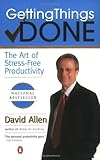
 It’s a Banded Leporinus and when I bought it, it was only about an inch long. With black and yellow stripes around its sleek body, I thought it was an attractive addition to my fish tank. Unfortunately, it liked to hide in the 55-gallon tank it shared with other fish (much like the incredible
  By the time I got my old 20-gallon tank set up for his new home, he had just one neighbor left. I managed to catch him and put him in the new tank. He was not a happy camper. He kept bashing himself against the tank walls. Finally, he settled down in a natural “cave” I’d created for him by stacking a few rocks with a big rock over the top. And that’s where he is to this day, two years later. (And yes, I realize that a fish this size needs a much larger tank to survive in, but I’m not about to let him have my 55-gallon tank for himself.)