2014: A Look Back

Moving forward, looking ahead.

2014 is over. It was a good year for me. Not my best, but certainly one that finished on a very positive note. A year I can look back on and be proud of what I learned and accomplished, a year that marks the successful end of a long and bitter battle to keep what’s rightfully mine.

The Journal
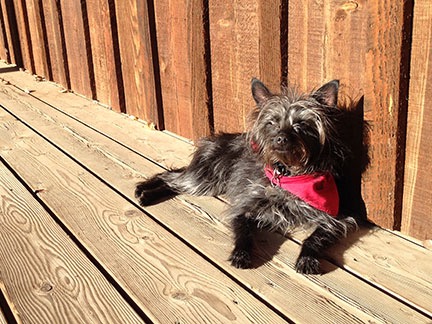
Penny on the Porch
Penny the Tiny Dog lounges in the morning sun on the wrap-around porch of the house we spent the winter in.

I kept a journal for much of the year. I started it on January 1, 2014, when I was housesitting for a neighbor who was gone for the winter. He had a wonderful home and I was fortunate to be able to spend nearly three months in its comfort. Having the space to entertain friends helped me build stronger bonds with people I’ve met since relocating permanently here in Central Washington State in late May of 2013. And it was a hell of a lot warmer than my RV would have been.

This was the first time I kept a journal for any length of time. You might argue that this blog is a journal — and it is, to a certain extent. But while my blog posts cover a wide range of topics and often go into wordy detailed descriptions, my journal is brief. I wrote in it every morning throughout the spring, set it aside during the summer, and then opened it again in the fall. I wrote my last entry in the 2014 edition this morning and will start my 2015 book tomorrow.

Each entry is limited to one double-sided page, forcing me to keep things brief. I often refer to blog posts for more detail. My journal entries include a lot of thoughts and feelings that I don’t include in my very public blog. 2014 took up 1-1/3 blank books. Red ones — I really do like red. 2015’s first book will be black because that’s the color I found on sale.

The benefit of this and other journals I’ve kept in the past: I can go back and refer to them to see what was going on during a specific time in my life. This is especially important these days, when I’m trying so hard to discard painful memories from my wasband’s betrayal and the very bitter divorce that followed it. Writing things down gets them on paper and out of my head. Later, when I’m fully healed, I can go back and revisit them with the 20-20 vision of hindsight.

I’ll consult that journal as I write up this year in review.

Travel

I didn’t do much traveling in 2014, although I really enjoyed the few trips I took.

The big trip was to California’s Central Valley. For the second year in a row, I had a frost control contract with the helicopter. Unlike the 2013 contract the 2014 contract paid a much higher standby fee but required me to live in the area with the helicopter. So just as I’d moved the helicopter and my RV seasonally to Washington state for cherry drying when I lived in Arizona, in February 2014, I moved the helicopter and my RV to the Sacramento area of California for frost control.
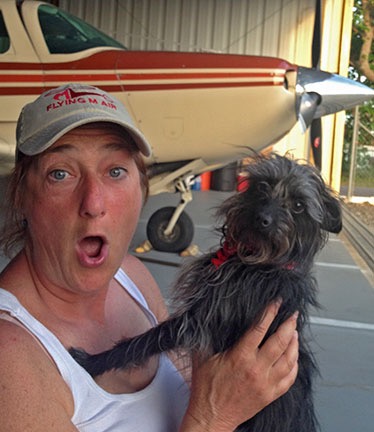
Hamming it Up
Penny and I, hanging out at George’s hangar at the airport.

I made some new friends down there — it’s amazing how easy it is to make friends when you’re alone and don’t have to humor a companion who doesn’t seem interested in meeting anyone new. George, a fellow pilot, and Becky, who managed the airport where Penny and I lived, became part of my life for the two months I was there. George and I spent a lot of time flying both his gyroplane and my helicopter. We took my helicopter out to San Carlos Airport for a test flight in an Enstrom 480 and a visit to the Hiller Aviation Museum, where we got a great private tour.
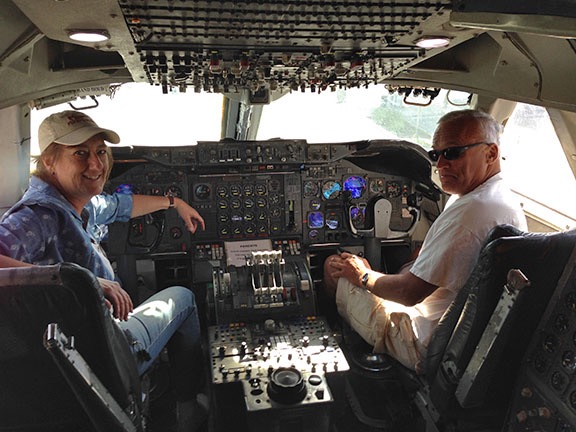
Maria and George in the Cockpit
Here I am with George, sitting in the cockpit of a 747 on display at the Hiller Aviation Museum.
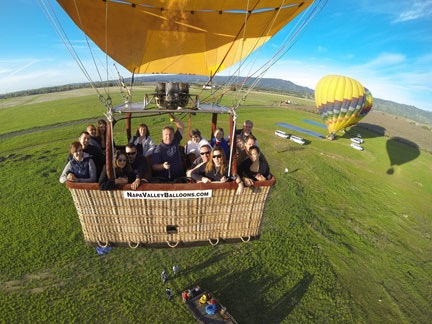
Hot Air Balloon
The hot air balloon flight comped to me by the pilot was one of the highlights of the trip. I hope to return the favor this spring when I go back.

Other things I did in California: during February, March, and April: hot air balloon flight over the Central Valley, wine tasting with visiting Washington friends in Napa Valley, several “joy flying” flights over Napa Valley and the Sutter Buttes, whale watching at Point Reyes, a visit to Muir Woods, kayaking with the members of the Sacramento Paddle Pushers group in the American River, paddling at Lake Solano, and a visit to the food truck extravaganza in downtown Woodland. I also got to see my friend Rod, who lives in Georgetown, and Shirley, who lives in Carmichael. I really like the area I stayed in and hope that this year’s contract lets me base the helicopter at the same airport.
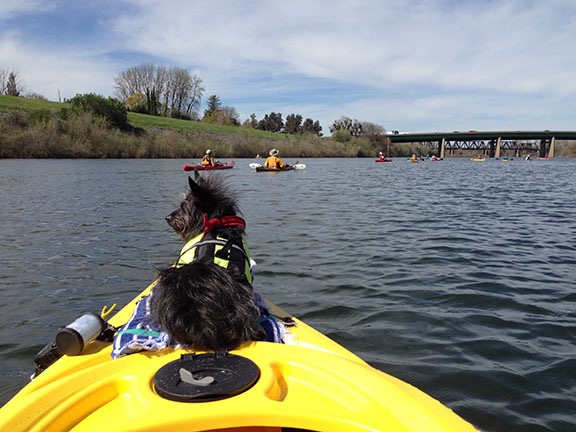
Penny on the Kayak
Penny keeps watch in the kayak’s bow as we head back down the American River in Sacramento with new friends. Not sure why I didn’t blog about this trip; I have tons of photos to share.

I went to the Santa Barbara area of California three times in 2014 to record courses for Lynda.com. In February, I took Penny with me and recorded Up and Running with Twitter, a brand new version of my extremely popular Twitter course. I went back in May, without Penny, to record Word 2013 Power Shortcuts and Up & Running with Meetup. I returned yet again in October to record Word 2013: Creating Long Documents. The first time, I stayed at a hotel in Carpinteria that I didn’t particularly care for. But on the next two trips, I stayed at my preferred hotel on the harbor at Ventura in my “usual room” with harbor view and jacuzzi tub. I really enjoy my trips to Lynda. I work extra hard while I’m there so I finish early and get to enjoy a day at the beach.
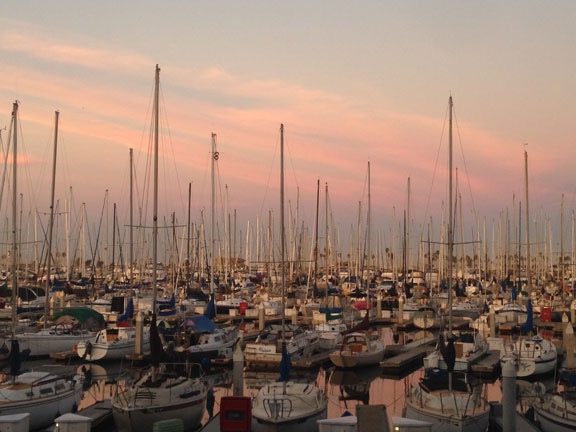
Harbor View
The view from my usual room in Ventura isn’t too shabby.

I got to visit the San Juan Islands twice this year. The first time was for a week-long vacation at my friend Steve’s house on Lopez Island. I blogged extensively about that great trip. The second time was for the Thanksgiving holiday weekend with my friend Bob at Friday Harbor, which I also blogged about. I really like the islands but could never full-time live on that side of the Cascades: too much dreary weather. I was lucky at Lopez Island; the weather was very good all week.

My final trip of the year was my annual Christmas trip to Winthrop for cross-country skiing in the Methow Valley. I haven’t blogged about that trip yet but I hope to find time to do so. The Winthrop/Mazama area is the largest cross-country ski area in the country, with hundreds of miles of groomed trails. I feel extremely fortunate to have such a great place to ski only 100 miles from my home.
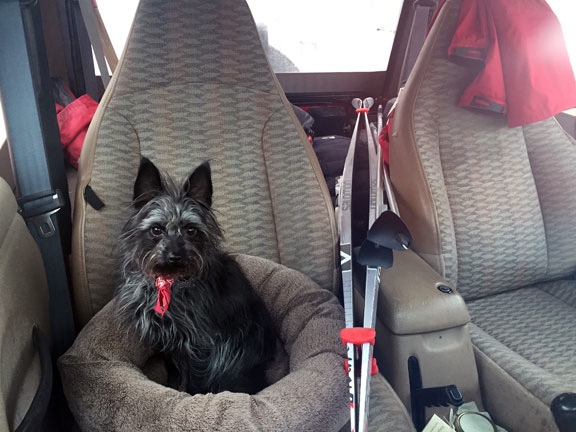
Off to go Skiing
Penny and I went skiing over the Christmas holiday for the second year in a row.

Trips planned for 2015 include Arizona and California this spring. My autumn and winter travel schedules are still up in the air.

The Big Project
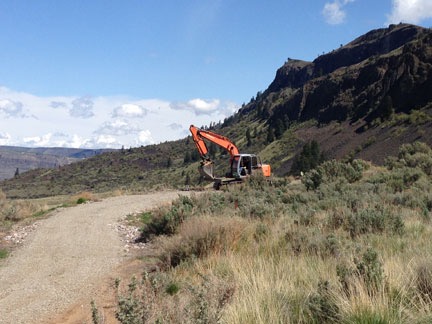
Backhoe
Jeff of Parkway Excavating rolled down my driveway on April 24 to begin prepping the building pad.

When I returned to Washington after frost season, I started the biggest project of my life: the construction of my new home. Earth work on my lot began in April and construction began soon afterward, continuing through the end of June. The building, which would house all of my possessions — including my helicopter, RV, Jeep, Honda car, and Ford truck, jet boat, motorcycle, and ATV — is a pole building I designed with the assistance of the good folks at Western Ranch Buildings in East Wenatchee. With a total of about 4,000 square feet, 1,200 of which is dedicated to living space, it features a four-car garage, an RV garage big enough for my helicopter and fifth wheel RV, a shop area, comfortable one-bedroom home, and a wrap around deck with windows to take in the amazing views of the Wenatchee Valley.
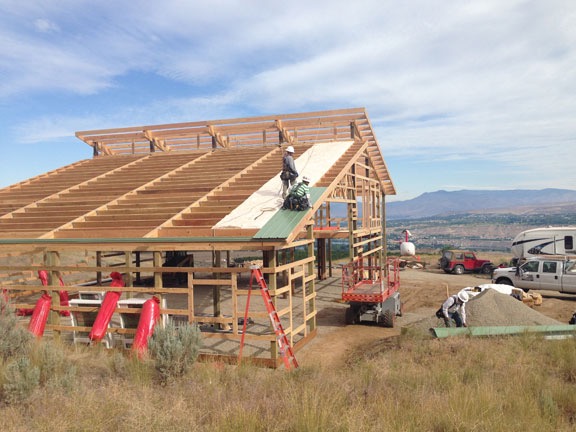
Roofing
They began roofing the building on June 10.
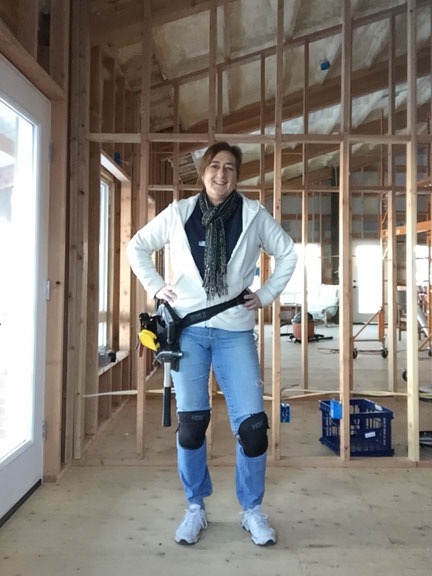
Electrician
Yes, this is me dressed up for electrical work: toolbelt, kneepads, and warm clothes. Heat is on but without insulation, the building still gets pretty chilly.

Because I was paying cash for the building and because I was interested in saving as much money as possible, I became not only the building’s designer but also the general contractor and electrician. (I was going to do the plumbing, too, but a local plumber offered me a deal that was too good to pass up.) Because my flying work is seasonal and my writing work is flexible, I had no real trouble getting the work done. I did pause in the autumn after getting the framing and roof insulation done, but decided in November to forego a lengthy trip to California and Arizona for the winter months and go full throttle to finish it up as quickly as possible.

What’s done? The building’s entire shell, including concrete floor is done. All doors and windows are installed. My vehicles, including my helicopter RV, are safely tucked inside for the winter. My shop and RV have all utility services. The living space is framed, the furnace and air handler for my HVAC system are installed and running, the ceiling has its first layer of insulation. The electrical system in the garage and living space are about 80% done.

What’s coming up? The plumber comes next week and, if all goes well with the wiring, I’ll get through the inspections needed to close up the walls by January 15. Then I’ll get the insulation and drywall done and the main space painted. The floors go in next. My appliances, custom kitchen cabinets, granite countertops, freestanding soaking tub, glass block shower walls, and many light sconces are on order and will begin arriving as soon as next week. Cabinets will be installed in mid February, appliances at February month-end, and countertops sometime before the middle of March. In the meantime, I’ll put down my deck and the rails around it. At this point, there’s a very real possibility that I’ll be able to move into my new home by March month-end.

If you’ve never built your own home, you likely have no idea what a joy and trial it is. This is, by far, the most challenging thing I’ve ever attempted. It’s a real pleasure — despite the occasional difficulties — to be able to make my own decisions on every aspect of the project without having to wait for a risk adverse, indecisive, and, frankly, cheap partner to weigh in with his decisions. And I cannot begin to describe how rewarding it is to look around what I’m building and know that it came from my mind, my heart, and my hard work.

I’ll continue to blog about the project throughout the coming year.

Other Accomplishments, Activities, New Hobbies

I got the year off to a slow start, not really doing much of anything new. I guess the biggest deal in the spring was learning to fly a gyroplane and soloing in about 7 hours. George taught me in his little Magni M-16 Gyroplane and it was a blast.
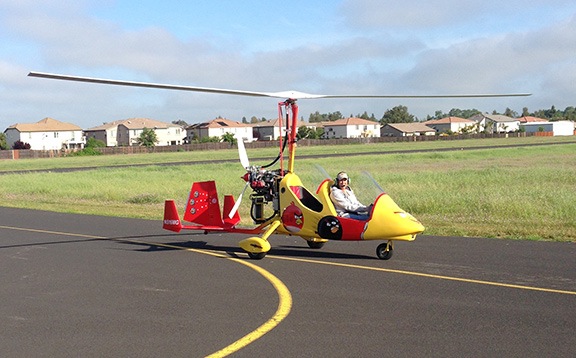
Solo Flight
George snapped this photo of me as I taxied off the runway after my first solo flight.

In the spring, when I returned from California, I built a chicken coop and, with the help of some friends, built a secure chicken yard for my flock of six hens. They laid eggs — about three dozen a week! — starting in October and only just slowed down production for the winter. I also had the opportunity to help out at a chicken slaughter.

For the first time in at least 10 years I had a vegetable garden. I planted Brussels sprouts, tomatoes, onions, pumpkins, melons, zucchini, yellow squash, butternut squash, corn, and herbs. Most of my garden occupied pots and raised garden planters I made out of pallets.

I also kept up with my beekeeping activities. I caught a swarm again this year and assisted another beekeeper on a swarm capture. By the end of the season, I had seven hives and had harvested another 3 gallons of honey. I also began selling honey in boutique packaging at local wineries. And I took a mead-making course and put up my first gallon of mead.
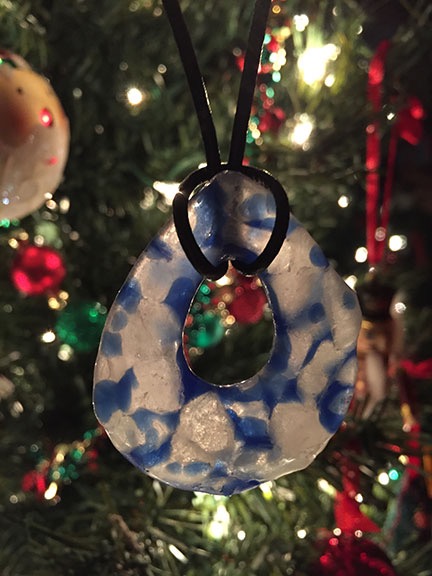
Pendant
Here’s one of my upcycled pendants, created from clear and blue wine bottle glass.

At the end of the summer, I purchased a very small kiln and began doing warm glass projects that upcycled wine bottles into Christmas tree ornaments and jewelry. I began making some of these items available for sale online.

I also stayed pretty active locally during the year, going on multiple hikes, boat trips, paddling trips, and Jeep trips with friends. I took over a Meetup group I belonged to and met a bunch of great people on activities with the group.

Friends

I didn’t realize how many good friends I’d made in the area until I had my moving party on June 28. I sent out invitations in email and on paper and on Facebook and Twitter. The party would be two parts: a moving party that started at my hangar and a pot luck barbecue at my mostly completed home. I honestly didn’t expect more than maybe 20 people to show up with only handful for the move. If I got my furniture moved, I’d be thrilled — I could always fetch the boxes myself.

But the attendance — especially at the hangar — blew me away. At least two dozen people showed up there with pickup trucks. One even brought a large horse trailer. Within 2 hours everything in the hangar was loaded up and we were on our way across the river to Malaga. They unloaded even quicker — almost before I realized what was happening. Then they brought out their pot luck dishes and we partied. I think the final party attendance was close to 50.

My social life here in Washington is amazing. If I wanted to, I could do something with friends every day or evening. Wine tasting, boating and paddling, hiking, Jeeping, dinner, movies, parties — there’s no end to it. On some days, I have to choose between activities or squeeze multiple activities with different people into my day. I’ve never been so active with other people. I love it — especially since these are all great, friendly, generous people who like me for who I am.

And yes, I’m dating, too. But not much, and that’s by choice. I’m extremely picky about starting a relationship with a man. I’d rather live life alone than live it with the wrong man again.

Flying Work (and Play)

In addition to the very lucrative frost contract I had in California in early spring, I had my best cherry drying season ever. In 2014, during the “crunch period” of mid June to mid July, I had three other pilots working with me to cover the acreage I was under contract for. I think we did a remarkably good job providing service for my clients in the Quincy and Wenatchee areas. There wasn’t quite as much rain as there was in 2013, but with more acreage to cover — almost 350 acres at one point! — the standby pay made our dedication to staying in the area worthwhile.

I did some charter work during the season, including a winter video shoot for one client that included air-to-air footage of the historic Miss Veedol airplane and an interesting dawn shoot over the Wenatchee Symphony Orchestra playing at Ohme Gardens. The Miss Veedol footage was only part of the aerial footage shot from my helicopter that appeared in the first We Are Wenatchee video. I also did two amazing Seattle video shoots — at sunset and dawn the following day — as well as a video flight up the Duwamish Waterway and Green River to its source near the base of Mt. Rainier. It’s flights like these that make me so glad I became a helicopter pilot.

We are Wenatchee from Voortex Productions on Vimeo.

Although one of my big charter clients wound up opening its own flight department with a leased helicopter and full-time pilot, I still did a bunch of charter work for them, flying management team members to various orchards throughout Central Washington State — and even to Seattle. They’ll continue to use my services on an as-needed basis during the busy season, as long as it doesn’t conflict with my cherry drying work.

Other interesting flights include a handful of wine tasting flights, a flight to the Slate Peak communication facility, a pollination flight, and two Santa flights. And, of course, I can’t forget my flight to and from Lopez Island and the flight around the San Juan Islands I took with my friend Steve. Or those Napa Valley flights. Or the flight for a hamburger at Blustery’s Drive In in Vantage.
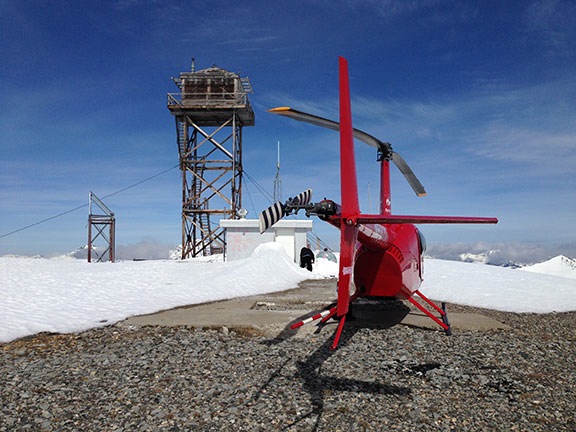
Landing Zone Closeup
There was still snow atop Slate Peak in May 2014.

Writing Work

Although writing accounts for only a small part of my income these days, I did do a significant amount of writing work. In addition to the four video courses I authored for Lynda.com (mentioned earlier), I also began writing articles for Lynda.com’s blog.

I also made a new writing contact. Beginning in January 2015, my articles about flying helicopters will begin appearing on AOPA’s Hover Power blog. You’ll find my bio on the About the Authors page there. I’m extremely pleased to be writing about helicopters for an audience beyond blog readers.

As for my blog, it’s readership has pretty much doubled over the past year. I now consistently get between 1,000 and 2,000 page hits each day with visitors from all over the world.

My divorce book, which I blogged about back in April 2013 — has it been that long? — is still being written. I can’t finish it until the divorce bullshit is finally over.

The Divorce Bullshit

A lot of people don’t realize that even though my divorce was finalized in July 2013, it wasn’t over. Not only did my wasband appeal the judge’s decision, but he refused to comply with court orders regarding refinancing our house, which he received in the settlement, and paying me what he owed me. So legal action dragged on throughout the end of 2013 and into much of 2014.

My poor wasband — and yes, I do pity him a lot more than I probably should — got a lot of bad advice from friends and family members. If he’d accepted my very generous original settlement offer — proposed back in November or December of 2012 — he could have saved well over $100K in legal fees and could have kept the house for about 1/5 of its market value, including most of the furniture and other items I would have left behind. And we both could have gotten on with our lives with a minimum of bad feelings. But he took that bad advice, which gave him the idea that he had some sort of legal claim over the business I’d begun building long before we were married and all the assets that went with it. Even when the judge decided he didn’t, more bad advice convinced him to appeal. The appeals court, which handed down its decision just before Thanksgiving, agreed entirely with the original judge. In other words, he lost the appeal.

The result: more than two years of our lives wasted, a life-long friendship shattered with a lot of bad feelings, and more money than I’d like to think about thrown away on legal fees. He could have gotten rid of me — and kept the paid-for house! — for $50K. Instead, it’ll wind up costing him over $200K (including legal fees) and he has to sell the house to pay me. That’s gotta hurt.

My only consolation is that his stupidity and greed cost him far more than it cost me. I’ll recover from the financial setback of the legal battle, mostly because I know how to live within my means and I have substantial retirement investments. My home will be fully paid for within a few years, leaving me as debt-free and financially secure as I was before this all started.

Of course, I’ll actually be far better off than before this started because I won’t be dragged down emotionally by a lying loser incapable of making decisions or taking measured risks to move forward in life.
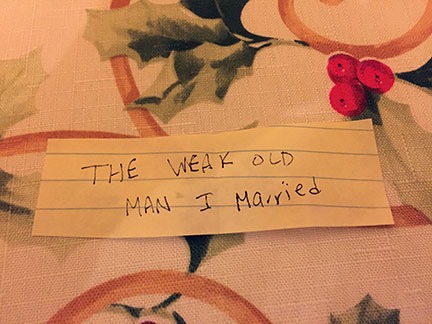
Solstice
Here’s the note I burned on the yule log at a solstice party — I want to leave this burden behind forever.

And that’s what 2014 has shown me: the 29-year relationship with the man I loved was holding me back, preventing me from moving forward to achieve lifestyle goals and dreams. I thought I shared goals with the man I loved but in the end it was all a lie — he just pretended during those last few years to be on the same page with me to keep the status quo he so loved. He sucked away my self-esteem by blaming me for our dismal social life and making me feel unwelcome in the home he claimed to want to share with me. It wasn’t until he freed me that I regained the self-esteem he’d sucked out of me and I began to move forward with life again.

I’ve accomplished more in 2014 than I had since I married in 2006. I achieved more goals, I made more friends, I learned more things. I stopped waiting for a partner to run out of excuses to hold us back and I began living life again. And believe me, living life alone sure beats the hell out of living life chained to a sad sack old man.

I only wish I’d made the break sooner, before we were married, before he lost his mind and soul. It would have been nice to remain friends with someone I really cared about.

In the meantime, I’m waiting for the house to be sold by a court-appointed master so I can get paid and do my best to put this this nightmare behind me.

After I finish my divorce book.

Looking Forward

2015 promises to be a great year. I have my big construction project to finish up, more writing work ahead of me, and a healthy helicopter charter business to nurture and built. I have more friends than I’ve ever had in my life — good, reliable friends eager to get together for all kinds of fun and even help me make my dreams realities. I have hobbies and interests to keep me busy and plenty of free time to explore them. Best of all, I’m living in a magnificent place that’s full of beauty and life and opportunities for outdoor activities.
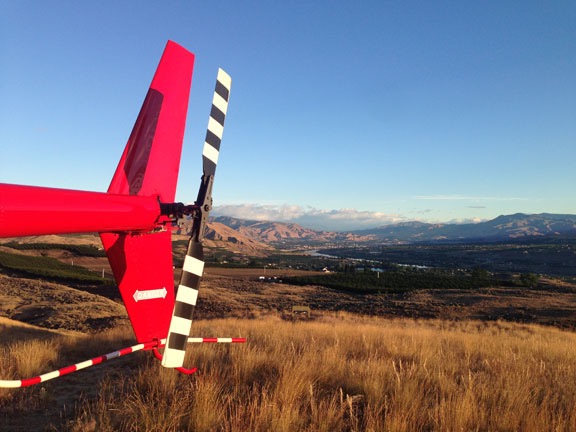
Tail Shot
Isn’t it beautiful here?

I’m alive and loving life again.

Happy New Year.

Skating Away

I take to the rink.

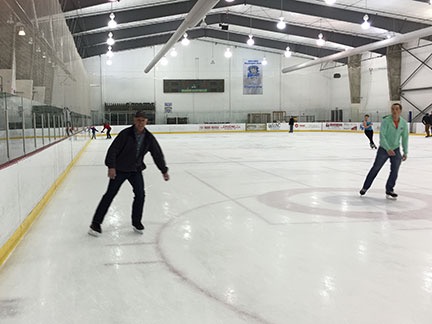
I went skating with a friend on Tuesday. It was a Meetup event that I’d planned and although five people signed up, only two of us showed. I suspect that had a lot to do with the weather, which was rainy and cool all day.

This was the first time I’d been skating in at least 15 years. I think the last time might have been at Rockefeller Center in New York back when I lived there. It might have been when I was in college, which was a lot more than 15 years ago.

Skating is offered at The Rink at Town Toyota Center in Wenatchee. It’s a huge, well-maintained skating rink for hockey, skating lessons, and even curling events. Most weekdays there are open hours for public skating. I planned our event for midweek, to avoid weekend crowds.

The Rink
The Rink isn’t very crowded on a weekday afternoon.

Tim was my companion for skating. We paid the $5 fee and the extra $2 for rental skates. The skates were in good condition but were figure skate style, which included a toe pick: the little teeth at the toe that skaters use when performing certain maneuvers. Although this is the kind of skate I always wore, it would come back to bite me later.

We laced up and got out on the ice. I was terrible: stiff and wobbly at the same time. I got the hang of it again slowly, picking up speed. When the stiffness in my legs and hips started to go away, I realized it was all coming back to me.

Tim Skating
Tim skated as if he’d done it just last week.

Tim, on the other hand, looked as if he’d been skating for years. Nothing fancy, but none of the stiff wobbling, either.

I’d started skating back when I was very young — too young to actually remember my start. Back in my home town of Cresskill, NJ, there was a skating rink near the high school. It was a big, shallow pond that, in later years, had a concrete curb around it. In the summer, it was mostly empty, sometimes puddled in places with rain runoff. I remember catching tadpoles in it as a kid. But in the winter, they’d use a fire hydrant to fill it with water and let it freeze. It was never more than a foot deep anywhere and it usually froze pretty well, although I do remember one side that was never quite as smooth as the rest. There was enough space for small hockey games on one end and family skating at the other. Sometimes someone would build a big bonfire and we’d get warm around it after coming off the ice.

I skated with the Girl Scouts, too. There was an indoor rink somewhere in Tenafly or Englewood that the Girl Scouts used to rent time on once in a while. It was good quality ice, smoothed over with a Zamboni. It was there that I started skating rather well. No figure skating, of course, but good control and maneuverability and I was even starting to skate backwards, which was a pretty big deal for me.

Of course, I did have a nasty fall there. I fell on my right side with my right arm up. My arm popped out of its shoulder socket. If you’ve ever had that happen to you, you know how painful it is. I screamed good and loud. They rushed me off the ice, but not before my arm popped back in where it belonged. When they took the x-rays, convinced I had a broken collarbone, they found nothing.

It wasn’t the fall that made me stop skating. It was growing up. Having other things to do. Going to school, building a life, having a relationship. Skating was a sport that didn’t appear on my list of activities. Although I did take up roller skating in college and did some in the early 80s, even that didn’t last.

So on Tuesday, I was quite rusty when I started off. It felt good to relax and pick up speed as I made my way around the rink. It felt really good to see that I skated better than a lot of young people struggling just to stay vertical.

Of course, I expected to fall and I didn’t disappoint myself. It was kind of funny when I did. I’d been moving along at a good clip when that damn toe pick caught unexpectedly in the ice and threw me off balance. I made a spectacular fall, hitting the ice with my left knee and sliding forward. A little girl skating with her mom asked me if I was okay and two of the guys that worked there skated right over. I guess seeing a middle-aged woman sprawled on on ice set off alarms. But I was okay. I did accept a hand up to my feet. Then I took a break on the bench and watched Tim skate.

I bashed my knee pretty good, but I could still walk. That was a plus.

Later, after a rest, I got back out on the ice and did a few more laps. Tim skated up to me. “You know what they say about falling off horses,” I told him. I wanted to end the skating session on a positive note. I didn’t fall again.

Would I do it again? I’d like to! It’s a great winter exercise and quite pleasant on an uncrowded ice rink. I was just getting to the point where I felt as if I were getting real exercise when I fell. I’ll be back — but I’ll also be wearing kneepads. My bones aren’t quite as resilient as they used to be.

Oh, and next time, I’ll rent hockey skates.

Gun Training

Responsible gun owners get professional gun training.

Certificate
My certificate of completion.

Earlier this month, I was a participant in an NRA Basic Pistol Course. The course was privately conducted at a friend’s home in the Wenatchee area, with the shooting portion done at a private makeshift shooting range on another person’s property. It lasted two days and although I had to leave early on the first day to attend a mead-making course I’d signed up for in Leavenworth, I caught up on the second day and met the course requirements well enough to earn a certificate of completion.

I’m not a supporter of the NRA. Well, let me rephrase that. I’m not a supporter of the NRA’s political lobbying arm. I didn’t realize this until the course, but the NRA has two distinct organizations. The one I don’t mind supporting is the one that promotes firearm safety, training, and awareness. The one I won’t support at all is the lunatic lobbying organization that seems to have given people the idea that it’s okay to carry assault rifles into Target department stores. More on that in another blog post.

My Gun History

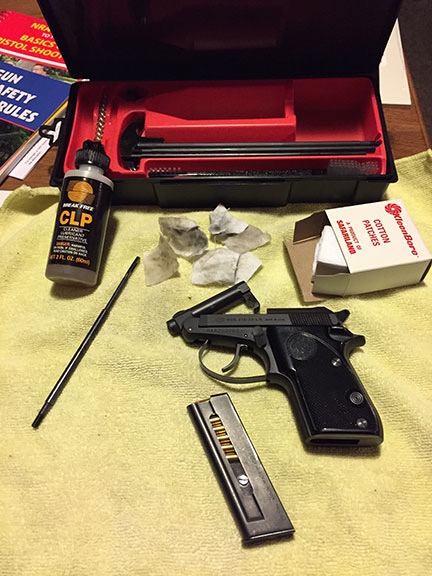
I took the NRA course because although I’ve owned my Beretta Model 21A 22 caliber semiautomatic handgun for more than 10 years, I’ve never really felt comfortable using it or handling guns.

Cleaning My Gun
The other day, I cleaned my gun for the first time in years. I can’t believe how dirty it was.

I got the gun back in the early 2000s, not long after moving into my Wickenburg house with the man I’d later marry. The house was on 2-1/2 acres on the edge of town. Although I would not consider it a “remote” location, it was certainly not what someone would call suburbia. The house was new and it creaked a lot at night. My future wasband would spend a week or more each month back in New Jersey for work and I was left alone. The creaks unnerved me — I remember sitting up in bed one night all night because I was convinced there was someone walking around downstairs. (There wasn’t.) I wanted a means to protect myself when my future wasband was away, so he bought a gun. I’m thinking it was a 357 Magnum. I know it was a big revolver. A scary gun. A few years later, I got my little Beretta and he traded in the revolver for a Glock.

Although I grew up with handguns in the house — my father was a police officer — I was not familiar with them. I wanted professional training. So we signed up for the only gun training course we could find in our area of Arizona: a concealed weapons permit course. It was an extensive course with classroom training and range practice. The course was led by a local gunsmith and his wife. They wore camo to each session. I was the only female attendee among about 6 or 7 men. When it was over, I had a card that made it legal for me to carry a concealed weapon in the state of Arizona. These days, I don’t even think you need a permit to carry concealed in Arizona. That state is whacked out and I’m glad to have it in my rear view mirror.

It’s important to note that I didn’t take the course for the permit. I took it because I wanted professional training.

Over the following years, we occasionally practiced shooting at a local range or out in the desert. It was a big deal when guests from New York came to stay with us and we took them shooting. But I never really got much practice.

Fast forward to 2013. I moved to Washington state, leaving my wasband behind forever. I bought 10 acres of property on an unpaved road overlooking the Wenatchee Valley. The word “remote” would certainly apply more to this home than my last one, although I do have neighbors within 1/4 mile. My gun, which had been traveling back and forth to Washington every year in my RV anyway, was something I kept handy. (I hate to admit it, but my wasband and the crazy old whore running his side of the divorce were acting so irrationally — going so far as to send a private investigator to try to snoop on me — that I worried about my personal safety.)

In 2014, I bought a new gun that would be handy for long-distance protection from animals, rattlesnakes, and other threats: a Remington Model 870 Tactical 12 gauge shotgun.

Of course, since it had been so long since I’d had formal training — or had even shot my gun — I wanted more training. I had my eyes trained on the Complete AK 47 rifles from Palmetto Armory I’d once visited and was fascinated. A gun is useless as a means of protection if you are afraid to handle it or use it. A friend of mine — I’ll call her Lacy — was also interested in getting some training. She set us up at the range to work with a local gun enthusiast who offered training for a fee.

The instructor — I’ll call him Gary — was very knowledgeable. I shot my Beretta for the first time in years and didn’t do too badly. I also got a chance to shoot my shotgun. That was quite an experience. The kick bruised my shoulder, so I learned to shoot somewhat accurately from the hip. Lacy got to shoot it, too. But this instructor’s politics were questionable. He kept them to himself for most of the time, but later started hinting that we needed to be armed in case the government came to take our guns away and we needed to fight back. Real survivalist stuff. I suggested that he might like living in Idaho.

The NRA Course

When Lacy arranged for the official NRA course to be held at her home, I signed right up. The idea was to have an instructor lead a class for a handful of women. Four of us were supposed to attend, but cold weather chased off two of them. In the end, it was me, Lacy, and the instructor’s mom, who had been shooting her whole life.

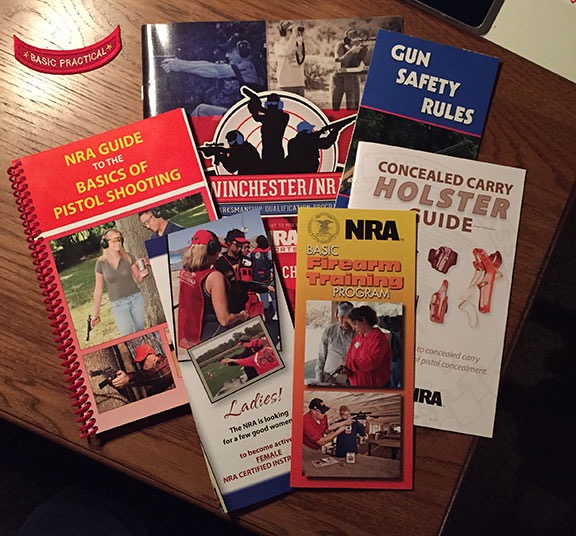
The course cost $50 and I’m pretty sure that all of it went to the instructor (who we paid), with a portion of it going to the NRA training materials and literature that we each got. Of this material, the 100+ page NRA Guide to the Basics of Pistol Shooting was very informative — a real keeper. The safety rules pamphlet was a good guide to handling firearms, but the same information was also covered in the book. Other material promoted additional NRA courses and solicited for women to become firearms instructors. The Concealed Carry Holster Guide was a 30+ page booklet with illustrations and descriptions of various holsters and clothing to carry a concealed weapon. I didn’t think there was that much to say about the topic, but apparently there is. There was even a patch that I could sew onto — well, whatever. I wonder how it would look on my old Girl Scout sash?

NRA Literature
My $50 bought me 2 days of training and all this printed material. I admit that I threw it all away except the spiral bound book.

Gun Safety Rules

Because Steve quizzed us repeatedly on the three rules of gun safety, I came up with a mnemonic for them:

PPoint the gun in a safe direction.
T – Keep your finger off the Trigger.
LLoad the gun only when you’re ready to fire.

PTL = Praise The Lord. The PTL Club was a religious TV show hosted by Jim and Tammy Faye Bakker that I never watched. (I’m not religious.) I don’t know why this association came to me, but it did and it stuck and it works.

Praise the lord and pass the ammo.

This instructor — I’ll call him Steve — was a lot more “normal” than Gary had been. He’s the one who pointed out that the NRA was really two separate but related organizations. (I think it was a way to distance himself from the wackos.) He also made a clear distinction between open carry, concealed carry, and “discrete carry” that really made sense to me. (More on that in another blog post.) He was extremely safety conscious and quizzed us over and over on the three rules of gun safety. Although his presentation consisted primarily of NRA-prepared slides shown with transparencies on an overhead projector (!) he also had a wide variety of guns and other equipment to show us. I felt that his presentation was nicely done and complete.

My only complaint is his tendency to occasionally go off on a tangent — for example, spending too much time (on several occasions) talking about the types of ammo that were available. Did three 50+ women in a beginning shooter class really need to see a handwritten list of the 30-40 types of 38 caliber ammo presented on a whiteboard? All we really needed to know was how to find out what would work in our guns and some tips for choosing one type over another. This is just an example. Other than those few tangents, I think his presentation was right on target. (No pun intended.)

The range work was good, but not ideal — mostly because it was very cold with just enough wind to drop the temperature another 10 degrees. Lacy had provided hand and toe warmers and I had them open in my jacket pockets and shoes. Body parts that were covered were not an issue, but naked hands were. It was difficult to load the guns and I took every opportunity possible to shove empty hands into pockets and grasp those hand warmers.

Backyard Shooting Ranges

For those of you reading this in a metro area — especially back east — or in countries where gun ownership and use is severely restricted, the idea of a private shooting range at your home might sound odd to you. The truth is, there’s no reason why I couldn’t set up a range on my 10 acres of land and practice shooting at any reasonable hour of the day. Or shoot coyotes or other animals that threaten me, my dog, or my chickens. Hell, my Seattle transplant neighbors do it all the time, trying to live that “wild west” dream to the max.

Steve provided the guns. We shot with revolvers and semi automatic handguns. We shot single action and double action. The targets were paper dinner plates tacked onto a stand about 50-60 feet away. Beyond them was a berm. The “range” was at Lacy’s friend’s home. (Oddly, when I met the friends, I discovered that they knew another friend of mine from a trip to Wickenburg last winter. Small world, eh?) Steve was interested in us hitting the target as close to the staple in the middle as possible. (Real high tech, huh?) We all did fine, despite the cold.

Afterwards, we each got a chance to shoot our own gun with Steve. I let Lacy go first while I warmed up in my car. While waiting, I took my Beretta apart — following the instructions in the manual I had with me — and sliced my index finger open trying to get it put back together. (Yes! Guns are dangerous! It took over an hour to stop the bleeding!) I managed to reassemble it just as Lacy was finishing up.

I pointed out to Steve that one of the problems I had with my gun was jamming. I’d brought my ammo, which were CCL and Federal — both very good brands that he had recommended. He asked permission to fire my gun and I let him empty the magazine at the berm. Then we reloaded with Federal ammunition and I shot. The first empty shell was not ejected. Steve was surprised but after thinking about it for a moment he said he thinks it’s because the shell was bare lead and not jacketed. We emptied the Federal shells from the magazine and reloaded with the CCLs. It worked fine. At least I know what not to load.

It was too cold to do any more, so I left. Lacy and I will likely do some practicing up at the range when the weather warms up a bit. I might set up a range at my place to practice, too.

On Firearms Training

Would I recommend this course to anyone who owns a gun? Definitely.

But I’ll go a step further to say this: I believe that every gun owner should be required to take a professionally run gun safety or gun use course. In other words, I don’t think you should be able to buy a gun or own a gun unless you have a certificate or something on record proving that you’ve had gun training.

And frankly, I don’t see how that affects a gun owner’s “rights.”

Yes, this course cost me $50. But do you know what a gun costs? My silly little Beretta retails for $410. My Remington 12-gauge shotgun retails for $600. What’s $50 compared to that? An avid gun user would spend more than $50 on ammunition in a month.

And who’s to say it has to cost that much? Who’s to say that a larger class size can’t cut costs? Or that gun clubs can’t be certified to provide this training to members for free?

You want me to go even further? How’s this? I believe that any gun owner with children in the house should be required to attend a gun safety course with their kids. It doesn’t have to be long and it should be upbeat and fun while stressing the danger of guns — apparently, the NRA offers such a course. Kids need to know that guns are dangerous and shouldn’t be touched without supervision or training.

What? Kids touch guns? You think that’s okay, Maria?

Age and Maturity Level Matters

This is what happens when you give a 5-year-old a 22 caliber rifle.

The NRA and gun manufacturers apparently don’t think there’s anything wrong with marketing guns to kids aged 5 to 12. This is wrong.

While it is possible for a 10-year-old (for example) to be smart, mature, and responsible enough to safely handle a gun with supervision, I think that’s the exception rather than the rule. Think of the last kindergartener you saw — maybe you have one at home. How do you think that kid would be handling real gun?

Why does the NRA think this is okay? This is one of the reasons I can’t be a member of this organization.

Yes, I don’t see any reason why a mature and responsible young person — especially one living in a rural or remote area — can’t be professionally trained (like his/her parent) to safely use an appropriately sized/powered gun for supervised target practice or hunting. Of course, age and maturity level must be considered, and that’s likely where this would all fall apart because of the gun wackos out there. More on that in another post.

I do want to mention here that I received some very basic training and experience with a bolt action rifle back when I was in Girl Scouts. In suburban New Jersey. How old was I? Maybe 12? (Ah, if only Girl Scouts was as good now as it was back then. But I digress.)

I’ll summarize with this: the Basic Pistol Course I attended earlier this month — and the Concealed Weapons Permit course I took in Arizona years ago — provided me with a wealth of information about safely handling and storing guns, as well as how guns work. There is no reason why gun owners shouldn’t be required to learn — and be tested on — this material prior to owning or handling a gun.

Comments?

This is a hot button topic and I’ve stated some very strong opinions. I’m sure everyone who reads this has something to add. That’s what post comments are for.

But be warned: While I don’t mind readers sharing conflicting opinions, I don’t allow abusive comments, especially those posted by people who hide behind aliases. Comments here are moderated and I have zero tolerance for trolling. I have a Comment Policy and if you’ve never commented here, you should read it before trying to comment. It would be a shame if you spent 30 minutes getting all hot and bothered while composing a nasty comment aimed at me or another commenter and your comment never appeared. What a waste of time, huh?

And if you want to rant about how the government is evil and will be coming for our guns and how we need to rise up against “Emperor Obama”, go ahead. I can always use a good laugh.

A Snowy Weekend

First snow of the season is just right.

It started snowing Friday afternoon.

It had been forecasted, so I was expecting it and got all my errands done early in the day. There was a sleety mix coming down in town as I headed home. By the time I pulled into my driveway, the sleet was more snow-like. It could have been our elevation — my home’s elevation is about 800 feet higher than town at the river’s edge. I put my Jeep away in the garage, let Penny out, and settled down to an afternoon catching up on paperwork.

First Snow Reading
By mid-afternoon, there was just three quarters of an inch of accumulated snow.

By 2:47 PM, there was 3/4 inch on the ground. Not very impressive.

But it kept snowing. I chatted with a few different friends on the phone, watching the white stuff come down in big flakes outside. Inside was toasty warm and smelled of the ham and cheese quiche I had in the oven. I was sipping a hot coffee with eggnog and milk — a do-it-yourself eggnog latte.

Later, after dark, I let Penny out to do her business. She stood at the doorway just looking at the snow, completely uninterested in stepping out. Later, before bed, when the snow was deeper but still coming down, I had pretty much the same luck with her. I suspected I might have a problem.

Of course, a tiny dog can only hold it for so long. She woke me at 3 AM, needing to go out. I obliged, standing at the doorway while she managed to find a satisfactory spot under the front deck to take care of business. It had stopped snowing and the sky was full of stars with just a few low clouds floating around. The cliffs behind my home were illuminated by the starlight and reflected light from town miles away. It was a beautiful night — perfect for some photography.

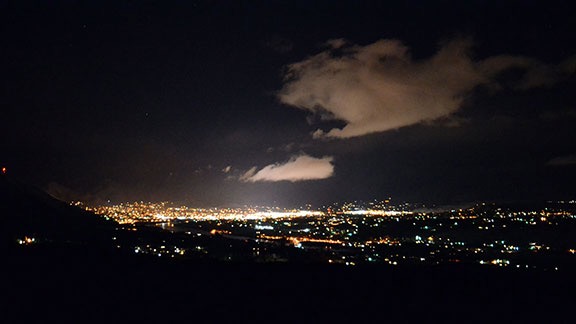
Now wide wake, I went back inside and set up my camera and tripod. I experimented with some shots from the deck outside my bedroom door and then the front deck. Although I couldn’t get a satisfactory shot of the cliffs, I did get an acceptable one looking down toward town. (I need to get my camera checked; there’s something screwy going on with exposures.)

Wenatchee at Night
I made this photo of the lights of Wenatchee from the deck outside my bedroom door.

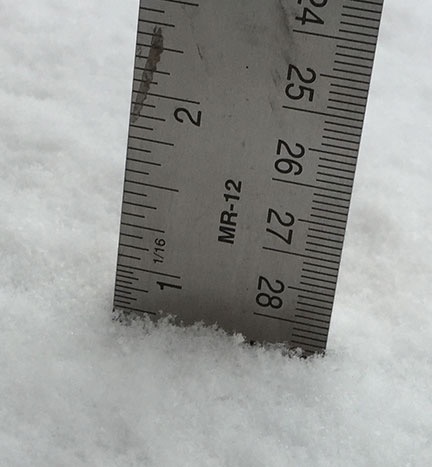
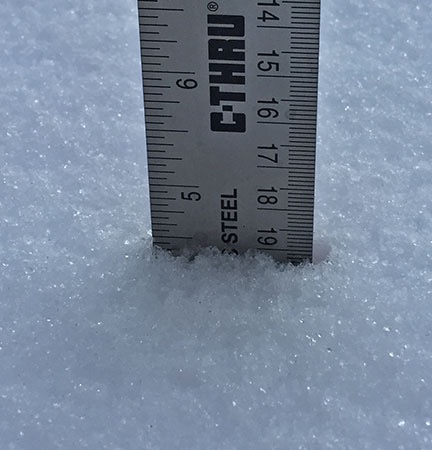
Total Snowfall
Total snowfall was about 4-1/2 inches at my place.

I went in to have coffee, write in my journal, and do some blogging. I had some quiche for breakfast. Somewhere along the way, it got light out. I went back out with my ruler and stuck it in the virgin snow on my driveway apron. Four and a half inches.

The stuff was not wet but not quite powdery. The temperature was right around 32°F and didn’t feel cold at all. There was no wind. And it was amazingly beautiful with all that untouched snow on the ground.

I put on my Sorrels and walked back out to check on the chickens. They were out and about in their yard and looked up at me, as they usually do, expecting food. Their water was free of ice — I’d bought them a heated waterer — and although there was snow in their food dispenser, it didn’t look wet. I threw them a scoop of scratch and checked for eggs. There were three of them, one of which was still warm. Apparently, my chickens hadn’t gotten the memo about cutting back on egg production when the days got short.

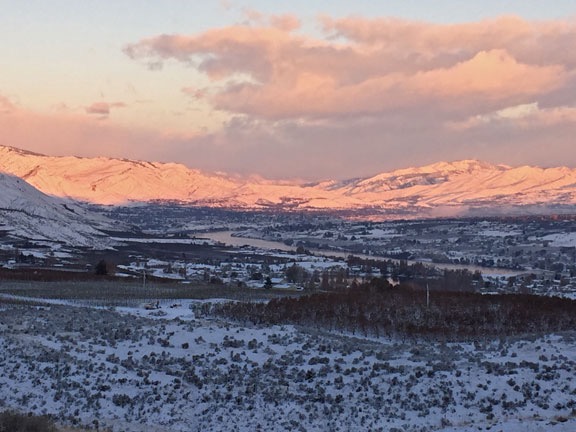
First light was just hitting downtown Wenatchee. I went back upstairs and took in the view from the deck outside my bedroom. The light was pink as it touched the mountains and valley to the northwest. I felt as if I could have watched the view change all day, but it was time to get some work done outside.

First Light on a Snowy Morning
First light hits the Wenatchee Valley on a snowy morning.

Although my driveway is quite long, I don’t plan on ever shoveling or plowing it. I have a Jeep and its tires are still good. The driveway doesn’t have much of a slope to it. I don’t expect getting in or out with the Jeep to ever be much of a problem, especially since snow doesn’t usually stick around long here. Even my truck has 4WD, so if I need to get out with that, I know I can. How do I know? I used it to pull my RV out last February after a heavy snowstorm for a two-month trip to California. The Honda? Well, the Honda is in for the winter at this point.

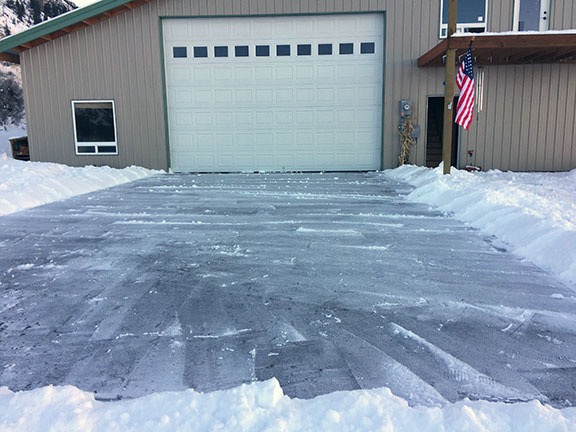
But I also have a concrete driveway apron, which I need clear if I want to get my helicopter out for a flight. I didn’t have any flights scheduled until after Thanksgiving, but who knows what might come up? I had already decided to keep it clear of snow and ice. I had a good shovel and a bag of ice melt. With temperatures expected to rise during the day, I wanted to shovel now, before the snow got soft and heavy.

It didn’t take long and I have to admit that it felt good. That might sound weird to the people who consider snow-shoveling a chore, but I do it so infrequently (so far) that it’s more of an excuse to move around outdoors than any kind of real work — especially when the snow is still light and there’s no ice to contend with. I felt the same way last year when I shoveled the walk at the home I was housesitting at after a snowfall. The whole job took about 20 minutes — the driveway apron is only 22 x 30 feet — and I barely broke a sweat in my fleece sweatshirt.

Shoveled Driveway
My shoveled driveway apron, just in case I need to pull the helicopter out for a flight.

I didn’t spread any ice melt on it. The way I see it, there’s no reason to spread that crap around unless there’s ice to melt. I figured I’d monitor the condition of the driveway apron and, if the little snow left did turn to ice, I’d spread some ice melt to get rid of it. But as the day wore on, the snow melted and the resulting water dried. No ice.

While I was out with the shovel and still energized, I shoveled a path from my front door to the chicken yard. This would give Penny a better place to run and do her business. But she had already figured out that she could stay under the front and side decks to get around the building without having to walk through much snow. In fact, while I was shoveling she disappeared around the back of the building, possibly tracking the scent of a rabbit that had left tracks in the snow back there.

Snowy Home
A look back at my home from Lookout Point on a snowy morning.

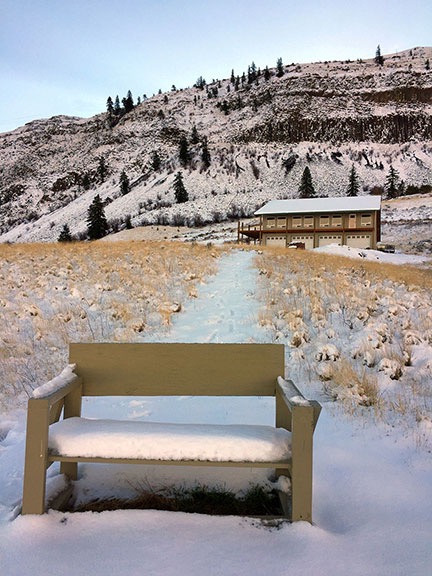
Before going back inside, I walked down to Lookout Point, my little bench overlooking the valley. I’d brought the bench cushions in when the weather began changing two weeks ago and the bench looked abandoned and kind of forlorn with its covering of snow. I looked back at my home and liked what I saw: the neat symmetry of the building, the smooth blanket of snow on its big roof, the pine trees on the cliffs behind my home, accented with white. The path back to my home from the bench looked inviting. I looked forward to mornings like this when I could stoke up a fire in the fireplace and sip hot cocoa while looking out over the valley.

And that’s when I realized that I liked winter.

It’s odd because I left New Jersey to escape the cold. That put me in Arizona, which I soon grew to dislike for many reasons, not the least of which was the brutally hot summers. But my home in Arizona also lacked seasons — the only thing that changed was the average daytime high and nighttime low. There were no fall colors, there was no snow, there was no springtime leafing out. The seasons were more subtle, marked by temperature changes, wildflower and cactus blooms, and thunderstorms.

We bought some vacation property in northern Arizona, mostly to escape the hot Phoenix area summers. We went up there pretty regularly in the summer early on, and I spent much of the summers of 2004 and 2005 in my old RV up there. But we also enjoyed going up there in the winter time. How many Thanksgivings and Christmases did we spend in the cabin we built together? I remember waking once to a hushed, snow-covered landscape, cosy and warm under a thick comforter up on the loft, going downstairs to make a hot breakfast of Pillsbury orange danish. We spent part of that day at the Grand Canyon, walking the shoveled rim trails, before dinner with friends at El Tovar. That property, bought for summer use, became my winter treat. The chain of Christmasy red and white stars I’d bought still hung from the loft the last time I was there.

Now I’m back in a four-season place. Indeed, the winter here is remarkably like the winters in northern New Jersey, where I spent more than half of my life. But there’s the added benefit of a wide variety of winter sports nearby: downhill skiing, cross-country skiing, snowshoeing, and skating. There’s life here — that’s another thing I’ve been missing for too long.

I didn’t spend much time outside that morning. I had things to do inside before heading out to visit a friend and then participating in a cider tasting outing with other friends. Dinner out came afterward. The temperature rose throughout the day but it got cloudy. The roads were icy on the way home, but I threw the Jeep into 4WD and had plenty of traction.

The next day, Sunday, was even warmer. My garage got up to 50°F before I realized I didn’t need the space heater on while I did my warm glass work. Snow was melting everywhere and my driveway apron was dry. The chicken yard was snow-free — they’d trampled it all down into wet dirt and they were still making plenty of eggs. It was 46°F outside when I left at 1 PM for a football party at a friend’s house. I took my truck because I needed to run my trash cans out to the main road. It had no trouble on the unplowed driveway.

Temperatures this week will continue to rise, with a daytime high on Wednesday expected to be 50°F. The National Weather Service is predicting a warmer than normal winter here and if the cold snap we had earlier this month is an anomaly — which I believe it is — we might not get much more snow at all. Although I hope to get some cross-country skiing in before I head south for a month or two, I don’t really care one way or another. This snowfall was a treat and I’m sure there will be many snowy weekends in my future.

Minimizing Trash

How I do my part — and how you can do yours.

Earlier this week, NPR did a story about the food waste ban in Massachusetts. It led with the following fact:

Americans alone, on average, throw out about 20 pounds of food a month, most of it hauled away with the trash.

They’re talking primarily about excess food thrown away by institutional organizations (think hospitals, schools) as well as buffet restaurants. But there’s also the food waste that we consumers create, often through spoilage or simply preparing more food than we eat and throwing away the leftovers. The end result of all this is ever more added to our landfills, which are already overflowing with detritus of our wasteful lifestyles.

The article appealed to me because it confirmed that my own personal efforts to reduce what I put in landfills can make a difference if others did the same. I thought I’d share what I do with readers, possibly to give them ideas of what they can do make a difference. And hopefully, they might share a few new ideas with me.

Recycle

First and foremost — and actually required in many places — is recycling. I’m fortunate to have “single-stream” recycling available to me. That means I get a big garbage pail and put all recyclable items into it together. No need to sort or have multiple bins.

I keep a small blue recycling garbage pail in my kitchen, right beside my garbage pail. They’re the same size, but I wind up emptying the blue pail at least twice as often — sometimes every day. I put anything other than styrofoam that has a recycling logo on it into that pail. (My local waste company does not take styrofoam.) This includes the plastic “cans” that Penny’s dog food come in, junk mail, paper waste from bills and receipts, paper and cardboard packaging, cans, newspaper, and plastic bottles. (I save glass bottles, such as wine and cider bottles for art projects; more on that in another post.) You can imagine how quickly this might get filled up at a home that consumes a lot of packaged foods. (I don’t.)

I also get a lot of mail order items for my various hobbies — beekeeping, warm glass work, etc. — mostly because they’re simply not available locally. These items come in cardboard boxes. I cut down the boxes and use them to fill any empty space in my big recycling bin before I bring it out for collection.

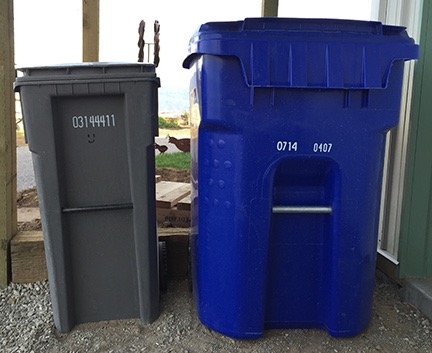
Garbage Pails
Yes, my recycle bin is about twice the size as my garbage bin. And yes, I did draw a smiley face on my garbage pail so I could distinguish mine from my neighbors’.

It does cost me an extra $8/month to have my big recycling bin, but I think it’s worth it. The waste management company collects it every 2 weeks, which is about the same frequency I take out my much smaller garbage bin. The big drawback for me is that I have to take both bins 2 miles out to the end of our private road for collection. But I think the cost and inconvenience are worth it so I can do my part.

Upcycle and Reuse

I mentioned above that I save glass bottles for art projects. I will eventually do a blog post about that. But it’s just part of my “upcycling” efforts.

Upcycling is where you take something that could be discard it and turn it into something else that might even be more useful. I’ve done quite a bit of this with pallets, scrap wood, and glass bottles.

I also reuse a lot of things — plastic containers that food comes in and large plastic paint buckets are two pretty good examples.

The trick is to look at an item before tossing it out and think about how it might be reused. Large yogurt containers make excellent scoops for chicken feed and potting soil. The single-serving yogurt containers make great seed starters — I started my avocado plant in one before transplanting it to a nicer pot. They’re also good as open storage containers for small items I need while working on projects around my home. If these things are damaged during their second (or third or fourth) use, so what? They go from that use into the recycle bin.

I also collect packing peanuts, other packing foam, bubble wrap, and air bags used as padding for items shipped to me. I stow them in large bags that I drop off at a local shipping place for them to reuse. I recycle most paper padding, but do save some of it as starter for my beekeeping smoker or fire pit.

Upcycling and reusing make sense not only because they help minimize waste, but they save you money. A search for “chicken feed scoop” on Google, for example, results in a list of plastic and metal scoops ranging in price from $2.69 to $15.93. Mine were free and when they break, I’ll be able to replace them for free.

Compost

If you have a garden, you should be composting. Period.

Seriously, why wouldn’t you?

According to the EPA‘s “Composting at Home” web page,

Compost is organic material that can be added to soil to help plants grow. Food scraps and yard waste currently make up 20 to 30 percent of what we throw away, and should be composted instead. Making compost keeps these materials out of landfills where they take up space and release methane, a potent greenhouse gas.

Although I don’t think this page is the best source of detailed information about composting, it does have this two-page, illustrated composting guide that explains the whys and hows of composting, including the all important difference between greens and browns and lists of what should and shouldn’t be composted.

Spinning Composter
This composter can hold quite a bit. With stirring rods inside, spinning it on its horizontal axis aerates the contents.

I’ve been composting rather haphazardly for years. Back in Arizona, we had a compost bin that we’d occasionally throw items into. It wasn’t properly maintained, especially after I started going away for the summer each year for work and my wasband began living at home only on weekends. I don’t consider it a success. But here in Washington, I’ve embraced composting as a source of soil for my garden. I bought a rotating composter and, when that filled up last week, built a new pallet planter to hold additional end-of-season garden waste to compost over the winter months.

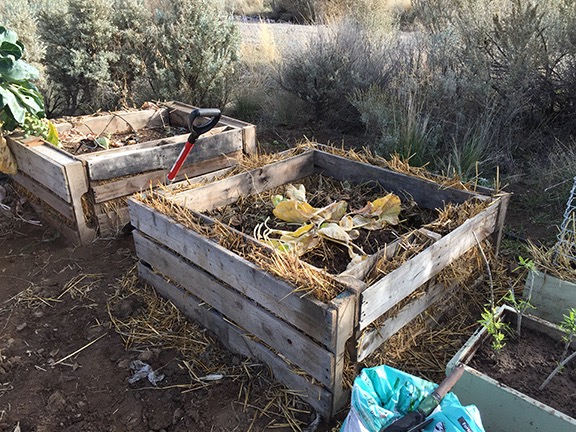
Pallet Planters
With two spare pallets from my bee yard, I simply built a fourth pallet planter and filled it with excess yard waste. With luck, it’ll be full of something resembling soil next spring and I can use it as another planter.

What do I compost? Mostly filled coffee filters and vegetable scraps that I don’t feed my chickens, such as onion skins and potato peels. I keep a small plastic container — a used yogurt container, of course — on the countertop and fill it throughout the day. I usually empty and rinse it in the afternoon. And, of course, all that garden waste, including vines, stalks, and leaves.

Of course, when I clean out my chicken coop, all of their droppings go into my compost bin, too. If I had horses, some of their manure would also go in. (Might fetch some manure from a friend’s horses this week.)

The rotating bin makes it easy to mix up the compost — five half-spins seems to do the job. There’s already a lot of rich, dark soil in there.

I’ll likely stop adding to my compost bin in late winter to assure that the entire contents can be used in my garden in spring. Then I’ll start over and build up a supply for the following spring.

Feed Your Critters

Because I have chickens, I also have a place to get rid of most of my salad and vegetable trimmings. Chickens will eat nearly anything — they’ve been cleaning my brussels sprouts stalks and carved pumpkins lately — and turn them into the most delicious eggs you could imagine. They get most of what comes from my kitchen in the evening, after I’ve made dinner. When they see me coming, they all run to the gate to their pen to see what goodies I have: salad trimmings, carrot or apple peels, broccoli stems, tomato cores — you name it.

(And if you don’t have chickens but live in an area that allows them, think about it. They’re extremely easy to take care of and lots of fun to have and watch. And there’s nothing like a fresh egg still warm from the chicken’s butt. And no, you don’t need a noisy rooster to get eggs. Four hens should provide enough eggs for a couple or family of three. I have six hens and get about 3 dozen eggs a week.)

Penny the Tiny Dog gets any fat or skin I’ve trimmed off meat or chicken. I don’t like meat fat or chicken skin — I never have. All this stuff gets trimmed off either before or after cooking. If there’s a lot of it — for example, suppose I’ve roasted a whole chicken or made chicken soup from scratch — I put it in a plastic container in my freezer. Every day, I hack off a bunch of it, chop it up, and heat it in the microwave. I then pour it over her kibbles for her evening meal. If there’s fat trimmed off a cooked steak I have for dinner, I throw it in the fridge and use it the same way for her meals until it’s gone — then go back to the freezer source. She absolutely loves this. And because there’s so little of it — perhaps 1-2 ounces per meal — I don’t think it really counts as giving her “people food.” Most of her nutrition comes from the canned and dry food she eats. (And no, I’m not at all interested in cooking for my dog, taking her off store-bought dog food, or eliminating gluten from her diet.)

Shop Wisely

Of course, what really helps minimize food waste is to simply shop wisely. When I linked to the NPR article on Facebook, one of my friends responded:

I hate wasting food. Drives me absolutely crazy to throw it away. I never stock up on anything perishable and hit the market daily for whatever I’m making for dinner.

I’m with him. This is actually a habit I picked up years ago when I lived in New Jersey. The local market — which also had a real German butcher shop in it — was walking distance from my home. We’d walk over nearly every day after work and buy whatever we planned to eat for dinner. Later, in Arizona, I’d stop at the supermarket — it was on the way home — to pick up whatever I needed for the next day or two. I very seldom fill a shopping cart with groceries weekly (or even less frequently) as so many people do. The result: everything is recently purchased so little of it goes bad before it’s eaten.

But I take this a step farther with how I shop for produce items. I skip those plastic bags as much as possible. Unless I’m buying a bunch of small loose items — for example, brussels sprouts or new potatoes — I just throw them loose into my cart. Do you really need a plastic bag around those two apples? Or that head of broccoli or lettuce? You’re just going to take the food out of the little plastic bag when you get home, so why bother taking it?

Of course, you can also apply that to your grocery bags. Why use the plastic or paper sacks the supermarket provides when you can bring your own reusable canvas or nylon bags? My problem is my memory — I can’t seem to remember to bring them with me. But I’m working on it.

Minimize Waste

That’s just a few of the things I do to minimize waste. Of course, being a party of one with a tiny dog means I don’t generate as much waste as most households anyway. But can you imagine how much less waste we’d all send to landfills if we just made an effort to reduce it through recycling, upcycling, reusing, composting, and shopping wisely?

What can you add to my list? Use the comments form or link to share your experience.