Giving Credit Where Credit is Due

Two people helped me get started in cherry drying.

Yesterday, I got an email message from someone I hadn’t heard from since 2009. His name is Rob and he’s one of the two people who helped me launch my cherry drying business here in Washington state.

The first person, of course, was Erik Goldbeck. Erik contacted me way back in 2006 about joining him in Washington for some cherry drying work. It was Erik who explained what the work entailed and why it’s done. He tried to get me up to Washington from my home in Arizona in the summer of 2006 and again in 2007, but he was unable to guarantee me work or the standby pay I needed to make the trip financially viable. It wasn’t until 2008 that Erik got enough contract work to bring a second pilot on board with guaranteed standby pay. He chose me and I prepared to come north to join him.
At Pateros
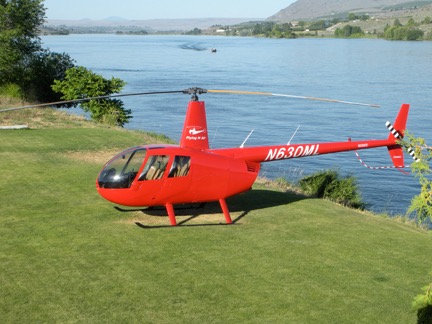
Here’s my helicopter, parked on the lawn beside a motel in Pateros, WA where I worked for 10 days that first cherry drying season.

Then two things happened. First there was a late season frost that destroyed half the crop. Suddenly Erik only needed one pilot. But Erik was not going to be that pilot. Almost at the same time, he was diagnosed with cancer. When I met him in person for the first and only time, he was in the hospital recovering from surgery, relearning how to walk. He sent me to Quincy, WA to handle the remaining cherry contracts he’d gotten for us. I was only there for seven weeks that first year and only flew five hours total.

The following year, 2009, Erik was out of the picture. (He died that summer; his illness and death had a profound effect on me.) I prepared to go to work for the same company he’d contracted with for much of the work the previous year. I had two contacts: Rob in the Quincy area and Dan in the Chelan area. They worked for a man named Ed, selling helicopter services to orchardists and getting helicopters to do the work.

About a month before my season start, Ed apparently decided he didn’t want to be in the business anymore. He shut down without any notice, leaving Rob and Dan unemployed, dozens of orchardists without any protection for their cherry crop, and more than a few pilots wondering what the heck they were going to do. I got in touch with Rob, who seemed disillusioned and fed up. He told me he was going to retire and then he did something I’ve always appreciated: he gave me the phone numbers for a bunch of orchardists in Quincy and Wenatchee who might need helicopters.

I worked the phones. I got enough orchardists interested in hiring me to make it worth coming north on my own. I created a contract based on the one Erik had with me. I collected standby pay. And in late May, I hooked up my old RV and headed north to Washington for the summer. I even managed to extend my season with a new contract that had me in the Wenatchee area until mid August.

At the end of the season, I sent Rob a “commission” check to thank him. I think he was surprised.

Each year, I built up my client base to add clients and orchards. By 2011, I had enough work to add a pilot for about three of my eleven weeks. The following year I added one for four weeks. The next year, there were three of us for a while. Then four. This year, which is my ninth season, I have four pilots helping me for my busiest part of the season: two in Quincy and two with me in the Wenatchee area, where I’ve been living full-time since May 2013.

But without the leads from Rob, I would never have been able to come back that second season and I wouldn’t be where I am now — living in a place I love, surrounded by good friends and friendly people, enjoying a life I’d only dreamed about having.

I tried to contact Rob a few times, mostly just to say hello. But I never got a response.

Until yesterday’s email, which was sent using the contact form on my blog.

I’d taken his two granddaughters, aged 6 and 3, on a helicopter ride during an event at the airport on Saturday. They “wanted to fly with the girl pilot.” He was writing to say hello and thank me. He mentioned that he was still retired and living at his orchard but he occasionally did some seasonal inspection work. I wrote back to tell him how good it was to hear from him and to thank him again for helping me get started.

Rob probably doesn’t realize how much he helped change my life for the better. Cherry drying was the good paying work I needed to make my helicopter business thrive. It gave me the excuse I needed to get away from Arizona’s brutally hot summers. Although I didn’t realize it at the time, it also gave me a chance to enjoy a few months of freedom every summer, living like a single person and making my own decisions. I fell in love with this area over those summers and it was a no-brainer to move here full-time when my marriage fell apart.

Rebuilding my life here has been one of the most pleasurable challenges in my life — and it wouldn’t be possible without the business I built here with Erik and Rob to help get me started.
A Day of Silence at the Aerie

I just can’t listen to any more of it.

I’m home today, catching up on paperwork, yard work, and home construction chores that I’ve been putting off for too long. When I’m home — unless I’m writing — I almost always have the radio on with NPR (specifically NWPR) tuned in. I get the news from Morning Edition; listen to news analysis and opinions and learn about new books on The Diane Rehm Show; get more of the same from On Point, Here & Now, PRI’s The World, Fresh Air, All Things Considered, and Marketplace; and learn interesting scientific things on Science Friday. If I’m up early enough, I hear BBC World Service, which offers an interesting perspective on current events throughout the world and if I’m still tuned in late in the evening (at home or in my car), I listen to q from CBC. On weekends, if I’m tuned in, I really enjoy Wait Wait…Don’t Tell Me! and a bunch of other entertaining and/or humorous shows, many of which I also listen to on podcasts so I don’t miss them. (I actually listen to quite a few NPR podcasts, but that’s a whole different blog post.)

NPR, which they say leans left politically, gives me a solid basis of information for me to form my own opinions. Because yes: I am one of the few Americans who can tell the difference between fact and opinion. And I’m among the group of even fewer Americans who actually cares.

But today things are different.

The Orlando shooting happened early yesterday morning, and it’s all over the news today. It’s the same old collection of politician and religious leader “thoughts and prayers,” ultra liberals demanding all guns be banned, ultra conservatives trying to place blame on Muslims, crazy Christians praising the killer for murdering gays, et cetera, ad nauseam. There’s a constant rehashing of what’s known and what’s suspected as the media and public try to figure out whether it should be labeled as terrorism or a hate crime.

As if it really matters.

50 innocent people were killed on Sunday morning and many others seriously injured by a man who apparently had only two guns on him. How does that even happen? How is it that we’re legally allowed to buy guns capable of killing that many people in that short a time?

And who cares whether this was jihad or he was Muslim or white or a citizen or hated to see men kissing. Who fucking cares?

The fact is, he was on an FBI watch list but because our laws don’t prohibit possible terrorists from buying guns, he was able to do so. That’s a fact. There’s no opinion there. He was on a watch list. Period. He was able to legally buy guns that he then used to kill 50 people. Period.

Am I the only person who sees a problem with this?

And the American people are powerless to make the killings stop. Why? Because the NRA buys more politicians than we can ever hope to. And those politicians kill any bill that would limit firearms sales.

Because back in 1791, after fighting a war to get our independence — a war that depended, in great part, on a citizen militia — the Second Amendment to the United States Constitution was adopted and it said:

A well regulated militia being necessary to the security of a free state, the right of the people to keep and bear arms shall not be infringed.

Apparently, many people seem to think these 27 words mean that any American has the right to own any kind of weapon for any reason.

I don’t think automatic assault rifles used to kill 50 people in a bar is what our founding fathers had in mind.

But it doesn’t really matter what I think. I don’t have enough money to buy members of the Congress and Senate. The NRA does. And it gets that money from people who apparently think it’s okay to arm anyone with any weapon they like.

Because Second Amendment.

So the radio is off at the Flying M Aerie today. I simply can’t bear to listen to the news I’m powerless to do anything about.

It didn’t start that way. I listened to about 10 minutes of Morning Edition before I’d had enough and turned it off. I’ve got my aviation radio on instead. I can hear the few planes and helicopters call in as they land or take off from the airport 3 miles from my home.

Otherwise, silence.

Silence for the 50 people who will never speak again.

And the thousands of people killed in senseless gun violence in this country before them.

Flying with the Mustache Kid

Another rides event, another opportunity to take hundreds of strangers flying.

Yesterday, a fellow cherry drying pilot named Gary and I offered helicopter rides at Wenatchee Pangborn Airport’s annual Aviation Day event. This was our third time doing this event together and I think we make a great team. I’ve also been offering rides at the annual Wenatchee Wings and Wheels event since 2012, but I’m kept a lot busier at this event now that Wings and Wheels is held in an East Wenatchee park. Airport events are always the best ones for rides. In fact, this is my best event every year and tops all the events I’ve ever done, including the big Air Fair event in Buckeye that I did for many years when I lived in Arizona.

And big is important. There’s nothing worse than setting up to give helicopter rides and then have just a few takers, leaving the aircraft sitting idle on the ground for most of the day.

Girls Can Fly

Anyone who knows me very well also knows that I don’t like gender distinctions. I’m a firm believer that a woman can do anything a man can and I’ve proven that in three (so far) male dominated fields. I don’t belong to women’s organizations for this reason. They seem to use gender as an excuse for not succeeding. You can read a lot more about my gender-related opinions here.

That said, I very much enjoy taking girls — especially pre-teen girls — for helicopter rides. In the predominately conservative areas in which I’ve lived — Arizona and now Central Washington State — I’m sad to see that people are still surprised that the pilot is a woman. And that their kids, as you might expect, are equally surprised. I make a point of reminding them that women can be pilots, too. I don’t want them to think about gender boundaries and “glass ceilings” that they later, consciously or unconsciously, might use as an excuse to fail. I want them to take on the challenges and achieve the goals they want to achieve, regardless of whether most of the people on the same path are men. I consider it a privilege to show them what’s possible by my own example, at least in the world of aviation.

Rides events are good for the community, too. They make it possible for helicopter operators to offer people without a lot of extra cash the chance to experience helicopter flight without breaking the bank*. At just $40/person, they can even take their kids for a flight. (It was my first helicopter flight at age 7 or 8 that made me interested in flying and ultimately become a helicopter pilot.) Even if kids don’t walk away wanting to become pilots, a helicopter (or airplane) flight helps expand their world. They see familiar places from a new perspective. The world of aviation — which may have been mysterious and unapproachable — is suddenly exposed to them as something that’s neither difficult nor scary. And the ones who talk to me about wanting to fly get my standard mini lecture on how important it is to pay attention in school so they learn the math, science, and geography they need to fly.

I’d estimate, based on conversations with my passengers, that about 50% of them have never been on a helicopter. A surprising percent of them — at least 10% — have never been on any kind of aircraft. And I’m not just talking about kids here; I’ve had people in their 30s and 40s tell me they’ve never been airborne. It’s an honor to be the one who takes these people flying for the first time and I do my best to make it a positive, memorable experience.

Which could explain why I have so many repeat customers. A couple who flew with me yesterday with their 3-1/2 year old son told me that this was their third time flying with me as a family. That means their son was 1-1/2 years old the first time. I asked if he remembered the flights and the dad assured me that he did and talked about it a lot.

I could go on and on all day about why I enjoy offering rides at big events like Aviation Day in Wenatchee. I could tell stories about all the passengers I remember — and there are quite a few of them. But it’s a beautiful day and I’m thinking of taking my kayak out on the river with friends. So I’ll leave you with this video I threw together yesterday evening, after sitting in the pilot seat for 8 hours with only 2 breaks.

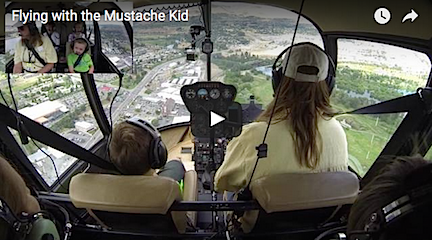
My new GoPro camera setup shoots video footage from two vantage points. I’ve been putting them together to create picture-in-picture videos, with audio. The idea is to be able to create videos for passengers of their flight. Videos I can put on YouTube so they can share them with their friends.

Flying with the Mustache Kid
One of more than 40 flights I did yesterday.

This particular flight stood out in my mind. It was early in the afternoon and I’d been flying for more than 4 hours straight with just a 15-minute break to refuel and swallow a hot dog. I was past my first wave of tiredness, into the punchy second wind I usually get when the flying is automatic and I’m just trying to enjoy the flights with my passengers. Certain passengers really get me going when I’m like this and the kid with the neon green t-shirt and painted on mustache was definitely one of them. I have no idea how old he was, but he couldn’t have been older than 6 or 7. He was a talker — very articulate with a good vocabulary. He was also attentive, seeing and hearing far more than most passengers probably do. He sat right next to me and we talked for the entire flight.

See for yourself:

(Keep in mind that he was wearing and playing with the microphone boom on a $1,000 Bose aviation headset for the entire flight. Note to other pilots: buy cheap headsets for rides events.)

As you might be able to tell from my responsive chatter, I thoroughly enjoyed my time with the Mustache Kid. I’m not sure if he’ll remember this flight as well as I will, but I hope his family finds the video online — I’ll also post it on Flying M Air’s Facebook page — and shows it to him. It’s the kind of thing I think he’d enjoy showing his kids someday.

And many thanks to my companion pilot Gary, who flew even longer than I did; the ground crew (Lorri, Alex, and Nate), who did an amazing job getting passengers on and off the helicopters quickly and safely; and the folks at Pangborn Airport, especially Tina, who makes sure I get the event on my calendar every year.

For more flight videos, be sure to check out Flying M Air’s channel on Facebook. I’ll try to put together a few more videos like this one soon.


* Normally, I have a 1-hour minimum for flights. It’s just not worth it to preflight the helicopter, get it out, fly it to the airport, wait around for the passengers, do the flight, collect the money, refuel, and fly the helicopter back for a 10-minute flight. Think about it: would you be interested in spending up to 2 hours of your day and about $120 in operating costs for 10 minutes of actual revenue flight time that might get you $80 or $120? Obviously, I couldn’t survive if I did so. But gather together 50 or more people who want those short flights and take them all in one day and it becomes a profitable endeavor — and a lot of hard work.

Helicopter Owners, Pilots, and Owner Pilots

It’s all about a difference in goals.

Note: A version of this post originally appeared in AOPA’s Hover Power blog. If you’re a helicopter pilot, you owe it to yourself to check in there regularly to read great articles written by experienced helicopter pilots.

I think a lot about the goal differences between helicopter owners and pilots. This could be because of my annual involvement in cherry drying work which is one of the few kinds of work that probably appeal more to owners than pilots.

What Owners Want

I think I can safely say that all owners–whether they own and fly for pleasure or own primarily as part of their business–want to keep owning the helicopter. That means keeping costs low and revenue–if any–as high as possible without jacking up costs so they can continue to meet the financial obligations of ownership: insurance, debt service, storage, required maintenance, registration, taxes, etc.

Of course, if a helicopter is owned as part of a business, the owner’s main goal is probably to build that bottom line. That means maximizing revenue while minimizing expenses. While every helicopter has some fixed costs that come into play whether it flies or not–insurance, hangaring, annual maintenance–an owner can minimize costs by focusing on work that pays even if the helicopter doesn’t fly. That’s why you can lease a helicopter with a monthly lease fee that’s independent of hours flown and why certain types of agricultural work–cherry drying and frost control come to mind–pay a standby fee that guarantees revenue even if the helicopter is idle.

As an owner, I can assure you that there’s nothing sweeter than having your helicopter bring in hundreds or even thousands of dollars a day while it’s safely parked at a secure airport or, better yet, in a hangar.

If the helicopter does have to fly, the owner wants the highest rate he can get for every flight hour and the lowest operating cost. How he achieves those goals depends on his business model, the equipment he has, the services he offers, and the pilots who do the flying.

What Pilots Want

What pilots want varies depending on where they are in their career.

  • Student pilots want to learn. Their goal is to learn what they need to and practice it enough so they can take and pass checkrides. Because they’re paying full price for every hour they fly, they’re not necessarily interested in flying unless it enables them to practice the maneuvers they need to get right on a check ride.
  • New pilots want to fly. Period. Their primary interest is building the time they need to get their first “real” flying job: normally 1,000 to 1,500 hours PIC. They’ll do any flying that’s available. And even though commercial pilots and CFI may be able to get paid to fly, some will fly for free or even pay to fly if the price is right. Indeed, I’ve had more than a few pilots offer to fly for me for free, which makes me sad.
  • Semi-experienced pilots want to build skills. Pilots who have had a job or two and have built 2,000 hours or more of flight time are (or should be) interested in doing the kind of flying that will build new skills or get practice in the skills they want to focus on for their careers. So although they still want to fly, they’re more picky about the flying they do. They’ll choose a job with a tour company that also does utility work over a job with a tour company that doesn’t, for example, if they’re interested in learning long-line skills.
  • Experienced pilots want flying jobs doing the kind of work they like to do and/or paying the money they want to receive for their services. Pilots with a good amount of experience and specialized sills are often a lot pickier about the jobs they take. For some of these pilots, flying isn’t nearly as important as pay and lifestyle. A utility pilot friend of mine routinely turned down jobs if he didn’t like the schedule, just because he didn’t like being away from home more than 10 days at a time. But dangle a signing bonus in front of him and there was a good chance he’d take it.

Of course, there are exceptions to all of these generalizations. Few people fall neatly into any one category.

But what you may notice is that most of them need to fly to achieve their goals, whether it’s passing check rides, building time, learning skills, or bringing home a good paycheck.

And that’s how they differ from owners.

Owner Pilots

I’m fortunate–or unfortunate, if you look at my helicopter-related bills–to be both an owner and a pilot. I’ve owned a helicopter nearly as long as I’ve been flying: 15 years.

The owner side of me is all about the revenue. I love agricultural contracts that let me park the helicopter on standby and collect a daily fee for leaving it idle. Every hour it doesn’t fly is another flight hour I can keep it before I have to pay that big overhaul bill. (I own a Robinson R44 Raven II, which requires an overhaul at 12 years or 2200 hours of flight time, whichever comes first.) It’s also an hour I don’t have to worry about a mishap doing the somewhat dangerous agricultural flying work I do.

The pilot side of me wants to fly. I love to fly. I bought a helicopter because I felt addicted to flying and needed to be able to get a fix any time. (The business came later, when it had to.)

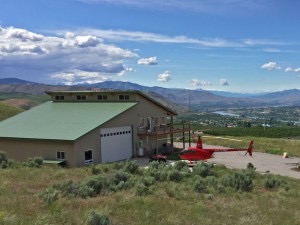
Home Helicopter
Owning a helicopter means having a safe place to keep it when it’s not flying.

And because I’m an owner, with ultimate say over how the helicopter is used, and a pilot, with a real desire to fly, I can pretty much fly where and when I want to. But when the fun is over I’m the one who has to pay the bill.

Being an owner pilot gives me a unique perspective, an insight into how owners and pilots think and what drives them.

Working Together to Achieve Goals

In a perfect world, owners would think more about pilots and work with them to help them achieve their goals. That means helping them learn, offering them variety in their flying work, and paying them properly for their experience and skill levels.

At the same time in that perfect world, pilots would think more about owners and work with them to help them achieve their goals. That means flying safely and professionally, following FAA (or other governing body) regulations, pleasing clients, taking good care of the aircraft to avoid unscheduled maintenance and repair issues, and helping to keep costs down.

What do you think? Are you an owner or pilot or both? How do you see yourself working with others? Got any stories to share? Use the comments here to get a discussion going.

Tips for Long Cross-Country Flights

A few things I’ve learned during many hours of cross-country flying.

Note: A version of this post originally appeared in AOPA’s Hover Power blog. If you’re a helicopter pilot, you owe it to yourself to check in there regularly to read great articles written by experienced helicopter pilots.

Because I take my helicopter where the work is, I often do long cross-country flights between my permanent and various temporary bases of operation. (After a lot of careful consideration, I’ve decided that it’s safer and more cost-effective to fly the helicopter from point to point than to buy a custom trailer and tow it.) I’ve been making cross-country flights in excess of 500 miles since 2004 and, for six consecutive years, made an annual round trip between the Phoenix area (where I lived) and north central Washington state (where I now live) for cherry drying work. Nowadays, I make an annual round trip between north central Washington and the Sacramento area for frost control. I flew solo on about half of these long flights; the other half was usually spent with a low-time pilot building PIC time at the controls while I tried not to be bored (or sometimes sick from PIO—long story for another time).

I flew home from California in late April. It was another solo flight, one that I’d been looking forward to mostly because I would be doing all the flying. And, instead of the 5-6 hour direct flight, I planned to fly west and then north up the California and Oregon coasts before turning inland again. Total flight time would be about 6-7 hours.

CA Coast
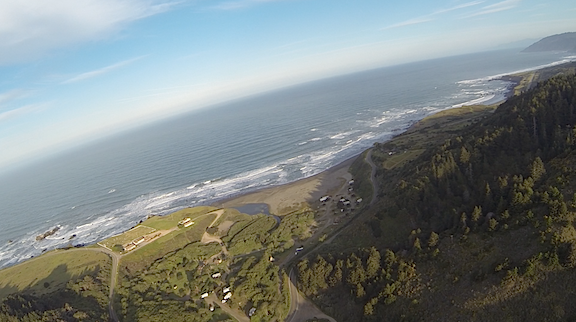
My first look at the California coast on a recent flight from the Sacramento area to Washington State.

Although the flight wasn’t as pleasant and uneventful as I’d hoped, I’m not complaining. But it did remind me of some tips I could share with other pilots preparing to do long cross-country flights.

Planning the Flight

Whether you plan to file a flight plan (which I recommend doing) or not, it’s important to plan for the flight. This pretty much goes without saying. In addition to the usual things to check in advance–weather, fuel availability, TFRs, route options–consider the following:

  • Make your flight segments shorter than they have to be. Sure, Robinson Helicopter claims I can get 16 gallons per hour in my R44 so I should be able to fly 3 hours (less 20 minutes reserve) between stops. But do I really want to fly that long without a break? Probably not–especially after those first two cups of coffee. Yet I’ve seen more than a few flight plans that had us in the air as long as possible.
  • Don’t just study your route before the trip—study everything around it. How many times have I tried to fly up or down the coast, only to be forced inland by a typical “marine layer” of fog? Too many to count. I’ve learned to study my route and alternate routes that would be easy to get to if I needed to change course.
  • Know where the fuel is along the way. Do you think you could make a planned fuel stop if you hit 30 mph headwinds that weren’t in the forecast (or flight plan)? This happened to me on my April flight. I was lucky that there were several airports with fuel along my planned route so I could stop sooner than expected.

Preparing for the Flight

Once you’ve planned the flight, you can prepare the aircraft for conducting the flight.

  • Gather and prepare your charts. If you use paper charts, mark them up with your intended route and fold them with the route easy to access. Then stack them in the order of use. That’s how I used to do it when I used paper. Sure beats fumbling around one-handed. Fortunately, we’re in the 21st century and have tools like Foreflight to provide accurate, up-to-date charts. Make sure you’ve loaded and updated all the charts you’ll need. Use the flight planning tools to mark your route. Then make sure you’re fully charged up and, if necessary, have backup power available. A backup device is handy, too. I use, in order: Foreflight on my iPad, Foreflight on my iPhone, and a panel mounted Garmin 430 GPS.
  • Make an airport and frequency list. I don’t do this much anymore–Foreflight makes it easy to get this info on the fly–but when I used paper charts, I also made a list of all the airports along the way that included frequencies for CTAF (or tower) and AWOS/ASOS (or ATIS). I could then program all the airport codes into my Garmin 430 as a flight plan and make frequency changes as I flew from one airport to the next.
  • Bring oil. I use W100Plus oil in my helicopter. It isn’t exactly easy to find. That’s why I usually bring along a quart for every expected fuel stop. That’s not to say that I’ll use it all, but it’s there when I need it.
  • Pack snacks. I always have a small cooler on board for long flights and do my best to fill it with ice (or frozen water bottles) and good snacks before I go. Even if you planned a meal stop along the way, circumstances might prevent you from making that stop. Maybe you had to change your route. Maybe the restaurant closed 30 minutes before you arrived. Or maybe the restaurant that was supposed to be a quarter-mile south is really more than a mile and a half from the only airport gate on the north end of the field. Bringing beverages like water or Gatorade-like drinks is also important. You don’t want to get dehydrated.
  • Pack an overnight bag. If you weren’t planning an overnight stay, pretend you were. A change of clothes, toothbrush, and credit card can make an unscheduled overnight stop a lot more pleasant. And if you think roughing it might be necessary, consider a sleeping bag or bedroll, either of which can make sleeping in an FBO–or the helicopter–a lot more comfortable.
  • Pack an emergency kit. I’ve spent so much time flying over remote areas that I forget that many pilots don’t. My helicopter has an emergency kit under the pilot seat that includes a first aid kit and equipment like fire starters, a signal mirror, a “space blanket,” energy bars, water, and so on. If weight is a factor–and it certainly is in my R44–you’ll have to limit what you bring. But some essentials can save your life if you’re forced to land in the middle of nowhere.
  • Make sure any required power supplies, cables, or batteries are handy. If you rely on electronic devices for navigation, you’d better make sure you’ve got back up power for them. My iPad’s battery can’t survive a 7-hour flight with the screen turned on and the GPS running. I use USB cables hooked up to a power supply to keep the battery charged. If you have a battery-powered GPS, make sure you have a spare set of batteries.
  • Set up your tunes. I listen to music or podcasts when I fly solo. My aircraft’s intercom system automatically cuts the music sound when a radio transmission comes through. Handy.

During the Flight

It’s during the flight that your preparation will really pay off. If you’ve done everything right, you’ll be prepared for anything.

  • Open your flight plan. I recommend filing and opening a flight plan for each segment of the flight. Again, with a tool like Foreflight this is very easy. I can open and close a flight plan with a few taps on my iPad screen. This beats the frustration of trying to reach Flight Service on the radio in a mountainous area when only 700 feet off the ground.
  • Remember that your flight plan is not carved in stone. I can’t tell you how many flight plans prepared by pilots who were accompanying me went out the window before the second fuel stop. Stuff happens–usually related to weather–and changes are a fact of cross-country flying life. The only time I’ve ever done a long cross-country flight plan exactly as planned was on one trip from Wenatchee, WA (EAT) to Phoenix, AZ (PHX), and that’s because our straight line route across the Nevada desert didn’t have any other options for fuel stops. We had to do it as planned.
  • Know when to pull the plug and wait it out. Weather an issue? While scud running is something we’ve all probably done at one time or another, it probably isn’t something we should be doing. Tired? Tired pilots make mistakes. When low visibility, severe turbulence, or simple pilot fatigue makes flying dangerous, it’s time to set the ship down and take a break. If you did all your homework before the flight, you should know whether there’s an airport nearby to make the wait a little more comfortable. I remember unplanned overnight stays in Rosamond, CA (not recommended) and Mammoth Lakes, CA (which would have been nicer if I’d been prepared for snow).

Experience Is Everything

Low Clouds
Hard to believe that only a few hours after hitting the coast I was forced inland by low clouds and rainy weather.

My April flight was a mixed bag. It started with a beautiful but slightly hazy dawn just west of Sacramento, a gorgeous morning on the coast, moderate turbulence with strong headwinds, low clouds, hazy coastal weather, drizzly rain, more low clouds, even lower clouds (and scud running), and bumpy air on a cloudy day. If you’re interested in details, you can read about it in my blog. Although it isn’t common, it is possible for me to have a perfectly uneventful cross-country flight of 500 miles or more in a day.

If you do enough long cross-country flights, planning and conducting a flight becomes second nature. I’m always thinking about what’s up ahead and working on ways to get more information about alternative routes when things aren’t looking as good as you want them to. I’ve occasionally used my phone to call AWOS and ATIS systems at airports I think might be along a better route. I use radar in Foreflight to get a feel for how weather is moving and where it might be better or worse than I am. I’ll change altitude to avoid mechanical turbulence. If I have to do any scud running, I do it slowly and carefully, always aware of exactly where I am and where I can go if things get worse.

It’s all about planning and preparing and using your experience to handle unexpected situations as they come up. After a while, there’s very little than can surprise you.