Doors-Off Flying

Things to keep in mind.

Note: A version of this post originally appeared in AOPA’s Hover Power blog. If you’re a helicopter pilot, you owe it to yourself to check in there regularly to read great articles written by experienced helicopter pilots.

Summer is on its way and, in most parts of the northern hemisphere, that means warm weather will soon be upon us. Not every pilot is fortunate enough to fly a helicopter with air conditioning. When I lived and flew in Arizona, it was common for me to take all of the doors off my R44 in May and leave them off until September. It was that hot every single day. (And no, I don’t miss it one bit.)

Of course, pilots don’t need warm weather as a reason to take the doors off. Sometimes the mission you’re flying requires it. Aerial photography is a great example — there aren’t too many photographers who would be willing to pay hundreds of dollars an hour to fly with you and be forced to shoot photos through highly reflective, possibly scratched Plexiglas.
Door Off
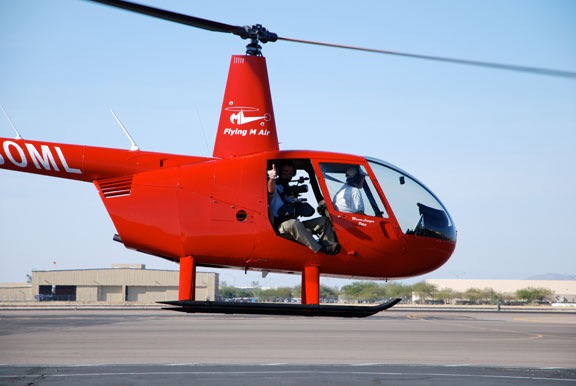
For this memorable video flight, the videographer sat behind me with his door off.

When you remove the doors from a helicopter, you add an element of risk to the flight. Fortunately, the risk can be controlled if you fully understand it and do what’s necessary to reduce or eliminate it. That’s what I want to touch upon in this post.

Loose objects

The most obvious risk is from loose objects blowing around the cockpit or, worse yet, exiting the aircraft. This is a real danger, especially if an object hits the tail rotor or someone/something on the ground.

Want some examples of how dangerous this can be?

  • NTSB WPR14CA363
    “While in cruise flight an unsecured jacket departed the helicopter through an open window. The tail rotor drive shaft sheared as a result of the jacket’s contact with the tail rotors. The pilot subsequently initiated a forced landing to an orchard where during landing, the main rotors struck and separated the tailboom.”
  • NTSB WPR13CA071
    “Prior to the flight, the doors were removed in order to make it easier for the passengers to board and exit the helicopter…. After the two passengers were transported to a work site location, the right rear passenger exited the helicopter and placed the headset on the hook located behind the front seats. After departing the site, about 3 to 5 minutes later while en route at an elevation of about 1,000 feet above ground level, the pilot felt something strike the helicopter. After landing and upon inspecting the helicopter, the pilot discovered that the right rear headset was missing and that the leading edge of the tail rotor had been damaged.”
  • NTSB LAX03TA150
    “While in cruise flight, the back door on the helicopter opened, and a flight jacket that had been unsecured in the back seat departed the helicopter and became entangled in the tail rotor assembly. The tail rotor assembly subsequently separated from the tail boom, and the pilot was unable to maintain control of the helicopter.”
  • NTSB FTW86LA047
    “The pilot failed to assure the cabin door was properly closed before flight, or the cabin door just popped open during flight, allowing an unsecured life vest to blow out the door and into the tail rotor blades. This resulted in the entire tail rotor assembly departing the helicopter.”

(As some of these examples show, you don’t need to have the doors removed to have an unsecured item depart the helicopter and get into the tail rotor.)

Robinson Helicopter warns about this in Safety Notice SN-30, “Loose Objects Can be Fatal.” It recommends that pilots firmly latch all doors and even goes so far to recommend that pilot never fly with a left door removed. (Remember, the tail rotor is on the left side in a Robinson and many other helicopter models.)

I know that my engine starting check list includes an item to assure that loose items are secure. Yours should, too. While this is always important, it’s vital for doors-off flight.

Be sure you warn passengers of the danger of an item exiting the aircraft. Even something as small as a lens cap or lens hood can do significant damage to the tail rotor in flight.

Never Exceed Speed

You might not realize this, but your helicopter’s never exceed speed might be reduced with the doors off. On a Robinson R44, for example, Vne is reduced to 100 knots with the doors off, even if other conditions such as altitude and temperature would allow a faster speed.

My understanding from the Robinson Factory Safety Course is that this reduction of Vne is for structural reasons. (If someone knows better, please correct me in the comments.) There’s more buffeting wind inside the cabin with one or more doors off than with all doors on.

Check the Pilot Operating Handbook for the aircraft you fly the next time you remove doors to make sure you don’t operate beyond doors-off Vne.

Securing Passengers

This might seem like a no-brainer, but if you’re going to remove doors, your passengers had better be secured in their seats with either seat belts or harnesses.

Because some of my aerial photography or video clients like a greater range of movement in their seats than seat belts allow, I have a mountain climbing harness with a suitable strap for securing it to the aircraft frame. I make this available to clients as an option if they don’t have their own. Under no circumstances do I allow my passengers to fly without being secured, especially when their doors are off.

Keep in mind that while a photographer might use a harness to secure himself in the aircraft, you must make sure he knows how to release the harness from the aircraft in the event of an emergency — just as your preflight briefing must tell passengers how to release their seat belts.

Dangling Seat Belts

Of course, it was my generous offering of a harness to a photographer that resulted in more than $2,000 of damage to my aircraft when he used the harness but failed to secure the seat belt at his seat. The seat belt buckle dangled outside the aircraft for the duration of our 90-minute video flight chasing racing trucks over desert terrain. On landing, the passenger side fuel tank and area just outside the door frame had at least 50 dings and paint chips in it. How he didn’t hear it repeatedly striking the aircraft near his head is something I’ll never figure out.

Of course, it was my fault for not catching this prior to starting up and taking off. Expensive lesson learned.

Conclusion

While I don’t think there’s anything wrong with taking the doors off a helicopter prior to flight, it does give the pilot more responsibilities to assure that everything is secure and all passengers are properly briefed.

Or isn’t that something we’re already supposed to be doing?
Pay the Pilot

Yes, I still get requests like this.

Way back in 2009, I blogged about a video of Harlan Ellison ranting against people who expect professionals to write for free. It’s time to revisit that topic for two reasons.

I Can’t Use No Stinkin’ Badges

First, a Facebook friend pointed out that Idiot’s Guides, an imprint of Penguin Random House, is looking for authors and editors for books and articles. Compensation? “Badges” and exposure. Apparently some writers have mortgages and utility bills that accept that for payment. (Sadly, mine don’t.)

That set off the usual discussion about new writers needing to break into the field and obtain “published clips” countered by my argument that if enough writers are willing to write for free, all the clips in the world aren’t going to help a writer get past the freebie stage because there simply won’t be any paying work for him/her. Publishers don’t seem to care much about quality these days — read most online publications to see for yourself — they just want words that Google well. That’s why there are so many content mills.

I am hugely opposed to writing for free for any publication that makes money from my work. If a publication values your work, it should pay you for it. Period. If it doesn’t, you shouldn’t be writing for it.

If you have a differing opinion and feel a need to voice it here in comments, be my guest. Just (1) stay civil if you want your comment to actually appear and (2) don’t expect to change my mind. You might want to watch that Harlan Ellison video first.

Promoting My Company on Your “Social Medias” Doesn’t Pay for Fuel (or Maintenance or Insurance)

Last night, I got the following email message, submitted using a form on the Flying M Air website; I’ve obviously redacted identifying information:

Phone:

Source: A Search Engine

Message:
Hello,
my name is ***** and I’m a landscape photographer. I am in Page now and I was looking for joining a flight over Lake Powell/Alstrom Point tomorrow 05/27 or in the next days if not available. I would like to know if you would be interested in a collaboration. I would promote your company through my social medias and I will give you the rights to use some of the images I will take for your promotional purposes (such as website and social medias). Also I’m traveling with my partner, the travel blogger behind *****.com and she would also promote you through her social medias + mention you on her blog. Kindly let me know if you are interested in my proposal. If you want to check out my work please follow this link: www.*****.com

Best regards,
*****

I need to point out that this person didn’t think it was appropriate to include his phone number in the field conveniently provided for it. So if I decided that I wanted to take him flying the next day at a location 736 NM from my base of operations, the only way I had to contact him was by email or to go to his website and attempt to find a phone number.

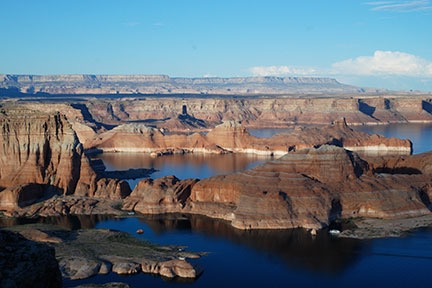
Alstrom Point
The view from above Alstrom Point at Lake Powell. This is just one of at least a dozen good photos I have from this area.

And yes, Lake Powell is over 700 nautical miles from my base of operations. The same contact page he used to send me an email clearly displays my mailing address in Washington state. The entire site provides information about the tours and other services I offer in the Wenatchee area of Washington. So I’m not quite sure why he thought it was remotely possible for me to fly him the next day at a place 700 miles away.

I did a Twitter and Google search for this person. I could not identify his Twitter account and he did not appear on the first page of search results for Google. This pretty much confirms my suspicion that his “social medias” wouldn’t have any value at all.

My first instinct was to simply delete the email. And I did. But then I thought about how well it would work as an example for this discussion in my blog. So I pulled it out of the trash and started writing this.

Then I thought about responding to it. And I wrote a response:

Thanks for taking the time to inquire about our aerial photography services.

Apparently you missed the part on our Contact page — coincidentally the same page where you found the form to email us — where we provided our mailing address in Washington state. Lake Powell is 739 nautical miles from our base, so the possibility of us flying there today to take advantage of your generous collaboration offer is pretty much nil.

If you’re serious about flying with us at Lake Powell, you might be interested in this offer for next spring:
http://www.flyingmair.com/news/lake-powell-photo-flights-april-2017/

You might also benefit from reading and understanding the information here:
http://www.flyingmair.com/aerial-photography/rates-fees/

A “collaboration” has to be mutually beneficial. I don’t need aerial photos of Lake Powell — I have hundreds of them, some of which appear on the Flying M Air site. Some of the photos in my collection were given to me by photographers who also paid me for their flights. I can’t imagine how more photos or promotion on your “social medias” would help me buy fuel, pay for maintenance, or cover my $15,000/year insurance bill.

And by the way, which ***** are you on Twitter? I couldn’t find you. And a Google search for your name didn’t bring up any landscape photographer on the first page of results. Seems to me that you need to fix your “social medias” before you offer them up as compensation for services rendered.

Enjoy your trip to Lake Powell.

Maria Langer
Owner, Flying M Air

I haven’t sent it yet. Should I?


May 25, 2916, 9 AM Update:

Prompted by Brian Dunning’s comment below, I’ve recomposed my response. What do you think of this?

Thanks for taking the time to inquire about our aerial photography services.

Unfortunately, we’re not available at Lake Powell today or the 27th or any other time this week. We are planning a trip there in April. You can learn more about opportunities to fly with us there then on this page of our website:
http://www.flyingmair.com/news/lake-powell-photo-flights-april-2017/

You might also benefit from checking out the additional information here:
http://www.flyingmair.com/aerial-photography/rates-fees/

But your timing is perfect! I have a photography job here near our Washington base that needs to be done this weekend and I think we might be able to collaborate on that. I’ll need about a dozen 20 megapixel photos of the Rock Island Dam shot with a 10mm fisheye lens from a boat near where the water is released from the dam. I’m sure you have or can get the equipment needed for creating such photos. I would sell your photos to my client and mention your name to him; maybe he’ll hire you in the future! I’d also show them off on my social medias to help promote your work. And a friend of mine who has a photography blog might mention your name, too.

Kindly let me know if you’re interested in my proposal.

Best regards,
Maria Langer
Owner, Flying M Air

Cherry Drying: A Narrated Video

Experience the glamour of being a helicopter pilot!

Drying Cherries
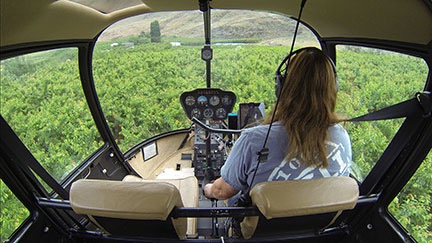
The camera position offers a clear view out the windscreen, as well as the instrument panel, and my hand on the collective. It also offers partial views out the side windows.

I’ve been fiddling around with my GoPro camera setup. A few years back, I positioned a mount between the two back seats. A few weeks ago, I put my Hero 3 Black in there and played around with various video options. I was satisfied with — I can’t say I really like — the results. Other people who saw stills and videos seem to like it a lot.

I think adding audio really made it better, though. Through the use of a cable I bought online, I can get audio right from the helicopter’s intercom system. That means you can hear anyone talking in a headset as well as radio communication. I think this can be an excellent teaching tool.

Cherry Drying?

I’ve been drying cherries in Washington state since 2008. As I write this, I’m starting my ninth season.

If you have no idea what this is all about, here’s the short version: In the last few weeks before harvest, cherries are susceptible to damage when it rains. When the cherries get wet, they absorb water though the skin and they split. They can also get mold or mildew growth. It’s bad; if 50% or more of a grower’s crop is damaged, he won’t pick at all. So growers hire helicopters with pilots to stand by in the area. When it rains, they call us out to hover low over the trees. This shakes the branches, thus shaking off most of the water.

Want more info? Here’s a post I wrote about this years ago.

I gave it a try on Saturday when I dried a new (to me) cherry orchard in East Wenatchee. The resulting video was about 45 minutes long. But when I edited out the flight to the orchard and the flight home, it shortened up to 25 minutes.

So if you’d like a good, long look at what it’s like to fly a helicopter low and slow over 16 acres of cherry trees in a wire-rich environment, here’s your chance. I warn you now: it isn’t riveting stuff. In fact, it’s downright tedious. The only thing that makes it remotely sharable is the narration, where I chatter away about what I’m doing and thinking. See for yourself:

I warned you!

And yes, I should be wearing a flight suit. I promise to wear it for the rest of the season.

And while I should also be wearing my helmet, there’s a limit to how much discomfort I’m willing to endure these days while doing this work.

Easy Pizza Dough

You can make your own pizza at home.

Pizza
Homemade pizza with morel mushrooms, leeks, minced garlic, cheese, and an egg.

Last week, after a successful morel mushroom hunt, I went in search of recipes for morel mushrooms. Along the way, I found a recipe on Saveur’s website for Pizza with Ramps, Morels, and Eggs. I made the pizza on Thursday, substituting leeks and minced garlic for the ramps, which were not available locally. (Note to self: plant garlic this autumn.) It was delicious. But the thing that impressed me most was how easy it was to make that pizza dough.

A few people who saw my photo of the pizza on Facebook asked whether I’d made the crust from scratch. I did. Here’s my version of just the pizza dough recipe. I found some problems with Saveur’s recipe as published and have made changes accordingly here.

Ingredients:

  • 3/4 cup water, heated to 115°F. I heat the water in the microwave, although I suspect my tap water would come out hot enough. Use a thermometer to check it. Too cold and the yeast won’t activate. Too hot and the yeast could die.
  • 1 packet (or 2-1/4 tsps) active dry yeast. I buy yeast in a jar so I measure it out.
  • 1/2 tsp sugar. Sugar feeds the yeast. Do not omit it.
  • 1-3/4 to 2 cups flour. The recipe called for 1-3/4 cups, but I needed more to make a dough that could be handled. You’ll also need some for dusting a work surface.
  • 1/2 tsp salt.
  • Olive oil.

Instructions:

  1. In the bowl of a stand mixer fitted with a dough hook, combine water, yeast, and sugar. Let sit until foamy, approximately 10 minutes.
  2. Add 1-3/4 cup flour and salt and mix on medium speed until dough forms. Add additional flour if necessary to stiffen up the dough until it’s still very soft but workable. I added at least 2 tablespoons more.
  3. Increase speed to medium-high and knead for about 5 minutes.
  4. Use olive oil to lightly coat a clean bowl. Transfer dough to oiled bowl and turn to coat dough with oil. (The Saveur recipe skipped this step; as a result, the dough stuck to the plastic wrap. If you prefer, you can skip the oil and dust the dough with flour to prevent sticking.)
  5. Cover dough with plastic wrap and set in a warm place to rise for 30 minutes. My oven has a “Proof” function so I used it.
  6. While you’re waiting for the dough, prepare the topping(s) for your pizza.
  7. Remove the dough from the bowl and move it to a lightly floured workspace. (This is one of the reasons I love having granite countertops.)
  8. Split the dough into the number of pizzas you want. This recipe should make 2 8-inch pizzas, but there’s no reason why you can’t divide it into 3 or even 4 or leave it as one large pizza.
  9. Work each piece of dough into a flattened shape about 3/4 inches thick. While the original recipe uses the word “roll” and I used a rolling pin for the first of two pizzas, I used my hands for the second one.
  10. Place the dough on a piece of parchment paper on a flat pan.
  11. If desired, brush each pizza with olive oil. Then top with desired toppings.
  12. Bake at 450°F for 15 to 20 minutes or until golden brown.

One of my favorite pizza toppings is eggplant sautéed with garlic and olive oil and then topped with goat cheese crumbles. Morels and leeks with garlic and butter (from the Saveur recipe linked above) wasn’t bad either.

The best thing about this recipe: it’s quick. You can go from a pile of ingredients to finished pizzas in less than an hour. And it tastes good, too.

Just Say No to Traffic Patterns

Why waste time flying around the airport or hogging up the runway when you just want to get on the ground?

Note: A version of this post originally appeared in AOPA’s Hover Power blog. If you’re a helicopter pilot, you owe it to yourself to check in there regularly to read great articles written by experienced helicopter pilots.

Over the past nine or so years, I’ve done more than my fair share of long cross-country flights with newly minted commercial pilots or CFIs. In most cases, the purpose of the flight was to reposition my helicopter at a temporary base of operations 500 or more miles away and the typically 300-hour pilot on board with me was interested in building R44 time. I was on board as a passenger and got a chance to observe the things these pilots did — or didn’t do. I think the fact that I’ve never been a flight instructor gives me a unique perspective on what I observed.

One thing I’ve come to realize is that typical flight training does very little to prepare students for a commercial flying career. Instead, students are taught to perform maneuvers “by the book,” often so they can teach those maneuvers to their own students in the future. While it’s obviously important to know how to perform maneuvers properly, there are other concerns that are important to commercial pilots. In my upcoming posts for Hover Power, I’ll tackle a few of them, starting with traffic patterns.

I can tell lots of stories about new commercial pilots and CFIs entering traffic patterns to land for fuel at nontowered airports in the middle of nowhere. I can even tell you about the pilot who landed on the numbers of an empty airport’s runway, hover-taxied to the taxiway, and then hover-taxied a half mile down the taxiway to reach the midfield fuel island. They did this because that’s what they had been trained to do. That’s all they knew about landing at airports.

Our flight training teaches us a few things about airport operations, most of which are school-established routines at the handful of airports where we train. There’s a procedure for departing flight school helipads and there may be a procedure for traveling to a practice field nearby. Once there, it’s traffic patterns, over and over. Normal landing and takeoff, steep approach, maximum performance takeoff, run-on landing, quick stop, autorotation–all of these standard maneuvers are taught as part of a traffic pattern. It gets ingrained into our minds that any time we want to land at an airport, we need to enter a traffic pattern.

The reality is very different. Remember, FAR Part 91.129 (f)(2) states, “Avoid the flow of fixed-wing aircraft, if operating a helicopter.” Your flight school may have complied with this requirement by doing a modified traffic pattern at the airport, operating at a lower altitude than the typical airplane traffic pattern altitude of 1,000 feet, or landing on a taxiway rather than a runway. But despite any modifications, it’s still a traffic pattern.

But is a traffic pattern required for landing? No.

Experienced commercial pilots — and their savvier clients — know that traffic patterns waste time. And while the pilot might not be concerned about an extra few minutes to make a landing, the person paying for the flight will be. Why waste time flying around the airport before landing at it? Instead, fly directly to or near your destination and land there.

Before I go on, take a moment to consider why airplanes use traffic patterns. They enter on a 45-degree angle to the pattern to help them see other traffic already in the pattern. They then follow the same course as the other planes so there are no surprises. This is especially important at nontowered airports that don’t have controllers keeping an eye out for traffic conflicts.

But helicopters are avoiding this flow, normally by flying beneath the airplane TPA. As long as they stay away from areas where airplanes might be flying — remember, avoid the flow — they don’t need to worry much about airplane traffic. Instead, they need to look out for other helicopters and obstacles closer to the ground. If a runway crossing is required, special vigilance is needed to make sure an airplane (or helicopter) isn’t using the runway to take off or land. Obviously, communication is important, especially at a busy airport when a runway crossing is involved.

Now you might be thinking that this advice only applies to nontowered airports, where the pilot is free to do what he thinks is best for the flight. But this can also apply to towered airports.

Airport controllers who are accustomed to helicopter traffic and understand helicopter capabilities may instruct you to fly to and land at your destination on the field. You must be prepared to do this, even at an airport you’ve never been to before. That’s part of what your preflight planning is all about. Consult airport diagrams or even satellite images of the airport. Know where you’ll be flying from and where you need to park. Imagine the route to that spot. Be sure to take note of where the tower is–it’s often a great landmark for navigating while close to the ground. Never assume the controller will put you in a traffic pattern. And don’t be afraid to admit you’re unfamiliar if you didn’t do your homework or if things in real life look different from how they looked on paper or a computer screen.

What if a controller does instruct you to enter a traffic pattern and you don’t want to? As amazing as this might seem to new pilots, you can ask the controller to allow you to go direct to your airport destination.

PRC
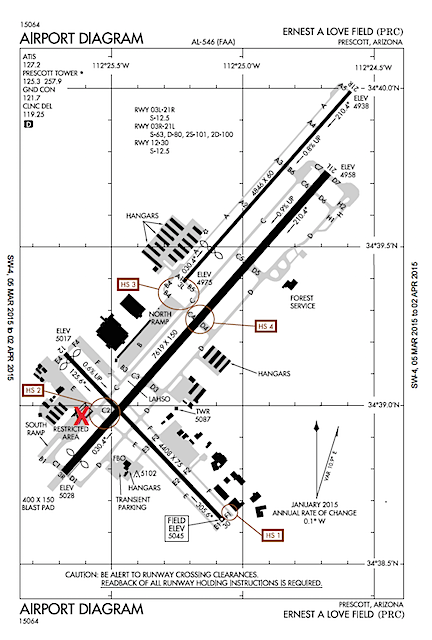
The airport diagram for Prescott. The X marks the location of the restaurant and we were coming in from the west. Runways 21L and 21R were active. The tower instructed us to fly all the way around the south end of the airport, at least three miles out, to get into a pattern for Runway 21.

I’ll never forget the flight I had one day as a passenger on my friend Jim’s Hughes 500c. Jim was a retired airline pilot who had been flying helicopters for at least 10 years. We were flying into Prescott Airport (PRC) in Arizona for lunch. When Jim called the tower, he asked for landing at the restaurant. The controller told Jim to enter a traffic pattern that would have required him to fly all the way around the airport, taking him at least 10 minutes out of his way. “Negative,” Jim barked into his microphone. “One-Two-Three-Alpha-Bravo is a helicopter. We want to land direct at the restaurant.” A new pilot at the time, I was shocked by his tone of voice. There was an uncomfortable silence and then the controller came back on and told him he could fly direct to restaurant parking.

Will the tower always grant your request? It depends on the situation. If a runway crossing is involved and the airport is busy with traffic, they might not. It might be safer or more convenient for them to keep you in a pattern with the airplanes. But it can’t hurt to ask, although I don’t think I’d be as aggressive as Jim was that day.

One of the big challenges of becoming a commercial helicopter pilot is thinking like a commercial helicopter pilot. There are things we can do that seem to conflict with what we were taught. Landing at airports without the formality of a traffic pattern is one of them.