Shop locally or online, reuse, recycle.
 Christmas can be one of the most wasteful times of the year. For most people, it involves a lot of driving around from store to store; getting stuck in traffic; cruising parking lots for the best spot at the mall; buying gifts recipients probably won’t like (and hence, have to return with even more mall visits); covering gifts in rolls of colored paper with ribbons and bows that will soon be discarded; driving to parties here, there, and everywhere; cooking more food than what can be eaten before it goes bad; etc., etc. And let’s not even get started on the light shows that too many people erect. Seriously: Is it that important for your house to be seen from space?
I know: it’s all part of the tradition of Christmas. I wouldn’t dream of making substantial changes in it — I really don’t need to add the receipt of hate mail to my working day.
But I do want to suggest looking at with the thought of reducing wastefulness related to shopping. And that’s what this post, prompted in part by “I’m Dreaming of a Green Christmas” by Siân Berry in The Atheist’s Guide to Christmas, is all about.
If You Can, Shop Locally
In a perfect world, you’d be able to walk “downtown” in your city with a bunch of canvas shopping bags, visit a handful of shops where the owners or clerks knew you by name, and leave with all your shopping done.
I remember that perfect world from when I was a kid. My sister and I would do most of our Christmas shopping in Cresskill’s local pharmacy — Scofield’s — which also sold perfumes and other small gift items. (I distinctly remember buying my father a tie there once.) They knew us, we knew them. It was a bike ride away and we could bring home the goods in our bike baskets. Later, when we got older, we’d ride our bikes to Bergenfield, where they had a lot more shops and options.
Those days are just about gone. Downtowns have been mostly killed off by malls and superstores like Walmart. Gift recipients in this high tech age expect the kind of merchandise not available at the local Hallmark shop. But if you live somewhere with a vibrant downtown area, try hard to shop there. Not only will you be supporting local merchants and the economic viability of your town, but you’ll keep your carbon footprint a lot lower than if you started driving around to the malls.
If You Can’t Shop Locally, Shop Online
Sadly shopping locally is not an option for me. But you couldn’t pay me to step foot in a mall in December.
This year (and most other years), I did 90% of my holiday shopping online and had gifts shipped directly to recipients. I also received 90% of my gifts by USPS and UPS, shipped directly from stores like Amazon.com. In most cases, the gifts I purchased (and assume received; I haven’t opened them yet) are items that I wanted — items that appeared on a personal wish list at the online store in which they were bought.
There are two benefits for shopping online with wish lists:
- You are absolutely certain to get the recipient exactly what he or she wanted. No disappointments, no pretending to like gifts. Best of all: no returns.
- Convenience. What could be easier than going online, clicking a few links and buttons, and entering payment information?
What most people might not think about is that shopping online is actually “greener” than making several trips to the mall. Sure, all these items need to be shipped to their recipients, but the shipping services are making the rounds anyway. Face it: UPS is going to visit Wickenburg twice a day on weekdays whether its trucks are filled or not. I’m actually reducing greenhouse gases by helping to fill their trucks instead of by hopping in my car and making the 80-mile round trip trek to the nearest mall by myself. And by having gifts shipped directly to the recipients, I don’t waste time, money, packaging materials, and greenhouse gases to ship them twice.
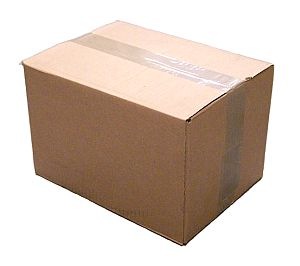 Here’s a tip: if you’re flying out to visit family or friends, ship the gifts there with instructions not to open them. Then, when you arrive, sort through the gifts and wrap them for that big moment. Or skip the wrapping; who says “wrapping” can’t be cardboard shipping boxes?
Ordering Online? Recycle those Packing Materials!
I’m sure my family is not the only one to recognize the convenience of shopping online to get gift recipients exactly what they want. As a result, there’s a lot of cardboard boxes, packing peanuts, bubble wrap, and plastic airbags shuffling around.
Depending on where you live, you might not need to throw all that stuff away. I have three choices for dealing with packing materials:
- Reuse it. I keep a very large plastic bag in my garage which I fill with bubble wrap, foam, and those plastic airbags. I have another smaller bag I use for packing peanuts. I also keep a few select size boxes. Then, when I need to pack something to ship it out, I have all the free packing materials I need. Not only does this save money, but by reusing materials, I’m keeping them out of landfills and recycling centers.
- Hand it off to someone else who will reuse it. In Wickenburg, one of our shipping centers, Kaley’s, welcomes clean used boxes and packing material. So when my huge bag of bubble wrap or smaller bag of packing peanuts gets full enough to start a new bag, I take the filled bag to Kaley’s and they use it to pack items for their customers. It’s easy to find someone to take these things if they’re clean and neatly packaged up. Heck, I was in Page, AZ for a few weeks this past autumn and wound up with two big bags of packing peanuts — I brought them to the nearest gift shop with a “We Ship” sign on the window and they were thrilled to get them.
- Recycle. If you don’t have the room to store these materials, know you won’t need them, or have no one to hand them off to, take them to the recycling center. In most cases, they only thing they’ll want are the boxes, which must be broken down. That means you’ll need to discard the other packing materials, filling landfills with material that may take forever to break down. (But have you really tried hard enough to find a home for them?)
And, of course, you should always recycle the wrapping paper and other recyclable materials that are part of Christmas. In my home, we actually recycle more than we throw away.
How Else Can You Make Christmas Greener?
If you’re interested in this, I highly recommend “I’m Dreaming of a Green Christmas” by Siân Berry for some really great tips. But I’m sure you can come up with some ideas on your own. Just think about what’s wasteful and reduce that waste. If everyone did just a little, it would make a big difference.
And possibly the best part about all this is that when you reduce waste, you’re likely saving money, too.
Have a great Christmas holiday!

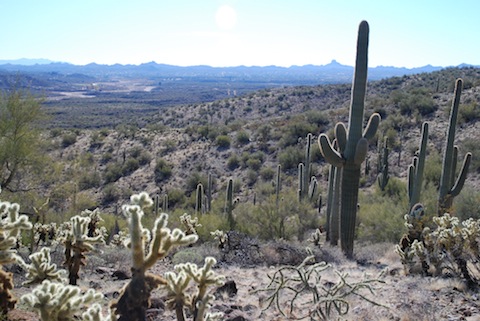 We made a sharp left to continue along Rincon Road. It climbs out of the river area into the low mountains northwest of town. At an obvious intersection, we made a right to continue on Rincon. This short piece of road is extremely rough but offers outstanding views back toward Wickenburg, as well as lots of typical Sonoran desert vegetation. And rocks — did I mention the rocks?
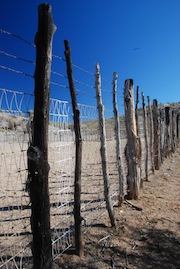
 There were some exceptions, of course. One was Sand Mill, site of windmill, cattle tanks, and corral. I have a thing about windmills and did my usual study of this one. Unfortunately, it was broken, although I do think it could be repaired. What I found more interesting was the welded iron water tank behind it and the fencing around the corral — which was in unusually good shape. There had been two cows standing in the area when we drove up, but they ran off when we stopped. Cows out in the open range are funny like that. No matter how hard you try to not spook them, they get spooked anyway.

 Later on, near a place called Brick Tank, I managed to get this shot of two cows. They stood there for about two minutes just staring at us as I rolled the Jeep into position and framed this shot. Then, just as I pushed down on the shutter, the smaller one (on the left) turned her head and ran off. The other followed, of course.
 We also passed a herd of about eight mule deer along the way. I stopped while Mike tried to get some photos. They weren’t quite close enough for our lenses — we hadn’t brought along my 70-300mm zoom. Here’s my only shot, which I admit isn’t very good. I cropped it here.
 We drove across Antelope Creek, which still running as a small stream with a mix of spring water and runoff from snow and rain at higher elevations the previous week. I threw the Jeep into 4WD and powered up a steep, narrow Jeep trail with lots of loose rock. When I leveled out and could see the road beyond, I realized that I just wasn’t prepared to go any farther. The road was very narrow, very steep, and covered with very loose rock. I was tired from almost 2 hours of driving on back roads. I’d had enough rough road exploring.
 We got out for a while to take photographs in the area. There was a lot of slate-like rock, standing straight up. Much of the rock was covered with orange and yellow lichen. It made an interesting contrast to the green and brown of the desert, the blue of the sky, and the deep shadows cast by late afternoon sun. The light hadn’t gotten “good” yet, but it wasn’t bad — probably because of its low winter angle.
 We also walked down to Antelope Creek. It was great to see so much water flowing in the desert. I knew that downstream, the flow dried up before it even reached Stanton. I tried to get some photos that showed reflections in pools of relatively smooth water. The water, in some places, was about two feet deep. Although Jack the Dog drank some of it without side effect, I wouldn’t think of drinking it without treating it first; just too much open range and wildlife in the area. (That’s why its best to bring your own water, even if you know you might find some along the way.)
 But first, we stopped at one of the few buildings that remain at Octave, another ghost town. The afternoon sun had drifted down quite low when we arrived and I think I got some of my best photos of the day. I have a thing about photographing abandoned buildings, and even though this was a small one, it kept me busy for a good 20 minutes. This is one of my favorite shots.
 We also stopped alongside the road where the boulder-and-saguaro-strewn side of Rich Hill was illuminated by the low-lying sun. As you look at this photo, remember that each cactus stands at least 15 feet tall. Really gives you an idea of how big the boulders are, no? The horizontal version of this photo will be my desktop pattern.
 If you’re interested in following our route, I offer
 Anyway, out my window is the harbor and quite a few of the boats are decorated for the holidays. Lots of strings of lights up on sailboat masts. Plenty of other boats lighted, too. In fact, there are probably more lights on the boats here than on houses in Wickenburg.