Christmas Off-the-Grid, Part I

Baby, it’s cold inside!

We drove up to our camping shed at Howard Mesa this morning. Just me, Mike, Alex the Bird, and Jack the dog. We left the horses home. It’s getting mighty cold up north these days and I really didn’t think it was fair to the horses to make them stand outside with no shelter when nighttime temperatures were dipping into the teens. The problem of shelter becomes even more serious when there’s a chance of snow for Tuesday.

The ride was long and uneventful. We made two stops: the Ace hardware store in Chino Valley for a gasket and some pipe insulation and the Safeway in Chino Valley for lattes and discounted fuel for Mike’s truck.

Mt. Humphreys and the San Francisco Peaks had a nice thick cap of snow. The air was crystal clear and we could see the mountains when we were still in Prescott — at least 50 miles away. It looked amazing.

When we got on I-40 west of Williams, there was snow on the ground. Well, on the north side of hills, trees, and other shade-producing structures. Any area exposed to the sun was free of snow. But there was a considerable amount in the shady area. We started speculating on whether there would be snow on the ground at our place.

I took some video along the way, with the usual idea of making a little DVD to send the family. You know: how we spent Christmas off the grid. I have quite a library of video tapes I’ll probably never show to anyone.

When we got to Howard Mesa, there was some snow on the ground and on the road. It was about noon and the sun was bright and warm. The outside temperature was about 40°F. The snow was melting into the dirt below it, making the road slick wherever the gravel-like cinders had been crushed or worn away. The truck had one brief skidding incident before Mike slowed down.

Up on top of the mesa at our place, it was as deserted as usual. I got out to unlock the gate, coating the bottoms of my shoes with gooey mud and gravel. Mike parked up by the shed so we wouldn’t have to walk far with all the stuff we’d brought up. (For some reason, we brought a ton of stuff with us — I think the Christmas presents took up most of the space.) Then we went inside the shed to survey the situation.

For years, we suffered with mice, both in our camper and later, in the camping shed. It took us the best part of two years to find all the holes they were using to get into the walls and close them up. I’m still amazed when we come in after being away for a month or two and there aren’t any mouse droppings. There were none today, either.

But there was ice. We have a 5-gallon water jug we keep on a plastic holder with a spout. The water bottle was frozen almost solid. We had to carry it outside into the sun to get the defrost cycle going. The dish soap was frozen and so was the 409 cleaner.

Mike had some small problems getting the heater going, but it was soon filling the place with warm air. I started up the gas fridge and moved everything from the cooler into it. It was already cold in there, which would save some energy anyway. Then I started up the oven and threw in a frozen pie. When it’s cold up here, we bake a lot.

The big problem seemed to be the water pump. At first, it wouldn’t work at all. Mike pulled away the wall so he could check it out and the warm air from the room slipped into the small space. He was in the process of testing it with some electric testing equipment when it suddenly went on. Unfortunately, all the pipes in the area seemed to be frozen so the water wouldn’t flow. We’d brought our gas bottle heater and Mike set it up to throw heat on the whole area. After a while, the pump started working better and soon we had water in the sinks and shower. The plastic hosing to the toilet is frozen, though, so it’ll be a while before the water gets in there. We’ve got a bucket full of water for manual flushing.

As I type this, Mike is wrapping the 4-foot hose from our water tank to the shed with heat trace tape. We’re hoping it keeps the hose and valves from freezing overnight so we’ll have running water all night long and — more important — in the morning when we get up.
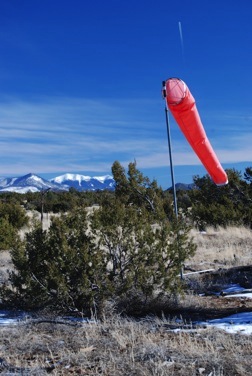
Howard Mesa Christmas I went out for a while and took some photos. It’s so perfectly clear and beautiful outside, with just enough snow to remind you that it’s winter. There’s just a slight breeze blowing; if it picks up it’ll get very cold outside.

Tonight we’re meeting some friends for a big dinner at El Tovar in Grand Canyon National Park. Last year, we had a party of six in the private dining room on Christmas Eve. This year, it’s a party of ten in the same room a day earlier.

The moon is full tonight and I’m bringing my tripod along. I’m hoping the wind stays calm so we can stop at Mather Point for some moonlight photos of the canyon.

More later…
First Memories of Las Vegas

Things change.

We first visited Las Vegas, NV back in the late 1980s. I was working for ADP at the time as an Internal Auditor. Each spring, they’d send me to Los Angeles to do a three-week audit of their Employer Services location in Buena Park. The deal was, they’d either fly me home for one of the two weekends or fly my significant other out. We always had them fly Mike out on the second weekend. He’d spend a week goofing off while I worked each day, then I’d take a week off and go on vacation with him before we both flew back to New Jersey. We saw quite a bit of the western part of the state that way, with my company picking up the airfare for our vacations.

In 1988 or thereabouts, we finished up my April visit to Los Angeles by renting a car and driving to Death Valley, Las Vegas, and Lake Mead. We did a lot of camping, but also stayed in hotels.

Las Vegas was an afterthought. We’re not gamblers and, back then, Las Vegas wasn’t quite what it is today. We figured that since we were in the area, we’d spend the night before heading out to Lake Mead, a mere 20-30 miles away.

We had no reservations, so we used the AAA travel guide — which was our bible during our early explorations — and found that the Frontier Hotel had rooms within our price range. We drove up, parked right in the driveway under the overhanging sign, and went in. We got a room somewhere in there — I don’t remember the details well, so it couldn’t have been too good or bad — moved the car to a regular parking spot, and settled in.

The most memorable part of the Las Vegas stay was walking from the Frontier all the way to the Tropicana along the Strip — a distance of about two miles. I wore moccasins in those days and had made the fatal error of going sock-less. The blisters on the backs of my heels were terrible. We had to take cab back.

We did see the show there — Folies Bergere, which is still running — and it was the first time I’d ever seen tasteful topless dancing. (And yes, I’ve been to New Orleans.)

Anyway, this past weekend, Mike and I went back, mostly to visit with some friends of ours who were in Las Vegas on business. We’ve been to Las Vegas dozens of times since that first stay and have watched it change from a quirky gambling town to the outrageous mega theme park it is today. But this last stay took us on a walk past the old Frontier. I wasn’t surprised — but I was kind of sad — to see it being torn down.

Say Goodbye to the FrontierThis photo shows the main entrance to the place as it looked on Friday, December 14. For all I know, it might be completely gone today, only 4 days later. That’s the overhang I remember driving under in our rental car while we went in to get a room.

Las Vegas is changing faster than anywhere else. I wonder how long before the hotels that were built since our first trip there will be torn down to make room for even newer ones?

Care Packages, Continued

The worst part is the paperwork.

As I type this quick blog entry, I’m waiting for my printer to spit out all five pages of the 5th customs form I’ve prepared today. I’m doing all this on the USPS Web site, which is workable but not very well designed. For some reason, it takes at least a minute for my printer to process each page of the form, which only takes up 1/2 a page. I’m cutting off 1/2 sheet for each of the 5 pages. That’s 30 half pages of junk paper for the 6 forms I’m creating.

How wasteful. But I’m sure I’ll wind up using it for scrap paper.

I’ve finally gotten around to preparing the next 6 care packages. I would have prepared all 8 that I needed to make my self-imposed number of 10, but AnySoldier.com will only let me have 2 addresses a day and I’m still short two. Why the limit? Apparently slime ball marketers were sending junk mail to our men and women in the armed forces. I know they want mail, but no one wants junk mail.

The packages are full of yummy goodies (beside my homemade oatmeal chocolate chip cookies) and personal hygiene items requested specifically by the units. Since I spent a bit more than I’d expected to on package contents, my husband kindly chipped in for the postage.

Oddly enough, taking care of the postage and customs forms is more time consuming than packing the boxes and inserting personalized notes of thanks.

It’s really a shame, since I think a lot more people would send items to the troops if they didn’t have such a time-consuming hassle with customs forms.

But I’m almost done. Just one more 5-page form to prepare and print.

Then two more packages this week and I’ve finished my commitment — at least for the holidays. I’m thinking of committing to a package a month until the war is over.

I don’t have relatives or even friends fighting overseas. But I still know they’re there. And I still care.

Do you?

Wild Horses

Hard to miss from the air.

Last weekend, while flying, I spotted three separate herds of wild horses.

Recent Sightings

The first was on Saturday, on my way back to Wickenburg from Sedona. We were almost all the way back to town when I decided to take a short detour to the Hassayampa River. There were about 8 horses out in the desert southeast of Stanton. I flew almost right over them before I spotted them.

I’d seen wild horses in the area only once before. I’d also seen them several times up in the Weaver Mountains just north of there, in the foothills that stretch down to Waggoner and Walnut Grove. There are a few ranches out there, but these horses were far beyond their fences and grazing areas. Once, I spotted a small herd at at my Weaver Cabins landing zone when I flew by low with a friend to point out the spot. When I land there, there’s occasionally horse manure in the area to prove their presence.

The second recent sighting was the following day, on my way from Wickenburg to Scottsdale to pick up passengers. Although I like to fly in the Lake Pleasant area on my way to Deer Valley or Scottsdale, when the meter is running (so to speak), I take a more direct route. I was just crossing Route 74 (Carefree Highway) when I spotted four horses standing close together near the fence that keeps cattle off the road. Again, this was in open range area, not the typical place for a rancher to keep horses. I’m pretty sure they were either wild or escaped.

Wild HorsesLater, the same day, as I flew my passengers from Sedona to Scottsdale, we spotted a very large herd — perhaps 20 horses — on the flat mesas near Cordes Junction. For the life of me, I can’t remember if it was north or south of the town, but I know it was on the east side of I-17. That herd included a few youngsters. (This photo is from Wikipedia Commons. Although it shows a herd in Utah, it’s a good representation of the land around Cordes Junction: high desert grasslands.)

A few years back, one of the Phoenix TV helicopters had been up in the area and had spotted a large herd. The pilot had flown a bit low to get them running so they could get footage for the TV cameras. I watched in horror as the horses galloped toward the freeway. The pilot must have seen what could happen because he pulled away suddenly and the horses, no longer being chased, veered off. I wonder if that hotshot pilot still does asinine things like that.

When I was learning to fly in the Chandler, AZ area, my flight instructor took me out to the Gila River area on the Gila River Indian Reservation. The area is undeveloped with a stream of water running through it most of the year. There’s a large herd of wild horses out there and more often than not, we’d spot them from the air. But I’ve been through there a few times since they built the Wild Horse Pass Casino near there and I haven’t seen another horse. Perhaps they moved on to quieter pastures.

Burros

Of course, there are more wild burros (donkeys, asses — whatever you like to call them) in Arizona than horses. They mostly date back to the mining days, when miners used them to haul gear and ore. When the miners called it quits, they’d let their burros loose. Girl burros met boy burros out in the desert and made baby burros. The population boomed.

Nowadays, burros can be easily found near any major water source. The ones in the Lake Pleasant area are almost tame — I think people feed them. I’ve also seen and heard them around Alamo Lake and at aptly named Burro Creek, as well as alongside the Colorado River on the west side of the state. And everyone in Arizona knows (or should know) about the ones that make Oatman, AZ famous.

The Bureau of Land Management (BLM) periodically does burro roundups in various areas throughout Arizona. They use helicopters to find the animals and move them into fenced-in areas where they’re trapped. They they haul them off for auction or adoption.

Burros are supposed to make excellent companion animals for domesticated horses. One of my neighbors had a burro with her horses. Every time she went riding, the burro would follow along.

Wild or Escaped?

As for the horses, while I’m sure a lot of them are wild and have always been wild, I’m equally sure that some of them must be escaped. Every once in a while, I get a call from someone looking for lost horses and wanting to conduct a search from the air. While I have a kind heart, I can’t fly for free — especially if the search area is a 45-minute flight from my base. When the caller hears my rates, she usually changes her mind. And yes, the callers are almost always women.

Horses are funny. If one of them get loose, it might trot away long enough to get its owner panicking. But it will always either come back (if there are other horses there) or go to where it knows there are other horses.

My horses are a good example. They’ve gotten out, either alone or together, a few times. They always either hang out right by their own corral (that’s where the food goes, right?) or go over to my neighbor’s horses.

A few years back, we were out in the desert with a bunch of other horseback riders doing a moonlight ride. We were twenty miles from anywhere — halfway between Aguila and Vulture Mine Road south of Wickenburg. After the ride, we were hanging out in the parking area. All of our horses were tied to their trailers. Except Barb’s. She’d decided to use a piece of string to create a “corral” for her horse. A piece of string, unless it is electrified, is not going to stop a 1,000 pound animal from going where it wants to. Caleb the horse trotted right past the group of us on his way to freedom. The search, on horseback, lasted close to an hour under the light of a full moon. Then we all gave up and went home. Only my friends Steve and Janet remained behind, camping overnight with their horses. The next morning, they reported that Caleb had reappeared ten minutes after the last truck left.

Horses are herd animals. Caleb needed to be part of a herd.

Of course, if multiple horses get loose and they have a place to go, they’ll go for it. Especially if there’s grass out in the desert to graze on. I think the four horses I saw along Route 74 on Sunday were escapees. The area they were in was just too close to civilization for them to have wandered there from the wilderness.

Learn More

There’s something about horses that fascinates people. Seeing them out in the wild really thrills my passengers. And even though I’m a horse owner, I admit that I like seeing them from the air, too. It makes me feel that there’s hope for the world’s wildlife, that urban sprawl and overdevelopment hasn’t yet reached every part of the world.

Yet.

If you’d like to read more about wild horses and burros in Arizona and the west, try these articles: