My Long, Dry Summer

Two very different summers.

Forgive me readers for I have sinned. It has been nearly three weeks since my last blog post.

All joking aside, I haven’t blogged for two reasons:

  • I’ve been very busy. Let’s face it, I’m usually a pretty busy person. If there isn’t something I have to do, I make something to do. (This is a throwback to my crazy divorce days when I was eager to find things to take my mind off my future wasband’s hurtful insanity.) I’m never at a loss for projects to keep me busy.
  • I haven’t been inspired. I need a reason to blog. An idea, a thought. Something I read online that I want to respond to. An interesting thing that happened to me. And this summer has been pretty dry in more ways than one.

So I guess you might consider this a blog post that, in part, explains why I haven’t been blogging. And it also fills you in on what I’ve been up to this dry, dry summer.

The Projects

I live on 10 acres of land on a shelf overlooking the Columbia River Valley. I absolutely love it here. I’ve got everything I’ve ever wanted in a home: space, views, privacy, and plenty of land to do whatever I like with. I bought the land back in 2013, the day after my divorce papers came through, and immediately started developing it for my home. The building began in 2014 and I completed my living space — well, enough to move in, anyway — in spring 2015.

My House
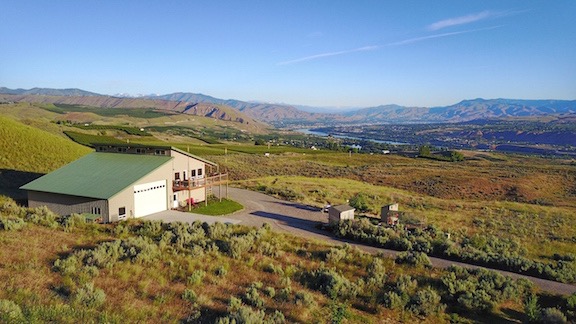
My home sits on a shelf overlooking the Columbia River Valley near Wenatchee, WA. (And yes, this is a drone photo.)

My home isn’t a typical stick-built house. It’s a “pole building” that’s primarily a 2800 square foot garage to store my vehicles and other stuff — which I admittedly have too much of — with a 1200 square foot finished living space on top. I was originally going to build a much smaller garage with a more modest living space and then build a house to go with it, but in the interest of saving time and money, I built just one big building and didn’t skimp on the amenities in my living space. It’s very comfortable for one or two people — although I admit I really do enjoy the utter freedom and flexibility of living alone so I’m unlikely to share my space anytime soon.

My Great Room
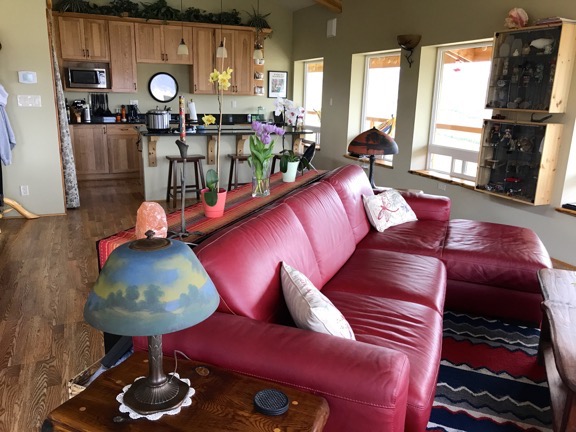
My great room, with windows overlooking that wonderful view.

I did much of the work on the living space myself and I haven’t quite finished. For example, I still have to finish the trim up on the loft and in my bedroom, I still have to finish some tile work around my shower stall, I still have to dress up the stairs a bit, and I really do want to tile the entrance hall. Recently, I decided that instead of using the loft as a guest bedroom, I wanted to move my desk up there and make it my office so I’ve got some furniture moving ahead of me. And yes, I’m still unpacking. I really did pack too much stuff from my old Arizona home.

Other than minor building-related projects, I have the usual chores related to owning a home: mowing the lawn, gardening, making repairs to things that break or just need attention. So far, everything I’ve needed fix has been something I can fix myself, so it’s just a matter of finding the problem, figuring out what needs to be done, and doing it. I have a lot of tools now — I actually have a whole workshop in my garage — so I seldom need to buy or borrow anything to get a job done.

Weed control is a serious concern here; the county requires us to control our noxious weeds. I’ve been at war with the kochia since my very first week as a landowner and I’m definitely winning. This year I’ve started working on the knapweed that seems to have begun appearing since the kochia has been killed off. I also identified and destroyed some tumbleweed, which I absolutely abhor since trying to deal with it at some northern Arizona vacation property years ago. The trick is to cut or pull out these weeds before they go to seed. This year, I also bought my third (and last) weed sprayer, a 15-gallon ATV-mounted tank with a DC pump. Yes, I use various chemicals to spray the weeds along my 1,000+ feet of road frontage and in my driveway. (Lecture me all you want about “natural” mixtures of salt and vinegar, but nothing works quite like Roundup or some of the specialized broadleaf killers they sell at the local farm supply store.)

The Big Projects

I do have two large self-inflicted projects, and they are related.

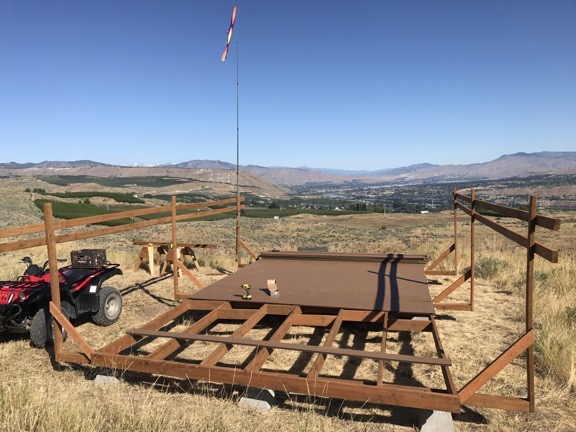
One is a platform for a 12 x 14 cabin tent that I’ll be setting up for “glamping.” I ordered the tent from the Colorado Yurt Company. Built to my specifications, it should arrive here on Wednesday. It’ll have canvas and screen sides so whoever is staying in it can configure it as they see fit — these days, I’d roll up the canvas on at least three sides and enjoy the views and airflow through the screen. It also has a 12 x 8 foot covered porch. Of course, all this has to be built on a custom platform, which I’ve constructed, with the assistance of two pilot friends, out near my lookout point bench. The whole thing is made from pressure-treated lumber with Trex decking. Assembled with screws, it can be disassembled and moved at any time. (This is actually a good thing since I’ve already decided I want to move it for next year.) It’ll be furnished with a queen bed, night tables, dresser, and table and chairs (on the deck). I can’t wait to sleep in it!

Tent Platform
Here’s the platform as it looked last week. The only thing left to do is lay the rest of the Trex and then put up the vertical supports.

My Portable Potty Building
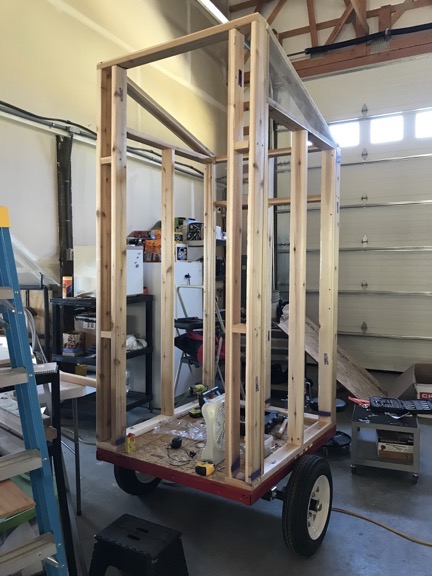
Here’s my portable potty, under construction in my garage. One of the benefits of having a huge garage is being able to do projects like this in relative comfort.

Of course, the one thing the tent doesn’t come with is a bathroom. One option was renting a portable toilet — you know, those blue buildings you see at outdoor events. I’d rented one while my home was under construction — mostly for the builders, since I had my own bathroom in the RV I was living in at the time — and learned that if they give you a newish one and maintain it weekly, it isn’t nasty at all. But it does cost $90/month and I’d have to look at it all summer. And it isn’t quite the experience I want my guests to have. So I cooked up the idea of building a portable bathroom with an RV toilet and holding tank. I got the trailer kit at Harbor Freight, framed out the building on it, and bought a holding tank and RV toilet. I’m about 75% done at this point; I’ll do the plumbing this week, test it, and then put on the walls, door, and roof. I can then put it in position anywhere on my property when needed and tow it back to one of my RV dump ports when I need to. Over the winter, I can drain it and store it in my garage. This is a complex project — mostly because of the plumbing work involved — but I’m enjoying the challenge of making something I cooked up in my head become reality. (Like my home.)

Other Activities

I do occasionally find time to socialize with friends.

My Funny Little Boat
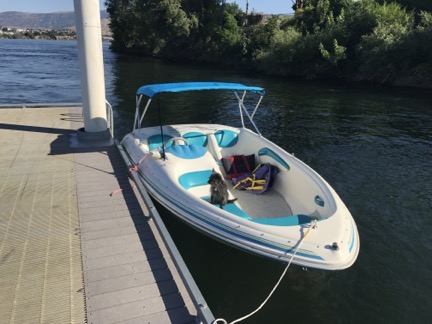
Here’s my funny little boat, parked at the dock near Pybus Market in downtown Wenatchee. (Every time I use the boat, I’m reminded of my wasband’s second divorce lawyer, who tried desperately in court to get me to admit that it was worth more than the $1,500 I’d paid for it. He even claimed my wasband would pay me $1,000 for it — which I accepted — but my wasband backed down; he obviously didn’t want it. It’s just an example of the divorce court antics, likely fueled by my wasband’s old whore, that I witnessed back in 2013. I wound up getting the boat in the divorce — it was mine, after all — without having to pay him a penny.)

I’ve had the boat out twice this summer so far. I have to admit that I was surprised that it started so easily on our first outing; I’m terrible about maintaining things I don’t use regularly and the battery was completely dead when I put the charger on it in June. Neither of our outings were interesting; in both cases, I was taking friends out for a ride. We did the usual: motor at full throttle — for a whopping 32 miles per hour — up the river to the Rocky Reach Dam and then drift back for a while on the current. It isn’t much of a boat, but it does get me out on the water and I really do enjoy that. I might take it out to other stretches of the river when cherry season ends and I’m pretty sure I’ll be taking it with me to Arizona this winter; I already bought the hitch extender I need to hook it up behind my truck with the camper on top. I’m really looking forward to getting it on the Colorado River and some of the Salt River lakes near Phoenix.

Packing Cherries
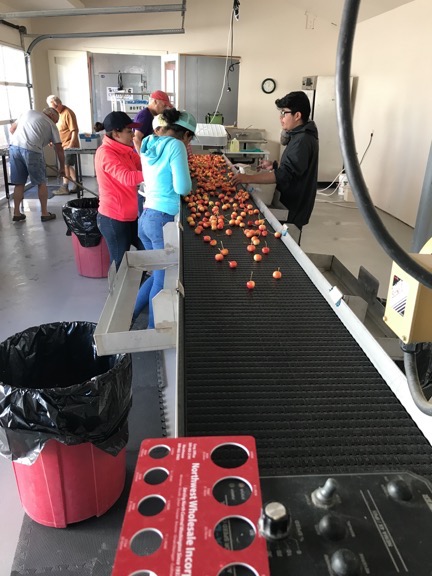
The cherry packing line at my friends’ orchard. It’s actually a lot of fun when you do it with friends and there’s some good music playing.

I also helped some friends pack rainier cherries earlier this month. They have two cherry orchards and have arranged to sell rainier cherries directly to a Seattle area supermarket chain. I worked with about a dozen people to sort and pack cherries over a two-day period. It was a paying job, but I took a 15-pound box of cherries instead of cash. I’ve got about a pound left.

Later that week, my cherry packing friends invited me to join them and and a big group of other friends to watch a production of The Sound of Music at Leavenworth Summer Theater. Not only was their future daughter-in-law playing the lead character, Maria, but it was her birthday. It was nice chatting with cast members after the show. And you really can’t beat a musical production nicely produced outdoors on a warm summer night.

I’ve also done a bit of entertaining, from having a few neighbors over for wine and homemade cheese on the deck to full-blown barbecues where I’ve made my famous smoked ribs. I really enjoy having people over to share my home with them.

The Animals

Of course, some of my time has been taken up with caring for my growing menagerie.

Penny turned 5 — can you believe it? — this year and has become quite the spoiled little mutt, going with me nearly every where I go. She loves to come with me in the helicopter but has learned that when I’m wearing my flight suit, it’s likely to be a very boring long ride over cherry trees so she stays clear when I put it on.

After losing my chickens twice to a neighborhood dog last year, I started a new flock of chickens in March with 18 chicks. I built them a big chicken coop and it has been working out very well. The chickens just started laying about two weeks ago; I’m now getting 6 eggs a day and expect that to go up to about 16. I’ll be selling off most of the hens as layers — there’s actually a decent market for that around here — and keep just 5 or 6. In the meantime, I bought eight more chicks to get them started before winter. My goal is to keep a young flock and keep selling off the layers before they’re a year old. I’ll always have fresh eggs and the money I get from hen sales will cover all my costs.

Solo the Cat
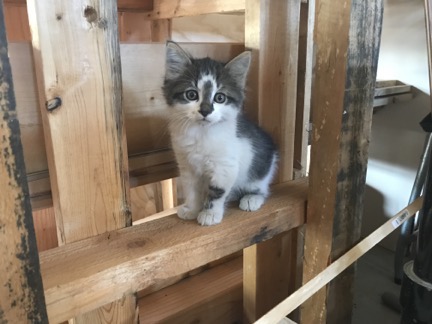
This is Solo, one of my three mousers-in-training.

I also added three kittens to my home. They are mousers-in-training and currently live in the garage. They’ll keep the mouse population down — it’s impossible to keep up in the garage and garden without resorting to poison — which, in turn, should keep the snake population down. (I had to kill a rattler the other day; my first kill since 2014.) I’ve had limited success with feral “barn cats” in the past, but Penny tends to annoy them to the point that they leave. I figured that raising kittens with Penny will prevent them from wanting to run off. It seems to be working so far; she plays with them quite often and one of them really seems to like it. But the youngest of the batch is probably going back to where I got her; she doesn’t seem to understand what the litter box is for and I’m tired of cleaning cat crap off the concrete floor.

And for the folks wondering about the winter when I’m away, the chickens and the cats will be fine. I have a good, reliable housesitter.

As for wildlife, with five hummingbird feeders hanging from my deck, I get lots of hummingbird activity. And the bighorn sheep, which came down from the cliffs daily late last summer, have just started appearing every few days. It’ll be interesting to see if they become a nuisance again.

The Weather

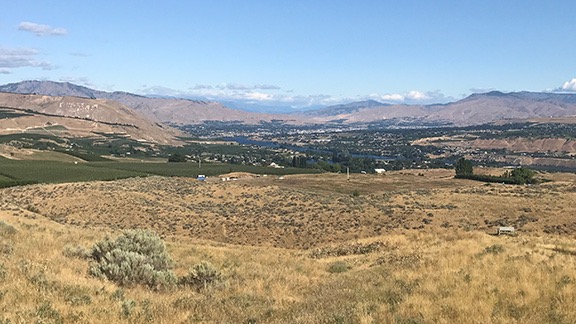
The weather this summer has been absolutely amazing. Day after day of blue skies and temperatures in the 80s and 90s. I don’t even think we topped 100°F this year. While that’s good for the folks who grow cherries and alfalfa or come to the area for vacation, it’s isn’t good for the helicopter pilots who live or travel here to dry cherries. And that would be me.

This Week's Weather
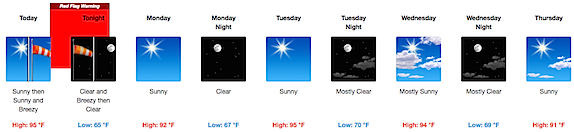
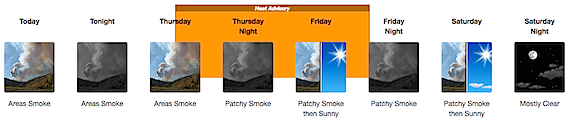
This is the upcoming forecast for Wenatchee per the National Weather Service. But it could be the forecast for nearly any week over the past month or so. No rain.

My main source of income these days is from my cherry drying work. (Don’t know what that is? Read this old blog post, which explains it. Or watch this video to see me in action.) My business has been growing steadily since around 2011. I now build a team of up to six pilots to cover the hundreds of acres of cherry orchards I have under contract.

This year, my season began on June 1 and will end on August 16. During that time, I’m pretty much stuck in this area, waiting for it to rain. The season got off to a promising start: my team, which consisted of just me and one other pilot in early June, flew a total of about 5 hours. But then the rest of the team began assembling and the skies dried up. None of us have flown in over a month.

Needless to say, my first-year pilots are pretty pissed off about that. But I warned them. When asked how many hours we could expect to fly, I told them the truth: 0 to 40. As I explained to them, if you can’t make it work financially with just the standby pay, you shouldn’t sign up. That might be all you get. And for two of the pilots who have come and gone so far, that’s exactly what they got: standby pay. And at this point, it looks like another two pilots will be in the same boat.

Fortunately for all of us, the standby pay isn’t too shabby. If you can keep your costs down, you can make good money. The smart folks who do this work with me treat their contracts as a sort of paid vacation. With perfect weather and no chance of rain, they can hike, go out on the water, fish, or do any number of local things while getting paid by the day to just hang around with a helicopter parked nearby. But when it rains, they’d better be at their helicopter with their phone handy and ready to fly.

What folks don’t seem to understand is that the weather here can change quickly. This is my tenth summer in the Wenatchee area and I’ve seen days like today where there isn’t any forecasted chance of rain, cloud up steadily. Soon there are isolated thunderstorms dumping rain on orchards. That’s why I can’t leave the area. Even with a forecast like the one shown above, I know that things can change. And I know that if I don’t have a helicopter over an orchard within 15 minutes of a call, I’m going to lose a client.

So yes, I take it very seriously.

I should mention that although this is my worst (so far) cherry drying season, last year was definitely my best. Although it didn’t rain much early in the season, by this time last year it was raining all day for several days in a row. We flew like crazy, sometimes drying the same orchard four or five times in a day. The growers were miserable and I could hear it in their voices when they called. We were doing our best with prompt responses and constant flying, but at a certain point even we couldn’t save the crop. A lot of cherries went unpicked.

But that’s the way it is in agriculture: you get good years and bad years. A good year in cherries is extremely profitable for growers — which is why they grow cherries. A bad year? Well that’s what insurance is for.

Water Tank
The Girl Scout motto is “Be Prepared” and I really do believe it’s a good idea.

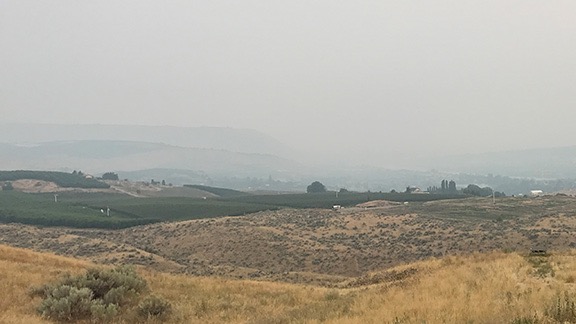
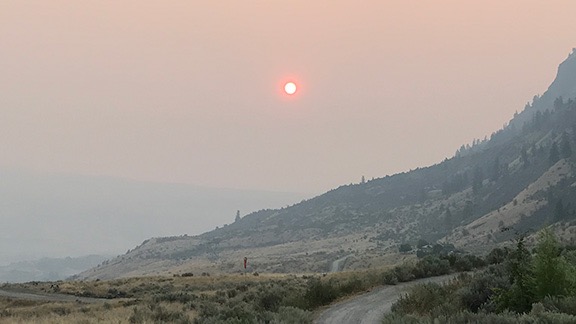
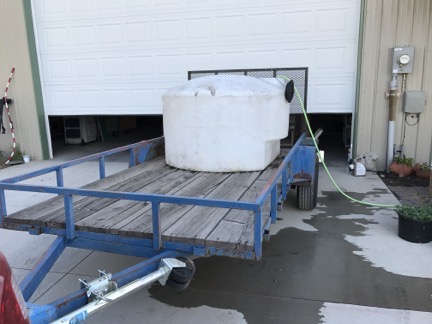
Meanwhile, the dry weather this year has turned the area into a tinderbox. Dry lightning started a fire in the hills beyond the cliffs behind my house back in late June. Although there was no evacuation notice for my road, I admit I got a bit uneasy watching a pair of single engine air tankers on floats scoop up water down on the Columbia River and climb up to drop it just out of sight behind my home. Things got even scarier when they were joined by a pair of Hueys with buckets that dipped in my neighbor’s irrigation pond and climbed up right over my home. Not only did I test my fire suppression system, but I put my 425-gallon portable water tank on a utility trailer I have, filled it with water, and prepared to connect it to a pump and generator as my own private fire department. Then the wind shifted and the fire went elsewhere, burning thousands of acres before they finally put it out. The tank of water is still on the trailer, just in case I need it. I’d be pretty pissed off if a fire took out my new tent platform.

Vacation Plans

Fortunately, my season will end right before the eclipse. Like last year, I’ll have my camper on my truck, all packed and ready to go when that last day rolls along. Then I’ll be off for my first vacation.

This year, I’m heading south to a remote area of Oregon where I hope to watch the eclipse from the shores of a small lake. Then I’ll make a leisurely drive back home, stopping in Walla Walla for some wine tasting and Palouse Falls for some night photography. I’ll be back in Wenatchee in time for a charter flight booked months ago.

Other trips planned:

  • Five or so days with a friend at his place on Lopez Island. We’re still sitting on the fence on whether I should fly us out there in the helicopter or drive. (Guess which way I’m leaning?)
  • A weekend-long mushroom foray with the Puget Sound Mycological Society near Mount Rainier. I’ll be taking my camper this year so I can camp out in the national forest before or after the event. Or both.
  • A trip back east for the fall colors in Vermont, a visit with my brother in New Jersey, and a museum visit in Washington DC. This one is tentative; I’d really be cramming it in between charter flights and events and am not sure I want the stress of making such a long trip with so much on my plate at home.

Three Weeks Left

In the meantime, I’m stuck at home, keeping very busy, waiting for my season to end, praying for some rain. It doesn’t seem likely.

Anyone who thought I was nuts for leaving Arizona for “wet, wet Washington” should get an idea of the reality here: our summers can be even drier than Arizona’s.

Getting a Closer Connection to My Food

Gardening, foraging, gleaning, making things from scratch.

Frittata
This morning’s breakast: a frittata with home grown onions and broccoli, homemade cheese, and eggs from my neighbor’s chickens.

This morning, for breakfast, I had a frittata I made with onions and broccoli from my garden, eggs from my neighbor’s chickens, and Chaource cheese I made myself three weeks ago. (The only reason the eggs came from neighbors is because my 17 chickens aren’t laying yet.) I could have added chanterelle or gypsy mushrooms I foraged for and froze last autumn or morel mushrooms I forged for on Friday. (That would have been a waste of the morels.) Or I could have made blueberry muffins from scratch, using blueberries I picked and froze last summer and sweetened with honey from my bees. Or a smoothie made with those same blueberries, two strawberries from my garden (only two are ready right now), and yogurt I made myself.

It’s only recently that I’ve realized how much of my food comes from my own sources or resources. Last night, I made a batch of pickled broccoli stems with more of that garden broccoli and dill from my garden. The tomato sauce and pickled green beans I canned last winter are still forming the basis of pasta meals or snacks and hors d’oeuvres for dinner guests. The cherries I gleaned last summer are still in the fridge in the form of cherry chutney that goes very well with roast or grilled pork, turkey, or chicken. I’ve got five kinds of homemade cheese in various stages of ripening in my wine-fridge-turned-cheese-cave or refrigerator. I’ve got mead made from honey from my bees fermenting in my pantry closet. In my garden, the broccoli and onions are ready for harvest and I pick them right before I eat them. Soon I’ll also have tomatoes, peppers, green beans, brussels sprouts, cucumbers, corn, melons, zucchini, and potatoes, not to mention marion berries, ligon berries, and black-capped raspberries. And it I get back into the forest for a hike at just the right time, I can pick thimbleberries right off the bushes.

Chickens Eat Weeds
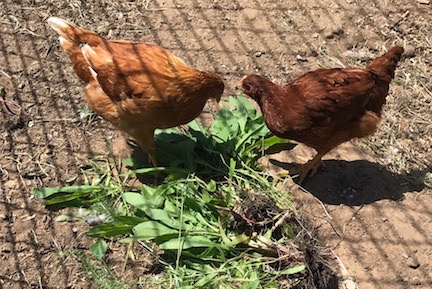
My chickens love to eat weeds. They’ll be making eggs in about 2-3 months.

I’ve discovered that I can turn weeds into eggs by feeding them to chickens and coffee filters into vegetables by composting them into a rich garden soil.

I spent literally hours traipsing through forest floors tangled with the debris of fires a year or more ago, looking for the morel mushrooms only found this time of year. Although I found a few — enough for a small side dish or pizza topping — I was competing with people who had a lot more experience than me and consider myself lucky to find ones they obviously missed.

It also takes a long time and makes a big kitchen mess to make cheese from scratch.

And gleaning cherries after harvest? Do you know how frustrating it is to see a perfect one just out of reach up in a tree and not be able to close your fingers around its stem?

Which is why people ask me why I bother. Why not just go to the supermarket and buy whatever’s there?

The only thing I can come up with is the feeling of satisfaction I get from knowing where my food comes from or what’s in it, and having a very active role in obtaining it, putting it on the table, and serving it to my guests.

Foraging for mushrooms, which I hope to blog about later in the week, is especially rewarding. When I say I spent hours searching, I’m not exaggerating. I went out into three different forest areas on four different days and came back with just five mushrooms, one of which is tiny. Yet the excitement I felt when I saw the biggest one cannot be overstated.

There’s something about having this closer connection to my food that I really like.

Next spring’s challenge: tracking down the wild asparagus that supposedly grows in the Chelan area.

What do you think? How involved are you in obtaining and preparing the food you eat?

Paying It Forward: Retro Dinette Edition

When a Craig’s List sale isn’t exactly a “sale.”

Years ago, when I lived in Arizona and was nearing the peak of my writing career, I had a lot of disposable income. Before I began dumping it into aviation and what would become my third career as a helicopter pilot, I invested that extra cash in real estate. One year, I bought a condo in town to use as a rental. The following year I got more ambitious and bought a property with a two bedroom, two bath house and a four unit apartment building on it.

The apartments, which were studios, were functional and cute. They were all furnished; the previous owner had lived in the house with her grown son and rented the apartments out to an assortment of low income folks and winter visitors. The furniture was the kind of stuff you’d find at a garage sale. In fact, that’s where most of it ended up since I wound up refurnishing every unit with southwest style lodgepole furniture made on order by a small company in Phoenix. I was trying to make the place a little more upscale, hoping to attract a different sort of tenant. (For the record, I count that as one of my failures.)

Retro Dinette
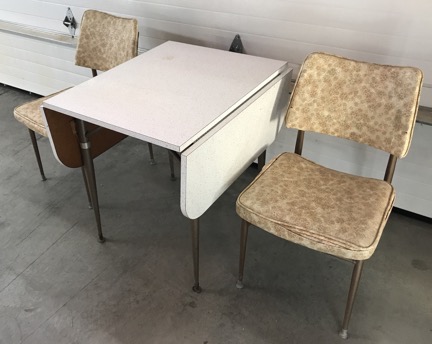
The table and chairs pose for a Craig’s List photo against my garage door. One chair was in perfect condition while the other had some upholstery issues. And yes, they are kind of ugly.

I did keep a few items, including a drop-leaf formica table and two vinyl-covered chairs. I don’t know why I kept them; maybe they reminded me of my childhood? They were certainly from that era — the 1960s or maybe even earlier — and well-made. They eventually wound up in my Wickenburg hangar where the table became a stand for my small hangar fridge and the microwave I kept on top of it. The chairs didn’t get much use.

When I moved out of my Wickenburg hangar in September 2013, the table and chairs were packed into the moving truck along with boxes of household items and other better furniture. They were unpacked into a hangar in East Wenatchee, where they sat with my other furniture until June 2014. That’s when they moved again, this time into my new home in Malaga. And it might come as no surprise that my little fridge wound up on top of the table again in my big garage.

As anyone who has been in my garage can tell you, I have a lot of stuff. Too much stuff, in fact. I’m one of those people who holds onto things if I think they might have any use at all in the future. (This also explains why I still own the Jeep Wrangler I bought new in 1999, the Honda S2000 I bought new in 2003, and the Yamaha Seca II I bought new in 1993; heck, I do use them all. It also explains why I have such a big garage.) Little by little, I’ve been selling off the stuff I no longer need/use/want. When I bought a nice rolling media cart at a school sale last year and the little fridge went on top of that, I no longer had any use at all for the table. So I listed it on Craig’s List.

I should mention that I tried to sell it last year, too. The table is probably considered an “antique” and it likely has some real value. I think I listed it for $80 last year but didn’t get a single call.

This year, I listed it for $40. It’s not as if I needed the money. It’s just that when you list something with any value for free on Craig’s List, you get all kinds of weird characters competing to claim it. I didn’t want to deal with all that.

I got a call from a girl who was interested but unable to come see it. She said she’d call back but I didn’t hear from her again.

Then I got a call from a guy in Seattle — a 3+ hour drive from here — who was very eager to come. He called at 3 PM on a Sunday and asked if he could come that night. I suspect he realized that the table had some value; maybe he even knew where he could sell it to turn a quick buck on the west side. I said, “You want to drive all the way out here for a $40 table?” He hesitated and then said, “I like retro furniture.” But I guess I’d planted a seed in his head. Was it really worth six to eight hours of a day to scoop up this bargain? What would gas cost? And what if the condition of the table wasn’t as good as he expected? He told me he’d call back. I never heard from him again.

I renewed the listing on Craig’s list. Another girl called. In all honesty, it could be the first girl. She lived in Chelan and could come Monday after work. She got out at 5 PM and would be here by 6. I didn’t tell her that it would take more than an hour to get here from Chelan.

She showed up at 6:45, still dressed for work, full of apologies. By that time, I had the garage door open for her. As we walked to where I’d stowed it in the back of the garage, a small pickup truck with a cap pulled up. She told me her parents had come in case she couldn’t get it in her car. That meant two vehicles had made the hour+ drive from Chelan. Soon we were all in the garage looking at the table.

I struggled to figure out how the supports for the drop leafs worked and finally succeeded in raising one side. It was a cool mechanism that I had completely forgotten about — the legs of the table actually slid out on a wooden track. (Seriously: they don’t make stuff like this anymore.) Her mom sat in one of the chairs. We chatted. I asked her if it was for her first apartment and she said it was.

I thought back to my first apartment. I was 20 years old and right out of college. It was a big studio with a separate kitchen in a not-too-savory part of Hempstead, NY. From my 6th floor window, I could see my old college dorm just a few miles away. I’d struggled a bit to furnish it with a combination of used and cheap new furniture, none of which I still own. I remembered the excitement of those days, of starting a new life away from home and school, of earning a living for myself. Every day was an adventure or challenge. I seldom had more than $20 in my pocket and liked to hold onto it as long as I could.

So when she handed me the $40, I told her to keep it.

She was surprised and asked if I was sure. I told her I was and that it was my housewarming gift to her. I told her that when she was ready to replace it, maybe she could sell it for $100 and put that towards the new set.

Her dad loaded the table into the truck and I carried over one of the chairs while she took the other one. They slipped it inside and closed the cap on the truck. We chatted for a while about the winery down the street and I urged them to come back there for a tasting one weekend. And then I shook her hand and wished her good luck.

Gotta pay it forward.

The funniest thing to me about the whole exchange? None of them so much as mentioned the elephant in the room: the helicopter parked in my garage.

Spring Has [Finally] Sprung at the Aerie

After a long winter and several “false springs,” spring has arrived with a vengeance.

It was a long, cold winter here in Central Washington State.

(At least that’s what they tell me. I wasn’t around. I went south and suspect I’ll be doing that most winters.)

Snow off roof
This Mavic Pro image, shot one afternoon not long after my return in March, shows the snow that slid off the roof and accumulated in front of my garage doors during the winter. There was an even bigger pile on the south side of the building, which has a bigger roof.

The cold reached deep enough into the ground to freeze the water lines running to the homes at the end of my road. The snow fell in storm after storm piling up and eventually sliding off my roof into big piles on the north and south sides of my home. And in March, which is normally when the weather starts getting good, every night temperatures dipped below freezing, stalling the wakening of the orchards. Even in April there were bouts of cold weather — as recently as last Monday, I woke to the sound of wind machines in the cherry orchard near my home.

Balsamroot at my House
Perennial balsam root, a native plant, started blooming in April and was finished by mid-May.

We had a few warm spells in April that fooled a lot of us into thinking that spring had finally arrived. The local supermarkets and big box stores opened their garden shops and began selling flowers and vegetables for planting. I planted some cold-weather plants — brussels sprouts and broccoli, for example — that survived through subsequent cold spells, as well as some herbs, such as basil, that did not.

Cherry Blossoms
Cherry blossoms on one of my two young cherry trees. I might actually get fruit this year!

I worried about the cherry trees, knowing that a serious frost could impact my clients’ orchards and, ultimately, the number of contracts I’d get for my summer work. The cherries bloomed and were sufficiently pollinated, although some clients in Quincy had early fruit drop and decided to skip a season.

Last week, spring seemed to finally take hold. After a few cold nights and chilly, rainy days, the temperature began to rise — by about 10° each day! By Sunday, it was in the 80s and I found it necessary to adjust the irrigation in my garden to provide my vegetables with enough water to grow.

Meanwhile, mother nature had watered the rest of my property. The wild grasses, sagebrush, and wildflowers took off in a wild growth spurt that I didn’t even notice until it was time to mow a path to my Lookout Point bench. The point is in the northwest edge of my property, positioned just before the land drops off into a wildlife corridor owned by the local utility company. Since most of my 10 acres is natural vegetation, I need to mow a path from my driveway to the bench to access it. I have a string mower I use for that but it needed a new axle after I ran it over with my truck. (Note to self: do not park anything in front of the truck’s garage door.) By the time I picked up the mower from the repair shop, the grass was 18 to 24 inches high in some places. I got the mower started and used it to mow my way down to the bench, mow around the bench, and mow a wider path back. I suspect I’ll have to mow it two more times before autumn.

Path to my Bench
The path I mowed down to my bench. I could not believe how tall the grass was along the way.

I began a wildflower class with the local college’s continuing education program. Every Tuesday evening we meet on a trail in the foothills to discuss, dissect, draw, and identify flowers. Most, if not all, of the same flowers grow around my home.

I’ve also started mushroom hunting, although I was apparently too early for the elevations I was hunting at. I suspect I’ll do better later this week.

My garden has taken off — and so have the weeds between the raised beds. Every morning I spend about 30 minutes pulling weeds and feeding them to my chickens.

I’ve caught two bee swarms (so far) and I’m ready to spilt the two healthiest colonies.

And this moment, as I type this, every single window in my home is wide open to let fresh air in. I haven’t heard the heat kick on in over a week and I suspect I won’t hear it again until autumn.

Spring is finally here — and not a moment too soon. Now let’s hope it sticks around for a while. I’m never in a hurry for summer.

The Last Chicken Coop

The last one I’ll build here, anyway.

I just built my third (and final) chicken coop.

The first coop was really more of a chicken lean-to. It was mostly open on one side, had two nice nests and two very rickety perches. I made it mostly out of pallets and scrap wood — and it showed.

Chicken Coop 1
My original chicken coop and chicken yard. The coop lasted from mid 2014 through October 2015; the yard was rebuilt with better fencing early 2015. This photo was shot in early 2014, when I was still living in my “mobile mansion” fifth wheel.

The second coop was way more ambitious. Also built with pallets as its base, it was designed to match the appearance of my home with an exterior finish using the same exact metal. It had three nests under a hinged lid and three sturdier perches. It was also insulated and had a covered porch so I could keep the chicken food out of the rain. It weighed a ton, though, and I had to drag it into place with my ATV. You can learn more about this project and my other efforts in this blog post from 2015.

Coop 2
The second coop scored high on durability and insulation values, but low on practicality. I don’t think there was enough room inside for more than the 8 chickens I had at the time. This photo also shows part of my third chicken yard, a hoop affair made of 5×16 foot “hog wire” panels. I like the design and still use it.

What I wanted was a coop that was big enough to hold a lot of birds laying a lot of eggs. But I wanted one I could actually walk into, one that was easy to clean and had plenty of light and ventilation. Although I’d bought a small coop the year before, it was unsuitable for more than two or three adult birds. I wanted to raise chicks into laying hens and sell them when they started laying. To get started, I bought 18 chicks when I got home from my winter travel in March and set them up in a brooder in my garage. That gave me a time limit — I needed the new coop done before they outgrew the brooder.

I almost converted my existing shed into a coop. With a little interior modification, it would have done the job. But then I would have lost my garden storage area. And what about the controls for the irrigation? Did I really want my chickens crapping on it?

I looked into shed kits at Home Depot. They were not cheap and they were a lot of work to build. I could build a custom solution for a fraction of the price.

But no more pallets! I was going to build from scratch.

I sketched out a design. The footprint would be 4 x 8 feet. The roof would be 7 feet sloping down to 6 feet. I began disassembling the old coop. I think that was harder than assembling it. I managed to salvage the framed plywood roof and one of the trim panels. I wanted more overhang on the metal, so I scrapped what I had. I burned pretty much everything else, although I did have to throw away the Trex decking I’d used inside. (I did say it was heavy.)

I started at the bottom, building the floor on 4x4s with 2×4 studs 16 inches on center. I used a heavy OBS sheet as the base and gave it two coats of oil based porch paint.

Chicken Coop Floor
I started with a floor on 4x4s, leveled in place.

Next, I framed out the four walls. But instead of framing them on the floor, I built the frames on my concrete driveway apron. It was easier for me to work on level ground. I framed them with 2x4s 16 inches on center. Every time I finished a wall, I stood it up against a deck post. I knew that it would be impossible for me to carry the two long walls over to the coop and fasten them into place by myself, so I did as much as I could before prepping the building area with two ladders and a bunch of wood screws and my impact driver. Then I called my neighbor Elizabeth and made an appointment for her to come help me get the walls in place. I promised it would take less than an hour and it did. And not only did we get the walls in place, but we even lifted the roof into position and fastened that down.

Framed Chicken Coop
I shot this photo right after Elizabeth left. The ladders were still in place; the one on the left is an orchard ladder, which are pretty common here. The wood thing leaning against the building is the door, which I’d made while I was waiting to put the walls in place.

The coop design had a 32-inch wide door, three ventilation windows, and two chicken doors. I framed them as needed. The trick then was to cut the T1-11 wood — it’s like plywood paneling — so the openings would match up right. Measure twice, cut once. I think I must have told myself that a dozen times a day during construction. But it sunk in. I fitted the north side short wall and half the west side wall without any problems.

Weather came. We had an unusually rainy spring this year. I had some large tarps and fastened one over the coop’s roof and two wall panels. I hadn’t painted anything yet and I didn’t want the wood to get soaked or ruined. My camper, the Turtleback, was parked on the driveway near the coop, blocking it from view from my home. So I was very surprised to find the coop lying on its side when the weather cleared and I was ready to get back to work. Apparently, strong winds had come though and knocked it over as if it were a sail.

Coop on its side
Oops. Did I mention that it gets windy here? The tarp acted as a sail on the top-heavy coop and it went right over.

Neighbors to the rescue. I had three of them meet me the next morning to right the coop. Damage was minimal. When they left, I got right to work.

I used 1/4 inch wire that I already had between the frame and the T1-11 for the windows. Later, I’d put sliding panels to close them off. I had two doors to the outside but planned on using only one for now; the other one was for expanding the chicken yard with another hoop enclosure. (It’s important to cover the chickens here to protect them from birds of prey.)

The original designed called for nests just inside the door that were accessible through hinged panels from the outside. I decided to do away with the outside access, mostly because I figured a single T1-11 panel would add to the structural integrity of the building. And after all, the building was big enough for me to walk into.

Coop Under Construction
In this shot, only one wall and the door are left to install. The nests are just inside the door to the right.

Once the walls were in place and the door was hung, it was time to paint it all. I used the rest of that oil-based porch paint and even bought a second can. The paint guy had warned me that it would absorb into the wood and he wasn’t kidding. I’m going to need a second coat. But for now, the wood is sealed tough against the elements. A second coat before winter and it’ll be ready for any weather.

Painted Coop
Here’s the coop right after painting it. By this point, the chicks were living inside. I drilled a hole in the wall and ran an extension cord so I could hang their heat lamp. I blocked off the exit to the chicken yard with a framed bit of fencing I already had. The two upper windows have 1/4 inch screen that doesn’t show in the photo.

I still had to finish the roof. I wanted so badly to get metal panels that match my home — after all, the walls of the coop match the walls of my home — but Home Depot had a limited selection of colors. So I chose the dark green. I dreaded cutting the metal — it’s no picnic, believe me — but it went a lot more smoothly than I expected it to. I had insulation leftover from the old coop and I put it into place. Then I painstakingly lifted the metal panels into place and screwed them down. Not perfect by any means, but functional.

Outside Finished
Here’s a photo of the outside of the coop and yard that I took just the other day. The door really blends in; I use a piece of rope as a “doorknob” and a hook to keep the door closed. The long white pipes are chicken feeders I made last year; they each hold about 10 pounds of chicken food.

Coop Perches
I used 2x2s with rounded edges for the perches. I also added a shelf on the north side, far above the highest perch, to store odds and ends like the pine shavings I use on the floor and in the nests.

By this time, the chickens were installed and able to come and go freely between the coop and their yard. I had put in some perches for them, but as they grew, I knew I could raise them and add more. So I did; they have a total of three perches now, each about 4 feet long. With 8 inches per bird, my 18 chickens (now 17 since one died) have plenty of space to roost. I could easily add 2-3 more if I had to since they’re spaced 16 inches apart.

Coop Nest Area
I had to block off the nest area with wood and wire mesh to keep the chickens out.

I still needed to do the nest boxes. The first thing I did was close off the nest area; the chicks were sleeping on the floor in there when they were still very young and I wanted to break them of that habit. They wouldn’t need the nests until they started laying, which probably won’t be until August.

Coop Nest and Brooding
Here are the finished nests on the bottom with the bottom half of the brooding area on top.

Still, I wanted to get them done and create a brooding area above them. My design called for six nests — three on each level — so I had to build a floor for one level and then the brooding area level above it. This required me to take careful measurements of the 2×4 framing because I’d have to cut plywood around it. Then I’d have to lift it into place from below and screw it into the 2x4s I’d put in to hold them. It’s hard to describe and was hard to do, although my little jig saw did make the job easier than I expected. In the end, I had to cut each floor into two pieces to get them into the tight-fitting space.

Once that was done, I used a staple gun to securely fasten 1/4 inch screen to either side of the top brooding area. I framed a door with 2x2s and stapled more screen onto that. Then I put the door on hinges and added a hook to hold it closed. I’d be able to hang a heat lamp over the area if I needed to to keep chicks warm. I figure I can brood up to 6 chicks for up to a month in the space. Keeping them with the other chickens should allow them to get to know each other while they grow, hopefully preventing fights when they’re released into the flock.

When it was all done, I had to block off the nests again. The chickens really like snuggling up in corners when they’re indoors. I wouldn’t mind so much, but they crap where they hang out and it’s a pain in the butt to clean out the nests.

At this point, the chicken coop is mostly done. In July, I’ll pull the covers off the nests and put a fake egg — I usually use an egg-shaped rock — into one or two of the nests. With luck, they’ll get the idea and start laying in there when the time comes.

Although I’d originally wanted to add sliding panels over each of the windows, I think I’ll skip it. The ventilation is good. In the winter, I’ll fasten some heavy plastic over each window to prevent drafts. I’ll leave the door to the yard open for them.

Because this coop is not insulated — neither was the original one — I might buy a chicken coop heater for it. I already have a Thermo Cube that will turn power on when the temperature gets down to 35 and turn it off when it gets up to 45. Attaching that to the heater will run it only when needed during the winter. It’ll never get warm in there, but it’ll stay warm enough to prevent frostbite. You might think that’s nuts, but power is cheap here and from renewable energy (hydro and wind) so I have no qualms about using it to keep my chickens from freezing in the winter.

In the meantime, I’m just happy to have this project done. And even happier that I can’t find anything wrong with this design so I won’t have to build yet another one.