My Morning Cup of Joe

It has to be just right.

I start each morning with a cup of coffee. That’s not unusual in the United States. Coffee is a pretty standard breakfast beverage. It’s why we drink coffee and the kind of coffee we drink that varies from person to person.

And my morning cup is special.

First of all, I don’t drink coffee because I rely on that jolt of caffeine to jump start my day. If all I wanted was caffeine, I’d get it from a double espresso at the local Starbucks or allow myself to become addicted to one of those idiotic “energy drinks” that young guys like to get hopped up on.

Instead, I drink coffee because I actually like coffee. I like the flavor. I like the aroma. I like the way it feels going down my throat when it’s just the right temperature: good and hot.

The trouble is, I don’t like just any old coffee. I like a certain kind of coffee the way I like it made.

And that’s the rub.

The Ingredients

Coffee ingredients are very basic, right? Well, to many folks, they are. But to someone as picky as me about coffee, they’re special.

  • Coffee. This is the main ingredient in a cup of coffee and, for me, it needs to meet several requirements:
    • Freshness. I buy coffee beans so I can grind them myself at home. The beans never come out of a hopper in a supermarket, where they may have been sitting for who knows how long. They always come in a vacuum-sealed package.
    • Bean type. This is where I differ from many self-proclaimed coffee connoisseurs. I don’t like Columbian coffee. To be fair, it may be the way it’s normally roasted: dark. I prefer Arabica beans with a light to medium roast. I also like Kona from Hawaii. These are smooth, mellow beans, roasted in a way where the roasting process doesn’t impart a bitter or burnt taste.
    • Roast. As mentioned, light to medium roast is my preference. Dark roast coffee tastes bitter or burnt to me. This is my big gripe against Starbucks and other “high end” coffee shops.
    • Eight O'Clock CoffeeBrand. The brand of coffee isn’t nearly as important to me as the other criteria. These days, my coffee of choice is Eight O’Clock coffee. I tend to buy it in bulk — 4 to 6 12-oz bags at a time — when it’s on sale at the local Supermarket. I store the unopened (very important) bags in the freezer. (They say that freezing coffee doesn’t do anything to maintain its freshness, but I do it anyway, just in case.) I’ll also buy any brand of light to medium roast pure Kona (not a “blend” — whatever the hell that means) and, in a pinch, Starbucks Breakfast Blend. I should mention here that a recent “coffee snob” house guest turned her nose up at my coffee choice and would make a special trip to Starbucks every morning for her cup. I guess if you’re not spending at least $1/ounce for coffee, you just can’t make some people happy.
    • Caffeine content. I drink caffeinated coffee. While I’m not in it just to get the caffeine, I don’t see any reason to drink coffee that has been tampered with in a lab to remove a naturally occurring ingredient. The resulting buzz I get if I drink two cups of coffee is what keeps me from drinking a third.
  • Water. I’m fortunate enough to live in a home with excellent and tasty well water. When I’m at our Phoenix place, however, I will use the tap water, which tastes like chlorine to me. The way I brew my coffee, the taste of the water is usually not a factor.
  • Milk. Yes, I put a small amount — about 1-1/2 tablespoons, if you were to measure — of milk in my coffee. Not cream, not half and half, and certainly not some powered crap with ingredients I can’t pronounce. I prefer 2% milk but can use 1% or whole milk. Skim milk is pushing things a bit.
  • Sugar. I also put about 1/2 teaspoon of sugar in my coffee. I like plain granulated sugar or evaporated cane juice sugar (often touted as “organic”). I don’t like Sugar in the Raw, a popular product that has a distinct molasses flavor. Ick. I also won’t use artificial sweeteners. There are 16 calories in a teaspoon of sugar and I’m using only half of that. Surely I can put another 8 calories into my body each day?

The Daily Grind

Before I got a decent grinder, I’d buy one or two bags of coffee at a time and grind them using the supermarket’s grinder. It was important to shake out any trace of the hopper coffee that the previous user might have left in the machine. I once ruined a package of coffee by letting it mingle with what some flavored crap.
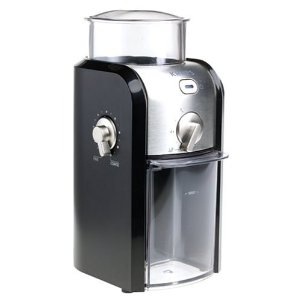
Krups Burr GrinderBut now I have a nice Krups Burr grinder which I like. It got mixed reviews on Amazon.com and I do agree with some of the points brought up by negative reviewers — for example, it can be a bit messy — but, in general it’s perfectly suited to my needs.

Almost perfectly. The least coffee it’ll grind is for two cups — even though the setting says it’s for one cup. But that’s okay. I usually do drink two cups of coffee a day. If I don’t drink the second cup, I don’t mind using coffee ground the day before. I’m not that picky.

I grind my coffee more finely than what’s recommended for drip coffee makers. Not quite an espresso grind, but certainly more fine than a basket or cone drip. That could be why the darn grinder gets messy.

The Coffee Preparation Device

A year or three ago, the big chatter on Twitter was about an $11,000 coffee maker. It brewed one cup at a time. At least they got that part right.

Brew and GoMy coffee maker of choice is a Black & Decker Brew ‘N Go. Designed for people who want to grab their cup of coffee as they head out the door on their morning commute, it comes with an insulated thermal plastic travel mug. I don’t use the mug unless I’m heading out to the car, too. I use a large ceramic coffee mug. It probably holds about 14 ounces.

I don’t use the reusable “gold” filter that came with the coffee pot. Because I prefer my coffee ground finely, the coffee grinds make their way though those gold filters and get in my cup. So I use #2 cone filters in the filter basket of the machine. I’m not picky about brand or paper bleaching. (Sheesh.) Because I go through so many of these things, I like to buy them cheap. I’ve actually found them very cheap in the coffee maker area of WalMart. So on the rare occasion that I’m in there, I stock up. And yes, when I’m at home, I compost the filters and coffee after brewing.

The Brewing Process

To brew a cup of coffee, I go through this routine.

  1. Fill a coffee cup with cold water and pour it into the coffee maker’s well.
  2. Refill the coffee cup with hot water to prewarm the cup. If I can’t get hot water from the tap right away, 2 minutes in the microwave warms whatever water I can get.
  3. Put a clean coffee filter in the filter holder.
  4. If necessary, grind enough coffee for a cup.
  5. Using a measuring spoon, measure out enough coffee for that size cup.
  6. Tamp the coffee down into the filter paper and close the lid.
  7. Dump the hot water out of the cup and put it on the coffee machine’s cup shelf.
  8. Push the button.

What comes out about 2 minutes later is a steaming hot, fresh cup of very strong coffee. This is what I like.

The Coffee I Don’t Like

I don’t like bad coffee and won’t drink it. What’s bad coffee? This:

  • Weak coffee. If I can see my spoon while I’m stirring, it’s too weak for me.
  • Coffee brewed from inferior ingredients. Yeah, I know the 3-pound plastic tub of Savarin was on sale at Costco last month. But don’t think I’m going to drink it.
  • Coffee that has sat in a pot on a warmer for more than 10 minutes. Yes, just 10 minutes. I have experimented with this at home using our bigger coffee maker. I’ll use that to make enough coffee for a group of people and the first cup is usually fine for me. But the second cup from the same pot ten minutes later? Keep it.
  • Columbian or dark roasted (or both) coffee. If it’s brewed right and fresh, I can drink it. But it’s normally not brewed strong enough or not fresh enough for me.
  • Most restaurant coffee. It usually falls into one or more of the above categories. Occasionally, you’ll get a good cup of coffee at a good restaurant, but I won’t even consider ordering coffee at a diner or cheap restaurant.
  • Flavored coffee. Are you serious?
  • Instant coffee. I stopped drinking instant coffee about 20 years ago and have seen no real reason to go back. And no, the new Starbucks instant coffee does not impress me. At all.

I prefer to drink no coffee than any of the above. In fact, I have. If I’m traveling and need a hot beverage and can’t track down a place to get a latte — freshly brewed, with enough milk to cut the bitterness of the dark roast — I’ll order tea. Or iced tea. Or juice.

Picky, yes. Snobbish? I don’t think so. If I were snobbish about my coffee, I’d buy expensive coffee, brew it in some fancy gadget, and turn my nose up at everything else. Instead, I buy relatively cheap coffee and brew it in a cheap machine the way I like it: hot, strong, and fresh.

What’s in your cup?

Outdoor Photography: It’s All about Timing

What a difference two days and one hour makes.

Although I was very pleased with the “Desert Still Life” life photo I shot the other day, I wasn’t 100% happy with it. It seemed to me that when viewed at 100%, the photo was grainy. I decided to head back out to the same spot at roughly the same time of day to shoot it again.

I couldn’t do it the next day, however, so it was two days later when I pointed the Jeep down that ATV road, pulled out onto the ridge, and followed the dirt road there to the same site. When I arrived, it was a full hour later in the day than the previous shoot.

This is an amazing example of how important timing is in photography. These two photos show roughly the same image, but with a mere 49 hours of time between them. The one on the left is my original image; the one on the right is the later image.

Good Shot Bad Shot

Now I know what you’re going to say. The exposure is off on the second shot. It is. I exposed for the cactus flowers, which were in the shade — remember, it’s one hour later. And although I probably could have fixed this shot up a bit in Photoshop, I didn’t bother. Frankly, when I saw the condition of the flowers, I didn’t try very hard to get a good shot. I just tried for the same angle. The only reason I made the photo on the right at all was to show it in this blog post as an example of how things change from day to day.

The biggest change was in the flowers themselves. Those bright magenta blooms had mostly closed up. I don’t think this had much to do with the time of day. I just think that they were 2 days past their peak. I’d just happened to arrive on point to make the first shot when they were at their peak.

The point of this post is to clearly demonstrate that outdoor photography is all about timing. You need to get there at the right time of day when your subject matter is at its peak. If this means multiple trips to the same spot, so be it. If you’re serious, you’ll do it. You’ll go out every single morning or afternoon during the wildflower season, toting your camera and your tripod along with you just for the possibility of making the one photo that will make all the work worthwhile.

Think photography is easy? Think again.

DocStoc Sells Your Personal Documents

Your privacy is obviously not their concern.

This morning, when going through the Google Alerts set up for my name — one of the tools I use to track down copyright infringement — I found a link on a company called DocStoc. The link was to a copy of my resume, created back in 2004, that included a variety of personal information about me, including my name; my city, state, and zip; my old e-mail address at my domain name; and my job history up to that point. The document was listed as “public domain,” but a Download link required you to have an account with DocStoc to download the document.

Needless to say, I was outraged.

I e-mailed the company and filled out a DMCA takedown notice on their site. I also demanded to know who had uploaded the document so I could take legal action against him/her.

If you have any sort of Internet or Web presence, I highly recommend that you go to DocStoc, perform a search on your name, and use their online DMCA Notification form to get whatever personal documents that are found removed.

Do not support this organization by buying documents that could be stolen from their sources.

Tax Time = Torture Time

How did we let it get like this?

Yesterday, I did my own taxes for the first time in four years.

Understand this: I have a BBA degree in accounting. Having that degree always convinced me that I should do my own taxes. After all, if an accountant can’t do her own taxes, who can?

But back in 2005, my taxes were extremely complex. I sold a rental property and bought a helicopter. There were capital gains and losses and all kinds of weird things. Even though I’d been using TurboTax (and MacInTax) to do my taxes for the previous eight or so years — and doing it manually before that — I didn’t feel up to the task. So I handed it off to my husband’s tax preparer and let him deal with it. I’ve been doing that ever since.

TurboTaxBut after last year’s debacle with a new tax preparer who charged me more than $500, I decided to take matters into my own hands again. I bought TurboTax Home & Business. Yesterday, I sat down in front of my computer to do my taxes and my husband’s.

My husband’s taxes were the warm-up exercise. His taxes should be relatively simple, right? After all, he has an employer and gets a W-2 form. He didn’t buy or sell stocks, he doesn’t operate a business. He didn’t purchase or sell any property during the year. Yet even with the software, it took me two hours to prepare his Federal and State return. And when it was done, he didn’t like the answer and said he’d probably take it to a tax preparer anyway.

As we muddled through the process, however, I realized that my husband knows nothing about tax preparation. He didn’t know what any of the forms were and whether he’d filed them in the past. I’m not talking about those weird forms that only tax geeks know about. I’m talking about common schedules like A and C. He was clueless. For his whole life — and he’s in his 50s now, folks — he’d put his trust in a tax preparer, from his dad to local accountants to Hewett-Jackson. Whatever they told him was golden. He write a check or get a refund and be satisfied. After all, he didn’t have to deal with the bullshit of putting together a tax return.

After “completing” Mike’s return, I sat down to do mine. It took 4-1/2 hours. With a computer and software. And it isn’t as if I had to wade through a pile of papers to get the numbers to input. I use Quicken for my personal and business accounting. It does all the math for me. (It can also export to TurboTax, but I admit that I don’t trust them together for that.)

When I was finished, I saw the final numbers. I have to pay — I nearly always do because I’m too stupid to pay estimated taxes like I should — but the numbers weren’t quite as bad as I expected. (Of course, I had no clue what I’d made last year until I actually sat down to do my tax return.) But what’s mind-boggling to me is the forms TurboTax spit out. Here’s this year’s list:

  • Form 1040-ES Payment Voucher. There are four of these for my estimated payments, which I’m really going to try to send in this year.
  • Form 1040-V Payment Voucher. That’s the one I’m supposed to send in with my big check.
  • Form 1040Form 1040 US Individual Income Tax Return. Yes, it’s the long form. I can’t remember the last time I filed a short form. I may have been a teenager.
  • Schedule A Itemized Deductions. I’ve also been filing this one for years, although I’ve never been able to deduct medical expenses. I suppose I should be glad.
  • Schedule B Interest and Ordinary Dividends. I have a variety of investments that are not tax deferred.
  • Schedule C Profit or Loss from Business. I file two of these: one for my writing and publishing business and one for my helicopter charter business.
  • Schedule D Capital Gains and Losses. I sold some stock at a loss.
  • Schedule E Supplemental Income and Loss. This is for a rental property I own and my royalties on copyrights.
  • Form 8889 Health Savings Accounts. This is one way to deduct medical expenses. Save for them in a special kind of account and deduct your savings, then pay your medical bills with that account.
  • Form 8829 Expenses for Business Use of Your Home. I have an entire room in my home that’s dedicated to the mess I call my office.
  • Form 4562 Depreciation and Amortization. This is for my helicopter and other assets used by Flying M Air.
  • Form 8582 Passive Activity Loss Limitations. Apparently, I can’t deduct the tiny loss on my rental property because I don’t dedicate my life to keeping it occupied. Whatever.
  • Arizona Form 140 Resident Personal Income Tax Return. Arizona needs a piece of my pie, too.
  • Arizona Schedule A Itemized Deduction Adjustments. At least I can deduct my medical expenses in Arizona.

I should be clear here: it didn’t take me 4-1/2 hours to fill in these forms. It took me 4-1/2 hours to enter the raw data that TurboTax needed to fill in the forms. TurboTax did the job in seconds, completing just the forms it thinks I need and spitting them out of my printer as if they’d been typed by hand.

Frankly, I don’t think it’s humanly possible to prepare a tax return like mine by hand anymore.

And that’s my point. There are rules upon rules upon rules to the U.S. tax law. I remember studying taxes back in the early 1980s — it was a nightmare then. It’s even worse now. How frustrating is it to enter line after line of financial details on a worksheet or form just to discover that it won’t impact your taxes because it didn’t total more than 2% of line 38? Or perform a convoluted calculation just to see what percentage is taxable or deductible? Or answer questions regarding child care, home expenses, foreign transactions — the list goes on and on. Four and a half hours worth of questions and answers.

In this stack of paper I’m sending the IRS this week, there must be over 500 different numbers. What do they all mean? Do they really matter?

There’s an entire industry built on the annual torture of U.S. Citizens required to complete tax returns. I bought tax software to make filing my own return possible. It cost me $80 (discounted). Other people pay $50 or more to tax preparers to do the job for them. Hell, I paid $550 to get my taxes prepared last year! (That’s more than some people pay in taxes!)

And why? Because the tax laws are so complex and confusing that people with basic math skills simply can’t do it on their own.

Hello? IRS? Are you listening? Whatever happened to the Paperwork Reduction Act?

Flight Planning Realities

It’s more than just drawing a straight line.

Every week I get at least one weird helicopter flight request. Yesterday’s was for a flight from Scottsdale to Four Corners and back.

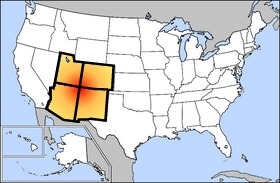
Four Corners

Four Corners, on a map. (Wikipedia image.)

When I say Four Corners, I’m talking about the place on the map where Arizona, Colorado, Utah, and New Mexico meet. In drawing their rather arbitrary state lines years ago, the mapmakers created this manmade point of interest: the only place in the United State where four state boundaries meet at one point. There’s a monument there that supposedly marks the exact point where the states meet. Tourists like to drive in and get down on all fours for photos with one limb in each state.

These days, the monument is managed by the Navajo Nation, which has land on three of the four states. The Colorado section is on Ute Indian land. I’m pretty sure there’s a fee to get in, but I could be wrong. I’ve driven past the point and flown over it, but have never stopped there.

So the passengers wanted to land at Four Corners, which is on Navajo land. That means I need permission from the Navajo Nation to land there. That’s the first hurdle the booking agent has to jump. (I won’t get permits for my passengers; I’ve wasted enough time trying for flights that didn’t happen.)

The booking agent evidently uses some kind of flight planning tool to estimate flight time. He estimated 2-1/2 hours each way. But the booking agent didn’t take into account the realities of endurance, refueling locations, weather, and FAA reserve fuel requirements.

I used SkyVector — highly recommended! — to come up with a basic flight plan — something I could use to estimate the cost of the flight. Its built-in aeronautical charts make it easy to identify places to stop for fuel if needed.

I learned that a direct flight from Scottsdale to Four Corners would take approximately 2-1/2 hours — just as he’d estimated. But this didn’t take into consideration the possibility of headwinds and my aircraft’s endurance. I roughly estimate 3 hours endurance on full tanks of fuel. But could I fill the tanks? I had no idea what the passengers weighed yet. And with my 20 minutes of required reserve fuel, planning a direct flight was not a good idea.

But what made it a really bad idea is that there is no fuel available between Winslow, AZ and Four Corners — a distance of 143 NM or 1-1/2 hour of flight time. Indeed, the closest fuel to Four Corners is 42 NM to the east — not on our way back — at Farmington.

My Flight Plan

SkyVector makes preliminary flight planning very quick and easy.

That meant I needed to plan three fuel stops: Winslow (INW) on the way up and Farmington (FMN) plus Winslow (INW) or Payson (PAN) on the way back. The resulting flight path is a narrow triangle totaling 549 NM and at least 5-1/2 hours of flight time. To be on the safe side, I’d estimate 6 hours.

This is what kills me about some of these booking agents. This particular one is based in Atlanta, GA. I can pretty much guarantee he’s never spent any time in an aircraft over the Navajo Reservation — which is where at least half this flight would be conducted. He has no concept of the vast distances and empty terrain a route like this would cover. He — and likely his passengers — can’t conceive of the utter boredom of six hours flying over this area. Sure, there are scenic parts, but not six hours worth. They’d be paying me close to $3,000 for this one-day adventure.

And all for what? A photo opportunity at a manmade “monument” in the middle of nowhere? Heck, look at it on GoogleMaps! There’s nothing there or anywhere near it!

Yet the booking agent will sell it to them if he can. And I’ll provide the service if it’s paid for.

I think the booking agent could do them a better service by selling them a Sedona tour or a trip up to the Grand Canyon. Or even Lake Powell, for Pete’s sake! Closer, cheaper to visit, and far more interesting.

Of course the weird requests of uninformed passengers or booking agents isn’t really my point.

My point is this: There’s a lot more to flight planning than simply measuring the distance between two points. The preliminary flight plan I cooked up here is just the first part of a lengthy planning process I have to go through if I get this job.

I have to admit that I find it a bit annoying when a booking agent oversimplifies the requirements of a flight — especially if he fails to inform his clients about what they’re getting into. In this case, it’s a long and expensive flight over the high desert of Arizona with very little of interest to see along the way.