My Health Insurance Story

If the AHCA passes, something like this could happen to you.

I’ve been self-employed since 1990. When I left my last full-time job — which did include health care benefits — I bought my own health insurance coverage. I was 29 at the time, a non-smoker, and in good health. But health insurance was something I thought everyone needed to have, so I signed up with one program or another — I honestly can’t remember any details — and stayed insured for years.

Understand that I seldom needed insurance coverage. Again, I was in good health. If I caught a cold, I went to the doctor. If my insurance covered the visit and medicine, fine. If it didn’t, I paid and didn’t complain. When I had some problems with my knee and needed several tests, some physical therapy, and finally some arthroscopic surgery to repair a torn meniscus, I ponied up the $1,000 deductible before finally getting some benefits to cover most of the other costs. I’m not rich and I’m not poor but I was usually able to afford any kind of medical attention I needed.

Each year, my insurance rates went up and I paid the new premium. It wasn’t a big deal; I made more money every year and I saw the increased expense as part of my cost of living increase. Occasionally, I’d shop around for a new policy and get one that was a little less costly. That would creep up over the years and I’d change again.

The biggest mistake I ever made

I’m not exaggerating when I say that getting on my future wasband’s health insurance was the biggest mistake I ever made in my life. Why? Because when was I diagnosed not long afterwards with a tumor that needed removal and possible cancer treatments afterwards, he told me that I might not be covered if the insurance company found out we weren’t married. Terrified of bankruptcy from medical expenses for surgery and cancer treatments, I agreed to marry him. After all, we’d been together for 23 years and “engaged” for most of that time. We’d obviously stay together forever.

I turned out to be wrong about that. But the insurance was the root of my mistake; if I hadn’t gotten on his health insurance plan, I never would have married him. It would have been a hell of a lot easier to get him out of my life when he decided he wanted a mommy more than a wife and took up with a desperate old whore he met online only six years later. (Read a few of the early posts tagged divorce if you want the details of his betrayal.)

And no, there was no cancer.

In the early 2000s, my future wasband took a job in the Phoenix area with a company that offered very good health insurance plan. Around the same time, I got a sizable increase in my health insurance premium. He told me I could get on his insurance and it would be cheaper and better. Even though we weren’t married, I assumed he knew what he was talking about when he made the offer, so I dropped my insurance and got on his.

Sometime after we married, when I was still on his insurance, I started having digestive issues. I went to a gastroenterologist connected to Wickenburg Hospital — which I will never do again — and told her about my symptoms, including pain in my upper abdomen. She translated that as chest pains and decided that I needed to get an EKG. When that showed no problem, she sent me for a stress test. When that showed no problem, she sent me for another test. When that showed no problem, she finally gave up trying to diagnose me with heart problems. She was never able to resolve the digestive issues I had. Neither was another doctor I went to see. I wrote about this in a 2010 blog post titled “Getting Quality Health Care: Apparently Impossible.”

My wasband lost the job with the great insurance got another one with good insurance. I stuck with his new plan. Then he lost that job and was unemployed for a while. He got us on Cobra, which he paid for with our joint checking account. Except he didn’t pay on time. He missed a payment and they cancelled our coverage.

He got in touch with them right away and made the payment. It was only five days late. They reinstated him immediately. But they looked at my medical records, saw the heart tests, and refused to cover me because I had a “pre-existing condition.”

Except I didn’t have the condition they claimed I had. I had never had that condition. All tests had proved negative. My heart was fine.

It took six months of fighting with Blue Cross to get insurance coverage again. For the entire time, I was completely exposed to financial loss: if I was hit with a major health problem, the cost of medical attention could easily bankrupt me. Actually, I guess it could bankrupt us — I don’t think my idiot wasband realized how exposed he was, too.

I finally got coverage under my own name, separate from my wasband, by signing papers saying I’d never put in a claim for heart-related issues. I had no trouble with that because I had a healthy heart.

And, as you might imagine, I learned my lesson and kept my insurance separate from my wasband’s no matter how good his next employer’s plan was. I simply couldn’t trust him with something that important. (That probably helped confirm my financial independence from him in divorce court a few years later.)

I have been on one health insurance plan or another since that “pre-existing condition” scare all those years ago. The Affordable Care Act (ACA or ObamaCare) made it easy to find insurance that met my requirements. Again, I’m generally healthy and I make a decent living. I have insurance primarily to prevent bankruptcy in the event of a major illness. I have assets to protect, including my home, my business assets, and my retirement funds. I’ve worked too hard my whole life to put them at risk.

To keep my premiums as low as possible, I have a very high deductible: $5,000. I take advantage of a health savings account if I can. (My new plan does not allow additional savings but I can still use the balance from my old plan.) It’s nice to have annual check-ups and special tests like mammograms covered by insurance without having to worry about the deductible. Coverage under ACA helps people who can’t afford doctor’s visits at all to make at least make one visit a year which can, hopefully, find any problems before they become serious.

I’m not at all happy with the provisions of the Paul Ryan American Health Care Act (AHCA or TrumpCare) in part because it will allow insurers to deny coverage or greatly raise rates for people with pre-existing conditions.

Will it affect me? Will I be denied coverage? Or charged some outrageous rate for premiums? Just because I had a few heart tests ten years ago? Tests that proved I had a healthy heart?

And will some test or problem you’ve had in the past prevent you from getting coverage?

And what about well-care visits? Maternity coverage? Contraception? Mental health care? Any number of items on the list of required coverages from the ACA?

(Don’t worry boys, I’m sure you’ll still be able to get your little blue pills. Republicans wouldn’t dare threaten a man’s sex life.)

With only 17% approval rating from the people, Republicans could pass the bill later today anyway. They don’t care about the people who voted them in. They care about the lobbyists and rich donors who pay for their campaigns. The people most likely to benefit from this plan.

So I guess time will tell how it affects you.

I Have No Patience for Lazy Writers

A brief rant.

This morning, I got this email from someone who is apparently farming out parts of his books to people with better description skills than he has:

You are the perfect person to help me. I’m writing a book about birding adventures that I had in 2011. One tense incident happened along the Rio Grande when armed cartel waded across the Rio Grande. To make a long story short, for the next forty-five minutes or so two helicopters (border patrol) circled overhead. Here is my question:

How would you accurately describe the sound these helicopters make?

Border Patrol at Rio Grande
Photo of Border Patrol helicopter over Rio Grande from gallery on U.S. Customs and Border Protection website.

For the record, I’ve never been birding along the Rio Grande while Border Patrol helicopters circled overhead for 45 minutes. How would I know what it sounds like?

Yet this guy was apparently there and can’t describe it. He figures that since I’m a helicopter pilot and a writer, I can describe it for him. So he sends me this email message.

Here’s a tip: if you can’t accurately describe something with words, you shouldn’t be a writer.

And yes, I addressed this in my blog back in 2009: “Writing Tips: Writing Accurate Descriptions.” If you do read that post, pay close attention to the first paragraph under the heading “Do Your Homework,” since it pretty much covers my thoughts on getting email messages like this one.

It’s Not That Simple

A response to a reader’s request.

The other day, I got the following email message in my In Box with the subject line “Quicken 2017 for Mac”:

As I write these words your “Quicken 2002 Deluxe for Macintosh” book sits in front of me. The time has come, whether I like it or not, to update to Quicken 2017 for Mac from Quicken 2007 for Mac. Sadly, thee’s no good documentation to use. In fact, I haven’t found any good material since your 2002 book! For all I know, you’ve moved on and no longer write books such as the one published back then. That being said, I’d like to request you consider writing a new Guide similar to the one your wrote way back then. All the best to you whatever your future ventures may be.

First, I want to thank the sender for phrasing his request so politely and understanding that I might not be writing books like that one any more. A lot of the email messages I get regarding my writing work is a lot less polite and a lot more demanding, which partially explains why the Contact page on this blog seems to discourage communication from readers. (It’s actually toned down a lot more than it used to be.)

Now let me tell you a little bit about the rise and fall of tech publishing.

The “Old Days” of Tech Publishing

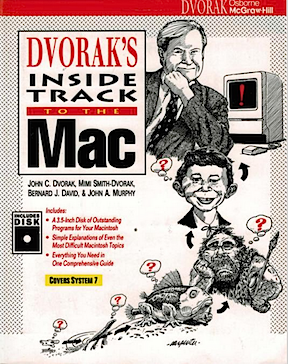
Dvorak's Inside Track
This is the first book I was involved in; I was a ghost writer on 4 chapters and am mentioned in the acknowledgements.

I got into the world of computer how-to book publishing way back in 1991. I’d left my last full-time job as a Financial Analyst at a Fortune 100 Corporation the year before and was trying my hand at freelance writing. Through an odd series of events, I wound up ghost writing four chapters of a book by John C. Dvorak, Bernard J. David (who I worked with directly), and others. That led to a book that Bernard and I co-authored, which led to another 80+ books that I mostly authored alone.

Back in those days, the Internet was in its infancy. Hardly anyone had a website — I didn’t have my first one until 1995 — and services like Google, which was founded in 1996 and wouldn’t become the powerhouse it is for years, didn’t exist. When people wanted to learn, they turned to books.

Software developers knew this. They provided printed manuals with their software products. Manuals for some software could be voluminous — I remember the one I had for a version of FrameMaker that had to be at least 800 pages. But despite the availability of these reference guides, users wanted something easier to read and understand. So computer how-to books were born. I happened to be at the right place at the right time to write them.

And I was very good at it. I had a knack for learning how to use software, breaking it down into simple tasks that built progressively through the book to more complex tasks, and writing it in a way that readers found helpful.

With a lot of competition, however, not many readers got to see my books and there wasn’t much money in writing them. No problem: I’ll just write more books. My publishers — especially Peachpit Press — really liked my work and my ability to meet deadlines. They kept me busy. I once signed six book contracts in a single day. One year, I wrote 10 books.

I wasn’t the only one cranking out books. Numerous publishers had tech imprints and dozens of new titles appeared every month. Bookstores — and there were a lot more of them in those days — had trouble keeping up, but they did. Publishers published these books and bookstores stocked them for one reason: they sold.

Demand only got higher as software developers stopped including lengthy manuals with their software, favoring Quick Start books instead. And then switching to digital only manuals that they might or might not include on the software CD.

Thus began the glory days of computer how-to book authors and publishers, a period that lasted from around 1995 through 2010.

Success Comes with Sales

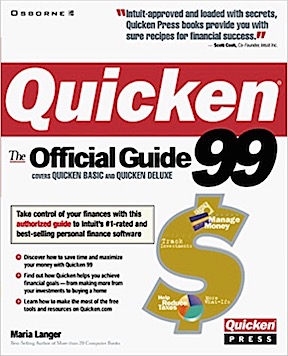
Quicken 99 Official Guide
This was one of my first bestsellers. Revised annually until I gave it up after the 2009 edition, it was a major source of income for me.

My financial success as the author of computer how-to books didn’t come from writing a lot of books with average sales. It came from writing two particular books, revised often, that were bestsellers. My Quicken 1999: The Official Guide was one of these bestsellers.

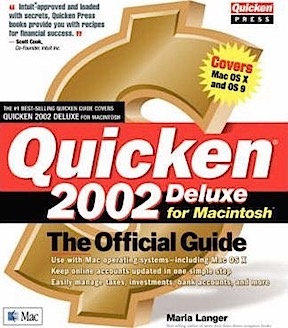
Quicken 2002 Mac
I was very happy to be able to write about Quicken for Mac, since I was a long-time user.

The success of one book often spurs a series of books. Quicken Press (later Intuit Press), an imprint of Osborne-McGraw-Hill, soon began publishing other Quicken and QuickBooks books. That’s how I wound up authoring Quicken 2002 Deluxe for the Macintosh: The Official Guide, the book referred to in the email message above.

I was pretty happy about this. Truth is, I’m a Mac user and had been writing Windows books only because there were more Windows users so the sales potential was higher. I’d been using Quicken on my Mac for years and knew it better than the Windows version I’d been writing about since 1998.

But my Quicken Mac book didn’t take off the way we’d hoped — there were a lot fewer Quicken Mac users and Intuit still had viable competition to Quicken on the Mac OS platform. To complicate matters, Intuit didn’t revise Quicken for Mac as often as it revised Quicken for Windows. When the next version, Quicken 2007, was released, neither Intuit nor my publisher saw a sufficient market for a book about it. So I was never asked to revise my book for future editions.

Google and the Death of Tech Publishing

Meanwhile, as publishers and authors were churning out computer books as fast as we could, the Web was growing. People were writing how-to articles and publishing them on blogs, on software support websites, on user group websites, and in online magazines. Even I did this for a long while, mostly to help promote my existing titles. These articles were free and available immediately. When search engines like Google proved to be extremely effective in helping readers find the content they sought, people started thinking twice about buying computer how-to books.

After all, why go to a bookstore or go online at Amazon to find a book that may or may not answer your specific question when you could spend a few minutes searching with Google and find the answer you need? Why wait for a book you ordered online to arrive when you could find the information you needed immediately? Why depend on the voice of one author when you could access information provided by dozens or hundreds of them?

Book sales dropped off dramatically in the late 2000s. I could see it in my royalty statements; my income peaked in 2004 and 2005 and then began a steady decline. Books about software staples like Word and Excel, that I’d revise with every new version, were dropped one after another. Publishers who had once agreed to a contract for nearly every title I proposed now declined, saying they didn’t think there was a sufficient market for the book. There were fewer and fewer new software-related titles being published. Editors who’d worked on dozens of titles a year suddenly found themselves unemployed. Publishers or imprints merged or disappeared. The few brick and mortar bookstores that managed to survive the rise of Amazon reduced or even eliminated their computer book shelf space.

By 2013, all of my book titles were officially dead — not scheduled for revision. And I know I’m not the only tech author who lived and thrived through the computer book glory days to find myself without a book market for my expertise. There are lots of us out there. The ones like me who saw it coming had a safety net to fall into; others weren’t so lucky and find themselves struggling to stay relevant and earn a living writing words few seem willing to pay for.

Don’t get me wrong — I’m not saying that computer how-to books no longer exist. They do. There just aren’t many of them. And rather than appeal to the beginner to intermediate user I wrote for, they’re mostly written for a much higher level of user about far more complex topics. Or very narrow markets that are easy to sell to.

This Reader’s Request

Fast forward to today.

The very politely worded email request from a reader quoted in full above is asking me to revise my Quicken 2002 for Mac book for Quicken 2017 for Mac. If you’ve been reading carefully, you know why this is unlikely to happen.

There is not a sufficient market for such a book.

And that’s what it’s all about: being able to publish a book that will sell enough copies for the publisher to make a profit. It has nothing to do with the author; publishers really don’t care what authors make. Their contracts routinely minimize author royalties to help the book’s bottom line. That’s all that matters. They have spreadsheets that calculate breakeven and if a title can’t break even with a decent profit, they won’t publish it. Simple as that.

Would I write and self-publish a book about Quicken 2017 for Mac? Probably not. Even self-publishing such a book doesn’t mean I’ll earn enough money to make such a project worthwhile. Let’s do the math. It would take me a good 400 hours of time over two months to write the book and prepare the manuscript for publishing. Say I need to make a minimum of $25/hour. That means the project would have to net me $10,000. Even if I managed to net $5/book after fees paid to Amazon, Apple iBooks store, Nook, etc., I’d still have to sell 2,000 copies. Are there 2,000 people out there willing to buy a book about Quicken 2017 for Mac? I seriously doubt it.

And I’ll share a secret with you: I still use Quicken 2007 for Mac. I bought but decided I didn’t like the 2015 version and I haven’t even bothered to buy the 2017 version.

So if I — a loyal Quicken user since the early 1990s — haven’t bothered to upgrade, how many other people have? And how many of them want a book about it?

The answer is simple: Not enough for me or apparently anyone else to write a book about it.

This Explains It

And this pretty much explains why I don’t write books about how to use computers and software anymore. I can’t make a living doing it.

But I’m lucky: at least I’ve found something else to make a living at.

Postcards: Glass Beach

While waiting for a battery to be replaced in my helicopter’s GPS, I got into a conversation with one of the avionics shop guys about my planned driving route along the California coast to get home. He immediately mentioned Glass Beach near Fort Bragg and even showed me a web page about it. 

I visited on Tuesday. It’s a neat little cove on the Pacific where sand-smoothed broken glass washes ashore, forming a beach with more glass than sand.