Snowbirding 2016: Death Valley

I finally make a trip I’d postponed for four years.

Posts in the Snowbirding 2016 Series:
Introduction
The Colorado River Backwaters
Quartzsite
Wickenburg
Phoenix
Home
Back to the Backwaters
Return to Wickenburg
Valley of Fire
Death Valley
– Back to Work

I need to start this account with some back story to put it into perspective. If you’re tired of reading about my old life, skip the following section and start reading at The Drive.

The Back Story

One of the things that bothered me most in the last years of my marriage was the fact that my husband’s 9 to 5 job and his insistence on living in a condo in the Phoenix area instead of our Wickenburg house made it very difficult for us to have any fun together. Although my time was extremely flexible — I was still in my declining writing career and didn’t do much flying when I wasn’t away for my summer job — his wasn’t. He worked every weekday. Even when I moved into the condo with him that last winter we were together, we seldom did anything during the week. Dinner and a movie gets old after a while, but not nearly as old as watching him channel surf every evening we didn’t go out. On weekends, he insisted on making the 90-minute drive back to Wickenburg on Friday afternoon, returning with a 90-minute drive back to Phoenix on Sunday evening or Monday morning. I tagged along when I could, but the irony of our work schedules was that I was more likely to fly on weekends than weekdays. Besides, on weekends he’d spend a lot of time catching up on car shows he’d DVRed from Dish Network. Doing something “different” meant taking the same old motorcycle ride up to Prescott. He wouldn’t take his plane out unless the weather was perfect and forecasted to be perfect until after his return.

To make matters worse, he was nearly constantly in a foul mood. His job — like the others in Phoenix before it — had become a dead end, with an unpleasant work environment and a micro-managing boss who made it difficult for him to make the sales he needed to earn a better living. He was struggling financially to not only cover the high cost of the condo he refused to sell, but the loan on his Mercedes, expenses for a plane he seldom flew, his other living expenses, and his regular contributions to his niece’s education, which had entered the PhD candidate phase. He couldn’t see how his debt and expenses had made him a slave to his job. He was never happy and he seemed to take it out on me, accusing me of being the reason “we had no friends,” and complaining when I preferred reading or doing crossword puzzles over spending another frustrating evening in front of the television while he channel surfed.

When that job came to an end in early February and he seemed to have another job lined up behind it, I pushed hard for us to go away for a five-day trip to Death Valley. We’d take the Mobile Mansion, set up camp at one of the park’s campgrounds, and take our cameras out to explore Death Valley. February was the time of year when the wildflowers started blooming. Our previous trip together to Death Valley — way back in the 1980s — had been limited by the rental car we’d had; we’d be able to go a lot farther off the beaten track in a 4WD truck.

I saw the trip as an opportunity to leave troubles behind, to remember the other great trips we’d had together, to go back — at least mentally — to a better time when our relationship was better and our love for each other was stronger. I hoped it would recharge our relationship and bring us closer together again.

Unfortunately, the trip was not to be. His mother was in town — as she was every winter for a month or two — and although we’d put her in a great two-bedroom home that was part of an assisted living community in town, she was at our house every single day and long into the night. For some reason — fear, perhaps? — he didn’t tell her about our upcoming trip. As the days to departure ticked down, I kept waiting for him to tell her. Surely she could live without us for five lousy days.

Lucy the Pug
Lucy, the toothless pug, basking in the morning sun at our Colorado River backwaters campsite. She survived that February 2012 night in the desert by hiding under a neighbor’s porch.

And then the day before we were supposed to leave — the day we should have been packing — he let our dog and my friend Janet’s dog out and later let our dog in without remarking on the absence of the little toothless pug. It was hours before I realized that she was gone, lost in the desert. After spending the entire day looking for her and feeling nearly as heartbroken as Janet about her loss, I snapped. I told him I’d had enough of him and cancelled the trip. The next day, I went down to Phoenix to work on a book in the office I’d ironically moved there to be closer to him.

I cooled down after a week or two and agreed to go with him to a marriage counsellor. And although I thought things were on the mend and looked forward to him starting yet another job that would give him more free time, he apparently had other ideas. When I left in May for my summer job in Washington, he signed up at Chemistry.com. A month later, he was sleeping with the desperate old whore who convinced him to dump me — after a 29-year relationship — and go after my money. He even told the judge at the first hearing that I had abandoned him. (WTF?) You can read about the rest elsewhere in this blog.

Anyway, that’s the back story. I’ve been wanting to visit Death Valley for the spring wildflowers for at least four years. This year, I finally got a chance to make that happen.

(Funny how much I can make happen without a sad sack old man holding me back.)

The Drive

It wasn’t an uneventful drive.

I left Valley of Fire around 10:30 AM and got on I-15, heading southwest. I was just settling in for the three-hour drive with the cruise control locked in at the highway speed of 65 MPH when I felt a weird vibration in the truck. I got into the right lane and killed the cruise control about the same time the right rear tire on the truck blew.

I’d always wondered what it felt like to have blowout at highway speed when towing a 15,000 pound trailer. Now I know.

Flat Tire
Ouch.

I kept control of the truck and managed to bring it to a stop within about 1,000 feet on the narrow shoulder of a very long overpass. Because highway traffic was just three feet away from my door, I lifted the center console and slid across the seat to get out on the shoulder side. The tread on the tire was nearly completely gone. Moving forward to get off the overpass was not an option unless I didn’t mind destroying the rim. The tire would have to be changed right where I was.

For the second time in less than two months, I called AAA.

Mud Flap and Tire
My damaged mud flap, sitting up on the guardrail with a big hunk of tire tread on the shoulder beside it.

While I waited, I walked back along the highway. I recovered a big chunk of the tire, but more importantly, I also recovered the mudflap that had been torn off when the tire blew. I brought them back to the truck and threw the mudflap into the bed.

A flatbed tow truck arrived an hour later. A guy came out and set about lifting my truck’s rear end with a hydraulic jack and lowering the spare tire fastened under the truck bed. In just a few minutes, the tire was changed. Of course, the spare’s pressure was low, but that wasn’t a problem. The truck had a compressor and the tire was soon inflated and I was ready to go.

Honestly, anyone who travels — especially alone — really should have roadside assistance like AAA. This was the second time it helped me on this trip. And yes, I probably could have changed the tire. But it likely would have taken me hours to do it and the tire pressure still would have been low. I got the job done without getting dirty for the cost of a $20 tip.

While I’d been waiting, I’d been working the phones. I called Discount Tire in northwest Las Vegas — a location that was along my route to Death Valley — and arranged for a set of replacement tires. In all honesty, I never did like the off-road tires that had come with the truck. I just hoped I’d get a year out of them. I obviously wasn’t going to. Best to just replace them all now with an all-terrain tire that was better able to handle the weight I was towing. I wound up with a set of four Toyo Open Country tires. Even with a $100 rebate, it was quite a chunk of change. With luck, however, I won’t have to replace them for at least 5 years.

So my next stop was the Discount Tire location I’d called. There was a long line inside. I was told it might be two hours. I secured my place in line, paid for the tires, and then pulled my rig into an empty lot next door. I disconnected the Mobile Mansion, topped off the truck’s tank with diesel, and parked it back in the lot. Then Penny and I went into the RV and had lunch.

That’s one of the nice things about traveling with a house. The fridge and bathroom are always handy.

It was about 3:30 PM by the time the new tires were on and I’d hooked up the Mobile Mansion again. Sunset was two hours away and it didn’t look as if I’d get to Furnace Creek by then. But I put the pedal to the metal and drove. I got on Route 95 and followed that to Amargosa Valley. Then south on route 373 to Death Valley Junction. Finally 190 west to Furnace Creek. There wasn’t much traffic at all and I was able to do (at least) the speed limit all the way. The new tires felt great — and were amazingly quiet compared to the old ones.

Route to Death Valley
I took the highlighted (blue) route from Valley of Fire to Death Valley.

On the descent down to the valley, the sky to the west, which was full of high, light clouds, turned brilliant pink and orange and then violet. It was probably the best sunset of the trip.

It was nearly dark when I pulled to the curb across from the office for Furnace Creek lodging. I checked in for the campsite I’d have for the next two nights. Then I walked back to the truck and drove it the final half mile to the campground. It was a back-in site between a giant luxury motorhome and some tent campers. I’d never parked the Mobile Mansion at night, but it wasn’t as if I could wait until morning. I set out a lantern on the driver’s side at the back of the site and a flashlight on the driver’s side in the front. And then, with a little guidance from the tent campers, I backed it in.

Got it on the first try. Sometimes I really surprise myself.

Setting up camp was easy because the site was level and there were no hookups. I disconnected the Mobile Mansion from the truck and put out the slides. Done.

The only drawback: that luxury motorhome had a generator running and it was loud. (What is it with these people?) Fortunately, they shut it off at 7 PM sharp.

Dawn at the Dunes

Although I’d hoped to get some exploring in on the afternoon when I arrived, arriving in the dark made that impossible. So I started my explorations early the next morning after a quick breakfast. Penny and I climbed aboard the truck before dawn and headed north toward Stovepipe Wells. I had the idea of photographing the dunes near there around sunrise. Unfortunately, so did a bunch of other people. When I arrived, the parking lot was half full and there were people all over the dunes. Getting a shot without a bunch of footprints or a tourist in it was not likely.

So I backtracked down the road and parked on the shoulder. I climbed into the back of the truck with my tripod and camera and framed a few shots using my 85-300 telephoto zoom lens. The focal length compressed the perspective, as I suspected it would, bringing the distant mountain tops closer. I got a few shots I liked before climbing back into the truck to continue on my way.

Death Valley Dunes
Not long after sunrise along the road between Furnace Creek and Stovepipe Wells in Death Valley.

On the Road to Skidoo

Death Valley Map
I highly recommend this map, which is available from Amazon.

And here’s where I made my mistake. Back in January, I’d had lunch with my friend Rebecca, who had been to Death Valley earlier in the year. She’s showed me some locations on a National Geographic map that I bought and had shipped out to me when I was staying at the Colorado River backwaters south of Ehrenberg. I’d studied the map and had decided to try finding a set of dunes to the west of Ubehebe Crater in the north part of the park. But I guess I hadn’t “studied” the map enough — for some reason, I thought the road through Stovepipe Wells was the right road. It wasn’t until I was at Emigrant Campground that realized something wasn’t quite right and pulled over to check where I was going. I’d gone about 40 miles the wrong way.

Pro tip: Maps can only help you when you use them. Duh. (I should have grabbed one of these maps at the Visitor Center. It’s not as detailed as what I had, but it’s easier to manage in the truck.)

So I came up with a Plan B: explore the west side of the park up Emigrant Canyon Road. The map showed two interesting townsites: Skidoo and Harrisburg. I like wandering around ghost towns and figured I’d check them out.

I headed south on Emigrant Canyon Road, climbing ever higher into the mountains on the west side of the park. Outside, the air was cooler — in the low 40s, according to the truck’s outside air temperature gauge. But it was clear and I knew it would warm up. I found the sign to Skidoo and turned left onto a nicely maintained gravel road. Ahead of me, in the near distance, were two white SUVs and a white pickup truck. Soon, I caught up with them and was driving in their dust. When I saw an old cabin on a short road off to my left, I turned and used it as an excuse to let some miles get between us.

Abandoned Shack
One of the neatest abandoned buildings I’ve ever come upon.

The cabin wasn’t anything interesting other than the fact that it was in remarkably good condition and would still make a very usable shelter. That in itself was remarkable: most unused buildings in this country — especially those in remote places — are targets for vandals who destroy for the pure satisfaction of destruction. There were no signs to keep out so I did what any explorer would do: I opened the screen door and wooden door inside it for a peek. I found an old spring bed frame and some litter inside. No smashed beer bottles, no graffiti, no vandal debris. I carefully closed both doors up the way I found them.

Door Light
I don’t know why, but I like this image.

In general, the place wasn’t very photogenic. The most interesting shot I got was through a hole in the boards covering the back window: the light shining through cracks on the door. It was the cleanest abandoned building I’d every seen. I hope it stays that way forever.

Mine Shaft and Truck
Yes, I do realize that I probably looked pretty silly driving around Death Valley with two kayaks on my roof.

Penny and I got back into the truck and crossed the road. Soon we were climbing up a hill to an old mine site on the opposite hillside from the cabin. I left Penny in the truck — I don’t like to worry about her falling into mine shafts — and explored on my own. There wasn’t much there that I hadn’t already seen before at countless mine sites in Arizona and Nevada: the support structure beside the main shaft, several smaller horizontal mine shafts going into the hillside, and the remnants of old buildings. The site was neat and clean. Thinking back on this, I have to wonder if the park service or volunteers clean these places up. Or if vandals simply avoid National Parks.

We got back on the road and continued the drive to Skidoo. In most places, the road was wide with gentle curves and a bit of washboarding. In other places it was narrow and rocky as it wound along the edge of a steep drop-off. I passed the ruins of another building on my left and decided to explore it on the way back. I was eager to see Skidoo and wanted to be there before the sun had risen much farther.

Skidoo Sign
Here’s the sign that tells you you’ve arrived at Skidoo. At the top is a quote: “Here the golden goddess is again singing her siren song of enchantment and California is again beckoning the world with a finger of gold: the world is listening, and coming — TO SKIDOO!” Apparently, the Rhyolite Herald was pretty good at dishing out bullshit back in 1907. All I could think about was where did they get their water?

When I got there, I didn’t even know I was there. It was just a flat area among the hills with lots of dirt roads going off into different directions. I drove up to an interpretive sign set alongside a turnoff in the road that announced I’d reached my destination. Wikipedia calls Skidoo a “virtual ghost town” but I don’t see any “virtual” or “town” about it. There’s really nothing of the town left other than foundation rubble and broken glass.

I’ve been doing some video journalling lately and apparently made one from the top of the hill. I didn’t turn toward the sun, probably because I knew the video in that direction would be crappy. I sound nasal because I was fighting a cold and I’m not sure if the snowcapped mountains are the Sierras.

I saw a road going up a steep hillside and decided to check it out. It would be a good test of my new tires. I drove over to the bottom of the hill, popped the truck into 4WD and started a steep climb. There was plenty of room at the top to park and (fortunately) to turn around. So I parked, shut the engine, and climbed out with Penny for a good look. From my vantage point, I could clearly see where the town had been (despite there being no real traces of it), as well as several mine shafts with towers. The two SUVs and pickup truck I’d seen earlier in the day were parked by one of the mines far below me. Off to the northwest, I could see snowcapped peaks.

At Skidoo
I could see the white trucks and the men who had been in them near a mine site across the ravine from my observation point. A photo shot with my 300 mm lens revealed the Noreas logos on the SUVs. One of the men was dressed as a ranger and had likely come in the unmarked pickup with the big antenna on the roof.

Mine Site with Truck
There wasn’t much left of the truck and what was left was half-buried in mine tailings.

I turned the truck around and headed back, realizing that the road looked a lot steeper from the top than it had from the bottom. I took it slow in 4WD low gear. Then I found my way to another mine site I’d seen from the top of that hill, parked off the road, and got out for a look, again leaving Penny in the truck. What interested me most about this site was the wrecked truck there. For some reason, I like to photograph abandoned vehicles so I really spent quite a bit of time on this one.

Rusty Car Door Wood Planks
I like the textures you can find among old, ruined things: a rusty car door, a wall made out of wood planks.

By then I was pretty sick of Skidoo and ready to skiddoo. (Sorry, but I couldn’t resist that one.) I turned the truck around again and retraced my route back to pavement eight miles away. I did stop along the way to visit that other abandoned building, but there wasn’t much there of interest so I didn’t stay long. Not even worth sharing a photo of it.

Harrisburg / Aguereberry Camp

Back at Emigrant Canyon Road, I had to make a decision: go back into Death Valley and explore elsewhere or continue on my way. I decided to go a little farther down the road to see if anything else was interesting. That’s how I wound up taking the turn to see the ghost town of Harrisburg, which was partially visible from the paved road.

I drove about a mile or two down the unpaved Aguereberry Point Road and parked with two other vehicles in a tiny parking area in front of a closed gate. The folks from the other vehicles were just leaving their cars and walking toward the ruins about a quarter mile away. They had a dog with them, too, so Penny and I hung back to give them space. I’d later discover that they were part of a group of three, two of which were in period costumes for a photo shoot. We were the only people there.

Through the Wall
A look through the wall of Pete Aguereberry’s old house.

Although maps identify this spot as Harrisburg, a sign at the ruins called it Aguereberry Camp. The main site consisted of three buildings, an outhouse, and the remains of a mine. Farther up the road I’d walked was the ruins of an old Roadmaster sedan and still farther were the ruins of the Eureka Mine, which I did not visit. (There are only so many mine shafts a person can see in a day.) While the photo shoot folks were working around the car, I explored the buildings. They were in disrepair and vandalized, just as I’d come to expect of ruins, but not nearly as bad as I’d seen at other vandalized sites.

From there, Penny and I hiked another 1/8 mile or so to the old car, passing the photo shoot folks on their way back. The car made a remarkably interesting subject for photography — at least in my mind. The original color, teal (?), could still be seen among the rusty patches. Even the logo of the car was visible in one spot — which is how I knew it was a Roadmaster. I took quite a few shots, many of which featured Aguereberry Camp’s buildings in the background. I even got to play a bit with my 10-24 mm lens, which I seldom use these days.

Roadmaster
A wide angle (16 mm or 24mm full frame) shot of the car with Aguereberry Camp in the background.

Wide Angle Car
A very wide angle (10 mm or 15 mm full frame) shot of the car with the buildings visible through the windshield.

We walked back to the building a while later and spent some time chatting with the photo shoot folks. The two models — a man and a woman — had changed back into regular clothes. They were all sitting in the shade, snacking on peanut butter and apples and other tasty treats. They offered me some, but I declined. We talked about Death Valley and photography and they urged me to continue up Aguereberry Point road to the point. “The view is amazing,” the photographer assured me.

Aguereberry Point

Although I felt as if I’d had enough driving along bumpy back roads for the day, I’m not one to pass up a view — especially one that isn’t crowded with tourists. So when I left the photo shoot folks, I continued along the road.

Aguereberry Point was only about six miles from pavement, but much of the road was very narrow for most of the way. There was a section that it wound through a narrow canyon that I could imagine being treacherous in a rainstorm. Then it came out onto a hillside and continued climbing out in the open. Up and up and up, finally ending in a small parking lot that looked as if it were at the top of the world. Penny and I were the only ones there.

The view was good from the parking lot, but the photographer had advised me to take the trail to the point. After walking (and climbing) a bit on the wrong trail, I got on the right one and followed it as far as I could go. The view of Death Valley was unobstructed to the northeast and southeast, with a mountain due east that blocked the view that way. At an elevation of 6,433 feet, we were at least that high above the valley floor, much of which is below sea level. It was dead quiet.

Photos really can’t convey the full picture of what this place is like, but here’s a panoramic image to give you an idea. Was it worth the drive? Hell yes.

Aguereberry Point Panorama
Here’s a panorama taken at the point. Click the image for a larger version that you can scroll to see details.

Raven
Ravens like dog food. Who knew?

I walked back to the car and put out some food and water for Penny. A young couple drove up and parked next to the truck. As they donned backpacks, we chatted about places to visit in the park. I had nothing to offer except a recommendation to skip the drive to Skidoo. They told me that the wildflowers were amazing down near Ashford Canyon, where they’d camped overnight. Then they were off down the trail, leaving me to chase off the ravens that were eating Penny’s food.

On the Trail of Wildflowers


This video was released by the park service less than a week before my visit. Watch it full-screen.

From there, I retraced our route back to pavement and, from there, back down into Death Valley. We passed through Stovepipe Wells and headed toward Furnace Creek. That’s when I noticed the wildflowers I’d missed that morning on my predawn drive. The roadsides were full of them. I didn’t realize it, but Death Valley was heading for a once-a-decade “super bloom.”

Flowers
I thought there were a lot of flowers here, north of Furnace Creek. But this was nothing compared to what was about 50 miles down the road.

After a brief stop to check out the desert pupfish at Salt Creek, I continued past Furnace Creek on Badwater Road. I was back among the tourist crowd, with lots of cars and buses along the way, especially at Badwater, which is the lowest point in the U.S. at 282 feet below sea level. There were lots of people walking out on the salt flats there, but I didn’t bother to stop. I was aiming for Ashford Canyon, where the young backpackers had said there were so many flowers. The further south I got, however, the more flowers there were. People were parked alongside the road where the flowers were thickest, taking photos and walking among the bright yellow blooms. I couldn’t resist a few stops myself, although I knew I’d get better shots when the sun was lower in the sky.

Death Valley Flowers
The light wasn’t as good as it could have been, but I couldn’t resist stopping for a few photos along the way to Ashford Canyon.

I was also surprised to see standing water in various places alongside the road. I’d heard that there had been a lot of rain in Death Valley that fall, but I’d assumed the water had run off or seeped into the ground. Instead, there were a few dry lake beds that weren’t exactly dry. Some were almost swampy. Although I hoped for an opportunity to get some good reflection shots, conditions were unfavorable; a breeze put just enough ripples on the water surface to break up any good reflections.

Flowers at Ashford Mills
Desert gold wildflowers at Ashford Mills.

I arrived at the remains of Ashford Mills after 4:30 PM. The same big yellow flowers — appropriately named “desert gold” — I’d been seeing along the way were scattered all around the ruins. I wandered around the ruins and took photos while Penny sniffed here and there. It was amazing to see hills in the distance yellow with blooms.

Death Valley Flowers

Death Valley Flowers

Death Valley Flowers

Death Valley Flowers

Death Valley Flowers
Here are several close-up shots of some of the smaller flowers I spotted while wandering around.

There were also some smaller flowers that were less obvious and required careful attention to spot. I did a lot of crawling around with my 16-85 mm lens — I don’t have a macro lens — to get close-up images of them. The group of four people sitting out at a picnic table near the parking lot, eating a late lunch or early dinner, must have thought I was nuts. I was really getting into it.

The turn for Ashford Canyon was right across the road from the road to Ashford Mills. It was a narrow two-track road that wound up a hillside and then into the canyon. The young backpackers had said the flowers were good up there, but as I began the slow bumpy drive I began wondering whether they meant that the flowers were good in that general area. They certainly were amazing. I drove for about a mile when I realized it wasn’t going to get any better than what I was already seeing. I found a place to turn around and started back.

By this time, the sun was sinking quite low. Mountains on the west side of the park would make sunset a lot earlier than I expected after consulting Siri that morning. (Ask Siri what time sunrise or sunset is and she’ll tell you and provide a weather report.) I wanted to head back for a late afternoon shot of a particularly flower-filled area along the road. So I headed back toward Badwater and Furnace Creek. I reached the location I was thinking of just as the light was getting very good and got out to take a few photos.

Death Valley Flowers
The carpet of yellow flowers is a stark contrast to the bare rock walls on either side of Death Valley.

Leaving the Valley

By the time I was ready to go back, the hillsides were in shadow. It was dusk when I pulled up to the Mobile Mansion.

If you’re wondering why I bothered to give you the backstory at the beginning of this post it’s because of this: While I drove and hiked around and explored and photographed Death Valley with my dog, I spent a lot of time thinking of what the trip might have been like four years earlier with the man I thought was my life partner. With five days to spend in the park, we would have seen a lot more. But would the trip together have gone as smoothly as I’d hoped? Or would he have been stressing about his mother left behind? And would the trip have been a repeat of all those amazing road trips we’d taken together in the 1980s and 1990s? Or would we have bickered over every little thing we did?

I know now, in my heart, that our relationship was like the walking dead — existing with no life, no future. In February of 2012, I wanted to go back to the way things were when our relationship was good and strong, when we were two people of one mind who shared ideas and dreams. But he had already given up and was just biding his time, waiting for his escape. I loved and trusted him too much to see the truth about what he’d become: a bitter old man, blaming me for his failures in life, eager to take revenge on imagined offenses.

Although my trip had been short — too short, I think! — it had been taken on my terms, without pressure or a need to compromise. I’ve been traveling alone since long before my 19-day “midlife crisis road trip” back in 2005. While it’s nice to travel with a companion, good travel companions are hard to come by. I lost mine years ago, many years before my divorce. While I’m sad that he’s gone, there’s no denying how much better off I am without him.

Although I’d considered doing a little early morning photography the next day, I realized that the locations I wanted to visit were too far away to get there and back and still leave the park by 10 AM. It would be better to come back another time, when I had more time to spend. My next stop was in the Sacramento area of California, where I’d be based with the helicopter for a frost contract. It was a six-hour drive and I looked forward to seeing a few friends when I arrived. Wednesday would be my travel day and Thursday would be a day to kick back and relax before taking Alaska Air home to fetch the helicopter.

To minimize the noise I’d make on departure the next morning — keeping in mind that my tent-dwelling neighbors would hear every sound I made — I decided to hook up the Mobile Mansion that evening. So I cranked down the landing gear, backed the truck into place, and lowered the front end of the Mobile Mansion onto the hitch. Within a few minutes, the chains and power plug were in place and the landing gear was up and locked. All I had to do in the morning when I was ready to go was to close up the slides.

I had a nice salad for dinner. I tried hard to ignore the sound of the generator next door. I don’t understand how I can camp day after day in my rig without running a generator when these people in their fancy motorhomes can’t seem to spend any time in theirs without their generator running full-time. Fortunately, they turned it off at 7 PM sharp.

After dinner and a quick clean up, I relaxed in bed with a book. Penny curled up in her bed beside me. I was dead asleep by 9 PM.

In the morning, we were on the road by 7 AM, heading west on the road past Stovepipe Wells toward Panamint Springs. That drive didn’t go anywhere near as planned — but that’s another story.

A Flight to Salinas

Any excuse to fly, eh?

I’m currently based in the Sacramento area of California for my late winter/early spring job as a frost control pilot. I live part-time in a nice farm town I’ve grown to know and like over the past four years, waiting for the weather to turn cold and a phone call telling me to get ready to fly. At that point, “passive standby,” when I get paid by the day to have my helicopter on-site, turns into “active standby,” when I get paid by the hour to wait. When the fly call comes, I theoretically spring into action, firing up the helicopter and heading out over my almond orchards to circulate air and keep the frost from damaging the developing nuts.

I say “theoretically” because although this is my fourth year as a frost pilot, that fly call has never come. Instead, each season I wind up being paid by the flight to fly to California, being paid by the day to hang around in very pleasant weather doing whatever I like while it’s still kind of dreary at home, occasionally being paid by the hour to sit in my truck at the airport at night waiting for a fly call, and eventually being paid by the flight to fly the helicopter home. I earn enough in two months to carry me financially until cherry season starts in May — and beyond. Along the way, I have a grand old time in Northern California’s Central Valley. I’ve made some friends, done a ton of hiking, gone wine tasting, kayaked the American River and Lake Solano, learned to fly a gyro, gone ballooning, and even given my bees an early start to the spring season. In general, it’s just an extension of my winter travels, with lots of flexibility to go where I like and do what I want — as long as I can get back to base by midnight when I’m put on active standby.

Anyway, my point is that I don’t have a lot of flying to do for this job. So instead, I take the helicopter out on “maintenance flights.” This is where I start up the helicopter to make sure it’ll start when I need it and since I’ve got the engine running, I may as well take off and since I’m taking off, I may as well go somewhere interesting like up Cache Creek or into Napa Valley or around Sutter Butte.

Cache Creek 2
My favorite “maintenance flight”? Low-level up Cache Creek, especially just after dawn.

Yesterday’s Excuse for Flying

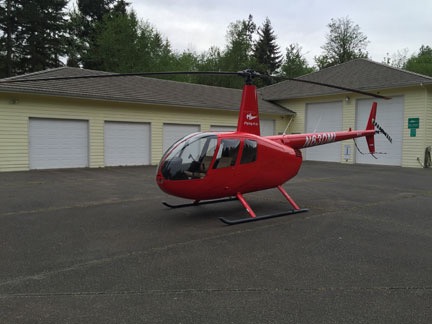
My helicopter is coming up for overhaul soon and I’ve begun interviewing service centers to find one that’ll do the job the way I want it done at a price I’m willing to pay. I’ve already visited a shop in St. Augustine, FL, and have talked to the folks in Hillsboro, OR, who sold me my helicopter nearly twelve years ago. (Hard to believe it’s been that long, eh?) I’ve recently gotten more motivated to learn my overhaul options; one of the magazines I write for has agreed to a 1000-word article about my search for a shop. So I obviously need to visit more shops.

So the other day, I checked the Dealer/Service Center page on Robinson Helicopter’s Website. And I made a list of the centers in Northern California. And I started making calls. By the end of the day, I’d made plans to visit the folks at Airmotive Specialties, the service center in Salinas.

DWA to SNS
The direct route to Salinas was easy enough.

I was not interested in driving to Salinas. The 170-mile drive would take at least 3 hours each way. Obviously, I’d fly. Foreflight told me it would take about an hour and 20 minutes and that was fine with me. (I have 200 hour to burn off on the helicopter before November.) A review of the direct route showed that it was pretty easy, with no serious concerns about airspace or mountain terrain. Weather was forecasted to be good on Wednesday, although rain was moving in north and east of San Francisco (where I’m based) later in the week. It was a no-brainer. I made tentative plans to fly on Wednesday afternoon.

The Flight Down

I spent Wednesday morning taking care of odds and ends: writing a blog post, updating a friend’s website, answering email messages, scanning receipts, walking to the closest RedBox to drop off a video and pick up another one. The man I needed to meet at Airmotive would be at the office all day, so there was no rush. I had lunch just after noon, then climbed into the truck with Penny and headed out to the airport. A while later, after setting up my GoPro “nosecam,” iPad with Foreflight, and phone for music, I fired up the engine. I was heading south by 1:30 PM with Penny lounging on her bed in the front passenger seat beside me.

It was an uneventful flight. Well, mostly.

Why I Tend to Avoid Towered Airspace

I think a sidebar is in order to explain why I didn’t fly right through Livermore’s airspace and talk to the tower.

First of all, my direct route would have put me less than 1/2 mile into Livermore’s airspace — nowhere near the runway or tower. It wasn’t a big deal to adjust course a tiny bit to the left (east) to avoid it.

Second, my experience with towered airports has been a real mixed bag over the 15+ years I’ve been flying. If an airspace is directly on my flight path, I’ll ask the controller to transition. I might make a request like “Helicopter six-three-zero-mike-lima, 10 miles northeast, would like to transition southbound on the east side of your airspace.” (That’s what I might have said on Wednesday to Livermore.)

About half the time, the tower will allow me to “proceed as requested,” sometimes asking me to “ident” (push a button on my transponder which momentarily makes me more visible on his radar) or even assigning me a squawk code (an unique 4-digit code for my aircraft on radar). All that’s quite reasonable and fine with me.

But other times, the tower will require me to follow a certain route through the airspace — for example, over the top of the airport, midfield at a specified altitude. This can waste time and fuel. And still other times, the tower will instruct me to climb to an altitude above the airspace — usually 2500 feet AGL or higher — to “transition.” (Technically, this is not transitioning the airspace because I’m technically not in it when I’m flying that high over it.) This is nosebleed territory for helicopter pilots who typically fly 500-1000 feet AGL, not to mention a real waste of time and fuel. And other times — admittedly rarely — the tower will simply deny the request and tell me to stay clear. (Scottsdale liked to do this.)

So the solution I’ve come up with is this: if my direct route doesn’t take me within two miles of the runways or tower, I adjust my path to fly around the airspace and monitor the tower frequency to listen for traffic. At my altitude, airplane traffic — other than crop-dusters — is seldom an issue.

There was a close call with a biplane crop duster who apparently didn’t see me where I was cruising at about 1000 feet AGL (Above Ground Level) just to avoid crop-dusters. I guess he was going back to base. I dumped the collective and dropped down to about 300 AGL quickly while taking other evasive actions. He passed above and behind me and I continued on my way, climbing back up to at least 700 AGL and keeping a sharp eye out for others.

And then near Livermore, another traffic situation. I’d tuned into Livermore’s tower to monitor the frequency as I flew southbound just east of the tower-controlled airspace. I heard the controller warn another pilot about traffic that sounded just like me. I stayed quiet until the controller came back on the radio about a minute later, sounding a bit alarmed that the traffic (me) was only a half-mile away. I looked up and left and saw the Cessna flying at least 500 feet above me, westbound. I keyed the mic button and said: “Livermore Tower, helicopter six-three-zero-mike-lima, just east of your airspace, has that airplane traffic in sight. I’m passing below him, no factor.” The controller sounded more than a little relieved when he responded with thanks.

Marine Layer Moving In
You can see the marine layer moving in on the right side of this shot. I was about 5 miles from Salinas Airport here.

I was in the mountains, abeam San Jose Airport, when I started noticing the marine layer moving in from the west. I fiddled with Foreflight’s settings to get visibility information for the nearby airports. All of the ones in my vicinity — including Watsonville and Salinas up ahead — were reporting 10 miles or more. But I didn’t like the way those low clouds look. I know from experience that the marine layer can turn an airport from VFR to IFR in fifteen minutes when it’s moving just right.

I landed at Salinas and followed the controller’s directions to “the biggest hangar on the field.” I parked in an empty airplane tie-down spot nearby. As I shut down, I looked at the windsock and the low clouds. The wind was clearly pushing the marine layer in from the west. I might not have much time if I wanted to get back that day.

At Salinas

My meeting went extraordinarily well. I met the boss, had a quick tour of their facility, and chatted with him about my options. He and his crew have done more than a few Robinson overhauls, including one for a helicopter that was parked right outside his hangar door. He’d learned a few things that would save me money while keeping me safe and in full compliance with FAA requirements. He had local sources for aircraft painting, upholstery, and parts inspections. Best of all, he could get the work done within my stated time restraints — I would need it back by mid February for next year’s frost season.

He and his helicopter guy came out and looked at my ship. They said it looked good — I have to wonder if they say that to everyone or if so many other ships don’t look good that they feel compelled to say something when they see one that looks better than usual. I have to agree that it doesn’t look 11+ years old. I’ve taken very good care of it over the years, getting quality maintenance done by good shops and keeping it in a hangar (or garage) for most of its life.

My visit ended by giving him my complete contact information so he could work up a quote. I’d have to order the overhaul “kit” from Robinson at least six months in advance to get it in time. Clearly, I’d need to choose a shop a lot sooner than I expected to, possibly as early as May 1.

By the time I got outside, it was overcast and downright cold. The marine layer had indeed moved in, with clouds just 1200 feet above the field (according to the ATIS recording) and mountain obscuration to the north, where I needed to go. It looked as if the only clear routes were to the south. I’d need to fly around the weather to move north.

But first I needed fuel. I’d burned half of what was on board on my trip down and did not want to go into any weather situation without full tanks. A call on the unicom frequency got me nowhere, so I walked over to the general aviation terminal and found someone in the Airport Manager’s office who gave me a phone number to call for fuel. While I waited for the truck, I fiddled with Foreflight to get additional weather information. But I didn’t need a computer or weather report to see that I wasn’t going to be taking the direct route back.

Around this time, I realized that I’d forgotten to text a Facebook friend who worked at the airport. She’s a medevac pilot who was on duty that evening. I was supposed to text her when I arrived so she could drop by. But the incoming marine layer had distracted me and I’d forgotten. Now, with the weather getting worse by the minute, I couldn’t wait around. I texted her my apologies. Another time? Chances are, I’d be back in November; I’d very much liked what I’d seen and heard at Airmotive.

The Flight Back

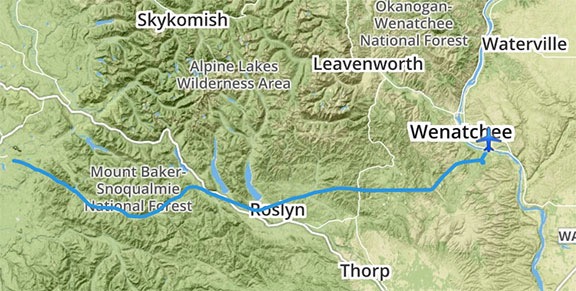
SNS to DWA
My actual track, as logged by Foreflight, on my return flight from Salinas. Talk about circumventing weather!

Once the fuel was on board and I’d added some oil, I climbed back on board and started up. The ATIS mentioned ILS approaches but the airport was still VFR. I asked for a departure to the east, got clearance, and took off.

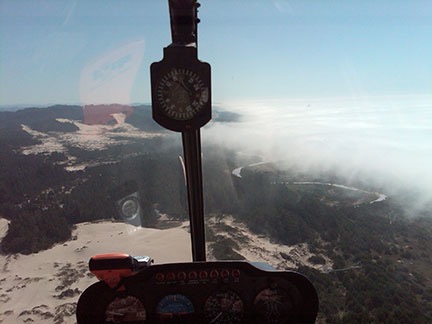
I had my GoPro “nosecam” running for the whole flight. With the sun behind me — if it made an appearance — I knew the light would be much better than it had been on the way down. (I don’t record every minute of every flight. I already have too much mediocre footage; now I just try to get good footage.) The camera captured the situation well: very low clouds for quite a distance. I aimed for some brightness on the horizon, stayed at an altitude that kept me below the cloud layer, kept a sharp eye out for towers, and flew southeast.

Marine Layer
I really wanted to steer left in this shot, taken less than a mile from the airport. But instead I aimed for that bright spot in the far right — southeast bound.

Don’t get me wrong. I could have tried scud running a path up the valley to the north. And I might have found a comfortable way to get where I wanted to go. But I’ve run scud enough times and have found my way blocked enough times that I’ve learned not to even bother trying if there’s an easy way around it. I know marine layers well enough to know that they don’t usually cross mountains. If I could get to the far side of the mountains east of the airport, I’d find a clear way north.

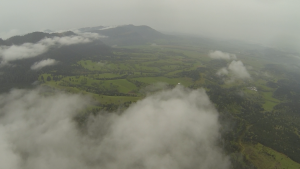
And that’s exactly what happened. I aimed for the brightness, which got bigger and brighter the farther I went. Suddenly, I was in sunlight, climbing the bright green foothills of the mountains on a northeast heading. Soon I was at cloud level just to the east of the clouds heading due north. Before long, I was above the marine layer, looking out at islands of mountaintops in the clouds to the west.

Out of the Marine Layer
Only six minutes passed from the time the previous photo was snapped to the time this one was snapped. At this point, I was banking to the northeast, climbing above the marine layer just east of where it got “stuck” in the mountains.

I adjusted my course on both my helicopter’s Garmin 430 GPS and Foreflight and attempted to fly direct back to my base. The lush green hills were amazingly beautiful and the shadows from the sun shining through the marine layer gave them an extra depth. It was hard not to detour in a few places to get some better views. I let the camera run, figuring I’d get a few good shots along the way.

Green Hills
California’s hillsides are gorgeous in the spring. You can see the marine layer trying — but not succeeding — to climb over the hills on the left.

I flew for a while to the east of the marine layer, but as I crossed the valley near Hollister, the marine layer moved in beneath me. I was already about 2500 feet up, having just crossed some mountains, and knew I’d have to cross more mountains on the other side of the valley, so I stayed at altitude and crossed above them, with glimpses of the farm town beneath me. The air up above the clouds was a bit rough and we got bounced around a bit. So the next time I had the option of flying above or below the marine layer — near Livermore — I elected to fly below it. That had me flying just below the clouds along a hillside east of the airport there, almost on my original flight path down.

Over Hollister
I flew above the marine layer clouds at Hollister and was rewarded with a bumpy ride.

Lake Valley
I couldn’t resist flying down this lake-filled valley east of San Martin.

Lick Observatory
While I didn’t overfly any of the buildings at Lick Observatory, I did fly close enough to get a good look. (Hope I didn’t wake anyone!)

Golf Course
I was over this Livermore area golf course at 4:39 PM when one of my Twitter friends saw me fly by.

The rest of the flight was pretty uneventful. I made a straight line back to my base, over two wind farms, a handful of small cities, the Sacramento River, wetlands, and lots of farmland. It was just after 5 PM when I set down on my grassy parking spot at the airport.

Wind Farm
Windmills that had been still on my way south were turning by the time I flew back north.

Birds
All of the wetlands in northern California are full of these large white birds that take flight as soon as they hear a helicopter approaching. This was a big flock — yes, every white dot here is a bird. Fortunately, they stay very close to the ground.

Final Approach
On final approach to this year’s base of operations west of Sacramento.

I gathered together my things, let Penny out to run on the grass, and locked up the helicopter. I chatted for a while with one of the line guys about the upcoming rainy weather and placed a fuel order. (The helicopter must always be topped off with fuel when I’m on call.) Then Penny and I headed back to the truck and our temporary home.

I’d logged a total of 2.7 hours of flight time.

Later, after I drove back to where I’m staying and relaxed for a while, I checked in with Twitter. I found a tweet from one of my twitter friends who had apparently seen me from the ground while he was golfing in Livermore. How’s that for small world syndrome?

It had been a good flight and a nice day out and about. Although I could have done without the detour — which probably added 20 minutes of flight time to my return trip — I certainly couldn’t complain about the views along the way.

Snowbirding 2016: Valley of Fire

A short overnight visit to a geologically interesting place.

Posts in the Snowbirding 2016 Series:
Introduction
The Colorado River Backwaters
Quartzsite
Wickenburg
Phoenix
Home
Back to the Backwaters
Return to Wickenburg
Valley of Fire
Death Valley
– Back to Work

When I left Wickenburg that Sunday morning, I was technically on my way to my late winter job in the Sacramento area of California. Indeed, I had to be in Sacramento to catch a 6:40 AM flight home on Friday to fetch my helicopter. But I’d planned the drive with enough time to make two stops along the way. The first was Valley of Fire State Park near Overton, NV.

Valley of Fire gets its name from the vibrant red rocks that jut out of the desert floor in this area of Nevada. It’s full of scenic overlooks, easy to difficult hiking trails, and plenty of interesting sandstone formations. In the right light, it’s quite photogenic. It’s also easy to visit. Only 50 miles from Las Vegas, it gets quite a few visitors on weekends — as I soon found out.

Camping with the Mobile Mansion

When I planned the trip, I didn’t realize it was a holiday weekend — since when is President’s Day right after Valentine’s Day? — and had half expected to be able to slide into a campsite inside the park that Sunday afternoon when weekenders left. I’d also been assured by a friend who’d been there weeks before that if all the campsites were taken, I could park my rig in “overflow parking.”

Wrong on both counts.

When I arrived in early afternoon after a long but pleasant drive up Route 93 from Wickenburg, the weekenders weren’t quite through with their weekends and the first come, first served campgrounds were marked “Full.” I managed to park my rig along the curb in a completely full Visitor Center parking lot and went in to talk to a ranger. She confirmed what I’d already learned on the Self-Pay Station signs: camping in designated sites only. But she was extremely helpful, offering suggestions for camping on Bureau of Land Management (BLM) land west of the park or Bureau of Reclamation land east of the park.

Since the Reclamation land was closer, I soon found myself backtracking out the park entrance I’d come in and then turning north along the main road there. In a few miles, I found the gravel road I thought she’d referred to and made a right onto it. I could see a few other campers out there, quite far from the road. Since I wasn’t interested in exploring with the mobile mansion behind me — it’s seriously difficult to turn that sucker around in a narrow space — I opted for the first “pull through” spot I could find: a narrow road that climbed up a hill with a relatively level spot on top. I approached it from the east after turning around in a wide area and parked with the Mobile Mansion’s big back window facing out toward the lake. When I got it level enough that I didn’t have to worry about it rolling back down the hill, I dropped the landing gear and disconnected it from my truck. Then I put out the slides, gave Penny some food and water, locked it back up with Penny inside, and headed back into the park.

Another free campsite, courtesy of our government.

I later discovered that the location the ranger had referred to was about a half mile farther down the road where there were literally dozens of RVs, some of which were even bigger than mine, parked. I was glad that I wasn’t among them, though — I know half of them would be running generators past dark; likely watching satellite TV instead of the stars. There was no one within a quarter mile of my site and the closest campers were in tents. I had no intention of ruining their quiet evening with my generator so it was all good.

Afternoon Photo Shoot

Closer Look at Valley of Fire
Want to learn more about what’s photogenic in the park? Start with this €4 ebook.

It was nearly 4 PM and the sun was low in the west when I got back into the park. I took the road north from the Visitor Center. I was very interested in hiking out to a formation called the Fire Wave, which was best viewed in the afternoon. My photographer friend Rebecca, who had been to the park recently, had recommended an ebook about the park: A Closer Look at Valley of Fire by Isabel & Steffen Synnatschke. That’s where I learned about the Fire Wave, which is pictured on the cover, and it was exactly the kind of scenery I like to shoot.

Of course, what had been described in the book as something off the beaten path had since gotten its own marked path. The parking lot there was completely full and there were people all over the place. Even if I could have parked, I doubted I could get the kind of scenery-only photos I wanted. On top of that was the authors’ note that the scene was best shot just after sunset and numerous signs that warned that anyone out on the trails after sunset was trespassing. So it seemed to me that a walk down to the Fire Wave that afternoon would be a frustrating waste of time.

I continued out to the end of the road, finding every single parking area completely full with day trippers who were out of their cars and climbing all over the rocks. While it’s nice to see families enjoying the outdoors together, I really wish I’d come on a weekday when it would likely be a lot less crowded. I turned around at the end of the road and headed back.

Red Rocks
I spent an hour shooting various rock outcroppings with various lenses from various positions. It was nice working alone, unrushed with plenty of time to experiment.

I wound up parking at an almost empty parking lot beyond the Fire Wave’s lot on the way back. From there, I struck out into the desert to the northeast with the thought of maybe coming up on the Fire Wave or an area like it from the other side. That didn’t pan out, but I did find some interesting rock outcroppings to photograph. I walked about a mile with Gaia GPS turned on in my phone to record my track. In addition to my phone, which I used to take a few photos for my Gaia track, I had my Nikon with me, along with three lenses. I got a chance to use my 10-24mm lens, which I rarely use, to take some really wide angle shots. As the sun got lower and lower, the shadows grew, giving the rocks a three-dimensionality they wouldn’t have when the sun was higher in the sky. The tricky part was keeping my shadow out of some of the shots. And I tried to tread carefully among the sometimes delicate rock formations to keep from crushing thin rock ridges beneath my feet.

Cactus with Red Rocks
Another wide angle shot, this one featuring a type of prickly pear cactus that would likely be in full bloom with large pink flowers within two months.

Selfie
I seldom share selfies — I usually don’t like the way they turn out — but was very pleased with this one.

On the way back to the truck, I stopped for a selfie with the park behind me. The battery in my camera’s remote was apparently dead — no real surprise there — so I did it the old fashioned way, with the camera’s self-timer. I was very pleased to get a good shot on the first try.

Sunset
Another beautiful desert sunset, reflected on the side of the Mobile Mansion.

I explored a bit more of the park before the sun set, trying to find a good place for a morning shoot the next day. Then I headed back to the Mobile Mansion. Penny, as usual, was glad to see me. We went for a walk and I watched the sun set. Later, while I was having dinner, I watched the flickering dots of nearby campfires through my big back window, marveling at how bright the moonlight was.

Morning Photo Shoot

I was up, as usual, before sunrise. My closest neighbors had started a campfire, likely to keep warm. I could see it flickering off in the distance. It reminded me of my days at the backwaters in January and early February.

I made a cup of coffee to go and grabbed a snack bar for breakfast. Then, as the sky brightened to the east, Penny and I were in the truck, headed into the park.

Stone Walls
I love the textures of the wood window frames and stone walls at the Cabins.

Although I’d read through the Valley of Fire book looking for ideas of where to go for that morning shoot, I decided, in the end, to keep it simple: I’d go to the Cabins, a trio of stone cabins built by the Civilian Conservation Corps (CCC) to house workers years ago. The book panned the Cabins as a photographic destination, claiming it wasn’t interesting unless they were lit from inside. I disagree. I was there before sunrise — trespassing? — and began shooting almost immediately. The first light on the cabins was extraordinary and I got more than a few interesting shots. I was the only one around and, again, it was a real pleasure to shoot on my own without having to deal with other photographers or tourists. (Honestly, I don’t understand why people go on photo excursions where they have to jockey with other photographers for a good spot to take a shot.) My only challenge was keeping an eye on Penny — and keeping her out of my shots.

Cabins in First Light
The Cabins at Valley of Fire, shot with a 10mm lens at first light. No, I didn’t retouch this (or any other image) here. It really was that red.

Grass and Rock
Yet another wide-angle close up. The light had already become too harsh by the time I shot this.

Afterwards, I drove farther into the park, retracing my route from the afternoon before. It was around 7 AM, the Visitor Center was still closed, and there wasn’t another soul in sight. I parked alongside the road in one of the numbered dips where the road crosses a wash, got out alone, and began hiking down a slot canyon. The sun hadn’t climbed high enough to illuminate the canyon walls and there were deep shadows. According to the book, the canyon would eventually end up by the Fire Wave. I didn’t get that far, however — the canyon was full of water about a quarter mile in.

I turned around and went back to the truck, then crossed the road and headed off to the west. By that time, however, the light had become bright and harsh — not good for photographing desert landscapes. It was time to go.

Hooking Up and Heading Out

After taking a drive through the west side of the park, Penny and I headed back to the Mobile Mansion. It was around 9 AM. People were just starting to come into the park.

After a quick drive farther down the road where I’d parked — mostly to scout it out for better sites for a future stay — I returned to my rig and began the relatively quick task of hooking it up to the truck and getting ready to move on. Although it’s big, I’ve learned over the years that if I don’t take a lot of stuff out of storage while I’m parked, it’s pretty quick to close up for travel.

By 10 AM, we were rolling back down the gravel hill and onto the pavement. We’d have to drive through the park again — it was the shortest route to I-15. I had to show my pay stub at the ranger station on the west side to exit. Then we were on our way to our next destination: Death Valley.

Snowbirding 2016: Back to the Backwaters

I return to the backwaters to share a different campsite with friends.

Posts in the Snowbirding 2016 Series:
Introduction
The Colorado River Backwaters
Quartzsite
Wickenburg
Phoenix
Home
Back to the Backwaters
Return to Wickenburg
Valley of Fire
Death Valley
– Back to Work

My alarm went off at 3:10 AM on Wednesday morning. Although I’d gotten only about 2-1/2 hours sleep, I jumped out of bed. I’d set the alarm with a minimum amount of extra time. I needed to be on the road in my Jeep by 3:30. Penny looked at me as if wondering why I’d turned the light on to make one of my bathroom trips. But when she saw me getting dressed, she jumped out of bed, knowing something was up.

My bags were already packed. I’d slipped my small wheelie bag into my large wheelie bag so there was just one bag to check at Alaska Air. It doesn’t matter as far as cost goes — I’m an Alaska Air MVP member so I get two bags checked for free. It was more a matter of waiting for luggage in Phoenix. And the simple fact that I didn’t have enough things to take with me to fill both bags but wanted both with me.

The last thing I packed was the ribs. I’d wrapped them in foil and plastic the night before and had put them in the fridge. They were still warm when I pulled them out and put them in the big wheelie bag, along with the ketchup squeeze bottle I’d filled with my honey barbecue sauce. As I zipped the bag around them, I wondered what the TSA would make of them and hoped they’d be neat about opening up the wrapping.

I’d left the Jeep out overnight, not wanting to deal with the garage door in the morning. (No, I still don’t have automatic garage door openers; it’s on my list.) I started it up and set the heat to high when I brought down the first load of luggage. It was 27°F out and the snow crunched under my shoes. I made a second trip to bring down Penny’s travel bag and the garbage and locked up. My house sitter would not be back for a few days. Then I loaded up the Jeep, got Penny cozy on the passenger seat, and got on my way.

It was 3:35.

Getting to Phoenix

My road was still mostly covered with snow and ice, but my Jeep with its new tires doesn’t care. The rest of the roads were clear. I made it to the airport by 4:10, parked in short-term parking, went in to check my bag, and then came back out to move the car to General Aviation parking, which I’d arranged for a few days before. Then Penny and I walked back to the main terminal, enjoying the quiet of the cloud-covered predawn hour. By 4:45, we were through security and I was sitting in the waiting area with Penny in her travel bag at my feet.

It was an uneventful flight to Seattle. It usually is. The total distance is only about 90 air miles and the flight is usually less than 30 minutes long. Driving there, however, would take about 3 hours. I believe time is money and take the plane whenever possible.

At SeaTac, we had a very tight connection. I let Penny walk on her leash from the plane to almost the next gate. Then back in her bag for boarding. They had already boarded the flight and we were the last to get on. Twenty minutes later, we were airborne.

And twenty minutes after that, I was asleep.

I only slept for about an hour, but it was long enough to miss the food and beverage service. I didn’t know that, so after I woke up, I was waiting patiently for the cart with my credit card out for a cheese platter. When the cart came, however, it was a beverage cart and the flight attendant asked, “Do you want anything else to drink?”

Anything else? I wondered to myself. That’s when I realized I’d missed breakfast. I must have been sleeping pretty soundly.

Our flight arrived a full 30 minutes early. Alaska Air does that a lot. It was 10:30 when we rolled into the gate.

Cheryl or Mike or both were picking me up. I’d told them to get to the airport at 11:30 so they didn’t have to wait for me to get my bags and walk Penny. But by 10:45 I had them and Penny had already visited the doggie area. I texted them and Cheryl hopped in the car to get me. I waited outside in the cool shade, munching on an apple muffin I’d bought inside while other people came and went.

When Cheryl arrived, I tossed my big bag into the trunk with Penny’s travel bag and climbed in. Penny settled down on a pillow in the back seat. Cheryl had some errands to run and so did I. I needed to pick up my camera at Tempe Camera. They’d checked it out completely, found nothing wrong with it, and had cleaned it for me. I needed it for my upcoming trip to Valley of Fire and Death Valley. I’d planned on driving out to get it after picking up my truck, but Cheryl didn’t mind taking me on her way to do her things. So we stopped there before heading out to Ray Road near I-10 to visit a lighting store, a Bed Bath and Beyond, and a Home Depot. I treated her for lunch at Wildflower Bakery, where we ate outside and I began soaking up the sun in earnest.

Afterwards, we went back to her house where my truck waited. I had a choice to make: spend the night with her and Mike or head out to Quartzsite to retrieve the Mobile Mansion and join my friends at the backwaters. It was nearly 3 PM and the RV dealer in Quartzsite closed at 5. It would be tight. I decided to go for it; I figured I could always spend a night in one of the few motels out there if I couldn’t get the Mobile Mansion. So I thanked Cheryl, said goodbye, loaded up the truck, and headed out.

Getting to Camp

Google put me on southwest Phoenix back roads to wind my way north and west toward I-10. We finally got on the freeway at 3:30 — just a bit too late to use the HOV lanes — and we headed west. Soon the scant city traffic was behind us and we were cutting through open desert at 75 mph. The kayaks on the roof shook a bit, but didn’t shift.

I pulled into the RV dealer’s lot at 4:50 PM. The owner/manager remembered me and commented on how I’d just made it. I paid the bill — which was about $200 less than I expected — and took the truck out back to hook up the trailer. That’s when I realized that the hitch pin — a metal rod with a cotter pin at one end — was missing. I did a search, then went back inside to see where it might be. But it was gone. While I fumed a bit, they came up with another pin that would do the job. I finished hooking up the RV, stowed the landing gear, and headed out.

My friends were waiting for me at a new campsite about seven miles south of I-10. This one was right at an inlet between the Colorado River and one of the backwater canals. They’d voiced some doubt about whether there was room for my big rig to turn around and park and I admit I was a bit stressed by that. But when I arrived, I saw that there was plenty of room. In fact, they’d saved me the best spot, right in the corner of the campsite where my big back window would look out over the Colorado River and I could look up the backwaters from the window at my desk. With some guidance from Steve, I backed the Mobile Mansion in. Then I set about disconnecting the trailer and setting up camp.

Mobile Mansion Parking
This photo, shot from the levee road after I unhooked the Mobile Mansion and took down the kayaks, shows most of our camp. I think I got the best spot.

That’s when we discovered that one of the bolts securing part of the landing gear raising/lowering mechanism had sheered off. It must have happened back at the dealer, when I raised the landing gear. Steve was able to extract a small portion of the bolt that remained so we could match its size. But we had no replacement bolt.

No problem. I left the rig attached to my truck for the night. We’d get the bolt at Ehrenberg or Blythe in the morning.

A campfire was already going. I poured myself a Makers Mark on the rocks and joined my friends.

Life at the Backwaters

Sunrise
Arizona treated me to a beautiful sunrise my first morning at camp. This was the view out the window at my desk.

In the morning, we drank coffee around the campfire. There were five of us at this camp: Janet and Steve, who I’d stayed with at the previous camp, and Karen and Steve, who were friends of Janet’s that she’d camped with the year before. Janet and Steve had their small travel trailer, a horse trailer with three horses, and two dogs. Karen and Steve had their larger travel trailer and two cats. We all had boats: two pontoon rowboats, a peddle boat, and two kayaks. As you might imagine, it was quite a setup.

After breakfast that first day, Steve and I went in search of a bolt for my landing gear. We tried the little store in Ehrenberg first, since it was closest. They had a lot of random hardware there, but no appropriately sized bolts. So we went to the excellent Ace Hardware store in Blythe, about 7 miles away. The two of us put on our readers and studied nuts and bolts until we found three possible matches. I bought them all. We stopped back in Ehrenberg to fill water jugs and a water bladder before heading back to camp.

It took just a few minutes to fix the landing gear. Steve did it, cramming his body into the front compartment, which couldn’t be opened more than a third of the way because of the truck bumper and the angle I’d parked at. A short time later, the landing gear legs were down, the trailer was disconnected, and I had full use of my truck again.

I went back into Blythe to do some grocery shopping and buy myself some lunch at a chicken place. When I got back, I saw that a fifth wheel toy hauler had moved into the campsite across the inlet from us. I heard the steady hum of a generator running. This was my introduction to Generator Man. I wrote about his idiotic and inconsiderate behavior in another blog post, so I won’t rant about him again here.

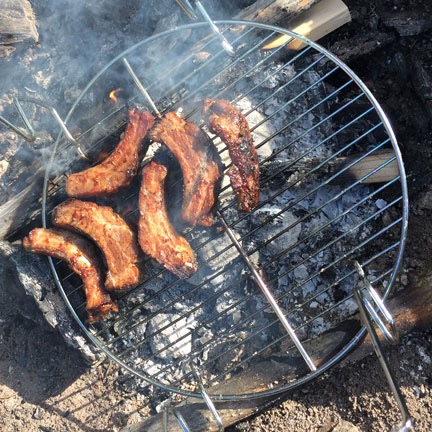
We had dinner together that evening around the campfire. We ate the ribs I’d made in Washington and had packed into my luggage for the trip back to Arizona. They were fully cooked and just needed to be brushed with barbecue sauce and heated up over a fire. We used a separate campfire at Janet and Steve’s place for that. Janet made fire-roasted corn on the cob and Karen made beans to go with them. It was an excellent meal, if I do say so myself.

The generator was still going when I went to bed. Fortunately, I couldn’t hear it inside the Mobile Mansion.

Life at the campsite quickly got into a routine. Coffee and breakfast around a campfire near Karen and Steve’s trailer in the morning. I made muffins one morning and Pillsbury cinnamon rolls another morning, but we usually all took care of our own meal. We’d break up and do our own thing in the middle of the day. In late afternoon, Janet and Karen’s Steve usually went fishing — and they always came back with a few fish. Then we’d get together for dinner around the campfire in the evening, usually playing music to drown out the sound of Generator Man’s noise.

RV Light Bulbs
Examples of the old (top) and new (bottom) light bulbs. The new ones will last 10 years, are super bright, and use a fraction of the power

I went in to Quartzsite twice with Janet. The first time, I picked up another 20 or so LED light bulbs for my RV. I’d experimented with them the previous month and liked the extra brightness and power saving. The bulbs were pricey — about $5 each — but their benefits and long lives made them worth it. With them installed on all of the fixtures I used regularly, I cut my evening and morning power consumption so much that I only had to run my generator twice for a total of maybe two hours the whole time I was there. My water pump is now, by far, my biggest consumer of battery power.

The second time we piggybacked a Quartzsite trip on the back of a Blythe trip. Janet’s single RV battery had gone bad and needed replacement. She was also having trouble with the charge controller for her solar panel. So we made a few stops in Blythe to pick up odds and ends for both of us before going to Solar Bill’s in Quartzsite. I looked into a solar + battery setup for the fuel tank and pump on the back of my truck. I no longer need it on my truck so I plan to move it onto its own utility trailer when I get home. Ideally, a solar panel would keep a battery charged to run the pump. Bill showed me a solution that would only cost about $250 to set up: 40 watt solar panel, charge controller, and 2 reconditioned golf cart batteries. I told him I’d have to give it some thought, mostly because I’m not ready to set it up just yet.

Ghost RV Park
Here’s one of the shots I took when I paddled across the river to the RV park there. They had their own backwater that I wanted to explore, but I got too late a start that day. You can see my kayak parked at the boat ramp.

One afternoon, when the river was running high and fast, I paddled a kayak across to check out the campground on the California side. It was a hard paddle, requiring me to point the kayak nose upriver from where I wanted to end up. I don’t think my friends expected me to make it, but I did. On the other side, I found an RV park full of RVs but with few people. Apparently, people park their rigs there and come use them once in a while. All of the full hookup spots were reserved on an annual basis by Canadians, none of whom were there. The onsite store had very little to offer in the way of groceries. It was all kind of sad, like an RV ghost town. I took a few pictures and paddled back, missing the inlet by about 100 feet. After a rest along the rocky levee — where Penny jumped in — I paddled upstream and slipped into the inlet. Nice upper body workout.

Sandy Hill
The sand looked a wee bit too deep on these hills to take my truck up, so Penny and I walked.

Another afternoon, I decided to take my truck up onto the top of the cliff just east of our site. Most of my friends didn’t think I’d make it — they’d been up there with the horses before my arrival and said it was too sandy — but Karen’s Steve claimed to have seen another pickup up there. I figured it was worth a shot. The access road started out very steep and rocky — a very doable hill climb for a 4WD truck with off-road tires on it. Once up the first climb, a narrow road wound around on top of hard hills covered with loose volcanic rock. Deep sand had blown over it in patches, but they weren’t big enough to stop a truck moving fast enough, so I made sure I moved quickly through them. Finally, however, I faced a sandy hill with two two-track trails climbing up it. The sand looked deep and while my truck is properly equipped for off-road travel, it’s heavy and I didn’t want it to sink into the sand. So I parked and walked with Penny up one of the hills, mostly to check it out. When I got to the top, I realized I was at my destination and didn’t bother retrieving the truck. Penny and I spent about 20 minutes up there, checking out the views and taking photos. It was nice up there, away from Generator Man, where the only sound was the wind.

Campsite View
This shot offers a great view of our campsite, as well as the one across the inlet and the campground across the river. Although the Arizona side is all BLM desert, the California side has lots of farming for quite a few miles.

Fishermen and Photobombs
Janet and Karen’s Steve show off the fish we caught while Karen and Janet’s Steve photobomb them.

I went fishing one afternoon with Janet and Karen’s Steve. I don’t think they expected me to catch anything — I didn’t either, in all honesty — because they suggested I bring my own truck to the fishing hole in case I got bored. I surprised all of us by hooking a decent sized redear sunfish (or orange ear, as Janet and Steve call them) not long after Janet hooked a large mouth bass. Janet caught a slightly larger orange ear after that but Steve brought in the main catch just as the sun was setting: a very large bass. He cleaned all the fish for us later on and took his bass away; Janet, Steve, and I feasted on the remaining fish a few days later.

Penny on a Kayak
Here’s Penny, demonstrating one of the reasons I sometimes call her “adventure dog.”

On Sunday, after Karen and Steve left for their next destination, Janet’s Steve dropped Janet, Penny, and me off with our boats about five miles upriver from our camp. We launched and headed downstream, stopping at one of the backwaters on the California side along the way. The river was moving at about three miles an hour, so there wasn’t much work in the paddling. I was wearing shorts again that day and left my white legs atop the kayak to get some sun on them. Although my formerly year-round tan has faded considerably, I don’t get sunburned like I used to. It was nice to get out for a good long paddle. It took about two hours to get back.

Steve watched the second half of the Super Bowl at a sport bar in Ehrenberg that he said was surprisingly good, although not particularly busy. I stayed in the Mobile Mansion — mostly to escape the sound of Generator Man — and read, following the Super Bowl action on Twitter and participating in NPR’s #SuperBowlHaiku meme. We’d tried during the day to pick up CBS on one of my two televisions as well as Janet’s but couldn’t get any channels at all. (I guess Generator Man has a satellite dish over there, too.) I fell asleep earlier than usual — the sun might not burn me, but it apparently sucks the life out of me: I’m always exhausted after a day in the sun.

Janet on her horse
Here’s a shot of Janet on her horse during our Monday afternoon ride.

On Monday afternoon, we took the horses for a short ride back up to the top of the cliff. They put me on Flipper again and the steep climb was a bit much for her. I suspect I might be the last adult to ride her. At least I hope so. She’s getting a bit too old for such strenuous work.

Breaking Camp

By that time, we’d all decided to leave on Tuesday. Janet would be showing her artwork at Gold Rush Days in Wickenburg. I’d be spending some more time with my friends in Wickenburg. And Steve would be bringing the horses to where I was staying; there was a nice horse corral in the backyard.

So we spent some of Monday afternoon breaking camp. I put the kayaks back on top of the truck, put away my generator, and stowed most of my loose items. Steve cleaned, deflated, and broke down the pontoon boats and put their frames atop Janet’s van. Later, we had fish for dinner with salad and rice, eating in the Mobile Mansion to get away from Generator Man’s drone. We played Exploding Kittens a few times and I actually won once. I gave Janet the game to play with other friends and sent Steve home with the remains of a bottle of Honey Jim Beam, which was too damn sweet for my taste.

In the morning, there was no campfire. Janet was the first to pull out. I finished packing up, cleaned the inside of the Mobile Mansion, and closed everything up. Steve guided me to hook up the trailer. I made a wide U-turn in the campsite and pulled out, leaving him to pack up the horses.

I made just two stops before I left the area. First stop was the convenience store in Ehrenberg where I dumped the Mobile Mansion’s tanks, topped off the fresh water supply, and filled my four 6-gallon jugs with fresh water. I also bought one of their excellent Mexican iced fruit pops on the way out. Second stop was the post office to pick up a temporary license plate the car dealer had sent me to replace the expired one.

I was on I-10 heading east by 11 AM.

Snowbirding 2016: Home

I take a week-long break from traveling to check on things back home.

Posts in the Snowbirding 2016 Series:
Introduction
The Colorado River Backwaters
Quartzsite
Wickenburg
Phoenix
Home
Back to the Backwaters
Return to Wickenburg
Valley of Fire
Death Valley
– Back to Work

Long before I retrieved the Mobile Mansion from the sale lot to begin my snowbirding trip, I booked flights home from Arizona and Sacramento. My house sitter had vacation plans for the end of January at a time that coincided with a meeting of the writing group I belong to, as well as my need to get my FAA flight physical done. I figured I might as well come home while she was away. A quick flight search on Alaska Air’s website, armed with the latest frequent flyer special offer, yielded a surprisingly inexpensive round trip flight from Phoenix to Wenatchee for that week so I booked it, thus locking me in to doing the trip in the first place and coming home in the middle of it. The Sacramento flight I booked was for later, in February, when I’d go home to fetch my helicopter for work in California’s Central Valley.

The Trip Home

So that’s why I found myself standing at the curb in front of my friends’ home near Phoenix at 4 AM on a Wednesday morning, waiting for an airport shuttle with Penny and two packed bags.

My friends wanted to take me to the airport, but I could not ask anyone to drive me anywhere at 4 AM. So before we could argue about it, I booked and paid for the Super Shuttle. Cheryl warned me that they wouldn’t be able to find her house because Mapquest gave bad directions — and I verified that Google did, too — but I instructed the driver to take 27th Avenue when I booked the trip. Still, at 4:05 AM, I saw the van’s headlights on the other side of a dry wash it could not cross. (Why ask for special instructions if you’re not going to use them?) A frantic phone call to the Super Shuttle people got me in touch with the dispatcher. Ten minutes later, the van sped down the road, coming to a stop where Penny and I waited.

I had a 6 AM flight and, for a while, was worried that we wouldn’t get to the airport on time to deal with checking bags and going through security. But there was no traffic at that hour and activity at the airport was predictably light. My ticket had been upgraded to First Class — probably because of the early purchase and my “MVP” status on Alaska Air — so I got better counter service and didn’t have to wait on the longer line for security. By 5:15, we were waiting at the gate.

I don’t fly First Class very often — I honestly don’t think it’s worth paying a lot more for — but I will occasionally splurge if it’s a long flight and the difference in price isn’t outrageous. It’s always nice to get a free upgrade. I sat in seat 2A, put Penny’s travel bag under the seat in front of me, and settled into the very comfortable seat. It was nice getting a hot breakfast, but I skipped the complementary alcohol. In hindsight, I think a bloody Mary would have been nice.

SeaTac
SeaTac treated us to some typically rainy weather.

We got into Seattle early and my layover was just long enough to get Penny out of her bag for the walk to the gate for our connecting flight to Wenatchee. Then Penny was back in the bag and we were on the turbo prop to Wenatchee. We’d arrive at 10:22 AM.

And yes, that’s why I took a 6:00 AM flight out of Phoenix — so I could get the first flight into Wenatchee that day and have a whole day at home instead of sitting around airports.

Return to Malaga

I’d asked my friend Alyse to pick me up at the airport. Normally, I would have taken a cab, but it had snowed on and off during the month I was gone and I knew how bad my road could get. Yes, it was passable for any vehicle with good tires and a driver who knew how to drive on snow-covered roads. But who knew what the cab company would send? Besides, I wasn’t sure what condition my driveway would be in. I knew that one of my neighbors had plowed it at least once, but when? I was hoping to get close to my front door and wasn’t convinced that a cab would pull into a snowy driveway.

Alyse and her boyfriend Joe came in her four wheel drive pickup. I threw my luggage in the back and climbed into the back seat with Penny.

We talked about the snow. When was it going to go away? It wasn’t this snowy last year. Alyse told me that in the old days, it snowed like this all the time. She wasn’t the only person to say this over the coming week.

The roads in the Wenatchee area were clear. So were the roads going into Malaga and up toward my home. But my road? Completely snow-covered. Alyse flipped it into four wheel drive and started the last two miles. It wasn’t very slippery, but it was very thick with snow in some parts. It seemed that the association had plowed it seven times (so far) that winter. Unfortunately, the guy who does the plowing is cheap and you do get what you pay for. And the farther down the road you went, the worse it was. Although there were three houses beyond mine, mine was the last one that was occupied most of the time during the winter, so the last stretch seemed barely plowed at all. In fact, my driveway was in about the same condition as the road.

I was amazed by how much snow was still on the ground. I knew the temperatures had gotten into the 40s at least a few days and had assumed that most of the now had melted. It hadn’t.

But it was beautiful.

My house in the snow
I shot this photo of my home from the road a day or two after I got home. It really is pretty with all that snow.

Alyse and Joe helped me get my bags inside. Alyse wanted to show Joe some of the finishing touches I’d put in the place, including the rustic wood trim over my stairway stub wall and the furniture my friend Don had made out of charred wood slabs. And the Pergo I’d laid. (They flip houses and are always looking for some nice architectural touches to bring up values before selling.) Then they left. I watched to make sure they got out of the driveway, then set about unpacking.

Salt Lamp
One of the things I brought home from Quartzsite is this Himalayan rock salt lamp. While I don’t believe in its purported health benefits, I do like the way it looks when illuminated. That’s one of my antique lamps behind it.

One of the two bags I’d brought home with me was the big folding rolling bag I’d bought years ago for the Australia trip I’d begun planning in 2011 and hoped to take with my wasband in 2012. (That didn’t happen, for obvious reasons.) It’s a neat piece of luggage: a very large wheeled duffle bag that folds down into a small package for storage. (I don’t think Eagle Creek makes them anymore because I can’t find it on their website.) I’d packed clothes into it when leaving on my trip in late December, unpacked in the Mobile Mansion, and stored it, folded up, in a cabinet. Then I used to to bring home a bunch of stuff I didn’t need with me, including including outdoor winter clothes and boots and a bunch of stuff I’d bought in Quartzsite for home. I didn’t have much laundry to do — I’d done most of it when I was in Wickenburg — but I had plenty of stuff to put away.

I checked on the chickens and was pleased to see I still had five hens and a rooster. No eggs. The shed still had water and cat food for my barn cat who was, as usual, absent. The housesitter had mentioned that the cat’s water froze once or twice and that surprised me because the heater I’d left in there for him was still running. It must have gotten very cold. I might insulate the shed over the summer so it stays warmer next winter.

Snow at Garage
There was no snow on my roof because it had all slipped down in front of my garage. Yes, I take credit for the poor design that causes this to happen.

Of course, the melting temperatures during the past week were just high enough to get the snow to slide off my two big roofs. On the south-facing side, that wasn’t a big deal because there was nothing there. But on the north-facing side, it slid down into a huge pile right in front of my four garage doors. That meant I had a shitload of shoveling to do if I expected to go anywhere in my Jeep. No rush to do that; I had put milk in the freezer and had plenty of food for the day — or even the week — so shopping wasn’t a big priority.

It was nice to be back in my nice, clean, warm home. It was nice to not have to worry about how much water or power I used (as I had when I’d camped off the grid in the backwaters and Quartzsite). It was nice to have fast Internet. It was nice to have a freezer full of foods I’d prepared and frozen for the days I didn’t feel like cooking and a microwave I could use to reheat them. Heck, it was even nice to have a television that I could tune into something.

I celebrated that first day home by eating a beef barley soup I’d made back in December and catching up on the Daily Show.

The Snow Bank

The next day, after doing odds and ends around the house, it was time to face the inevitable: the snow bank keeping my Jeep from exiting the garage.

My garage has five vehicle doors:

  • The big one on the front (east side), which measures 20 feet wide by 14 feet tall, is for the RV garage. Because I didn’t need to use that garage after my Santa flight back in early December, I’d stopped shoveling the 22 x 35 (or so) concrete pad in front of it. The snow had kept accumulating since then, melting and freezing and then accumulating some more. I estimated I had about 14 inches of frozen snow there and no real need to shovel it.
  • The four regular garage doors on the north side, which each measure 10 feet wide by 8 feet tall, are for my vehicles. The entrance to these garages is under my side deck, which is covered by an extension of the same roof that covers my living space. It’s a very big roof — roughly 52 x 36 feet — and built on a 3/1 slope. Because the space under it is mostly insulated, when the snow falls on it, it sticks. Until the temperatures warm up. Then the slow slides off — about six feet in front of the four garage doors below it. I was very fortunate that the snow didn’t slide off right before I left for my trip because I’d have to shovel my old truck out to make my departure. But my luck couldn’t hold out forever and the accumulated snow had dropped to a compacted “drift” 3 to 4 feet tall, 8 feet wide, and about 6 feet thick.

Fortunately, the Jeep lived in the very first garage bay. I put it there because the stairs up to my living space were in the back of that bay, making it about 5 feet shorter than the other three bays. The Honda lived beside it; that wouldn’t be back on the road until all the snow was gone in the spring. The truck lived in the third bay but it was back in Arizona. My little boat lives in the fourth bay and wouldn’t be coming out until the weather got sufficiently warm. It was a good thing these other bays didn’t have vehicles I needed to drive because the neighbor who’d plowed my driveway dumped all the snow in front of the last two bays. And that snow pile was more than 5 feet tall, 20 feet wide, and 20 feet thick. That’s a hell of a lot of snow.

Two Thirds Done Shoveling
At this point, I was about two thirds done making my way through the snow pile outside the Jeep’s garage bay.

So on Thursday morning, after a sufficient amount of procrastinating, I put on my winter boots and a sweatshirt and headed out the garage door with two shovels. I used the long-handled spade to break up the compacted snow and the snow shovel to move it in front of the Honda’s garage bay. It was slow going warm work. In an hour, I got about two thirds of the way through it. I was glad my Jeep was narrow; if I’d been digging out a space wide enough for the truck, I would have had a lot more snow to move.

I heard a vehicle on the road and ignored it, but when it got closer, I realized I had company. It was a pickup truck I’d never seen. It stopped in front of the garage bay and three people got out — my neighbors who had plowed my driveway not once but twice while I was gone.

We chatted and the husband, John, offered to come back with his plow and move all the snow away. He even offered to plow in front of the big RV garage. I said sure, fine, and was definitely willing to pay. But we got to talking more and more. The next thing I knew, he was back in the truck, using it as a battering ram to break through the snow separating my Jeep in the garage from the rest of the driveway. He sort of sideswiped it, letting the bumper break the snow and his front tire mashing it down into a shorter pile. This was not what I had in mind to clear out the garage bay, but he was having a great time doing it, laughing gleefully every time his truck hit it. When he’d finally broken through, I went at it with my shovel and he climbed out of the truck to help. He was extremely pleased that rubbing his truck against the snow had cleaned the lower side of it.

I can’t make this shit up.

It only took a few more minutes to clear the snow away so I could drive out. There was that hump to drive over and I really didn’t want it there, but it was so tightly packed that it would have taken me hours to clear it away. Besides, I knew my Jeep could run over it. I fetched some money for the other two tow jobs and his wife took it for him. He told me to call any time I wanted him to come back with the plow. He didn’t seem to understand that he could come back that day. And then I started thinking about it and realized that I didn’t exactly need the work done. And that I could save about $100 if I didn’t have it done. So I told him I’d call if I needed it done and they all drove off, happy.

I went to the store later in the day and got some groceries, including fresh milk and salad stuff. The Jeep started right up and handled the driveway and the road without any problems.

A Week at Home

I began regretting coming home about a day later. The weather turned cold again, staying pretty much right around freezing. We had some more snow and some of it melted away when the sun came out and shined on it. But there were a few days of January fog, which I find dismally depressing, and it was too cold and snow-covered to get anything done outside.

Wood Trolley
My do-it-yourself solution for mobile indoor scrap wood storage. Don’t laugh — it works and it was dirt cheap to throw together.

I did get stuff done inside, though. I did a bunch of cleanup work in my shop. I took an old wooden crate I had, put wheels on it, and set it up as a scrap wood trolley. This made it possible to store all the scrap wood I had indoors in a place where I could move it around to get it out of the way when needed. I vacuumed up all the sawdust my miter saw and table saw had left behind when I cut the wood for my loft guardrails — I’d used the table saw to cut the grooves for the wire fencing to fit into so there was a ton of sawdust on the floor from that. I worked on reorganizing my shop area and made some preliminary plans for another set of shelves in the storage end of the garage. I also planned the locations for a few more outlets I wanted to add on that side of the building. I’ll get the lumber and electrical parts I need for both jobs when I return in spring.

Loft Rail
I finally finished the rail for my loft, which was required by building code. This narrow section of loft space over my closet gives me easy access to the high bedroom window facing south, which I pretty much leave open in the spring and fall.

With all the wood already cut and finished for the loft rail in my bedroom, I had no reason not to finish it up. So I spent an afternoon doing that. It came out remarkably well.

And I had just one tiny bit — the return — to finish at the top of the rail for my stairs so I knocked that off in about an hour. I even took out my sander and finished the surface a little better for another coat of tung oil.

Penny after a Bath
Penny looked much cleaner — and smelled much better — after a bath.

I gave Penny a bath. After so much playing in the dirt along the river and in Quartzsite, she really needed one.

I joined my writer friends for our regular meeting. I’d missed the previous one and the one before that had been called off due to weather. It was good to see them all and share feedback with them on their work. And to hear feedback on mine.

I took care of chores in town one day. I got my FAA flight physical (passed) and some long overdue blood work done. I got some prescriptions refilled. I bought food for the chickens and my barn cat. I went to the airport office, paid a bill, and dropped off a survey. I arranged to park my Jeep at the airport when I went back to Arizona so I could drive myself home when I returned.

I caught up with some friends, too. I met with Megan for some wine on Monday afternoon and had dinner with Alyse on Tuesday evening. Bob was supposed to meet with us, but with the weather kind of nasty, he’d decided to go straight home from work instead. (Wimp.)

The Wild Rush at the End of My Stay

Suddenly it was Tuesday and I was getting ready to go back to Arizona the following morning. I still had a ton to do.

I’d promised the friends waiting for me in Arizona that I’d smoke up some ribs for them, so I dutifully defrosted four racks — which is the most my Traeger can hold — and prepped them for smoking. I would have put them on the grill before dinner with Alyse, but I was worried that I’d be gone too long and the hopper would run out of pellets. I figured I’d do it when I got home that evening. Unfortunately, my Traeger’s auger decided it wasn’t going to run in the 26° weather out on my deck. So I popped the ribs into the oven on a rack over a pan, set the oven to 225°, and let them slow cook there.

That was at 7:30 PM. I packed and cleaned up my home while I waited for the ribs to cook. It took 4 hours — just as it does on the Traeger. (Thank heaven I’d had baby backs in the freezer; St. Louis style take at least an hour longer.) I also made a batch of Honey Barbecue Sauce. It was midnight when I finally wrapped the ribs in aluminum foil and a big plastic bag and stuck them in the fridge.

All this time, I had my aviation radio going and didn’t hear the Horizon flight come in at 11:55 PM. That got me thinking that it hadn’t come in. My 5:40 AM flight is the same plane and when that plane doesn’t come in at night, the morning flight is cancelled. I got it in my head that the flight would be cancelled and couldn’t sleep until I’d spoken to someone at Alaska Air about it. Although she didn’t know if the plane was in Wenatchee, she didn’t see the flight being canceled.

At 12:30 AM, all packed and ready to go with my coffee maker set up to make coffee in my travel mug, I set my alarm for 3:10 AM and finally went to sleep.

Wednesday would be a big travel day.