Move Over, POV.1 — I’ve Got a Hero Now

Decision made.

The video just blows me away. Here’s a piece of the 1.1 hours of footage I shot today with my GoPro Hero fastened to the front of my helicopter:

This is unedited. I didn’t run it through any filters or stabilizers. All I did was find a 2-minute section of interesting footage, save it as a QuickTime movie, and upload it to YouTube.

I didn’t even have the camera set for full HD.

I didn’t even touch the camera during the flight. I turned it on before I got in and started up and turned it off after I landed and shut down. It saved roughly 4 GB of footage in a normal format easily read by my Mac without QuickTime plugins.

Add to this the incredible hi-res stills (and these, too) I can shoot just as effortlessly and you have a win-win situation for anyone interested in hands-free photography and video.

This completely blows the POV.1 out of the water. I’ll be selling my complete POV.1 camera setup on Craig’s List as soon as I get home. Why mess around with a second-rate extreme video camera system when you can have something so much better for less?

What Scud-Running Looks Like on Google Earth

My geologger tells the whole story.

Everyone who reads this blog or knows me understands that I am a gadget queen. I have all kinds of little gadgets that I use daily.

My GPS logger, described in some detail here, is one of my multi-purpose gadgets. Although I purchased it primarily to geotag photographs, I also use it when flying to get an exact record of where I’ve been.

I had my GPS logger running for the entire length of my flight from Seattle, WA to Page, AZ last week. As I discovered this morning when I looked at the tracks on Google Earth, it faithfully documented my Pendleton, OR area scud-running attempts.

Scud-running, in case you’re not familiar with the term, is a pilot’s attempt to get around bad weather in order to travel from point A to point B. Normal pilots do not attempt scud running unless they really need to get somewhere — this isn’t something you do on a pleasure flight. It’s also not something a pilot attempts unless he really thinks there’s a way through or around the weather in his path. Scud running is infinitely easier and safer in a helicopter than an airplane. We can make tighter turns and land without an airport when things get really bad. You could argue that scud-running is dumb and I don’t think I’d argue with you very much.

Here’s what my September 9 scud-running attempts look like on Google Earth:

Scud Running near Pendleton

The red line is my arrival in the area the night before. I landed at the Pendleton airport, fueled up, then flew a few more miles to the Bi-Mart parking lot next door to the Red Lion hotel where I spent the night. The Bi-Mart was closed and its parking lot was empty. It made a good LZ that would ensure an early departure the next day.

In the morning, I made my first attempt to get across the mountains. That’s the white line and it tells a pretty good story. I headed southeast, got up into the mountains, and attempted to find a way through. The lower line that comes to a point and doubles back is where I made my first U-turn in a canyon. I followed a canyon back out of the mountains and tried again by heading northeast. Again, I couldn’t get through and had to make a turn in a canyon. The yellow line, by the way, is I-84/Hwy 30; I’m pretty sure parts of the road were in fog. I returned to the airport and started waiting. That attempt took nearly an hour and 13 gallons (1/4 tank) of fuel — obviously, scud running isn’t something you attempt without a lot of fuel on board. (Makes for a bigger fire when you crash, though.)

At noon, I tried again. The blue line indicates my attempt to follow some railroad tracks up into the mountains. I realized pretty quickly that I wasn’t going to make it and doubled back. The post here about my new Hero camera (another gadget) includes video of this attempt shot as a time-lapse.

The green line is where I finally made it and got on course. It was 1:45 PM when I left the airport. I made it as far as North Salt Lake City before dark, dodging rainstorms and clouds a good part of the way.

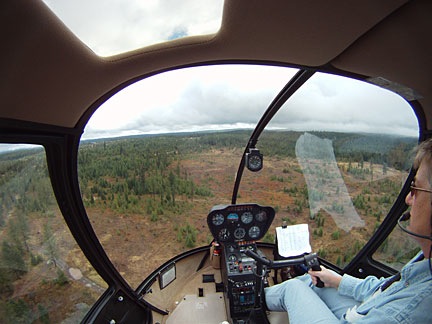
Scud Running in a HelicopterScud running is dangerous and I don’t do it without full understanding of that danger. Not once did I ever lose sight of the ground or immediate surroundings. When I realized I could not go forward the way I was going, I went back. As you can clearly see by shape of the white line U-turns I made, I was required to turn in two very tight places. These are turns that an airplane could not accomplish, especially since they were made in narrow canyons with no view over the canyon walls. The photo here shows how low the clouds were on that third attempt — the successful one. At several points, I was 200-300 feet below the clouds.

I did a lot of scud running this past summer. That’s probably the nicest part of being back in Arizona: I seldom have to run the scud here.

About the Cherry Drying Posts

And why they’re were password protected.

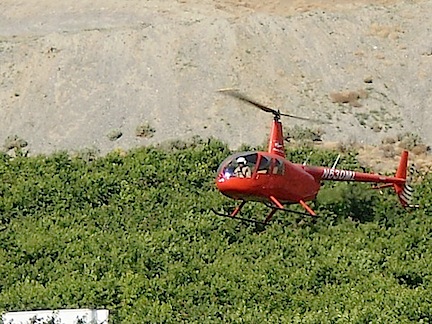
Drying CherriesA few weeks ago, it came to my attention that this blog was the primary source of information about cherry drying by helicopter. Every day, pilots who wanted to learn more about cherry drying were stopping in to read up.

Normally, I’d be pleased. But I also began to realize that these same pilots were using the information I provided to compete with me for cherry drying work.

That would simply not do.

The truth of the matter is, there simply isn’t enough work to go around. Every year, I struggle to get my contracts together and signed and then struggle some more to get my standby pay. Other pilots I know who have been doing this work far longer than I have go through the same process. None of us can afford to have competition for what little work is out there.

In my case, it’s particularly tough. I travel from Arizona to Washington and back at considerable cost. This year, I made the trip with only one contract signed. If I hadn’t been able to secure other work, I would have taken a heavy loss.

In this tough economy, I depend on this work to keep my business afloat. Without it, I’d likely have to sell the helicopter. Right now, there simply isn’t enough tour and charter work out there to cover the cost of my fixed expenses, such as insurance, annual maintenance, and hangaring.

So I’ve password-protected the posts, making them inaccessible to most visitors. I’ll likely remove the password once my friends and I stop doing this work.

August 2013 Update: Since writing this blog post, I’ve moved to Washington state. I’m very secure in my cherry drying work with great clients that I serve faithfully year after year. Indeed, I’ve built the kind of relationships with my clients that I’m proud of. I have so much work during the busiest part of the season that I’m actively looking for other helicopter pilots with their own helicopters to work with me. If you’re an owner/operator with an R44 helicopter, at least 500 hours helicopter experience, and a month or so free every summer and you want to get started in this work, visit the Help Wanted page on Flying M Air’s website to learn more about opportunities.

The rest of this post still applies.

Some Important Things to Know about Cherry Drying

I do need to say a few things about cherry drying for the folks looking for information.

  • Cherry drying requires a helicopter. If you don’t have a helicopter, you cannot dry cherries. Any company that has helicopters for this kind of work already has pilots. Inexperienced pilots cannot expect to be hired for this kind of work by a company that already has helicopters and pilots.
  • Cherry drying is not a good way to build time. I got less than 20 hours of drying time this summer. I got around 5 hours each of the previous two years. Do you really want to blow a whole summer sitting around in farm country waiting for it to rain just to get 5 to 20 hours of flight time?
  • Cherry drying is not for low-time pilots. When you work, you’re hovering 5 feet over treetops, sometimes in very windy conditions. That means tailwinds and crosswinds and LTE. There’s a lot of dancing on the pedals. There’s a real need to know the helicopter you’re flying.
  • Cherry drying is dangerous. All operations are inside the deadman’s curve. If you have an engine problem, you will crash. Read these accident reports to get a better idea of what can happen: SEA05CA122, SEA04LA102, LAX02LA169, SEA00LA101, SEA00LA103, WPR09LA371, and WPR11CA146

I know a lot of helicopter pilots — especially low-time helicopter pilots — out there are desperate for work. If you’re one of them, I can assure you that cherry drying isn’t the solution you’re looking for.

Planning the Big Move

I make plans to move my “rolling mansion” and helicopter from Wenatchee to Page, AZ.

My last cherry drying contract for the season ends on Wednesday, August 25. I need to be in Page, AZ with my trailer and helicopter by the middle of September. I’m just starting to plan for the move.

This is an exercise in logistics that I go through twice a year. Every time it’s slightly different.

The fun starts on Thursday, when my husband arrives on a late flight into Wenatchee. We’ll spend a few days in the area on a mini vacation. It’ll be the first time I’ve seen him since May 15. He goes home on Monday morning.

The move starts on Sunday, August 29 (weather permitting) with a flight over the Cascades with the helicopter to Boeing Field (BFI). With perfect weather, the flight should take less than an hour. But I’ve only had perfect weather once in the ten or so times I’ve made the flight. The last time I did it, it took about 4 hours because I had to fly all the way down to the Columbia River at Hood River to get under the clouds.

Planned Routes

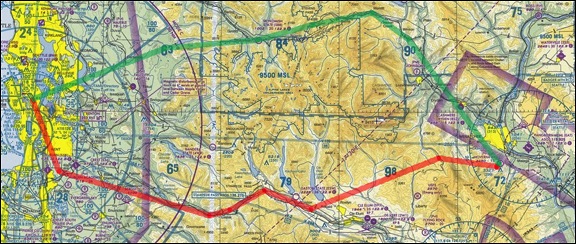
Two different routes to get from Wenatchee to Seattle by helicopter. The red route includes a stop at my friend Don’s house.

Moitek Mount

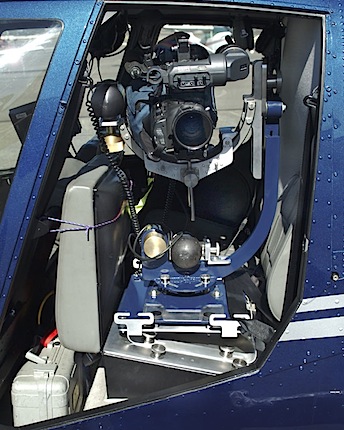
My new Moitek Video Mount, pictured in my friend Erik’s helicopter.

At BFI, I’ll take possession of my new Moitek Video Mount, which I bought from the estate of a helicopter friend who passed away last year. A videographer who used the mount with my friend will be meeting with us to show us how to set it up. He’ll bring along a camera and get some footage on a flight down to Longview, where we’ll meet with the mount’s designer and maker to ask questions and get other tips. I’m hoping my friends Don and Jim, each R44 owners, will accompany us for this little trip. I’d love to get some air-to-air video for a project I’ve been working on for some time.

Back at BFI, I’ll drop off the helicopter for some maintenance. It needs its blades painted (again) and since I’m coming up on my 100-hour inspection, I figured I’d have it taken care of then. It’ll stay at the maintenance shop until I return in September to pick it up.

I’ll get back over the mountains by plane or helicopter (piloted by a friend) on Monday morning. I’ll spend the rest of the day and most of the next prepping the RV for the long drive. I’ll need to put away all loose items and clean up as well as I can.

RV Route

The RV Route

On Wednesday, September 1, I’ll hook up and roll out of here. The plan (so far) is to go to Walla Walla, where I’ll spend a few days at an RV park I know. Walla Walla has some great restaurants and wineries. It’ll be like my own little vacation on the way home.

On Saturday or Sunday, I’ll get an early start and hit the freeway for the 10-hour drive to Salt Lake City. If some friends are available to meet me, I’ll go in on Saturday; otherwise, I’ll do it on Sunday. I’m planning on parking overnight at the Draper Camping World, which should be affordable and convenient. I probably won’t even bother unhooking my truck.

On Monday morning, I head out early for Page. I hope to get there early in the afternoon and find a place to park my rig for about a week. Weather permitting, Mike will fly up to Page in his plane and pick up me and Alex the Bird to take us home. The truck and RV will remain at Page until I return with the helicopter.

On Tuesday or Friday, I’ll head up to Seattle by commercial airliner. Then, on Wednesday or Saturday, I’ll start the long flight to Page. It’ll take 8 to 10 hours, so I’m likely to do it over two days. I might have a passenger; I’ll know more this week. If I do, we’ll be doing the flight on Saturday/Sunday to Las Vegas, possibly with part of the flight along the California Coast, and I’ll be going on to Page alone. If not, I’ll do the flight on Wednesday, making the best time possible to Page by flying through Oregon, Idaho, and Utah on pretty much the same route I followed to get here before the start of the season.

In Page, I’ll set up camp — probably in the campground I lived in for two months two years ago — and offer aerial photo flights over Lake Powell. I have clients meeting with me starting on September 20, so there’s definite business for at least 5 days. On September 25, I fly the helicopter home, hopefully with a passenger (if she hasn’t forgotten). I’m not sure when I’ll retrieve the truck and RV; it depends on whether I have a training video shoot the following week in California.

So if you were wondering what I’ll be doing for the next month or so of my life, you now know.

I’ll be interesting to see how closely I can follow these plans in the weeks to come.
One Way Not to Research a Pilot Job

Some people are so dumb.

I got a call today from an unidentified helicopter pilot who’s “just about to get” his CFI. He called my number and asked to speak to a pilot who happens to own another helicopter charter operation in Washington State. When I told him that person didn’t work for me, he seemed satisfied to talk to me.

He wanted information on cherry drying. He’d heard about it and he wanted to do it. I told him that if he wanted to be a cherry drying pilot, he needed a helicopter.

“So you get a helicopter and then you can do cherry drying?” he asked.

I decided I wasn’t going to give him very much information. “Yes.”

“Is that what you do?”

“Yes.”

Long pause. He was evidently expecting more. Then: “So you have a helicopter company?”

“Yes.”

“How many helicopters do you have? Four or five?”

Cherry Parking Spot

One helicopter is enough for me.

“No. I have one. I can only fly one helicopter at a time.”

“Oh!” he sounded surprised. “So you’re just a tiny company.”

I don’t think I’m being unreasonable when I say that the word tiny applied as a label to my company by a 200-hour pilot rubbed me the wrong way. I probably should have hung up on him there. But I decided to feed him some of my patented sarcasm. “If it makes you happy to say that I have a tiny company, fine.”

He wasn’t quite bright enough to pick up on the sarcasm. “Well, it doesn’t make me happy,” he said, sounding more than a little baffled. He hurried on. “So you have a bunch of pilots and they fly that helicopter.” It was a statement, not a question.

“No,” I corrected him. “I am the only pilot. One helicopter, one pilot. Makes sense, no?”

“Oh. And you do cherry drying?”

I was getting very tired of the conversation. “Yes. I come here and sit around for 16 hours a day, 7 days a week for weeks at a time. When it rains, I fly. That’s cherry drying. And believe me, it isn’t for low time pilots.”

Perhaps he [finally] began to sense the hostility in my voice. Suddenly, he was done. I guess he realized that I wasn’t going to hire him. He thanked me for my time and hung up.

I wonder if he ever found the person he was looking for.