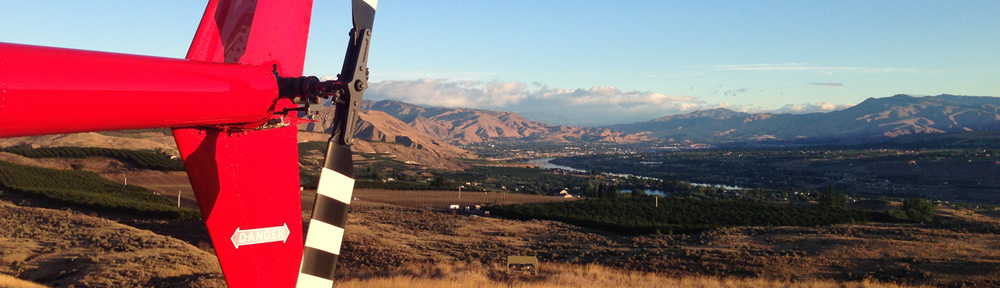
Two trips to Sedona in challenging weather.
One of the best things about being a pilot in Arizona is the weather. It’s darn near perfect just about every day. What else could a pilot ask for?
So when weather moves in, it’s a big deal. Especially when you need to fly in it.
Wickenburg to Sedona
Saturday’s flight had been booked a month in advance. Three friends from Phoenix wanted a day trip up to Sedona. To save money, they drove up to Wickenburg — which was on the way to their weekend place in Yarnell anyway — to start the flight at my home base.
I’d spent Friday night in Phoenix for Mike’s company Christmas party. When I woke at 6 AM, it was dark and rainy. But I had my laptop with me and wasted no time checking the weather. I’d told my client that I’d call him by 8 AM if we needed to cancel. If he didn’t hear from me, it was a go.
The forecast called for chance of showers before 11 AM, then partly cloudy. More showers after 11 PM. Sounded good to me. OUr flight would depart Wickenburg at 10 AM and we’d arrive in Sedona around 11, when any weather in the area would be moving out.
The drive home to Wickenburg was long but the weather was definitely clearing. There was some flooding on State Route 74 (Carefree Highway) not far from I-17. Nothing I couldn’t drive through, though.
At 9:30, when I pulled the helicopter out of the hangar and fueled it, there was still a layer of clouds sitting atop the Weaver Mountains. That wasn’t good.
Let me explain my usual route from Wickenburg to Sedona by air. I depart to the northeast, crossing the Weaver Mountains just east of Yarnell. Then I continue northeast, following the path of Route 89 through the Bradshaw Mountains and over the town of Prescott. Then I head skirt along the southern edge of Prescott Airport’s airspace and cross over the top of Mingus Mountain at the pass so I can descend right past Jerome. Then it’s north until I reach the red rocks and east until I reach Sedona Airport. I chose the route because it’s relatively direct, it shows downtown Prescott and Jerome from the air, and it completes a “red rock tour” outside of Sedona’s noise-sensitve areas and away from other helicopter traffic. The return flight is much more direct. I fly southeast over Oak Creek, then head southwest to Wickenburg, crossing the southern end of Mingus Mountain and the Bradshaws at Crown King or Towers Mountain, and passing east of the Weaver Mountains. You can see this usual route on the chart below; it’s the blue route.

You may have noticed that the word “mountain” is used extensively in the above paragraph. That’s because there are a lot of mountains here. The ones I have to cross range in elevation from 5000 to 8000 feet. While that’s not a big deal on a typical Arizona day, it is a big deal when the clouds are sitting at 6000 feet. All pilots know about mountain obscuration — mountains hidden by clouds. And smart pilots avoid it.
So one look at the Weaver Mountains made me wonder how much detouring I’d have to do that day and what the clouds looked like in the valley beyond the mountains.
But there was plenty of detour space. I could avoid the mountains entirely by flying around the west end. That would add time to the flight, which was billed at a flat rate. Not in my best interest, but neither is hitting a “granite cloud.”
By the time my passengers arrived, however, the clouds had lifted a bit. And since they really wanted to see Yarnell from the air, I headed that way. When we got close, I saw a clear path beneath the clouds and a clear valley beyond it. I popped over the ridge and even circled their weekend home once so they could get photos of it from the air. Then we continued on our way.
In the valley between the Weaver and Bradshaw Mountains, I’d estimate the cloud bottoms at 6,000 feet. I was flying at 5,400 feet, 600 to 800 feet off the ground, so I had plenty of space. But I decided to file a pilot report, since the weather forecast had nothing about the low clouds.
A pilot report — for those readers who are not pilots — is a report of observed conditions where a pilot is flying. Normally, pilots file pilot reports when they encounter unexpected conditions, like low ceilings, turbulence, or icing. These were low ceilings and they were low enough to get an airplane pilot in trouble. They were worth reporting. It’s unfortunate that more pilots don’t file pilot reports since, once filed, they appear on weather briefings for the area and they’re a valuable source of information for other pilots.
I think that hearing me talk to the Prescott Flight Service Station on the radio about the weather scared my passengers a bit. When I was finished, my client said, “If the weather is too bad, we can do this another day.”
I assured him that the weather did not pose any danger to flight. I then told him how interesting to me it was since I’m so accustomed to flying in perfect weather.
Meanwhile the tops of the Bradshaws were socked in pretty good, so I decided to go around the west side of Granite Mountain. That took us over the Williamson Valley Road area of Prescott and Chino Valley. From there, it was a straight shot past the northwest end of Mingus Mountain (which was also cloud-covered) to the red rocks. I did my usual tour, listening to my passengers ooh and aah. (It really is beautiful out there, even when the weather is overcast and otherwise ugly.) Then I landed at the Sedona Airport.
It was cold and windy there. We walked to the terminal and my passengers left me to have lunch at the airport restaurant, which overlooks the rock formations around Airport Mesa. I chatted with the FBO folks, placed a fuel order, and settled down with the IFR training material I’m reading in preparation for getting my instrument rating.
I got a call from one of the Phoenix-area resorts I occasionally do business with. They had a couple who wanted to do a Sedona Tour the next day. We agreed on times and my contact said she’d fax me the reservation form. As I hung up, I was glad I hadn’t delayed this flight for a day, making me unavailable for the next day’s flight.
I read about IFR flight instruments. It wasn’t terribly exciting. After about 20 minutes, I happened to look out a window. It was snowing outside, just southeast of the airport. One of the low clouds was dumping a flurry of flakes. While snow didn’t bother me, the fact that I couldn’t see through the snowfall did.
When I flew at the Grand Canyon, the pilots had a saying: if you can see through it, you can fly through it. I couldn’t fly through this little snowstorm.
Of course, I didn’t have to go that direction, either. So went outside and had a good look. There were little snow squalls here and there in every direction.
I went over to the computer they’ve got set up for flight planning and got on the National Weather Service Web site. The forecast had changed. There was now a 50% chance of snow showers. Duh.
Things looked good to the west. Although there was falling snow out that way, I could see sunshine beyond it near Mingus Mountain. That meant the snow was localized. It would probably blow through.
And it did. But other snow blew in to take its place.
Still, when my passengers returned, I didn’t want to wait around. I’d seen a good clearing to the west and I wanted to be through it before the situation at Sedona worsened. So we loaded up, started up, warmed up, and took off.
We were in snow showers almost immediately. Visibility wasn’t bad, though, and the air was still smooth. It was safe. It was just…well…different.
We got clear of Sedona’s weather and popped into the sun. But there was still a cloud atop Mingus Mountain, so crossing over the top on the way back wasn’t an option. And the weather radar I’d looked at showed me that conditions were better to the west than to the east, so I should avoid my usual return route. So after taking a low-level pass alongside the ghost town of Jerome, I headed northwest to retrace our route back the way we’d come.
We hit a bunch of snow along the west end of Mingus Mountain. I must have been flying in it for close to 10 minutes. My passengers were very quiet. But I kept chatting — as I usually do — to keep them at ease. Then the snow cleared out and we were flying with the clouds at least 1,000 feet above us. I looked for and found the indian ruins on top of one of the mesas in the area and pointed it out to them. A sort of consolation prize for taking the same route each way. When we got closer to Prescott, I thought I might be able to overfly it and follow Route 89 back to the Yarnell area. But by this time the wind had picked up and flying along the foothills of Granite Mountain was tossing us around a bunch. And since I couldn’t see the pass south of Prescott that I needed to slip through, I didn’t know it’s conditions. I didn’t want to look and see — I’d already done too much detouring on this flight and it was quickly losing profitability. If conditions were bad at the pass, I’d just have to come back, thus adding at least 20 minutes to the flight time. So I steered us around the west side of Granite Mountain again.
Ahead of me, in the Yarnell area, the clouds looked low again. So I detoured to the west some more, around the west end of the Weaver Mountains. That put us in the valley near Hillside. The clouds seemed to move up as we descended down to 4000 feet. I followed Hillside Road to Congress Mine, then detoured once again to the Hassayampa River just so see how it was flowing. From there, we made a quick pass over the town of Wickenburg before landing.
It was mostly cloudy but cold when we got out of the helicopter. It had been an interesting flight for me, but not one I was anxious to repeat. It had taken 30 minutes longer than the round trip flight usually takes and about 15 minutes longer than my budget for it. I hadn’t lost money, but it hadn’t been a very profitable flight, either.
But my passengers really enjoyed it and maybe I’ll see them again.
Scottsdale to Sedona
The next day is a good example of how quickly weather can change. I was scheduled to fly from Scottsdale to Sedona with two passengers at 2 PM.
I checked the weather shortly after getting up that morning. Partly cloudy, 10% chance of showers, high 46°F. Not bad at all.
I checked the weather again at 10 AM. It was the same. My passenger called right after that. I told him about the weather and that we were good to go. He promised to meet me at the airport at 2 PM.
At noon, I prepared my flight plans and manifests. I checked the weather again. Now it was mostly cloudy with a 50% chance of show showers. Dang!
I dug deeper into my weather resources. Flagstaff looked bad, with low visibility forecast right around the time we’d get to Sedona. Flagstaff is only 20 miles from there, but its up on a higher plateau. Was the altitude part of the problem? Would it be clear in Sedona? I called the FBO and asked what the weather was like. He said it was cloudy and that a small storm had passed through, but it was okay then. I got back online and looked for Webcams. I found a few in Sedona and they all showed good visibility. One of them even looked as if there was a little sunshine.
I called my passenger and left a message on his cell phone. Then I called the concierge who had booked the flight and told her the situation. I said I didn’t think it was a safety issue, but I thought the weather might make the views a bit less appealing. (Wow, did that turn out to be an understatement!) She wanted to cancel. She tried to reach the passengers, but couldn’t. I told her I needed to leave Wickenburg by 1 PM to get to Scottsdale on time.
I was warming up the helicopter on the ramp at Wickenburg when my cell phone rang. I answered it. It was the Concierge. She’s spoken to the passengers and they were still good to go.
So I went.
It was cloudy in Wickenburg but there were very low clouds atop the Weaver Mountains. I didn’t have to go that way. I had to go to Scottsdale, which is southeast. I passed through heavy rain in North Phoenix. I was sunny in Scottsdale when I landed, but it soon started to pour. I was wet when I got into the terminal.
 Let me take a moment to review my flight route from Scottsdale to Sedona. I fly northwest to Lake Pleasant and follow the shoreline up past the Agua Fria River to Black Canyon. Then I follow I-17 (mostly) to the southeast end of Mingus Mountain. I follow the mountain’s northeast slope to Jerome, then head north to the red rocks. I do my red rocks tour and land. The return trip takes us through Oak Creek and Camp Verde before climbing up along I-17 and following that back all the way to Phoenix. Again, it’s the blue line in this illustration.
I met my passengers, gave them a briefing, and loaded them up. One of them looked startled that the helicopter was so small. I talked to the tower and we took off to the north.
I could immediately see that the weather in the vicinity of Lake Pleasant would be anything but pleasant. So I headed north up into the mountains. The area was remote and undeveloped. All the little runoff channels were full of water, with waterfalls everywhere. It would have been kind of cool to fly lower and really see them, but I needed to climb to clear mountains ahead of us and I definitely didn’t want to get caught in the area if weather moved in.
It rained on us. It was mostly a light rain. The drops were pushed off the helicopter’s bubble by the force of the wind.
I couldn’t get much speed because my passengers (and I) were heavy and I’d topped both tanks off in Scottsdale. (You can never have too much fuel when weather is questionable.) We were not far from max gross weight.
We hooked up with I-17 just south of Cordes Junction. The freeway was covered with water — you could tell by the splashing of the car and truck tires. The clouds were low. North, along I-17, they seemed even lower. I couldn’t see the Bradshaws at all. I flew to Arcosante and circled it, telling them what it was all about. I also told them that I didn’t think I could go any farther toward Sedona. I was actually heading back along I-17 when I decided to take another look. I swung the helicopter around and, sure enough, the clouds had lifted enough for me to see the pass down into the Verde Valley. “Let’s give it a try,” I said.
Conditions improved a bit as I reached the pass. The clouds were much higher over the valley — primarily because the valley is much lower. I descended through the pass right over I-17. I skirted along the foothills of Mingus Mountain as I normally would, but lower. The top of the mountain was completely obscured. We reached Cottonwood and I still couldn’t see Jerome. It was in the clouds.
So I altered my course and headed northeast toward the first red rocks I could see. I’d start the tour there.
I should mention here that my passengers didn’t seem the least bit concerned about the weather. They were from British Columbia in Canada and they live, as one passenger told me, “in a rain forest.” Sadly, they’d come to Arizona for sunshine and it had been cloudy and/or raining since they arrived. They commented on all the terrain we passed over, asking me a lot of questions. Apparently he wants to buy a place here and she’s not convinced it’s a good idea. They did appreciate the views, especially when we got right up to the red rocks. I did a modified tour, going into a canyon I usually avoid, mostly because it was clearer than some of the other areas I do go.
It was snowing hard at the airport, and since they hadn’t been very interested in landing anyway, I decided to recommend against it. By big worry was that the weather would worsen while we were on the ground and that we’d be stuck there when the sun set in less than 2 hours. Then I’d have to pay a car service to take them back and I’d have to spend the night in Sedona. None of this would impress the Concierge that had booked the flight. My passengers understood the situation and agreed that it was best to continue. So we flew around Airport Mesa, getting a few last good looks of Sedona, and headed toward Oak Creek. We were only in snow for about 5 minutes.
The return trip was relatively uneventful, After crossing over Camp Verde, we climbed along the path of I-17. I’d been tempted to follow the Verde River south — it looked pretty clear that way — but did not want to get trapped in that canyon by weather, especially since my flight plan had me going a different way. When we came out atop the mesa north of Cordes Junction, I was surprised to see that the ceilings had risen by at least 500 feet. In the distance, toward Lake Pleasant, the sky was bright. Whatever had been there had cleared out. I headed toward the light.
A while later, we flew along the northwest side of the Agua Fria River. I showed them the ruins atop Indian Mesa and flew down the west side of the lake. We caught sight of a rainbow about 10 minutes out from Scottsdale.
My flight home was quick and easy. By 5 PM, the helicopter was tucked way in its hangar, clean from the rain.

 The folks at the FBO drove us and the tools out to the helicopter. Luis and Alex wasted no time setting up a work area on the pavement. They spread blue shop towels on the ground and neatly arranged their tools. Then they got to work removing the rear panel of the helicopter.
 Robinson makes a great helicopter, but it doesn’t make it easy to replace something as simple as an alternator belt. To get this job done, you need to take off the rear panel and the fan scroll it hides. There must be at least 100 screws involved in this process. The panel comes off quickly but the fan scroll doesn’t. It must have taken them the better part of 45 minutes to get the damn thing off. Then they had to loosen all the clutch belts (there are four) before they could get the alternator belt in place. This photo shows Luis at work with the clutch belts just before putting the alternator belt (being fetched by Alex) on. Then put everything back together. And when they’re done with the fan scroll, they have to balance the fan, which requires hooking up specialized electronic equipment, starting the helicopter, and if necessary, adding weights to the fan’s blades.
 I spent much of the time standing around, holding the rear fairing so it wouldn’t get blown away by passing helicopters, chatting with the few people who came by. First, it was the FBO line guy. Then the mechanic for one of HeliUSA’s Astars, which needed its blades balanced. Then the pilot for the helicopter getting its blades balanced. All the while, the clouds built. The sun disappeared and it got cold. This photo shows the view of the ramp from the helicopter. HeliUSA is getting a batch of tour passengers while the mechanic works on the blades of one of its helicopters. You can see the Luxor in the distance.
 One of the highlights of the repair — at least for me — was the giant torque wrench. This is the legendary tool that separates wannabe Robinson mechanics from real Robinson mechanics. The reason: it supposedly costs a small fortune and it only used for one thing: to tighten the giant nut in the middle of the fan. The wrench comes in a red plastic case and sits, in two pieces, on specially cut padding. When assembled, the thing is about 4 feet long. They put a socket wrench head on the end of it to use it. It’s a two-man job, with one man wielding the wrench while the other uses a 3-foot bar of aluminum set up as another wrench to hold the bolt (or whatever is back there) in place. It took them four tries to get the bolt lined up just right so they could put the safety wire in place.
 I was near Boulder Beach at 2500 feet (see photo), surveying the low clouds in front of me when I spotted a helicopter a bit lower to my right. I made a radio call on the tour pilot frequency. The pilot responded, saying he was at 2000 feet, landing at the Hacienda (a hotel near the dam where a tour operator does 8-minute dam tours). If he was doing dam tours, I figured, it couldn’t be too bad at the dam.
 When I reached the California – Nevada border, I turned right, following the road that led to Bullhead City. I called the tower there as I crested the ridge and began my descent into the Colorado River Valley. It was remarkably clear down there, although low clouds hung in the mountains to the east of Lake Mohave, north of Bullhead City. As usual, there was nothing going on at Bullhead. I got clearance to follow route 95 (now on the Arizona side) south.
 Conditions, in general, were much better as I made my way to Lake Havasu City. I even departed from the road route for a 10-mile stretch between Topock and Lake Havasu. I got some so-so photos of London Bridge as I passed over town. (It’s nice to have 10 megapixels when you need to crop an image.)
 When I reached the Parker Dam, I had to make another decision: go the direct route or continue following roads? As much as I wanted to go direct, I couldn’t. Mike thought I was on route 93 and I wasn’t. If I went down somewhere in the desert, they’d never find me because they didn’t know where to look. If I followed 95 and other roads, if I went down, it would be near a road and I’d be found. So I didn’t really have a choice. I continued south over 95, over the river.
 I called Mike and told him where I was. I said I’d either go direct to Wickenburg or follow roads. When I got airborne, I made my decision: direct.

 This photo is the last one I snapped on the flight. I was flying east on Tropicana at 3000 feet MSL. Then the Alt (short for alternator) light on my panel illuminated and didn’t go out. That meant there was a pretty good chance I had an alternator failure. And if there’s one thing any pilot will tell you, it’s not a good idea to start a 2-hour flight across empty desert without an alternator.