Helicopter Flight: McMinnville to Yakima, Part 3

Another video from the FlyingMAir YouTube channel.

Join me for the third part of my cross-country flight from McMinnville, OR back to my summer base in Malaga, WA. In this video, I turn left from the Columbia River and begin a flight up a valley toward Yakima. By this time, the wind is fierce and the helicopter is being bounced around in turbulence. I fly in valleys, over forested areas, and across the hilly grasslands of the Yakama Reservation. I talk some and tell a few stories, but at this point I’m pretty sick of flying and just want to get there. Headwinds and turbulence that force me to slow down make the flight grueling, despite the blue skies and scenery. This is a very long video and although I like to keep them short, I didn’t want to cut this one in half. Audio is from direct connection to the intercom, so you can hear radio chatter and me narrate the flight and make radio calls, plus dialed down volume of the helicopter’s engine/rotor noise. I included a bit of “nosecam” video, too.

Here are the videos in this series. I’ve already published videos that cover the last part of this flight, which was done a few days later:

McMinnville to Yakima, Part 1: https://youtu.be/6x6XY3-uZjo
McMinnville to Yakima, Part 2: https://youtu.be/3mmyOMzN0Ls
McMinnville to Yakima, Part 3: https://youtu.be/eaYIAFirT4o (this video)
Yakima River Canyon: https://youtu.be/1HZi_UHjK0I
Kittitas to Malaga: https://youtu.be/cRuUhyCQWMA

The Gallery Exhibit

I submit 10 pieces of jewelry to a gallery’s “Gems and Geology Holiday Gift Show.”

I’ve come a long way since I started making jewelry — mostly wire-framed pendants — with rocks. Over time, I’ve stepped up my game by taking classes and trying new techniques. The results are promising. And encouraging.

My friend Cyndi told me about a special exhibit at a gallery we both sell our work at. (Cyndi makes metal art; you can find it on Etsy.) The theme was Gems and Geology, which is pretty much what my jewelry is all about. Although I’d missed the first deadline — intent to submit with digital samples — I wrote to them anyway. I got an enthusiastic response:

We’d love to have your work in our show! … This is just the type of work we were hoping for! I am so glad you reached out.

Whew!

I got to work making pieces that I thought would be appropriate for a real gallery show. I already knew that this particular gallery did not like my wire work, mostly because it simply doesn’t sell there. (Oddly, it sells remarkably well at another gallery in Ellensburg; go figure.) That meant prong and bezel settings, which I was just starting to get comfortable doing.

I made the mistake early on of sharing a photo of one of my pieces on Twitter. Someone wanted to buy it. While I love selling jewelry, I was really hoping to send that one to the gallery. Still, I had plenty of time to make a replacement and I did.

I finished making the 10 pieces two days ago. I spent this morning photographing them for publicity materials. I figured I may as well share the photos here, too.

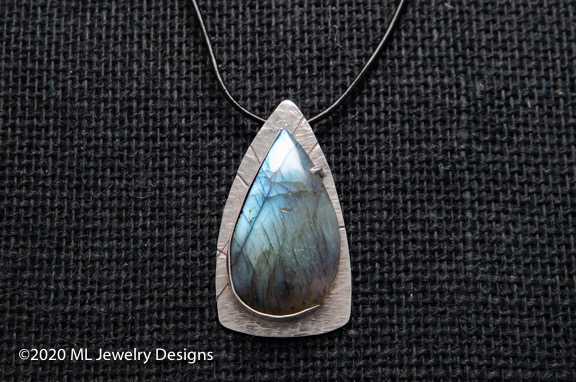
Labradorite Pendant
Labradorite bezel and prong set on textured, reclaimed silver. Black leather cord with sterling clasp. (Learn more about my reclaimed silver in this blog post.)

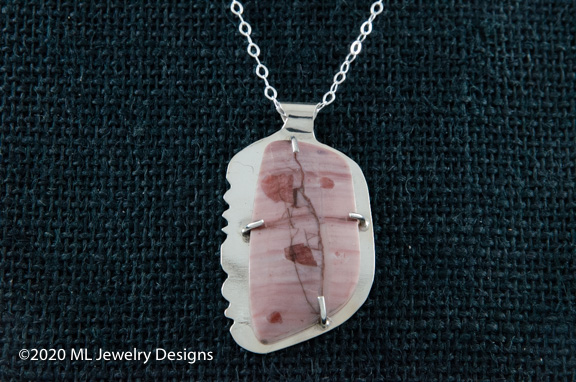
Kona Dolomite Pendant
Kona Dolomite prong set on polished Argentium silver. Sterling silver chain. (This was not made specifically for the show but meets the requirements.)

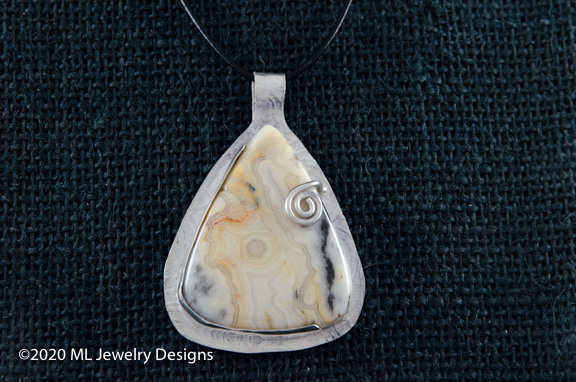
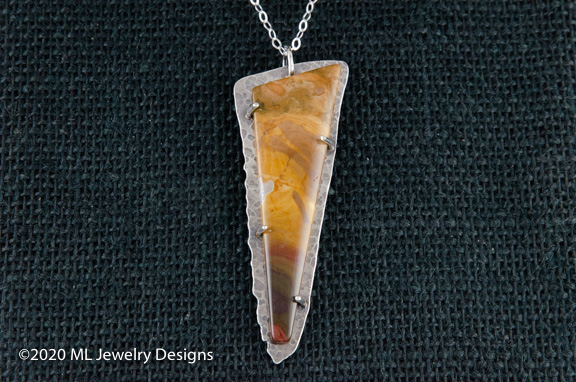
Crazy Lace Agate
Crazy Lace Agate bezel and prong set on textured Argentium silver. Black leather cord with sterling clasp. (This was not made specifically for the show but meets the requirements.)

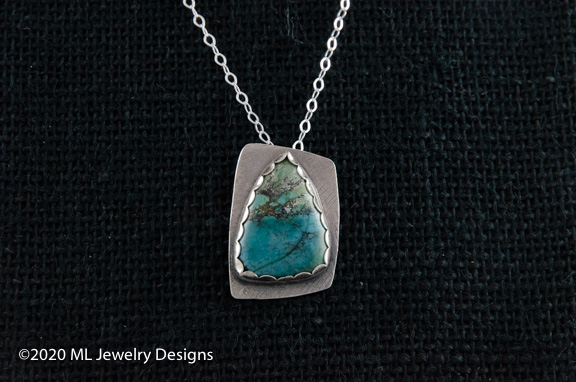
Azurite and Malachite Pendant
Azurite and Malachite bezel set on textured reclaimed silver. Sterling silver chain.

Brazilian Agate Pendant
Brazilian Agate prong set on textured reclaimed silver. Sterling silver chain.

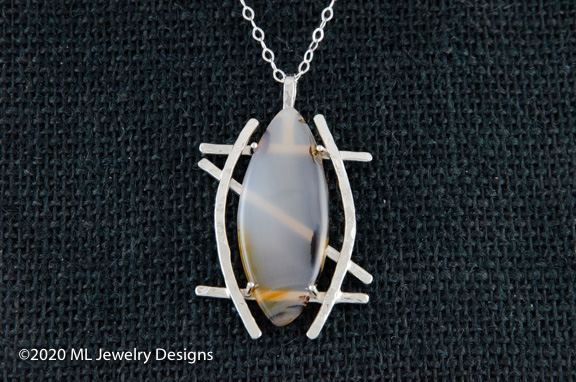
Montana Moss Agate Pendant
Montana Moss Agate prong set on a textured sterling silver frame. Sterling silver chain.

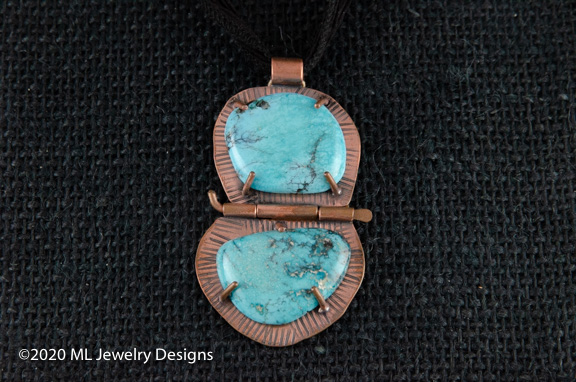
Turquoise Pendant
Two genuine turquoise cabochons prong set on textured and hinged copper. Black silk cord with hand-formed copper clasp. (This was not made specifically for the show but meets the requirements.)

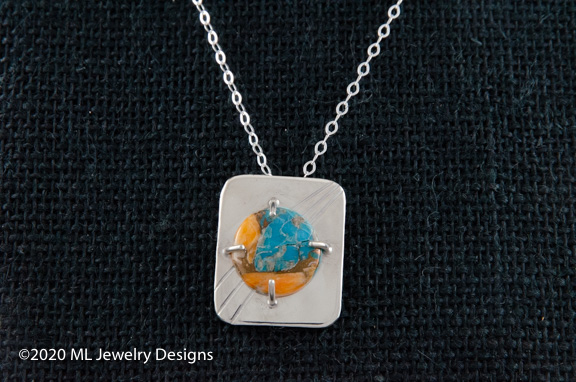
Kingman Turquoise with Spiny Oyster Shell Pendant
Kingman Turquoise and Orange Spiny Oyster Shell with bronze prong set in textured sterling silver. Sterling silver chain. (This was not made specifically for the show but meets the requirements.)

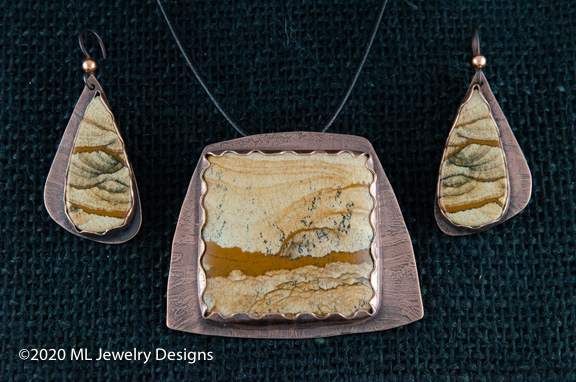
African Queen Jasper Set
African Queen Jasper bezel set in copper for earrings and a pendant. Black leather cord with sterling silver clasp for pendant; hypo-allergenic niobium ear wires for earrings. This is my current “masterpiece.”

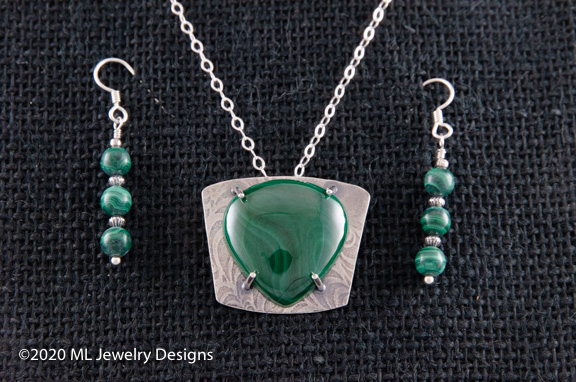
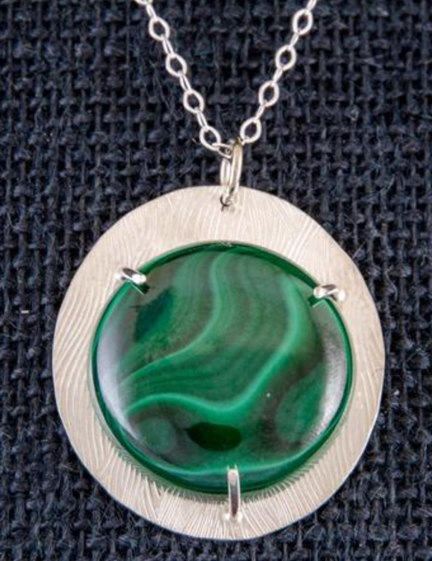
Malachite Set
Malachite prong set on textured reclaimed silver with malachite bead earrings. Sterling silver chain; sterling silver ear wires.

Keep in mind that none of these are currently available for sale. If you want them, you’ll need to go to Confluence Gallery in Twisp, WA between November 28 and January 9. (Twisp is actually a great destination in the winter, especially for cross-country skiing. The Methow Valley has hundreds of miles of well-groomed cross-country skiing and snowshoeing trails and was my Christmas destination before I started going south for the winter.)

If you like what you see here, you’ll probably like some of the jewelry in my Etsy store. Go check it out!

Helicopter Flight: McMinnville to Yakima, Part 2

Another video from the FlyingMAir YouTube channel.

Join me for the second part of my cross-country flight from McMinnville, OR back to my summer base in Malaga, WA. In this video, I descend down into the Columbia River Gorge to fly upriver below the clouds. As the clouds lift, the wind picks up. Along the way, there’s lots of rain on the windscreen, an airplane passing in the opposite direction, and waterfalls along the oregon cliffs. This part of the flight goes from Columbia River east of Troutdale and ends after a “left turn” into a valley across the river from Hood River. Audio is from direct connection to the intercom, so you can hear radio chatter and me narrate the flight and make radio calls, plus dialed down volume of the helicopter’s engine/rotor noise. I included a bit of “nosecam” video, too.

Here are the videos in this series. I’ve already published videos that cover the last part of this flight, which was done a few days later:

McMinnville to Yakima, Part 1: https://youtu.be/6x6XY3-uZjo
McMinnville to Yakima, Part 2: https://youtu.be/3mmyOMzN0Ls (this video)
McMinnville to Yakima, Part 3: to come
Yakima River Canyon: https://youtu.be/1HZi_UHjK0I
Kittitas to Malaga: https://youtu.be/cRuUhyCQWMA

I should mention here that “cross-country” in the world of aviation is any long flight where you land at a different place from where you started. For airplanes, it’s 50 miles or more; for helicopters, it’s 25 miles or more. This is only part of a 178 nautical mile trip.

Helicopter Flight: McMinnville to Yakima, Part 1

Another video from the Flying M Air YouTube channel.

Join me for the first part of my cross-country flight from McMinnville, OR back to my summer base in Malaga, WA.

In this video, I depart McMinnville, which is really rocking with pattern traffic, and head northeast into — you guessed it! — descending weather. (Seriously: just once I’d like to fly in that part of Oregon with good weather. How can people live there?) This time, I’m also dealing with a bit of wind that shakes the helicopter up every once in a while and makes me wonder whether my dogs in the back seat will puke. This part of the flight goes from McMinnville to the Columbia River and ends on a bit of a cliffhanger (pun intended).

Audio is from direct connection to the intercom, so you can hear radio chatter and me narrate the flight and make radio calls, plus dialed down volume of the helicopter’s engine/rotor noise.

Here are the videos in this series. I’ve already published videos that cover the last part of this flight, which was done a few days later:

McMinnville to Yakima, Part 1: https://youtu.be/6x6XY3-uZjo (this video)
McMinnville to Yakima, Part 2: https://youtu.be/3mmyOMzN0Ls
McMinnville to Yakima, Part 3: to come
Yakima River Canyon: https://youtu.be/1HZi_UHjK0I
Kittitas to Malaga: https://youtu.be/cRuUhyCQWMA
I should mention here that “cross-country” in the world of aviation is any long flight where you land at a different place from where you started. For airplanes, it’s 50 miles or more; for helicopters, it’s 25 miles or more. This is only part of a 178 nautical mile trip.

Saving Money by Recycling Your Own Scrap Silver

It’s like getting silver sheet for 1/3 off the price.

I use a lot of silver when I make jewelry: fine (100%) silver, sterling (92.5%) silver, and Argentium (93.5%) silver. Although I used to work primarily with silver wire, I’ve begun doing more with sheets of silver. I generally use 22 gauge sheet to make pendants and 26 gauge to make earrings.

The Cost of Metal

As I type this, I can buy 22 gauge sterling silver sheet for $4.36 per square inch. That price varies wildly — just a few months ago it was about 30% less. More recently, it was about 10% more. You can track precious metal prices online in a bunch of places, but I track it on the Rio Grande website, since that’s where I buy my metals.

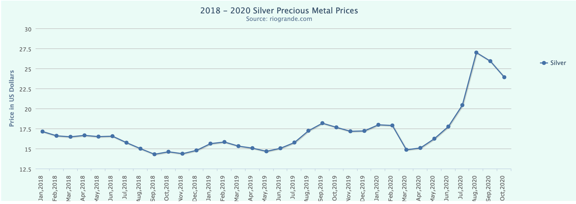
Silver Prices
Here’s a chart of the silver prices, which went nuts back in June 2020. It looks like it’s settling down now. You can track metal prices at the Rio Grande website.

The price I pay is a combination of market price (as shown in the graph above) and the type of processing applied to the metal. Sheet metal will cost more per ounce than just plain old lumps of silver. After all, the folks doing the processing have to get paid for their work, no? That’s value added pricing.

The Value of Scrap

Rio Grande has a scrap metal program that will take my scrap silver and pay me 85% of market value for it. So if I send them an ounce of fine silver and the current market price is $24/ounce, they’ll pay me $20.40/ounce. The values are different, of course, for sterling and Argentium. They do gold and platinum, too, but I don’t use much gold or any platinum in my work (yet) because of the crazy high price.

I’ve taken advantage of the recycling program at least twice. I save every single scrap of silver and try hard to keep the fine silver separate from the alloys. When in doubt about a scrap, I throw it in with the alloys. The first time, I got about $50 back. The second time I had more scrap and got over $100 back. I take it as a credit on my account because I generally spend well over $1,000 on metals every year anyway.

Recycling My Own Scrap

The first step was to prep the crucible. I posted this video on Twitter to share the sound of the cooling crucible.

Recently, however, I watched a few “YouTube University” videos that showed jewelers making their own wire and sheet from scrap. To do this, I’d need a good, hot torch (which I already had), a small crucible, a mold, and some borax (which I already had). I decided to give it a try. Invested about $40 in the equipment I didn’t have and started melting silver.

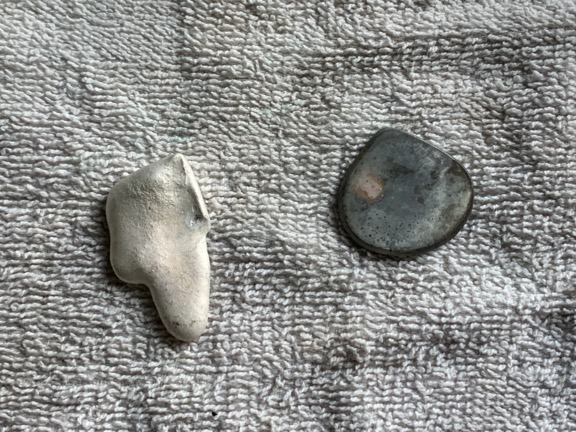
Ingot
My second try at an ingot.

It wasn’t as easy as it looked in the video — what else is new, right? — but I did manage to get a decent little ingot on my second try. (I melted down the first try so no loss.)

Malachite Pendant
The backing for this malachite cabochon was made with silver I recycled.

I rolled it through my rolling mill, periodically annealing it to soften it back up, and got it down to a sheet roughly between 21 and 22 gauge. I textured the resulting piece, then cut out a shape for a backing plate for a cabochon pendant. I added prongs and a hole for a bail, cleaned and polished the piece, and set the stone. It looked great (if I do say so myself).

The interesting thing about my recycled silver is that it’s a higher percentage of fine silver than Sterling (92.5%), but not nearly as high as fine silver (100%). Because it also contains some Argentium (93.5%), it might have some of the tarnish resistance properties of that alloy. Legally, I can stamp it 925 because that’s the minimum purity of the piece.

Doing the Math

Yesterday, I made two more ingots. It took quite a while because I was aiming for larger ingots and, for the second one, was trying to melt larger pieces of scrap. I actually had to stop and refill my torch to get the job done.

Ingots
Here are the two ingots I made yesterday. They weigh at least an ounce each. The darker one has been through the rolling mill about 20 times and is dark because it’s freshly annealed in this photo. The larger ingot has not been rolled at all yet.

I started wondering whether it was really worth the effort. So this morning, I did the math.

Suppose I want 22 gauge sterling silver sheet. I looked up the price on Rio Grande, where I would buy it, and came up with the number $4.36/square inch or $31.14/ounce. (Remember the added value of turning silver into sheet.)

Now let’s look at how much I’d get back from Rio if I recycled an ounce of silver. With a current market price of $24/ounce and a rate of 85%, I’d get $20.40/ounce. Because a square inch of 22 gauge silver weighs .14 ounces, the refund would equate to $2.86/square inch.

In summary:

Descriptionper sq inper oz
Cost of of 22 gauge silver bought new$4.36$31.14
Value of equivalent amount of recycled silver$2.86$20.40
Amount I save by recycling my own silver$1.50$10.74

Of course, it’s even more cost effective to recycle my own silver now that Rio Grande has instituted a $50 recycling fee (beginning October 15, 2020). This makes it completely impractical to send my silver back to them — I’d never have enough silver to make this worthwhile. In hindsight, it’s a good thing that I learned how to make ingots before this fee came into effect. I’m ready for it.