There IS Such a Thing as Too Much Business

When that business is being conducted at a loss.

I’ve been deeply involved in the Groupon debate for the past few days.

Earlier in the summer, I’d bought a Groupon from a Twitter friend and had used it to buy some jewelry at half price. Later, in August, I was approached by a Groupon clone company and got the details on what they really cost a small business. I did some math, realized it would never work for my business, and blogged about it .

Only a week or two later, I heard a story on NPR about Groupon in which a friend of mine with a business similar to mine was interviewed. He seemed to say positive things in the interview. When I called him, he gave more concrete information that didn’t seem too positive. I spent half a day crunching the numbers again and still couldn’t see how Groupon could benefit me.

I put that aside and got on with my life.

Back into the Debate

Yesterday, my attention was captured by a story on Plagiarism Today about a photographer who had been caught apparently passing off professional photographers’ images as hers on her Web site. The whole thing blew up in her face when she offered a 1-hour portrait sitting with print and CD of images for $65 through Groupon. She’d sold over 1,000 of these — far more than any photographer could complete in a year — when someone pointed out that photos on her Web site belonged to other photographers. She attempted to say that her site was hacked, but it was pointed out that the same photos also appeared on her Facebook page. Then her site and Facebook page went down; when her site reappeared it had a collection of crap photos that my mother could have taken with a Kodak 110 camera. (My mother is a horrible photographer.)

If you’re interested in seeing how the situation developed, read the comments from the Groupon thread, which were preserved by Petapixel after Groupon cancelled the offer, refunded the money, and deleted the thread. (A little too late to put out that fire.)

This story was picked up by many other sites, including TechCrunch. Their focus was on the ability of a business to effectively service Groupon customers, Groupon’s apparent failure to properly vet the services it features, and the hardship incurred by at least one Groupon merchant, Posie’s Diner. Since I’ve always thought that the Groupon model could be potentially harmful to a small business merchant using their service to advertise, I went to the Posie’s Diner blog post and read the story. It’s an honest and rather sad account by the restaurant owner who wound up having difficulties meeting payroll expenses while accepting the Groupons she’d sold. Each one had a face value of $13 but she’d received only $3 for each one. That meant she’d have to sell $13,000 of product for only $3,000 in revenue. The blog post explains the other related problems, which are mostly customer related.

Some Commenters Are Jerks

To make it clear, Posie’s Diner does not blame Groupon. She admits she made a mistake and takes full responsibility for it. But that didn’t stop the usual bunch of jerks from making nasty comments on her blog post. This one really pissed me off:

Businesses that complain about too much business should not be in business.

Wow. This guy needs to get a clue. If every sale you make comes at a loss, then even one sale is “too much business.”

That’s the situation I would have faced if I went with the Groupon clone — or Groupon. My margins are so low that I’d lose money on every single sale. I didn’t need that kind of business. No business does.

Is Groupon a Problem?

I admit that I resent the idea of a company making money off my hard work while I lose money on deeply discounted sales. Posie’s might have made a mistake going with Groupon, but it’s a mistake they won’t make again. I just won’t make that mistake at all.

To be fair, I read both good and bad comments all over the Web about Groupon from both merchants and customers. Clearly, there are possibilities for using the service with success. I just can’t figure out what they could be for my business. But there’s also a lot of pain in the Groupon model: the financial hardship of businesses with too many Groupon sales, the difficulty for customers being able to redeem Groupon goods and services due to crowds and overbookings.

Back to the “Photographer”

The idiot “photographer” who unknowingly pulled me back into the Groupon debate is truly a fool. Not only did she commit fraud when attempting to use other photographers’ work as examples of her own to sell her services, but she sold far more Groupons than she could ever expect to accept. If she hadn’t been revealed as a scammer in time to cancel the sale, she likely would have been out of business before long. After all, she was making less than $35 on each hour-long session at a client’s home. Between transportation costs and materials costs, she would have been in the red from day one. Would 1,700 sales at only $35 each have been “too much business” for her? I think so.

Then, when customers starting seeing the dismal quality of her work, would Groupon have refunded their money? And what would they have done when the fraud claims starting coming in and Groupon was called out for not properly vetting the offer?

Or maybe she was a true scammer who never planned to do any Groupon work. Perhaps she planned to just take the money and run.

Clearly, there’s some kind of problem with Groupon that needs attention. I’ll continue to watch from the sidelines. But I certainly won’t be giving Groupon any business in any form.

When Is an Ad Not an Ad?

When it’s part of a blog post.

The other day, I was contacted by e-mail by someone who claimed to represent an advertising company that bought text ads on small blogs. They were interested in placing an ad on Maria’s Guides.

I was interested. It’s always nice to make a few bucks with advertising. I replied that I was interested but did not accept ads for pharmaceuticals, casinos/gambling, or sex/dating services. He got back to me within 24 hours and told me the rate they’d pay, which was agreeable, and the fact that they just wanted to ad to appear in one post on the site.

That should have started alarm bells ringing, but it didn’t. I had another advertiser some time ago who bought 10 ads, each on a different post. Targeting, I supposed.

He got back to me the next day with the text of the ad. It was about three sentences, one of which included a link to some kind of mobile Internet service. The ad was written in first person and ended with a the phrase “[Redacted company name] gets a big thumbs up in my book.”

I read the instructions. They wanted me to place the text of the ad, with its link, in the middle of a paragraph of blog post text. As if it were part of the post and I was the one giving the thumbs up.

I wrote back:

I don’t think you understand. I agreed to an advertisement. I didn’t agree to modify my blog post’s text to apparently recommend an organization I know nothing about.

I wouldn’t mind putting similar text — without the recommendation — in a box floating “above the fold” within the post. That box would be titled “Sponsored Link” or something similar. But I will NOT put it into the post itself as if I wrote it.

Obviously, he wasn’t interested in an advertisement. He was interested in a paid endorsement. He wrote back to thank me and let me know he’d remove me from his contact list.

I guess some bloggers will do anything for a few bucks. I won’t.

Move Over, POV.1 — I’ve Got a Hero Now

Decision made.

The video just blows me away. Here’s a piece of the 1.1 hours of footage I shot today with my GoPro Hero fastened to the front of my helicopter:

This is unedited. I didn’t run it through any filters or stabilizers. All I did was find a 2-minute section of interesting footage, save it as a QuickTime movie, and upload it to YouTube.

I didn’t even have the camera set for full HD.

I didn’t even touch the camera during the flight. I turned it on before I got in and started up and turned it off after I landed and shut down. It saved roughly 4 GB of footage in a normal format easily read by my Mac without QuickTime plugins.

Add to this the incredible hi-res stills (and these, too) I can shoot just as effortlessly and you have a win-win situation for anyone interested in hands-free photography and video.

This completely blows the POV.1 out of the water. I’ll be selling my complete POV.1 camera setup on Craig’s List as soon as I get home. Why mess around with a second-rate extreme video camera system when you can have something so much better for less?

What Scud-Running Looks Like on Google Earth

My geologger tells the whole story.

Everyone who reads this blog or knows me understands that I am a gadget queen. I have all kinds of little gadgets that I use daily.

My GPS logger, described in some detail here, is one of my multi-purpose gadgets. Although I purchased it primarily to geotag photographs, I also use it when flying to get an exact record of where I’ve been.

I had my GPS logger running for the entire length of my flight from Seattle, WA to Page, AZ last week. As I discovered this morning when I looked at the tracks on Google Earth, it faithfully documented my Pendleton, OR area scud-running attempts.

Scud-running, in case you’re not familiar with the term, is a pilot’s attempt to get around bad weather in order to travel from point A to point B. Normal pilots do not attempt scud running unless they really need to get somewhere — this isn’t something you do on a pleasure flight. It’s also not something a pilot attempts unless he really thinks there’s a way through or around the weather in his path. Scud running is infinitely easier and safer in a helicopter than an airplane. We can make tighter turns and land without an airport when things get really bad. You could argue that scud-running is dumb and I don’t think I’d argue with you very much.

Here’s what my September 9 scud-running attempts look like on Google Earth:

Scud Running near Pendleton

The red line is my arrival in the area the night before. I landed at the Pendleton airport, fueled up, then flew a few more miles to the Bi-Mart parking lot next door to the Red Lion hotel where I spent the night. The Bi-Mart was closed and its parking lot was empty. It made a good LZ that would ensure an early departure the next day.

In the morning, I made my first attempt to get across the mountains. That’s the white line and it tells a pretty good story. I headed southeast, got up into the mountains, and attempted to find a way through. The lower line that comes to a point and doubles back is where I made my first U-turn in a canyon. I followed a canyon back out of the mountains and tried again by heading northeast. Again, I couldn’t get through and had to make a turn in a canyon. The yellow line, by the way, is I-84/Hwy 30; I’m pretty sure parts of the road were in fog. I returned to the airport and started waiting. That attempt took nearly an hour and 13 gallons (1/4 tank) of fuel — obviously, scud running isn’t something you attempt without a lot of fuel on board. (Makes for a bigger fire when you crash, though.)

At noon, I tried again. The blue line indicates my attempt to follow some railroad tracks up into the mountains. I realized pretty quickly that I wasn’t going to make it and doubled back. The post here about my new Hero camera (another gadget) includes video of this attempt shot as a time-lapse.

The green line is where I finally made it and got on course. It was 1:45 PM when I left the airport. I made it as far as North Salt Lake City before dark, dodging rainstorms and clouds a good part of the way.

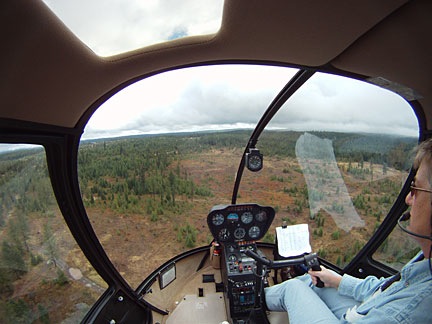
Scud Running in a HelicopterScud running is dangerous and I don’t do it without full understanding of that danger. Not once did I ever lose sight of the ground or immediate surroundings. When I realized I could not go forward the way I was going, I went back. As you can clearly see by shape of the white line U-turns I made, I was required to turn in two very tight places. These are turns that an airplane could not accomplish, especially since they were made in narrow canyons with no view over the canyon walls. The photo here shows how low the clouds were on that third attempt — the successful one. At several points, I was 200-300 feet below the clouds.
I did a lot of scud running this past summer. That’s probably the nicest part of being back in Arizona: I seldom have to run the scud here.

My Hero

It’s a camera.

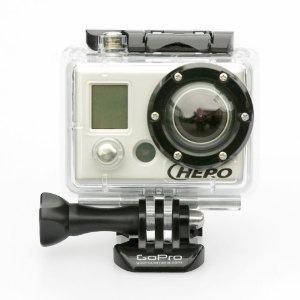
GoPro HeroAbout two weeks ago, I bought a GoPro Hero camera. This is a tiny, durable video camera designed for extreme sports. Real extreme sports. (The darn thing comes in a waterproof housing.) For the past two days, I’ve been testing it out.

I’ve been really dissatisfied lately with the quality of video coming out of my POV.1 camera, which I’ve had for about two and a half years. I wanted something smaller, easier to set up and use, and with better picture quality. The GoPro Hero has the POV.1 beat hands down.

I started playing around with the camera on Tuesday, in the car on the way to Phoenix. I wanted to get an idea of image quality. The Hero offers several resolutions, including true 1080p HD. I shot in a lower quality and was very impressed with the results.

But movies isn’t the only thing the Hero does. It can also be used to shoot individual snapshots, three consecutive snapshots, and snapshots a set number of seconds apart. Anyone who knows me, knows how much I enjoy time-lapse photography — this little camera has the timing built right in.

Yesterday, while stuck in Pendleton, OR waiting for weather to clear, I played around with it a bit more. I decided to try creating a time-lapse. So I set it up before departing the airport on my second attempt to get across the Blue Mountains. In this 38-second video, I travel nine miles from the airport, realize that I’m not going to get over the mountains, turn back, and land on the ramp again.

Salt Lake from the Air

Salt Lake City from the Air

Wahweap Hoodoos

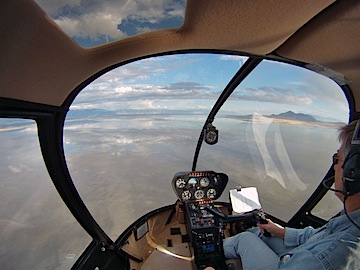
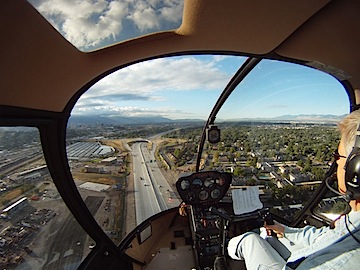
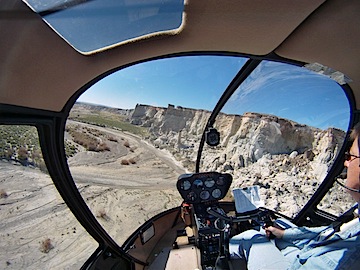
Three shots from my Hero. (1) The last shot it took yesterday, as I was flying over the Great Salt Lake; the reflections of the clouds on the glassy lake surface were amazing. (2) Early this morning as I flew down I-15 near downtown Salt Lake City. (3) A shot from my E-ticket ride past the Wahweap Hoodoos.

Later in the day, I finally got out of there. I’d cleared the camera’s contents and set it up to take a shot every 5 seconds (instead of 2 seconds in the video here). It did this for nearly five hours — the time it took for me to fly from Pendleton to the Salt Lake City area. The battery died about 15 minutes from landing. I compiled the video and liked what I saw. It compresses a 5-hour flight through Oregon, Idaho, and Utah into only four minutes. This morning, I set up the camera again and captured shots for my 2-1/2 hour flight from Salt Lake City to Lake Powell, including a wild, low-level flight down Wahweap Creek past the Wahweap Hoodoos (see photo here). I’ll likely put the two long videos together and get the resulting video online once I’ve had a chance to add notations.

As you can see in these images, the quality of the photos is excellent. There’s great depth of field, making it possible not only to see perfectly out the helicopter’s cockpit windows but to read the instruments. It has no trouble dealing with exposure; it seems to get it right every single time. If I had the time to go through the 5000+ images shot over the past two days, I would find all kinds of neat views. The original images are 2592 × 1944 resolution — that’s better than HD — I just downsized them for this blog post. And with one shot every 5 seconds, the camera battery died before it filled the 16 GB SD card I bought for the camera.

What’s kind of unusual is the way I mounted the camera for these shots. I hung it upside down using a suction cup mount on the passenger side ceiling window. (You can see the front of the window in each shot; I hung the camera from the back side.) Because the camera has a very wide angle lens, there’s some distortion to the view. I think that just adds to the funkiness of the photo. The camera is smart enough to turn the image right side up when processing, so there’s no need to worry about upside down video if you’re shooting video.

As for video…if I can figure out a way to mount it in a good spot, I should be able to get some really fine video while flying. That’s the challenge. Believe me — if I succeed, you’ll see the results here.