Helicopter Pilot Job Hunting Advice

My response to a job seeker.

Every once in a while I get an email (or phone call) from a helicopter pilot looking for work. Although I usually just ignore email — primarily because the pilots contacting me don’t qualify for the only position Flying M Air ever has listed on its Help Wanted page — and tell the caller we’re not hiring, the other day I got an email message from a U.S. veteran and decided to do more.

I have a soft spot for vets. They risk their lives to keep us safe — or at least follow U.S. military policy which is admittedly misguided at times — and they get a pretty raw deal when they return from service: bad medical care, difficulty finding jobs, etc. The G.I. bill helps these guys get an education that can take them farther in life and it’s always great to see someone taking advantage of it. I fully admit that if I did hire employees and I had two employees with identical qualifications but one was vet, I’d hire the vet. It’s the least I can do to thank them for their service.

The Sad Truth

Pilot Log Book
Until you log at least 1,000 hours of flight time, it’s next to impossible to get a decent job as a commercial helicopter pilot.

The guy who wrote to me was a vet with 10+ years of service. He came home, got an Associates degree at a community college, and got his helicopter ratings through CFI-I (Certified Flight Instructor – Instruments). He told me more in his brief list of qualifications, but to share more here might make him easy to identify and ultimately embarrass him, which is certainly not my intention. The key point is that he has less than 300 hours of flight time, which makes him pretty much unemployable as a commercial helicopter pilot for anything other than flight instruction.

Let me be clear: it’s not impossible to get a job as a pilot with as little as 300 hours of flight time. I know people who have done it. But in almost every single situation, the pilot’s “employer” isn’t paying him/her to fly. Instead, the pilot flies when needed and the “employer” collects and pockets the revenue. In some cases, the employer might provide living space. (I know a pilot who lived on a cot in a hangar until his “employer” went out of business and he found himself homeless.) In a few cases, the “employer” actually expects the pilot to cover part of the cost of flying. In other words, the “employer” is taking advantage of low-time pilots by using their skills without monetary compensation. In many cases, the amount of flying they do is so insignificant that they’re not even building the flight time they need to move forward in their careers. It’s not a job, it’s a form of indentured servitude.

How could anyone recommend a job like that? I certainly couldn’t.

So how does a new pilot build time? As a certified flight instructor. That’s why they get the CFI rating. It’s their ticket to an entry level job as a flight instructor. And with the right flight school, a CFI can build that extra 700 hours they need in a year or maybe just a little more. I call that part of a career “paying dues.”

My Advice

I have to admit that I felt sorry for the vet who emailed me. I knew that his chances of getting a decent job as a commercial pilot were pretty much non-existent. But I felt I owed him something. So replied to his email message. Here’s what I said, with a bit of identifying information edited out:

Thanks for writing. Although we’re not hiring now, I’d like to take this opportunity to give you some advice.

First, the chances of you getting a good job as a commercial pilot with just 277 hours is slim to none. As the folks at your flight school should have told you, most employers look for pilots with at least 1,000 PIC time. Most new helicopter pilots build that first 1,000 hours as flight instructors. If your flight school led you to believe otherwise, they did you a great disservice.

Second, when you visit the website for a potential employer, take a moment to look at job opportunities posted there before contacting them. You used a form on our website to contact me. The page you accessed (http://www.flyingmair.com/info/contact-us/) clearly instructs those looking for a job to visit our Help Wanted page (http://www.flyingmair.com/info/help-wanted/). The first paragraph on that page states that we do not have any full-time or part-time employees. It then lists the openings we do have: usually just cherry drying pilot, which requires both 500 PIC and a helicopter, neither of which you have. Simply sending a summary of your limited flying experience to any helicopter operator you can find an email address for — especially when it’s clear that you haven’t even ascertained whether that operator is hiring — isn’t likely to get you many responses.

Third, as a pilot and blogger, I’ve written extensively about flying helicopters, including a series about pursuing a career as a helicopter pilot. You might find it useful, especially Part 9 (https://aneclecticmind.com/2011/08/25/so-you-want-to-be-a-helicopter-pilot-part-9-pay-your-dues/).

While I admire your optimistic attempt to find employment as a pilot and I greatly appreciate your service in the US Military, I can’t help you beyond the above advice. Get a job as a CFI. Work your way up as most pilots do. Read my series for more tips.

Good luck.

Not the Only One Who Doesn’t Get It

I should mention here that last week I was also contacted by phone by an acquaintance in the helicopter pilot community. She (like another person I know in a similar situation) was attempting to build time through the use of a helicopter bought by a friend or business associate. She called me because the owner wanted to earn some revenue with his helicopter and she wanted to find out if she could get it on a cherry drying contract with me. There were multiple problems with this:

  • She called in July, when my cherry drying season was almost over. I didn’t need any pilots. (I contract with pilots in April.)
  • The helicopter was an Enstrom, which I prefer not to use for cherry drying.
  • Although a cherry drying contract has the potential to make good money for a helicopter owner, there’s no guarantee of flight time. As I’ve said over and over in numerous places, cherry drying is not a time-building job.

When I told her all this, she was disappointed. She asked if I had any ideas for building time. I told her the same thing I told the vet: get a job as a CFI.

There are No Shortcuts

It’s sad that so many people invest so much money in expensive helicopter pilot training and then find that they can’t get the pilot job they want right after earning their certificates. But it’s a fact of life.

And face it: college graduates with bachelors and even masters degrees are unlikely to step right into the kind of job they really want. The problem isn’t just with pilots. It’s with just about any career.

And yes, there are exceptions. But exceptions are for exceptional people.

If you think I’m trying to discourage people from following their dreams to become helicopter pilots, you think wrong. I’m just a realist. I hate to see people working toward a goal with inaccurate information about the path they’ll likely have to take. I’ve written about this over and over throughout this blog; the careers tag should bring up some examples of past posts.

But I can’t recommend my series about becoming a helicopter pilot enough. Really. Read it and the comments for each post. You’ll be glad you did.

Good luck.
China Cheap

How do they do it?

When I was in Quartzsite, AZ this past winter, wandering around the sales, I bought a new pair of reading glasses with yellow-tinted lenses to cut the blue light from mobile devices. I’d heard that the blue light was bad if you used a device at night, which I did. Often. I think the glasses have helped improve my sleep patterns.

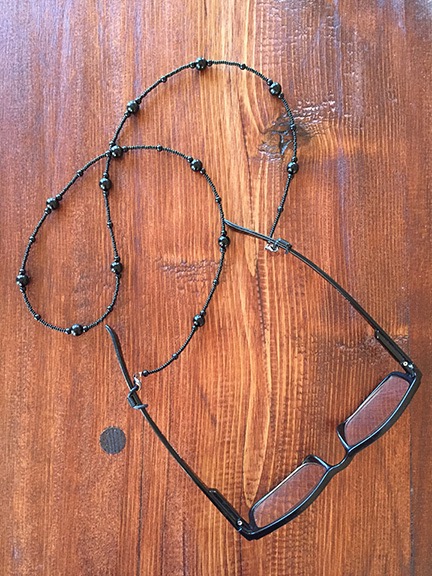
Because I need readers with me all the time and I don’t always carry a purse or clothes with suitable pockets, I’d taken to wearing the glasses on a chain around my neck, kind of like a stereotypical librarian from the 1950s. (I’ve been accused of many things, but vanity is not one of them.) When I bought the new readers, they also had beaded chains that were quite pretty and only $2. I bought one.

I wore it just about every single day for six months. Then it broke, dropping microscopic beads on the floor. I was definitely not going to restring them. With heavy heart, I tossed the chain away and got online to find a replacement.

Nice looking beaded chains were available on Amazon.com starting at about $12. Surely I could do better.

I did. On eBay. $3.56 with free shipping. I submitted an order and paid with PayPal.

I knew it was coming from China and I figured it would take a long time. Maybe a month. Whatever. I wasn’t in any hurry. I still had the old chain I’d used before the nice beaded one.

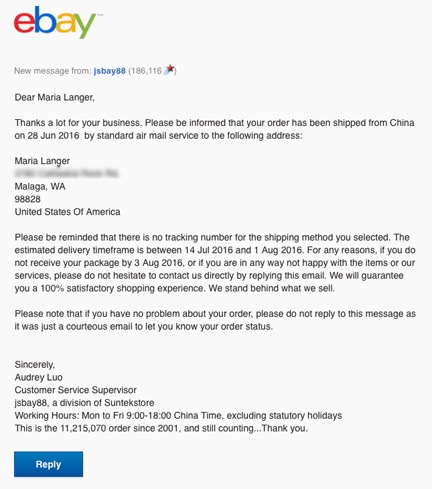
China Letter
A letter informed me my eyeglasses chain was on its way.

China Box
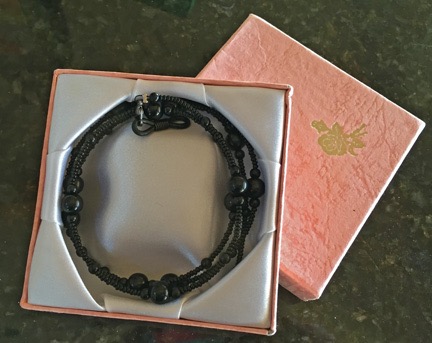
My new eyeglass chain arrived in a very nice satin-lined gift box.

The chain on my glasses
Although not quite as pretty as the one I broke, my new eyeglasses chain certainly does the job.

But within a few days, I got an email message from the Chinese company I’d bought from. It was written in perfect English, easy to understand, and complete in the information I needed. If scammers wrote letters this nice, they’d fool more people.

The package arrived about a week later. It was a padded envelope with Chinese postage on it. It easily fit in my mailbox.

I brought it in and opened it up. I was very surprised to find a nice pink box inside. I’d been expecting the chain in a cheesy plastic bag marked with an inspection number. The box made it suitable for giving as a gift.

When I opened the box, I found the beaded chain inside it on a piece of satin that seemed made just for it. Classy.

And that got me thinking. How do these Chinese companies make money?

First they have to get the materials and labor to create the item they’re selling.

Then they need the fancy box with the satin insert and someone to carefully stow the chain inside it.

Then the box goes into an envelope with a packing slip. A label goes on the outside with postage.

And then someone takes it with countless others to the Chinese equivalent of a post office where it’s shipped thousands of miles. It goes through customs (I assume) and gets sorted into the U.S. postal system. And eventually it makes it to my mailbox.

For $3.56.

Less than the cost of a latte.

How can they possibly make any money on this?

Are Writers this Desperate?

Another rant. I’ll keep it short.

This morning, I went through my email inbox (currently 1795 messages, 10 unread) and found this message from a few days ago:

Email Message
This is the email message I received from a video training company looking for authors.

Maybe I’m being oversensitive here — it certainly wouldn’t be the first time — but I’m trying to figure out why any author in his/her right mind would send a bunch of detailed ideas for potential video courses in response to an obviously boiler-plated email that doesn’t even include the name or title of the person sending it.

Testing for Legitimacy

A side note about Lynda.com

I honestly don’t know why LinkedIn bought Lynda when it’s only a matter of time before there are hundreds of copycat sites out there, all cheaper. And what of the free content already available on YouTube? Video content is already going the way of the print content I used to create. Why buy a book when you can Google it? Why pay for a video when you can find one for free on YouTube? Quality doesn’t seem to be a concern anymore.

With Lynda’s current policy of replacing freelance experts with in house (i.e., non-royalty) authors, they can’t even claim to have better courses anymore. Those out-of-work experts have plenty of places to go — especially if they’re not as picky as I am.

I did some research. I looked at the website for the domain name the email came from. It looked legit — like a Lynda.com copycat site. A link at the bottom of the home page said they were looking for authors. I clicked it. No details at all: just a form to fill out with contact information. Apparently, they’d get in touch.

So at this point, I have no idea what kind of deal they’re offering authors. Do they even pay authors? I don’t know. I do know that I need to be paid — or feel confident that I will be paid — before I do any work, including developing ideas that it would be all too easy to have an “in house author” develop and record without compensating me. I’m not a complete idiot.

And anyone can whip up a real looking website these days. And was the grammar error in the email a typo or a sign that the email was sent by someone who doesn’t speak English regularly? Like someone at a content mill?

My reply was aloof:

I’m interested, but I need to know more about your author program before I make any proposals. I have a great deal of experience creating video courses, having authored and recorded about a dozen for Lynda.com over the years. Here’s a list: https://aneclecticmind.com/videos/ My areas of expertise include Mac OS, Microsoft Word, Microsoft Excel, Twitter, WordPress, and various niche software products. I’ve been writing books and articles about computing since 1990 and have had 85 books published since then.

If you’re interested in working with me, you’ll need to do a bit more than leave an anonymous message for me through a form on my blog. I’ve worked with a lot of publishers since 1990 and have learned that the serious ones are the ones who make personal contact and help me understand why I should want to work with them. I know I can benefit you; what can you do to benefit me?

Looking forward to hearing from you.

Maria

I don’t expect to get a response.

Another Site, another Courting

This reminds me a bit about a personal email I did get from another video training company about two years ago. This guy was in full sale mode, doing his best to tell me why I should be a writer for them, and why they wanted to get a bunch of my courses for their launch. There would be generous payment — 50% of the take on each course sold — but I’m smart enough to know that 50% of nothing is still nothing. Could they sell the courses they put online? I didn’t know.

I decided to wait a while to see how things went. After all, the whole thing could be a web version of vaporware. Six months after launch, I checked in. The site appeared to be up and running and there was content, although the courses weren’t very meaty. I emailed my contact to ask about sales figures. I never got a response. A year later, the site was down.

It would be nice to hitch up to a new wagon, but I need to be careful whose wagon I hitch up to. I don’t want to waste my time writing content for a publisher that I might not be properly compensated for.

How Desperate are Writers?

But again, these contacts and pleas for authors have me wondering: just how desperate are writers that they’d respond to an anonymous message like this with course ideas and outlines?

And how little do content publishers care about authors and content quality that they’d send out messages like this to anyone they think might take the bait?

How bad has the situation in publishing and content creation become?

Throwback Thursday, Birthday Edition

An old photo and some memories to go with it.

I don’t have many photos of myself, mostly because I don’t see any need to. I know what I look like: I see that face in the mirror every morning. But I do have a few older photos to look back on and this is one of them.

Old Photo
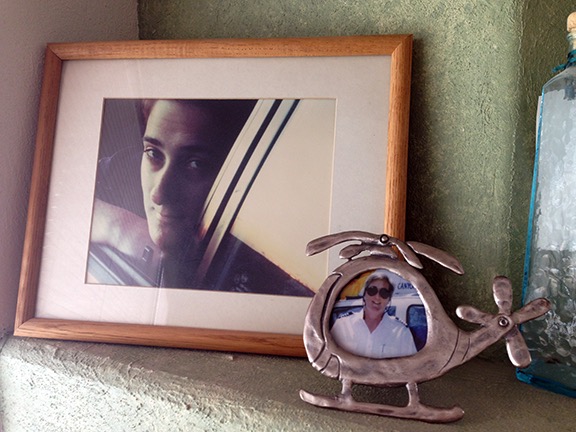
These two photos of me stood on the ledge beside my wasband’s desk in our Arizona home. I took the helicopter frame when I packed, but left the rest.

I vaguely remember the day the larger photo was shot. It was at my car in a parking lot at the beach. It was just after sunset. My future wasband was the photographer.

Nissan Pulsar
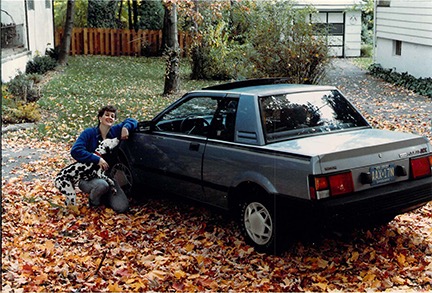
Here I am with my old car and my dog Spot in front of the first house I owned with my future wasband. I figure this was shot in 1985.

My car in those days was a 1983 Nissan Pulsar. It was metallic blue and a definite upgrade from the 1970 VW Beetle it replaced. I loved that car until I realized how much it lacked in terms of performance and agility. I replaced it in 1986 with a 1987 Toyota MR-2 that I owned until just a few years ago.

The beach was likely Jones Beach on the west end of Long Island in New York. My future wasband and I met there back on July 10, 1983, an event I documented in a blog post I wrote after my marriage to him fell apart 29 years later. The parking lot was called West End 2.

The photo was shot at sunset. We went to Jones Beach West End 2 occasionally to watch the sun set — that’s how we’d met. Back in those days, I lived in Hempstead on Long Island and he lived in Flushing in Queens. Although I doubt this photo was shot the day we met, it was probably shot sometime that same summer.

I like this photo a lot. It’s quite a nice composition; my wasband could be a good photographer when he tried. This is one of the instances when he managed to nail composition and light; he usually focuses (no pun intended) on subject matter and neglects one or both of the other vital components of fine art photography. (I can’t tell you how tough it was to get him to go on photo outings during golden hour light.) But in this case, he took a great portrait of a much younger version of me.

Younger, yes. I was probably 22 in this photo. My birthday had been just 10 days before we met and this had to be within three months of that. It’s one of my favorite photos of myself.

I’ve been thinking lately about how much I’d like to create a modern version of this photo. My face with the same expression — if I can pull it off after so many years of life experiences that resulted in the cynicism I work hard to overcome nearly daily. The position of my head in the lower corner of the driver’s side window of my current little car, a 2003 Honda S2000. The reflection of the horizon, red from the light of a recently set sun.

Or maybe it would have to be in my truck, since my car doesn’t have a back window for the reflection.

I just need a friend with a good eye and a camera to meet with me and make it happen. Another project for another day.

I don’t actually have this photo in my possession. I found it face down near my wasband’s desk when I returned home from my summer job in September 2012. The locks had been changed on the house I’d shared with him for 15 years, but an $8 lock — yes, I found the receipt dated just the week before on the kitchen table — isn’t going to keep me out of my home. (Neither was his lie-studded attempt to use the court to keep me out. No, I didn’t “abandon” him. I went to my summer job, as I had the previous four summers in a row.)

I found it interesting that he’d kept the photo at all. Or the one of the two of us all dressed up, shot only a few years later at a friend’s wedding, which I mailed to his mother as a birthday gift. I was surprised that the desperate old whore he’d hooked up with, who was obviously calling the shots for his life and divorce battle, hadn’t destroyed them when she was in my home, sizing up my possessions for her own future use. (That didn’t work out the way they intended, either.)

I righted the two photos and snapped the picture you see above. Later, I packed the little helicopter frame — I honestly can’t remember if I took the Papillon picture with it; it’s still packed somewhere. But I know I left the car window portrait behind. I think I was hoping that it would jog his memory of the better days together so long ago, before greed and jealousy and anger and frustration had split us apart. Maybe it would snap him out of his delusional state of mind and make him think twice about what he was throwing away. And how much it was costing him to make an enemy of the only woman who truly cared about him.

Of course, none of that happened. I stayed in the house until May 2013, packing my things while I waited in vain for him to see reason and settle out of court. In the end, it went in front of a judge and he wound up paying me and his lawyers at least four times what he would have if he’d agreed to my generous settlement offer. And he could have kept the house! Stupidity? Greed? Bad advice? I think they were all part of his problem. Amazing how a person can change.

But by then I was started on my new life without him, moving forward for the first time in years without a sad sack old man holding me back. Building the home I wanted — without the endless delays and compromises and excuses I’d been dealing with for years — in a beautiful place among good friends. A place where I could build my business and have an active life with the variety and challenges I thrive on.

When I look back on this picture, I remember the good old days when we were young and idealistic and deeply in love. And then I remind myself that the man who took the photo is long gone — and I’m so much better off without the man he became.

The Sun Shades

A solution to a “problem” I’d hoped I wouldn’t have.

On May 20, 2014, I began blogging about the construction of my new home in Malaga, WA. You can read all of these posts — and see the time-lapse movies that go with many them — by clicking the new home construction tag.

Earlier in June, I finally broke down and ordered sun shades for my home.

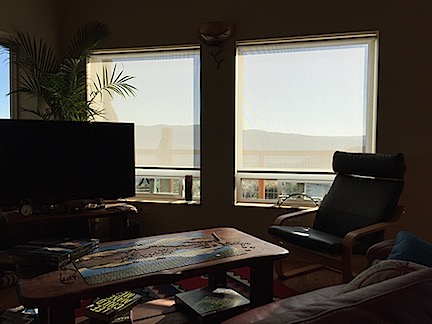
My living space has 15 windows, 11 of which are 4 feet wide by 5 feet tall and, as positioned, offer a nearly unobstructed view of what’s outside. (The others 4 are 6 feet wide and 3 feet tall up near the ceiling facing south.) Because I have no close neighbors and no worries about people looking in, I don’t have any curtains or shades. The result: my home is very bright with natural light during daylight hours.

Great Room at First Light
My great room, looking west northwest, shot from my desk at first light. The number and placement of windows offers an almost unobstructed view of what’s outside beyond my deck.

This isn’t perfect, however. (What is?) While the 7 north-facing windows are shaded by the roof over my deck on that side, the 3 east-facing and 1 west-facing windows are not. This time of year, I get a lot of direct sun into the east windows in the morning and into the west window in the afternoon. Although this tends to raise the temperature in my living room (morning) and bedroom (afternoon), that’s not really a problem — my air conditioning and ceiling fans can handle that. What is a problem is that I can’t work comfortably at my desk in the morning with the sun shining in my face. I’m also slightly concerned about the affect of direct sun on my living room’s red leather sofa and bedroom’s brown leather sofa and the various antique and heirloom items I own.

Solution: sun shades: shades that offer some filtering of the sun without completely blocking out the view. These are extremely popular in Arizona, where the sun can be brutally strong, especially in the summertime. I had a set at my home there for afternoon relief on the west-facing downstairs patio. Those were off-the-shelf roll-up shades from Home Depot that were admittedly cheap and ill-fitting but did the job. I’d want something a lot nicer for my new home.

In the past, I’ve ordered blinds from Select Blinds, a great source of blinds, shades, and other window treatments. This is where I ordered faux wood blinds for the little windows in my Howard Mesa cabin in Arizona and cloth vertical blinds for the sliding glass doors on the Phoenix condo. These folks do great work at a good price. There’s always a sale or special deal.

This time around, I ordered inside mount sun shades that filtered out only 14% of sunlight, thus letting a lot of light through. I’d be able to see through them, even when they’re down. I figured I’d put them on the 3 east and 1 west windows and use them in the summer. If they were easy to remove from the mounting hardware, I’ll likely remove them for the rest of the year. I don’t want anything blocking my view.

What I liked a lot about the blinds I chose is that they didn’t have to be wound up or down with a cord. They were spring-loaded, just like the blinds my parents had in our house for privacy back in the 1960s. You could pull them down in any position and with a tug, let them retract back up. No cord to worry about getting sucked into my Roomba or tangled into the power cord for my router or TV.

As usual, there was a special deal. (Deals aren’t really “special” if they’re always available, but I’m not complaining.) This time it was 35% off plus an additional 10%, 15%, or 20% off depending on the order total. My order of four custom-sized blinds — each window opening is a little different, thanks to the slap dash nature of the window framing — qualified for the extra 15% off, bringing the order total to just $370, including shipping. I sincerely doubt I could have gotten a better deal locally

Weeks went by. I was out working in my garden when the FedEx Ground truck came and dropped off a long box. My blinds.

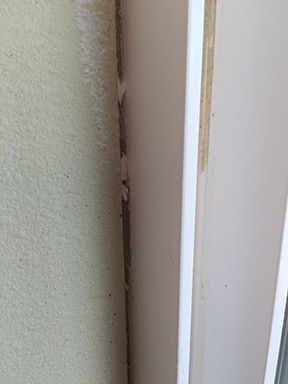
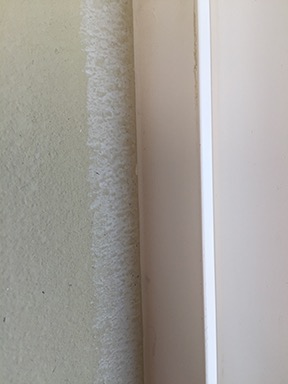
I got to work the next day. The first chore was to finish the seal between the window and drywall. Although the drywall guys had done a great job hanging a lot of drywall in my home and fitting it around windows to create the box-like effect I have, they did a crappy job of finishing. I had to buy paintable caulk, run beads in the joints, and smooth it with a neat little caulking tool I have just for that purpose. A bit of paint once the caulk had dried finished the job.

Bad Finish Better Finish
Left: typical bad joint between drywall and window frame. Most of my windows were like this. (Apparently, the general contractor (me), was supposed to hire a finish guy. Who knew? I guess I’m that guy.) Right: joint between window and frame after applying and smoothing caulk. A bit of paint made it perfect.

Drywall Anchor and Screw
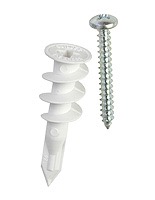
An example of a drywall anchor and screw.

Installation of the blinds was easy. Although I used the mounting brackets they came with, I could not use the screws. I needed drywall anchors, since the screw positioning did not connect with any of the studs. No problem — I had suitable drywall anchors with corresponding screws leftover from another project that didn’t need the anchors. I measured and marked, drilled holes, tapped in anchors, positioned brackets, and screwed in fasteners. (Any job is easy when you’ve got the right tools.) Using the tags in each blind bag, I matched the blinds to the windows. There was a bit of a challenge getting the middle east blind in — they were all a tight fit — but some creative use of a hammer resolved the problem.

Blinds Down
With the blinds down, plenty of light comes through and I can still see what’s outside. Although the blinds are long enough to go down to the windowsill, I typically only lower them to the part that opens so air flow is not restricted.

Blinds Open
When the blinds are open, the roller at the top of the window frame is nearly invisible, so I don’t have to look at them at all.

The result was perfect — exactly what I wanted. Actually, even a little better, as these two photos of two east side windows illustrate.

When the blinds are down, the light is filtered just enough. I can sit at my desk and work comfortably to get things done, but there’s still plenty of that morning light to illuminate the room. And I can see right through the shades for a sort of gauzy view of what lies beyond.

When the blinds are up, they roll tightly to the top of the window. Because I chose a neutral color — a sort of linen white — they are nearly invisible. No need to remove them in the winter months — which is good because the hardware would be very noticeable without them. This is a total win-win for me because I really don’t want to see any window coverings on any of my windows unless they are in use. I don’t believe in “dressing” a window when the real beauty is outside.

Of course, I only need the blinds down on the east side in the early morning — say before 10 AM — starting about a month before the summer solstice and ending about a month afterwards. The same goes for the one west side window in my bedroom for the afternoon — say after 4 PM — although I tend to keep that one down all day long because I’m not usually in that room during the day.

In all, I think I found the perfect solution to a “problem” I was hoping I wouldn’t have. The sun shades do the job, look great, and weren’t outrageously expensive.

This is only one of the challenges I’m facing and working through as I put the finishing touches on my home. The loft rails, which I finished this past winter, was another. Coming up is a big one: the stairs to the loft. Now that I have all the materials I need to start working on them, I hope to be blogging about that soon.