Flim-Flam!

The ultimate book for skeptics.

I just finished Flim-Flam! by James Randi. You may have heard of “The Amazing Randi” — he’s the one offering a $1 million prize to anyone who can demonstrate a paranormal phenomenon under controlled conditions. (You can learn more about Randi’s challenge on the James Randi Educational Foundation’s Web site.)

The book details many attempts to claim the prize — which was only $10,000 when the book was written — as well as the facts behind many of the things commonly believed in popular culture: The Bermuda Triangle, Chariots of the Gods, UFOs, astrology, psychic surgery, etc. Randi is relentless in his quest to expose charlatans, especially those who prey on believers with cash to “donate” to his efforts.

Although this book is now 25 years old, it’s an extremely timely read — especially with fakes like Uri Geller appearing on television to con viewers. (Randi is also the author of The Truth About Uri Geller, which exposes many of Geller’s tricks.)

Nowadays, people are willing to believe almost anything; it’s good to read something that brings reality into the equation.

Are you a skeptic? You need to listen to Skepticality or read Skeptic magazine.

Donating Ideas

A few thoughts about yet another new “charity” effort.

A fellow twitterer — and I won’t mention names because my purpose is not to embarrass him — has created a Web site designed to gather “idea donations.” That’s right: the goal is to gather business ideas for people who are evidently incapable of coming up with their own ideas. These mentally challenged people can then use the donated ideas to start businesses and improve their villages, towns, or personal lives.

I have a serious problem with this.

It isn’t enough for successful business people to donate money and equipment and finance small business owners who need help. Now we have to think for them, too?

The way I see it, if an “entrepreneur” isn’t bright enough to come up with his own business idea, he’s probably not going to be bright enough to make someone else’s idea work, either. It takes a lot more than a packaged idea to start and build a business. It takes brains, know-how, experience, hard work, funding, imagination, moral support….get the idea?

Am I missing something here? What’s the point of this? To make people who can think feel all warm and cuddly for handing out ideas to people who can’t think?

If someone doesn’t have enough imagination and know-how to come up with his own business idea, he should probably stick to work that doesn’t require so much brain power — and leave the business of starting and running new businesses to those better able to get the job done.

A Computerless Day

And on the seventh day, she shut off the computer.

A comment on my blog post, “Is Social Networking Sucking Your Life Away?,” got me seriously thinking about how often I use a computer when I really do have better things to do with my life.

Why We Use Computers

Well, obviously most people always have something better to do with their lives than sit in front of a computer. But I can’t deny certain reasons why we use computers:

  • To get work done. After all, a computer is a tool for getting many kinds of work done. So you may have to work with a computer every day just to get your work done. I use a computer for this reason quite often.
  • To relax and unwind after a long day at work or doing something intense. This is what the commenter said and I think it’s a perfectly legitimate reason to use a computer. After all, computers have become a hub for entertainment, with video games (but please don’t get me started on those), sites like YouTube, and sites that provide news and entertainment information. My husband watches TV to unwind in the evening, many people turn to their Internet-connected box. I admit that I do this once in a while, although I really prefer a good book or movie.
  • To communicate with others across long distances for free. iChat, Instant Messaging, Skype, and many other tools make it possible to use the Internet to keep in touch with friends and family members anywhere in the world. When Australian photographer Jon Davison was here last month, he used iChat on his MacBook to have a video chat with his girlfriend back home. It was amusing to see him walking around the house and yard with the computer, pointing its camera at the guest room he was staying in and the views of the mountains to the north. But heck, why not? Live audio and visual communication across thousands of miles to another continent for free? If I had anything to say to someone that far away, I’d be doing it, too. And, of course communication doesn’t have to be audio or visual — it could be a simple e-mail message.

When There Are No Days Off

But on Saturday, I spent nearly the whole day in front of my computer. I did a bunch of things, the most important of which was to create some marketing material I’ll need this week. But did I have to do it on a weekend? My husband was home from work, we’d cancelled two days of a helicopter gig in Wickieup due to wind, and we had both days unexpectedly free at the same time. Yet I was sitting in front of a box working with Photoshop and InDesign to create flyers and he was sitting in front of a different box watching sports.

One of the drawbacks to being a freelancer/business owner and working from home is that there’s often no distinction between work days and days off. After a very busy month and a half of hard work for both of my businesses, I’d completely lost the distinction. I’d fallen into the trap that made every day that I wasn’t flying a day that I could be working. Where were the days off?

So I took yesterday off — from using the computer.

A Day Away from the Computer

It was a conscious decision I made the night before, so it wasn’t difficult to get started on the right track.

The only tough parts for me were skipping my morning blog entry — which I like to do every morning, if I have time — and not checking the weather. I had plenty of time — I was up a 5 AM while Mike continued to sleep. I made my coffee and gave Alex the Bird his scrambled egg. But since I wasn’t going to start the day with a blog entry, what was I going to do? The answer was kill clutter.

Our kitchen has a built-in desk with cubbyholes above it. Over the years — and I do mean years — the desk and cubbyholes have become the gathering places for all kinds of loose papers and other items. I found expired car registrations, broken jewelry, the title for my Honda, photos taken and developed in 2001, business cards, and a lot more. I wound up throwing half the stuff out. Half of the rest was put away immediately. The rest — well, let’s just say the clutter has shifted to a new position. (I’ll deal with it today.)

Then Mike and I went to Wickenburg Airport to socialize with fellow pilots at the Sunday morning coffee and donuts. This was a “tradition” that I started back when I ran the FBO there and every FBO operator after me has done the same. (It’s actually a money-making proposition, with voluntary donations covering the cost of the coffee and the donuts, with plenty to spare.) It was cool and windy out, so most folks were inside the terminal. I spent quite some time with a newcomer, giving her a long list of flying destinations that included either restaurants or lodging or both. (In fact, I didn’t realize I had so much information in my head about that.) We also stopped by the hangar to drop off a few things and tidy up a bit. I got to play with my new 18-55mm camera lens, which we found in our mailbox on the way to the airport.

Back home, I did a bit more tidying up while Mike took his truck back out to help a friend move some furniture. By the time he was back, I’d brought our two horses up to the tack room and had prepared them for saddling. We went for a nice ride out in the desert behind our house. I’d brought my GPS with me and my point-and-shoot Canon camera. My goal is to match up photos with track points to put GPS info in the photos. (I discussed this in my recent post, “Day 5 on Google Earth,” and will go into greater detail when I actually achieve this goal.)

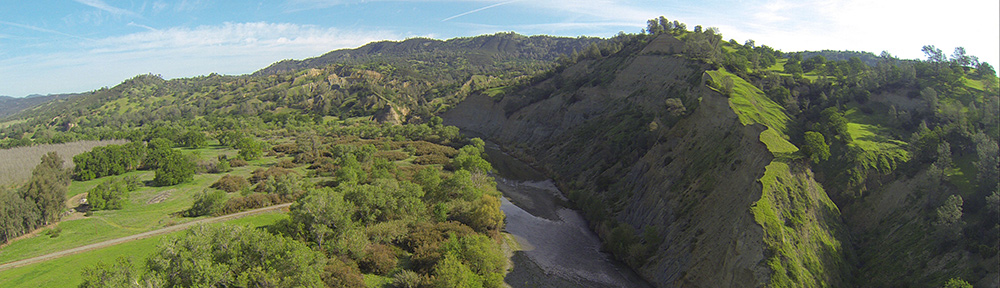
At one point, we stopped on top of a ridge that overlooked the whole west side of town. On one side was a golf course and hundreds houses. On the other side was rolling desert hills without a structure in sight. I commented to Mike how special the place was — the border between civilization and wilderness — and how terrible it was that greedy developers all over Arizona are trying so hard to replace the wilderness with tract housing. The scars on the land that will soon be Wickenburg Ranch — so clearly visible from our vantage point — really brought home this point. How long would it be before our vantage point on a horse trail would be the middle of someone’s living room or garage?

Wickenburg Panorama

Back home, it was difficult not to rush to the computer to offload the pictures and GPS tracklog. But I spent the next hour and a half doing something I hadn’t done in a long time: taking a nice long soak in the bathtub with a book.

Then, at 5, it was time for dinner with some friends. Jim and Judith have left Wickenburg for the Las Vegas area, with a second home on the California coast. They were in town this past weekend to finish packing up their house, which is for sale. (They want me to buy the house because it has a helipad and hangar, but I think their neighbors would kill me with the amount of flying I do.) We had dinner at their favorite restaurant in town, which is also one of ours: House Berlin. We had a great dinner, checked out their new car, and exchanged hugs and best wishes.

I finished up the day reading in bed while Mike watched the baseball game on television. I fell asleep early and woke well-rested.

I Did Cheat Twice

I do have to admit that I used my computer twice during the day.

The first time was when I went into my office to shut it down early in the morning. The computer starts each morning at 5 AM to gather my e-mail and download podcasts. When I went to shut it down, it was displaying an e-mail message about my eBay bidding status. I’m trying to buy a 10.5 mm lens for my Nikon D80 and I couldn’t resist seeing if I was still the winning bidder. I wasn’t. But the auction doesn’t end until today, so I still have a chance. I shut the computer down within 30 seconds.

Later in the day, I also used the computer to suck my existing track logs off my GPS. I wanted to start with a clean slate, but keep the existing data. The whole process took about 2 minutes.

I won’t argue that these two tiny uses “don’t count.” They do. But I’m not ashamed of them. And I’m extremely proud that I didn’t use my laptop, which sits in the kitchen these days, to check the weather. I was sorely tempted on several occasions.

Was it a Better Day without Computers?

Yes. It was. I spent time with my husband and critters and friends. I made a dent in some of the clutter in my house. I spent hours outdoors in fresh air on a beautiful day. What could be better on a computer?

So I think I might practice what I preach a little more often — maybe on Sundays.

Is Social Networking Sucking Your Life Away?

An honest cost-benefit analysis can help you decide.

I participate in Twitter. I also participate on LinkedIn and RedBubble. And I have accounts on My Space, Facebook, Technorati, Del.icio.us, StumbleUpon, Pownce, Flicker and a number of others I can’t remember. (I occasionally sign up for a “new” account, only to find that I already have one. Oops!)

Note here that I make a distinction between participate in and have accounts on. The social networking sites I participate in are the ones I use regularly. The ones I have accounts on are ones I’ve tried but don’t actively use. And then there are the ones I’ve tried and deleted accounts from. (My recent experience with Spock comes to mind.) I’ve actually deleted more social networking accounts than I actively participate in.

But I know many, many people who actively participate in multiple social networking sites. And I have just two questions for these people:

  • How?
  • Why?

How Do they Do It?

I don’t know about you, but in my universe, a day has 24 hours. Of those 24, I throw away 6 to 8 by sleeping. I spend another 4 to 6 doing “life maintenance” tasks like eating, bathing, socializing with my household’s members (husband, parrot, dog, and horses) and friends, and keeping my house clean. Then figure another 4 to 12 hours doing the work that pays the bills.

What’s left? Not much.

So how are people finding the time to participate in all these social networks?

My participation in Twitter is well-integrated into my lifestyle. Twitterific is open on my computers’ desktops. (And no, that’s not a typo. It’s open on all of my computers’ desktops.) Throughout the day, I receive tweets from the 30 or so Twitter members I follow and send my own tweets out into the ether. Occasionally, a conversation will start up between me and another member, but it usually consists of no more than two or three tweets on either side. And it isn’t as if the conversation is live. Sometimes a fellow twitterer will ask me a question and I won’t see it for an hour or two, when I’ll finally answer it. It’s not like I sit there watching Twitterific. I don’t. And when I’m away from my desk or computer, I’ll occasionally tweet from the field using the SMS capabilities of my Treo. I do this most often when I’m on the road, but I occasionally do it when I’m in the middle of something and have a few spare minutes. I hate doing nothing and these tweets often give me something to do.

My participation in LinkedIn is less active. I basically check in once a week or so, just to see if any of my contacts have added contacts that I know. If so, I attempt to add them. Once in a while, I’ll update my profile or write up a recommendation for one of my contacts. Or ask for a recommendation.

RedBubble sees me even less frequently. Although I started out visiting every morning for one to two hours, I soon realized that I was wasting my time there. RedBubble, in case you’re not familiar with it, is a social networking site for artists, photographers, and (supposedly) writers. Members post their work. Artwork can often be purchased. But I soon learned that the kind of artistic people who actively participate in online social networking do so only so they get positive feedback on the work they’ve posted. There’s not much “social” about it. So I stopped wasting my time and now use RedBubble solely to get extremely high quality cards and prints of my own photographs. (Seriously, RedBubble is the best. I challenge anyone to find a better source for printing photography in a variety of formats.)

Note that I used the phrase “stopped wasting my time.” I stopped wasting my time with most of the other social networking sites, too. I simply wasn’t getting enough benefit from these sites to make it worth the time I was spending there.

Yet so many people make the time. Where do they get it from? Do they simply neglect the other parts of their lives? Which ones? Sleeping? Life maintenance? Real socializing with friends and family members?

How do they do it?

Why Do They Do It?

But perhaps the real question is why they do it. What benefit do people get from online social networking?

As you may have guessed, I haven’t seen much benefit to the sites I don’t actively participate in. I have my own Web site (you’re on it, unless you’re reading this in a feed reader or yet another splog has stolen my content), so I have my own forum for sharing thoughts, photos, etc. That means I don’t need MySpace or Facebook. I simply don’t have time to surf the Web for interesting content, so I don’t need Technorati, Del.icio.us, or StumbleUpon. My photos are on my site or on RedBubble, where they can be purchased as high-quality products, so I don’t need Flicker. Pownce is simply a prettier version of Twitter with a few extra bells and whistles, but I like Twitter and since I use the Twitterific interface for following tweets, I don’t care how unattractive Twitter’s interface is.

As for the social networking sites I do participate in, I see definite benefits to my participation and those benefits outweigh the cost in my [very valuable, at least to me] time.

Take, for example, Twitter. Being a writer is a lonely occupation, since it doesn’t involve working directly with people throughout the writing process. In fact, it’s better when there isn’t anyone around. So imagine me at my desk working 12-hour days to finish a book on time. I have some music on and my parrot is chattering away in the next room. I’m creating screenshots and laying out pages, and editing the last edition’s text so it applies to this version of the software. I need a break, I feel like being part of the world, at least for a few minutes. So I switch to the Twitterific window and see what my Twitter friends have been up to. Suddenly, I’m not alone. I’m part of an active, current world. I see news tweets from CNN when something major has occurred (although I really don’t give shit about O.J. and can’t understand why CNN is determined to keep it in the news). I see tweets about lunch and meetings and work activities and family interaction. I’m alone in my office, yet I’m part of a bigger picture and that picture is live.

I’ve also made friends on Twitter. Not people I’ve met in person — at least not yet. But people I can turn to if I have a question or even chat with. Yesterday, I called Francine Hardaway, one of my Twitter friends, on the phone to get her impressions on social networking. She’s extremely involved in online social networking — she tweets about it all the time — and I thought she might reveal something about it that I could be missing. What I discovered is that she uses Twitter for pretty much the same reason I do. And she’s involved with many of the other social networking sites to stay in tune with what younger, technology-saavy people are doing and thinking. This helps her with her work as an entrepreneurial consultant.

What’s neat about Twitter is that it attracts people from all over the world. I think I have more Twitter friends in the U.K., Australia, and New Zealand than in the U.S. It’s interesting to observe how they come and go throughout the day. Andy, who is in the U.K., is just finishing up his work day as I start mine. Miraz, in New Zealand, is getting to work as I break for lunch. Twitter is a big picture of the world and I find it fascinating and well worth the time I put into it.

I wish I could say the same about LinkedIn. Although the concept is a good idea, its feature set is somewhat limited by the site developers’ desire to monetize it. So the really useful features are reserved for paying members. And frankly, I don’t think they’re worth paying for. What’s left is a true networking site where you have to already have a relationship or link to a member before you can be directly linked. That keeps spammers and “friend collectors” (as you might find on Twitter, Facebook, etc.) in check.

While you think that a professional networking site like this — after all, it’s based on working relationships — might result in work leads and jobs, it doesn’t. Not for me, not for any of my LinkedIn connections. Yet people spend hours and hours on LinkedIn, answering questions posted by other members, searching for jobs, requesting recommendations, fine-tuning their connection lists. For what? I don’t know. Although I haven’t entirely written it off, it certainly isn’t worth more time than I already put into it: perhaps 2 to 4 hours a month.

N630ML at Norquist'sRedBubble, as I already mentioned, has just one benefit for me: the ability to get very high quality prints of my own photos. I’ve used it recently to create a package of photo cards to give as a gift to passengers on Flying M Air‘s Southwest Circle Helicopter Adventure. The quality is something I can be proud to hand out as a gift. In fact, I recently had cards made as a gift for a friend who allowed me to land my helicopter in her yard so photographer Jon Davison could get photos of the helicopter and a really neat looking house. So my time spent on RedBubble these days is solely to upload photos and place orders.

I should mention here that I also use Del.icio.us. The emphasis is on the word use. I have a Del.icio.us bookmark in my browser that creates a Del.icio.us bookmark for pages I like. I never view the resulting list. Instead, Del.icio.us automatically generates a page full of my new links each day and posts them to my site.

But what about the other online social networking sites out there? Why are people using them? What benefit are they receiving? Is it worth the time they’re putting into it?

Don’t Let It Suck Your Life Away

I’ve been saying the same thing for years now, but I need to keep saying it.

Computers are a great tool and the Internet gives us easy and often exciting new ways to interact with other people. But there’s far more to life than what you see on a computer screen. The hours you spend in front of a computer are the hours you’re not participating in real life, building the relationships and memories and skills you’ll cherish for a lifetime.

So here’s what I’d like you (yes, you) to do. The next time you sit down for a session on Facebook or Flicker or [fill-in-the-blank], note the time you got started. Then, when you’re finished, note the time you stopped. Then think about that time and how you might have spent it better with your spouse or kids or best friend in the park or at a ball game or sitting around the kitchen table in conversation. Or doing something else that you enjoy or that can make you or your relationship with other people better. Then think about all the hours you spent at that social networking activity and imagine all those hours spent doing something better.

Don’t you think that might make your life better?

People often ask me how I do so much. My stock answer is that I don’t watch television. But the other answer is that I try not to waste time online.

And with that said, it’s time to get to work for the day.

What Do You Think?

I know you participate in online social networking. Why not answer my two questions — how and why? — in the Comments for this post? Perhaps you’ll be the one to explain what I’m missing. Use the Comments link or form for this post to get started.
Question: When does an apparently fun way to earn income become a "job"?

Answer: From the moment you start.

While I was in the middle of the Big September Gig, I found several times to post “tweets” to Twitter about my progress, using the text messaging feature of my Treo. Later, when I got a chance to read the tweets of the people I follow, I found this comment from a fellow Twitter member:

Wish I was out flying but after so much, does it become a “job”?

The question kind of floored me. After all, the flying I do for hire is a job. So I replied:

Any time you’re required to perform a task at someone else’s whim in exchange for money, you’re doing a job, aren’t you?

But that doesn’t mean it has to be a bad thing.

And that pretty much sums up the way I think about all the things I do for a living, whether it’s writing or flying.

Why People Might Think Otherwise

That got me thinking about why some people might think that my flying or writing was not like a job. What did they include in their definition of job that I wasn’t including?

And I came up with the following list of items:

  • Many people’s jobs require them to be in a certain place at a certain time every day, such as an office or a jobsite. There’s usually some regularity to this, for example, 9 to 5, five days a week.
  • Many people’s jobs have a limited amount of time off that has to be approved before it’s used. For example, a 2-week vacation or “personal days.”
  • Many people’s jobs include a manager or supervisor or some other kind of “boss” who keeps tabs on their work and has the final say over how their work is done. This same person will also evaluate performance and provide input into promotion and raise decisions. And this person can terminate employment at any time.

For many people, this is the true gist of what a job is. They go to work on a regular basis, they do something under the supervision of a boss, and they get paid. A few times a year, they take time off.

Freelancing and Business Ownership is Different

I’m a freelance writer and the owner of a business. These are my two “jobs.” And in both jobs, I’m subject to the same requirements of a regular job, but in different ways.

As a freelance writer:

  • Although I’m not required to be in a certain place at a certain time every day, I am required to complete my work on time. So that means I have to sit at my desk and work to get the book or article or whatever is due done. And if meeting a tough deadline means working 12- or 14-hour days — even on weekends — that’s just the way it is.
  • I get as much vacation time as I like and no one has to approve it. However, if I don’t work, I don’t get books or articles written. And I don’t get paid.
  • I have a boss: my editor. He or she decides whether I’m creating the content the publisher wants to see. He or she can also make changes to my work or require me to redo it a different way. And if I don’t do my job right, he or she is not likely to recommend me or hire me for future assignments.

As the owner and chief pilot of Flying M Air:

  • When I have a gig, I have to show up on time and stay until my client is satisfied that the job is done. That job can be any day of the week, any time of the day or night.
  • I get as much time off as I want — as long as there isn’t an upcoming gig on my calendar. But when I’m not working, I’m not making money.
  • My boss is my client. If he wants me to be on the ramp, ready to fly at 6 AM, I have to be there. (There are exceptions to this. For example, as pilot-in-command, I have final say over whether a flight is conducted. So if I feel a flight cannot be conducted safely due to weather or other conditions, I can cancel it.) If I don’t do my job satisfactorily, my client will probably not hire me again in the future.

But Wait, There’s More!

I can make a good argument that being a freelancer or business owner is a lot more work than being an employee with a desk job.

  • When I’m not working and have no work lined up, I have to work to find work. For example, I might need to write a book proposal or pitch an article idea. I have to maintain my Web sites to keep potential customers — editors, readers, passengers — interested in my services. Or meet with hotel concierges to convince them that they should be recommending my helicopter day trips to their guests.
  • I have to manage the finances of each of my businesses. That includes keeping track of all banking records, balancing bank accounts, paying bills, and filling out sales tax returns. (Thank heaven I don’t have employees anymore; dealing with that paperwork is a nightmare.)
  • I have to keep my competitive edge. That means learning about the new technology I might have to write about and purchasing the computer hardware and software I need to get my job done right. I have to take an annual Part 135 check ride with an FAA inspector and work with helicopter instructors to get advanced ratings (like the instrument rating I want to get this season) and practice emergency maneuvers. It also means preflighting and washing the helicopter and managing its maintenance.
  • I have to think about and plan for my businesses 24/7/365. So yes, I lose sleep when I have a seemingly impossible to meet deadline ahead of me for my biggest book. (I made it.) Or when I can’t figure out where that pesky oil leak is and wonder whether it’s serious enough to be squawked. (It wasn’t.) And I’m thinking in the shower or while driving or flying about things I can do to grow my businesses and my income.

Do you do all that in your job?

I’m Not Complaining!

I’m certainly not complaining. While it’s true that being a freelancer or business owner can be a headache sometimes, it’s never bad enough for me to face the alternative — that desk job. I’ve been there and I know.

There’s something enticing about collecting a regular paycheck (with benefits, if you’re lucky) and moving your way up the corporate ladder — or even just skating at a ho-hum job. There’s something sweet about not having ultimate responsibility for profitability of a business. It’s certainly great to leave your job at the office door when you leave at the end of an 8- or 9-hour day.

I made the move to a freelance career in 1990, after eight years of a “9 to 5” job. And after 18 years of working for myself, building a writing career and flying business, I simply could not go back to the 9 to 5 grind. I’d rather work my ass off on my own schedule, taking the ups and downs that come with the freelance/business owner lifestyle, and be completely responsible for my livelihood than to tie myself to an office job again.

But that’s me.

What do you think? Use the Comments link or form for this post to share your thoughts.

And please, no get-rich-quick links. They will be deleted.