More Plagiarism in the News

Now this is plagiarism!

The Dan Brown plagiarism case is now history. He won — I thought he should in that particular case — and the plaintiffs will be using all their future royalties to pay legal fees.

But now there’s a new case in the news. I just read about it on Slate in an article by Jack Shafer titled “Why Plagiarists Do It.” Mr. Shafer’s article was written in response to news that 19-year-old Harvard student Kaavya Viswanathan (don’t ask me to prounouce that), who had gotten a $500,000 two-book contract while still in high school, had completed her first novel — with a little help from another author. It appears that Miss Viswanathan borrowed at least 29 bits and pieces from two similar novels by Megan F. McCafferty. Although she claimed it was accidental, Mr. Shafer sums up his opinion (and mine) on that as follows:

Please! Pinching one or two phrases from another book in the course of writing a 320-page novel might be accidental. But by the time a novelist does it 29 times, the effort is transparently intentional and conscious. Unless, of course, Viswanathan composed her entire novel during Ambien-induced sleep-writing episodes.

(It’s wit like that that keeps me coming back to Slate again and again.)

I read articles in the Harvard Crimson and the New York Times that provide plenty of examples of the borrowed phrases. This is a pretty clear-cut example of plagiarism — 29 instances of it. In fact, if this isn’t plagiarism, I don’t know what is.

Interestingly, Mr. Shafer’s article lists a bunch of reasons why someone might become a plagairist. None of them are flattering.

But I think that what pisses me off the most about this is that this kid got a half million bucks in advance money to write two novels and she rewards her publisher and editor and agent by stealing passages out of other books — books that probably didn’t earn a tenth of that.

I think it goes without saying that she should be ashamed of herself. Unfortunately, she probably isn’t.

I hope she loses her movie deal.

A Town on the Coast of Maine

But which one?

I put off writing about this photo because I wasn’t sure exactly where I snapped it. I know it’s in Maine and I know I took in in October, when Mike and I went to spend a week with John and Lorna at their place in Winterport. I wrote about the trip in my old blog, but it hasn’t made it to this blog yet. (I still have about 60 entries to import; I did about 12 yesterday.)

The Coast of MaineThere’s no place in the world that looks as much like New England as some of these New England coastal towns. It’s the harbors, I think, filled with all kinds of boats, and the typical New England style architecture all around. And the colors, too.

I took this photo late in the afternoon from a park overlooking the harbor. We’d just spent a while walking around the town, browsing shops. It had been a foggy morning — every morning was foggy while we were there — and if you have really sharp eyes, you can see the fog bank way out to sea in this photo. (It may be easier to see in the larger header version of this image, which should eventually rotate to the top of this page if it isn’t already showing.)

I’m not sure what town this is. We did a lot of driving up and down the coast. It might be Searsport, Belfast (my vote), Camden, Rockport, or Rockland. (I admit that I’m looking at a map right now, trying to figure it out.) I’m hoping Lorna or Larry read this soon and use the comment link to tell us.

One more thing: there can’t be anyplace else in the country that’s more different from central Arizona than the coast of Maine. It was a great trip, refreshing to be back in a place where rain and fog were relatively common weather phenomena and where I could smell the salt air almost everywhere I went.

Blogger or Writer? Not Both?

An article and podcast from a former blogger.

I listened to the podcast first. It was in my iPod after updating yesterday, among the other Slate Magazine Podcasts. Its title sent a chill down my spine, “Stop Blogging, Start Writing.”

But the interview with the author left me with the sneaking suspicion that her “last entry” was just an attempt to get some publicity. She sounded like a giggly airhead. She admitted that she had trouble “following up” with potential assignments. Hell, she claims she’d been contacted by “several” New York publishers interested in books, yet she’d managed to come away without a single contract. Not much of a professional writer, if you ask me. Any unknown who sits around waiting for a publisher to play the ball for her doesn’t deserve to succeed as a writer.

Good things may come to those who wait, but book contracts don’t.

Still, the idea of blogging taking up too much creative juice, leaving nothing for other writing, remains with me. I looked up the article that led to the podcast interview:

Why I shut down my blog” by Sarah Hepola. She seems to echo many of my sentiments, but spoils the piece with her last sentence:

Now, if I could just turn off the TV, I think I could finally get started.

Blogging and television? No wonder she doesn’t have any time to write! Or maybe that was some kind of joke? Ha-ha?

I don’t think that author will stay away from blogging for long. It’s rather addictive — at least I think so. Something interesting happens to you and you want to write it up in your blog, partially to remember it and partially to share it with others. You learn something new, something that could help others and you want to share it in your blog. You have a deep thought or a revelation of major importance and you want to shout it out in your blog pages to see if anyone else agrees or wants to argue with you about it.

But I do agree that blogging sucks something out of a person. That something isn’t lost, though. It’s just stored away for the future.

About the Photos

I add a new category to Maria’s WebLog.

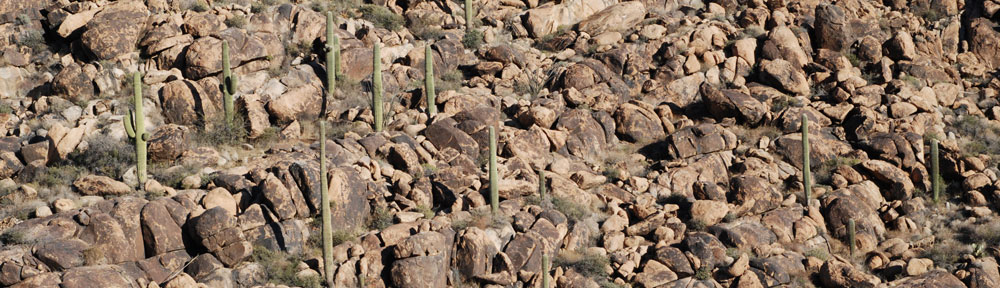
I’m not sure if readers are aware of this, but I took all of the photos that appear in the header to this site. There are about 20 of them now in the random header rotation and they’re from all over the place.

It struck me that it might be somewhat interesting to learn more about each of the photos and the circumstances under which they were taken. So I added the About the Photos category. During the upcoming weeks, I’ll be writing a bit about the photos you see on this site, explaining where they came from.

I was heavily into photography for a while — mostly while I was in college (and dating a photographer) and for several years afterward. I don’t think I have any special skill. I believe that anyone who goes to an interesting place, points an autofocus camera in the right direction, and snaps off dozens of shots has to get at least one good shot. (A friend of mine’s sister proved that when one of her photos was published as a poster for a rock band; 99% of her photos were absolute crap.) So I keep snapping and every once in a while, I get one worth sharing.

Bear with me as I tell you about some of them.

RSS Summaries

A reader chastises me.

The other day, while writing about the Reading Options in WordPress, I decided to experiment with this blog. I togged the settings so only summaries of my entries would be sent to people accessing with RSS readers.

Understand that I don’t use an RSS reader. I surf the old fashioned way, with a Web browser. I don’t surf that often and I don’t follow any one particular blog or site. So it’s never been an issue for me.

But for the book, I had to understand what this WordPress feature did. So I toggled it to the Summaries setting, downloaded a feed reader, and looked at the result. What I saw was a list of 10 or so posts in a window. I’d click a post title and the beginning of the post would appear in a window pane beneath the list. There was a link at the end indicating that there was more; clicking the link brought me to my Web site.

This seemed a logical way to release content via RSS. After all, didn’t I want visitors to come to the site where they could read not just the articles but the comments? And see all the pictures that came with the piece?

Dori of Wise Women didn’t think so. She commented on my “Stand Up for Your Principles” piece to stand up for her principles: that RSS feeds for blogs should include the entire content.

Whew! No problem. This morning, I remembered what I did to create the summaries (I did have to remember something I learned about 2 whole days ago!) and toggled the option back to its original settings. I just checked it with my feed reader and it’s working fine.

But this makes me curious. I’d like to know more from the folks who use an RSS feed reader to follow this blog. Here are a few questions; I’d appreciate it if you’d take the time to answer a few of them in the Comments for this post.

  • How often do you check the site? Regularly? (If so, I’m flattered to be on your list!)
  • Why do you prefer a news reader to a Web browser?
  • Does your news reader display formatted text and graphics?
  • Which reader do you use? On what computer platform?
  • Would you like to share any advice for people considering using a reader or for bloggers like me who aren’t fully aware of the benefits?

Although I’m a technical person and write about computer technology for a living, I made a decision long ago to concentrate on only those technologies that I use or write about. There’s just too much out there to learn it all — and still have a life that doesn’t revolve around a computer! As a result, my knowledge of computer technology is spotty, with expertise on certain topics balanced by sheer ignorance of others. (Ignorance is bliss, they say.)

Perhaps its time to give the RSS feed reader topic a bit more attention. What do you think?

PostScript: I just used my RSS reader to check out the other blogs that were included in it. It appears that none of them include the full text of the article. What’s going on here? Perhaps that’s why I discarded the idea of using a reader when I first tried it about two years ago? Because you had to go to the Web site anyway to read the article? It seems that, in many instances, the reader adds an extra step to following blogs. If you’re commenting on this piece, please comment on that, too.