One of my Twitter friends, keech560, shared a link to this YouTube video. Although I don’t usually embed the videos I like on my blog, this was “a keeper” — a video I want to watch again and remember. It reminds me that women weren’t always accepted in aviation — or many other professions — and gives me an idea of what it must have been like to be the first woman airline pilot.
As you watch this, think about all the fine minds we’ve held back because of gender, race, or other factors. We’re all people; we can all achieve the same dreams — if given the chance.
My buddy Rod called me yesterday and we chatted for about an hour. Rod’s an experienced utility helicopter pilot who got his start in agriculture (spraying), spent some time doing tours at the Grand Canyon, and worked his way into long-line work. He’s a great pilot who’s extremely conscientious, takes great care of the helicopter assigned to him, and gets the job done responsibly and safely. It’s no wonder he never has any trouble getting a job when he wants one.
Rod’s only problem is burnout. After a season working fires or moving stuff around at the end of a long line, he just wants to go home and be with his fiancé and dogs. The 14 on/14 off schedule usually sounds okay at the beginning of a season, but by the end of the season, the 14 off just aren’t enough days off. That’s when he takes a break and does other stuff.
Rod always gets a kick out of these young guys who want to be helicopter pilots. We both know that these wannabes really don’t know what it’s all about. Everyone thinks it’s a glamour job, but Rod knows better. He does the kind of work that pays well and takes the unglamorous “perks” that go with it: extensive travel to places in the middle of nowhere, crappy motels, greasy spoon restaurants. Even I can attest to the less glamorous side of flying helicopters — look at me right now, blogging from a 22-foot travel trailer, parked in the RV park/golf course in the middle of a farm town.
Although Rod’s not very computer literate, his fiancé is. They found this video on YouTube, and sent me the link last night. It takes a more realistic — yet hilarious — look at what it’s like to become a helicopter pilot. The words and video clips together make this a classic. It even has a catchy tune.
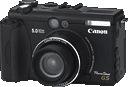
About two weeks ago, I got the bright idea that it was a complete waste of valuable camera resources to use my Nikon D80 for time-lapse photography when I had an older camera I could use. The other camera is my Canon PowerShot G5, which I bought back in 2003 for aerial photography work.
Buying the camera was a huge deal back then. Digital SLRs, if available back then, were too expensive to be an option. The G5 offered 5.0 megapixel (!) resolution — more than twice the resolution of any other digital camera we had. But it also included features we needed, including manual setting for focus and exposure.
Looking at the camera today, it’s amazingly big and clunky. But it takes a decent picture — certainly good enough for my time-lapse experiments. And frankly, I was having trouble getting my mind around leaving my Nikon outdoors, unattended, for hours at a time. It could be because the tripod got knocked over once and it was sheer luck that it fell toward a rail that caught it rather than toward the empty concrete behind it. I had no love for the G5; if it broke, well, that’s the way it goes. Ditto if it got stolen. In fact, I’d be more upset about losing my tripod or Pclix than the G5.
Oddly enough, the G5 has a built-in intervalometer — a fact I was unaware of. Unfortunately, the interval must be set in minutes (1 to 60) and it can only take 100 shots at a time. This simply wasn’t going to cut it for my needs. Besides, for some reason I still can’t understand, I can’t get the damn thing to work.
So I bought an optical cable for my Pclix. It arrived right before I left for Washington. I tried it for the first time on Friday.
For the optical cable to work, its end must be taped to the camera. The Pclix maker recommends electrical tape, so that’s what I used. Unfortunately, the heat of the day softened the tape. After about 2-1/2 hours, it shifted out of position. The camera stopped taking pictures. Here’s the result, with most of the beginning edited out (since there was really nothing going on):
Disappointing in so many ways. The sky was just getting interesting when the setup failed. And let’s face it — the view of the golf cart shed isn’t all that enticing.
So I tried again yesterday after recharging the camera’s battery overnight. I fixed up the camera differently and pointed it north instead of west. Same settings: one shot every minute, compiled into a movie at 10 frames per second. To prevent the camera battery from running out, I turned off the camera’s video screen. First shot at 9:13 AM; last shot at 7:33 PM. I left the camera outside all day long — even while I was out doing a helicopter ride. I never would have done that with my Nikon.
The result isn’t bad at all. I’m a little POed at myself for including the wires in the shot and it’s a little weird that some of the larger vehicles that drove by appeared in some shots — like the hay truck near the beginning! Again, I think I could have done better. But the clouds are so awesome in this movie. They build and move and swirl around. So cool. See for yourself:
I’ll keep working on this. Hopefully, I’ll get it right soon.
But the good part about all this is that it’s encouraging me to keep moving.
I created this time-lapse today, while cleaning my office. Here are the before and after images; as you can see, it really needed some work.
This is what I had to clean.
This is what it looked like when I was done.
Ready for the action? Here it is. The formula: one shot at f22.0 (which explains the blur) every 30 seconds, put together in a 10 frames per second video. The lens used is a 10.5mm fisheye. Be sure to check out my dog.
One of my Twitter friends, @PattyHankins, retweeted a link to the video embedded here. It’s an interview with author Harlan Ellison, clipped from the upcoming documentary film, Dreams with Sharp Teeth. In it, Ellison rants against people expecting professionals to work for free and the writers who are willing to work for free.
As Patty points out, this applies to photography, too. But as a writer and a helicopter pilot who has often been asked to work for free, it really hits home for me. Too many organizations expect you to work for free, as if your association with them will pay you for your time and expertise. That’s just wrong.
Watch this video. Ellison uses some colorful language throughout, but no more colorful than I’d use if I were sufficiently riled up and not afraid to speak candidly in front of a camera.

 Looking at the camera today, it’s amazingly big and clunky. But it takes a decent picture — certainly good enough for my time-lapse experiments. And frankly, I was having trouble getting my mind around leaving my Nikon outdoors, unattended, for hours at a time. It could be because the tripod got knocked over once and it was sheer luck that it fell toward a rail that caught it rather than toward the empty concrete behind it. I had no love for the G5; if it broke, well, that’s the way it goes. Ditto if it got stolen. In fact, I’d be more upset about losing my tripod or
