Summer 2016 Road Trip, Day 1: The Road to Mazama

A late start, a free overnight stay.

I’m on vacation. After a 10-week cherry drying season that had the five pilots on my team flying more than 160 total hours (!), my last contract ended on Sunday, a beautiful cloudless day. Because I’m required to stay in the area for the entire season, I get a little stir crazy by week 7 or 8. I started planning a trip with my new camper, the Turtleback. I had some minor repairs and improvements made earlier this month and brought it home on Thursday. I began packing the next day. By Sunday morning, I was ready to go.

Kayak Blues

Or at least I thought I was. I still had one thing to get on board: my kayak. My trip would have me visiting lakes throughout the North Cascades, both in Washington and British Columbia (Canada). Clearly it would be nice to have my kayak along for early morning or late afternoon paddles.

The idea was the hang my kayak on the ladder on the back of the camper. My kayak isn’t anything special. It’s straight out of Costco and several years old. Plastic with a molded seat and storage space and a cup holder. Room for Penny to ride on the bow or between my legs. It’s the kind of thing that if it broke along the way, I wouldn’t lose sleep over it. Besides, I have two of them that are identical, mostly so visitors can come paddling with me. For this trip, I only wanted to bring one.

But no matter what I did, I couldn’t easily hoist it onto the ladder rack. I’d wanted to leave town by 10 AM and by 9 AM I was sweaty, still needing a shower, and had a handful of other more important tasks to complete. And the kayak was still lying on the ground in front of the garage.

I showered, dressed, and headed down into town in my Jeep. I’d rig something up with pulleys and my electric winch. I’d already confirmed that the camper’s onboard generator could power the winch.

Then I got home, had lunch, and did those other things. I was waiting for shade in my driveway. By 12:30, there was some shade, but not quite as much as I hoped. Still, I climbed the ladder, rigged the pulleys, and built a sling for the kayak. I attached the winch and hoisted the kayak into place. It was a struggle. The ropes and knots and hooks kept getting hung up on the ladder. I tried to imagine doing it in a campground or lakeside up in the mountains, possibly with a handful of people watching. I couldn’t paint the picture. I imagined bringing along the kayak and never using it.

I winched it back down and pushed it into the garage. I removed the rigging and put away the winch. I finished packing and loaded Penny on board the truck. It was 3:00 PM when I pulled out of the driveway.

On my way out of town, I bought an inflatable raft and an electric air pump. That would have to do.

The Generator

I had one stop to make on my way north: a gas station in Pateros, WA.

I owned two generators. One was a 1KW Troy-Bilt that had been bought way back in around 2000 for backup power at the vacation home I owned with my wasband. The generator had been in my Wickenburg hangar when I moved to Washington, so I’d taken it with me. The other was a 2KW Honda I’d bought in 2010 for use with my old Mobile Mansion. I only needed one generator. (Heck, you can argue that I don’t need any generators because my new camper has one built in.) So I decided to sell the smaller one.

I had no idea what it was worth, but I knew you could buy a Chinese-made one at Harbor Freight for about $100. Surely this one was worth more. I figured I’d list it on Craig’s list for $175 and see whether I got any calls.

The calls started coming pretty quickly. One guy who seemed very interested was living in an off-the-grid cabin about 17 miles from Tonasket. Tonasket near the border of Washington and Canada — not exactly close by. He was willing to drive down to get it, or to see if he could talk a friend into picking it up. I told him I’d be heading his way on Sunday and offered to meet him. (Why not, right?) So after several phone calls, including one to say I’d been delayed and another to say I was finally on my way, I headed for the Chevron station in Pateros, which was about a half mile past where I’d turn up the Method River.

I got there around 5. I went in, bought a heavily caffeinated beverage and some chocolate covered espresso beans. Then I went back into the truck to wait.

And wait.

I was just getting ready to roll out of there at 5:30 when he pulled up in a pickup truck with a water hauling tank in back. He was around my age with really nice long hair covered on top with a sort of trail guide hat. He greeted me with a friendly handshake and I brought him over to the truck, where the generator was sitting on a blanked on the back seat. He pulled it out — it’s very heavy — and laid it on the tailgate of his truck. I pointed out the power switch, fuel valve, and choke lever. He set everything up and pulled the cord. It roared to life.

He asked me if I’d accept less. I guess that’s something you’re supposed to do. I told him not after I’d hauled it up here and waited a half hour. He understood, although I think he doubted I’d been there a half hour. He counted out $175 and I put it away. We chatted for a while about what I do in the Wenatchee area and what he does up in Tonasket. (He’s a “Jack of all trades, master of a few.”) He was an interesting guy and it would have been nice to talk to him a while longer. But I had a vacation to get on and I wanted to be parked for the night before it got dark. We shook hands again and I went back to my truck. He was gone before I even pulled out.

The Campsite

I had no idea where I would be spending the night. The original plan had been Pearrygin Lake State Park north of Winthrop, but I couldn’t see spending $30+ for a campsite I’d only occupy for one night, especially if I didn’t have time to take advantage of any of the facilities. So I drove north through Twisp and Winthrop towards Mazama with the idea of finding a quiet spot in the National Forest.

Twisp was relatively quiet — although I didn’t drive through the business part of town — but Winthrop was hopping. The town was full of parked cars with plenty of people out and about. I was pretty surprised — after all, it was after 6 PM on a Sunday night. I assumed the tourists would have gone home by then. But then again, it is still summer. I rarely vacation in the summer months because I want to avoid crowds, so I really have no idea how a typical summer week plays out.

I have to say that it was interesting to visit the area in the summer. I come up to the Winthrop area annually for Christmas — at least I have for the past three years — to do some cross-country skiing. The area is always covered with snow. Last year I drove through in the summer on a camping trip with the guy I was dating at the time and again in the autumn when I went for a weekend mushroom seminar at the North Cascades Environmental Learning center. (I’ll be back in late August for a nighttime photo class.) The hillsides were the same golden color they are around my home, but the valley was lush and green. There was one field with tall grass that had gone to seed; the wind whipped it around and the seed heads seemed to flow like water.

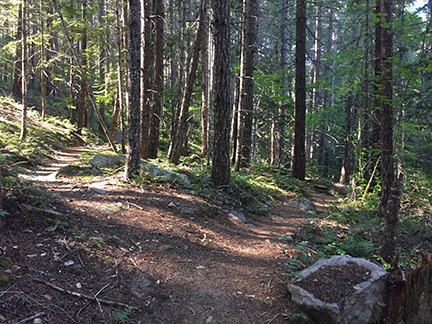
There was a recreation side at Mazama that indicated camping was available, so I turned in and headed north up Lost River Road. I didn’t remember any campgrounds up that way, but I did remember a parking area for a Sno Park. When I got there, it was big and flat and empty, surrounded by fir trees. The pit toilet was unlocked and was probably the cleanest one I’d ever been in.

By this time, it was after 7 PM. Sunset was in over an hour, but the valley was already in deep shadows. I could drive back to Mazama and continue up route 20. But I didn’t know how far I’d have to drive before I found a suitable place to park for the night. Do I leave a known in search of a suitable unknown? The answer was no. I’d had enough adventure for the day. It was time to kick back and relax.

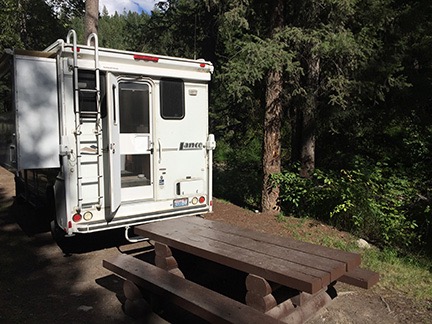
First Campsite
Our first night’s campsite, just north of Mazama, WA.

So I parked the truck, opened the Turtleback’s slide and set about organizing my hastily packed belongings.

A while later, I had my portable grill out with a hamburger sizzling and two small eggplant from my garden grilling beside it. A sliced tomato from my garden completed the meal.

My only regret: I’d forgotten to pack a bottle of wine.

Tips for Long Cross-Country Flights

A few things I’ve learned during many hours of cross-country flying.

Note: A version of this post originally appeared in AOPA’s Hover Power blog. If you’re a helicopter pilot, you owe it to yourself to check in there regularly to read great articles written by experienced helicopter pilots.

Because I take my helicopter where the work is, I often do long cross-country flights between my permanent and various temporary bases of operation. (After a lot of careful consideration, I’ve decided that it’s safer and more cost-effective to fly the helicopter from point to point than to buy a custom trailer and tow it.) I’ve been making cross-country flights in excess of 500 miles since 2004 and, for six consecutive years, made an annual round trip between the Phoenix area (where I lived) and north central Washington state (where I now live) for cherry drying work. Nowadays, I make an annual round trip between north central Washington and the Sacramento area for frost control. I flew solo on about half of these long flights; the other half was usually spent with a low-time pilot building PIC time at the controls while I tried not to be bored (or sometimes sick from PIO—long story for another time).

I flew home from California in late April. It was another solo flight, one that I’d been looking forward to mostly because I would be doing all the flying. And, instead of the 5-6 hour direct flight, I planned to fly west and then north up the California and Oregon coasts before turning inland again. Total flight time would be about 6-7 hours.

CA Coast
My first look at the California coast on a recent flight from the Sacramento area to Washington State.

Although the flight wasn’t as pleasant and uneventful as I’d hoped, I’m not complaining. But it did remind me of some tips I could share with other pilots preparing to do long cross-country flights.

Planning the Flight

Whether you plan to file a flight plan (which I recommend doing) or not, it’s important to plan for the flight. This pretty much goes without saying. In addition to the usual things to check in advance–weather, fuel availability, TFRs, route options–consider the following:

  • Make your flight segments shorter than they have to be. Sure, Robinson Helicopter claims I can get 16 gallons per hour in my R44 so I should be able to fly 3 hours (less 20 minutes reserve) between stops. But do I really want to fly that long without a break? Probably not–especially after those first two cups of coffee. Yet I’ve seen more than a few flight plans that had us in the air as long as possible.
  • Don’t just study your route before the trip—study everything around it. How many times have I tried to fly up or down the coast, only to be forced inland by a typical “marine layer” of fog? Too many to count. I’ve learned to study my route and alternate routes that would be easy to get to if I needed to change course.
  • Know where the fuel is along the way. Do you think you could make a planned fuel stop if you hit 30 mph headwinds that weren’t in the forecast (or flight plan)? This happened to me on my April flight. I was lucky that there were several airports with fuel along my planned route so I could stop sooner than expected.

Preparing for the Flight

Once you’ve planned the flight, you can prepare the aircraft for conducting the flight.

  • Gather and prepare your charts. If you use paper charts, mark them up with your intended route and fold them with the route easy to access. Then stack them in the order of use. That’s how I used to do it when I used paper. Sure beats fumbling around one-handed. Fortunately, we’re in the 21st century and have tools like Foreflight to provide accurate, up-to-date charts. Make sure you’ve loaded and updated all the charts you’ll need. Use the flight planning tools to mark your route. Then make sure you’re fully charged up and, if necessary, have backup power available. A backup device is handy, too. I use, in order: Foreflight on my iPad, Foreflight on my iPhone, and a panel mounted Garmin 430 GPS.
  • Make an airport and frequency list. I don’t do this much anymore–Foreflight makes it easy to get this info on the fly–but when I used paper charts, I also made a list of all the airports along the way that included frequencies for CTAF (or tower) and AWOS/ASOS (or ATIS). I could then program all the airport codes into my Garmin 430 as a flight plan and make frequency changes as I flew from one airport to the next.
  • Bring oil. I use W100Plus oil in my helicopter. It isn’t exactly easy to find. That’s why I usually bring along a quart for every expected fuel stop. That’s not to say that I’ll use it all, but it’s there when I need it.
  • Pack snacks. I always have a small cooler on board for long flights and do my best to fill it with ice (or frozen water bottles) and good snacks before I go. Even if you planned a meal stop along the way, circumstances might prevent you from making that stop. Maybe you had to change your route. Maybe the restaurant closed 30 minutes before you arrived. Or maybe the restaurant that was supposed to be a quarter-mile south is really more than a mile and a half from the only airport gate on the north end of the field. Bringing beverages like water or Gatorade-like drinks is also important. You don’t want to get dehydrated.
  • Pack an overnight bag. If you weren’t planning an overnight stay, pretend you were. A change of clothes, toothbrush, and credit card can make an unscheduled overnight stop a lot more pleasant. And if you think roughing it might be necessary, consider a sleeping bag or bedroll, either of which can make sleeping in an FBO–or the helicopter–a lot more comfortable.
  • Pack an emergency kit. I’ve spent so much time flying over remote areas that I forget that many pilots don’t. My helicopter has an emergency kit under the pilot seat that includes a first aid kit and equipment like fire starters, a signal mirror, a “space blanket,” energy bars, water, and so on. If weight is a factor–and it certainly is in my R44–you’ll have to limit what you bring. But some essentials can save your life if you’re forced to land in the middle of nowhere.
  • Make sure any required power supplies, cables, or batteries are handy. If you rely on electronic devices for navigation, you’d better make sure you’ve got back up power for them. My iPad’s battery can’t survive a 7-hour flight with the screen turned on and the GPS running. I use USB cables hooked up to a power supply to keep the battery charged. If you have a battery-powered GPS, make sure you have a spare set of batteries.
  • Set up your tunes. I listen to music or podcasts when I fly solo. My aircraft’s intercom system automatically cuts the music sound when a radio transmission comes through. Handy.

During the Flight

It’s during the flight that your preparation will really pay off. If you’ve done everything right, you’ll be prepared for anything.

  • Open your flight plan. I recommend filing and opening a flight plan for each segment of the flight. Again, with a tool like Foreflight this is very easy. I can open and close a flight plan with a few taps on my iPad screen. This beats the frustration of trying to reach Flight Service on the radio in a mountainous area when only 700 feet off the ground.
  • Remember that your flight plan is not carved in stone. I can’t tell you how many flight plans prepared by pilots who were accompanying me went out the window before the second fuel stop. Stuff happens–usually related to weather–and changes are a fact of cross-country flying life. The only time I’ve ever done a long cross-country flight plan exactly as planned was on one trip from Wenatchee, WA (EAT) to Phoenix, AZ (PHX), and that’s because our straight line route across the Nevada desert didn’t have any other options for fuel stops. We had to do it as planned.
  • Know when to pull the plug and wait it out. Weather an issue? While scud running is something we’ve all probably done at one time or another, it probably isn’t something we should be doing. Tired? Tired pilots make mistakes. When low visibility, severe turbulence, or simple pilot fatigue makes flying dangerous, it’s time to set the ship down and take a break. If you did all your homework before the flight, you should know whether there’s an airport nearby to make the wait a little more comfortable. I remember unplanned overnight stays in Rosamond, CA (not recommended) and Mammoth Lakes, CA (which would have been nicer if I’d been prepared for snow).

Experience Is Everything

Low Clouds
Hard to believe that only a few hours after hitting the coast I was forced inland by low clouds and rainy weather.

My April flight was a mixed bag. It started with a beautiful but slightly hazy dawn just west of Sacramento, a gorgeous morning on the coast, moderate turbulence with strong headwinds, low clouds, hazy coastal weather, drizzly rain, more low clouds, even lower clouds (and scud running), and bumpy air on a cloudy day. If you’re interested in details, you can read about it in my blog. Although it isn’t common, it is possible for me to have a perfectly uneventful cross-country flight of 500 miles or more in a day.

If you do enough long cross-country flights, planning and conducting a flight becomes second nature. I’m always thinking about what’s up ahead and working on ways to get more information about alternative routes when things aren’t looking as good as you want them to. I’ve occasionally used my phone to call AWOS and ATIS systems at airports I think might be along a better route. I use radar in Foreflight to get a feel for how weather is moving and where it might be better or worse than I am. I’ll change altitude to avoid mechanical turbulence. If I have to do any scud running, I do it slowly and carefully, always aware of exactly where I am and where I can go if things get worse.

It’s all about planning and preparing and using your experience to handle unexpected situations as they come up. After a while, there’s very little than can surprise you.

Cross Country Flight: Sacramento to Seattle and Wenatchee

A look back at a memorable flight.

Since the winter/spring of 2013, my helicopter has spent two months each year in the Sacramento area of California on a frost control contract. I fly the helicopter down in late February and fly back in late April. I usually take along a fellow pilot who does most of the flying to build R44 time and shares the cost of the flight. Most of these people are relative strangers and although they’re usually nice guys or gals that I stay friends with after the flight, I admit that I prefer flying with people I already know pretty well. So this spring, when it came time to start thinking about that return flight, I started thinking about who I could invite to join me.

The answer hit me like a lightning bolt: of course I should invite my friend Don.

Don’s been a pilot for much of his life and has flown airplanes and helicopters. I don’t know how much time he’s logged, but I’m certain it’s more than my 3,300 hours. I also know he has tons of cross-country experience, including helicopter flights between the Seattle area and Alaska.

Why Don?

You might be wondering why I’d invite such an experienced pilot when there were so many low-time pilots who’d likely jump at the chance to fly with me on a six to eight hour cross-country flight. There are three reasons.

First, Don is a good friend I’ve known for years. He and his wife were very supportive during my crazy divorce, and you know what they say about a friend in need. He’s easy going and has a good sense of humor. I knew I’d enjoy spending time with him.

Don't Helicopter at PHX
Don’s helicopter on the T3 Helistop at Sky Harbor Airport in Phoenix in 2009. After I shared my experience approaching and landing at the helistop, he often picked up and dropped off visitors there. Later, in October 2012, he dropped me off there when I was off on one of my many trips.

Second, Don had owned a helicopter very much like mine — in fact, it was only six months newer — which he’d kept in his garage at his Seattle area home. About two years ago, he sold it. I knew he hadn’t flown much since and probably missed it. He would appreciate the flight; surprisingly, not everyone I’ve invited to fly with me on a long flight has.

Third, because Don already had so much flight time, he’d actually share the flight with me. After all, I like to fly. When I fly with other pilots, they’re paying for the privilege of every minute of stick time they can get. They don’t want to share the stick with me and I don’t feel comfortable asking them to.

So I texted Don to see if he was interested. The response came almost immediately. Hell, yes!

Getting to the Helicopter

Don has two homes, one in the Phoenix area and one in the Seattle area. He made arrangements to be in the Seattle area on the day we’d go south to fetch the helicopter.

I booked my flight from Wenatchee to Sacramento, which included a plane change in Seattle. Don booked his flight from Seattle to Sacramento on the same flight. Since Don always flies First Class, I bought a First Class ticket, too. When he booked his flight, he got the seat right next to mine.

We met at the gate for the Seattle to Sacramento flight. I’d been at the airport for two hours and had treated myself to a breakfast of trout and eggs at Anthony’s. Don had also been at the airport for a while and had breakfast.

I had Penny with me, of course. She’s always excited when she sees me take out her airline travel bag. She’d gotten back into the bag at the gate before Don arrived and he didn’t even realize I had her with me until we boarded.

There wasn’t supposed to be breakfast on our flight, but there was; a nice yogurt and granola bowl with fresh fruit that would have gone nicely with the Bloody Mary I couldn’t have. (First Class on Alaska Air really is worth the extra cost. Can’t say the same for all airlines.)

On the flight, we chatted, ate, read. Time passed quickly. We were on the ground by 10:45 AM. With no bags checked and a quick exit from the plane, we were at the curb waiting for our Uber driver by 11 AM. Penny seemed happy enough to be out of the bag, sniffing around someplace she was pretty familiar with. After all, we’d flown to Sacramento quite a few times over the past four years.

It was about a 30 minute ride to the airport where my helicopter had been parked on the grass for two months. I settled up my bill for parking and said goodbye to the staff there. Don preflighted and installed the dual controls while I folded up the cockpit cover and tie downs and went to work setting up my GoPro. That’s when I realized that I’d left the Mini SD card for the camera at home. Duh-oh! There would be no video from the flight.

California to Washington

We’d discussed our route briefly on the flight down. Neither of us was in a hurry and both of us leaned toward a flight up the coast, which would add about an hour to the flight time.

Marine Layer
Here’s a shot of the marine layer on the coast of Oregon that forced us inland during a flight from Seattle to Wickenburg with my wasband in 2009.

My experience with flying the coast was varied. What I’d learned was that if I could get to the coast, I probably wouldn’t be able to follow it all the way up. The California and Oregon coasts are well known for their “marine layer” clouds. Although I’d flown the coast many times in the past, from Los Angeles to the Columbia River between Oregon and Washington, those damn clouds always made an appearance, forcing me inland so I’d never covered more than one or two hundred miles at a stretch. Last year, when I’d flown north by myself, planning on a coastal route, clouds with rain moved in not long after I hit the coast, forcing me inland for a dreary flight with more scud running than I like to do.

But nothing ventured, nothing gained, eh?

We followed Cache Creek west into the hills. I did the flying. I’d been wanting to fly Cache Creek all winter, but truck troubles had messed up my March plans and I wound up spending most of the month home instead of with the helicopter. I hadn’t flown nearly as much as I wanted to. This was my chance to get flying out of my system, flying a familiar and loved route. Somewhere in the hills, I turned the controls over to Don and he steered us over Clear Lake. Although the weather was clear where we were, there were clouds to the west (of course) and neither of us were sure whether they came into the coast or were off over the Pacific.

After flying up Highway 101 for a while, we decided to try heading west to see if we could make the coast. So we followed one of the canyons — I’m not sure, but I suspect it was the one the Noyo River flows in — concentrating on the path ahead of us. As expected, we were moving right in toward the clouds, which forced us lower and lower. But ahead of us, to the northwest, the sky was bright. Maybe it was clearing up?

We were flying about 300 feet over the road, stretching our necks to peer ahead of us and ready to turn around as the road went around a bend at a high point in the hills. We followed the bend and the road dropped away. We kept going.

Low clouds kept us flying low in the hillsides near Fort Bragg. We turned north, heading for our first fuel stop at Eureka. The coast was to our left and we occasionally caught glimpses of it as we flew over tree-covered hills with the clouds only a few hundred feet above us. I don’t think either of us wanted a trip up the coast in such conditions — I know I didn’t. But I also didn’t want to fly the I-5 corridor, which is painfully boring, especially once you get north of Eugene. We’d make a decision at Eureka.

The ceilings were much higher when we stopped for fuel at Eureka. We gassed up; Don bought the first tank. Then we went inside for a potty break. There wasn’t much else to do there — although the airport has a nice little pilot shop, there was no restaurant and nothing was within walking distance. So we climbed back on board and continued on our way, this time following the coast.

Cloudy Coast
Despite the clouds, it was beautiful on the coast.

Brookings Bridge
If you’ve driven on the Pacific Coast Highway — Route 101 — through Brookings, CA, you’ve driven over this bridge.

Near Newport
The coast near Newport, OR. I love the way the breakers line up when you see them at just the right angle.

Lincoln City, OR
A look down into Lincoln City, OR.

By this time, the scenery around us was interesting enough to take some pictures while Don flew. The doors were on, of course, so most of my photos have reflections and glare and even window dirt. But they give you a feel for what the weather was like and show a little of how beautiful the California and Oregon coasts can be from about 500 to 1000 feet up.

The coast was very rugged at the beginning, where the Redwoods National and State Parks come right up to the rocky shoreline. There were no roads in many places — just trees right up to the cliffs with lots of small waterfalls dropping down into the ocean. This is a view few people see, a view that can only be seen from the air off the coast. Don steered us along its left, over the ocean, just within gliding distance of land.

In some places, we saw sea lions stretched out on rocky beaches. I took pictures, but they didn’t come out good enough to share.

The Pacific Coast Highway hit the coast and then went inland several times. Finally, just before we hit the Oregon state line, it came out to the coast and stayed there for quite a while.

The weather got a little worse at first, with light rain pelting the cockpit bubble in more than a few places, then started to get better. By the time we got into Oregon, we saw patches of blue sky. The sun was shifting ever lower toward the horizon to the west and the light started getting kind of good.

Good Light on the Coast
Light is 90% of photography.

Waterfall
Waterfall near Otis, OR. Yes, I cropped this image; we weren’t that close.

Cloverdale
Cloverdale, OR looks like a pleasant place to live, eh?

Tillamook, OR
Don fueling up at Tillamook. The huge hangar behind him was used for airships years ago. I think there’s a chance it might be an air museum now.

We made our second fuel stop at Tillamook, OR. Don pumped while I paid. It was just after 5 PM and the airport office (and restrooms) were closed. It was also chilly. I let Penny loose to do her business, then called her back to get back on board. We didn’t hang around.

Oregon Coast at Seaside
The Oregon Coast near Seaside.

By now, we were hungry. Two breakfasts had filled us before noon, but skipping lunch hadn’t gone unnoticed. Don had been texting back and forth with his wife who would have a hot dinner waiting when we arrived at their Seattle area home.

We continued up the coast a bit more before heading inland not far from Astoria, where the Columbia River meets the Pacific Ocean. This was, by far, the longest stretch of the Pacific Coast I’d flown in one day: more than 400 miles.

Don navigated northeast toward his house. It was all familiar territory to him — I didn’t fly much west of the Cascades. We flew east of Olympia and right over the top of the airport at Puyallup. From there, it was only a few minutes to Don’s place.

My iPad, with Periscope running, broadcast the approach in typical low-def quality.

Don let me take the controls and guided me in. I’d flown to his house before a few times but honestly couldn’t remember much about the approach. He had to keep pointing out landmarks and reminding me to slow down. It is tight — that’s for sure — with a steep approach between tall trees into a clearing beside his garage. I had Periscope running on my iPad in its cradle and recorded the whole thing.

And then we were on the ground, the long part of my journey over.

Resting Up

We went in and had something to drink while Don’s wife, Johnie, finished making dinner. Penny played with their new dog and ran around their grassy yard occasionally taking a detour to terrorize their chickens through the fence.

After dinner and a nice dessert, I went out to the barn with Don to see the two cows they’d “rescued.” They were huge. I really wish I’d had the presence of mind to take a photo, but I was so shocked by what I was looking at that I simply didn’t think of it.

I hit the sack in the guest room pretty early. I was still fighting a cold I’d had for at least three weeks and was exhausted. I slept well with Penny at the foot of the bed.

Seattle Area to Wenatchee

In the morning, after letting Penny out and then taking a quick shower, I dressed and met my hosts for breakfast. It was overcast and questionable (as usual) as to whether I’d make it across Snoqualmie or Stampede Pass. The automated weather station at Stampede was reporting half-mile visibility, which was enough to get through legally. But what about the rest of the flight? There was no accurate weather reporting in other places in the mountains. The only way to find out whether I’d make it was to give it a try. If I couldn’t get through, it was a long flight around the Washington Cascades to the Columbia River Gorge. I was hoping I wouldn’t have to go that way.

Don's Heliport
Another cloudy morning at Don’s place.

After thanking my guests and saying goodbye, I did a quick preflight, added some oil, and climbed on board with Penny. Then I started up and warmed the engine, setting up my iPad and iPhone with weather resources and Firelight maps to guide me while I waited. When the helicopter was ready to go, I picked up into a hover, turned 180 degrees over the driveway, and climbed out through the trees the way I’d come.

I had ForeFlight’s track log feature enabled during the flight, so I know exactly how I went. Originally, I thought I’d hook up with I-90 and follow that through the mountains at Snoqualmie Pass, which is at 3004 feet. But that would require me to head north quite a bit before heading southeast. It didn’t make sense to go out of my way. So instead, I followed the course of the Green River up into the mountains, aiming for Stampede Pass, which is higher at 3800 feet, but had that handy ASOS weather station. The weather there was reported at 1/4 mile visibility with mist, but I knew that could change at any time.

My Route
An overview of my route from the Seattle area to Wenatchee. Not exactly a straight line.

In the meantime, the flight was pleasant, even under the clouds, taking me over the Howard A Hanson Reservoir and a few communities that were no more than named points on the map. The area below me was thick forest, for the most part, with a road following the river for part of the way. I wish I could have taken pictures, but I’m a terrible photographer when I’m flying. I really missed my GoPro on that flight.

I steered up another canyon to the left just past Lester, heading for Stampede. The only roads were forest roads now as I climbed with the hills, getting ever closer to the cloud bottoms. Soon, I could see Stampede Pass ahead of me. I’d forgotten all about the wires that crossed through the lowest (and clearest) spot. I’d have to cross at a higher point a bit east where the clouds seemed to touch the ridge line. I could tune into the ASOS by that point; it was still reporting 1/4 mile visibility with mist.

My route over the pass
Here’s a closeup of my route (the blue line) through the Stampede Pass area on a Sectional Chart. I crossed the mountains just southeast of the pass, not at all interested in crossing over all those wires.

I slowed to 40 knots and creeped up to the ridge. I knew the rules I’d set for myself, rules that had never failed me when dealing with weather flying: if I could peek over the ridge and see the ground and my path ahead, I’d cross the ridge. Otherwise, I’d have to backtrack or find another place to cross.

I peeked, I saw. The ground dropped away ahead of me as I crossed the ridge near the pass and descended down into the valley beyond. Soon I was flying over I-90, past the lakes near Roslyn and Cle Elum. I steered east northeast, then due east, then northeast, direct toward home.

I crossed the mountains south of Wenatchee at Mission Ridge and made a slight detour to check out the slide damage areas at Whispering Ridge and Joe Miller Road. Then I made a beeline for the airport to get some fuel and take care of some paperwork with my mechanic.

A short while later, I was landing on my platform, which I’d left outside before heading down to Sacramento the previous day. It was good to get the helicopter put away.

A Weekstart Trip with the Turtleback

Or 28 hours off-the-grid.

I brought the Turtleback home on Wednesday and left it on my truck on purpose. I wanted to take it out for a short trip before I put it away.

I wanted to test it out in real off-the-grid conditions. I wanted to see how comfortable it was, how well I slept in it, how hot the water got, how loud the heater was. I wanted to cook a meal in it, wash dishes in its kitchen sink, and use the toilet in the middle of the night. I wanted to take it on a narrow gravel road and squeeze into a parking space I couldn’t dream of fitting into with its predecessor.

I’d do it locally — or relatively so. There’s a campground called Rock Island about 17 miles up Icicle Creek near Leavenworth Washington. The total driving distance is about 75 miles. One of my favorite trails, the Icicle Gorge Loop Trail, runs right past it. I thought I’d get a campsite, set up camp, and do the loop trail.

The campground page on the USFS website said Rock Island Campground got “heavy use.” I hate crowds so I didn’t want to do the trip on a weekend. I figured I’d do it on a “weekstart.” (If Friday through Sunday is the weekend, then Sunday through Tuesday should be the weekstart, no?) The way I saw it, most people left the campground on Sunday; I’d pull in on Sunday evening, get a good site, and avoid the crowds.

Heading Out

Of course, things don’t always turn out the way you want them to. I lost about two hours of my Sunday to a bee swarm call that was a total bust. (Don’t ask.) Then I spend another 30 minutes looking at new grills. By the time I got back home to pack, it was well after 4 PM. There was no way I’d have time to shower, pack, and head out before the friendly propane suppliers closed. I’d leave the first thing in the morning instead.

I was ready to go by 7:30 AM with the refrigerator packed, clothes and dog supplies loaded, and water tank topped off. I got a mile from my home before I remembered that I needed to harvest some broccoli that would flower if I didn’t and that I’d forgotten my Nikon. Twenty minutes later, I was headed out again.

I stopped at Ag Supply on North Wenatchee Avenue for propane. I asked for a “strong guy” to help me. Lots of places won’t load full propane bottles back into your truck. They’re not required to. But friendly places do. And the main drawback to the Turtleback is that the two 7-gallon propane tanks are in a cabinet about level with my head. Getting them down when they’re empty will be easy. Getting them back up there, not so much. And I had no idea how much propane was in them. I didn’t want to run out on my maiden voyage.

The kid who helped me used my stepladder to get them down and put them back. They were each about 1/2 full. I like to run one tank empty before switching to the other and refilling the empty so I always know I’ve got a full tank. These tanks have fancy gauges that I didn’t think worked. They do. They just read a little low.

The next stop was in Leavenworth: Safeway. I needed a gallon bottle of water — I don’t drink what comes out of an RV’s tank. (Ick.) And some orange juice. And an almond croissant. And a veggie platter to snack on. And bacon (which I forgot).

Once the groceries were loaded, Penny and I continued on our way with me munching a croissant. And then a donut. We drove through town and turned left onto Icicle Road. Soon we were winding up the canyon beside Icicle Creek, which was rushing madly with spring snow melt. Few cars were on the road — it wasn’t even 10 AM on that Monday morning. Pavement turned to gravel and we kept going, passing one campground after another. It was when we got to Chatter Creek Campground’s turn that I saw a pickup truck at the campground entrance. A woman was out of the truck moving a ribbon that stretched across the entrance drive. I stopped my rig and called out to her: “Is the campground closed?”

She came over and we chatted. All the Campgrounds past Johnny Creek were closed. Some biologists were checking out trees. Bark beetle was an issue. Was Rock Island closed? Yes. I pointed out that the website didn’t say the campground was closed. She had nothing to say about that. I asked her if the ranger station up the road had more information and she told me that was closed, too. But there’s some distributed camping, she said in a sort of wink-wink-nod-nod-say-no-more kind of way.

“Yeah, I’ll just find one of those sites,” I said. “This is set up for off-the-grid camping.” I thanked her and shifted into gear.

She took a step back and said, “Nice rig.”

I laughed and thanked her.

I kept driving. I took it slow. The truck handles a bit differently with the Turtleback on it. Higher center of gravity, exaggerated bumps, lots of squeaking. One of the things I’ve learned over the past few years is patience. I’m seldom in a hurry to do anything. I think it’s got to do with my relaxed lifestyle. So when I want to drive slowly, I can.

I passed one of the Icicle Gorge Loop Trail trailheads and kept going. Then I reached Rock Island Campground. It had the same red ribbons tied across its access roads with signs that said, “Closed to Public Use.” I kept going.

I stopped for a while in a parking area where I’d gone mushrooming with a friend the previous fall. Penny and I got out for a short walk in the woods. It was wet — I think it had rained that morning — and there was some flooding down on the trail. We didn’t stay long. We didn’t see any mushrooms either. Seriously: what was I thinking? It was way too early in the season for chanterelles.

We continued down the gravel road. The only thing left was a horse loading area, a horse campground, and the Icicle Creek Trail Trailhead at the very end of the road. The horse campground was closed (of course) and a pretty good water flow crossed the road just past it. Although the ford had a concrete bottom, I didn’t see any reason to drive through. I couldn’t camp at the trailhead. So I turned around and started looking at some of the side roads I’d passed.

One of them about halfway back to Rock Island Campground looked pretty good — but narrow. I parked the truck on the side of the road and got out with Penny to scout it out. I’d lost my cell signal before the pavement ended and the last thing I wanted was to get stuck on some dirt road in the middle of nowhere. Better to look on foot than explore with the truck and Turtleback.

The road was narrow with scattered potholes, many of which were deep and full of running water. Branches came low over the road. The Turtleback is at least 12 feet tall and more than 8 feet wide — it would be pushing these branches aside as I drove. But there didn’t seem to be anyplace to drive to. One by one, we passed right turns that we either short or extremely narrow paths unsuitable for my rig. We kept walking. We’d gone about 1/3 mile when I saw it: the most amazing campsite I’d ever seen. Nearly level with a mix of sun and shade, a fire pit, logs to sit on, and Icicle Creek rushing past.

Not the best video in the world, but it gives you an idea of what the road was like. If you can, watch it fullscreen.

We went back to the truck and climbed on board. I used my phone to video our 4-minute drive back to the site. You can hear the truck and camper pushing through the branches. It sounds like I’m beating the crap out of my rig, but there wasn’t any damage.

I backed into the campsite and killed the engine. Icicle Creek was about 50 feet from the camper door. I could hear the water rushing — it was about the only thing I could hear. It sounded wonderful.

My Campsite
Here’s a panoramic view of the campsite with the Turtleback parked in it.

And, of course, we were the only ones around — possibly for miles.

Setting Up Camp

There wasn’t much to setting up camp. That’s the beauty of traveling with an RV. You park it, open a slide (if you have one), and you’re good to go.

In my case, there was a bit more work. Although I’d brought linens with me, I hadn’t made the bed. So I did that. I also stowed the few items of clothing I’d brought. And the medicine cabinet items I planned to leave in there.

I’d also brought along some MatchLight charcoal, scrap lumber, and newspaper, all in a box. I put those outside beside the fire pit, along with a new grill I’d bought for cooking over the fire. I wasn’t going to “cook” — I had some smoked ribs that needed sauce and grilling to finish up before they were ready to eat. I was going to reheat them there. The only other alternative for reheating them was the convection microwave and I had no desire to run the generator.

Penny on Guard
Penny on guard duty.

I should mention that while I was doing all this, Penny was sitting outside the camper door on high alert, shivering a bit in the cool air, watching the forest around us. She’s pretty funny sometimes. She’s incredibly brave for a small dog, always running far ahead on hikes and challenging other dogs that give her the weird eye. But there in the forest, in a place completely unfamiliar to her, she stuck close to home. I suspect it was because she couldn’t hear much above the sound of the rushing creek and she was likely smelling all kinds of wildlife that could include something as exotic as bears.

As I was finishing up, I started thinking about all the things I needed to set up a good camp. Some of the things were things I already had and could leave in the camper but had neglected to pack them: folding chairs, lantern, BBQ tongs, Dutch oven, steamer basket. Other things would have to be bought or otherwise acquired: battery monitor, stiff broom, outside door mat. Of course, I didn’t have a pen and paper to write these things down. So I fetched a pen from the truck and made lists on the back of the cardboard insert that had come with the BBQ grill. I added notebook w/pen to the bottom of the list. Duh.

I’d periodically add items to this list over the next 24 hours. And two more lists: things to fix/add (outdoor shower, DC outlet near stereo) and things to modify (bedroom closet, key hooks, mattress top).

The Hike

Penny and I went for a hike right from the campsite. There were narrow trails leading up and down Icicle Creek. I picked the one heading up and we started out.

Stream
Spring runoff had streams running all over the place.

We didn’t get far before our path was blocked by a rushing stream. I didn’t want to get my feet wet and there didn’t seem to be a way to cross. But Penny was already finding another trail. I followed her up the little creek into the woods. After a while, the path turned back toward the creek and another chance at crossing. It was wider there, with strategically placed logs that looked crossable. But there was a lot of water flowing and falling in would not be good for either one of us.

Log
Penny and I crossed the stream on this log. Her way was blocked by the log and branch lying across the larger log.

Still, before I could make a decision, Penny had already started across, jumping from one stone or patch of earth to another and pausing on a center island. I knew I could get at least that far so I followed. Before I could stop her, she began trotting down the log that went to the other side. Trouble was, there were other logs on top of that log and her way was blocked. So she tried to find another way. Worried that she’d misstep and fall into the rushing water, I inched my way across the log, stopping near where she’d found another island to stand on. I coaxed her into my grasp, picked her up, and tossed her the final four feet to the opposite shore. Then I followed, hoping we wouldn’t have to go back the same way.

Seriously, though: my dog is very brave.

Or maybe not. The trail was narrow as it wound through the woods. For a while, there were signs of horse traffic — after all, the horse trailer parking area was just up the main road. Then that disappeared as the trail got really narrow and the brush seemed to close in. Penny ran ahead, as she usually does. At one point, she stopped along the trail, sniffing the air. She growled and then barked. I looked and saw nothing.

But although my sense of smell is better than most people’s, it’s no match for a dog’s. She was smelling something I couldn’t and it was getting her riled up. What was it? Could it be a bear?

Yes, there are bears in the area. No, I’ve never seen one there. But one of the signs I’d seen earlier in the day was all about keeping a bear-safe campsite. And here we were, in a thick forest, and Penny was barking at something I couldn’t seen.

Talk about creeping me out.

I hustled her along the trail, eager to keep moving, trying to remember if I was supposed to be quiet or make a lot of noise if I encountered a bear.

Pacific Trillium, White Pacific Trillium, Pink
I did stay focused on the walk enough to take some photos of some of the flowers we saw along the way. These two look like two different colored versions of the same thing: Pacific Trillium. (Correct me if I’m wrong, please.)

After a while, the trail turned toward the road and dumped us in the horse trailer parking lot. We walked down the road as far as the ford, then turned around and followed it all the way back to the side road we’d turned down to camp. I’d had enough of the dense woods and Penny barking at things I couldn’t see.

Camp Trail
Here’s my track for the hike we took from camp. It was only 1.7 miles. You can find the stats and photos for this hike on the Gaia GPS website.

Relaxing

Penny in Bed
Of course I brought Penny’s bed with us.

I had a lunch of sardines with scallions on crackers — don’t knock it until you’ve tried it — and then stretched out on my bed with a book to relax. Penny couldn’t jump up on the bed so I had to lift her into place. She settled right down in her bed for a nap. Soon I was dozing off. (I’m still fighting a bit of a cold that I’ve had for over a month now and I get sleepy in the afternoon if I exert myself too much early in the day.) I found the sound of the creek soothing.

I dozed and read most of the afternoon. Outside, the sky changed from sunny to cloudy to sunny to cloudy more times than I could count. I was glad for the sun; the solar panels on the roof would keep the batteries charged. I was very eager to see whether they’d hold enough power to run the heater as necessary overnight. (The Mobile Mansion had failed me on a few nights on the previous winter’s snowbirding trip.) It was very windy, as it had been at home, but the wind was mostly up in the trees.

By 6 PM, I thought it was time to get dinner ready. The sun would sink behind the hills to the west long before the 8:30 PM sunset. So I built a fire, which took just one match on the dry paper and wood and MatchLight I’d brought along. While that burned down to coals, I got the broccoli I’d brought along ready to steam on the stove and opened a bottle of wine. I sat on the steps in the doorway, sipping wine and watching the creek rush past while Penny went on patrol, at one point barking at an invisible foe safely across the creek.

Ribs on the Grill
In hindsight, I don’t think it was worth building a fire just to heat up these ribs. Next time, I’ll bring my portable propane grill.

My new grill didn’t work as well as I’d hoped, but I made some modifications and got it to perform. That got the ribs sizzling enough to bring inside. I would have eaten outside if it had been a bit warmer, but with the sun gone behind the mountains, it chilled down quickly. I went inside and sat at the table facing the creek where I could see and hear it through the open door. Penny got two rib bones.

We didn’t stay up late. I crawled into bed before nine with my iPad and an ebook. I’d put Penny up there long before that. I killed the lights and read for a while in the dark. When my iPad fell out of my hands, I took off my reading glasses and went to sleep.

Morning in Camp

I slept pretty well. I’d set the heater to 60°F and it came on a few times during the night. It was remarkably quiet, especially compared to the one in the Mobile Mansion. I think it’s because it had a smaller blower since it had a much smaller space to heat. I was warm enough under the sheet, blanket, and comforter I’d put on the bed. But that didn’t stop me from waking between 4 and 5 AM, as I usually do.

I spent some time looking out at the stars through the big skylight over the bed.

I did a crossword puzzle on my iPad and was reading again at 5 AM when I began hearing a weird, rhythmic beeping sound. Three tones, repeated the same way, over and over. They were soft and got progressively louder and then got softer again. At 5:07, they stopped completely. Weird doesn’t begin to describe it. Eerie. I still don’t know what the sound was.

Up Icicle Creek
A morning look up Icicle Creek from my campsite.

I got out of bed around 6 AM and made coffee. I sat at the table to drink it and read some more. It was weird not being able to access the Internet to check the weather and read the news. The sun was up, touching the tops of the snow-capped peaks across the creek. But the campsite was still in shadows and would be until nearly 8 AM.

By that time, I was starting to pack up. Although there wasn’t anything preventing me from spending another day away from home, I didn’t see any reason to. The purpose of the trip had been to test out the Turtleback by actually living it in for a day. It had passed all tests with flying colors, surprising me with features I didn’t even know it had. For example, I discovered that the skylight over the bed opens and that it has two shades: one for dimming the light and one for blocking it. I discovered that the stereo has an audio in port. I discovered that the television mount enables it to pivot all the way around so it can be watched from the dining area. (Not that I could watch TV; I was really off the grid and don’t have a satellite subscription.) I discovered that the refrigerator door shelf dividers break very easily. (Oops.) I discovered that the water heater makes the water very hot. (Ouch.) I discovered that the bathroom is indeed smaller than one on an airliner and that if I was still as heavy as I was in my late married days, I might not be able to close the door. I discovered that one of the cabinet doors just doesn’t want to stay closed in transit.

I also discovered that the previous owner had left a can of Monkey Butt Powder in one of the bathroom cabinets.

So the plan was to drive around a bit to see if there were any more really good campsites and then do the Icicle Creek Gorge Trail.

Packing Up

Another nice thing about camping in an RV: packing up is very easy. I left the scrap lumber for the next camper and put the box with the MatchLight in it back into the camper. I turned off the water heater and water pump. I secured all the cabinet doors. And then I pushed the button to move the slide back in.

Done.

While I was doing this, Penny had caught sight of a squirrel and had chased it up a tree. I swear that she’d still be watching that damn rodent if I hadn’t called her away to get into the truck.

Squirrel Penny Looking at Squirrel
Penny chased this squirrel up a tree and then stared at it, trembling with anger and frustration as it taunted her with squirrel noises.

Icicle Gorge Loop Trail

Purple Trillium
More trillium, hiding beneath the fir trees.

Fairy SlipperA patch of fairy slipper.

The Icicle Gorge Loop Trail is my favorite area trail. It’s got everything going for it: sun, shade, forest, meadow, rushing streams, small waterfalls, wildflowers. The 3- 4.2-mile well-worn trail is narrow and winding, climbing up and down gentle slopes all the way. Strategically placed benches give hikers places to rest in comfort. I’ve done the trail at least three times before yesterday — once alone and twice with friends.

There was only one car in the trailhead parking lot when Penny and I arrived with the truck and Turtleback. I slipped inside without opening the slide and raided the fridge and cabinets for something to drink, some cheese packets, and an energy bar. With my fanny pack filled and secured and my camera slung over my shoulder, Penny and I started down the trail.

Yellow Flower
I have no idea what these are. They grew in a relatively clear area not far from the creek. Anyone know? Tell me in the comments for this post.

Harsh Indian Paintbrush
Harsh Indian paintbrush. I played around with bokeh — keeping a foreground item in focus while throwing the background out of focus — as much as I could.

Woodland Beardtongue
I’m pretty sure these are woodland beardtongue. They grew in patches near the creek.

Lupine
Lupine were all over the place. The trick was making an interesting composition.

Mountains and Creek
Snow-capped granite peaks were visible in many places towering above Icicle Creek.

Little Waterfall
Little waterfalls like this one were visible all along the trail.

Rushing Water
In many places, giant logs in the streambed attested to the power of rushing water.

I always hike the trail clockwise. I don’t know why, but I do. Yesterday was no different.

Everything was cool and lush and green. It was early May and although it’s been warmer than usual at home, it’s still nice and cool up in the mountains. And it was just after 9 AM — a good time to take advantage of a hike like this.

Penny ran ahead, as she does, and I took my time. Although I walked briskly when I was walking, I made lots of stops to take pictures both for my Gaia track and myself. I like to photograph wildflowers and flowing water and this hike gave me plenty of opportunities. There were lots of places were tiny streams crossed the trail. I suspected that much later in the day, after the sun had done its work on the snow-capped peaks around us, there would be even more water flowing.

And it was sunny. An absolutely perfect day. Hardly any wind, blue skies with puffy white clouds.

I took a lot of pictures.

The far side of the trail showed some serious winter damage with fallen trees across the trail and one that had even crushed one side of a bridge. It would take the efforts of many workers — I assume volunteers — to get the trail back in shape for the easy-to-moderate hike audience it is intended for. I found myself doing a lot of climbing over tree trunks and picking my way around blocked area of trails. I’d look into volunteering to help on the trail, but I suspect the work is done during cherry season when I have to be near my base and reachable by phone. (I’ll make some calls later today.)

I had the Gaia GPS app running on my phone and it counted off the miles one by one in Siri’s voice. I thought the hike was three miles long and was very surprised when Siri announced “Three Miles” when we reached the Rock Island Campground at the far west end of the loop.

“It can’t be three miles,” I argued. “The whole loop is only three miles.”

“Three miles,” she repeated. Which was weird because she never counts off a mile marker more than once.

Siri was right, of course. It was 4.2 miles. I don’t know where I got the idea it was only 3 miles.

It was only 1.2 miles back to the truck. During the hike, we’d passed a pair of older women once and three young women twice — they were all walking in the opposite direction. We exchanged cheerful greetings with each meeting and everyone had something to say about Penny, who darted around in front of them as if she wanted to play. For a while on the return leg of the loop, there was a single male hiker behind me. He stopped by the river for a while and then caught up again. I stopped to let him pass. He pointedly ignored me so I said loudly, “Good morning!” He grunted a response. I honestly can’t believe how unfriendly some people can be.

I was starting to stumble about a half mile before the end of the hike. Stumbling is my body’s way of telling me I’ve hiked long enough. In the old days, when I was a very big girl, the stumbling would start after about a mile. Later, when I was very thin, I could go eight miles before the stumbling started. Now that I’m somewhere in the middle, I start stumbling after three miles. I really need to get back in shape.

Back at the trailhead, I consulted the hike information sign, still not believing the hike was more than 3 miles. But it was there on the sign: 4.2 miles. According to Gaia GPS, I’d gone 4.6 miles.

Icicle Creek Gorge Trail
Here’s my track for the Icicle Creek Gorge Trail. You can find the stats and photos for this hike on the Gaia GPS website.

Heading Home

We headed home a while later, making a stop in Leavenworth for a bratwurst sandwich and some smoked meats at Cured. (Love their buckboard bacon.) My cell phone went nuts with missed calls and text messages once it picked up a cell signal. I answered one or two but decided to wait until I got home to get to the rest. If they waited that long, they could wait a few more hours.

It was about 1:30 when I pulled into the driveway and backed the Turtleback onto the concrete pad in front of my big RV garage door.

It had been a short but important trip. It showed me just how perfect my new rig would be for travel during my off season. Whether I wanted to go away for a single night or months, the Turtleback will give me a comfortable, affordable, and convenient place to stay. It also got me fired up for future travel with the Turtleback. I’m already planning a trip to the North Cascades in August, when cherry season is over. And there’s a very good chance that it’ll be my home away from home next winter for work and play. I can’t wait!

The Turtleback

Downsizing…because I can.

One of the great things about being single — and believe me, there are lots of great things — is the fact that you simply don’t need as much living space. While two might be able to live as cheaply as one, two can never live comfortably in as little space as one. So not only can I live in a smaller home (1200 square feet vs. 2400 square feet), but I can also travel with a much smaller RV.

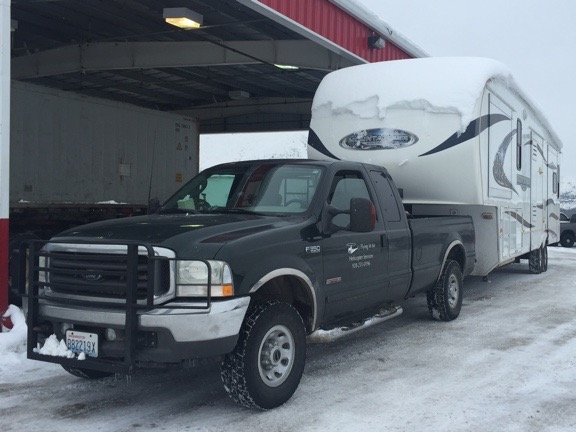
And travel is something I love to do. Whether for a weekend, a week, or an entire season, nothing beats hitting the road and exploring new places or revisiting old places with friends. That just wasn’t as easy as it should be when I was towing a 36-foot fifth wheel with four slides. Yes, when I parked, I was extremely comfortable, with enough living space to throw a party for a dozen friends. But getting the damn thing parked took a lot more effort than I wanted to put into it. And finding a place where it could fit wasn’t always easy.

I bought the Mobile Mansion back in 2010, after my then-husband promised he’d hit the road with me during the summer months when I came north for cherry drying. I needed enough space for two full-sized people and a mid-sized dog to live comfortably for four to six months. The Mobile Mansion was perfect for that use. Unfortunately, I wound up not needing all that space, since my husband apparently had no intention of joining me as he’d promised. In 2012, he started the wheels turning to become my wasband. (That turned out to be the best thing that happened to me in a very long time.)

I lived in the Mobile Mansion while I built my new home — so it was a very good thing I had it. It was comfortable, except during the winter months when I made other arrangements. Last summer, after moving into my new home, I used it as an AirBnB rental parked right on my driveway, getting $79/night with a two night minimum almost every weekend from July 4th through October 15. Then it went on a sale lot in East Wenatchee.

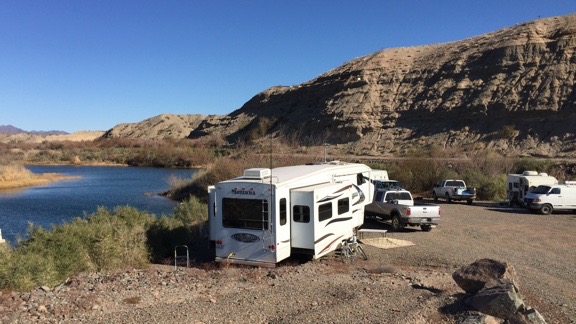
Quartzsite CampsiteThe Mobile Mansion parked in the desert near Quartzite in January 2016.

By December, I decided to spend the winter snowbirding and fetched it off the lot for a trip south. I spent a happy six weeks in Arizona, Nevada, and California, living mostly off the grid along the Colorado River with friends between stays in another friend’s guest house. Truck problems got it stuck in California for a while, but I brought it home again last month, cleaned it up again, and put it on a sale lot in North Wenatchee.

Over the winter, I’d been thinking hard about options for replacing the Mobile Mansion with something smaller and easier to travel with. My first inclination had been to go with a small — think 16 to 20 feet — bumper pull trailer. Then I happened to take a look at a truck camper for sale in Quartzsite. I struck a deal to trade the Mobile Mansion for the camper and pocket about $12,000, but I hesitated. I hadn’t wrapped my brain around the huge downsizing yet. By the time I was ready — only a week later! — the rig was gone. So I stuck with the Mobile Mansion for the rest of the winter.

But that truck camper had planted a seed. When I got home and placed the Mobile Mansion in the sale lot, I started looking for a truck camper I could live with.

My truck is huge. It’s a 1-ton diesel with 4WD, a crew cab, and a long bed. They don’t get much bigger than this and still fit in a regular garage. Because of its size, I could get a large truck camper. In fact, I sort of had to get a large truck camper.

I looked at a few dealer lots in the Tri-Cities area, then started combing Craig’s List. And that’s when I found the 2005 Lance in Moses Lake.

I went down to look at it. Moses Lake is about a 90-minute drive, although it’s only 55 miles away. The couple who owned it were the original owners and they had taken very good care of it. It was parked in an RV garage when I saw it. It was clean and it was loaded.

The Slide
The dinette and refrigerator are on the slide.

Storage
There’s plenty of storage beside the bathroom.

Want a list of features? Here are the highlights: slide for dinette and large refrigerator with separate freezer, queen sized bed, double sink, convection microwave, three-burner stove, television, satellite dish antenna, regular antenna, AM/FM stereo with CD/DVD player, landing gear with remote, two awnings, 2500 watt generator that can be started with the push of a button, tons of storage, skylight in bedroom, lots of windows, day/night shades on most windows (they’re not allowed in kitchen areas, probably due to fire hazard near stove), outdoor shower, wet bathroom (that’s where you shower in the same space as the toilet and sink), air conditioning, heat, two 7-gallon propane tanks, ladder to roof, solar panel that keeps the batteries charged. These are just the things I can think of off the top of my head. The slide is quite large — when it’s open, there’s a ton of floor space. So even if I did happen to go camping with a friend, we wouldn’t be tripping over each other.

Kitchen
The kitchen is small but functional.

Wet Bath
“Wet bath” means you shower in the same space as the toilet and sink.

The price was a bit more than I wanted to spend, but it was in line with Nada RV Guide pricing for a unit its age. And it was in very good condition. The couple was nice. They clearly loved the RV and had made a lot of memories in it. They were sad to sell it. But they’d just bought a fifth wheel almost as big as mine and although they thought they’d use the truck camper once in a while, they realized they wouldn’t. After a year of owning both, they’d decided to sell.

We talked money. I suggested lower price. I hate haggling but he accepted my offer. I got the feeling that they wanted to sell it to me.

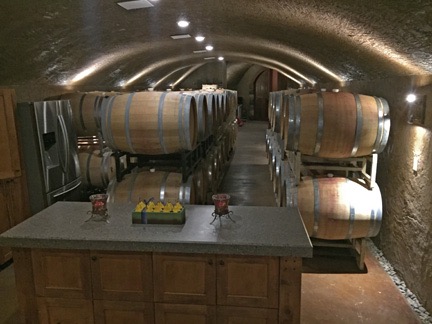
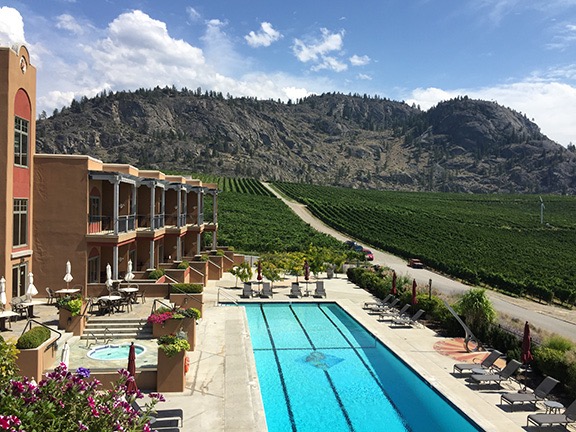
I told them I needed to sleep on it and research the truck modifications I’d need to get done to get the camper fastened down on my truck. On the way home, I stopped for dinner at Cave B Winery. Before I was done, I’d decided.

It took me two weeks to get the hardware I’d need on the truck installed. In the meantime, I built a small trailer for the 100LL fuel tank that was in the back of my truck and had the tank moved to it. The tank would come in handy in Quincy, where two pilots would be working for me in June. Then more delays as I had a multi-day aerial photo gig for a favorite client in the area. Finally, with rain forecasted for Wednesday, May 4, I called the owners and made arrangements to meet with them.

The owners were just as gracious to me that day as they were when I first came to see the camper. The husband spent at least an hour with me, showing me how to hook it up and pointing out all kinds of things I’d need to know. (Of course, they had all manuals for the camper gathered up in an envelope under one of the dinette benches.) He backed the truck up under the camper, gave me a wooden rig he used as a spacer to prevent himself from backing up too far, and showed me how to retract the legs. Then we pulled it out onto his driveway and fastened it down to my truck, using fasteners he threw in at no extra charge. Then, while I was doing the paperwork with his wife, he checked my tire pressures and even added air to the airbags at the back end of my truck. Before I left, he took a picture of it — he said he wanted to show his friends the truck he’d put it on. Oddly enough, he has the same truck as me — just one year newer.

When we were all done, we parted ways and I started the long trip home.

The camper, which probably weighs about 3,000 pounds, rides well on back of my truck. I can definitely feel its weight and the higher center of gravity. But my truck gets much better mileage than when I towed the Mobile Mansion and parking it was no trouble at all.

After a stop for lunch in a neat little bistro in George, WA, and a quick trip to the supermarket, I drove over to the RV dealer where I’d left the Mobile Mansion. Way back when I first bought it, I’d replaced the mattress and I wanted to swap them out. That done, I made a stop to pick up some oil for the helicopter before heading home.

The Turtleback
The Turtleback, parked in my driveway with the slide out. And yes, it will fit in the RV garage. After all, the Mobile Mansion fit in there and this is a heck of a lot smaller.

I spent a few hours loading some of the Mobile Mansion’s gear — hoses, cords, cookware, dishes, etc. — into the new RV, which I’d christened the Turtleback on the long drive home. I still need to make the bed and store some extra linens. Most of what I needed from the Mobile Mansion fits into the Turtleback — it has a surprising amount of storage space.

At this point, I’m thinking about taking it up to the National Forest at Leavenworth for a few days on a maiden voyage. There’s a nice campground about 17 miles up Icicle Creek with a good 3-mile loop trail running through it. I’m sure it will be mostly empty mid-week. If I go, I’ll report back here.