I Turn Down Work

It’s too hot to fly!

I got a call yesterday afternoon. The caller wanted to know if I was doing any more tours that day. A lot of people think that Flying M Air has a helicopter tour schedule. They don’t realize that we do tours on demand, by reservation.

Although I’d done a tour early that morning — for some smart passengers who understood that when I say “the earlier, the better,” 7 AM is a good time — I had nothing booked for the afternoon. I didn’t want anything booked for that afternoon. It was over 100° out (in the shade) and my helicopter doesn’t have air conditioning. Even with all the doors off and flying 500 feet above the ground, it would still be over 100° in the cabin in the sun. So I told the caller that we were done flying for the day. That it was just too darn hot. That we didn’t fly after 10 AM in the summer months and would be available after 8:30 AM on Monday.

She sounded a little disappointed and I’m not sure if she’ll call back. But I’m not so desperate for revenue hours that I have to put myself through hell just to make a few bucks. And, frankly, I don’t think my passengers would have enjoyed it much, either. Summer thermals tend to make things bumpy and uncomfortable.

An interesting side note here: Silver State Helicopters, which operates flight schools in the Phoenix area, won’t fly when the temperature exceeds 104°. They say it’s because the performance charts only go that high — the same reason that was used to close down Sky Harbor one day when the temperature reached 124° years ago (I believe jet performance charts go up to 50° C while Robinson’s go up to 40° C). I’m not terribly worried about that. Performance can be extrapolated and it isn’t as if I’m going to operate at max gross weight. But it also isn’t as if I want to operate when it’s that hot.

I really do need to get out of here for the summer.

Chopsticks

Use ’em or lose ’em.

The area we lived in in New Jersey had a huge Asian population — and that means lots of good Asian restaurants: Chinese, Japanese, Korean — they were all within 10 miles of our home. In those days, we ate out several times a week and would usually hit one Asian restaurant a week.

I got very good at eating with chopsticks. I’d learned way back when, in Boston on a trip with my friend and her father. We were sixteen and her father was there on business. We stayed in a suite near the Prudential building and would wander around the city while her father was at work. One night, he took us to dinner at Benihana. That’s the touristy teppanyaki steakhouse chain. They handed chopsticks all around the table, but by the end of the meal, I was the only one still using them. Even back then I realized that you couldn’t learn something without trying.

Through the years, I got lots of practice. Whenever I went to a restaurant with a fork and a pair of chopsticks, I’d use the chopsticks. This was good, because sometimes I’d go to a restaurant where the fork was missing. Like when I worked for the New York City Comptroller’s Office right after graduating from college. My partner was Chinese, originally from Hong Kong, and on payday, we’d go to Chinatown for lunch. Lucille (my partner) didn’t go to the Chinese restaurants where the tourists went. She went where the Chinese people went. I was usually the only non-Asian in the restaurant. She’d order food and I’d eat it. Sometimes, she didn’t tell me what I was eating until after I’d had some, afraid that I wouldn’t try it if I knew what it was. But I’ll try just about anything once. She brought pigeon for lunch one day and I even tried some of that. I didn’t eat the head or the feet, both of which were still attached. I do recall asking later if it was a local pigeon — New York has lots of pigeons. It wasn’t.

Lucille used to say that every time you try something new, you add an extra day to your life. It’s something that has stuck with me since those days long ago.

Now I live in Wickenburg and chopsticks are difficult — if not downright impossible — to find. And on the rare occasion when I do eat in an Asian restaurant — usually on trips down to Phoenix or up to Prescott or out to San Francisco or New York — I’ve discovered that my chopstick skills have deteriorated. I need more practice.

I got some the other day at the Kona Grill in Scottsdale. I’d gone “down the hill” on some errands: buy food for Alex the Bird, see a lawyer, visit a jeweler, and see a doctor. Mike had some birthday gifts to exchange and the Scottsdale Fashion Center mall had all the stores he needed to hit. So we met there when I was done with my errands. By that time, I was starved — I hadn’t eaten since breakfast. Our first stop was the Kona Grill.

Understand that I’m not a big fan of chain restaurants. They tend to deliver mediocrity. This is especially apparent in the low-end restaurants — the ones where you can get a meal for under $10. I truly believe that places like Country Kitchen, for example, serve prepared foods that they heat up when you order it. Food that was prepared in some big factory and quick frozen or vacuum-packed before being shipped to the local restaurant.

Kona Grill is a chain, but it’s one that we’ll eat in. So are P.F. Chang’s, Macaroni Grill, and Outback Steakhouse. The trouble is, all the new restaurants going up are part of a chain. There are so few independent restaurants. When you find a good one (which is not easy in a place likek Phoenix), you should eat there regularly, just to preserve it. Someday soon, there won’t be any independents left.

We arrived at Kona Grill at happy hour. Mike and I aren’t big drinkers, but the happy hour menu did include half-price selected appetizers, pizzas, and sushi. So we settled at a high-top in the bar, ordered some appetizers and sushi and token drinks, and prepared for a feeding frenzy.

They gave us chopsticks, probably because we ordered sushi. Now I’ve never been to Japan, but my understanding is that in Japan, sushi is “finger food.” That is, you eat it with your hands. (If you’ve been to Japan or live in Japan now and can set me straight on this, please do use the comments link — I’m genuinely curious.) I usually use chopsticks — mostly to get practice — but I’ll use my fingers when I eat big sushi — you know, like futomaki — that you can’t stuff into your mouth at one go. I’ve found that my chopstick skills are no longer sufficient to hold together half a piece of sushi after I’ve bitten into it. (It could also be the sushi chef’s rolling skills.)

Anyway, we enjoyed a good, cheap meal and got our chopstick practice. We also got a chance to walk around a big mall that wasn’t crowded with 15-year-old, tattooed kids on cell phones.

Next week, I’ll be in Mountain View, CA with my editor, Megg. She’s already asked what kind of food I like so she can buy me dinner on the publisher. I’m hoping to get some more chopstick practice then.
It’s Not Just Sand

I have to explain to passengers that the desert is more than sand dunes.

I had some passengers on a helicopter flight a few weeks back who were just visiting the Phoenix area from somewhere back east. At sometime during the flight, they told me they were hoping to see the real desert.

My DesertI was confused. Wickenburg sits in the Sonoran desert. That’s the desert with the big saguaro cacti all over the place. It rains, on average, less than 8 inches a year. The desert can’t get any more real than that.

My passenger clarified. “Well, where’s the sand?”

The sand, unfortunately, is all over the place. In washes, in my front yard, in my shoes and cars, and in my hair and eyes during a dust storm. Sand (and dust) is a part of life here.

But not the kind of sand my passenger was thinking about. He was thinking of sand dunes. You know. Like the kind in movies that take place in the Sahara desert.

I began to understand. His mental picture of the desert included the rolling sand dunes from the movies. The same sand dunes that had hazards like quicksand and oasises with palm trees and ponds of water.

I explained that there were sand dunes in the southwest desert, but they were only part of the desert landscape — not the whole thing. I told him about the big sand dunes west of Yuma on I-8, and the small sand dunes west of Blythe off of I-10 (I’m not even sure if you can see those from the road, but I see them from the helicopter when I fly that way), and the medium sized sand dunes in Death Valley.

Then I put on my tour conductor voice and gave him a summary description of the Sonoran desert landscape, including information about its cacti, trees, animal life, and other features.

Of course, all this has me wondering how many people think the desert is just a big sand dune.

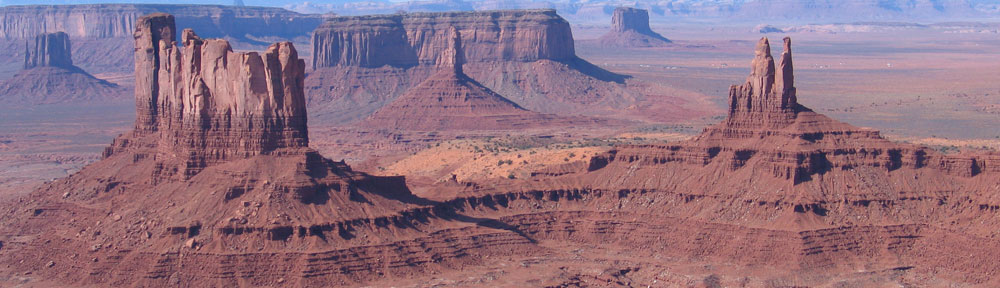
Monument ValleyOne of the things I love about the desert is its diversity. There are so many kinds of desert, each with their own little ecosystem. Drive 50 or 100 miles in any direction and you’re likely to be in a whole different kind of desert. For example, if you drive up route 93 from Wickenburg, you’ll enter another kind of desert where there are no saguaro cacti, but plenty of Joshua trees. Drive up to Monument Valley and you’ll see the layers of underlying rock exposed in magnificent formations, with scrubby trees and bushes hanging on for life in the fine red sand.

Just don’t go down to Phoenix. There isn’t much of the desert left down there, with all the asphalt, golf courses, non-native plants (like palm trees, for heaven’s sake!), and irrigation.

Unnatural Causes

An Adam Dalgliesh mystery by P.D. James.

Unnatural CausesI mentioned in a previous post that I’d taken two novels with me to the hospital for something to do while recovering from surgery. In that same post, I also mentioned that drugs kept me unable to read for the entire time I was there. I caught up yesterday by reading one of the two books I’d lugged down to Phoenix and back: Unnatural Causes by P.D. James.

I’m a big reader of mysteries, but for some reason I’ve always shied away from P.D. James. I think I must have had a bad P.D. James experience in my past. You know what I mean. You get a book from the library and have every intention of reading it, but when you open the book and begin to read, the book fails to grasp your attention. You put it aside, planning to pick it up later to read it, and wind up just returning it to the library — late, of course — with a new idea in the back of your mind: you don’t really care for that author’s work.

I don’t remember this happening to me with a P.D. James book, but it must have. There’s no other explanation for why I have avoided her work for so long.

The Great P.D. James Avoidance, however, ended last week when I picked up one of her books at Wickenburg’s local library. And yesterday’s reading of Unnatural Causes dissolved any preconceived notions I had about her work.

The book, which was originally published in 1967, concerns the discovery of a dinghy carrying the body of a dead man whose hands have been cut off. The dinghy washes ashore at the seaside town where it originated, which is also the same place the victim lived: Monksmere. The town has an unusually high percentage of full- and part-time residents who are either writers or crititcs. The dead man was a writer.

The book is nearly 40 years old now and it shows its age. Not in a bad way, mind you. More like a “look back” way. A part of the plot concerns the typing (on a typewriter) of the dead man’s manuscripts with and without carbon paper. If you’re old enough to remember typewriters, you’re likely to remember carbon paper, too. Not only did it give you the ability to make a copy of a document as you typed it, but it preserved that document on its shiny blue or black side — until you reused it so many times that you couldn’t read the carbon. Remember the days? Glad they’re gone? Me, too!

I won’t go into any more detail about the story line or suspects because I don’t want to spoil the book for any future reader who likes a good British “cosy” mystery. That’s what this is, through and through. P.D. James and Agatha Christie were cut from similar molds, although I think James has better use of the English language and much better descriptive skills. Her desciptions of the coastal town were so clear that they brought me there — from central Arizona! — and I was able to hear the waves and feel the dampness of the sea air. There’s something to be said for an author who can do that.

My final word? If you like mysteries and haven’t read any P.D. James, Unnatural Causes is a good place to start.

I Never Thought…

…I’d ever have to complain about too much flying.

I am exhausted. During the past three days, I flew 11.5 hours of revenue time. That’s time that people are actually paying me to fly. I flew 6 hours just today.

All of a sudden, everyone wants to go flying. I’ve done charters to the Grand Canyon, Scottsdale, Sedona, and Sky Harbor Airport in Phoenix. I’ve done real estate developer land tours, tours around Mesa, and tours around Wickenburg. And that’s after last week’s two photo shoots, a Grand Canyon charter, a Sedona charter, and an ash scattering. Where are these people coming from? And where were they in January and February when I was wondering where my next payment was going to come from?

I made my next payment. And the payment after that. Heck, I might even have June’s payment lined up — I have another tour tomorrow and a 2-day outdoor gig next weekend.

I need a rest. This helicopter charter business is starting to get like a job.