
Don’t waste your money.
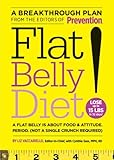
I am an idiot. Throughout the past ten years or so, I’ve been conned by at least a half dozen “best-selling” diet books. I thought I’d learned my lesson. But when I picked up The Flat Belly Diet book at a Borders bookstore last week, I said “this is the last diet book I’ll ever buy.”
I should have quit with the previous one.
Another “Breakthrough Diet Plan”
The Flat Belly Diet is yet another attempt — apparently successful — to sell America’s overweight women on an easy way to lose weight. Trouble is, there’s there’s not much that’s either easy or effective about it.
Every “breakthrough” diet has a gimmick. This one has three:
- The Four-Day Anti-Bloat Jumpstart. This is a mind game, pure and simple. You follow a strict and not exactly convenient diet plan and keep a journal of your thoughts, feelings, and challenges for four days. The goal? Lose your water weight. Up to 7 pounds of it! Well, that’s what one person on the plan lost, anyway. I’m not stupid enough to confuse water weight and bloating gas with fat.
- MUFAs. This is the biggie. MUFA (pronounced MOO-fah) stands for monounsaturated fat. It’s the “good” fat and The Flat Belly Diet presents one example after another to prove why MUFAs are healthful foods. (Okay, I get it already.) But this is a gimmick with real punch for women — after all, dark chocolate is a MUFA! Yes, ladies, this diet lets you eat chocolate. How can you resist?
- Get a flat belly without doing “crunches.” Yes, like most diet books, this one promises again and again that you can flatten your belly without exercise. But then it includes an exercise program — if you want better results. Better results than a 6-pound loss in 32 days? What the hell do you think?
Of course, the book is only part of a huge marketing machine. There are already add-on pocket guides and cookbooks. There’s also a Web site, which is offered on a free “trial” basis to book readers. After that, you have to pay. And pay, and pay. After all, isn’t that what “breakthrough diet plans” are all about? Creating a money-making machine to separate desperately overweight people from their money?
When will we see MUFA-fortified “snack packs” on supermarket shelves in yellow in pink packaging? Give them a month or so — they’re probably in production now.
Reality Check
Here’s the reality of dieting and weight control for middle-aged women. You put on fat when you consume more calories — the energy in your food — than you burn in your daily life. As you age and your hormone situation changes, your metabolism slows down and you burn fewer calories. You start fattening up.
If you want to lose weight, you need to take in fewer calories than you burn. You can do this three ways:
- Eat less of the same stuff. Let’s face it: portion control in this country is a joke. We often choose restaurants based on portion size for the money spent rather than quality or flavor. It’s the American Way of eating. Next time you sit down at a restaurant with a typical portion in front of you, cut it in half and take half home for tomorrow. At home, simply make less food. Use smaller plates. There are many things you can do to eat less. Stop making excuses and just do it.
- Eat smarter food. Yes, a bag of potato chips is a wonderful-tasting snack. And yes, it seems to “satisfy” your hunger better than a handful of carrot sticks. But guess which one has fewer calories? Duh. Read the damn labels on the food you eat — choose foods with fewer calories per serving. Eat more unprocessed foods, like salads and fresh vegetables and fruits.
- Get more exercise. Take a walk around the block at lunchtime. Walk to do your errands. Walk your dog. Take a hike with your spouse or kids or grandkids. Take the stairs at the mall. Park on the far end of the parking lot rather than in the closest space. These little bits of exercise can make a huge change in your metabolism if you simply keep moving.
The thing that got me to buy The Flat Belly Diet was the fact that it mentioned calories. (So many diet plans don’t — they lead you to believe that you can eat as much as you like of certain types of food — the hell with balanced diets!) Its diet plan is pretty simple (after the first four days): four meals a day, 400 calories per meal, 1 MUFA per meal. Do you really need a book to tell you that? Of course not. I just did.
But I’ll tell you this, too: 1600-calories a day might not be the right number for you. I know it’s not the right number for me. I don’t lose weight until I drop down to 1000-1200 calories a day. This is probably why so many people on The Flat Belly Diet only lost 5 or 6 pounds after 32 days of dieting. I can lose 5 or 6 pounds in a week and not even feel it — that’s normal body weight fluctuation for me.
In defense of The Flat Belly Diet, they’re trying to convince you that following their plan helps you make a lifestyle change. 1600 calories a day is doable, they argue. It won’t hurt. Is that true for you? I know it’s not for me. When I want to lose weight, I quickly get frustrated when I hit a plateau and stop losing. I know 1600 calories a day won’t do it for me — not unless I take up jogging.
And here’s another thing: I’ve looked at the book’s recipes and menus and portion sizes and guess what? They cover the first two points of my Reality Check list above. This is common sense stuff, ladies! This is the same thing you’d learn in Weight Watchers or by consulting a dietician. Eat less, eat smarter. Toss in one or two good, brisk walks a day and you’ll be able to lose weight without yet another fad diet guiding your meal plans.
What will I be doing with my copy of The Flat Belly Diet? Donating it to my local library. Hopefully, I can save some of my neighbors a few bucks.
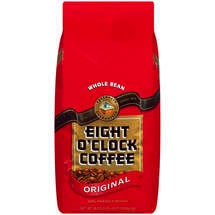 I like Eight O’Clock Coffee. It’s an Arabica bean with a light roast. It’s more robust than Dunkin’ Donuts coffee, which I liked before I left New Jersey and could no longer get here in Arizona. (It’s now available in Arizona; I tried it again and was disappointed.) But it’s mellower than Starbucks or any of the other boutique coffee brands — although I’ll take Starbucks Breakfast Blend in a pinch. I buy it as whole beans and grind it at home as part of my coffee-making ritual. Nothing like a good cup of coffee first thing in the morning, huh?
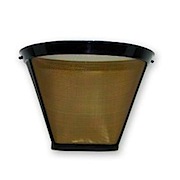 My coffee maker comes with one of those “gold” filters. It’s a washable thing that’s supposedly better for brewing coffee because it helps the oils of the beans meld together or some such bull. Whatever. What I find is that using the reusable filter guarantees bitter bean residue at the bottom of my cup. I’ll stick to paper filters. The coffee maker takes a #2 cone filter. I don’t buy Melita brand or unbleached or any such nonsense. I buy the cheapest ones I can find — they do the job perfect well. My supermarket sells them in packs of 50 or 100. At my rate of 2+ cups per day, that’s enough filters for one or two months. But over the past summer, I discovered that Wal-Mart sells off-brand paper filters like the ones I use in packs of 250 for less than what I pay for 100 at my local supermarket. So when I go to Wal-Mart — which isn’t very often, thank heaven — I buy two or three packs. Stock up and save.
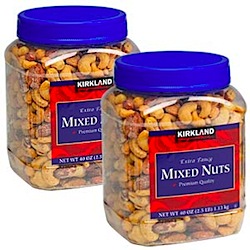 My husband — well, he’s still sucked in. He buys cases of canned corn and canned chicken broth. He buys huge plastic jars of nuts and garlic powder and peppercorns. He buys buffet plates full of smoked salmon and styrofoam trays of flank steaks. He buys a lot of junk we don’t need. He freezes things that are better not frozen. We eventually do eat or use most of what he buys, but we also throw some of it out. I don’t like that.
 And went inside the
  Afterwards, I went outside and took a walk on the pier. I took a photo looking up the coast (shown here) and another looking down the coast (shown below). Amazing that these two photos were taken only moments apart, isn’t it? But the weather was variable and moving quickly. A huge storm front was moving into southern California that would dump rain on the low elevations and snow on the higher ones.
 There was magic at the Paradise Cove Cafe — at least for me that morning. If I’d been with someone else — someone anxious to eat breakfast before starting the drive or satisfied with a chain restaurant for a meal — I would have missed that magic.
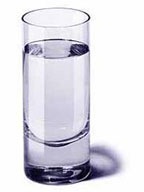 Water does several things that can help you lose weight and feel healthier:
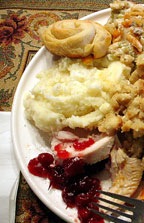 One of the problems with American food portions — especially those in many restaurants — is that they’re just too big. The next time you’re faced with a huge plate of food at your favorite restaurant, eat just half of what’s on your plate. Take the rest home in a carry-out bag. Not only will you eat less food, but you’ll have a free meal the next day.
 Some fruits to keep in mind:
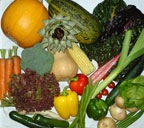 For vegetables, try:
 Boy, is this a no-brainer. If you’re accustomed to eating dessert after dinner, just stop. Instead, reach for a piece of fruit. Fewer calories and better for you.
 How much time do you spend cruising for a parking spot close to where you’re going? Did you ever think that that time could be better spent walking from a parking spot on the other side of the lot?
 Do you take a bus or train to work? Instead of getting off at the stop closest to your workplace, get off one or two stops before or after it. Again, you’ll be treating your body to some extra exercise.
 Only need to go up or down one or two floors? Avoid elevators and escalators. Take the stairs. More exercise squeezed into your busy day and only your body will notice it.
 While I realize that times are different and many parents are concerned about the safety of their kids, you don’t need to drive your kid to school to ensure his or her safety. Take a walk instead. You’ll get exercise and make sure your kid gets some, too. You’ll also have some quality time to spend with your kid on that walk.