Snowbirding 2022: Campsite Log

Some details about the places I camped during my winter 2021/22 trip to points south.

I thought I’d keep track of the places I camped each night in case anyone wants to try any of them.

Edited February 17, 2022:
Where I am now/just added: Navaro Beach Camp, , CA.

PlaceCostHookupsFacilitiesConnectComments
Three Islands State Park, ID$36*E **G **C*Rate includes non-ID surcharge. **Water turned off for season.
Pahranagat National Wildlife Refuge, NVfreenoneT G *C*Multiple pit toilets. Lakeside sites. Wildlife, hiking/biking trails. Close to road.
Valley of Fire State Park, NV. Atyl Campground.$35*E W **T S G****Rate includes non-NV surcharge. **Dump station only. ***WiFi available for a fee. Nice sites, quiet, red rocks. Good value.
Lake Mead National Recreation Area, NV. Stewart’s Point.freenoneT*C*Pit toilets in one area. Huge area right on the lake. Many campers but lots of space. Quiet, private.
Lake Mead National Recreation Area, AZ. Willow Beach Campground.$57*E W S **T S L G RW ****Rate includes Good Sam discount and tax. **Sewer on site and at dump station. ***Free WiFi for one device. Overpriced but very pleasant. 50% off 65+ with pass.
Lake Mead National Recreation Area, AZ. Kingman WashfreenoneT *C*One central pit toilet. Quiet, underutilized, early sunset because of canyon, 3 miles down gravel road. You can camp right on the lake. Coyotes, burros.
Lake Mead National Recreation Area, NV. Six Mile Covefree *noneT G *C ****Park entrance fee or pass is required. **Central pit toilets. ***Weak come-and-go cell signal. Quiet (on weekdays), 30 minute drive down gravel road from park entrance station. You can camp right on the lake. Beware of soft sand in parking area.
Davis Camp. Bullhead City, AZ$36.25*E W **T S GC*Includes extra fee for dogs and tax. **Dump station. County park campground on Colorado River just downstream from Davis Dam.
Oatman-Topock Dispersed BLM CampingfreenonenoneC**Usable Cell phone signal on Verizon. Close to road, rugged terrain.
Needle Mt Road BLM Dispersed CampingfreenonenoneC**Usable Cell phone signal on Verizon. Relatively close to freeway, rugged terrain.
Lake Havasu State Park, Overflow Camping Area$25.00*T S GC*Dump station available. Limited number of beachfront sites. Inadequate generator rules.
Pomosa Road Dispersed Camping, Quartzsite, AZfreenonenoneC**Usable Cell phone signal on Verizon. Very quiet.
Holtville Hot Spring BML Long Term Camping area$40.00*noneT S** GC*$40 covers up to 14 consecutive days in this and other long term areas. **Toilet and shower are at the hot spring. No soap allowed. Relatively flat, featureless area with dispersed camping. Lots of long term campers with expansive solar setups.
New Camp, Salton Sea Recreation Area$37 *E W **T S*** G RC*Rate includes $7 reservation fee. **Dump station only. ***Shower was solar hot water, $1/token. Hookup campsites were either in a large parking area or adjacent to main road with railroad track nearby. Camp store closed. I would not camp there again; not worth the money.
Joshua Tree South BLM Dispersed CampingfreenonenoneCLarge area along maintained gravel roads just south of Joshua Tree National Monument. Many campers, but plenty of space. Easy access to I-10 freeway about 1 mile away. Remarkably quiet.
Rice Ranch, Quartzsite AZ$40*E W SGC***Somewhat discounted rate due to past business relationship. **Strong signal but slow due to heavy load on local cell towers during Quartzsite’s busy period. Centrally located very near two main venues, bicycling distance to all others. At noisy intersection.
A Friend’s House, Gilbert, AZ$0n/an/an/aEvery year I visit with some friends in Gilbert, AZ. I stay in their guest room and let my camper sit empty in their driveway. The last night of my stay, they had more houseguests so I moved into the camper for the night, still parked in their driveway and not hooked up to utilities.
USFS Apache Jct Dispersed Camping$0nonenoneC**Cell signal was acceptable but not good. Wide open area not far from off-road vehicle recreation parking. Shooting within 1/2 mile before dark and before dawn in the morning. Coyotes. Two late arrivals slept in their vehicles and departed before light, which was kind of weird. Beautiful desert.
Catalina State Park, Tucson (Ringtail area dry camping)$20none*T S G RC***Dump station available. **Cell signal was acceptable but not good. Nice park with many hiking, biking, and equestrian trails. Dog friendly. Main campgrounds offer electric and water at sites; nearly impossible to reserve.
Casino Del Sol RV Park, Tucson, AZ$56E W ST S L GC W**Wifi near central building only. New campground with asphalt parking surrounded by gravel. Newly planted trees. No ambiance at all, but plenty of amenities. Expensive.
Las Cienegas National Conservation Area$0nonenone*C*Pit toilets available in group camping areas. Active historic cattle ranch(es) with dispersed camping.
A friend’s house, Sierra Vista, AZn/an/an/an/aMy Gilbert friends have a new second home in Sierra Vista and invited me to check it out. We stayed two nights and I helped them with a few of their renovation chores. It was wicked cold those two nights and I was glad to be indoors.
BLM Darby Wells Road Dispersed Camping, Ajo, AZ$0nonenoneCDispersed camping in Sonoran desert just south of an open pit copper mine.
Holtville Hot Spring BML Long Term Camping area$40.00*noneT S** GCSee notes from first stay. I stayed for another 6 nights in February.
Mojave Narrows County Park, Victorville, CA$39E W ST S GCCounty campground right next to TWO train tracks. Sites were dirty, land was poorly kept. Other campers were loud, but train was worse; it ran all night. NOT recommended.
Gaviota Lane, Ventura, CA$0nonenonenoneRelatively quiet side street behind a strip mall with an apartment complex across the street.
Jalama County Beach Campground, Lompac, CA$50none*T S G RW***I picked one of the beachfront sites which had no hookups. Other sites had hookups. There was a dump station. **No cell signal at all; WiFi was iffy. Very nice campground 14 miles down a twisty road.
Limekiln State Park, Lucia, CA$35noneT S G RnoneTiny campground tucked into a canyon under a bridge. Some sites are near the beach; others are in a dense wooded area next to a creek. No cell signal. Quiet. Pleasant stay but being out closer to the beach would have been nicer.
Bay Flat Road, Bodega Bay, CA$0nonenoneCRecommended to me by campground host at full Bodega Dunes Campground. Pullout alongside the road right on the bay. Quiet except for fog horn, barking sea lions, and some traffic.
Navaro Beach Campground$35noneT* GC***Pit toilets. **Very weak cell signal on Verizon was enough to check in at social media and send/receive texts. Pleasant campground adjacent to a beach. Just 10 sites include table and fire ring. Very quiet.

Key to codes

HookupsFacilitiesConnectivity
E – Electric
W – Water
S – Sewer
T – Toilet
S – Shower
L – Laundry
G – Garbage
R – Recycle
C – Usable Cell Signal (Verizon)
W – Free WiFi

Snowbirding 2022: Planning My Winter Travels

I start planning for a few months on the road.

I travel south every winter and have been doing so since moving to Washington in 2013. I camp out in an RV — at first, my giant fifth wheel and later one of two different slide in truck campers. I still have that second truck camper and will be taking it south again this year.

Let the Past Guide My Future

Last winter, I spent 2 1/2 months camped out on BLM land along the Colorado River. I had a great campsite, a good friend for company about half of that time, and a comfortable, productive stay. But I’d also brought along a shit-ton of extra equipment — a 12-foot cargo trailer full of it. It made my campsite very comfortable, but it also made it very inconvenient to travel.

My friend Bill reminded me — in an offhand way — of a simple fact: I’d sold my ultra comfortable fifth wheel and bought a truck camper because I wanted the convenience of being able to go anywhere I wanted to go. By hooking up a trailer to it, I was losing the benefit of the truck camper’s small footprint, mobility, and (for lack of a better word) parkability. Why was I doing that?

The answer is, I don’t know.

I guess that if I wanted to go to a campsite and stay there for 2 1/2 months, it doesn’t really matter how big my rig is. That old fifth wheel would have been the ultimate in luxury parked near the river last year. (As a matter of fact, I did park it there for a few weeks a few years ago on my last trip south with it.) But what if I actually wanted to travel around and see stuff? Take a few tips from Bill’s travel routine?

And that is what I want. If all goes well over the next year or so, this will be my last year driving down to Arizona and California with a camper on my truck. I should make it count.

The Lure of Staying Home

My biggest problem this year is that I don’t really want to leave home.

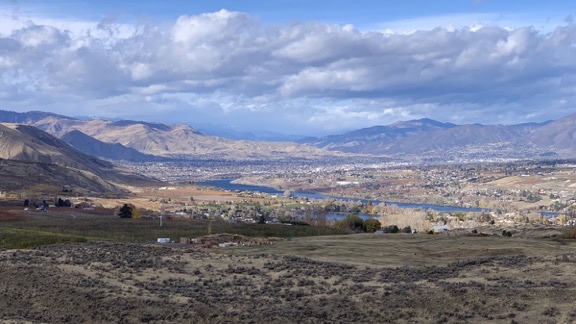
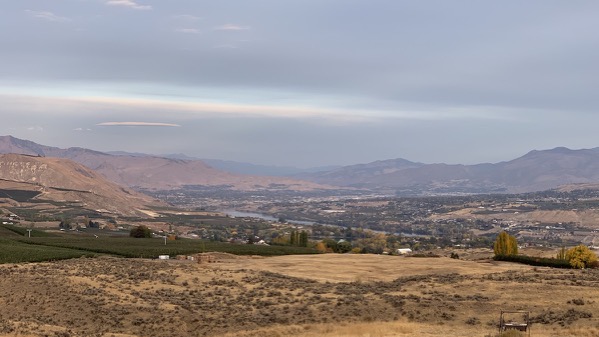
I love my home. It’s comfortable and it has everything I want or need to stay busy and make the most of my time. And even though there’s a 6-week period where the sun does not actually shine on my property — it certainly shines out on the Wenatchee Valley, which I can see clearly from every window in my home.

Autumn View
If this isn’t something worth seeing out the window every day, I don’t know what is.

And no, I don’t really mind the cold or snow. I don’t particularly like it, but I don’t hate it.

What I do hate is the short winter days. The sun is currently setting here at around 4:20 PM and it’s dark by 5 PM. Since I don’t have a regular job, my body clock is my only real clock. And since I’m going to bed when it’s still light out in the summer when the sun sets at 9 PM, it’s hard to stay up for 5 hours after it gets dark in the winter. I feel ready for bed by 7 PM — and if I happen to fall asleep around then, I’m usually up by 2 AM. And that really sucks.

So it’s mostly the darkness that makes me want to leave town. There’s 90 minutes more of daylight in Arizona and the clocks seem to be more practically set; the sun is currently setting at 5:20 PM down in Phoenix. That extra hour really makes a difference to me.

And I won’t deny that warm weather is a plus. Last year, I wore a t-shirt outside from the day I arrived at my campsite on the Colorado River south of I-10 just before Thanksgiving until the day I left Death Valley in mid February. Yeah, it got chilly at night, but all day long, I was able to soak up the sun. I really do love the sun.

So at this point, as I sit in my camper at the Spokane Fairgrounds and Expo Center on a Sunday morning, waiting for the last day of an Arts and Crafts show to begin, I’m working hard to convince myself that I really do need to start my trip south right after Thanksgiving.

The Plan

The plan is that I have no plan. And that’s causing a problem, too.

Because I’m not going to go to a familiar spot and park for two months or more, part of that time with a friend, I really don’t know what I’m going to do. So I need to make a plan.

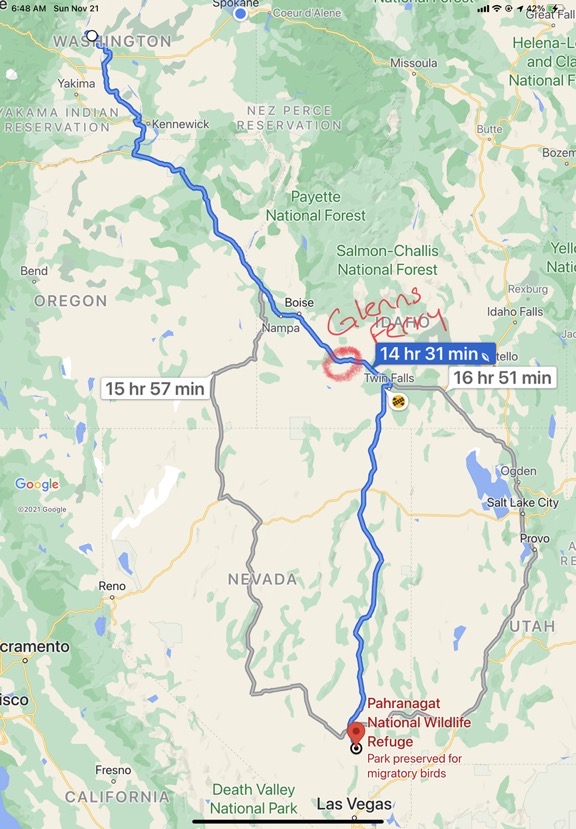
The beginning of the plan is pretty easy. I’ll take the fastest route south: I-84 southeast through Washington, Oregon, and Idaho to Twin Falls and then US-93 south to I-15 just outside of Las Vegas.

If I get an early enough start and the weather is good, I’ll spend the first night at Glenns Ferry in Idaho, where there’s a state park campground not far off I-84 where I can plug in. (I like to plug in in cold weather so I can run my quiet portable electric heater to save propane and battery power.) The next day, I’ll continue into Twin Falls and down US-93 into Nevada. I’ll have “arrived” in the south when I reach one of my favorite enroute camping destinations: Pahranagat National Wildlife Refuge just south of Alamo. If it is as I remember it — totally under utilized, quiet, and free — we’ll spend two nights there and enjoy some hiking around the lakes.

Route South
My route south with stopping points. This is the same route I took annually when I came north for cherry season back when I lived in Arizona, so I know it very well.

The “we” includes my pups, Lily and Rosie, of course.

From there, I’m thinking of Valley of Fire State Park southeast of there. I doubt we’ll get a campsite in the park, but we’ll definitely do some hiking on the trails there. Again, my rig parks just like any other truck, so parking spaces aren’t an issue. We’ll likely camp on some BLM land east of there, which I’d camped at long ago with my big rig. This time, however, we might spend a few days and go exploring close to the shoreline of Lake Mead. There appears to be a ghost town down there and I can never resist a good ghost town hike.

From there — well, I have a loose plan.

I spent some time yesterday morning with Google Maps, trying to figure out where to go. I’d considered heading east through a few of the National Parks in southern Utah, but I suspect the elevations will make them cold. My camper is not a good winter rig; it has terrible insulation. I could imagine myself blasting the propane heater all night every night and waking to near dead batteries and tanks I’d have to fill every few days. I doubted commercial campgrounds would be open for a power connection. And then there were daytime activities — am I really going to want to hike or explore, possibly in snow, if the temperature is hovering around freezing? I’m not fooling myself: the answer is no.

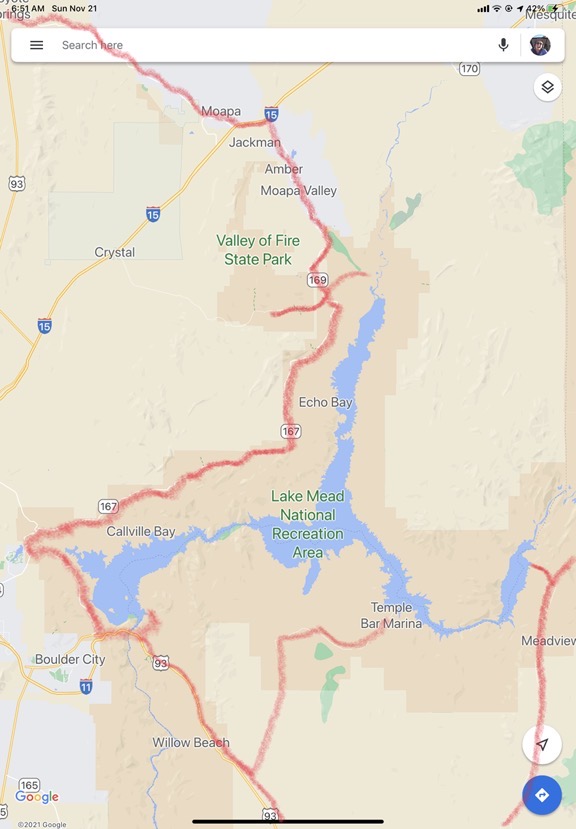
So I thought I’d continue southwest along Lakeshore Road and over the Colorado River into Arizona, keeping just far enough from Las Vegas to avoid traffic. There are campsites along Lake Mead — both on the park’s paved roads and on unpaved roads that my 4WD truck shouldn’t have any trouble negotiating. I thought I’d try a few of those, depending on the weather. I expect it to be relatively warm during the day and cool (or maybe even cold) at night. The goal is to find campsites where I can relax, get out and hike, and not be bothered by other campers and their equipment. I considered a visit to Willow Beach campground with a boat rental and a trip back up to the Arizona hot springs, but I’m not sure if I want the expense. That campground is a great place to refresh my rig after dry camping for a while, but it’s crazy expensive and the boat rental isn’t cheap either. (As I near my early retirement, I’m starting to budget myself. Or at least try to.)

Lake Mead Area Explorations
Here’s a map of the Lake Mead area, marked up with the places I’m thinking of exploring. There are several places where I can access the lake where dry camping should be easy.

From there, south to I-40 at Kingman, perhaps with a quick stop at Kingman mine to replenish my supply of turquoise beads. I was thinking of driving along Route 66 eastbound — I’ve never done the long Arizona stretch. It would be great to find a campsite somewhere out there.

Then on to Flagstaff, where I’d likely have to park at a commercial campground, if any are open, just to keep my rig warm at night. I’d like to go back to Lowell Observatory and walk around town a bit. Flag is at 7000 feet and cold in the winter, so how long I stay depends on what the weather is like.

I did think of visiting the Grand Canyon along the way, but that’s really weather dependent. If there’s snow on the ground, I won’t. If not and if it’s been dry, I might go up there and spend a night in the National Forest just south of the park. I’ve always wanted to do that but I know that the roads can get pretty muddy. And then there’s the cold.

After Flag — well, I don’t know.

I wanted to go into New Mexico — it’s been ages since I was there — and hoped to visit Albuquerque and Santa Fe and maybe even Taos. But a quick look at elevation numbers pushed that thought right out of my mind. Santa Fe is at 7000 feet or more and in December, that means cold. (See above.)

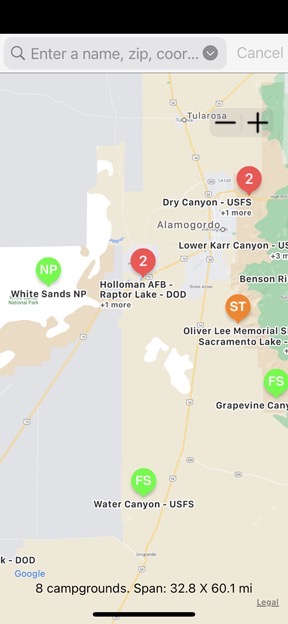
Camping Map
Here’s a zoomed out screen grab from the Ultimate CG app on my iPhone for the area near White Sands. This app, like many others with the same functionality for iOS and Android devices, taps into a database of public campgrounds and campsites, many of which are free. It’s perfect for campers who want to stay as far from KOAs as possible.

So the solution is to stick to lower elevations or destinations farther south. I might start around Albuquerque and travel south from there. I’ve always wanted to visit White Sands. And there seems to be some good remote camping options down there.

Once I’m down there, I can continue west back into Arizona. I need to be in Tucson at the beginning of February for a jewelry-making class, but I seriously doubt my travels up to that point will take me through December and January. While my friend Bill has no qualms about zig-zagging back and forth through the southwest when he travels, my rig doesn’t get 25 mpg. In fact, I’m lucky to get half that, which means I burn twice as much fuel. At $3 to $4 per gallon for diesel, it starts adding up. (Remember, I’m trying to get into a budget mindset.)

So maybe I should go south from Flagstaff and stick to places in Arizona? Maybe camping near Sedona’s red rocks? Heading back to the Arizona side of the Colorado River? Now I’m heading into the territory I wanted to avoid: the same place I spent last year. While I wouldn’t mind spending a few days in Quartzsite in mid January — I want to attend the Pow Wow again — I don’t want to camp long term anywhere near Quartzsite. The Pow Wow is January 19 through 23. I prefer to go during the week (instead of on the weekend) to minimize exposure to crowds. So that pretty much sets when I need to be in Quartzsite.

And then there’s Tucson from February 2 through 5.

So I have to plan around that. What do I do between the two? Head over to southern New Mexico? Visit my friends in Gilbert and Chandler? Or Wickenburg? Or check out that campsite Bill showed me last winter in California, south of Desert Center? Or go farther west, perhaps all the way out to San Diego?

And will I be able to meet up on the road with my friend Bill? Possibly for a trip up to our favorite hot springs resort near Death Valley?

And then there’s the possibility that I might need to be home by February 10 to prep for crew duties on another boat trip — this time on the Intracoastal Waterway traveling at a slower pace from Charleston, SC to as far as we get in 2 1/2 months. (I’ll know more in a few days about whether that will actually happen; I’ve got my fingers crossed.)

I have to mention here that the possible boat trip is yet another reason why I’m not so motivated to head south. As I mentioned at the top of this post, I love my home. It’s comfortable. It’s easy to live in. If I go south for 2 1/2 months and then go on a boat trip for 2 1/2 months, that’s 5 months away from home. Do I really want to be away that long? I know I definitely want to do another boat trip, but do I really want to do another trip to Arizona?

So as you can see, I don’t really have a plan. I have ideas for a plan. Too many ideas.

The Clock is Ticking

Meanwhile, the clock continues to tick and calendar pages continue to whiz by. My house sitters expect to move in on December 1, which is less than two weeks from today. I can put them off until Christmas — they have somewhere else to stay until then — but do I really want to head south then?

I don’t know. I’m just making this up as I go along.

To Migrate or Not to Migrate?

That is the question every damn year.

It’s that time of year again: the time when the days start getting crazy short and the nights start getting crazy long. The days when, because of geographic features near my home — namely, the 1000 foot cliff less than a quarter mile south of my property — direct sunlight reaches my home for fewer and fewer hours. The days when the leaves start turning brilliant autumn colors in preparation for the one big freeze that’ll turn them brown before colors actually peak and the one stiff wind that’ll blow them all away.

Gray Day
Today is a gray day at the aerie. Although the orchards haven’t started turning autumn colors yet, other trees have. It’s just a matter of time before the trees are bare and gray is the predominant color.

In other words, pre-winter.

Every winter since I moved here “full time” in 2013 I’ve spent at least part of the winter south of here in an RV. In the early years, it was the big fifth wheel I’d owned since 2010; later it was the big truck camper I bought to replace it, and, more recently, it’s been the slightly smaller big truck camper I bought to replace that. I leave my home in the able hands of a house-sitter (or two or three) in November or early December, and drive south until it’s warm enough to sleep in my camper at night without being plugged into a power source. I stay south until just past the point where I’m ready to come home, which is usually in February or March.

But before that, every year I have the same debate with myself: do I stay home this winter or migrate south?

The Argument for Staying Home

The best argument for staying home is that home is comfortable.

Although it gets cold outside — sometimes into the single digits at night — my home’s heat works fine. Because local power is renewable and so damn cheap, I have no qualms about cranking up the heat as high as I like to stay warm. My garage isn’t heated, but my jewelry shop down in the garage is insulated and the portable heater I use down there keeps it warm enough to work in comfort.

At home, I have everything I need to do anything I need to do. Want to cook a meal in a big oven or Insta-Pot? No problem. Need to store something large in the fridge or freezer? I’ve got space. Want to edit a bunch of video and upload it to YouTube? I can use a desktop computer with two monitors and upload via a super fast fiber connection to the Internet. Feeling under the weather? I can lounge in a comfy bed or on a sofa in front of a TV with a book close at hand. Want to explore new jewelry designs or techniques? The shop is already set up with any equipment I might need.

Staying home is easy.

The Difficulty of Travel

Traveling, on the other hand, is not. While moving from place to place in my truck/camper rig is not difficult — heck it’s as easy to drive and park as my truck is — finding a good overnight or multi-day spot can be. My problem is that I’m picky and a bit cheap. I don’t want to pull into a campground, hook up, and pay $40 per night for the privilege of having neighbors 15 feet away out my windows on all sides. I don’t care if that campground has full hookups, a laundry room, a heated pool, and a dog run. Places like that are like suburbia (or worse). I don’t live like that at home and I certainly don’t want to live like that when I travel.

I want to live out in the desert or in the mountains or at a lake or river or in the forest with the same kind of privacy I have at home. I want to let my dogs out by simply opening the door and letting them out — just as I do at home. I don’t want to hear a stranger’s voice or vehicle or generator or barking dog. I want to experience sunrises and sunsets without seeing them through wires or around buildings or over the tops of other RVs. I want to hear the wind and rain and see wildlife.

Last Year

Last year I camped at a site I knew well along the Colorado River south of I-10 in Arizona. It’s BLM land and, technically, you’re only supposed to stay there for 14 days before moving on. I stayed considerably longer. My friend Janet was with me for about half that time; she moved on to Quartzsite as she normally does in January.

I was set up with a little compound that included my camper and the cargo trailer I’d dragged down there. My mobile shop, I told myself. I later realized that it was a sort of anchor, limiting my travel possibilities. Because of it — and because the spot I’d set up in was so damn comfortable — I didn’t travel much at all last year once I’d parked and set up. It wasn’t until I hooked up with my friend Bill that I actually travelled.

Camper Setup
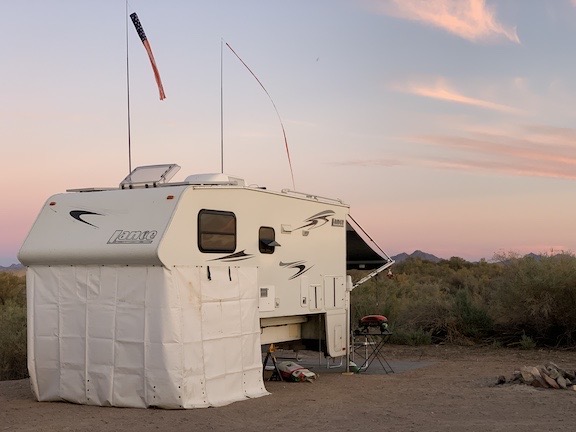
Here’s my truck camper, set up for a long stay at camp last year. You can read more about life at camp last year here.

My biggest fear in that spot was that some yahoo with loud equipment — generators, ATVS, radios, etc. — would pull into the area — it was big enough for multiple rigs, after all — and set up camp nearby, totally spoiling the peace and quiet I was able to enjoy. Yes, the spot did have visitors — there was a boat ramp there that saw some activity from fishermen — but no one (other than friends) spent the night. The fear of being intruded on by someone loud and obnoxious made my stay a little less enjoyable. And the knowledge that I was wasting time on a piece of desert when I could have been exploring new places convinced me not to spend more than a week at that spot again.

The realization that my cargo trailer was limiting my travel capabilities convinced me to leave it home in the future.

The Prospect of Traveling Light

Of course, not having the cargo trailer along would limit my comfort on the road. I couldn’t easily take the things I might “need” with me. After all, my truck’s huge cargo bed was full of my camper. My camper had some storage space, but not for large items. The back seat area of my truck was limited and there were some things I really needed to bring, including my generator and my bicycle (which folds).

It would also limit my ability to participate in art shows while traveling. I was all prepared to do shows last winter — I had all of my show equipment stowed in my cargo trailer — but COVID canceled most shows and the few that remained lacked the precautions that would have made me comfortable participating in them. (So yes, I lugged all that stuff all over the southwest for no reason.) Without the cargo trailer, would I be able to bring the tent, tables, displays, and other items I needed to do shows? I doubted it.

That meant that the trip would be strictly a vacation with no income-earning potential — and that didn’t jive with other plans I had for my life.

But This Is How It Works

I go through versions of this same debate every single year around this time. Lately, in the end, I make the same decision: stay home.

It’s a great idea. I can be comfortable and get work done. I can write, edit videos, and make jewelry — all of which have revenue potential for me. I can spend holidays with friends. I can go cross-country skiing for Christmas on some of the best groomed ski trails in the country. (And I do mean that literally; look up Methow Valley skiing.) I can spend the winter without worrying about where to camp, where to dump RV tanks, where to get water, and whether there’s enough solar power to top off my batteries before nightfall. Sounds great!

And then something happens that gets me packing my RV for the trip south: we change the clocks.

Suddenly, instead of the sun setting here at 5:46 PM, it sets at 4:34 PM. By December 5 of this year, it’ll be setting at 4:10 PM.

As someone whose life is governed by an internal clock powered by sunlight, I’m mentally ready for bed at 6 PM. And I can assure you that waking up at 2 AM after a full 8 hours of sleep is not optimal.

But before that, on around December 1, the Shadow Time will have begun here. And, most likely, the inversions will have started, shrouding the Wenatchee Valley in low clouds or fog that, because of my elevation, I’m often seeing directly out my windows. I remember being here one December or January when for three days in a row, when I looked out any of my windows, all I saw beyond the deck was white. I was living in a fog bank.

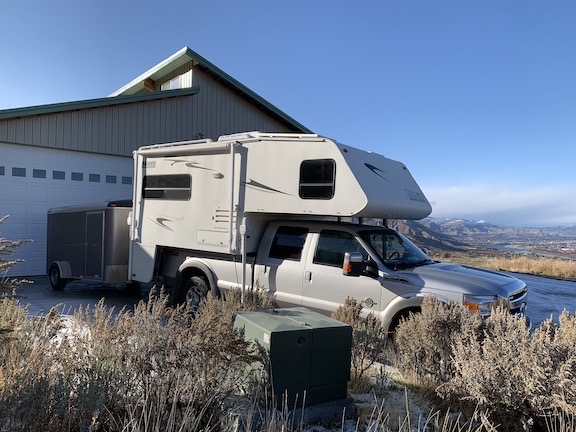
Truck at Home
Last year, I left home early, on November 15. With a cold snap and snow already on the ground, I couldn’t wait to get out of here. The trailer stays home this year.

This Year

I that’s where I stand today: I would like to stay home this winter but I know that as soon as we change the clocks, I’ll be eager to get out of here.

I have house-sitters all lined up and I know it would be disappointing to them if I told them I wasn’t leaving. So I’ll keep my current mindset to myself, knowing that it will change on the evening of November 7.

In the meantime, I have two Christmas art shows to attend in Washington State this November: one in Pasco on November 5-7 and one in Spokane on November 19-21. I’ll be taking my truck camper to both of them and I MUST be able to get all of my show gear on board. I’ve also started looking for shows in Oregon, California, and Arizona for December. If I can successfully pack for Pasco, I’ll head south right after Spokane.

Another winter south of the 45th parallel? You can bet money on it.

Helicopter Tour of the Los Angeles Area

Another video from the Flying M Air YouTube channel.

Join me and fellow helicopter pilot Skyler as Skyler pilots my helicopter around his home turf, the Los Angeles area, to give me an aerial tour. We depart Whiteman Airport, pass through Burbank’s airspace, and tour several points of interest from the air — Universal Studios, the Hollywood sign, Griffith Park Observatory, Dodgers Stadium (where the cars were lined up for COVID vaccinations), and downtown Los Angeles — before landing at Hawthorne Airport (home of SpaceX). I’ve got in-cockpit audio for most of the flight (after resolving a camera issue while Skyler was flying) so you can hear various airport towers as well as other aircraft making position calls on the Los Angeles helicopter common traffic advisory frequency (CTAF). I’ve added a few still photos I took along the way, too.

Cross-Country Helicopter Flight from Wenatchee to Los Angeles

A three-day journey, part solo, part with a companion.

Earlier this month, I got an offer I couldn’t refuse: a fellow pilot — Skyler, based in Los Angeles — wanted to lease my helicopter for two months so a client of his could experience what it was like to own a helicopter. The terms were set and they were good for both parties. My helicopter was probably going to sit in its hangar until the beginning of May anyway. Why not get it out early and let it earn some money for me?

So I did the necessary paperwork with my insurance company and Skyler’s client. Part of the deal was that I’d get the helicopter an annual inspection before delivering it in Los Angeles — even though that could have waited until the return flight in May. Because the client would cover that expense, was I going to say no? Of course not. So on the Ides of March, I pulled it out of the hangar, started it up, and went south.

Wenatchee to McMinnville

Or I would have. Instead, I pulled it out of the hangar, tried to get it started, failed, put it on a battery charger, waited two hours, tried to start it, failed, put it back on a battery charger, ordered pizza for the maintenance guys, had lunch, tried to start it, and finally succeeded. Three hours after I’d expected to leave, I finally took off. It was 1 PM.

N7534D
Here’s Mr Bleu in Wenatchee, tethered to the ground by a battery charger cable.

(And before anyone freaks out about me flying a helicopter with a less-than-pristine battery, have you never jump-started a car? And, if you’ve done so, has the engine ever failed after you started it? This is the same thing, folks. The helicopter’s alternator charges the battery in flight, just like your car’s alternator does for its battery when you drive. You only need the battery when you start it or if the alternator fails. And even then, the engine won’t quit.)

Watch the Videos
Interested in seeing the cockpit POV video from last year’s trip to McMinnville? It’s in five parts because of all the weather I had to deal with:

The last two have the most weather, if you like watching an idiot in a helicopter running the scud.

The flight to McMinnville, OR, where my mechanic is based, was a lot better than it was last year, as documented in a series of videos on Flying M Air’s YouTube channel. I actually had decent weather — even some sun! — for most of the way. It got a little iffy just before reaching the Columbia River near Cascade Locks, and the wind was howling just before I got there, but once I settled in over the Columbia a trip down the lower gorge, things settled down. I was glad I’d chosen the route I’d picked, which was pretty much a straight shot from Wenatchee to Hood River (modified in flight to Cascade Locks to avoid wind in the gorge), down the river a bit, and then straight to McMinnville. A pilot friend had suggested following I-90 across Snoqualmie Pass to the Seattle side of the mountains and then south along I-5 — a real IFR (I follow roads) route — and that may work for him, but I’ve always had bad luck trying to cross the Cascades there. On this particular day, I definitely made the right decision since there were low clouds west of my route, possibly along the route he’d advised. Flying anywhere west of where I live in late winter or early spring is always a crap shoot and I’m sick of playing craps while I fly.

While on that topic, I should mention that I’m pretty sick of flying in bad weather, period. My helicopter had, at the time of my departure, only 86 hours left until overhaul. I’d fully expected to get it overhauled last year, but 86 hours is definitely enough for another cherry season, as long as I don’t fly it for fun and run down that clock. So I put it away for the winter. That means that 90% of the time I’m flying is either down to McMinnville and back or during/after rain where I live. Flying in rain may keep the blades clean, but it sure isn’t as much fun as flying on a perfectly clear, windless day.

Day 1 Route
Here’s the route I wound up taking. I originally aimed for Hood River, but revised my route to cut the corner and (hopefully avoid some wind) when I got just past the fire tower.

So this flight was relatively uneventful. I’ll post a video when I get around to it. I’ve already posted a video with clips about a fire tower I flew over. Although folks claim they like my long videos, I just don’t understand why. They get boring after a while — even for me, and I’m doing the flying.

Fire Tower
I made a whole video about this fire tower. And yes, that’s Mt. Adams off to the right.

While I normally follow the river closely when I’m in the Columbia River Gorge area, I was eager to get to my destination without wasting a lot of time, so I flew straight lines whenever I could. That put me in a unique viewpoint for the Bonneville Dam, which was kind of cool. For some reason, however, I missed a bunch of the waterfalls on the Oregon side that I usually see — are they above Cascade Locks? If I weren’t so darn lazy this morning, I’d check a map. It could also have been the low clouds distracting me.

Bonneville Dam
Here’s a different perspective of the Bonneville Dam, approaching it from a peninsula into the Columbia River just upstream from there.

I crossed into Oregon just east of Troutdale’s airspace. Along the way, I caught sight of a message for our previous president that someone had planted in their yard. The weather was drizzly, but I had no need to make any detours. I landed at McMinnville almost exactly two hours after I’d departed Wenatchee.

Fuck Trump
This gave me a good laugh as made my way southwest across the northwestern part of Oregon.

At McMinnville

I blogged a bit about my travels earlier this week, so I’ll try not to repeat what I said there.

The short version is, I knew it would take at least a day and a half to do the annual inspection on my helicopter. Jerry Trimble Helicopters, where I go, is kind enough to provide courtesy cars for customers, so I climbed aboard a low-end Nissan — I’d gotten a brand new Volkswagen sedan on my previous trip — and set about finding a hotel and some food. I settled in at a Comfort Inn with some groceries for dinner.

On my full day in the area, I visited the Evergreen Aviation Museum, which is right across the street from the airport where my helicopter was being worked on. It was great touring the place with a docent all to myself and hardly anyone else around. I highly recommend it. (You know the Spruce Goose is there, right?)

SR-71 Blackbird
How often do you get to see an SR-71 Blackbird from the top? This was on the “behind-the-scenes” part of my docent-led tour.

I checked in on my helicopter before heading into town. It looked as if the crew was just past halfway done. The had to replace a hose because of a service bulletin but everything else was looking good. The battery was on a charger. They didn’t have a replacement and I couldn’t wait for them to get one, so I hoped it would be okay. If not, Skyler could get it replaced in Los Angeles. I was confident that it would start the helicopter on the remaining days of my trip south.

I went into town, where I had a wine tasting (and, like an idiot, bought three bottles of wine) and then ate dinner outdoors at a South American restaurant. Then back to the hotel, where I put together that fire tower video mentioned above.

In the morning, I had to figure out how to get the wine I’d foolishly bought home. I’d be flying to Los Angeles in the helicopter, but from there I needed to get on an airliner to get home. I had two carryon bags and was not interested in checking either one. The wine, even in a box, would put me over the limit. So I set about finding a place that could ship it for me. There are restrictions on shipping alcohol — who knew? — and a few hurdles to jump. But after parting with nearly as much money as it cost to buy those three bottles, they were in someone else’s hands. (They arrived at my house yesterday.)

N45PG
At the Jerry Trimble Helicopters hangar, I saw what’s left of Robinson R44 Raven I N45PG. Back in 2003, this helicopter belonged to my friend Tristan, who had big plans to build a business with it. As a CFI, he gave me my R44 transition training in this ship and I leased it from him for three months in 2004 to see if I wanted to get my own. Seeing it in pieces, needing a ton of work to get back into the air again, was bittersweet. I have a photo of it somewhere; I’ll share it if I find it. Tristan, who has an even shorter attention span than I do, is on to other things.

Back to the airport to check on the helicopter and set up the cameras for the next part of the flight. Would it be done by 2 PM? Skyler was arriving at Portland on a 1:30 PM flight and I had to pick him up. Ideally, the helicopter would be sitting on the ramp ready to go when we got back. It looked good. I left.

It was an hour drive to the airport. I arrived about 5 minutes before Skyler’s flight landed. I was waiting at the curb when he came out. We made the hour drive back, stopping at a DQ for lunch in the car along the way.

It wasn’t ready when we got back, although it was outside the hangar. Panels were still off and the battery was missing. The mechanics were kind of swarming around it like a pit crew at a race, but not moving nearly as fast. No one should rush maintenance.

Skyler and I loaded our luggage in back as the guys worked. A fuel truck came and topped the helicopter’s tanks. I paid the bill; I’d be reimbursed the next day.

It was after 3 PM when I did a quick check flight with Jerry. We talked a little about the “hop” in the rotor blades. It could be smoother with a blade balancing, but I didn’t want to spend the money on one so close to overhaul. He didn’t think it was so bad. I was used to it.

Finally, Skyler climbed in and we took off.

McMinnville to Susanville

Day 2 Route
Here’s the second day’s route. It would have been a straighter line if we could have gotten fuel at Klamath Falls.

I’d planned a very boring route down California’s Central Valley, keeping in mind that the winds were forecasted to hit 60 mph the next day at Weed so we needed to be past there by nightfall.

But Skyler had a different idea. He wanted to take a direct route that would have us on the east side of the lower Cascades and then crossing the Sierra Nevada on a diagonal the next day. I was game to try, mostly because I knew the wind would be less severe on the east side. So we headed south with the wishful thought of stopping at Tahoe for the night.

We flew over a whole lot of nothing. After leaving the valley and getting into the foothills of the lower Cascades, it was just snow-covered forest — much of it logged and replanted — and a lot of snow-covered back roads. There was one interesting spot where dead fir trees — possibly killed in a fire? — cast long, horizontal shadows on the bright white hillsides. The effect was stunning. (I’d share a photo but, true to form, the camera that would have caught it crapped out on me not long after departing McMinnville.)

Our flight path, aiming for fuel at Klamath Falls, had us on a direct path over Crater Lake, which I’d never flown over. The view of the seasonally closed park was stunning. I started heading out directly over the lake but changed course when I realized that an engine failure over the middle of the lake would have us freezing to death in cold water before we could get to shore. I changed course and hugged the northeast shore, getting back on course on the other side.

Crater Lake
I flew over Crater Lake while Skyler played tourist. I erroneously thought that my helicopter’s nose cam would pick up footage from our flight, but the damn thing had stopped writing to the video card 15 minutes after leaving McMinnville.

We arrived at Klamath Falls at 5:15 PM. We tried calling the FBO from the ramp, but there was no answer. Skyler walked to the FBO office while I shut down. He returned, cursing. Although they were still in there, they wanted an extra $150 to fuel us because it was “after hours.” Neither of us wanted to pay, so I started up and we continued to the tiny rural airport at Malin just 18 NM away. We used self-serve to put in the maximum allowed — can you believe the pump had a shut off? — which would be enough to get us to Tahoe.

But by this point, it was getting late. We were another hour into the flight when we started doing math. Sunset was just after 7 PM but it didn’t look as if we could make it to Tahoe until well after 8 PM. Neither of us wanted to fly over the mountains in the dark. Where could we stop for the night?

Skyler flew while I worked Foreflight on my iPad. By some miracle, we still had a cell signal. After a few discarded suggestions, I looked at Susanville. The town was about 5 miles from the airport. It would work if we could get ground transportation.

I picked up my phone and called the number for the FBO. Second miracle: someone answered.

I asked if they had a courtesy car for two helicopter pilots who needed to spend the night in town. After a moment of hesitation, the man promised a Crown Victoria (third miracle!), told us where to park, and asked when we’d be leaving in the morning. I told him we’d leave after 8 AM and we needed both fuel tanks topped off before going. He gave me another phone number if I had questions and we hung up.

We arrived in Susanville just before sunset. We parked where a guy on the radio — the same guy? — told us to, unloaded our luggage and my cameras, and walked to the terminal where two men chatted with us. One of them offered us a beer several times — I think he wanted us to hang out. But we where exhausted and declined. Instead, we climbed into the car and headed for town.

It was the Red Lion for our overnight stay, with a stop at the KFC across the street for dinner. I spent the evening transferring video files from my cameras to a hard disk and trying to troubleshoot the problem I was having with my relatively new GoPro Hero 8.

Ah, the glamour of cross-country flight!

Susanville to Los Angeles

Day 3 Route
This turned out to be our route on Day 3. We didn’t really use waypoints at all; the idea was to get around the mountains and then head into the Los Angeles area.

It was overcast the next morning. And cold.

We stopped at a Starbucks for coffee and breakfast and then headed to the airport. They’d filled the helicopter with fuel; Skyler’s client picked up the tab (again, as he would for the whole trip). We chatted with a bunch of guys and a kid in the terminal, including a guy who did a UPS package run across the mountains in his King Air every day. He told us that the conditions were bad where he had come from, which I think may have been Redding.

We discussed our route. Skyler wanted to continue on his original route. I was concerned with mountain obscuration in the Sierra Nevada and the possibility of high winds up in the mountains. The way I saw it, we needed to pick a side of that range: east or west. If west, we should move back to the west side before going further south, although that could put us in the weather the King Air pilot had mentioned. If east, we’d be fine flying past Reno and then dropping into the Owens Valley. We could head west when we got to the desert.

He chose east so we took off to the southeast.

The trip started off a little bumpy with winds and mechanical turbulence. The rule when flying a Robinson in wind is to slow down — keep it below 100 knots. That isn’t so tough given that my ship doesn’t cruise much faster than 110 knots in the best conditions. Skyler did a bunch of flying; he likes to experiment with the way the wind affects the helicopter when flying near mountains. I just wanted a smooth ride. I don’t know too many people who don’t hate turbulence.

The weather settled down by the time we got near Reno. We crossed the metro area on the west side, in the foothills. We continued south. Through more snow-covered, hilly, forested terrain. It was beautiful but kind of monotonous.

Reno, NV
Skyler flew past Reno while I took pictures out his side of the cockpit bubble.

Skyler suggested we stop for lunch at Lake Tahoe. I was game. I was hoping for some decent footage from the nosecam, which was now using one of my GoPro Hero 7s. He flew, trying hard to get some “cinematic” footage along the way. We came through the mountains at a pass; there were low clouds misting rain or snow over the lake, so we had to stay pretty low. It was about as gorgeous as you might expect.

Lake Tahoe
Flying low level down the east shore of Lake Tahoe. I’m not sure, but I think my camera had something on the lens dead center; it doesn’t seem properly focused.

We came in for landing at the airport there and put in a fuel order. He had some paperwork to do for the insurance so he used the computer in the FBO. Afterwards, we went to the restaurant in the building next door. We ate indoors — it was chilly out on the patio — but there were only a few other people in there so I felt safe enough.

After lunch, we climbed back on board and continued the flight. We’d considered hopping over to the Central Valley by way of Echo Pass, but had decided to stay on the more interesting side of the mountains. (If you’ve ever flown in California’s Central Valley, you know what I mean.) The ceilings were kind of low, but not low enough to be a nuisance. Still, I was interested in following a known path that would go through the mountains without having to climb over them. So we headed southeast until we found Route 395 and followed it south.

Near Bridgeport
We crossed this valley on the way to intersect with Route 395. I wanted to avoid having to fly over peaks like the ones in the distance; better to follow a road and fly through the passes.

Eventually, we got to Mono Lake and the town of Lee Vining. After that would be Mammoth Lake and beyond that, at around Bishop, the terrain would finally descend and flatten out into the Owens Valley. All along the way, we’d have the towering, snow-capped Sierra Nevada Mountains on our right with lesser mountain ranges off in the distance on our left.

Mono Lake
Skyler flew low over Mono Lake, giving us a view of the tufa formations on the northwest shore.

I flew for a while when the terrain got too boring for Skyler. Past Bishop, I overflew the radio telescope installation, being careful not to directly overfly any of the telescopes in case they were working. I remembered the installation being a lot bigger than it was that day but chalked it up to remembering a time when I felt smaller and the world around me when I flew seemed so much bigger. For a while, I settled down over the Owens River, flying a staight line as it snaked back and for the beneath us. Then I moved out over the divided highway of Route 395, remembering that I’d driven that road only a month before on my way home from Death Valley and my other winter travels.

Route 395
Route 395, somewhere in the Owens Valley.

It was around 2 PM when we stopped for fuel at Lone Pine. It was self serve and Skyler did the filing job while I handled the ladder and grounding strap. He debated whether he should put fuel in both tanks but decided not to; our original destination airport — Brackett Field, I think — charges a landing fee if you don’t put on at least 30 gallons. He wanted to come in nearly empty. (It actually turned out to be a bad decision because we didn’t have enough fuel to get there with sufficient reserves.)

Lone Pine Airport
There wasn’t much going on at Lone Pine Airport on that Thursday afternoon.

Before continuing south, I ducked behind the helicopter, stripped off my turtleneck, and put on a t-shirt. We’d gone from frigid air to desert heat in just a few hours. I climbed back on board, started up, turned on the air conditioning, and headed out. I don’t know about Skyler, but I was ready to be done flying.

But we still had miles to cover. We passed Owens Lake on the west side and continued down the valley. Eventually, we crossed over some hills, heading toward Isabella Lake. Then down through Kelso Valley. Through one wind farm and then another. Past many solar installations across the high desert north of the mountains north of Los Angeles.

By then, Skyler had decided that we needed fuel. He headed toward Whiteman. I didn’t see the airport until we were nearly on top of it — it’s completely surrounded by roads, businesses, and homes.

By this point, I was a passenger and was enjoying it. I have very little experience with the crowded Los Angeles airspace and no desire to expand my knowledge. Skyler knew it well; he could fly and talk. In fact, when we left Whiteman, we switched seats and I settled back with my phone to be a tourist.

He offered me two quick tours of the Los Angeles area: The coastal route with celebrity homes or downtown LA. I picked downtown, never dreaming that he would get so close to downtown. But before we got there, we went past Universal Studios, the Hollywood sign, and Dodgers Stadium, which was a COVID vaccine site filled with cars. Downtown Los Angeles had more helipads than I thought possible; Skyler told me that every building over 13 floors has one for emergencies.

Downtown LA
Downtown Los Angeles, up close and personal from the air.

From downtown, we headed for his revised destination — he’d been chatting occasionally via text with his client since leaving Tahoe — Hawthorne Municipal Airport, home of SpaceX. He landed on the runway and followed the tower’s instructions to set down at the FBO. We touched down at 5 PM, exactly the time he’s told his client we would arrive. He hurried inside to meet the client while I unpacked my luggage, made a Hobbs book entry, retrieved my cameras and most of my mounts, and said goodbye to Mr Bleu.

I got to meet the client, Chris, inside the FBO. He was heading out with Skyler; they’d do a tour of the area as soon as he got clearance from the tower to depart.

I got a video of them taking off.

Mr Bleu at Hawthorne
Here’s Skyler and Chris taking off from Hawthorne in Mr Bleu.

Left alone in the FBO, I organized my things and worked Google to make a hotel reservation. I’d be in the area until Saturday morning and, without a car, would be Ubering here and there. I was gone before they returned.

Afterword

I collected a lot of video during the trip and a lot of it will get edited for Flying M Air’s YouTube channel over the coming months. My cameras, of course, did not all behave so I don’t have complete footage of the flights from any one position on the helicopter. But that’s okay. I’ll make the best that I can from what I have.

Mr Bleu will be returning before May 15. I won’t be flying him back. Skyler and Chris plan to do the trip over four days. I’m bummed out, but can’t complain. They’ll be paying for that entire flight so it’s all good.

And who knows? They might fly Mr Bleu again in the future.