Eating for Health: The Mediterranean Diet

I change the way I eat in an attempt to head off health problems.

Last week I went for my annual check up. There was nothing new to report: I still had high blood pressure (which I’ve had for at least 15 years). I did manage to shrink a bit more — no matter how tall I tried to stand against the measuring do-dad, my height came out to 5′ 7-1/4″ instead of the 5′ 8″ on my driver’s license and elsewhere. The scale reported that I was about 5 pounds heavier with my clothes on than I had been that morning at home with my clothes off. Neither number was very good.

I chatted with the nurse about weight. As I’m aging, I’m feeling the affects of having to carry around more weight than I should. I told her about my experience with Medifast, which I blogged about here, and how I was not interested in eating fake food for the rest of my life. She told me about her experience with the Mediterranean Diet and highly recommended it. A while later, the doctor did, too.

This isn’t the first time healthcare professionals have recommended the Mediterranean diet. I’d been advised to try it before. And I did get a book full of recipes to learn more about it. But, in all honesty, I didn’t think it was that different from the way I usually eat. You see, I don’t eat a lot of processed/prepared foods and I don’t have junk food snacks in my pantry. I already have a somewhat “healthy” diet.

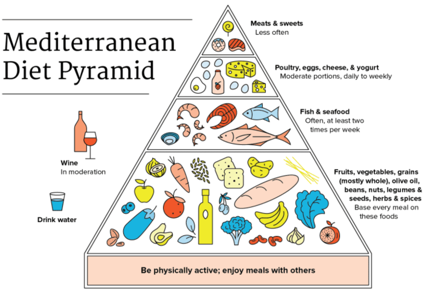
Mediterranean Diet Pyramid
Search Google for “Mediterranean Diet Pyramid” and lots of versions will come up. This one is from an article on the America’s Test Kitchen website; check it out to see a larger version and explanation.

This time, however, I decided to take a closer look. The Mediterranean diet isn’t about weight loss as much as it’s about developing and maintaining healthy eating habits. It tries to condition you to make good food choices so you can stick to it for the rest of your life — which is exactly what I need and want. (I’m done with lose-weight-quick diets that promise you’ll lose weight if you just eat some ridiculous combination of foods that don’t make up a healthy balanced diet.) It presents a food pyramid that’s remarkably different from the one established by the FDA — it pushes lots of fruits, vegetables, and whole grains and severely limits red meats and sugary snacks and deserts. I could eat things like bread and pasta and rice (in moderation, of course) — which are verboten on so many weight loss diets. I could also eat lots of beans, fruits, and vegetables, which I actually like. The main change would be a reduction in meat and an increase in fish — and I have to admit that I’d already eat more fish if there was a decent fish market within driving distance of where I live.

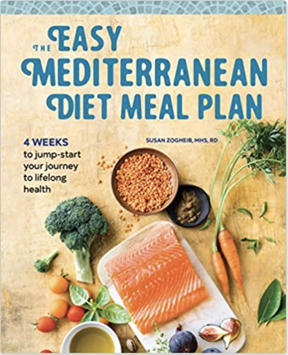
Easy Mediterranean Diet Book
I might call this book “Mediterranean Diet for Morons” since it’s so damn easy to follow.

I decided to give it a try. But because my bigger problem is portion control, I thought I’d try it with a guide that included recipes and meal plans that made it easy for me to eat the right things without over eating. I wound up with The Easy Mediterranean Diet Meal Plan, which includes four weeks of meal plans with recipes and weekly shopping lists. I bought the Kindle version, which was only $6.99, so I could easily consult it anywhere on my iPad.

After reading up on the “good food” vs “bad food,” I paged ahead to the first week’s shopping list and dutifully added all the items I didn’t already have on hand to the shopping list in my phone. Although I’d planned on going food shopping this morning (Sunday), it was a good thing I had the list with me on Friday when I happened to be in town after a trip with a friend up to Twisp; I put on my mask and braved the Fred Meyer supermarket in mid afternoon to get what I needed. I don’t think I’ve ever spent so much time in the produce department in my life. I wound up with a ton of veggies, many of which — like kale and fennel (anise) — are not normally part of my diet. I had trouble stuffing them all into my fridge.

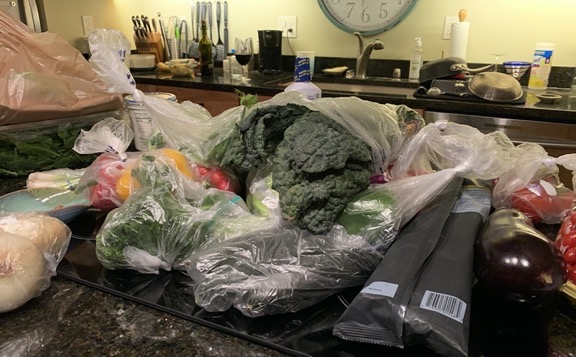
Veggies
Here’s some of my haul from Friday’s trip to Fred Meyer. Kale, peppers, celery, and fennel were four veggies I seldom buy.

I spent Friday evening and all day Saturday trying to eat up the leftovers I’d accumulated during the week. (I hate throwing away food.) Then I went through my pantry and pulled out food items that I shouldn’t eat, just so they wouldn’t tempt me. I made two bags: one to store down in a box in my garage because I’d likely eat them again (in moderation) when my one-month trial was over and another to hand off to a neighbor because I was unlikely to eat them ever again. This process actually surprised me because I found that most of the stuff in my pantry was food that was okay on the Mediterranean Diet. (As I said earlier, my normal diet isn’t that different from this one.)

I also made the “cold cooked” oatmeal and quinoa dish that would be my breakfast for the next two days. (I ate it a little while ago with 2 ounces of fresh raspberries on top and it was very tasty.)

I discovered that all of the recipes in the cookbook made four servings. That meant I needed to cut them in half or fourths, depending on whether I was supposed to eat them for two or one meal. (Of course, this also meant that I bought too much food; I’m hoping some of it will last beyond the first week. If not, my chickens will get some good treats at the end of this week and I’ll shop more carefully next time.)

Food Rules
I should point out here that the Mediterranean Diet offers the same advice as Michael Pollan in his book, Food Rules. The main takeaway of that book is “Eat food. Not too much. Mostly plants.” I highly recommend the book if you’re interested in a quick, easy read that’ll help you eat healthier.

Anyway, the main challenge this first week is to keep my snacking under control between meals. I’m using my usual calorie counting app to keep track of what I eat and that’ll help keep me focused. Once I get into the swing of things, I should do fine. After all, I managed to stick to Medifast, which was quite difficult, for nearly 4 months. If I can do that, this should be a piece of cake.

(Or maybe a stick of celery, since cake isn’t on the list of “good food.”)

I’ll let you know how I do.

In the meantime, why not take a look at your own situation? Could you benefit from a better diet with healthier food? Or some of the other philosophies of a diet like the Mediterranean, which I didn’t even cover here: slowing down, taking time to prepare your food, enjoying meals at a table with your family and no screens? Be objective in your evaluation. Maybe it’s time for you to start thinking more about how what you eat and how you eat it affects your health. You never know.

The Great Loop

I read a book about a trip I’d like to take.

Although it’s still very much winter here in North Central Washington State, my mind has been somewhat consumed with boating these days.

If you’re a regular reader of my blog, you may remember the post I did some years ago about an ill-fated trip to a friend’s house out in the San Juan Islands. (It was an ill-fated post, too. The friend I wrote about seemed to take great offense at what I’d said about him and another friend apparently read between the lines and thought I was blogging about her. My response to both: Really?) In the post, I mentioned my friend’s boat, which I really liked, and how I wanted to get a similar one.

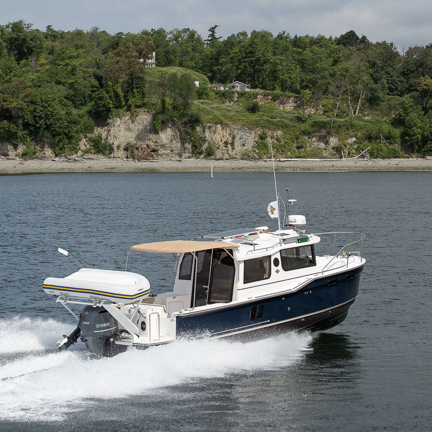
Ranger Tug R-27
Spending four winters in a row in a truck camper has really prepared me for long-term living on a boat this size. It’s basically my camper on a boat.

Over time, I discovered the 27-foot Ranger Tug that I have my eye on. This boat has all the comforts of home — well, at least all the comforts of my truck camper — in a towable package. That means I could store it in my garage between long trips out on the Columbia River, Lake Chelan, Roosevelt Lake, the San Juan Islands, and the Inside Passage. I could even take it south for the winter — imagine spending December and January on Lake Havasu in Arizona?

I also began thinking of other adventures where I could take such a boat. I immediately thought of the Intracoastal Waterway up the east coast of the US. And then maybe up the Hudson River. And the Erie Canal to the Great Lakes. And wouldn’t it be amazing if I could find some way down the Mississippi back to the Gulf of Mexico and around the Florida Keys back to my starting place?

What I had just imagined was something that actually existed and had been accomplished by many people: the Great Loop.

The Great Loop

Per the America’s Great Loop Cruiser’s Association website,

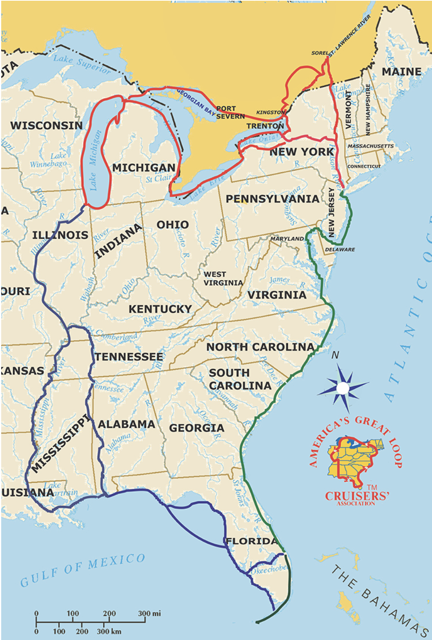
The Great Loop is a circumnavigation of the eastern U.S., and part of Canada. The route includes the Atlantic Intracoastal Waterway, the New York State Canals, the Canadian Canals, the Great Lakes, the inland rivers, and the Gulf of Mexico. “Loopers” take on this adventure of a lifetime aboard their own boat.

Great Loop Map
Here’s the map of the route. Note that there are two ways to get from the Hudson River to the Great Lakes, two ways to get through the Great Lakes, two ways to get from Illinois to the Gulf of Mexico, and two ways to navigate Florida. This makes it possible to do the trip a number of different ways.

The website has a wealth of information about this roughly 6,000 mile journey, including many resources for learning about the route and points of interest along the way. Honestly, the website can tell you a lot more about the Loop than I can; I’ve only begun exploring it.

A Challenge, An Adventure

If you know me well, you should know that I live for challenges. I’ve had three successful careers (so far) for a reason: I get bored easily. After an initial start in the business world as an auditor and financial analyst — what was I thinking? — my writing hobby turned into a career as a freelance writer. When that generated a bunch of fun money, I learned to fly helicopters, bought a helicopter, and turned that into a career as a helicopter pilot. These days, I’m keeping myself amused by learning jewelry skills and techniques, but I can’t really call that a new career — at least not yet. (Maybe in a few years?)

In each case, it was the challenge that drove me, even if I didn’t realize it. I always want to learn and do new things. I want to get good at them. When I can actually earn a living doing them, I’m rewarded and motivated to do and learn more.

Taking a boat on a 6,000 mile trip on rivers, oceans, canals, and lakes — now that’s a challenge.

I’ve always been a bit of an explorer. I bought a Jeep to explore the desert on the ground. I’ve used helicopters to explore the desert, mountains, canyons, lakes, rivers, coasts — you name it — from the air. In the past, I’d done boating trips with a focus on exploration: a rafting trip down the Colorado River through the Grand Canyon, a house boating trip on Lake Powell, small boat trips on the Hudson, East, Harlem, Colorado, and Columbia Rivers, a 12-day cruise up the inside passage on a small boat. Imagine how much I could explore on a Great Loop trip!

Of course, there are hurdles to jump. Getting the boat and learning to pilot it safely and effectively is the first big challenge. Learning what I need to know to plan and execute a long boat trip is another. This isn’t something I would do without proper preparation. But as I research the things I need to know, I realize that it’s definitely doable. A real goal for my post-retirement years.

Reading First Person Acounts

I started my research about six months ago, before I went south for the winter. I searched for books about the Great Loop. There are a lot of them. It seems that many people who do this journey like to write books about it.

There are different ways to do the trip and a lot of them depend on the size and style of the boat you’re doing it with. I wanted to read books written by people kind of like me — not super rich, motoring in a smallish boat. (Yes, 27 feet is considered small for this trip.) A lot of the books out there were by couples in giant yachts and I didn’t want to read those. Chances are, I’d have a budget for the trip, which meant I wouldn’t be able to spend every single night along the way at a full-service marina. I’d have to boondock (the RVing word) or lie at anchor (the boating phrase) for at least half the nights. So I wanted to read books by people who had similar experiences to what I might have.

I sampled a few books in Kindle format and wasn’t very impressed. One of the drawbacks of this age of self-publishing is that anyone can do it — even if they can’t write. One book sample read like an infomercial for the book, with lots of repetition and apparently no editing. Another was similarly uninteresting to me, although I can’t remember why. But a third…well, I thought that had promise. I bought it and read it yesterday.

A Book Review

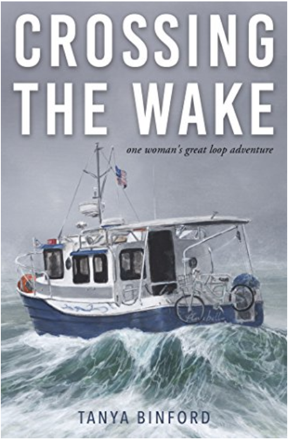
Crossing The Wake
Here’s the book I read first about motoring the Great Loop.

Crossing the Wake: One Woman’s Great Loop Adventure by Tanya Binford is almost the kind of book you might expect. The subtitle tells you that the book is about a woman’s trip doing the Great Loop and hints that she’s doing it alone (which she mostly did). I tend to shy away from women’s books because I have trouble identifying with the themes they usually include: the trials of motherhood, dealing with sexual discrimination, and fighting male dominance. This book, fortunately, didn’t have much of that — although it certain had more than enough for me. Unfortunately, as I discovered while turning page after virtual page, it didn’t really have what I wanted to read, either.

You see, although the author wrote this book about her journey, it read more like a catalog of fears, challenges, and social activities than a travelog. With virtually no boating experience, she decided she wanted to do the trip. To prepare, she moved from the Arizona desert to the coast of South (I think) Carolina and bought her young adult son a boat. Over and over again, she tells the reader how little confidence she had in her skills while she let her son do the piloting. She shares many anecdotes about needing the help of a man to do one thing or another. Yet she buys one boat after another to learn what she needs to know and build her skills. That’s admirable, but I don’t believe she had the skills she needed when she finally started the trip.

The first part of the book explains what she was doing for a living — she was a psychiatric registered nurse who was able to meet with patients through video calls (this was before the pandemic) — with side stories about some of her patients, co-workers, and bosses. It also covers some of her preparations, with lots of details of the (mostly) men who helped her and the (mostly) women who worried about her doing the trip on her own.

The second, longer part of the book was about the actual trip. Here’s where the definition of “solo” gets hazy. You see, although she was alone on her boat for most of the trip, she also traveled among other “Loopers” who she would see, on and off, throughout her trip. The book is one story after another about meeting this couple/boat here and that couple/boat there and having “docktails” and dinner and shore trips with all these people. It was a social report. There were very few details, especially in the first part of the trip, about navigation, points of interest, or the traveling itself. When she did try to give details, she fell short or used incorrect names. (It’s New York Harbor, not Hudson Bay (which is in Canada); the New York Thruway, not the New York Expressway and the Tappan Zee Bridge, not the Tappen Zee Bridge. These are the things I caught because I know them; how many other mistakes did she make?)

Along the way, she confirmed, over and over, that she was in way over her head on this trip, lacking either confidence or skills that she really should have had. And if that wasn’t bad enough, halfway through the book/trip she admits that the autopilot and radar don’t work properly. (I cannot, for a minute, imagine taking a boat on a 6,000-mile solo trip without an autopilot, let alone drive a boat in unfamiliar water in fog without radar yet the author did both.) Yes, she survived the trip, but I felt that she struggled with her own shortcomings to do so.

What did I want from the book? I guess I just wanted more details about the trip itself. More about navigation, overnight stops (other than to name them), unusual boating/navigation rules/situations. She did provide some of this, but not nearly as much as I wanted. Instead, I was treated to her stories about her bullying her mom on part of the trip, men who made passes at her, and her emotional turmoil when another boater she’d had a fling with found another non-boating woman and married her.

And frankly, I found her side story about a patient who had killed herself when she (the author) left her job to start the trip disturbing and unwelcome.

If the author happens upon this blog post and reads it, I’m sorry to be so brutal. But I’ve filed this book with most of the other “women’s books” I’ve come across. I probably should not have read it.

Did I get anything out of the book at all? Yes. I learned that a woman with very little experience driving a boat slight smaller but similar in style to what I want to buy completed the trip by herself.

If she could do it, so could I.

Making Plans

So I’ve set this up as a new goal for myself: motor the great loop before I turn 65. I have just over 5 years to:

  • Get back in shape. I’ve let myself go a bit and that’s causing aches and pains that I simply should not have at my age. Time to slim back down, get more exercise, and prep for being able to walk a very narrow gunwale.
  • Buy a suitable boat. That Ranger Tug is looking good, but I do have a friend trying to talk me into something else, so I’m not 100% sold on it yet.
  • Spend a lot of time on the boat to become an expert on handling it. This might sound weird, but to me, flying a helicopter in most conditions is like driving a car. I’d like to get like that behind the wheel of a boat. Practice — especially practice in challenging conditions like wind, currents, and rough water — makes perfect.
  • Spend some time with a boat mechanic. The goal is to learn the basics of what might break and how I can fix it — or at least enable to limp to a marina for a real fix.
  • Learn everything I need to know about navigation on the Great Loop’s waterways. There’s a lot to learn — including navigation on Canadian waterways.
  • Prepare the boat for a very long trip. That includes a last-minute tuneup of the engine and other systems and packing the gear I’ll need (and leaving behind the gear I won’t).
  • Get the boat to a starting point, launch it, and get under way. Whether I do this alone or with a travel companion depends on what’s going on in my life when the time comes to start.

Chapman Piloting & Seamanship
Chapman Piloting and Seamanship is the bible for learning about boating in the United States. I’ve got this book in print and in Kindle format and have been reading various chapters to immerse myself in boating information.

A lot of this actually ties in nicely with a related goal: getting my boat captain’s license. I’d like very much to be able to make a bit of income with this boat since it’ll cost so much to acquire and operate. (But still not as much as a helicopter.) Even if I make enough to cover my personal boating costs, I’ll be very happy. But to legally do that, I need the proper boat captain’s license, which requires experience on the water, training, and passing scores on a test. I’m already beginning to study for all that.

But whether I become a boat captain or not, motoring the Great Loop is a set goal. Let’s see if I can do it.

Reality TV: British Baking vs. Blown Glass

I compare two contest style reality TV shows.

I don’t watch regular TV. I don’t have cable or satellite, although both are available where I live. Instead, I have a smart TV and subscribe to a handful of services: Netflix, Amazon Prime, and Disney Plus. (I also watch YouTube on my TV but I haven’t yet sprung for a subscription to get rid of the increasingly annoying ads. I don’t think YouTube should cost more than Netflix.) Because I absolutely abhor commercial breaks while watching TV, I pretty much ignore the extra channels my TV offers for “free.” (My time is worth more than what I’d spend watching those commercials.) I don’t channel surf; once I start a show, I’ll either watch it all the way through or turn off the TV and do something else.

What I watch is pretty much limited to what I find on the services I get. (This means that if you try to start a conversation with me about the latest hit on CBS, you will not succeed.) When I feel like watching TV and I don’t have something specific in mind, I’ll browse to find something new. I’m big on binge watching when I want entertainment, so that occasionally has me trying new multi-episode series to see what resonates with me enough to watch.

I should mention here that, as a rule, I don’t watch reality TV. My personal reality is entertaining enough for me — I don’t need to watch some onscreen reality, manipulated by directors and creative editing to add drama. I’ve never seen Survivor or The Great Race or The Bachelor. I don’t even know the names of other shows that countless Americans waste their time watching — probably because they have time to waste. I prefer spending my free time enhancing my own reality.

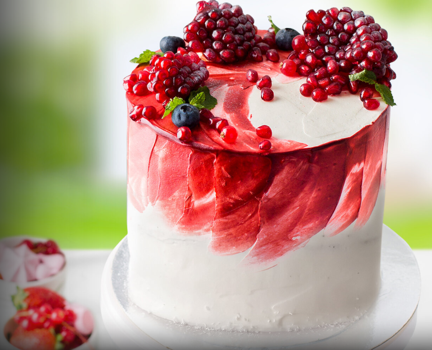
Great British Baking Show Promo
The promo photo on Netflix for the Great British Baking Show.

That said, I rather enjoy The Great British Baking Show, which I believe — and you can correct me if I’m wrong — falls into the reality TV genre. It’s kind of fun and very heartwarming (at times) to see the contestants help each other out. There’s very little (if any) friction between the folks vying for the prize of top chef. I watch people struggle (or not) to bake amazing things. They succeed (or fail miserably). The hosts provide just the right amount of comedy while the judges keep things grounded. Along the way, I learn a bit about baking techniques and how people’s backgrounds influence the kinds of foods they make. There’s no fake drama — at least none that I can see. I think that’s what explains why it’s such a hit with many of my friends, although we don’t usually gab about it the way other folks seem to gab about The Bachelor. (For Pete’s sake, even one of the late night TV guys — one of the Jimmys — includes a recap of each Bachelor episode in his monologue. Who cares?)

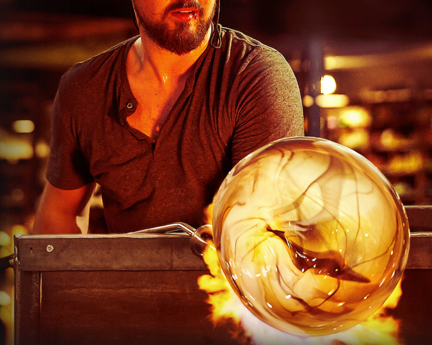
Blown Away Promo Photo
The promo shot for Blown Away on Netflix.

Recently, while looking for something new to watch, Netflix suggested Blown Away, a contest-style reality TV show featuring glass blowers. This seemed like a good fit for me. I love the look of blown glass and sort of expected the show to enlighten me about glass art techniques, much the way British Baking gives me insight into making custard or layering cakes. I figured I’d give season 1 a try and tuned in for a few episodes.

I was disappointed. Although the show offered many clips of what the glass artists were doing, there was very little in the way of educating viewers about it.

Well, that’s not exactly fair. I remember seeing some onscreen captioning that did explain certain terms and techniques briefly, but all of those seemed to disappear by the middle of the first season’s run of episodes. Other than that, the only time artists or judges explained what was going on was to enhance the drama. “That’s a very risky procedure so-and-so is attempting.” Or “If I don’t do this just right, the whole piece can shatter.” In most cases, these insights were actually the foreshadowing of breaking glass or ruined pieces.

I know that the place must have been full of cameras because of the amount of footage they edited in that set up rivalries between contestants. One contestant leaves the annealer door open too long; cut to another one yelling, “close the door!” Another contestant is yelling at her assistants; cut to the other contestants complaining about the yelling. And don’t even get me started on the way they edited in facial expressions from competitors that were obviously not responses to things that were said in the edited video. In the final episodes, half the scenes consist of one contestant comparing his/her work to the others and saying how much better (or worse) it was or declaring that he/she should win (or should get eliminated).

Four episodes from the end, I already knew who the final face-off would be between: a particularly outspoken and prima donna-ish woman who claimed to be making art that always seemed to be gender related and a no-nonsense man who definitely had superior skills but a similarly unattractive attitude. The editors had been developing the rivalry between them for nearly the entire run of episodes; how could they possibly eliminate either one? I got the feeling the outcome was established long before the show was edited and the scenes they included were edited in to support that outcome. The trouble for me was that I didn’t like either of those last two contestants. And when it came down to the final winner, I preferred the other one to win. (I actually wanted the guy eliminated just before the final round to win; he had the skill and the humility to take his art to the next level with the prize.)

When the series was over — I watched the 10 half-hour episodes over three nights — I was left feeling disappointed. I’d learned next to nothing and felt manipulated. I’d grown to hate the host of the show and the person who won. I felt too much pity for the contestants I thought should have stayed in the running but had obviously been eliminated because they were too much like British Baking contestants and not enough like other reality show contestants who would do anything to win.

I had just started watching the first episode of season 2 — perhaps thinking it would get better? — when I realized that this was probably like most reality competition shows. Fake. Contrived drama. Judging designed to maintain the rivalry between competitors. Little, if anything, to be learned. Why would I waste my time with more of this?

I turned it off.

I spent some time thinking about how this show stacked up against a reality competition that I actually liked: The Great British Baking Show. I wanted to understand why I liked one show and disliked the other. This blog post is the result of those thoughts.

What do you think? Have you seen either show? Can you recommend something you think I might like?

What’s Good About Being Home

It’s the little things.

I’ve been home from my winter travels for nearly four full days now. The initial euphoria has worn off, but I’m still thankful for the little things that make being home such a joy after living in a truck camper in the desert (and beyond) for three months. Here’s a quick list:

Water that I can use freely, without conserving every drop. I don’t generally camp in campgrounds with hookups, full or otherwise. That means that I have to haul water when I need it. Needless to say, the less water I use, the less work I have. I’ve gotten very good at conserving water when camping — my 30-gallon fresh water tank can last a week or longer if I try hard to make every drop count.

Heat. Yes, my camper has a heater, but the heater requires propane and battery power to run. Battery power is usually only an issue in December and early January — or on cloudy days — when there’s less daylight per day. My solar panels do a good job at keeping my battery charged, but running the heater at night can really suck those levels down, potentially damaging the batteries. Since I also use propane to power my fridge, heat my water, and cook, I like to minimize its use for heating. As it is, I burn through about 4 1/2 gallons of propane a week. Refilling a tank requires me to remove it from my camper, get it filled, and then reinstall it. (I have two tanks.)

Hot water all the time. To save propane (see above), I only heat the water once a day, in the morning. I use it to wash myself and my dishes. If there’s any left, it’ll stay warm until evening.

Clean clothes every day. In an effort to minimize trips to the laundromat, I will often wear t-shirts and always wear jeans more than one day in a row. (I brought along enough underwear and socks to last two weeks, so I wouldn’t have to double up on those.) Getting clean clothes meant a trip to the laundromat, which isn’t a terribly pleasant place to hang out. The only benefit to using a laundromat vs. doing your laundry at home is that you can do it all at once, using as many washers/dryers as you need.

Washer/dryer on the premises. See above. If I spill coffee on a white t-shirt, I can throw it right into the wash to get it cleaned before the stain sets.

Shower every day. My camper does have a shower and I’ve learned how to shower using a minimal amount of water — I estimate about 3 gallons per regular shower and 4 gallons if I’m also washing my hair. As I mentioned above, my goal is to minimize water and propane (in hot water) use so if I wasn’t dirty, I didn’t shower.

Comfortable places to sit. My camper is small — after all, it sits on top of a pickup truck! It has limited places to sit; basically I can sit at the table or prop myself up to sit up in bed. Neither is very comfortable. At home, I have sofas, a recliner, stools at my breakfast bar, and chairs at my dining table.

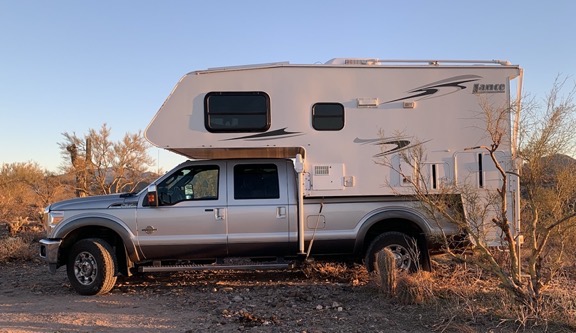
My Truck Camper
Here’s my truck camper, squeezed into a tiny spot in the Arizona desert. It’s the ability to get into tight spots that made me choose this kind of camping setup, but it does have its drawbacks.

Microwave. Simply said, you do not realize how much you use a microwave until you can’t use one. My camper does have a microwave, but the camper needs to be plugged into power to use it. Yes, I have a generator and yes it was plugged in full time when I was parked at my main camp over the winter. But I didn’t run that generator unless I needed to. After all, who the hell wants to listen to it? I don’t. So I went without one for most of my time on the road.

Dishwasher. I’ll admit it: I use a lot of paper plates when I travel. Regular plates mean more dishwashing which means faster water consumption. (See above.) I got a real satisfaction out of loading my dishwasher and turning it on this week — even if it did take three tries to get it running.

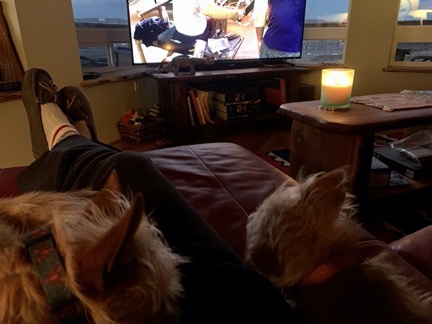
Comfort!
This photo says it all: lounging in comfort on the sofa in my living room with my pups, watching TV with the heat on. There’s no place like home!

A television (or two). I don’t watch much television, but I do admit that it’s nice to be able to sit in front of one now and again to unwind, kill time, or just catch up with the latest episode of the Mandalorian or British Baking Show. Or even to watch a movie or documentary recommended by friends. My camper does have a television — and even a DVD player! — but it was seldom worth firing it up, via 100w inverter — to see what my antenna could pick up. When I had an internet connection, I often watched videos on my iPad at bedtime. I much prefer the 65 inch 4K Samsung in my living room, or even the smaller, older, seldom used HDTV in my bedroom.

Indoor space. When it all gets down to it, there’s nothing quite like home to give you the living space that makes you most comfortable. While I really enjoyed the outdoors during my travels, I still spent a lot of time in the very limited space of my camper, especially when the weather was bad. It’s nice to have to walk more than three steps to get to the bathroom or bed or kitchen area.

Recycling. I’m a big proponent of recycling and I just can’t seem to do it easily when I’m on the road. At home, I’ve got a big recycling bin that gets emptied every two weeks. I make more recyclable garbage that regular garbage. On the road, it’s sometimes a challenge to find a place to dump the garbage I make.

My winter travels are comfortable enough, but not nearly as comfortable as being home. I travel south every winter to get sun and (slightly) longer days and I’m glad I do. But I’m also happy when I get home and back to the comforts I really appreciate.

Snowbirding 2021: Driving Home

The drive is longer than it needed to be but shorter than I expected.

Map Route
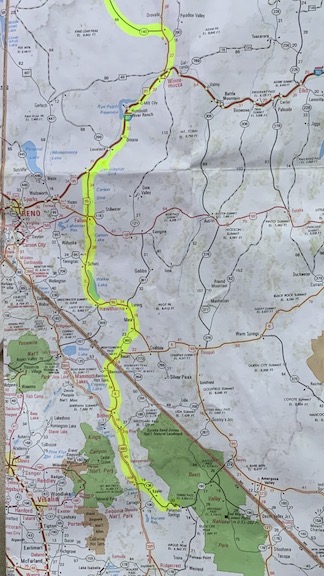
Here’s my route from Death Valley through Nevada.

After too many days with bad Internet (in Tecopa) and no Internet (in Death Valley), I plotted my trip home on a paper map that I found in my truck. The map, an oldish AAA map of western states and provinces, showed just the level of detail I needed, with Arizona, California, and Nevada on one side and Oregon, Idaho, Washington, and British Columbia on the other. I had a highlighter in my “Office” box and used it to trace lines. My goal was to explore a mostly new route, trying to get on some roads I hadn’t driven on before. Eventually, however, I knew I’d have to end up on Route 97 in Oregon, which was least likely to be affected by snowfall. I did not want to get delayed by snow in mountain passes on the way to the Columbia River crossing as I had been the previous year.

In hindsight, I’m not sure why I bothered to explore new roads when I had no intention of stopping along the way. At this point in my winter travels, I’m in GO HOME mode and I pretty much motor along with the goal of getting home in the fewest number of days. I don’t regret the route I chose, but I wish I hadn’t selected it while in that mode. Hindsight = 20/20.

Plotting the Drive

Humboldt WMA
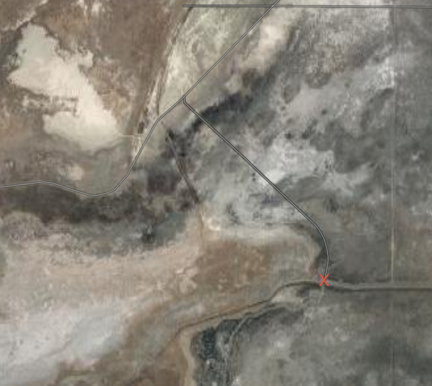
Google Maps satellite view makes it look as if I camped in the middle of a dry lake bed. I didn’t. My site (marked with the X) was along a canal, surrounded by trees.

I started writing about my drive home in my previous blog post, where I considered Solo Travel. At the end of that post, I reported that I’d parked in a campsite in the Humboldt State Wildlife Management Area (WMA), which appears in the most recent iteration of Google Maps satellite view as a dry lake bed. It was not dry. Not only did I have to negotiate a single-lane road of mud with deep tire tracks from my predecessors — with a 3200 pound camper on the truck and at least 3000 pounds in a trailer behind me — but there was water on both sides of that road for the entire 2-mile distance. My campsite about a mile down another road was along a well-defined and full canal, complete with a boat ramp and water fowl.

I guess this proves that you really can’t trust satellite view for accurate information. (And yes, I brought some of that mud home on my truck.)

Not that it mattered anyway. I use an app called Ultimate CG which draws on a database of publicly owned, noncommercial campgrounds throughout the country to find potential campsites when I’m traveling with my camper. (My friend Bill, who travels a lot more than I do, uses a similar app called AllStays, which seems to draw on the same database but adds other confirmed overnight parking spots.) When I’m in transit — in other words, on my way from one point to another — and just need a place to stay for the night, I’m not too picky. Although I could stop at any truck stop for the night, a lot of truckers keep their rigs or attached refrigeration units on all night and it can be noisy. I prefer a quiet spot, especially one where I can let my pups out to do their business without worries about traffic. That’s how I wound up at Humboldt.

It was exactly what I wanted/needed for the night. Dead quiet after the wind died down and super dark. No one else came into the “campground,” which was really nothing more than a parking area by the boat ramp with a restroom (that I didn’t use). The weather forecast claimed I could get snow overnight, but in the morning, when it was light enough to see, I saw that the fresh snow had stopped about 500 to 1000 feet above my elevation.

Snow Level
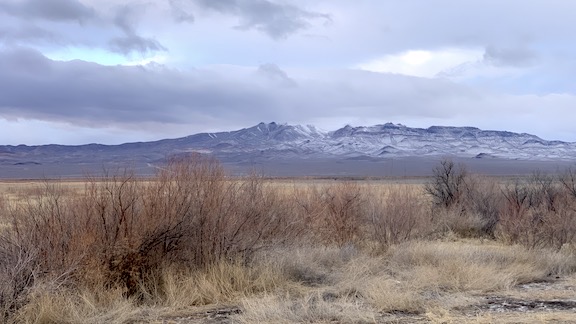
I could see in the morning that the snow level had stopped 500 to 1000 feet above my elevation.

Saturday’s First Leg

My first order of business after securing the camper and loading my pups into my truck was getting fuel. According to my truck’s mileage computer, I had 62 miles left before empty. Another app showed me there was fuel in Lovelock, 11 miles away. I backtracked through the area, glad that the muddy part of the road seemed drier and a bit less slippery. I drove through farmland — mostly dormant alfalfa, I think — to town, navigated to a truck stop with the cheapest diesel, and filled up. The pump stopped at $75, which is relatively common, and I dutifully re-inserted my credit card to get the pump going again to top it off. (It would be a good thing that I did.)

I had plotted a route through Nevada and into Oregon that would take me on I-80 to Winnemucca and then on a series of smaller numbered routes through northwestern Nevada and into Oregon, meeting up with route 97 south of Bend. Easy enough to follow. I programmed it into Google Maps and got on my way.

The first hurdle to jump was the snowstorm. It started as flurries and got heavier as I went along. Soon, the road surface started to get covered. I passed a flashing light saying that I needed chains or snow tires to continue. I had neither; my truck has all-terrain tires and I’m not sure if that’s good enough to meet traction tire requirements. Visibility dropped. So when I saw an exit up ahead, I got off the freeway. I’d driven less than 20 miles.

There was a gas station at the exit but a sign for a restaurant at the end of the ramp pointed away from it. Maybe I could wait out the storm with some breakfast? I turned left, went under the freeway, and saw nothing but a road thick with snow going off into the distance.

Snow
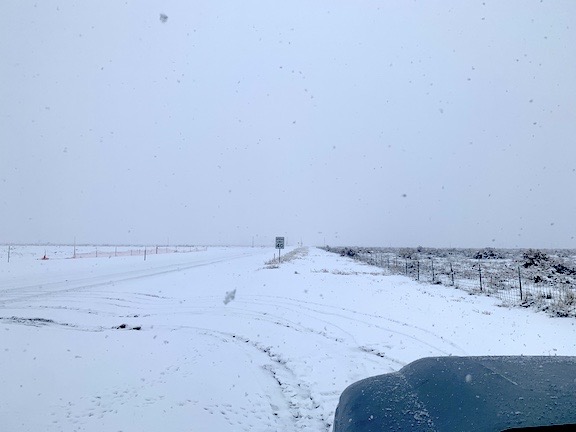
Put yourself in my shoes. If you were driving a truck with camper weighing roughly 12,000 pounds and towing another 3,000 pounds in a snowstorm without snow tires or chains on any wheels, would you have driven down this country road?

I pulled over onto a snow-covered shoulder and consulted Google maps. The restaurant was up the road. I didn’t want to drive that far. I shut off the engine and went into the camper with my dogs.

Trucker
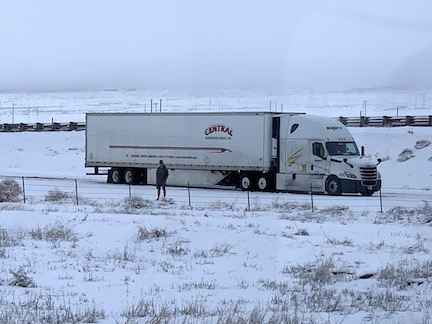
It’s nearly impossible to see in this zoomed-in shot, but this guy was wearing shorts. His dog is hidden behind some of the weeds.

The nice thing about traveling with an RV is that you have all the conveniences of home with you wherever you go. I pulled out the kettle and made myself a cup of tea. I watched the traffic go by on the freeway, including snow plows that shot streams of wet snow high up and away from the road. I watched a few cars and trucks come down from the freeway, park for a moment alongside the ramp, and then continue on their way to either the gas station or back up to the freeway. One of these was a big semi. A guy in shorts got out with his dog. I watched him watch his dog scamper about alongside the road. Then they both got back into the cab and the truck drove away.

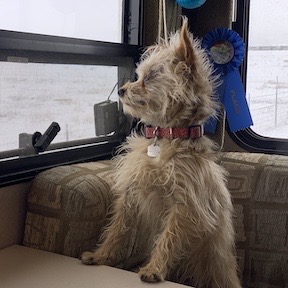
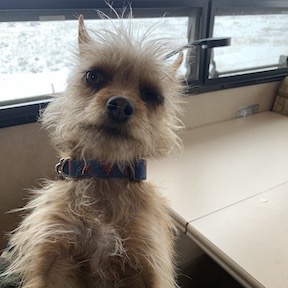
My pups were bored. They didn’t know what we were doing there and had no clue what that white stuff coming out of the sky was. (They have very limited experience with snow.) They looked out the window and bugged me a bit while we waited.

Rosie Lily
Rosie and Lily were bored while we waited.

The snow stopped rather suddenly and it got brighter out. I put away the kettle, transferred the remainder of my tea into a travel mug, and left the camper with my pups. They ran around a bit in the snow before letting me put them in the truck. I made a U-turn, got back on the freeway — which had been plowed and was completely free of snow or ice — and continued on my way.

From that point on, I started monitoring the outside temperature; I’d once hit ice unexpectedly on a mountain road and didn’t want that to happen when I was traveling at 65 mph with a load. But the temperature stayed above freezing — and even got into the 40s — for the rest of the day.

I got off the freeway in Winnemucca, a typical large Nevada town with plenty of casinos and other places to leave money. I would have stopped at the Pizza Hut — I’m a sucker for those meat lovers personal pan pizzas — but it was still closed at 10:05 AM. (Who knew?) So I just followed the signs for route 95 north and kept going.

I turned left onto route 140, which went due west straight as an arrow as far as the eye could see. A sign at the turn said something like “Next Services 66 miles” and if I’d been thinking clearer, I would have stopped for a photo. Folks back east have no idea how far apart some towns can be out west and are often amused by signs like that. The road cut straight across the flat desert, between a number of dry lake beds, reached a tiny rock outcropping, bent slightly to the right, and cut through more flat desert. The whole time I was driving, I could see weather up ahead: thick clouds that seemed to brush the desert floor. Rain? Snow? I had no idea. All I knew is that the wind was howling and my truck’s computer claimed I was getting less than 10 miles per gallon.

I passed alongside one of these weather squalls and some rain hit my windscreen. Then I was through it.

A few cars passed me during that 66 (or whatever) miles. I passed a few going the opposite direction. There were a handful of what looked like ranches along the way. Then the terrain started getting hillier as I approached the town of Denio and the left turn to stay on route 140. There was a sad little gas station at the intersection. I kept going. Another sign said something like “Next Services 75 miles.” The road here wasn’t flat and dull. It climbed into the hills.

I’d gone about 50 miles when I started wondering whether I’d have enough fuel to get to my planned fuel stop at Lakeview.

I watched my mileage rate decrease until it was less than 9 miles per gallon. The hills were really making the truck work and the curves made it nearly impossible to coast downhill safely. There were a few spots with very steep — think 8% and 9% — downhill grades where I needed to work not only the truck’s transmission — Tow mode automatically downshifts as needed for engine braking — but the brakes. Getting behind a very slow compact car in one of these areas prevented me from coasting down as fast as I might have. What looked like it might be a gas station in Adel didn’t have any signs for diesel.

To further stress me, I’d come into patches of weather like snow or rain. At one point, near the end of the leg, when my truck’s computer said I had less than 30 miles left until empty, I came upon a busy ski area with lots of traffic in the area. I was behind a huge truck bearing alfalfa that crawled along the road. I watched those miles tick down and wondered how long it would take Good Sam to bring me 5 gallons of diesel after I called.

I reached the intersection of 395 and turned left, toward town, behind that hay truck. I’d asked Google where the nearest diesel was and it told me I’d need to go 5 more miles — exactly what my truck said it could do before empty.

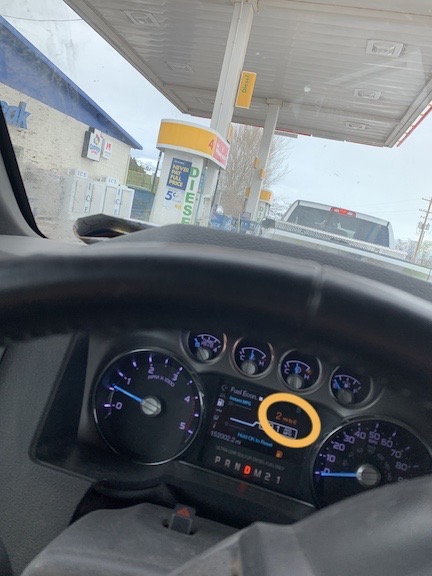
2 Miles Left
Can you read it? 2 miles left!

Then I saw the green numbers lit up on a gas station’s fuel price sign in the distance. Diesel! I pulled in behind another vehicle at the pump. At least if I ran out of fuel it would be easy enough to get it into my tank. My truck’s computer said I had 2 miles left until empty. Whew!

In my defense, when I got off the freeway in Winnemucca, my truck’s computer had told me I had almost 100 miles more range than Google told me I needed to drive. But the headwinds and the windy mountain roads really increased my fuel consumption. So even with my rule of making sure there’s 100 miles of wiggle room between distance and calculated range, I almost didn’t have enough fuel for the drive. Lesson learned. I guess.

Lakeview into Oregon

After fueling up, I immediately made a wrong turn. Unfortunately, I didn’t realize it until I’d gone about 10 miles.

You see, for some reason my phone decided that even though it had a 4-bar LTE connection, it wasn’t going to connect me to the Internet. So instead of programming the next leg into Google, I had rely on signs — imagine that — to point me in the right direction. I should have realized that something was up when my next destination — the relatively big town of Bend — did not appear on any sign. But Klamath Falls, also on route 97, did appear so I turned that way.

But as you might have surmised, I like being able to keep track of how far it is to my next destination. So I pulled over and fiddled with my phone, trying to get it to connect to the Internet. When that didn’t work, I took out my marked-up map, flipped to the correct side, and took a close look. That’s when I realized I was on the wrong road. I was on Route 140 heading west. I should have been on Route 395 heading north.

To be fair, either one would have taken me where I needed to go. But the correct route would have dumped me much farther north on Route 97, saving time.

I made a U-turn. My phone came out of its stupor a short while later and I was able to program Google Maps for Bend via routes 395 and 31. I continued on my way.

With the stress of a nearly empty fuel tank gone, the drive was much more pleasant. Route 395 wound through a hilly area before forking off to the right at the junction of Route 31. I went left and found myself driving on a very pleasant road that soon dropped me into a lake-filled valley. The mid afternoon sun lit the countryside with a gorgeous glow as I motored along a cliff face along the bank of Summer Lake. I had passed up the Summer Lake hot springs — along with others along the way — and I started thinking how nice it might be to do a road trip bouncing from one hot spring to another on a long, circuitous route.

Eventually, the road climbed up into the mountains and entered a national forest. I had plenty of fuel, but it was starting to get near time to find a place to park for the night. The national forest would be perfect, but the roads were snow covered and each turn into the forest had a yellow Area Closed sign. COVID? Seriously, I don’t understand the logic of closing outdoor recreation areas when being outdoors is so much safer than being indoors in close contact with others.

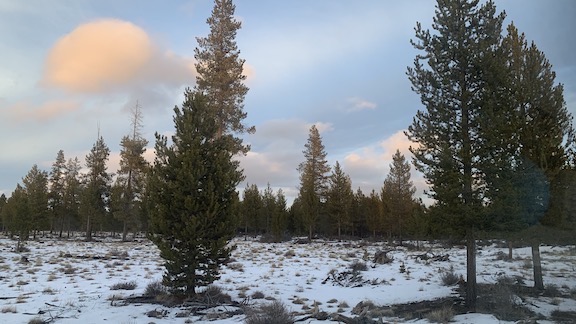
About 10 miles short of La Pine, I found a slush-covered forest road without a sign, drove in, and eventually found a spot where I could back my trailer into a cleared area (in the snow) with my truck’s nose pointing out toward the road. I shut down, let my pups run around for a while in the snow, and then went in for the night.

Campsite
The view out my dining area window just before sunset.

My campsite had internet access via cell phone and I caught up on email and texts with various friends. I updated my house sitter with my estimated time home: Monday instead of Sunday. I watched a few videos on YouTube and Disney Plus. (I’m still not sure about WandaVision.) I was in bed before 9.

The road had some traffic that seemed alarmingly close to my rig. I was startled by the sound of a train’s horn that seemed so close I honestly expected the train to be visible from my window. (The crossing was less than 1/4 mile away; I passed it on my way out the next day.) But by 9 PM, it had pretty much settled down. I worried about my 1/2 filled propane tank having enough gas and my batteries having enough power to keep my heater going overnight; I expected it to get down into the 20s. I put an extra blanket on the bed. I slept as good as usual.

The Last Leg

In the morning, while I sipped my coffee at 5:30 AM, I plotted my route to my next expected overnight stop: Maryhill State Park in Washington. It was only 3 1/2 hours away.

What? That close? How long to get home?

Google told me I could be home in 6 1/2 hours. I did some math. If I got on the road by 6 AM, and had two fuel stops, I could be home before 2 PM.

To say I hustled to get out of there is an understatement. My bed, my shower, and my dishwasher were calling me while the rest of the amenities of my home were waving encouragingly in the background. I had my pups fed and in the truck by 5:50 AM.

The slushy ground that had been so easy to back into the night before was gone, replaced with a hard icy surface that had no desire to let its trespasser go easily. I spun wheels in 2WD and 4WD. Crap. How embarrassing would it be to call Good Sam for a 10-foot tow?

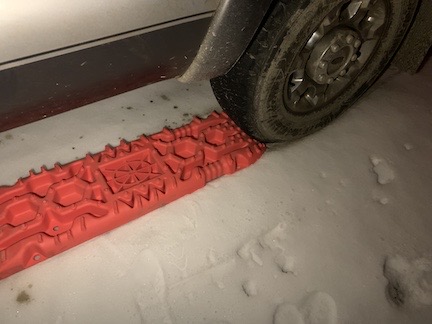
Traction Plates
You know the Girl Scout motto, right? Be prepared.

But no call would be necessary because I was now prepared. After an incident in sand back in late November, I’d bought a pair of heavy duty plastic traction plates. They were in the back seat area of the truck. I grabbed a lantern from the camper and deployed the orange plastic devices in front of each of my back wheels. Then, for good measure, I locked the front hubs and put the truck in 4L.

12,000 pounds of truck pulling 3,000 pounds of cargo trailer out of an icy patch of ground at 30°F? No problem. The truck immediately started moving, crawling out of the crunchy ground as if to say, “What the hell are those orange things for? I don’t need that shit.” I pulled onto the road, put my flashers on, and retrieved the traction plates. Then I unlocked the hubs, got back into the truck, shifted into 4H, and got on my way.

The rest of the drive was uneventful. I passed through one deserted looking town after another. It was early on a Sunday and I couldn’t even find a Starbucks in Bend that was open. I drove at the speed limit as the sun came up on a cloudy day. I was on Route 97 by now — a road I’ve been on many times before. (It was my primary route when driving from home to the Sacramento area of California during my frost control days.) As usual, I passed one point of interest after another without stopping. (Maybe I can visit them on my hot springs road trip?)

I found a great price on fuel in Madras, where I’d planned to stop anyway, and topped off the tank. Again, it took two credit card inserts because the fuel pump stopped at $75 the first time. I let the girls out to do their business.

I’d seen a sign for Black Bear Diner in Madras and even found a parking space on the road near it when I got there, but I decided that I didn’t want to spend time eating in a restaurant — or even going into a restaurant in an area that was still showing so many Trump signs — so I opted to stop at a Starbucks up ahead. (I’m a real sucker for their Double Smoked Bacon breakfast sandwich.) But that Starbucks was in a Safeway supermarket and it didn’t have breakfast sandwiches. I wound up getting a breakfast burrito at the deli counter.

I went back to the truck and ate in the parking lot while using the Fred Meyer app to place a grocery order that I could pick up on my way home. I was 262 miles away. Technology for the win!

More driving, more miles put behind me. Route 97 in northern Oregon winds through a number of small farming communities but not much else. The terrain is a combination of rocky formations from Oregon’s volcanic past and grass-swept plateaus, some of which still had some snow on them. When I saw the wind turbines in the distance, I knew I was getting close to the river. A long, downhill glide down a canyon deposited me in Biggs Junction, where I normally buy fuel on my way south. I didn’t need fuel yet so I didn’t stop.

I did stop on the other side of the river, in Maryhill State Park. They had a nice wide parking area with grass where I let my pups out for a quick run and pee. We stayed less than 10 minutes before getting back on the road and climbing up out of the Columbia River Valley toward Yakima.

I tried calling my sister and actually managed to talk to her for a short while before I lost the signal in some hilly, forested terrain on the Yakama reservation.

More driving. I’d finished the recorded book I’d been listening to since leaving Tecopa and listened to a few podcasts.

As I descended down into the Kititas Valley, I started thinking about ice cream. I turned east on the Interstate, not interested in braving Blewett Pass with my rig. In Vantage, I exited the freeway and stopped at Blustery’s for a chocolate banana milk shake. It cost me more than $8 (!) with tax but was exactly what I needed. I sipped it all the way to Quincy.

I stopped at Fred Meyer for my groceries. It was a real pleasure to restock for the week without having to go into the store. Does Fred Meyer realize that we actually buy less — thus saving money — when we don’t go into the store?

Meanwhile, I’d updated my housekeeper and others about my revised return date and time. A neighbor suggested that I stop at her house before going home so I could scout my driveway entrance. I drove down my road, which was remarkably clear of snow and ice, and drove up to her house. She greeted me with a container of soup so I wouldn’t have to cook that night. Her husband loaded me up into his new 4WD truck and drove down to my house for a look at the road conditions. I immediately noticed that the road got worse right after the winery, which was about a half mile from my home.

My driveway is about halfway down a pretty steep hill. It’s a left turn that starts with a little downhill part and then curves to the left before straightening out. To make the turn with my trailer, I’d have to go wide. The snow was on half the road — the left half. It was also on my driveway. That meant I’d have to drive slowly down the hill, come to a stop (or near stop) before my driveway, and make a very controlled left hand turn into my driveway, crawling down the snowy slope until I got onto the straight part.

I told him I could do it and we went back so I could give it a try.

Back behind the wheel, I took the downhill part of my road in 1st gear with 4WD turned on. I successfully came to a stop just short of my driveway, but then my truck started to slide. I stopped again, it slid again. One more time. Each time this happened, I got a little further down the road, ever closer to my driveway entrance.

I realized I had a choice: I could continue down the road, make a U-turn somewhere, and then approach from downhill. I’d done this successfully before with bad road conditions. Or I could take my foot off the brake and keep it off and let first gear roll me into my driveway.

I opted for the second plan. Mentally crossing my fingers, I released the brake and guided 15,000 pounds of truck and trailer into my narrow, snow-covered driveway. The ice crunched under my big wheels. My truck stayed on course without slipping. A look in a side mirror showed my trailer following it in faithfully. Then I was in the straight, flat part, heading for the concrete pad in front of my big garage door.

I was home!

Happy Ending

I got home this year a whole month earlier than last year. A lot of people are surprised by that, mostly because I came home when it was still cold and snowy.

What most folks don’t seem to understand is that I don’t stay away in the winter because of the cold or snow. I stay away because of the darkness.

The days this far north are short. There’s a whole 6-week period where the sun doesn’t clear the cliffs near my home and I get absolutely no direct sunlight. I left home roughly six weeks before the winter solstice, when the days are shortest. Doesn’t it make sense for me to return home six weeks after it?

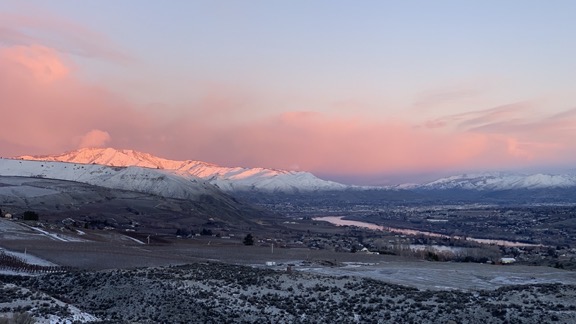
First Light with Fresh Snow
Here’s the view out my kitchen window this morning as I was writing this. We had fresh snow at higher elevations (including my home) overnight.

And, for the record, I like snow. (Cold, not so much.)

I might even get some cross-country skiing in — if I can finally get the new top on my Jeep.