Determination and Going it Alone

A chat with a fellow boater starts me thinking about the importance of independency.

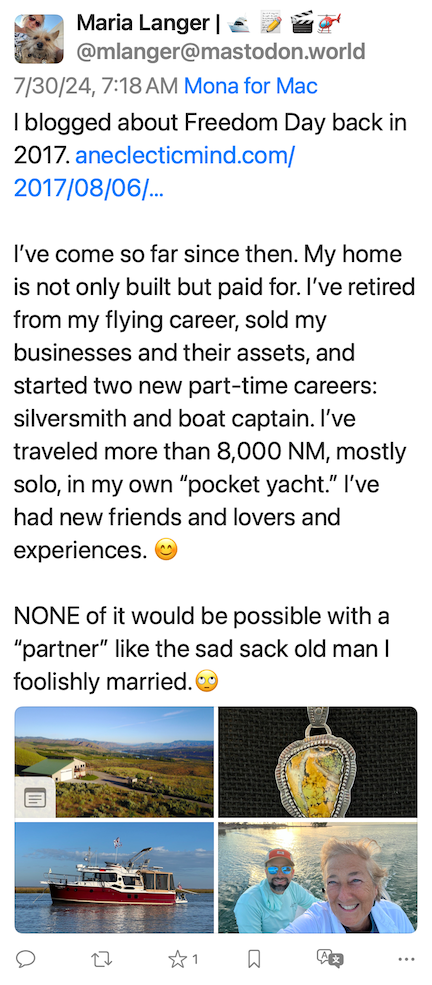
[Note: I wrote this post at least two weeks ago and, when I was done, I decided not to publish it. I thought it might be a bit too self-serving. But then I had an exchange with another user on Mastodon today, after my (solo, of course) cruise across Lake Michigan. You can see a screen grab of the exchange below. I decided that it was very much related to the rest of the content in this post — the elephant in the room, so to speak — so I decided to add it and publish the whole damn thing. – ML]

Lately, I’ve been meeting a lot of people on my Great Loop trip — more people than I’d met on my journeys down the inland waterways and up the ICW. People are going out of their way to meet me and chat with me. Most of them are impressed that I’ve been doing the trip (mostly) alone. These people are invariably couples and they are blown away by what they consider an amazing achievement.

A Rockstar? I don’t think so.

But it all came to a head yesterday when I was in a restaurant in Killarney, ON and a couple at a nearby table called me over as I was leaving.

They recognized my boat by its name and had seen me on it. Apparently, there’s some talk going around about me among the other Great Loop cruisers. A woman doing the Loop alone!

The wife of this couple told me I was a “rockstar” among the Loopers. That’s pretty hard to believe, since I don’t participate in any of the online forums most Loopers are drawn to. But okay, I’ll take it.

Cruising the Great Loop as a Learning Experience

We chatted for a while about cruising and the Loop and the percentage of people who jump into this 6000+ mile journey with little or no boating experience. The husband of this couple had boating experience similar to mine before buying his current boat, a Mainship: growing up around small boats and owning a few throughout his life.

But there are far too many people who start the Great Loop with little or no boating experience on a boat that’s brand new to them. Some folks even sell their boats as they’re finishing up the Loop but continue to cruise to the end, looking forward to the day they can be done and leave their boat for good. I find that mind-boggling.

I met a couple along the Trent-Severn Waterway who had begun their cruise near St. Louis and claimed they “felt done” by the time they were in Florida — not even 1/4 way through the trip! They were selling their boat the day I met them, but wouldn’t turn it over to the new owner until they got to St. Louis moths later. I’m still trying to figure out why they continued a trip they apparently weren’t enjoying. This is pleasure boating, folks; it shouldn’t feel like a chore or an ordeal.

We talked about how much experience a boater can get from a Great Loop trip — that’s actually the number one reason why this trip has meant so much to me. Simply said, it’s made me a good boat captain. How can it not? Navigating more than 7500 nautical miles (so far) on rivers, lakes (including Great Lakes), canals, the Gulf of Mexico, the Intracoastal Waterways, and the Atlantic Ocean. Dealing with locks, bridges, other boaters, and marinas. Cruising in weather from severe clear and calm to thunderstorms with hail. Resolving minor (fortunately) mechanical issues, like losing a stern thruster or having a bilge pump that won’t operate automatically. Having to find and make good stops to refuel, buy groceries, get water, dump garbage, refill propane tanks, and do laundry.

How can all this not make you a better boat captain and all around long distance cruiser?

Determination?

And then one of them said, “You must be pretty determined to do this trip by yourself.”

For a moment, I didn’t know what to say. I never thought of myself being determined to cruise the Great Loop. I just saw it as the boating world equivalent of a classic road trip, like cruising Route 66 or driving up the California Coast. I thought about the experience of visiting all the places along the way, seeing how people live, checking out the local history, eating the local foods. I thought about the challenges of planning and navigating a course, dealing with weather, and living the confined space of a boat. I thought that a boat trip that somehow started and ended in the same place without backtracking would be a great adventure — before I even knew the Great Loop existed.

The Great Loop has never been a “bucket list” item for me, something I can brag about to friends. I’m not going to hang a gold flag sold by a for-profit “club” that exists solely to separate cruisers from their money. Heck, most of my friends don’t know what the Great Loop is and, if they’re not boaters, they don’t really care.

So have I been “determined” to finish the Great Loop? For me, the goal isn’t the achievement of “crossing my wake.” It’s the journey and what I can take away from it to make me a better person.

The Solo Aspect

The Woman Thing
Here’s the exchange I had with another Mastodon user today that sums up my thoughts on the “female aspect” of my situation, which, frankly, I’m pretty fucking sick of dealing with. Read it to understand why.

It’s the solo aspect that everyone seems to focus on. This conversation really brought that point home to me.

Honestly, I don’t think that doing this trip solo is a big deal. In so many ways, I think it’s better than doing it with a companion. Not only do I get to make all of the decisions — and change my mind as often as I want to — but I don’t have to deal with the pet peeves we all develop when traveling with someone else.

I like to travel alone. I’ve been doing it since the 1980s in my first corporate job and, even when I had a “life partner,” I often made trips by myself. So there’s no part of traveling alone that’s unusual to me. It’s traveling with a companion that’s odd and somewhat difficult at times.

Yes, there are additional challenges when you’re driving a boat by yourself. There’s no one else to handle the lines or put down the fenders when docking or sit at the helm while you take a pee or make a sandwich. (And no one to make a sandwich for you.)

But can’t we all rise to the challenge? Having to deal with fenders and lines while docking alone has forced me to learn how to control my boat in confined spaces — I’m basically forced to get the boat up next to the dock at a near standstill so I can step off with a line and secure it. (There is no jumping on the dock from my boat and very little tossing lines to strangers, since half of them don’t know what they’re doing.) Having no one around to take the wheel when nature calls has taught me a few tricks for leaving the helm briefly while under way without dropping an anchor. And when I know I have a long cruise ahead of me, I make lunch in the morning, before I leave, so all I have to do is fetch it out of the fridge.

It’s problem solving. How do you do the work of two people when you’re just one person? You find ways to make it work. That’s part of the challenge of cruising. That’s part of what makes it interesting to me.

And let’s be real: having a second person aboard who doesn’t know or care about helping out when “needed” is worse than being alone on board. (I’ve been in that situation and it sucks.)

The other question I get a lot is about whether I get lonely. The answer, for the most part, is no. I’ve been alone for so much of my life that I’m used to it. I keep busy. I don’t have time to be lonely. The only thing that makes me a little sad is that I can’t share this incredible adventure with someone I can talk to about it in the years to come.

I’m not the only solo cruiser out there

I also want to mention here that I am not the only person doing this trip solo. Nagui, who I met while cruising last year, completed the loop solo in his Rosborough, Boundless.

I’ve also met Matt on Seaview, Ed on Freedom, Mark on Brandywine, Michelle on Plan B, Chris on Brown Eyed Girl, Bob on Bayleaf, and Harry on a homebuilt sailboat whose name I can’t remember. (Get boat cards, folks!) My apologies to the folks I missed in this list. While not all of these people might be “doing the Loop,” they are all on long-term cruises that require them to do everything that needs doing.

Independence > Dependence

Meanwhile, I feel bad for the folks who think they can’t go it alone. The people who depend on the company of someone else to do things.

I’m not just talking about cruising, either. I’m talking about the things we do in everyday life: dining out, going to the movies, attending live events (do you know how easy it is to get an excellent seat for concerts and shows when you’re a party of one?), traveling, and participating in social activities that may include mostly couples. If you’re single and think you can’t do the things you want to do by yourself, why the hell not? Why depend on the presence or moral support of another person when you’re perfectly capable of doing things on your own? Be independent!

And the only thing worse than feeling as if you can’t do things alone is feeling that you can’t do anything without the partner you might already have, someone who simply doesn’t want to do anything you want to do. Been there, done that! Got a ball and chain? Cut it loose! Live the life you want on your terms.

The End is Near

My trip is coming to an end. I’ll be done in less than a month now. Yesterday, I spent a few hours planning the rest of my route and the stops along the way. I wanted to make sure I could finish it on time — I created a deadline when I bought plane tickets to get home. Unless there’s some crazy bad weather ahead of me when I hit Lake Michigan, I should be fine, with a handful of days to spare in case I need to change plans.

I’ve already planned my next two cruises when I get back to the Pacific Northwest. First, I’ll attend the Ranger Rendezvous, which I first attended the day after I took delivery of Do It Now in September 2022. And then I’ll join a flotilla of boats to cruise up to Desolation Sound and back in late September. There’s a chance a friend will join me for that trip, but I’m not sure right now whether I want company.

And then I’ll let Do It Now get some rest in my garage while I enjoy the comforts of my “dirt home” for a while.

I live there solo, too, and I love it.

Freedom Day and Doing It Now

I celebrate two personal milestones on the same day.

Mastodon Post
Mastodon Post
I posted this on Mastodon today. My way of celebrating — and helping other people in dead end relationships to break free and move forward on their own.

Today is Freedom Day — the anniversary of my divorce decree — which I last wrote about back in 2017. That year, it went by without noticing it, but this year it was really on my mind for a variety of reasons.

Freedom Day this Year

One reason is that I’m really feeling the freedom that day gave me. I’ve been feeling it all along, but the past month or so I’ve been feeling it more. As I finish my Great Loop trip, and wind down my east coast boat travels, I’m been giving a lot of thought to my future and trying to answer the big question: What’s next?

After a lot of thought and weighing my multitude of options I think I’ve come up with a plan for the next five or more years of my life. (That’s something I’ll cover in another blog post.)

The point is, I have options because of the freedom I got on July 30, 2013, the day the legal document severing the partnership between me and my wasband was handed down. As far as the law was concerned I was done with him. I owned everything I owned and could make all of my own decisions without having to consult him or anyone else.

Freedom.

As I pointed out in a toot on Mastodon today, I’ve come so far since then. None of it would be possible without the freedom I achieved on this date in 2013 and the “do it now” attitude I’ve embraced to make up for lost time.

450 Days

The other milestone for today? It’s my 450th day aboard my boat, Do It Now. (Yes, it is taking me longer than average to finish the Great Loop, but that’s because I had to work last summer. I’m retired now and the end is near.)

I’m kind of tickled by the fact that I’ve spend more time living on my boat than living in my home since taking possession of the boat in early September 2022. Why? Well, I don’t think I’ve mentioned this elsewhere, but when I first started considering the purchase of this boat, I was very excited about it. I wanted to share my excitement with someone close to me so I shared it with certain family members. To my surprise, neither of them were supportive at all. In fact, I was told that buying the boat was a bad idea and a waste of money because I wouldn’t use it.

I wouldn’t use it?

Yeah. It was a rude awakening to realize that, after all these years, my family knew so little about what makes me tick.

I’m using the boat to the point of abusing it. I’ve put over 1,000 engine hours and nearly 8,000 nautical miles on it. I’ve used it to build skills for a part-time career as USCG-certificated boat captain.

But yeah. The lesson learned here is that it isn’t just my wasband who doesn’t get it.

Anyway, I’ve got another 15 or so days on board here on the Great Loop before I bring the boat back to the Seattle area for a month of cruising in the San Juan Islands and Desolation Sound. Then yes, I’ll put the boat away for the winter and take a break.

But you can bet your ass that I’ll have it back in the water next April.

Oops! Subscriber Feed Accidentally Turned Off

I accidentally turn off the subscription feature, halting the notifications about new posts.

I should have known I’d done this because I also did it on my Great Loop blog. I turned off a plug in back in April and that inadvertently turned off the blog subscription feature — except, apparently, for WordPress.com account holders. I’ve since fixed the problem. If you’re a blog subscriber who used the form in the sidebar to sign up, here are the posts you may have missed:

There aren’t many of them because, frankly, I’ve been enjoying life too much to stop and write about it. (Have I mentioned anywhere how awesome retirement is? I should blog about that.) What I do write these days has been mostly in my Great Loop blog.

Winding Down My Travels

As I near the end of my Great Loop trip, I contemplate bringing my boat back to Washington (and elsewhere) and possibly spending some time at home.

Why So Long?

If you’re wondering why I’ve got so many miles on the Loop when most places put the mileage count at about 6,000, blame it on my side trips. I boomeranged from the Annapolis Area to Key West and back this past winter and also made round trip cruises up the St. Johns River in Florida and up to Lake Champlain in New York and Vermont.

If you’re wondering why it has taken me so long to do the trip when most folks can do it in a year, it’s because I had to come home last summer to work — I wasn’t retired yet — and I also took a few other short trips home. The northern portion of the loop can only be done in the summer and I’d been working every summer since 1998.

It’s July 18, 2024 and I’m less than a month away from the completion of my Great Loop cruise. (If you don’t know anything about this trip, you can read about it in my Great Loop blog (which is painfully out of date).) So far, since mid October 2022, I’ve spent a total of 438 days/nights on my 2019 Ranger Tug R-29 CB Do It Now, covering 7,724 nautical miles (or 8.889 statute miles or 14,305 kilometers) in 17 states, one province, and two countries. I’m currently at a very pleasant anchorage in the Georgian Bay of Lake Huron, on the Canadian side of the border. I plan to cross back into the US at month end and then get to Chicago, where I cross my wake, on August 10 or so.

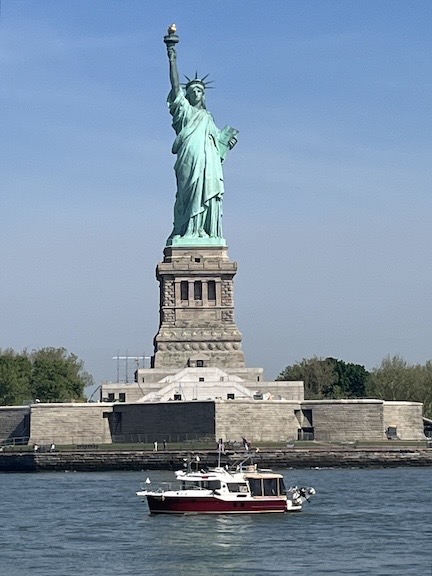
Do It Now at Statue of Liberty
I stopped for a selfie at the Statue of Liberty when I went through New York Harbor in May.

If you did the math, you’ve probably realized that I’ve been away from home an awful lot — but not a full year and a half. Although I started my travels on October 13, 2022, I came home for three weeks in December 2022, five months for the spring and summer of 2023, and then a few weeks in April 2024. But other than that, I’ve been living on the boat.

Some thoughts on Cruising

My boat is not large, but it’s certainly large enough for one person and two small dogs, especially when they’re accustomed to spending months at a time living in a slide-in truck camper every winter. My boat is bigger than my camper and more comfortable, with waterfront views everywhere I go. It’s also slower and burns more fuel, but that’s a topic for another discussion. Having a second person on board works with varying results, mostly depending on the expectations of that second person.

With 240 more days of active cruising experience than I had when I started this Great Loop adventure, I’ve learned a shit-ton about boats and boating. I’ve also gotten in tune with my boat, much as I had with my helicopters: I can pretty much predict how it will respond to nearly every situation. (You know it when you have that kind of relationship with a vehicle; it’s a rare and wonderful thing.) Simply said, I know how to drive my boat.

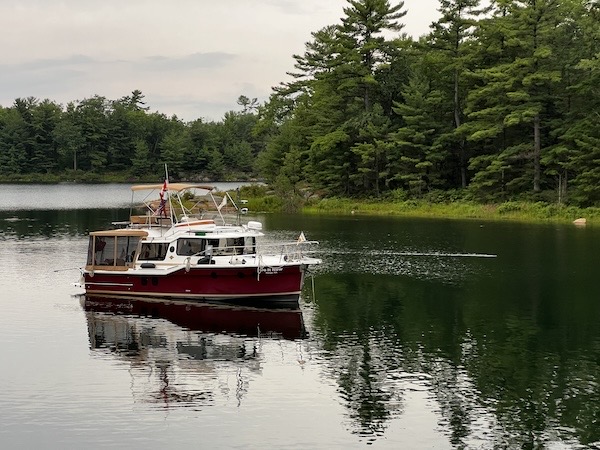
At Go Home Bay
Here’s Do It Now at a recent anchorage called Go Home Bay. Maybe that’s what got me thinking about home?

People see me cruising alone and think they need to rush out to help me with docking or locking. Usually not so. I recently brought my boat to a complete stop beside a man at a dock who had rushed over to help me with my lines. I looked at him standing there idly just two feet away from my window and said, “This ain’t my first rodeo,” before stepping off the boat with a line to cleat up. “I see that,” he replied. More recently, at Lock 37 of the Trent-Severn Waterway, a fellow boater offered to climb on board to help me lock through. I looked him in the eye and said, “I’ve done 35 of these solo so far; I think I’ve got the hang of it.” (There is no Lock 33 and I wasn’t counting the dozens of other locks on canals I’d traveled on.)

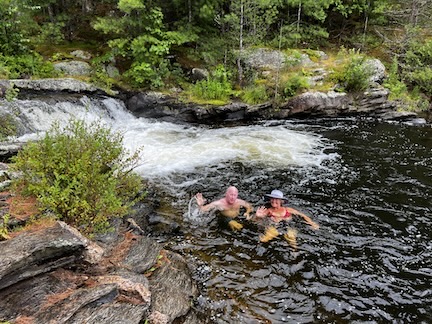
Bruce and LeaAnne at Waterfall
Here are Bruce and LeaAnne on New Bearings. We anchored about 3 miles from this waterfall and dinghied up to it with our boats. It wasn’t quite hot enough to get me in the water with them.

But I haven’t actually been alone the entire trip. I had friends on board for a total of 102 days: Janet, Alyse, Jason, and Cheri. And I’ve been “buddy boating” with others since getting on the Erie Canal and continuing north and west. I play leapfrog with many boats. Today, I’m trying to plan a meetup with some sailing friends at a place called Bad River where we can get our dinghies out and explore the waterfall there.

What’s Next?

At the 2022 Ranger Rendezvous
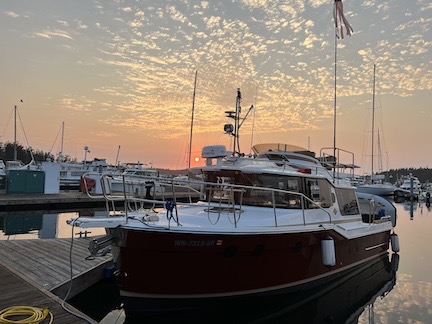
Here’s Do It Now at the 2022 Ranger Rendezvous. I had just picked it up the day before in Olympia and made the two-day cruise to the event with very little experience. Since then, I’ve added a bimini top, a screen enclosure for the aft cockpit, and a new dinghy davit.

As I plan these last days of a very long trip, I’m thinking about what I’m going to do next. I know that I’m going to trailer my boat back to Washington state, where I’ll have it launched in Tacoma or Anacortes for the month of September. I know I’ll spend a good portion of that month cruising Puget Sound, fishing for salmon, and taking my Washington friends for day trips. And, of course, I’ll attend the 2024 Ranger/Cutwater Rendezvous, where I hope to do a presentation about why Ranger Tugs are the perfect Great Loop boat.

But what about after that?

Well, I don’t want to cruise Puget Sound in Washington state in the winter — that’s for damn sure.

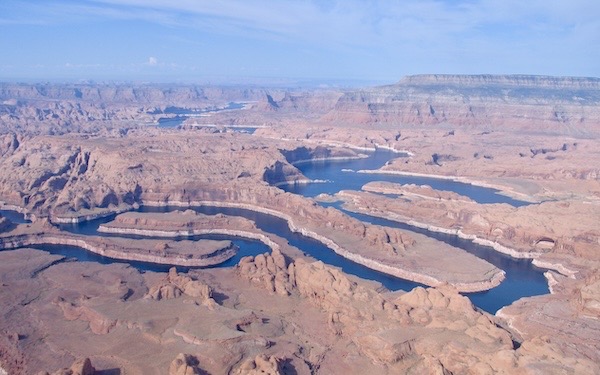
I had toyed with the idea of bringing Do It Now south and launching it in Lake Powell for the month of October. I already talked to the folks at the marina in Page, AZ and they can provide the launch/retrieve assistance I need, truck and trailer parking, and even a marina slip if I want it. But whether I go there depends a lot on the water level; it’s about 6 feet higher than I need it to be now, but in October? And I don’t want to spend the winter there, either.

Lake Powell
I can’t tell you how many hours I spent flying my helicopter over Lake Powell with charter or photography clients on board. I have at least a half dozen people interested in joining me there on my boat.

If I have it at Lake Powell, it isn’t much farther to go to Lake Havasu for the winter. But I have a sneaking suspicion that they don’t sell diesel on that lake. And I think it might get boring if the Colorado River is drawn down for the winter and I can’t leave the lake. I could take it to Lake Mead instead, but I think it’ll be a lot colder there. But maybe not. And my boat does have a heater. A good heater.

Homesick

Of course, the main feeling I’m tackling right now is the simple fact that I miss my home. While “homesick” might be too strong a word, I definitely miss the comfort of my own (considerably larger) space. I miss having a dishwasher and a washer and dryer just steps away from my bedroom door. I miss my jewelry studio. I miss my incredible views and my garden and my deck. I miss being able to take my Jeep or truck or Honda anywhere I need to go, anytime I want to go, without having to rely on a taxi.

Home
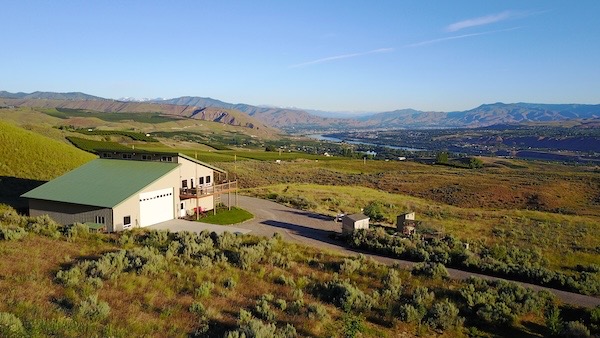
My home has kickass views and a very large garage.

The closer I get to my trip’s end, the more I realize that I just want to spend some time at home.

But I don’t want to spend the winter there either.

Don’t get me wrong. I love my home. I had it built to my specifications and it’s just about everything I want or need in a home. It’s very comfortable. But I don’t like the winters in Washington state. There isn’t enough light. I’m usually okay until they change the clocks and then I’m miserable, with the sun setting at 4 PM — or so it seems — and my body wanting to sleep at 6 PM. And the Shadow Time.

Although I’ve never been diagnosed with SAD, I’m pretty sure I get it. It starts when we change the clocks and ends sometime in late February. In recent years, I’ve tried to stay home but invariably headed south.

Maybe this year can be different?

Giving the Boat a Rest

Either way, I suspect I’ll be giving Do It Now a rest on its trailer. The good news is that it can fit inside my garage. (You know I have an enormous garage, right?) Although that space isn’t heated, I’m hoping to get away with a minimal winterization, even if it means having to put heaters in and under the boat for the cold season.

But never fear! I have spring and summer plans for Do It Now. I’ll likely launch it sometime in April or early May and spend the spring cruising around the San Juan Islands. But the big plans are taking it north into the Inside Passage, possibly as far as to Alaska. I’m working on getting other Ranger Tug owners in the Pacific Northwest to buddy boat with me for all or part of a trip. Another summer away from home, another summer on my boat. I’m looking forward to it.

And if the bug to buy a bigger boat doesn’t stop nibbling on my brain, there’s a pretty good chance I’ll upsize for 2026. That’s when I’ll start taking paying passengers on 1- and 2-week cruises along the Great Loop.

But all that depends on whether I’m sick of cruising by then. At this point, I’m not sick of it. I just want to enjoy my dirt home for a while.

My First Encounter with an AI

Finding a saved then forgotten file in my Dropbox reminds me of my first interaction with an AI system a little over a year ago.

Back in March 2023, I started getting emails from Google inviting me to try their new AI system, Bard. I was curious so after receiving too many (in my opinion) invitations, I gave it a try.

March, 2023

I wanted to see what it would tell me about a topic I knew a little about: Haiku. Here’s my annotated exchange, which I saved in a text file on March 26, 2023:

Me: What can you tell me about haiku?

Bard:
A haiku is a Japanese poetic form consisting of three unrhymed lines of 5, 7, and 5 syllables, respectively. Haiku often contain imagery and focus on nature or the seasons. The first line of a haiku introduces the subject, the second line develops the subject, and the third line provides a conclusion or resolution.

Haiku are thought to have originated in Japan in the 17th century. The earliest known haiku was written by Matsuo Bashō, a Japanese poet who is considered to be one of the greatest haiku masters. Bashō’s haiku often focused on the beauty of nature and the fleeting nature of life.

Haiku have become increasingly popular in the West in recent years. Many people enjoy the challenge of writing a haiku that is both concise and meaningful. Haiku can also be used as a form of meditation, as they can help us to focus on the present moment and to appreciate the simple things in life.

Here is an example of a haiku:

A single frog
Jumps into the ancient pond—
The sound of water.

This haiku by Bashō is a classic example of the form. It introduces the subject (a frog) in the first line, develops the subject in the second line (by describing the frog’s jump into the pond), and provides a conclusion or resolution in the third line (by describing the sound of the water).

Haiku can be a beautiful and meaningful way to express ourselves. If you are interested in learning more about haiku, there are many resources available online and in libraries.

I liked the definition of haiku that Bard provided, although I wasn’t sure about the phrase “Haiku have become.” Is haiku singular or plural? Bard used the singular form — “a haiku” — in the next paragraph. I don’t know and it isn’t what I focused on.

Instead, I focused in on the syllable count, which I was taught was important in a well-formed haiku. 5-7-5.

Me: Your example does not have five syllables in the first line.

Bard:
I apologize for the error in my previous response. Here is an example of a 5-syllable haiku:

Snow falls in silence.
The world is transformed into
A winter wonderland.

What bard could have pointed out was that it was a translation from Japanese to English, which I assume it was. Instead, it provided a new example with a problem in the last line.

Me.: Your new example does not have five syllables in the third line.

Bard:
You’re right, it doesn’t. I’m still under development, and I’m always learning. Thank you for your patience as I continue to improve.

I let it go.

June, 2024

Today, after finding that file on my computer, I decided to blog about it. After writing and formatting the first half of this post, I went back to Bard, which is now Gemini, and tried the same prompts. Note the differences, which I think are important.

Me: What can you tell me about haiku?

Gemini:
Haiku are a traditional Japanese form of short poetry. Here’s a quick rundown:

  • Structure: Haiku consist of three lines, traditionally with 17 syllables. The first line has 5 syllables, the second line 7 syllables, and the third line 5 syllables again (5-7-5).
  • Origin: They originated in Japan and are rooted in older forms of Japanese poetry.
  • Focus: Haiku typically focus on nature and capturing a fleeting moment or image.
  • Modern haiku: While the 5-7-5 syllable structure is a common guideline, modern haiku in English sometimes stray from this to focus more on capturing the essence of the haiku tradition.

Well, this was a better description that took into consideration many people’s belief that syllable count doesn’t matter. But it (cowardly) did not provide an example. So I asked for one.

Me: Can you give me an example of haiku?

Gemini:
Absolutely! Here’s a famous haiku by Matsuo Basho, a renowned haiku poet:

Old pond / A frog jumps in
The sound of water (5-7-5)

How interesting! It gave me a different translation of the same haiku? And it specifically indicated the syllable count.

Me: Your example does not have five syllables in the first line or seven syllables in the second line.

Gemini:
You’re absolutely right, I apologize for the mistake. Here’s a different haiku example that adheres to the 5-7-5 syllable structure:

Summer sun warms skin,
Cicadas sing their loud song,
Daylight fades too soon. (5-7-5)

I had no problem with this haiku written in the traditional style. In fact, I actually liked it.

Me: Very good. Thank you.

Gemini:
I’m glad I could help! Is there anything else you’d like to know about haiku, or would you like me to try writing one for you?

It apparently didn’t realize that it just did that. [insert eyeroll emoji here]

Me: No, thank you.

Gemini:
You’re welcome!
If you ever have any other questions, feel free to ask.

Is AI Worth It?

Despite this second encounter, I still believe using AI to teach and assist us in writing tasks is a big mistake. Not only is it prone to errors — even today! — but it consumes huge amounts of electrical power in a world already suffering from the effects of power generation on climate and air quality.

I could waste spend the rest of the day coming up with examples that showcase AI’s shortcomings, but so many people already have. I don’t understand why anyone would want to rely on a system that is clearly not ready for prime time and can do more harm than good.

I don’t want to live in a world where “intelligent” systems are telling us to put glue on pizza or eat rocks for their mineral content. Do you?