Why we need immigrants.
As I mentioned in a previous blog entry, I’ve been sitting on the fence about the immigration issue. But yesterday, something happened that gave me some more food for thought.
The phone company sent a pair of Mexican laborers to my house to do some work.
My house sits on the side of a hill. Between it and the telephone pole that brings service to my house is a large wash (dry river bed that sometimes isn’t dry) and my paved driveway, which curves up a pretty steep hill. There are no overhead wires going to my house. Electricity and telephone service are underground (the way they should be).
When we first moved to our home 10 years ago, Mike and I each had a home office. To handle home, business, and Internet (ISDN in those days) service, we needed six telephone lines. The phone company only had two lines in the conduit that ran under the wash. So they brought in a team of Mexican workers and a ditch-witch to dig a 3-foot-deep trench from the pole, across the wash, up the side of the driveway, and to our telephone box.
This worked fine until my neighbor, while playing with a backhoe in the wash, severed the phone lines. Mike and I spent half the day sitting in the wash under an umbrella, splicing in a new segment of phone line to restore our service. We didn’t want our neighbor to get hit with a bill from the phone company.
I think Mike did severed the lines next. (What is it with men and heavy machinery?) This time we had the phone company come in. We no longer had the offices in the house, so we didn’t need that 6-pair. Could they just use the phone lines in the original conduit? Sure. And they did.
Time passed. Those phone lines went bad. The phone company fixed the line in the wash and routed service through two of those pairs.
More time passed. Now phone service isn’t working reliably again. Sometimes it’ll be fine for days. Other times it’ll have a cracking sound that makes it nearly impossible to use. Once in a while, the lines will be dead. We called the phone company.
It took them about a month to admit that all the lines going to our house were shorted out. They couldn’t find two good pairs of wires in the ten pairs available. They needed to run a new cable.
They sent a guy in to check out the situation. He wanted to run the lines up the back of our property, up a 60° solid rock hill covered with desert vegetation. I was doubtful, worried about erosion in the new trench over time.
Yesterday I stayed home to rest (trying to speed recovery for my surgery). I was filling the hummingbird feeders in the backyard when I spotted the phone company truck trying to zero in on my house. (My house is hard to find and we like it that way.) They visited every house in the neighborhood before they finally climbed up my driveway.
“You finally found us,” I said.
The man in the passenger seat of the truck looked at me blankly and showed me a piece of paper. It was a work order for our home. I looked at him and realized he was Mexican. I looked at the driver. He was Mexican, too.
“Do you speak English?” I asked the passenger.
“A little,” he said.
I looked at the driver. “How about you?”
He laughed. “No Ingles.”
Great.
“I’ll call the phone company,” I said.
They understood that. They parked the truck and I went inside to use the phone, which was working well that day. I finally got through to someone. By that time, the two Mexicans were checking out the side of the driveway, where the old cable was.
“You sent two guys who don’t speak English,” I said. “I think you need to send a supervisor or someone who can communicate with them to make sure they do what the guy who was here yesterday wants them to do.”
A while later, the guy who’d been at my house the day before called. He confirmed with me where he wanted the new line to go. By this time, the Mexicans had shovels out and were digging in various areas alongside my driveway — not where he wanted the line to go. I told him this. “You want to talk to them?” I asked. “Do you speak Spanish?”
He told me he didn’t speak Spanish but he’d call their boss.
By that time, I was pooped. It’s the surgery recovery thing. I’m glad I stayed home yesterday to rest. I went back into the house, closed the windows, and turned the AC on. It was 10:30 AM and already about 85° in the shade.
The Mexicans continued to work. They pulled out their ditch-witch and dug a trench alongside my driveway right where the old trench was. I don’t think they hit the old cable because my telephone service was never interrupted. Around noon, one of them came to ask me to move the cars. We have a parking apron at the top of the driveway that was added after we moved in; they wanted to slice along the concrete seam to sink the wires there. I moved Mike’s truck, his old Mustang, and my Jeep.
I caught sight of their big, orange water bucket, which they’d put on top of my pop-up camper for easy access. Right out in the sun. I know how much I hate warm water, so I asked one of the guys if they wanted some ice for their water. I also offered them the only soda pop we had — diet Coke. (Mike drinks it; not me.) They accepted. I went inside, removed the ice maker’s bucket, put two Cokes on top, and brought it outside. When he opened the water bucket, it only had about 3 inches of water left in it. I dumped in all the ice, then told them to fill it at the hose spiggot at the side of the house. “Take the hose off,” I told them. “The hose water is dirty.” I don’t know if they understood, but I wasn’t about to hang out with them to find out. By this time, I was over 100° in the blazing sun and I wanted to be inside.
But those two guys didn’t seem to care. They worked away in the hot sun for the rest of the day. At one point, I looked outside to see one of them sweeping my driveway. At another point, they were down at the telephone pole digging with shovels. These two guys worked their butts off. I don’t know if they took any breaks or if they had lunch with them. All I know is that they were done by 5 PM and rolling back up the road when Mike got home from work.
Mike and I talked about it later. I told him that I couldn’t imagine any American working as hard as these two guys had worked in the hot sun all day long. “I hope they’re getting paid a decent amount of money,” I added.
“Probably about $15 per hour,” he told me.
Do you know any American laborers who would work like that for that kind of pay?
And therein lies the problem. We (Americans) have come to rely on immigrants for cheap labor. They’re willing and able to work. In fact, they’re eager to work. And they’ll do it for far less than most Americans would consider getting paid, without labor unions, strikes, or unreasonable demands for benefits.
What would happen in we suddenly cut off the inflow of immigrant labor?
What’s the answer to the immigration problem? Damned if I know.
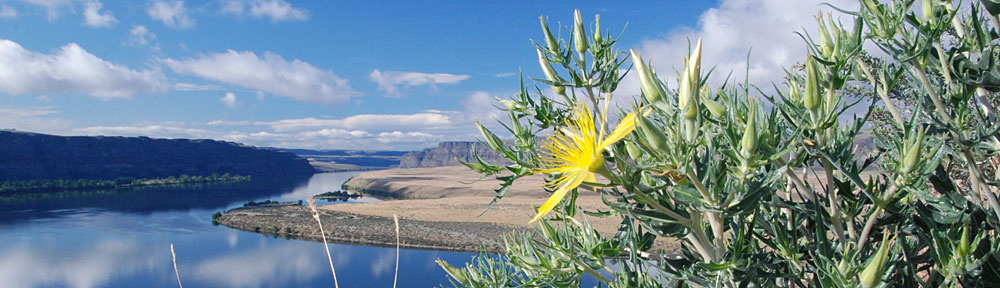

 I was confused. Wickenburg sits in the Sonoran desert. That’s the desert with the big saguaro cacti all over the place. It rains, on average, less than 8 inches a year. The desert can’t get any more real than that.
 One of the things I love about the desert is its diversity. There are so many kinds of desert, each with their own little ecosystem. Drive 50 or 100 miles in any direction and you’re likely to be in a whole different kind of desert. For example, if you drive up route 93 from Wickenburg, you’ll enter another kind of desert where there are no saguaro cacti, but plenty of Joshua trees. Drive up to Monument Valley and you’ll see the layers of underlying rock exposed in magnificent formations, with scrubby trees and bushes hanging on for life in the fine red sand.