THIS is What Life is All About

Experiencing the wonder of the world with someone you love.

Last night, I went to see The Hobbit: An Unexpected Journey. While I’ll likely use another blog post to debate the wisdom of stretching Tolkien’s classic into a three-part movie, I cannot criticize the movie makers for the breathtaking scenery throughout the movie. Filmed in New Zealand, this — and the epic Lord of the Rings trilogy — showcases some of the most stunning backcountry locations in the world.

There’s a scene in the movie when Thorin’s Company (13 dwarves, a hobbit, and a wizard) are traveling along a ridge in the mountains, high above the clouds. The scene, obviously shot from a helicopter, reminded me of two other scenes, one from a movie and the other from real life:

  • One of the closing scenes in the 1965 classic, The Sound of Music, when the Von Trapp Family is escaping the Nazis by hiking through the alps.
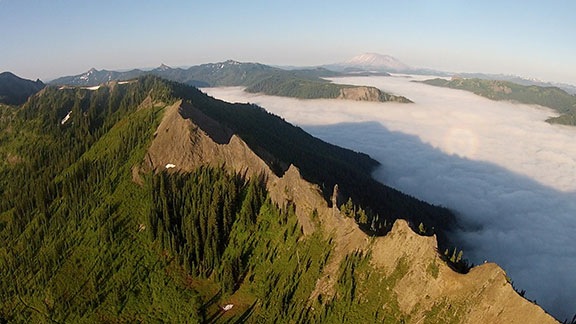
  • A particular moment on my July 2012 helicopter flight over the Cascade Mountains, when I crossed a specific rocky ridge surrounded by low clouds within sight of Mt. St. Helens.

That entire July flight was amazing, but it was this rocky ridge that popped into my mind while watching The Hobbit in a crowded Florida movie theater:

Cascades Ridge

And it brought me to tears. Even as I write this, perched on a stool at the breakfast bar in my mother’s kitchen on a Thursday morning before dawn, I’m all teary-eyed thinking about the amazing things I see and experience almost every day of my life — usually alone.

As I blogged after that flight:

I also felt more than a bit of sadness. There’s no way I can describe the amazing beauty of the remote wilderness that was around me for more than half of that flight. And yet there I was, enjoying it alone, unable to share it with anyone. Although I think my soon-to-be ex-husband would have enjoyed the flight, he was not with me and never would be again. I felt a surge of loneliness that I’ve never felt before. It ached to experience such an incredible flight alone, unable to share it firsthand with someone else who might appreciate it as much as I did.

Over time, I’ve come to learn that it’s more important to experience life than to be a slave to the material things we think we need to survive. I’m not independently wealthy — I do have to work for a living. But I’ve learned to work hard and smart and to live somewhat frugally so my money goes farther. By staying out of debt — and I’ll be completely debt-free (at least for a while) when my helicopter’s final loan payment is made next week — I’m not stressed about having to generate enough income to make credit card and loan payments. I can take time off to enjoy the experiences that make life worth living. In a way, I’m in a sort of semi-retirement where I mix work with play and really enjoy life.

Unfortunately, I’m one of the few people I know who are able to do this.

Reflection Canyon
Another example of the great places I fly for work; this shot was captured by my helicopter’s “nose cam” during a photo flight at Lake Powell.

My choice of career has also enabled me to enjoy amazing life experiences while working. I can’t begin to list the incredible places my work has taken me — or the incredible things I’ve seen from the air and on the ground while simply doing my job. That dawn flight across the Cascades is just an example — I did it for work, to reposition the helicopter for a required maintenance. In other words, it was part of my job. Not only did it entail a pair of amazing flights on consecutive days, but it also included a day spent wandering around Portland, a drive along the coast, a great dinner of oyster stew and fried oysters in an oceanside restaurant, a walk along the beach with my dog, a night in a beachfront motel, a beautiful foggy dawn, breakfast in a historic hotel, and a scenic drive back to the Portland area. What some people might do on a pair of days off, I was able to do as part of my work. How great is that?

What’s not so great is doing it alone.

Although my soon-to-be ex-husband promised me he’d join me on the road during my annual migration to points north — and I worked hard for years to build a business capable of supporting both of us — he backed out with excuses about needing to save more for retirement. I always hoped he’d see the light — and I was somewhat patiently waiting for him to do so right up to the end. The end came, as I’ve mentioned elsewhere in this blog, when he replaced me with another woman — someone who apparently doesn’t mind watching him be a slave to his material possessions and debt, enjoying life on weekends and during two weeks of paid vacation time each year.

It’s a shame, really. While I feel that life is all about experiences, those experiences are somehow better when they’re shared with someone else. For nearly 29 years, some (but not all) of my best life experiences were spent with the same man who I really thought appreciated them as much as I did: A road trip down the Pacific Coast from Seattle to San Francisco. A motorcycle camping trip down Skyline Drive and the Shenandoah Parkway and back up the Atlantic Coast’s barrier islands. A dash across a mosquito-infested field in the Everglades to a rental car, followed by an intense swatting session. A sunset soak in abandoned hot springs along the Rio Grande, watching wild horses graze in Mexico. A jet ski journey up the Colorado River from Lake Havasu to Laughlin. A river rafting trip down the Colorado through the Grand Canyon. A horseback ride on the beach in Costa Rica. A hike up a slot canyon with friends on the shore of Lake Powell. Time trials at a Bridgehampton race track in my Toyota MR-2. A day spent exploring the ruins of Chichen Itza. A sunrise at Montauk Point, followed by a nap in each others arms on a flat rock overlooking the Sound. An afternoon spent snorkeling in Cozumel. A view of the broken clouds of a marine layer moving in beneath us during a helicopter flight down the coast of Oregon. Long walks on beaches in too many places to count.

These are all memories I cherished, experiences somehow made better at the time because I shared them with someone I loved. Someone I could talk to about them long afterward. Someone who could browse photo albums with me and reminisce about the scenes they captured. Someone who could say, “Remember when we…” and I could remember with him.

That’s all gone now. Yes, I still have those memories, but they’re no longer shared, no longer cherished. Instead, they’re a reminder of how things change, how people grow apart without even knowing it, how love dies, and how easy it is for some people to replace a “life partner.”

I’ll have new experiences and build new memories of the amazing places I go and things I see and do in the years to come. Maybe I’ll have someone to share them with. Maybe we’ll stay together for a long time — long enough for the word “forever” to have meaning to me again.

But I’m certainly not going to wait for that someone to continue enjoying what’s important to me in life: experiencing the wonder of the world. The world is out there now and it’s not waiting either.

The Rules about Flying over Wilderness Areas

My answer to a reader’s question.

ChartA week or two ago, I got an email message from a reader who had read my November 2011 post, “A Few Aerial Views from Today’s Flight.” That post shows off a bunch of photos captured by my helicopter’s “nose cam,” a GoPro Hero2 camera I sometimes use in flight. The photos include views of the Verde and Salt Rivers north and east of Phoenix, including some of the lakes along the rivers. My reader noticed, after consulting some aeronautical charts, that much of the area I’d flown over was designated as wilderness area.

This reader, who asked to remain anonymous and not be quoted verbatim, was wondering about “bending” rules. Although he mentioned the June 2012 wire strike helicopter crash in the Verde River area, he wasn’t interested in the safety aspects of maintaining a high enough altitude to clear obstacles. He was interested in my interpretation of the rule about flying at least 2,000 feet above wilderness areas.

The “Rule”

Before I interpret the rule, it’s a good idea to know exactly what the rule is and where it can be found.

It’s interesting to note that a search for “wilderness” and “2,000 feet” in the Federal Aviation Regulations (FARs) does not provide any guidance related to operations over charted wilderness areas. The FARs are the rules pilots are required to comply with.

A search of the Aeronautics Information Manual (AIM) for “wilderness” results in “Part 7-4-6: Flights Over Charted U.S. Wildlife Refuges, Parks, and Forest Service Areas.” Paragraph b pertains to this topic:

b. Pilots are requested to maintain a minimum altitude of 2,000 feet above the surface of the following: National Parks, Monuments, Seashores, Lakeshores, Recreation Areas and Scenic Riverways administered by the National Park Service, National Wildlife Refuges, Big Game Refuges, Game Ranges and Wildlife Ranges administered by the U.S. Fish and Wildlife Service, and Wilderness and Primitive areas administered by the U.S. Forest Service.

A note adds this:

FAA Advisory Circular AC 91-36, Visual Flight Rules (VFR) Flight Over Noise-Sensitive Areas, defines the surface of a national park area (including parks, forests, primitive areas, wilderness areas, recreational areas, national seashores, national monuments, national lakeshores, and national wildlife refuge and range areas) as: the highest terrain within 2,000 feet laterally of the route of flight, or the upper-most rim of a canyon or valley.

First Glance Interpretation

At first glance, the “rule” seems pretty straightforward: you’re supposed to fly at least 2,000 feet above the ground in any charted wilderness area, etc.

User's Guide ImageCharts, by the way, make it very easy to identify these areas. They’re normally surrounded by a blue line that has dots on the inside of the area. This entry from the Aeronautical Chart User’s Guide shows what to look for. And this chart excerpt from the Phoenix terminal area chart (TAC) illustrates how two areas look on an actual chart: The Hells Canyon Wilderness area (left) and Lake Pleasant Bald Eagle Breeding Area (right):

Wilderness Examples

The Advisory Circular note goes a bit further to explain that the lowest point in the wilderness area that you should consider when setting your altitude is the highest point 2,000 feet from your aircraft in any direction. So if you’re flying over a 1,000 foot deep canyon and the canyon is only 1,500 feet wide, you should be 2,000 feet above the canyon walls — not 2,000 feet over the bottom of the canyon.

It’s important to note that a requirement like this is extremely difficult for helicopter pilots to deal with, primarily because helicopters normally operate 500 to 1,000 feet above the ground. We seldom fly 2,000 feet above anything — that’s nosebleed territory for us. That’s also where small planes might be operating — and we’re trained to stay away from them. So when you ask a helicopter pilot to fly 2,000 feet above the ground, we’re not going to like it.

But Is It A Rule?

But the real question should be, is this really a rule? Something that must be followed? Something that could get you in trouble with the FAA if you ignore it?

I can offer two arguments for why pilots are not required to fly 2,000 feet above charted wilderness areas:

  • The “rule” is not included in the FARs, which are the regulations governing flight in the U.S. Instead, it’s described in the AIM, which is informational in nature.
  • The language of the “rule” says that “Pilots are requested to maintain a minimum altitude of 2,000 feet above the surface…” Surely you can’t confuse a “request” with a “requirement.”

Before I go any further, I want to point out paragraph c of the same AIM part (7-4-6):

Federal statues prohibit certain types of flight activity and/or provide altitude restrictions over designated U.S. Wildlife Refuges, Parks, and Forest Service Areas. These designated areas, for example: Boundary Waters Canoe Wilderness Areas, Minnesota; Haleakala National Park, Hawaii; Yosemite National Park, California; and Grand Canyon National Park, Arizona, are charted on Sectional Charts.

Note the use of the word “prohibit” in this paragraph. With a little bit of effort, you can find the rules for these areas in the FARs or Special Federal Aviation Regulations (SFARs). For example, FAR 93 Subpart U and SFAR 50-2 govern special regulations over Grand Canyon National Park. In the case of Yosemite the rule is printed right on the chart:

Yosemite on Chart

In case you can’t read it:

Public Law 100-91 prohibits flight of VFR helicopters or fixed-wing aircraft below 2000 feet above the surface of Yosemite National Park. “Surface” refers to the highest terrain within the park within 2000 feet laterally of the route of flight or within the uppermost rim of the Yosemite Valley.

Pretty clear, no?

My point is, don’t get the idea that a pilot can ignore charted wilderness areas. That simply isn’t true. You need to know whether an area has its own special flight regulations before even considering “breaking” the 2,000-foot “rule.”

What’s Right?

Now you know my interpretation. But I didn’t get this on my own. It was pointed out to me by my primary flight instructor years ago. Pilots who take the time to look up and read the “rules” can make their own conclusions.

The reader who queried me about this obviously realized from the photos I shared on my blog post that I must have been flying lower than 2,000 feet above the ground in a charted wilderness area. Denying I did so when there’s photographic evidence to the contrary would be dishonest, insulting to my readers, and a waste of time.

But is it right to fly low over these areas? Because it’s not a regulation in most wilderness areas, it becomes an ethical decision on the part of the pilot.

First, consider why charted wilderness areas exist. The government is protecting these areas, for whatever reason. Usually, it’s because they don’t want aircraft noise to interfere with wildlife — especially wildlife breeding and habitat maintenance. Sometimes its because they want “natural” areas to be kept quiet for visitors trying to enjoy the beauty of nature in peace.

How do you feel about preserving quiet in these areas? Is it important to you? If you were on the ground, how would you feel if a helicopter or plane buzzed by at 500 or 1,000 feet? Would it bother you? How do you think it affects the people on the ground? People camping, fishing, hiking, meditating?

As the person who contacted me pointed out, when he flew in the area, he didn’t see a person for miles. So who would he be bothering?

The one thing I can say with certainty is this: If pilots typically “busted a wilderness area” by flying low through it and enough people on the ground noticed and complained about it, it’s far more likely that the government will respond by establishing a real rule to prevent it. Yes, at one time people were allowed to fly low-level through the Grand Canyon and Yosemite valley. But when enough complaints came in, regulations were written to make such activity illegal.

Would you want to see that happen with all the wilderness areas on the charts?

I know I wouldn’t.

One Pilot’s Stupidity Makes Us All Look Bad

Helicopter pilots: choose your landing zones wisely, please.

As a helicopter pilot, one of the questions I get asked most often is: “Can you land anywhere?”

In most cases, the person asking the question is referring to the legality of landing anywhere — not the ability to land anywhere. Helicopters have the ability to land almost anywhere, but not every landing zone is legal. I address this in quite a bit of detail in a post titled “Finding a Legal Landing Zone” that I wrote back in 2009. The facts still apply.

Unfortunately, not everyone considers the legality — or even the safety — of a landing zone before setting down on it. This brief news piece linked to by Vertical Magazine’s Twitter account is a good example. The gist of the piece:

A Monticello man has been charged by Nassau County Police with landing a helicopter in a grassy area full of pedestrians near the Nassau Coliseum minutes before midnight on Saturday night.

Nassau Coliseum, in case you don’t know, is an indoor arena where the NY Islanders play hockey and concerts are held. I saw quite a few concerts there in my college days. And hockey games.

On the night in question, there were about 100 drunk kids, aged 14 to 18, wandering around the building when the idiot pilot — honestly, what else can I call him? — came in for a landing in his Bell 407. He had to abort one landing before succeeding on a second attempt. At least 20 pedestrians were walking in the area.

I don’t think I need to tell you how stupid this stunt was. Drunk kids in the landing zone? All it takes is for one of them to walk into the tail rotor to turn a fun night of teenage drinking (yes, I’m being sarcastic) into death and mental trauma. Even if the kids weren’t drunk — and the pilot may not have thought they were — they’re still pedestrians in a landing zone. You don’t have to be drunk to walk into a tail rotor, as evidenced here and here.

And it’s not just the tail rotor that’s dangerous. Although visibility around a helicopter is good, it isn’t 360°. The pilot could have struck a pedestrian on the way down — or even landed on one.

Sure — nothing happened in this case. But the cops came, arrested the pilot, and seized his helicopter. And I think he deserves everything he gets.

You see, irresponsible pilots who pull dangerous stunts like this make all helicopter pilots look bad. People connect his action to the group he’s a part of. Hence, all helicopter pilots are reckless individuals who would land among a crowd of drunk teenagers.

We know better. But does the public? Does the local government?

A few years back, the city of Scottsdale, AZ instituted a town ordinance prohibiting the landing of a helicopter anywhere except at an airport or approved helipad. Why? Because an idiot pilot decided it would be fun to land in a culdesac of his subdivision. Neighbors didn’t think it was such a good idea and complained. It went to the city council and they “fixed” the problem by making it illegal.

(Wickenburg has a similar ordinance, although a pilot can get permission, on a case-by-case basis, by talking to the police chief before landing. And the police chief can deny the request.)

My point: think before you land off-airport. Think about the consequences of your actions. Think about the safety of the people on the ground. Think about the potential for complaints.

And don’t be stupid.

A Weekend in Wenatchee, a Helicopter Flight Home

Cramming a lot into three days.

Last weekend, I took Alaska Air/Horizon from Phoenix to Wenatchee, WA. I left on a Friday morning with the goal of being back in Wickenburg with my helicopter on Sunday night.

Friday: The Travel Day

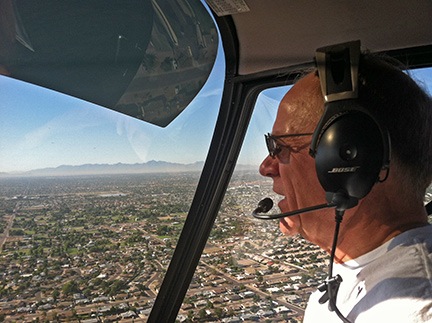
Pilot Don
Don at the controls, over Peoria, AZ.

My day started early at Wickenburg Airport. My friend, Don, came to pick me up in his helicopter at about 8:30 AM. After topping off his tanks with fuel — which was cheaper at Wickenburg than his winter base in Deer Valley — we headed southeast.

Don is one of my good friends. Like me, he lives in Washington in the summer and Arizona in the winter. But unlike me, his main home is in Washington; mine is in Arizona. The past two winter seasons, we shared hangar space — at least part time — at Deer Valley Airport. That’s where we met. Don owns an R44 like mine but blue. He’s retired and likes any excuse to fly. On Friday morning, I was his excuse. He came up to Wickenburg, picked me up, and flew me down to Sky Harbor.

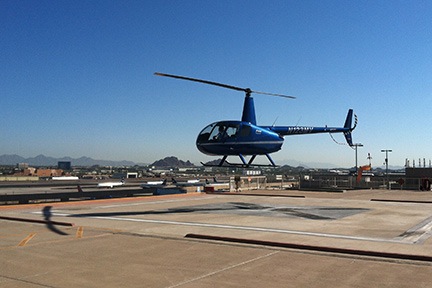
What most folks don’t know is that Sky Harbor Airport in Phoenix has a public helipad on the top of the Terminal 3 parking structure. (Don’t believe me? Next time you’re at the airport, take your car up there to the roof and see for yourself.) The helipad doesn’t get much use. In fact, I’m willing to bet that Don is one of the top 10 users with me in the top 20 during the winter months. I blogged about the helipad here and here and even put a video online here.

Don Flies Away
Don’s departure to the north.

Don dropped me off with my limited luggage, waited until I was clear of the helipad, and flew away to the north. I had just two small bags: an overnight bag that contained primarily camera equipment and my Bose headset bag. My A20 headset had been repaired under warranty and shipped back to my Wickenburg home; I wanted to use it on my upcoming long distance flight.

I took the elevator down to the baggage claim level, went out to the curb, and waited for the airport shuttle bus. I was at Terminal 3 and needed to be at Terminal 2. If it wasn’t so damn hot out already — at 9 AM! — I would have walked it. Instead, I waited for the bus, consulting my watch every 30 seconds.

Fortunately, the security lines at Terminal 2 were short and they didn’t ask me to go through the naked x-ray machine — which I won’t go through. So I was walking to my gate with time to spare before my 10:20 AM flight. Enough time to get a shoeshine and spend most of my time in the chair helping the shoeshine guy attract his next customer.

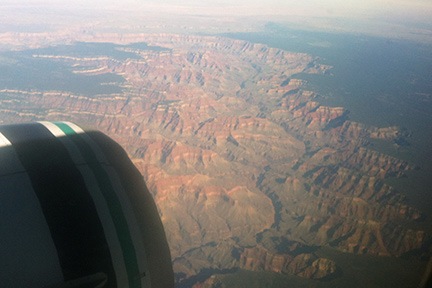
Grand Canyon from Airliner
This is what the Grand Canyon looks like from an airliner. And yes, I’ll admit it: I actually took this photo on the way home from Seattle in September.

The flight was uneventful. The only item of note is the pilot or first officer who acted as a tour guide throughout various portions of the flight. I’ve never heard a pilot provide so much information about what was out the windows. We flew near or over the Grand Canyon, Bryce National Park, and, of course, the mountains south of Seattle: Rainier, St. Helens, Adams, Hood. I was on the right side of the plane and felt a surge of homesickness when I spotted the Columbia River basin near Quincy. I also caught sight of the smoke from the fires that were still burning between Wenatchee, Cashmere, and Ellensburg. The air over the Columbia, however, was much clearer than it had been on the day I’d left three weeks before.

At SeaTac, I needed to meet up with my co-pilot for the return trip, Ronnie. Ronnie is a pilot who used to live in Arizona but now lives in Colorado. She’s a flight instructor who mostly flies Schweizers these days, but she’s checked out and endorsed in R44s. I’d asked her to join me on the return flight to Phoenix because I was worried that I might be too tired to make the flight alone. I haven’t been sleeping well for the past few months and would likely be doing a lot of flying on Saturday, before our planned afternoon departure. Her flight landed right after mine. We texted back and forth and finally met up near her gate. We’d take the same flight together to Wenatchee.

We arrived in Wenatchee on time at about 3:30 PM. We walked to the general aviation terminal, where the truck I used all summer was parked and waiting for my return — with the luggage I’d packed three weeks before for my return trip. It started right up. We stowed our bags and drove it out onto the ramp. Then I peeled off the helicopter’s blade hail cover and cockpit cover and tossed them into the back of the truck. We unloaded all the gear I’d left in the helicopter and stowed it in the truck, moved the truck off the ramp, and went back out to the helicopter. I wanted to make sure it started — I hadn’t flown it in over three weeks — and top off the tanks with fuel. It seemed like a good idea to take Ronnie for a quick flight around the area.

I preflighted, we climbed aboard, and I primed the engine. When I pushed the starter button, the helicopter roared to life as if to say, “Where the hell have you been? Let’s go flying!” A few minutes later we were airborne, heading southwest.

I showed Ronnie the orchard I’d been based at for the end of the season and the now-empty RV pad my host had built for me near his home. Then we popped over Wenatchee Heights and headed out to Malaga. I showed her my friend Al’s winery and the 10 acres of view property I hope to buy in January for my new home. Then we crossed the river, hovered momentarily near the tasting room for Mike and Judy’s winery, and went in for landing at the pumps at Wenatchee Airport. As we were coming in, another helicopter pilot got on the radio and welcomed me back.

(I should mention here that I was supposed to stay in Washington until October. I’d been working on a video project for another one of my winemaker friends. In April, when I brought my RV up from Arizona, I’d videoed the bottling process. I was supposed to video the late September pick and crush at several of the wineries. But things back home had become so uncertain that I simply had to return to check things out. And although I had every intention of coming back to Washington to do the video work I planned, what I found at home convinced me to stay. Thus, I missed out not only on getting the video work done, but I also had to turn down at least a dozen charter flights and winery tours that probably would have been good for about $10K in revenue.)

We fueled up the helicopter and I repositioned it on the ramp. By that time, my friend Jim was about 20 minutes out with his helicopter. Jim also flies an R44. He’s based in Coeur d’Alene, ID and operates Big Country Helicopters there. Like me, he’s a cherry drying pilot. During the summer, we’d arranged to work together at the Wenatchee Wings and Wheels event at the airport on Saturday, October 6. We’d be doing helicopter rides for $35/person. Jim had brought along his wife and another ground crew person. Ronnie would also help out during the event.

Jim arrived and parked beside me on the ramp. We then set about stowing all the helicopter gear from the truck in the general aviation hangar so I could squeeze the five of us in the truck for the trip into Wenatchee.

We got rooms at the Coast Wenatchee Center Hotel, which was quite nice. Ronnie and I shared a room, not only to save a few dollars but because it was the last available room in the hotel. Jim had reservations; we didn’t. We were pretty lucky to find a room at all because of a big event going on in Leavenworth, about 20 miles away.

At the Rivertop
I think this sign says it all about the Rivertop Bar and Grill.

We had dinner at the Wok About Grill. Jim and I are still dieting; Mongolian Barbecue makes it easy for us to pick and choose exactly what we eat. Later, we went up to the top floor bar in our hotel for drinks. While we were there, a DJ came in, started playing a weird mix of music, and turned on one of those disco balls. We left before the Karaoke began.

Saturday: The Big Event

Of course, I slept like crap. It’s difficult to deal with insomnia when you’re sharing a room with someone else. There are limits to what you can do without waking the other person. I spent a lot of time reading and doing social networking on my iPad. By the time 6 AM rolled along, I’d had about four hours of sleep. I hopped in the shower, dressed, and put on some makeup. By that time, Ronnie was half awake. I left her at 7 AM with a promise to be back my 9:00 to take everyone back to the airport. I had things to do and people to see.

My first stop was up in Wenatchee Heights, at the house where I’d parked my RV in late August and early September. The house belonged to my friend Mike, who had agreed to store my motorcycle for the season in his garage. I needed to retrieve my Moitek video camera mount. I wanted to bring it back to Arizona with me so I could do video flights while I was home during the winter months. I unlocked the house and dragged the two Pelican cases to the garage door where the truck was parked and waiting. But I could not lift the larger of the two boxes by myself. I needed help.

So I called Steve, the next door neighbor. He’s building a garage with an apartment on top for retirement and he was there and awake. A while later, he was helping me lift the two boxes into the back of the truck.

Next, we needed to make sure that the truck fit in Steve’s garage. I’d made arrangements with him to store the truck there over the winter. His garage has three bays and solar heat. He’d graciously agreed to let me park the truck there, out of the elements. In return, I told him he could use the truck for any Home Depot runs he needed to do. After measuring the garage bay and the truck, I drove it in. It fit with about 3 feet of space to spare.

Steve gave me a cup of coffee and we chatted for a while. His upstairs apartment is coming along nicely. He’s a really nice guy — hell, all of the people I’ve met in Washington are really nice — and I really appreciated him helping me out with the truck.

Then I was off to my next meeting: a visit with Alex the Bird and the folks who have agreed to take her for the winter.

When I knew I had to leave early to check on things back home, I arranged with Leah and Freddy, who live on the orchard, to watch Alex the Bird. Even though I planned to return, I suspected that bringing Alex home with me would not be a good idea. It would complicate matters that were already likely out of control. So I asked them if they’d take her for the winter. Not only did they say yes, but they were excited about it. With two kids, a dog, and a cat, I knew their home would be a great environment for Alex. I also suspected that Alex would entertain them.

I rang the bell at 8 AM, as scheduled. Alex was in her cage in the kitchen where she could watch everything going on. She looked happy — but cautious — about seeing me. Our past year together — which included living in my husband’s Phoenix condo — had not been good. Alex hated the condo, maybe even more than I did. Not only was her space there dark with nothing going on to keep her entertained, but I spent long hours in my office, working on various books. Her winter molt had lasted far longer than it should have — an indication to me that she wasn’t happy. Even when we got back to Washington and she was staying in her favorite cage, I could tell that things were different with her.

In talking with Leah, I got the impression that she was happier with Leah’s family than she had been with me over the past year. It made me both happy and sad. And Leah was still enthusiastic about watching her. She told me about how much Alex kept them entertained. And she apologized about Alex learning the word “crap” from her son. I left them after a half-hour visit that included filling Leah in on what had gone on at home in the past three weeks. She, like everyone else, was extremely sympathetic and supportive.

I was back at the hotel at 9:15. Everyone climbed aboard and we headed up to the airport. The event was just beginning, starting with a pancake breakfast. We went out to the helicopters, removed the tie-downs, and preflighted. We already had several people waiting to fly. Because of the cold overnight temperatures, Jim needed a little help from the local mechanics to get his helicopter started. So I started up and started doing rides. I was just coming back from my second ride when Jim was spinning and ready to take on his passengers.

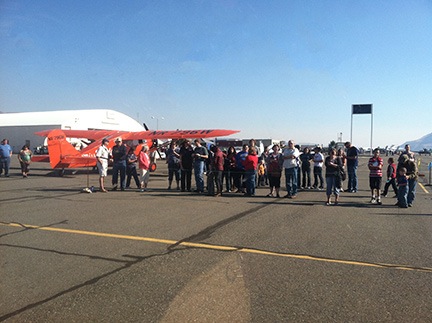
Waiting Passengers
The view from my seat as I waited for the ground crew to load passengers. The orrange-red plane in the photo is operated by the Spirit of Wenatchee. It’s a reproduction of the Miss Veedol, the plane Clyde Pangborn and Hugh
Herndon Jr. used to cross the Pacific Ocean in 1931.

We flew from 8:30 AM on. Our ground crew was excellent — no whining! Jim’s wife took the money and kept track of how many each of us flew. Ronnie did the safety briefings, using one of my safety briefing cards. Then Ronnie and Marshall loaded and unloaded the passengers. Jim and I worked hard to time the flight so only one of us was on the ground at a time. It was a constant flow of passengers for our 6- to 8-minute flights. The only time we stopped was for fuel: Jim first, then me a while later, and then Jim again.

Time flew. The event was supposed to end at 3 PM, but people were still lined up for flights. When Jim went for fuel around that time, I told him I’d keep flying until he was ready to fly again. Then Ronnie and I needed to leave. The plan was to top off the tanks, reload the gear, and get down to John Day Airport in Oregon before nightfall. But as time ticked on, that seemed less and less likely. Even when the tanks were topped off and we started loading our gear, I was doubtful about reaching John Day before dark. Sunset was just after 6 PM and it was already after 4 PM in Wenatchee.

Honey Crisp Rules!
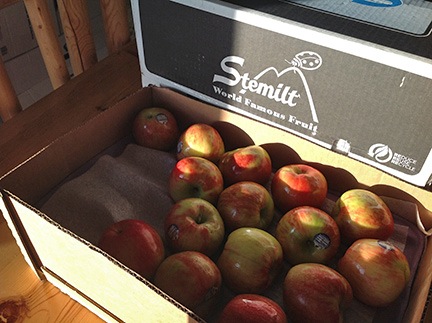
The remaining apples, once I got them home. I’ve been eating them every day since and have given away a bunch more. Thanks, West!

Meanwhile, my favorite Wenatchee area client stopped by with a 40-pound box of Honey Crisp apples, picked only days before at one of the orchards we’d landed at quite often during the summer. I realized immediately that the box would take up too much space in the helicopter. So I gave away about half the apples to the mechanics at Wenatchee airport and to Jim and his crew, then cut the box down to half size to get the remaining 20 pounds home. The box was still a lot bigger than I needed it to be, but there was no way I was going to part with any more of those apples.

We struggled to get the Moitek boxes into the helicopter. Although we managed to get the big one in, it left very little room for the rest of the things we needed to take. I started getting stressed, probably because of the long day of flying and my general lack of sleep. I made two big decisions: (1) leave the Moitek behind and (2) start the flight home in the morning. Ronnie agreed.

In the meantime, Jim was just finishing up. He planned to fly back to Coeur d’Alene that night. It was about a 90-minute flight for him and he knew the area well. We repacked my helicopter and repositioned it for the night. Then we saw Jim and his party off and headed back up to Wenatchee Heights to store the Moitek back in Mike’s house.

Ronnie and I were both exhausted from the full day. We knew we’d have to leave Wenatchee very early in the morning to make it to Phoenix in time for Ronnie’s 5:55 PM flight to Denver. We got a room at an East Wenatchee hotel I’d stayed at before and tried to grab a quick meal in the restaurant behind it. Service sucked and we spent way too long there. Ronnie got a sandwich and I took the other half of my salad to go for the next day. We wouldn’t have time to stop for lunch; there would be in-flight meal service on our helicopter flight.

We were in bed and asleep by 9 PM.

Sunday: The Cross-Country Flight

It should come as no surprise that I slept like crap. I was up for hours in the middle of the night with my brain operating at light speed. My biggest worry: what was going on at home with me gone. My husband had become an irrational stranger over the summer and I honestly didn’t know what he was capable of anymore. Of course, I fell back to sleep around 4 AM. So when Ronnie’s alarm went off, it woke me up, too.

I grabbed a quick shower, dressed, and was ready to go within 30 minutes. It was still dark out with no sign of dawn when we got to the airport at 5:30 AM. It was cold, too. I’d dressed in a long-sleeved shirt and one of my Flying M Air denim shirts and a jacket and was still chilled. I preflighted with the help of a flashlight while Ronnie installed the dual controls. We lifted off at 5:50 AM as the sky began to brighten in the east.

Our Route
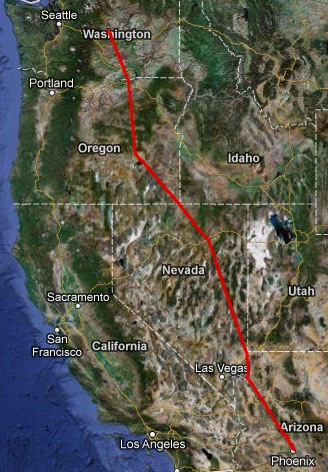
The actual track from our route, plotted on a map. The kinks in the route were to fly around restricted or otherwise controlled airspace.

We were going the most direct route, which should be about 9 hours of flight time. We needed three fuel stops: Burns, OR; Elko, NV; and Mesquite, NV. Although I wanted to land in Wickenburg and drive Ronnie to the airport, it didn’t look as if we’d have enough time to do that. I’d evaluate the situation when we got to Mesquite; I was prepared to land her at Sky Harbor, just as Don had done for me two days before.

Ronnie at the Controls
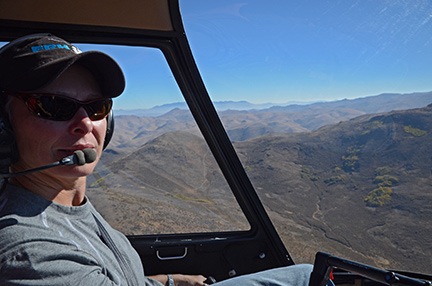
Ronnie at the controls over Oregon or maybe Nevada.

The sun came up when we were just south of Hanford. We crossed the Columbia River near Hermiston to voice the restricted area west of there. From there, it was a straight shot to Burns. Ronnie did most of the flying, but I landed us at Burns because I knew where the fuel island was. We got there in good time. The place was deserted, but fuel was self-serve. I had the grounding strap connected before the blades had even stopped spinning. I don’t think we were on the ground more than 15 minutes. Then we started up and took off to the next stop.

The stretch between Burns and Elko crosses over some of the most remote, empty desert I’ve ever flown over. In the spring, the area is home to many large herds of wild horses. But in the fall, with most of the grass gone, there isn’t much life at all. We didn’t see a single horse — and believe me, I looked.

Fall Foliage from the Air
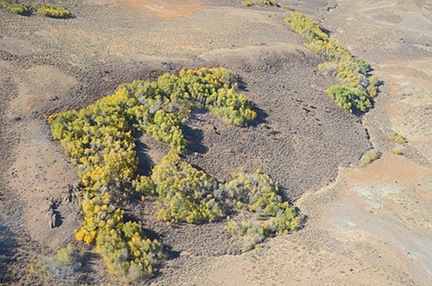
Fall foliage near Elko, NV from the air.

Again, Ronnie did most of the flying. I had my Nikon out and took a few pictures. Just a few because I really hate photos with glare in them and it’s nearly impossible to get glare-free photos through Plexiglas. We saw some pockets of fall color along the way. In some areas, it was quite beautiful.

We landed at Elko, where they have a great FBO. The line guy fueled us from a truck while we went inside to use the restroom. I also bought some oil — I’d been adding at least a half-quart at each stop — and bottled water. We were on the ground less than 30 minutes. Then we were airborne again, continuing southeast. It was about 11 AM. We were doing excellent time.

We ate our lunches, one at a time, just after leaving Elko. Ronnie went first while I flew. Then I went. Yes: I admit that I stole a fork from the restaurant. We’d kept the food cold in a little cooler I’d left in the helicopter just for that purpose; my salad was even better the second day.

We may have been doing good time, but it wasn’t good enough to land at Wickenburg and drive to Phoenix. That became clear as we neared Mesquite, NV. Even though we were on the ground there less than 20 minutes, we had at least 2 hours of flight time ahead of us. While it might be possible to land and drive to Sky Harbor in time for Ronnie to make her flight to Denver, there wouldn’t be time to stow the helicopter in the hangar before that. And with things as weird as they were back in Wickenburg, there was no way I would leave my helicopter out in the open without keeping an eye on it.

We skirted around the Grand Canyon airspace south of Mesquite, listening to the tour pilots on the radio talking about reporting points we didn’t know. I made a few position calls in relation to Meadview. As we climbed over the cliffs near Grand Canyon West airport, just when I thought we were clear of the tour traffic, Ronnie spotted another helicopter a little too close to our location for comfort. The other pilot must have seen us, too, because he took evasive action before we could.

Later, near the Weaver Mountains, I took control from Ronnie again and gave her a low-level thrill ride through the canyons that led to Lake Pleasant. It’s something that I usually do alone, but since Ronnie had commented on canyon flying earlier in our flight, I thought I’d give her a taste of what I do when I know the terrain very well. I admit that I’m spoiled: being able to fly where I like is something that most pilots who work for someone else don’t get to do.

It was around 4 PM when I made my radio call to Phoenix Tower. Ronnie used her camera to video our approach and landing on the helipad. (She put it on Facebook but I think access is restricted to her friends.) She climbed out and grabbed her bags. I watched her clear the helipad, then called for departure and headed north to Deer Valley. I’d need to buy fuel to get back to Wickenburg.

I took a nice rest at Atlantic Aviation, had some cold water, and chatted with the girl working the desk. Although I’d been shedding layers of clothing on every stop, I was still wearing jeans and a long-sleeved shirt in 90+° weather. But I felt remarkably refreshed when I headed out for the final leg of my trip to Wickenburg. Once I cleared the subdivisions and the power lines near Lake Pleasant, I dropped down low over the desert, speeding northeast. It felt good to be back in familiar territory.

But I also felt sad. I knew my days in Arizona were numbered. How many more times would I cross that familiar stretch of desert between Phoenix and Wickenburg? I didn’t know. One thing is for sure: I’m determined to enjoy every single flight.

I touched down at Wickenburg at 5 PM. By 5:30 PM, the helicopter was secured back in its hangar and I was heading home.

We’d shattered my previous record for the flight, completing it in about 9 hours of total flight time.
Cross-Country Flight: Wenatchee, WA to Coeur d’Alene, ID

A photo tour.

Earlier this month, my friend Jim’s cherry drying contract in Chelan, WA ended. He was faced with the task of bringing his helicopter and his truck back home to Coeur d’Alene.

His helicopter was running low on time — it would need a 100-hour/annual inspection within 6.5 hours. It was a 1.5 hour trip to Coeur d’Alene. He planned to fly home, pick up his wife, fly back to Chelan so she could drive the truck home, and then fly back to Coeur d’Alene. In other words, he would put 4.5 hours on it, leaving just 2 hours before maintenance was due. That’s cutting it pretty darn close.

My helicopter was relatively fresh out of maintenance and I was suffering from the RV version of cabin fever, so I volunteered to do a flight of two helicopters from Chelan to Coeur d’Alene and then fly him back to Chelan so he could drive the truck back. We agreed on a meeting time of about 5 PM.

I figured I’d use the flight to experiment with my three GoPro cameras. I wanted to give the wireless remote a good workout on the GoPro Hero 2, which I use as my “nosecam.”

Chelan is about 20 minutes from my base (at the time) in Wenatchee Heights. After rigging up the cameras and doing a preflight, I took off on a route that mostly followed the Columbia River.

I started having trouble with the GoPro remote right from the start. First, I discovered that the remote’s battery was too low to operate. This wasn’t a huge deal because I had a USB power supply and could plug it in. But it did irk me because I thought it was fully charged. What was worse, however, and couldn’t be resolved in flight, was that the remote back on the camera had apparently turned itself off before I used the remote to turn the camera on. The remote couldn’t find the back (and camera) and, thus, couldn’t turn on the camera. It wasn’t until I got to Chelan that I was able to resolve that problem.

The skidcam and cockpit cam worked fine, though.

I had the skidcam set up for one still photo every 5 seconds. In hindsight, I should have set it for every 2 seconds. But I did capture a bunch of nice shots, like this one as I departed my landing zone. The orchard I’m on contract for fills the frame; you can see my shadow:

Wenatchee Heights Orchard

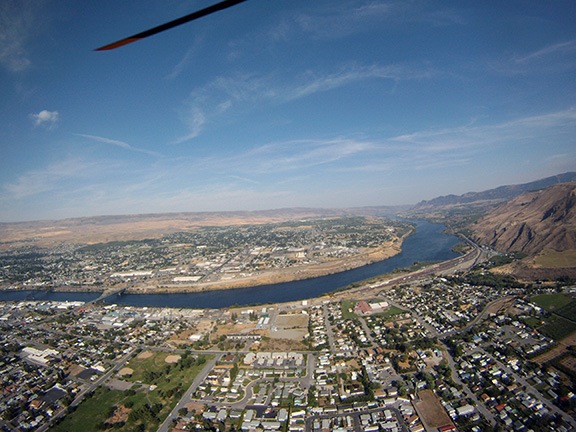
A bit further along on the flight, as I flew out of the Squilchuck Valley, the skidcam caught this image of South Wenatchee, the Columbia River, and East Wenatchee:

East Wenatchee Aerial

I should mention here that the skidcam ran until its battery died; I only shut it off briefly while I waited in Chelan and later in Coeur d’Alene. I have over 3,500 photos from that camera.

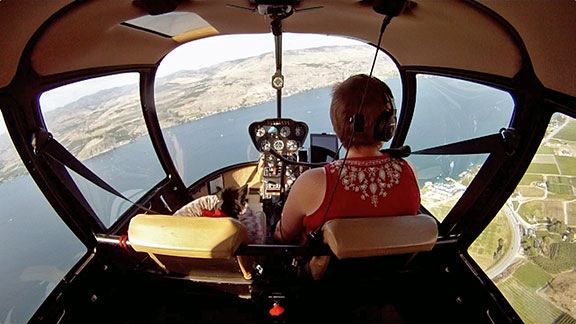
My route followed the Columbia River, flying mostly right over the main channel. The nosecam would have gotten some really rocking footage that probably wouldn’t have been too useable because of the high winds bouncing me around in the sky. But the stills would have looked good. Here’s a view from the cockpit cam shot not far past the Rocky Reach Dam:

Cockpit View of Columbia River

If you’ve got a sharp eye, you might notice something in the front passenger seat. That’s Penny the Tiny Dog’s bed. Penny slept for most of the flight — as she usually does in the helicopter. But every once in a while, she’d poke her head up and look around. Here’s another shot as we came over the ridge and began our descent to Lake Chelan:

Flying with Penny

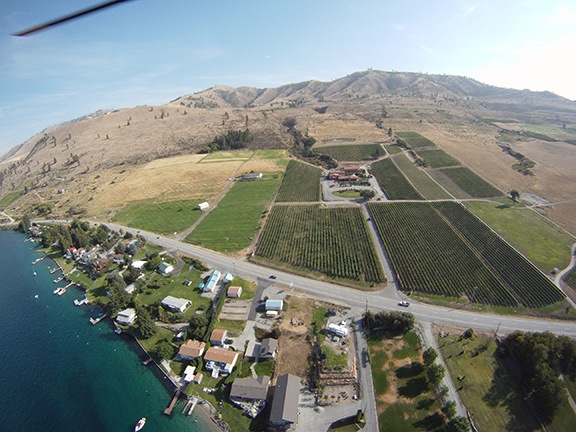
Normally, when I fly to Chelan Airport, I follow the river all the way. But I’d gotten a call from someone who wanted an engagement flight out to Tsillan Cellars Winery on the south shore of Lake Chelan. I wanted to scout the possible landing zones. I circled the winery once and decided that both offered landing zones would work. The one I’d use, however, was the one right at the end of the entry road, by the winery’s big sign. Showy and convenient and not too tight. Here’s a shot from the skidcam as I circled:

Tsillan Cellars Winery

From there, I continued on to the airport, flying over downtown Chelan along the way. I landed in the field near Jim’s helicopter and began the shutdown process. While I was waiting for the engine to cool, I put Penny on her leash and dropped her gently onto the ground. She wandered into the frame of the skidcam as Jim pulled up beside me.

Penny at Chelan

Jim topped off both of my fuel tanks with the fuel he had on his truck. There was no reason to drive all that fuel out to Coeur d’Alene later on. I fiddled with my cameras and got them running. We took off as a flight of two with Jim leading the way, heading almost due east.

Despite the fact that the airport is at least 500 feet over the river, we began climbing as soon as we departed. We had to clear the cliffs and climb up to the Waterville Plateau. I followed Jim, trying hard to keep my eyes on the red speck of his helicopter, concerned about catching up with him because of my helicopter’s slightly greater power. (More on that in a moment.) When we topped the cliff, he was easy to spot above the horizon; this nosecam still gives you an idea:

Climbing to Watervill Plateau

I was pleasantly surprised to find that although we had a tailwind, it wasn’t gusty and the flight was much smoother. The thought of spending an hour each way bouncing around the sky wasn’t appealing. But that wasn’t the case.

I soon learned that my Raven II helicopter is not faster than Jim’s Raven I. There are two possible reasons for this:

  • His helicopter is lighter, weighing in at less than 1450 empty. My ship’s empty weight is 1515. I assume he had full fuel (as I did) and we weigh about the same. Not sure how much gear he had on board with him, but I’m certain that his flight weight was lighter than mine. Although probably not much.
  • His chart for maximum manifold pressure allows him to pull at least an inch more power than I can in the same conditions. I have no idea why our charts are different.

In either case, he was able to get 5 to 10 knots more airspeed than me. It wasn’t long before his helicopter became a faint dot in the distance.

Meanwhile, the light was getting good and the combines were out harvesting the dry-farmed wheat up on the plateau. We paused enroute while I circled a field with two combines at work. This is where I really wish I’d set the camera for a shot every 2 seconds instead of 5. Although I got one so-so shot, I missed so many other possible shots:

Combine at Work

Afterward, I was ahead of Jim for a short time. My skidcam and then my nosecam caught him passing me:

Racing with Jim

Losing the Race with JIm

The landscape continued with rolling wheat fields, most of which were already harvested. It suddenly gave way to Banks Lake, a dammed coulee filled with water pumped up from the Columbia River at the Grand Coulee Dam. Here’s the last still clip from the nosecam — I’d mistakenly inserted a 2GB SD card instead of the usual 16GB SD card so I only got about 30 minutes of video. (Sheesh.) Jim told me, over the radio, that the rock formation in the lake is called Steamboat.

Banks Lake

Although my skidcam kept shooting, it had shifted somewhat and was no longer level — if indeed it ever was. It produced this slanted view of the lake as we were crossing the cliffs on the other side:

Banks Lake

Beyond that, my skidcam caught a few more images of combines out in the field. Here’s one corrected for the camera’s tilt:

Another Harvest Shot

After more relatively flat farmland, the landscape began to change. There were more and more trees and canyons mixed in with the farmland.

Farmland in the Hills

Soon we were flying along a bend in the Columbia River. Later, we were alongside the Spokane River.

Spokane River

By this time, Jim was so far ahead of me that I simply couldn’t see him. We finally determined, based on distance to KCOE, that he was four miles ahead of me. It wasn’t exactly a “flight of two helicopters” anymore.

A while later, we landed at Coeur d’Alene. Jim’s wife met us there. They exchanged hugs and he put his helicopter away in the hangar while Penny and I stretched our legs. Then he and I climbed back into my helicopter with Penny in the back seat and we took off on the flight home.

By this time, only the skidcam was still taking pictures. And because it was facing mostly into the sun, it didn’t get too many good shots. It’s a real shame because the light was really nice by then. Here’s a sample image shot somewhere over Washington at about 7:47 PM:

Return Flight

We chatted all the way back. When Iet him off at Chelan Airport, I had to shut down to take on more fuel. Then I took off back toward Wenatchee, where I was living at the time, and he drove off back toward Idaho.

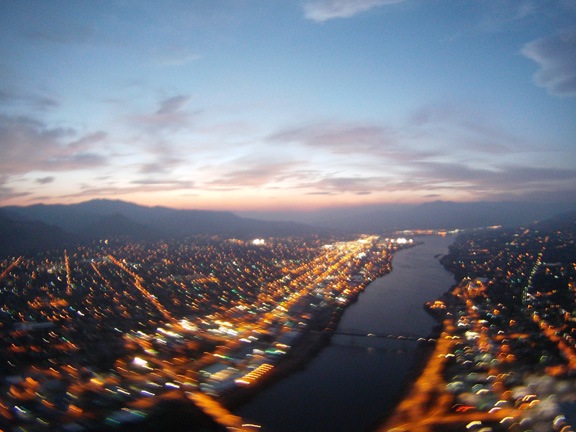
My skidcam caught this image of Wenatchee as I crossed the Columbia River:

Night Over Wenatchee

I touched down in my parking spot with just my landing light to guide me.