Shop Smart for Services: Avoid Dealing with Middlemen

I cannot stress this enough.

As usual, I’ll use a story to illustrate my point. I’ll try to keep it brief.

The Flight

Today, Flying M Air did a 2-hour charter for two men from Texas. They’d come to Phoenix to do a rather unusual aerial survey. I don’t think it would be appropriate for me to go into details of what it was all about, but I can say that it required me to fly low and slow over a bunch of commercial properties all over the Phoenix area.

The flight was booked last minute in an odd way. I got a call from a local airplane charter company who told me that these two guys had shown up to charter a helicopter — which the airplane charter company did not have. Could I take these guys on a survey flight? I spoke to one of the clients, got a few quick questions answered — including their weights, which I needed to calculate a weight and balance for the flight — and told them my rates. Then I hung up and got ready to meet them at the airport in less than two hours.

I was just leaving when my phone rang. It was XYZ Company (not their real name), which I wrote about at some length here. The short version is that XYZ is a booking company that markets itself as a provider of aviation (and other) services but doesn’t own a single aircraft. Instead, it hires third party companies (like mine) to provide the services,

The XYZ person on the phone told me they were sending two clients to me. She then proceeded to describe the job I’d booked directly with the client.

I told her I’d already booked it with the client and that the client was going to pay me with a credit card at the conclusion of the flight. I was trying hard to keep XYZ out of it. It didn’t matter much to me — I’d get paid the same amount whether they were involved or not — but I simply don’t like the way XYZ does business. But the caller told me that the client already had credit with XYZ and that XYZ was willing to pay me for the 2 hours of flight time up front with a credit card.

I didn’t want the client to pay me and still be on the hook with XYZ, so I took the payment. I then called the client and told him what had transpired. He seemed happy enough.

I went to the airport and did the flight. It was far from an ideal setup. For some reason, the client expected me to know the addresses of the buildings we flew over. As if flying a helicopter 300 feet off the ground while watching for obstructions and other traffic and talking to an airport control tower wasn’t enough of a workload for me. They were completely unprepared to get the location information they needed — hell, a handheld GPS, which I could have provided with enough notice, would have been a real handy tool.

But the client seemed satisfied with the flight. It was a nice day to fly and I was paid up front. So how could I complain?

The Lesson to Be Learned

I do, however, want to use this story as a lesson to folks shopping around for services — perhaps for holiday gift-giving.

There are several points to be made about what transpired. Although these points deal specifically with XYZ, they also apply to similar organizations that act as booking agents for services:

  • XYZ Company makes money off every flight it books. It typically marks up my services by 30%. So yes, if you bought an hour of flight time from me, it would cost you $545. But if you bought the same hour of flight time with XYZ in the middle, it would cost you about $700. In today’s story, these guys spent $300 more than they could have for the same service.
  • XYZ Company does not give refunds. For any reason. If you need to cancel a flight, you get a credit for the amount you paid. You have one year to use it elsewhere. Since I don’t (usually) take payment in advance, when you book with me, you don’t need to worry about refunds or credits. So if XYZ had been unable to book the flight with me, these clients would probably be stuck with a credit.
  • XYZ Company charges a fixed price for the service you say you need. So if you want 2 hours of flight time, you’ll pay for it up front. If you fly only 1-1/2 hours, you’re out of luck since they don’t give refunds. But because I charge charter clients based on actual time flown, if they fly less than expected, they pay less than expected. In fact, I typically overestimate flight time so folks feel good when the final cost is less than they thought it would be.
  • XYZ Company can’t be relied upon to get a reservation handled correctly. This is a classic example: they booked an airplane when the client clearly needed a helicopter! These guys flew in from Texas for this survey — imagine if there weren’t any helicopter charter operators available to do the flight on such short notice. They would have made the trip for nothing. Another time, they booked a 5-hour survey flight for a client that required landing illegally in a wilderness area (which I was not going to do). And I can’t tell you how many phone calls it takes to arrange a flight for a client with XYZ in the middle. Right now, I’m waiting for a yes/no answer on a flight they’ve called me about four times already — and I still don’t know if it’s going to happen.

Yet time after time, people turn to companies like XYZ, relying on a middle man who knows nothing about the provider’s capabilities or operations. The chain of communication is never properly established, services are misrepresented, clients and providers get unpleasant surprises at job time.

And the buyer of the services is paying a 20% to 40% premium.

What are they getting for this extra cost? Well, they don’t have to call more than one company that appears in Google’s search results.

You see, that’s how these companies get the calls. They buy up domain names and Google AdWords. They set up generic websites for local helicopter tours or airplane tours or balloon rides or skydiving. You search and they come to the top. You look at their site and you think they’re some big adventure travel company with airplanes and helicopters and hot air balloons all over the country. You call and they assure you they can help you. So you stop looking and let them do the work.

Is that worth 30% more than you could pay?

If you think so, fine. Like I said: it doesn’t affect me. I get paid the same amount, whether you book through me or them.

But in a day and age when everyone is so hot for deep discount deals like the ones Groupon offers, it seems so very strange to me that people would be willing to give money away to a middleman just because he knows how to dial a phone.

Shoppers, Do Your Homework!

Slick product packaging and marketing ≠ best products

mophie juicepackThis morning, while on Google+, I read an update by one of the people in my circles. He was recommending a product called mophie juice pack powerstation. This is a portable battery device that you can use to charge cell phones and tablet computers when you’re on the go and a regular charging source is not available.

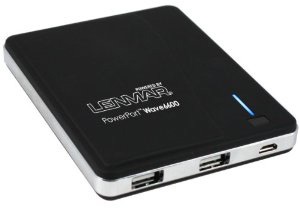
Lenmar PowerPortI’m interested in devices like these. In fact, the other day, I’d added the Lenmar PowerPort Wave 6600 to my Amazon.com Wish list. At first glance, this product seems to do the same thing.
There is, however, a $30 difference in price, with the Lenmar being the cheaper of the two alternatives.

Making an Objective Comparison

I looked briefly at the two devices. The mophie was 4000 mAh; the Lenmar was 6600 mAh. I thought higher was better. So I queried the person who’d recommended the mophie. His response was that if based solely on power, the Lenmar looked better. He then talked about portability and battery quality, suggesting that the cheaper unit might not be as good quality as the other.

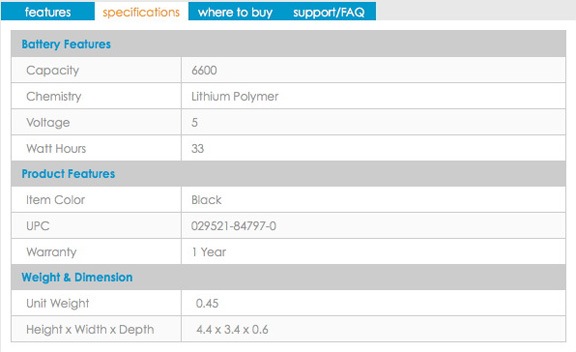
Of course, I had to dive in and find out. So I looked up the specs on both of them — the above links will take you there. What I found was that Lenmar’s rather plain vanilla site provided specifications that included battery type, voltage, capacity, unit size, and unit weight:

Lenmar Specs

The specifications info on mophie’s site, which was slick looking and modern with lots of trendy lowercase product names and headings, didn’t provide any details about the battery at all, although it did provide unit dimensions (it was a bit smaller) and shipping weight (which I suppose could be helpful if I wanted to carry it around in its original packaging):

mophie specs

To be fair, mophie’s features page did mention that its battery was 4000 mAh and it could output up to 2 amps.

I downloaded the user guides for both, looking for more information. Lenmar’s was a 3-page black and white guide with two of the pages in languages other than English. It provided lots of details on what the device could do and how to use it. mophie’s was a slick-looking 2-page color flyer with a first page that read like a marketing press release. (How else could you describe a heading that read “Here’s a rundown of why this is the perfect device”?) Nowhere did it say what kind of battery the device had or how much the device weighed.

Then I started looking at actual features. The Lenmar device had two power out ports: one at 1.0A max and the other at 2.1A max. They could be used together for a total of 3.1A max output. That means I could (theoretically) power an iPhone and an iPad at the same time. Or an iPhone and a GoPro. Or two GoPros. The mophie, by comparison, had just one power out port rated at 2.1A max. (This, by the way, contradicts what the website said — 2A — but it’s close enough.) That meant I could only power one device, like a single iPhone, iPad, or GoPro, at a time.

So here’s what I saw:

  • Lenmar had a basic Web site and ugly manual pushing a product that had a 6600 mAh battery and two ports capable of charging two devices at once. Price: $44 on Amazon.com.
  • mophie had a slick looking Web site and manual pushing a product that had a 4000 mAh battery and one port capable of charging one device at a time. Price: $80 on Amazon.com.

Which one do you think I picked?

Questioning Motivations

I started bring up these points on Google+ in comments to the original post about the mophie unit. I was very surprised that the person who posted the recommendation about the mophie didn’t seem the least bit interested in seeing whether the Lenmar unit was a better value for the money. Instead, he claimed he was familiar with mophie and that he knew their products were worth what they charged.

Period.

Then I noticed that the same person had made several other product recommendations recently and I began to wonder whether he had some motivation to push certain products — beyond his own experiences with them. And that’s when I realized that I was wasting my time trying to have an informed discussion about the two alternatives.

The Point

Yes, this blog post does have a point. A few of them, in fact:

  • Don’t take social networking product recommendations at face value. You can never be sure about the motivations of the people who push products.
  • Don’t make a purchase decision without examining alternatives.
  • Don’t let slick or trendy looking product design, websites, or marketing documents blind you to a product’s true feature set.
  • Don’t think that the highest priced product is always the best quality alternative. These days, price is not always an indicator of quality.
  • Do choose products that meet your needs at a price you’re willing to pay.

Is the Lenmar product better? I don’t know. It certainly seems to have a better feature set for nearly half the price. That’s enough to get me to try it.

Two Ways to Hasten the Demise of Groupon and Its Clones

Enough is enough already.

I hate Groupon. That should be clear by now. I think that any business that can bring in more revenue than the businesses that it “serves” is a leech and not a “marketing partner.” While they’re telling merchants how they’re getting “risk free advertising,” they’re selling to cheapskate customers, most of whom will only buy at the 50% (or more) discount Groupon requires. Good luck selling again to those folks at retail.

So it pisses me off to no end when I get a call from yet another Groupon clone. This one, based in Scottsdale (supposedly; it’s more likely a franchise set up by someone suckering work-at-home dreamers) claimed to be different. I let the sales rep stumble through an explanation of how they were different before asking her (1) how many helicopter tours a person might want and (2) whether their friends would buy at retail if I’d established a history of offering 50% discounts through companies like hers. Then I told her I wasn’t interested and not to call me back. And I added her number to my growing list of telemarketer numbers on my cell phone so if she does call back from that number, my phone will ring silently and I’ll know not to answer if I happen to notice it ringing.

And after hanging up, I thought of two ways we can all work together to make Groupon and its clones go away. Be advised that I’m in a foul mood so my language is a bit NSFW in this piece.

  • Just Say “Fuck Groupon” This is the method I use. I refuse to be a Groupon (or clone) merchant and I refuse to buy Groupon (or clone) vouchers. I’m not giving them any business in any way, shape, or form. I’m also making the sales rep go through a bunch of their bullshit sales pitch when they call just to waste their time and increase the marketing costs before explaining, in no uncertain terms, what I think of their business model and “service.” (I can be a real bitch.) I’m also spreading the word about how bad they are for business and consumers by sharing links to fact-based reports from actual Groupon merchants, customers, and business analysts. (Seriously: there’s enough info out there to make one wonder how Groupon has managed to survive this long. Are there really that many suckers out there?)
  • Just Say “Fuck the Groupon Merchants” This is the method people who aren’t small business owners can easily use. Just buy as many Groupon (or clone) deals as you possibly can and then use them all up as quickly as possible — keeping in mind that a good percentage of Groupon merchants are already on the verge of bankruptcy and may not be in business if you wait. Be sure to come at the businesses’ most crowded times and complain loudly when you don’t get the service you might get if there wasn’t a half-off deal filling the place with other cheapskates just like you. Whenever possible, break the rules and use multiple vouchers to increase your discount potential. Then, if the buying experience isn’t perfect, go on Yelp or some other online rating service and give the business just one star with a review that exaggerates how crappy it is.

Now, in my opinion, small businesses already have enough grief that they really don’t deserve to be fucked over by Groupon (or clones) and cheapskate customers. So I’m really hoping you go with the first method.

Enough said.

THIS is What I Mean about Coupon Deals Hurting Small Business

Customers think we’re so desperate for business that they won’t buy without a discount.

Prepare for a rant.

For the past two days, I’ve been fielding phone calls from the concierge at one of Phoenix’s big resorts — you know, the kind where people dump hundreds of dollars a night to be pampered at a secluded desert paradise in the middle of the country’s sixth largest city. A guest coming in November wants to take a helicopter tour. We must have gone back and forth about a half dozen times with pricing and tour questions. Apparently, a visit to Flying M Air’s Web site, which has complete information and pricing, was beyond the capabilities of the concierge in question.

On the second to last call, it was determined that the guest wanted a flight in the vicinity of the Salt River and Apache Trail. It’s a good match for Flying M Air’s Salt River Lakes & Canyons Tour, which is about 60-70 minute long and costs $695 for up to three passengers (not each) from Scottsdale Airport. I provided this information and the concierge said she’d get back to me.

She just called again. The client says that there aren’t three people on the flight. There are just two. And they’re willing to spend $495 for the same tour — as if it’s $200 cheaper for me to fly two passengers instead of three.

In other words, they’re trying to haggle my price down.

I told the concierge that would not be possible. She was very understanding and said she already told him that. But I doubt it. I suspect she was trying to help him haggle. (I also suspect that she’d still expect her 10% referral fee on the flight, thus digging even deeper into my pockets.) She apologized and we hung up.

I’ve said it before and I’ll say it again: I am not so desperate for business that I’d be willing to operate my aircraft near or below cost just to take a cheapskate and his wife flying.

But what makes these people think they can get away with bullshit like this?

I suspect that the deep discount mentality fostered by operations like Groupon and its clones has something to do with this. It’s the whole “only idiots pay retail” mindset. It’s the idea that companies have inflated their prices so they can offer discounts.

News flash: All of my clients pay retail. That’s the only pricing I have. Take it or leave it.

And my prices are already among the lowest in the area. My Scottsdale-based competitor would charge more than $1,500 for the same flight. Would Mr. Cheapskate be offering that company $495 for their tour? That company wouldn’t even turn a blade for less than $1,000.

My policy is firm: no discounts, no haggling. My services are priced fairly and I will stand by them.

Besides, I have way better things to do with my time than deal with the kind of client who doesn’t understand the value of what he’s getting for his money.

Another Quick Groupon Story

Another real-life story about Groupon users.

A friend of mine in Washington owns a small winery. It’s open two days a week for tastings. He charges $6/person and waives the fee with the purchase of two bottles of wine. For the $6, you get a 1-ounce taste of every wine he makes that hasn’t sold out. He had eight varieties; two were sold out as of mid August.

A while back, a hotel in nearby Wenatchee called him. They wanted to do a Groupon wine-tasting deal. Would he allow the people who bought their Groupon to have a free tasting? Other local wineries had signed on.

My friend didn’t know much about Groupon. But he’s a nice guy who wanted to help the hotel folks and he liked the idea of having more people come to his winery. He figured he’d reach new people and sell some wine. This was before three of his wines won awards at a blind tasting of area wines; before his wines started selling out.

They started coming without warning on a Saturday afternoon. Dozens of them. They soon took up all the seating in his tasting area. He called me for help. I put on some clean clothes and rushed over to help him pour.

We poured, they drank. They didn’t seem to have much interest in the wine. The seemed more interested in the list of wineries included in their Groupon. The more wineries they visited, the more free wine they’d drink. My friend sold one bottle for every three or four people who tasted.

One table of eight young women were there for more than two hours. I guess they figured that their Groupon had entitled them to a shady place to spend their entire afternoon. Collectively, they bought two bottles of wine. They left chewing gum stuck to the table.

Some people without Groupons didn’t stick around. There wasn’t enough seating for them. They didn’t feel like waiting.

This was repeated on the following two weekends. My friend had to pay someone to help him pour to keep up with the crowd. He lost money on every Groupon tasting. And he doubts the Groupon users will be back.

My friend learned a valuable lesson. As you might guess, he won’t be offering his own Groupon deal anytime soon.