Cherry Drying Season Begins. Again.

Can you believe this is my thirteenth season?

Cherry drying season began yesterday for me. It was the earliest start I’ve ever had. At this point, I expect to be on contract until the beginning of August.

Cherry Drying
Here’s a shot of me over the cherry trees a few years ago in my first R44.

I started doing this in 2008, the same summer I turned down a job offer to be a tour pilot in Alaska. That job would have had me landing on glaciers, touring fjords, and sling-loading food to dog sled camps. But it also had very long work days, only mediocre pay, and a long season away from home. I was married at the time — hey, everyone makes mistakes — and my wasband didn’t want me to be away from home so long. So when a chance to spend just about a month flying in Washington state came along, I took that instead. Any opportunity to get out of Arizona’s oppressive summer heat.

Want to learn more about cherry drying, including why we do it? Start with this very old blog post: “Drying Cherries with the Big Fan.” Then read more by following the cherry drying tag.

At the time, although I hoped it would become an annual gig, I never in my wildest dreams expected it to become my primary source of income. Back in 2008, I was still writing computer books for a living, just starting a slide down from a career high in 2004/05. I’d had a helicopter since 2001 but couldn’t make money flying it. The first R44 came in 2005, but it wasn’t until 2007 when I got some lucrative wildlife survey work that the business started turning a profit. Cherry drying carried on that trend. By 2013, when I shed my wasband and moved to Washington full time, I was making more as a pilot than as a writer. (Let’s face it: no one is buying computer books these days.)

Business boomed over the years. For a while, I kept building my client base — and the team of pilots who worked with me to serve them. Things leveled off a year or two ago and I generally have the same clients and contracts every year. My team now consists of 5 pilots (including me), most of which come on about 2 weeks after my season has started and leave 2 to 3 weeks before my season ends.

Mr Bleu
My R44 Raven II helicopter, “Mr Bleu,” parked out at his summer cherry drying base. I put on his blade cozies to protect the blades from forecasted hail in thunderstorms this weekend. Beyond him is a Hiller belonging to another pilot who isn’t working with me; all my guys fly R44s.

My formula is simple: work as a team to serve all the clients equally. Keep all pilots flying as much as possible, no matter which client calls. If only one big orchard needs drying, put multiple pilots on it to get it done fast. Don’t contract for more acreage than we can cover within a reasonable time. Oh, and make sure all of the orchards are in a tight little area so pilots don’t waste time deadheading from one orchard to another.

With few exceptions, my team is different every year. While I’d love to work with the same group of guys every year — 2016’s team really stands out for how well we worked together on the rainiest year I’ve ever seen here — few guys seem interested in doing this every year. They don’t see it the way I did: as a paid vacation with some time off for paying work in a place with lots of recreational opportunities. (Hell, I bought a boat here — before I moved here — so I could get out on the river during my cherry season.) The ones who do see that — Gary comes to mind — come again and again. Most others drift away, so I wind up building new teams every year.

Things will get busy for me in mid-June, when my guys start showing up. I’ll show them the orchards — probably from the air — give them Google Maps references with orchard locations, and probably fly with them so they know what they need to do. Then I’ll leave them alone until rain looks likely. When the calls start coming, I’ll start dispatching — by phone and on the radio. We’ll all keep flying until the work gets done or it gets dark, whichever comes first.

Of course, I’ll have my GoPros hooked up for most of my flights, collecting new footage for my YouTube channel. Folks really seem to love cherry drying videos — which is something I can’t quite understand. There’s really nothing exciting about the work.


This video from 2016 is my most popular cherry drying video so far, with over 735K views. As I write this, it’s averaging 2,000 views a day.

While the season is on, I’ll find an orchard where I can get permission for us to pick our own cherries. Last year, it was a block full of Rainiers that didn’t get picked because they just didn’t get red enough. (Can you imagine?) On really nice days with no chance of rain, I’ll lend my kayaks or maybe my bicycle out to the pilots. Or maybe I’ll take one or two of them out on my boat. Because we’re all on call during daylight hours 7 days a week and the days are so long, there’s no opportunity to party. We always have to be ready to fly at first light.

Did I mention that none of us can leave the area during the entire time we’re under contract? It’s almost like being under house arrest for me. For them — well, if they play it right, it’s that paid vacation I mentioned above.

Near the end of the season, I’ll have one of my end-of-season BBQs. I’ll smoke up a few racks of ribs and roast a chicken or two. I’ll invite my guys and maybe a few other pilots I’ve met during the season. Then, as the cherries are picked out and the contracts end, the guys will leave, one by one. By the end of July, I’ll be the only one left to cover the few orchard blocks that are yet to be picked. When they’re done, I’m done.

And that’s it for me for the year.

Well, not really. I still do charter flights and tours. And the occasional photo flight. And yes, I still go flying just for fun.

But once my last contract has ended, I usually spend some time trying to get my life back to normal, taking trips out of town and trying hard not to check the weather every half hour. I usually go on vacation, too. In 2017, I finished just in time to go to Oregon to watch the total eclipse of the sun. Other years, I’ve taken my camper into the North Cascades, Canada, and the Olympic Peninsula. Last year, I took a photo cruise among the San Juan Islands. This year, I’m going to Alaska for 10 days. (If I play my cards right, I might go out and land on a glacier with the folks I almost went to work for all those years ago.)

And that’s my cherry drying season routine. Did I know back in 2008 that it would become such a vital part of my financial well-being? Hell no.

But in all honesty, I never expect anything to work out the way it actually does. I’ve just learned to go with it. And I’ve got no complaints about this.

Helicopter Thank You Flight

Another cockpit POV Video on the FlyingMAir YouTube channel.

Join me for a quick flight from one orchard to another while I thank channel members and identify points of interest in flight.

I want to give a big shout-out to channel members. These are the folks who chip in to help me cover the costs of flying and maintaining the helicopter. As I mention in this video, I was pleasantly surprised to see that so many members had stuck with me throughout the winter, despite my failure to produce new content. Their loyalty gives me extra motivation to keep installing the cameras and editing the video from every flight I can. If you can’t or don’t want to become a channel member or patron, please join me in thanking them for helping me out.

You can learn more about becoming a channel member here: https://youtu.be/sHSqlQqeP1A It’s a short video full of bloopers that explains what channel membership is all about and why it’s vital to me.

If you don’t want to give money to YouTube/Google, I get it. I opened a Patreon account for folks just like you. Find it here: https://www.patreon.com/FlyingMAir Be aware that Patreon might add sales tax to your contribution — for reasons I still don’t understand.

You can also support the channel through the purchase of a hat, t-shirt, sticker, or magnet on my etsy store: https://www.etsy.com/shop/FlyingMAir

And if none of these things appeal to you (for any reason), you can also support me by subscribing to the channel, sharing my videos, and commenting when you see something you like.

Thanks for all your support!

About Me and the Helicopter

  • I have been flying for about 20 years. My nearly 4,000 hours of flight time is in Robinson R44, Robinson R22, and Bell 206L (Long Ranger) helicopters.
  • The helicopter is a 2005 Robinson R44 Raven II — the same one that appears in the photo at the beginning of the video. You can learn more about them here: https://robinsonheli.com/r44-specifications/ I own this helicopter. It is the third helicopter I’ve owned since 2000.
  • My helicopter has ADS-B Out and is picked up by radar facilities. You can see my track for recent flights on Flightradar24: https://www.flightradar24.com/data/aircraft/n7534D This is a great site for tracking any almost any flight, including the airlines.

About the Video

I try to drop cockpit POV videos on Sunday mornings and “extras” with more info about owning and operating a helicopter midweek. (Some channel members get early access to some of these videos.) I also host occasional livestreams with Q&A chats. Subscribe and turn on the notification bell so you don’t miss anything new! And tell your friends. I’m trying hard to deliver good videos and grow my subscriber base.

Some links on my channel are affiliate links, including all links to Amazon (https://amzn.to/32PLHTD) and MyPilotPro (https://mypilotpro.com/shop/?wpam_id=13). If you click one of them and buy something, I get a small referral reward. It doesn’t cost you anything so I hope you’ll shop with one of those links. Thanks.

Want to support the FlyingMAir channel? Here are four suggestions:

Cross-Country Helicopter Flight from Malaga to McMinnville, Part 1

A cockpit POV video from the FlyingMAir YouTube channel.

Join me for the first 20 or so minutes of my flight from my summer base in Malaga, WA to McMinnville, OR. In this flight, I take off, climb alongside Jumpoff Ridge, cross the ridge toward the Colockum and Mission Ridge, then continue on to the Kittitas Valley west of Ellensburg. Along the way, you’ll see basalt columns, high desert grasslands, forests, farmland, wind generators, and even Mount Rainier, off in the distance. I had three cameras rigged up for this video and I switch from cockpit cam to nose cam with occasional inset views of me looking at the camera. Audio is from direction connection to the intercom so you can hear me talk and make radio calls plus dialed down volume of the helicopter’s engine/rotor noise.

I should mention here that “cross-country” in the world of aviation is any long flight. For airplanes, it’s 50 miles or more; for helicopters, it’s 25 miles or more. This is only part of a 178 nautical mile trip.

You can see all of the videos for this flight here:
Part 1: https://youtu.be/pgKDciGP4eA (this video)
Part 2: https://youtu.be/CmupuFDXa4Q
Part 3: https://youtu.be/vyveMEm_MhQ
Pups in a Helicopter: https://youtu.be/eEVq9sRlJK8
Part 4: https://youtu.be/3KXR_D3SliA
Part 5: https://youtu.be/eghRyzhPigg

The Wink Debacle

Wink convinces me that it’s time to switch home automation systems.

When I built my home in 2014 I decided that I wanted it to include some “smart home” features — primarily devices that I could access, control, or monitor from my phone. Back in those days, Alexa wasn’t commonplace — if it existed at all — and Apple hadn’t come up with its HomeKit. It was a hodgepodge of options and I did a bunch of research before I decided on the Wink system.

My main criteria were:

  • I needed to have a generous number of device options that included light switches, motion sensors, and outlets.
  • I didn’t want to be tied into any monthly subscription plan.

Wink met this criteria. I could buy a Wink hub and then buy compatible — mostly Z-Wave and Zigbee — devices and add them to it. A free Wink app on my phone would give me access to these devices from anywhere I had an Internet connection.

To be fair, I went with other home automation products, too. A Ring doorbell to help monitor the outside of my home. LiftMaster wifi garage door openers that I could not only control but would notify me when one of my four garage doors opened. Various SmartCam and Tenvis security cameras. A Honeywell wifi thermostat so I could control heating and cooling, whether I was hopping on a flight home from a trip or too lazy to get out of bed. None of these products required a monthly fee for use. In fact, the reason I didn’t go with the Schlage keypad lock for my front door is because, at the time, they wanted a subscription fee and I wasn’t willing to pay it.

Wink never worked great, but it never worked badly enough to cause serious headaches or complaints. It was glitchy, period. Devices I added would sometimes be inaccessible or not behave the way I wanted them to. For example, my one Wink light bulb always defaulted to the ON condition after a power outage — not pleasant when the bulb is in the bedroom and the power outage happens at 1 AM. The hub would occasionally go offline for no particular reason. Sometimes, it would take several tries to pair up a new device.

I dealt with all this primary because I’m lazy and it worked good enough that I didn’t need to replace it. After all, it wasn’t as if I were paying for it on an ongoing basis. The hub was old — I’d never replaced it with the new model, no matter how hard Wink pushed me — but it worked good enough.

Wink Home Page
As this screen grab from the top of Wink’s home page says, you have to “Subscribe now to keep your service active.” Huh? Sell us a product and later ask us to pay to keep using it? No thanks.

Of course, all that changed about two weeks ago. Out of the blue, I got an email message from Wink telling me that they were going to a subscription model and that the hub would cease working on May 15 unless I subscribed. That was three days away. They later relented and, in an email message bragging about how many people had already signed up, said they’d delay until May 20.

I was pissed. I’d invested in their system and put up with its glitches for a long time. I certainly wasn’t interested in paying to continue using it.

I wasn’t the only one who felt that way. There were plenty of Wink users bitching on Twitter — including me, of course — and lots of them were asking about alternatives. I suspected Wink’s email about their rush of subscribers was pure bull. Only an idiot would disregard his/her own thoughts and feelings to do what “the herd” was supposedly doing. I might be an idiot about some things, but I’m not an idiot about tech or my money.

I started doing research and realized that there were a lot more options out there now. The one that kept coming up as recommended was Samsung SmartThings. It didn’t require subscription fees and it was backed by the major electronics company that I already trusted to supply my new TV, sound bar, stove, dishwasher, washer, and dryer. I discovered that if I ordered on the Samsung site, I could save $10 and get free shipping. So I bought a new hub for $59 + tax and waited for it to arrive.

SmartThings Hub
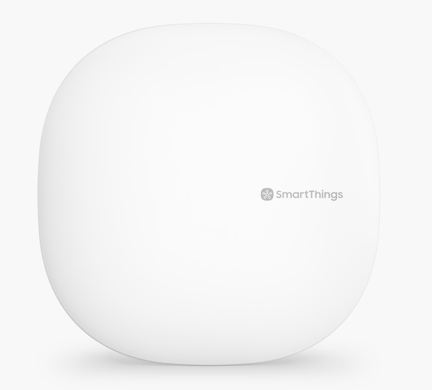
The SmartThings hub is small can connect to my network via Ethernet or wirelessly.

May 20 came and went and the Wink hub’s light stayed blue. The SmartThings hub arrived on May 21. I spent the afternoon moving all the devices off Wink and onto SmartThings.

I won’t say it went like clockwork. I did need to call technical support at Samsung. A real person who spoke English as her first language and was not reading off a script answered within two minutes. She guided me through the process of “excluding” and then adding one of my GE smart light switches. I realized I’d missed a crucial step. I did another switch — this one the Levitron for my deck light (the first smart light switch I’d ever installed) — with her on the phone and didn’t need any help at all. Then I thanked her and let her go to help other former Wink users — she’d told me they’d been getting calls from Wink users all day. I did the rest of the devices by myself. Even the handful of switches that also work with HomeKit and Siri could be added; I’d never been able to get them to work quite right with Wink. The only ones I couldn’t switch over were the Wink brand lightbulb (duh) and the door sensors that were too old to be compatible. I was actually very surprised when I was able to connect my original motion sensor, although a warning in the SmartThings app told me that it was old tech and might not work right.

Oddly, one of the last messages I got from Wink in its app was assurance that they’d extended the deadline for subscribing and were re-evaluating their subscription program.

Too late. I made the switch. The Wink Hub’s blue light is no longer glowing (or blinking) over my kitchen. Instead, the SmartThings Hub’s much tinier form and green light is up there.

So far, I like it. I was easily able to set up my floodlights so they automatically go on when Ring detects motion outside my front door at night — and go off 15 minutes later. I don’t expect to have any problems setting up my light timers when I travel and don’t have a house sitter hanging out here. And I can still use Siri to turn on my out-of-reach Cocktails sign when it’s 5 PM somewhere.

And if I get really crazy someday and decide that I want Alexa to eavesdrop on my life so I can turn on a light without touching my phone — not likely, but who knows? — I can make the whole system voice activated via Alexa.

Thanks, Wink, for convincing me it was time to make the switch to a more modern, reliable, and cost-effective smart home system.