My New Wardrobe

A new wardrobe for a new me.

One of the good (and bad) things about losing a bunch of weight is the need to buy new clothes. Good because it’s always nice to have an excuse to buy new things. Bad because buying a whole new wardrobe can be costly.

As reported — or, rather, bragged about — elsewhere in this blog, I lost about 45 pounds this past summer. Although my clothes closet was full of clothes I’d worn in my thin days and many of them fit me, most of them did not. And my dresser drawers had only clothes that fit me before I lost all that weight.

Taking Inventory

It took a long time to go through all those clothes and I’m just about done. The news was not good.

My much-loved Henley t-shirts — the ones with the super-soft cotton — which I wore almost all the time, were now large enough to wear as nightshirts. They were a men’s size large and a handful of them have been shifted to my pajama drawer. The 3X t-shirts I had been wearing as nightshirts were tent-like and went to the thrift store.

My long-sleeved t-shirts, which had been snug, seemed big enough to put two of me in. The shoulder sleeve seams hung at least two inches below my shoulders. They’ll go to the thrift store.

I tried on at least 20 pairs of denim jeans that had been hanging in my closet for up to 15 years. I gave at least 15 pairs of them to the thrift store. Of the remaining pairs, some of them were so worn or torn that they’d need repairs before being put back into circulation.

The three suits I’d kept from my corporate days were too large. They went to the thrift store. The same goes for most of the dress slacks, although a nice pair of fully lined wool slacks now fit me again.

And when I finally tried on my cold-weather clothes a few weeks ago, I discovered that all of them were too big for me — some of them ridiculously large. That’s long-sleeved t-shirts, turtlenecks, mock turtlenecks, sweaters, sweatshirts, and jackets. I was even heart-broken to discover that even the black denim logo jacket I’d gotten from Lynda.com — the one with “Author” embroidered on it — was now too large to wear. It had been painfully snug when I wore it just last year.

There was some good news in the closet. My formal wear, including a long satin skirt and several sequin tops and dresses, mostly still fit. I had no need for such clothing in the later years of my marriage — after moving to Arizona we never went anywhere that required that level of dress — so I never bought anything it that during my fat days. Fortunately, I kept the thin clothes and hope to wear it in the future — maybe as soon as this New Year’s Eve.

The New Wardrobe

In Color
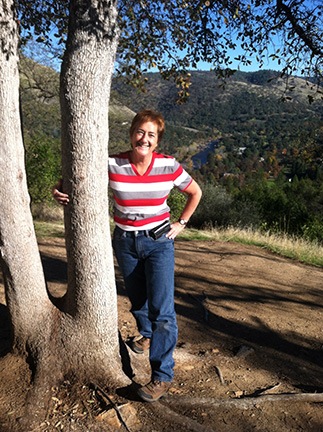
This photo, shot during my Thanksgiving trip to California, shows off one of the brightly colored t-shirts I picked up on a shopping spree in Vegas earlier that month. (I’ve also been traveling quite a bit lately.)

Over the past few months, I’ve been buying new clothes to fill in the gaps in my wardrobe. I detailed one shopping spree in this blog; there have been other smaller ones since then. On those trips, I bought the things I needed for warm weather: t-shirts, shorts, tank tops, skirts, and casual shoes (to replace the canvas Keds I’ve been wearing for years). A lot of what I bought is colorful — something I avoided in the past.

I also bought a lot of understuff: panties and bras. None of what I had in my underwear drawer fit properly anymore. I discovered Victoria’s Secret, had a bra fitting, and bought a few lacy bras that not only fit perfectly, but also helped counteract the affects of gravity that all women experience after a certain age. Of course, with all those lacy bras, I needed lacy panties to replace the practical but not very exciting cotton undies I’d been wearing for years. My soon-to-be ex-husband didn’t seem to care much about my lingerie — or sex, for that matter — in the last year or so of our marriage but I’m sure his replacement will. And I love looking and feeling sexy again.

I spent the Christmas holidays in St. Augustine, Florida, with my mom and stepdad. It wasn’t until I packed for the trip that I realized I had problems with my cold-weather wardrobe. So two days after Christmas, at the height of post-Christmas sales but before all the good merchandise had been bought up, I hit the outlet mall there.

Sale!It was a real shop-till-you-drop experience. I bought 9 long-sleeved t-shirts, 2 short-sleeved t-shirts, 2 lace camisoles, 3 tank tops, 3 sweaters, 2 pairs of Levis blue jeans, and a belt. I also bought 2 pairs of shoes — one of which I put on in the store and threw away what I’d been wearing. The sales made all this possible. With sale prices and two coupons, I spent less than $350 and got quality merchandise from stores like Eddie Bauer, Bass Shoes, Levis, and Tommy Hilfiger.

By the time I staggered back to the car, I was carrying 8 shopping bags. I had to ship most of my purchases home; the new clothes simply would not fit in my luggage.

Wearing Clothes that Fit

My new clothes all have one thing in common: they fit.

I know that sounds like an obvious goal, but you need to understand the kinds of clothes I was wearing before I lost weight. Back then, I didn’t like tight clothes because they showed off every bulge, so everything was loose-fitting. That just made me look even bigger than I was. And because ladies sizes weren’t always big enough for me, I bought a lot of my clothes in the men’s department — especially shirts. As a result, I always looked kind of big and shapeless.

Not so with my new wardrobe. All of my shirts are skin-tight, showing off my flat belly and new figure. Most of the jeans are “skinny” jeans — straight-leg and form-fitting. Even my shoes are cute and stylish; heck, just yesterday I got a complement on one of my new pairs.

Looking Lean
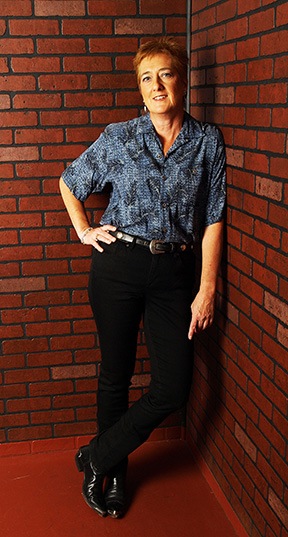
This shot, from my October 2012 Glamour Shots photo shoot — which was done before I finished slimming down — is a good example of my personal style.

And not only am I fitting into some of the old clothes I wore in my 20s and 30s, but I’m also dressing the same way I did back then — wearing clothes that accentuate my height (5’8″) and slim build. (That’s not as scary as it sounds, mostly because I never did go into the slutty look so many 20-somethings seem to like today.) I’ve resurrected my own personal style from the 80s and 90s: simple clothes in timeless fashions and basic colors. I look good, which, in turn, helps me feel even better.

It feels great to turn a few heads when I’m out and about.

What’s Still on My List

My wardrobe is nearly complete. The only thing I can still really use is a good mid-weight jacket. The few jackets I have — including my often-worn Robinson Helicopter jacket — are way too big on me. I already gave three jackets away, including a denim baseball-style jacket I got long ago for test riding a Yamaha motorcycle at Americade in 1991. (Did I mention that I seldom threw anything away?)

The good news is, my leather bomber jacket — the one with the sheepskin collar — still fits well enough to wear; I’ll put it to use on my upcoming photo gig at Lake Powell and Monument Valley. It’s freaking cold in the helicopter up there this time of year with two doors off, especially at dawn.

And my costly outback style oilskin duster — which I wore exactly twice on horseback rides during foul weather — fits fine. Now all I need is a reason to wear it again.

THIS is What Life is All About

Experiencing the wonder of the world with someone you love.

Last night, I went to see The Hobbit: An Unexpected Journey. While I’ll likely use another blog post to debate the wisdom of stretching Tolkien’s classic into a three-part movie, I cannot criticize the movie makers for the breathtaking scenery throughout the movie. Filmed in New Zealand, this — and the epic Lord of the Rings trilogy — showcases some of the most stunning backcountry locations in the world.

There’s a scene in the movie when Thorin’s Company (13 dwarves, a hobbit, and a wizard) are traveling along a ridge in the mountains, high above the clouds. The scene, obviously shot from a helicopter, reminded me of two other scenes, one from a movie and the other from real life:

  • One of the closing scenes in the 1965 classic, The Sound of Music, when the Von Trapp Family is escaping the Nazis by hiking through the alps.
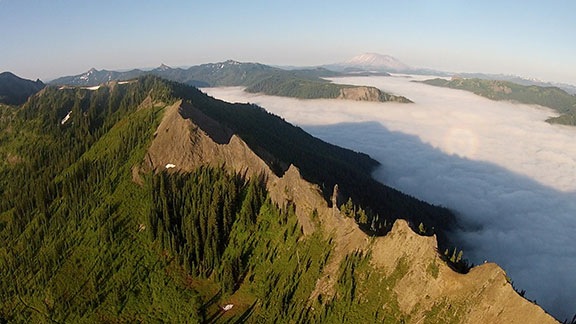
  • A particular moment on my July 2012 helicopter flight over the Cascade Mountains, when I crossed a specific rocky ridge surrounded by low clouds within sight of Mt. St. Helens.

That entire July flight was amazing, but it was this rocky ridge that popped into my mind while watching The Hobbit in a crowded Florida movie theater:

Cascades Ridge

And it brought me to tears. Even as I write this, perched on a stool at the breakfast bar in my mother’s kitchen on a Thursday morning before dawn, I’m all teary-eyed thinking about the amazing things I see and experience almost every day of my life — usually alone.

As I blogged after that flight:

I also felt more than a bit of sadness. There’s no way I can describe the amazing beauty of the remote wilderness that was around me for more than half of that flight. And yet there I was, enjoying it alone, unable to share it with anyone. Although I think my soon-to-be ex-husband would have enjoyed the flight, he was not with me and never would be again. I felt a surge of loneliness that I’ve never felt before. It ached to experience such an incredible flight alone, unable to share it firsthand with someone else who might appreciate it as much as I did.

Over time, I’ve come to learn that it’s more important to experience life than to be a slave to the material things we think we need to survive. I’m not independently wealthy — I do have to work for a living. But I’ve learned to work hard and smart and to live somewhat frugally so my money goes farther. By staying out of debt — and I’ll be completely debt-free (at least for a while) when my helicopter’s final loan payment is made next week — I’m not stressed about having to generate enough income to make credit card and loan payments. I can take time off to enjoy the experiences that make life worth living. In a way, I’m in a sort of semi-retirement where I mix work with play and really enjoy life.

Unfortunately, I’m one of the few people I know who are able to do this.

Reflection Canyon
Another example of the great places I fly for work; this shot was captured by my helicopter’s “nose cam” during a photo flight at Lake Powell.

My choice of career has also enabled me to enjoy amazing life experiences while working. I can’t begin to list the incredible places my work has taken me — or the incredible things I’ve seen from the air and on the ground while simply doing my job. That dawn flight across the Cascades is just an example — I did it for work, to reposition the helicopter for a required maintenance. In other words, it was part of my job. Not only did it entail a pair of amazing flights on consecutive days, but it also included a day spent wandering around Portland, a drive along the coast, a great dinner of oyster stew and fried oysters in an oceanside restaurant, a walk along the beach with my dog, a night in a beachfront motel, a beautiful foggy dawn, breakfast in a historic hotel, and a scenic drive back to the Portland area. What some people might do on a pair of days off, I was able to do as part of my work. How great is that?

What’s not so great is doing it alone.

Although my soon-to-be ex-husband promised me he’d join me on the road during my annual migration to points north — and I worked hard for years to build a business capable of supporting both of us — he backed out with excuses about needing to save more for retirement. I always hoped he’d see the light — and I was somewhat patiently waiting for him to do so right up to the end. The end came, as I’ve mentioned elsewhere in this blog, when he replaced me with another woman — someone who apparently doesn’t mind watching him be a slave to his material possessions and debt, enjoying life on weekends and during two weeks of paid vacation time each year.

It’s a shame, really. While I feel that life is all about experiences, those experiences are somehow better when they’re shared with someone else. For nearly 29 years, some (but not all) of my best life experiences were spent with the same man who I really thought appreciated them as much as I did: A road trip down the Pacific Coast from Seattle to San Francisco. A motorcycle camping trip down Skyline Drive and the Shenandoah Parkway and back up the Atlantic Coast’s barrier islands. A dash across a mosquito-infested field in the Everglades to a rental car, followed by an intense swatting session. A sunset soak in abandoned hot springs along the Rio Grande, watching wild horses graze in Mexico. A jet ski journey up the Colorado River from Lake Havasu to Laughlin. A river rafting trip down the Colorado through the Grand Canyon. A horseback ride on the beach in Costa Rica. A hike up a slot canyon with friends on the shore of Lake Powell. Time trials at a Bridgehampton race track in my Toyota MR-2. A day spent exploring the ruins of Chichen Itza. A sunrise at Montauk Point, followed by a nap in each others arms on a flat rock overlooking the Sound. An afternoon spent snorkeling in Cozumel. A view of the broken clouds of a marine layer moving in beneath us during a helicopter flight down the coast of Oregon. Long walks on beaches in too many places to count.

These are all memories I cherished, experiences somehow made better at the time because I shared them with someone I loved. Someone I could talk to about them long afterward. Someone who could browse photo albums with me and reminisce about the scenes they captured. Someone who could say, “Remember when we…” and I could remember with him.

That’s all gone now. Yes, I still have those memories, but they’re no longer shared, no longer cherished. Instead, they’re a reminder of how things change, how people grow apart without even knowing it, how love dies, and how easy it is for some people to replace a “life partner.”

I’ll have new experiences and build new memories of the amazing places I go and things I see and do in the years to come. Maybe I’ll have someone to share them with. Maybe we’ll stay together for a long time — long enough for the word “forever” to have meaning to me again.

But I’m certainly not going to wait for that someone to continue enjoying what’s important to me in life: experiencing the wonder of the world. The world is out there now and it’s not waiting either.

Grandma’s Table Photos

Lost photos, odd traditions.

I spent Christmas with my mom and stepdad at their St. Augustine, FL home. They do a great Christmas, with lot of decorations and gifts for everyone — even dinner guests! Very festive.

In addition to my sister and me, my mom invited some friends of hers: a couple slightly younger than me and their two college-age kids. That put a total of eight at their dining room table.

TableAs expected, my mom set the table with her good china and silver on a lace tablecloth. She also had gold plates under the plates, linen and gold napkins, and holiday napkin rings. And candles. The table looked beautiful.

It reminded me of holidays in years gone by. My grandmother, who passed away more than 10 years ago, always took a photo of the holiday table — no matter what holiday it was. She had an old Kodak 110 point-and-shoot film camera — the kind that took so-so photos because of its tiny negatives. She’d wait until the table was all set and then point the camera at it. Flash! An image was captured on film. Maybe she’d do a second one just to make sure. And if there was a turkey, it was always photographed before being carved, sometimes after staging it in the middle of that beautiful table.

The odd thing about this is that I don’t recall seeing any of the table photos she took. Come to think of it, I don’t recall seeing any photos she took.

Yesterday, I wondered about this. Did the photos ever exist? Had the film in her cameras been developed? Was there even film in the camera? If the pictures existed, what happened to them when she died?

These are questions I know I’ll never get answered.

But as I thought about it yesterday and I admired my mother’s beautiful table, I decided to take my own photo — sort of in memory of my grandmother and all those lost photos she took over the years.

I miss you, Grandma.

The Rules about Flying over Wilderness Areas

My answer to a reader’s question.

ChartA week or two ago, I got an email message from a reader who had read my November 2011 post, “A Few Aerial Views from Today’s Flight.” That post shows off a bunch of photos captured by my helicopter’s “nose cam,” a GoPro Hero2 camera I sometimes use in flight. The photos include views of the Verde and Salt Rivers north and east of Phoenix, including some of the lakes along the rivers. My reader noticed, after consulting some aeronautical charts, that much of the area I’d flown over was designated as wilderness area.

This reader, who asked to remain anonymous and not be quoted verbatim, was wondering about “bending” rules. Although he mentioned the June 2012 wire strike helicopter crash in the Verde River area, he wasn’t interested in the safety aspects of maintaining a high enough altitude to clear obstacles. He was interested in my interpretation of the rule about flying at least 2,000 feet above wilderness areas.

The “Rule”

Before I interpret the rule, it’s a good idea to know exactly what the rule is and where it can be found.

It’s interesting to note that a search for “wilderness” and “2,000 feet” in the Federal Aviation Regulations (FARs) does not provide any guidance related to operations over charted wilderness areas. The FARs are the rules pilots are required to comply with.

A search of the Aeronautics Information Manual (AIM) for “wilderness” results in “Part 7-4-6: Flights Over Charted U.S. Wildlife Refuges, Parks, and Forest Service Areas.” Paragraph b pertains to this topic:

b. Pilots are requested to maintain a minimum altitude of 2,000 feet above the surface of the following: National Parks, Monuments, Seashores, Lakeshores, Recreation Areas and Scenic Riverways administered by the National Park Service, National Wildlife Refuges, Big Game Refuges, Game Ranges and Wildlife Ranges administered by the U.S. Fish and Wildlife Service, and Wilderness and Primitive areas administered by the U.S. Forest Service.

A note adds this:

FAA Advisory Circular AC 91-36, Visual Flight Rules (VFR) Flight Over Noise-Sensitive Areas, defines the surface of a national park area (including parks, forests, primitive areas, wilderness areas, recreational areas, national seashores, national monuments, national lakeshores, and national wildlife refuge and range areas) as: the highest terrain within 2,000 feet laterally of the route of flight, or the upper-most rim of a canyon or valley.

First Glance Interpretation

At first glance, the “rule” seems pretty straightforward: you’re supposed to fly at least 2,000 feet above the ground in any charted wilderness area, etc.

User's Guide ImageCharts, by the way, make it very easy to identify these areas. They’re normally surrounded by a blue line that has dots on the inside of the area. This entry from the Aeronautical Chart User’s Guide shows what to look for. And this chart excerpt from the Phoenix terminal area chart (TAC) illustrates how two areas look on an actual chart: The Hells Canyon Wilderness area (left) and Lake Pleasant Bald Eagle Breeding Area (right):

Wilderness Examples

The Advisory Circular note goes a bit further to explain that the lowest point in the wilderness area that you should consider when setting your altitude is the highest point 2,000 feet from your aircraft in any direction. So if you’re flying over a 1,000 foot deep canyon and the canyon is only 1,500 feet wide, you should be 2,000 feet above the canyon walls — not 2,000 feet over the bottom of the canyon.

It’s important to note that a requirement like this is extremely difficult for helicopter pilots to deal with, primarily because helicopters normally operate 500 to 1,000 feet above the ground. We seldom fly 2,000 feet above anything — that’s nosebleed territory for us. That’s also where small planes might be operating — and we’re trained to stay away from them. So when you ask a helicopter pilot to fly 2,000 feet above the ground, we’re not going to like it.

But Is It A Rule?

But the real question should be, is this really a rule? Something that must be followed? Something that could get you in trouble with the FAA if you ignore it?

I can offer two arguments for why pilots are not required to fly 2,000 feet above charted wilderness areas:

  • The “rule” is not included in the FARs, which are the regulations governing flight in the U.S. Instead, it’s described in the AIM, which is informational in nature.
  • The language of the “rule” says that “Pilots are requested to maintain a minimum altitude of 2,000 feet above the surface…” Surely you can’t confuse a “request” with a “requirement.”

Before I go any further, I want to point out paragraph c of the same AIM part (7-4-6):

Federal statues prohibit certain types of flight activity and/or provide altitude restrictions over designated U.S. Wildlife Refuges, Parks, and Forest Service Areas. These designated areas, for example: Boundary Waters Canoe Wilderness Areas, Minnesota; Haleakala National Park, Hawaii; Yosemite National Park, California; and Grand Canyon National Park, Arizona, are charted on Sectional Charts.

Note the use of the word “prohibit” in this paragraph. With a little bit of effort, you can find the rules for these areas in the FARs or Special Federal Aviation Regulations (SFARs). For example, FAR 93 Subpart U and SFAR 50-2 govern special regulations over Grand Canyon National Park. In the case of Yosemite the rule is printed right on the chart:

Yosemite on Chart

In case you can’t read it:

Public Law 100-91 prohibits flight of VFR helicopters or fixed-wing aircraft below 2000 feet above the surface of Yosemite National Park. “Surface” refers to the highest terrain within the park within 2000 feet laterally of the route of flight or within the uppermost rim of the Yosemite Valley.

Pretty clear, no?

My point is, don’t get the idea that a pilot can ignore charted wilderness areas. That simply isn’t true. You need to know whether an area has its own special flight regulations before even considering “breaking” the 2,000-foot “rule.”

What’s Right?

Now you know my interpretation. But I didn’t get this on my own. It was pointed out to me by my primary flight instructor years ago. Pilots who take the time to look up and read the “rules” can make their own conclusions.

The reader who queried me about this obviously realized from the photos I shared on my blog post that I must have been flying lower than 2,000 feet above the ground in a charted wilderness area. Denying I did so when there’s photographic evidence to the contrary would be dishonest, insulting to my readers, and a waste of time.

But is it right to fly low over these areas? Because it’s not a regulation in most wilderness areas, it becomes an ethical decision on the part of the pilot.

First, consider why charted wilderness areas exist. The government is protecting these areas, for whatever reason. Usually, it’s because they don’t want aircraft noise to interfere with wildlife — especially wildlife breeding and habitat maintenance. Sometimes its because they want “natural” areas to be kept quiet for visitors trying to enjoy the beauty of nature in peace.

How do you feel about preserving quiet in these areas? Is it important to you? If you were on the ground, how would you feel if a helicopter or plane buzzed by at 500 or 1,000 feet? Would it bother you? How do you think it affects the people on the ground? People camping, fishing, hiking, meditating?

As the person who contacted me pointed out, when he flew in the area, he didn’t see a person for miles. So who would he be bothering?

The one thing I can say with certainty is this: If pilots typically “busted a wilderness area” by flying low through it and enough people on the ground noticed and complained about it, it’s far more likely that the government will respond by establishing a real rule to prevent it. Yes, at one time people were allowed to fly low-level through the Grand Canyon and Yosemite valley. But when enough complaints came in, regulations were written to make such activity illegal.

Would you want to see that happen with all the wilderness areas on the charts?

I know I wouldn’t.