In Defense of Text Messaging

It does serve a real purpose.

The other day, one of my Twitter/Facebook friends linked to an article in the New York Times titled “How Not to Be Alone.” In his words, it was “highly recommended.” So I read it.

The piece started out with a story about seeing a 15-year-old girl crying into a cell phone during a discussion with her mother. The story went on for four paragraphs, with the author, Jonathan Safran Foer, using his fifth paragraph to discuss his moral dilemma: talk to this stranger to try to comfort her or “respect the boundaries” between them. He never does say what he chose to do.

From there, the article launches into a discussion of how modern day methods of communication are dividing us, weakening our relationships, reducing our ability to articulately communicate, and making it easier to “avoid the emotional work of being present” to communicate. He argues that by diminishing our communication with others, we diminish ourselves.

He says:

We often use technology to save time, but increasingly, it either takes the saved time along with it, or makes the saved time less present, intimate and rich. I worry that the closer the world gets to our fingertips, the further it gets from our hearts. It’s not an either/or — being “anti-technology” is perhaps the only thing more foolish than being unquestioningly “pro-technology” — but a question of balance that our lives hang upon.

I read through the article twice without coming away with a one-line summary of what he was trying to say. Apparently, I wasn’t the only one having trouble with it because another Twitter friend replied to me and someone else with the simple — thank you, Twitter! — summary:

Don’t write when you can call. Don’t call when you can visit.

Simple enough. And I can certainly agree.

But it got me thinking about text messaging and the way it seemed to be painted, in the Times piece, as something that’s destroying society. And that bugged me.

Because I just don’t think it’s true.

Text Messaging for Work

You see, I use text messaging extensively for work. It gives me the ability to communicate instantly with clients and colleagues about things that they might want to know about right now. The key word there is might. If they must know about it now, I call their cell phone. But why bother them with a call when they might or might not be interested with the information I have to share? Or if I need an answer to a question but I don’t need it immediately — and know I will likely forget to ask if I do make a call later?

Here’s an example. My summer work requires me to be on call to fly over cherry orchards after it rains. The other day, there was rain in the area. I watched it move through on radar on my iPad. I saw it approaching an area where one of my clients has an orchard. I know he doesn’t live near there. I wanted to make sure he knew I was monitoring the weather and had some concerns about his orchard. So I texted:

Do you have someone at Malaga?

That was at 4:30 PM. His response came at 5:34 PM, after the weather had moved through:

Yeah. We made it through another close afternoon.

Communication accomplished. I didn’t have to call him to pester him with my question. He’s been growing cherries a lot longer than I’ve been drying them with a helicopter. I’m sure he had a handle on it. But by sending that quick text message, I communicated that I was aware of the situation and would be ready if he needed me. The fact that he didn’t respond for over an hour was okay with me. For all I know, he might not have even looked at his phone for an hour. He might have been busy watching the weather.

Do I communicate by text with all of my clients? No. Only the ones who have shown that they use text messaging to communicate by texting me first. When a client texts me, he’s telling me that texting is an acceptable or maybe even preferred means of communication. I’m okay with that.

I’m Not Alone

The title of the piece suggests that modern communication is making us more alone. I disagree wholeheartedly. If anything, text messaging has brought me closer to friends.

This morning, for example, while I was still in bed at 4:15 AM, I texted a friend on the east coast — where it was 7:15 — with a question. If he saw it immediately, great. If not, that was okay, too. He’d eventually see it and respond. But he was there at his desk and we had a text “conversation” about a bunch of things.

You might argue that when I realized he was available I should have picked up the phone and called him. But my friend works from home and uses his phone extensively for work. Chances are, our conversation would have been interrupted one or more times by incoming phone calls. Was our texted conversation important enough to disrupt his work day? No.

Although texting suggests a sort of immediacy to the conversation, it also makes it possible to put down and resume a conversation over time. Indeed, I’ve had texted “conversations” with people that have gone on for hours or days or even weeks. Could I accomplish this with phone calls? No — not without becoming a nuisance.

I can’t tell you how many friendships — including very old friendships — I have been able to maintain via text messaging and email. Sometimes it’s the best option.

The Trouble with Phone Calls

The problem with using the phone is that when you call someone, you’re saying, in effect, that it’s okay for you to bother him/her when it’s convenient for you. After all, you don’t usually call someone when it isn’t convenient for you, do you?

Of course, you can always schedule a phone call. Some of my publishing contacts do that. It makes sense. Take a meeting, on the phone.

But calling out of the blue? When someone might be busy? Just to chat?

I guess it depends on the kind of relationship you have with that person. I have plenty of friends who I feel comfortable calling to chat — at certain times of the day or evening. But if I don’t know a person very well, I think it’s rude to bother him/her with a phone call just to say hello.

Is that making me more alone? Not when I can fire off a quick text that might lead to a phone call when it’s convenient for both of us. Indeed, sometimes I’ll send a text message that says,

Are you around? Okay if I call?

Even if I don’t get a response, I get an answer to those questions: No.

Of course, this is assuming the person I want to reach lives with his/her cellphone at arm’s length all day every day. But that’s the kind of people I’m most likely to text anyway.

I’m not texting my mother or sister or a friend who keeps his cell phone packed away in a little backpack he uses as a manly man purse. (You know who you are!) I’m just texting the same people who text me.

In Person Meetings

When I was a kid, I’d go to my Aunt’s house in a nearby town. It aways amazed me how we’d be sitting around in the kitchen — the focal point for any Italian-American household — and one of her neighbors would walk right in. Often without even knocking on the door!

I’d love to live somewhere with all my friends nearby and be able to keep my doors unlocked at all times so they could walk right in and visit me. But that’s not my reality these days. Is it yours?

My world is bigger — my friends can be found all over the globe. They’ve chosen to live where they live just as I’ve chosen to live where I live. That doesn’t mean I won’t have super friendly neighbors when I finally build my new home. But I don’t really expect anyone to just “drop in” like we did in the old days.

Does that make me alone? I don’t think so. It makes me more likely to get out and about to get the social interaction I need with a wider variety of people in a wider variety of places.

So rather than sit around the kitchen table and wait for the same handful of visitors my Aunt’s family got, I’m getting out and expanding my world.

In Defense of Text Messaging

I’m not a kid. I’m in my 50s.

When I was a kid, we had three options for communication: face to face, telephone (which could be expensive if calling out of your immediate area), and mail (which took 2-3 days each way).

Today, we still have all of these things. Telephone use has become cheaper, mail has become more expensive. But we also have several free (or arguably low-cost) means of communication: fax (which is now, thankfully, almost dead), email, text messaging, and video conferencing. (And don’t get me started on self-publishing options — like social networking, blogging, print on demand, and ebooks — that make communication to the masses amazingly easy and cost effective.)

I can now communicate instantly for next to nothing with my friends and colleagues all over the world. I couldn’t do that when I was a kid.

I don’t understand how someone can argue that having and using more methods of communication — especially instantaneous, real-time methods — makes us more alone. If anything, it helps us connect better.

And text messaging is just one tool for doing that.

Your thoughts? Put ’em in comments so we can discuss.
Land of Wildflowers

Something new is blooming every time I visit my future home.

As I blogged earlier in the week, I spent some time on the Cathedral Rock Road lot I plan to build my home in Malaga, WA. I wanted to measure out the footprint for my building and put in marked stakes at each corner. It would help me visualize where the building would go and how much space it would take up.

The 48 x 50 building looked tiny on the 10-acre lot. So I decided to make it bigger: 60 x 50. That’ll give me room for a good sized shop bench and storage beside the RV and helicopter.

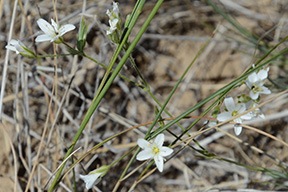
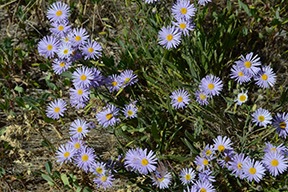
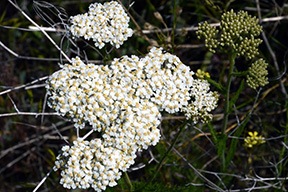
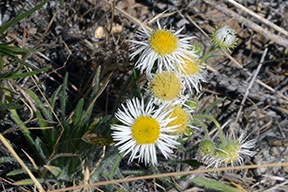
I’d been texting earlier in the day with my friend Tom, who keeps bees in Vermont. That conversation continued, even when I was walking around, pounding stakes with red ribbons into the ground. I mentioned that I wished I was able to set my bees up on the lot now because there were plenty of flowers around. He wondered how many hives the area would support. I hadn’t given it any thought. But it also got me wondering about how many different kinds of flowers there were right there.

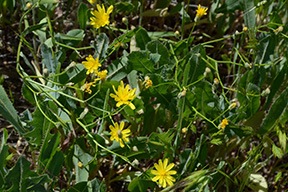
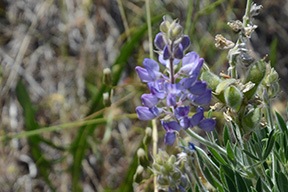
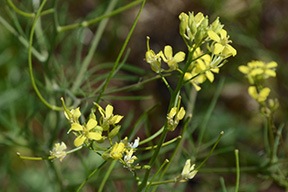
Not having anything pressing to do, I took out my camera and started shooting quick photos of the different kinds of flowers I saw. I thought I’d share them here, mostly to document them. I might do the same thing in a month and then again in two months. It’ll be interesting to build a history of flowers, especially since my bees will soon be depending on them for nutrition while they make me honey and wax.

So here are the photos.

Tiny Yellow FlowersTiny White Flowers
Purple FlowersBig Purple Flowers
White FlowersWhite & Yellow Flowers
Yellow FlowersLupine

This is just what I saw that day, while walking around. There were different flowers earlier in the season and I suppose there will be different flowers later in the season.

If so, I’ll show them off here.

Bees: My First Hive Inspection

I open my new hive for the first time to see what my bees are up to.

I started my beekeeping hobby in June 2013 and have been blogging about it periodically. If you’re interested in reading the other posts in this series, follow the Adventures in Beekeeping tag. Keep in mind that the most recent posts always appear first on this blog.

I set up my first beehive and loaded bees into it on Tuesday, June 4. On Tuesday, June 11, I went back to inspect the hive.

Hive inspections are something beekeepers should be doing about once every 1-2 weeks during the productive summer months. The idea is to check the health of the colony, remove things that shouldn’t be in there, and get a general idea of what the bees are doing in their box(es).

Preparing for the Inspection

To prepare, I looked up a few checklists online. I wanted a guideline that would help keep me focused on what I needed to do so I could minimize the amount of time the hive needed to be open. I found two good ones:

  • Hive Inspection Sheet is a great one-page checklist to record information from an inspection. This is the sheet I wound up using, even though it includes many items that I didn’t need for this inspection.
  • Hive Inspection Checklist comes with 7 pages of information to help you understand what you’re doing and how to do it. Although I didn’t like the actual checklist format, I found the accompanying explanations extremely valuable.

I also made notes in a looseleaf book I’ve been using to keep track of things I need to remember. (Seriously: the memory loss that goes with aging and having a very busy life sucks big time.) I divided it into two parts:

Prep:

  • Hive body. I needed to put the second hive body in the Jeep so I wouldn’t forget to bring it.
  • Smoker setup. I wanted the smoker all set up with ignition paper and fuel so all I had to do was light it.
  • Food. Didn’t want to forget the sugar syrup I’d prepared.
  • Camera charged. I was bringing along my GoPro to document the inspection and I needed to make sure it was fully charged.

Tasks:

  • Light smoker. Seriously, I even need to remind myself to do something like this.
  • Open hive. Duh-uh.
  • Remove frames one by one and check:
    • Brood development. Are there larvae? Capped brood cells? The health of the colony depends on a constant inflow of new bees via hatching.
    • Eggs. Is the queen laying eggs?
    • Honey / Pollen. Are the bees making honey? Storing pollen? They should be!
    • Queen Cells / Drone Cells. These are brood cells for queens or drones. They are larger than regular brood cells. I didn’t expect (or want) to see queen cells — one queen is enough and the presence of queen cells indicates either an unhealthy queen or the possibility of swarming. Drone cells should be present, but not in great numbers.
    • How many frames are full? The bees should have filled out their original five nuc frames and begun work building out comb and filling it on the additional five frames I provided in their hive.
  • Add hive box on top. Only if they’d made good progress on the five new frames.
  • Close hive. Duh-uh.
  • Feed bees. I needed to refill their feeder with the sugar syrup.

My notes were the bold text. I didn’t need the explanations. (Those were for you, dear reader.) Not a huge amount to do or remember. Just right for this first time.

I also printed out the checklist. I’d fill it out when I was finished.

The Inspection

I had a great day on Tuesday. Very relaxing. I blogged about it here. By the time I got to Jim and Kriss’s house in Wenatchee, I was feeling good. Very mellow and relaxed. In no hurry. And I stayed that way. That’s really important when you’re working with at least 10,000 live bees.

Hive Inspection PhotoI arrived around 4 PM, when the temperature was around 70°F. A nice warm afternoon when many of the bees would be out foraging. I brought my gear into what I’ve come to think of as the “bee yard” and was happy to see bees coming and going through the hive entrance. I saw Jim and Kriss and Jim came in to keep me company. I lighted the smoker and suited up. Jim remained in plainclothes, but stood back as I got to work.
Rather than give you a blow-by blow of the inspection, I’ll let you watch the video. It’s 9 minutes long, edited down from 30 minutes of raw footage. It was shot with a GoPro camera on a tripod. (I’ll do this again in the future and talk more directly to the camera.) Throughout the video, you’ll hear Jim and me talking about what we’re seeing.

Here’s the video:

The long and the short of it is that I have a healthy hive with friendly bees. Did you notice how Jim gets closer and closer throughout the video until at one point, he sticks his bare finger right next to the hive? My bees didn’t mind. They’re mellow. Mellow yellow bees. Jim says his bees aren’t that nice.

We saw drones and I actually spotted the queen, which surprised me very much. Jim and I seemed to see her at the same time.

We did find one swarm cell — a queen cell near the bottom of the hive. They likely built this before the frames were put into the hive, thinking they were running out of space in the nuc (which they were). I removed it.

We didn’t see any eggs, but we did see plenty of developing larvae and capped brood cells. And tons of honey and pollen.

I got to scrape clean honey comb off the top of the inner box. I munched on it later in the car. Next time, I’ll bring a container just for my spoils. I’ll be leaving most of the honey for the bees this year — they’ll need the stores for the winter.

Next Inspection

My next inspection will be about 10 days after this one — sometime next week. I’ll do pretty much the same thing, but this time I have the challenge of working with two boxes full of frames.

I’ve been giving my frame setup a lot of thought. I’m thinking that I want to reconfigure the hive to have just one deep frame on the bottom and then mediums above it. I’ll still allot two hive bodies for brood, but I think that having medium bodies/frames above the hive will give me more flexibility for honey production while making the hives lighter overall. And I’ll still have the deep boxes on bottom for installing or creating nucs. Of course now that I’ve already put the deep box on top, I can’t really make any change until I get a second hive setup and either split the colony or use the occupied frames from the top box in a new hive. Neither is possible right now.

I’m also thinking of putting in a frame with beeswax foundation might be a nice way to harvest a single frame of honeycomb before winter. I think the bees can spare that for me — especially given the amount of sugar I’ve been feeding them.

More video — but shorter and more pointed — with the next inspection. As usual, your comments and feedback here is always welcome.

PSA: Don’t Kill the Bees

You think people would know better by now.

I’ll keep it short, but it’s not sweet. In fact, it breaks my heart to write this.

I’ll also keep it simple for people who might have trouble understanding the facts of life. Yes, I’m talking about the birds and the bees — mostly the bees.

Why Bees are Important to Protect

Bees being Moved
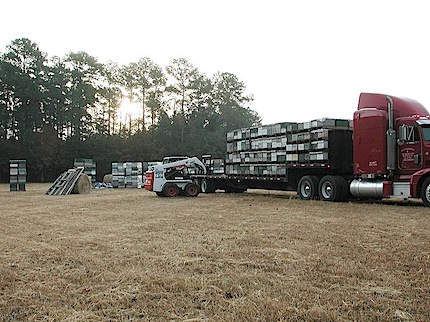
This Wikipedia photo by Pollinator shows bees being moved from South Carolina to Maine for blueberry pollination.

The production of food throughout the world relies heavily on pollination, much (if not most) of which is accomplished by bees as they gather pollen and nectar from flowers. Bees are so important for agriculture that it’s common for farmers and orchardists to have bees shipped hundreds of miles to their farms — often at a huge expense — to pollenate crops.

Colony Collapse Disorder

is a phenomenon in which worker bees from a beehive or European honey bee colony abruptly disappear. While such disappearances have occurred throughout the history of apiculture, … the syndrome was renamed colony collapse disorder in late 2006 in conjunction with a drastic rise in the number of disappearances of Western honeybee colonies in North America. European beekeepers observed similar phenomena in Belgium, France, the Netherlands, Greece, Italy, Portugal, and Spain, and initial reports have also come in from Switzerland and Germany, albeit to a lesser degree while the Northern Ireland Assembly received reports of a decline greater than 50%.

In other words, the world’s bees are dying.

I can’t stress how screwed the world would be if we lost the bees. I can’t even imagine it.

What Stupid People Do

Last night, when I returned home from a great day out with my dog and friends, I had an email message from someone responding to a Craig’s List ad I posted about wanting bees. He was reporting a swarm in Malaga. He’d sent the message at about 5:30 PM. It was now 8 PM, but still light.

I called him about it. He said the swarm was on a piece of scrap lumber only 2 feet off the ground on a lot with a home under construction. It had been there more than 24 hours. It was easy to reach and probably easy to catch.

Although I sorely wanted to capture the swarm myself, I didn’t want to drive the 40 miles (each way) to Malaga. So I called my friend, Jim, and told him about it. I gave him the address and even looked up directions on Google Maps. It would only take him about 15 minutes to get there. He was psyched. He said he’d throw on his shoes and try to get them.

I heard back from his wife about an hour later.

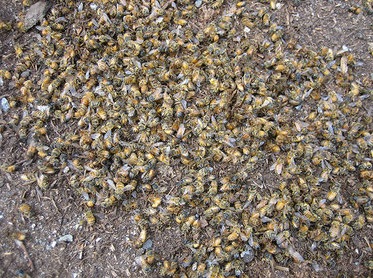
Dead Bees
Dead honey bees.

Jim had found the bees, dead, along with a few cans of Raid.

The bees are dying well enough on their own, but some moron has to go at them with a can of pesticide?

Dozens of beekeepers who live in the area are willing — and eager — to remove a swarm of bees for free, but some idiot has to kill them?

The stupidity of people amazes me.

Don’t Kill the Bees

Please, people, don’t kill the bees.

If you see a swarm, remain calm. Swarming bees are generally not dangerous. They’re just relocating. They’re like you in that big U-Haul truck, parked at a rest stop on the freeway, taking a break.

Call for help.

Your best bet is a beekeeper, if you can find one listed in a local phone book or online for your area. Try Craig’s List; search for “bees” or “swarm.”

The next best bet is the local Humane Society or Animal Control Department of the town or city where you live. They often have contact information for beekeepers.

Next choice: the police, but not 9-1-1. (A bee swarm is not a police emergency.)

Last choice: a pest control company, but with the request that they send someone to remove the bees without killing them. If they won’t do it for free, ask them to find a beekeeper who will. They should have this information handy.

I will concede that if the bees get into the walls of a building or some other place where they can’t be reached, extermination might be necessary. But if you call for help as soon as you see a swarm, you can usually prevent it from getting into that unreachable place and save it.

As the person who contacted me, and my friend Jim tried to do.

What Life is All About

An amazing, ordinary day.

I had one of those amazing days today. The kind of ordinary day that reminds you just how good life can be.

I slept until 6 AM — late for me — and read in bed until the sun shined right through the window into my eyes. You see, I’d forgotten to lower the shade. But that didn’t matter because no one was going to look in my bedroom window. No one other than the sun.

I had my coffee and tidied around my little home. I prepped for my day in Wenatchee. I had a long list of things I wanted to accomplish and I’d even made notes the night before. I wanted to make sure I had everything I needed when I headed into town.

I loaded up the Jeep and sat Penny on the seat beside mine. We headed out. I got about a mile down the road when I realized I’d forgotten something. I turned around and went back to fetch it. Then we headed out again. I got about 10 miles when I realized I’d forgotten something more important. I turned around and went back to fetch it.

I didn’t mind driving the extra 22 miles because of my bad memory. I wasn’t in a rush. I was doing my own things at my own pace. That was nice.

I drove up to the lot I’m going to buy soon in Malaga. Along the way, I stopped at the lot next door. (The one my husband has photos of that I don’t own and never will.) There were three men working there with a big backhoe. The foundation for my future neighbor’s home was in. They’d chosen a nice building site with nearly the same great view I’d soon have on the lot next to theirs. I chatted with the builder and got his number and the name and number of his girlfriend, who had designed the custom home under construction. I chatted a while with the earth moving guy and talk to him about septic systems and perk tests. I got his card and the number for the septic system designer. It was nice to meet new people, to learn about folks who might help me build my home one day.

On my future lot, I gathered together some of the stakes the owner had used to mark the footprint of the house he’d never build. I took my 100′ tape measure and marked out the footprint for the home I’d build: 48 x 50 feet, right beside the end of the driveway. I marveled at how small that footprint looked on the vast expanse of land I’d soon own.

New FlowerI walked around with Penny, through tall weeds and wildflowers that reached my waist, thinking about where I’d put my beehives and my RV and my septic system. I saw yet another type of flower I’d never seen there before. I admired the view for a while and felt the wind in my hair on a day with perfect weather. I looked back at those stakes and imagined my new home rising above the wildflowers. I imagined sitting on the deck with a glass of wine, taking in the view.

I went down to Wenatchee and had lunch with a friend in a Japanese restaurant where they make a seafood salad just the way I ask. My friend put away an amazing quantity of food. We talked about business and life and what great a gig we had as cherry drying pilots. My friend bought me lunch; I left the tip.

Fresh Honey in the CombI drove over to a friend’s house to tend to my bees, which were living in his backyard. I was inspecting my new hive for the first time. I took my time prepping and suiting up. My friend kept me company and explained what I was seeing while my GoPro camera, set on a tripod, created a 1080p HD video of the entire inspection with our running commentary. Afterwards, I sucked the honey out of the wax comb I’d trimmed from the top of the hive box. No honey tastes as good as the honey you eat fresh, right from your own beehive.

I went to Lowes to look at appliances and cabinets and bathroom fixtures for my new home. I thought about washers and dryers and glass-topped stoves. I looked at refrigerators with drawers and dishwashers that could hold all of my dishes. I talked to a kitchen design consultant and set up an appointment to design my kitchen. I thought about how nice it would be to finally have the kitchen of my dreams — and how nice it was going to be to skip the decision-making ordeal with someone incapable of making a decision.

I ran into a friend of mine and her daughter. We chatted for a while about nothing important.

I stopped at Stans Merry Mart to look at Traeger smokers. The sales guy, who couldn’t have been much older than 18, gave me a thorough rundown on how they worked, what I could make, and how easy they were to clean. I thought about smoking racks of ribs and other yummy food. I came very, very close to buying one, but remembered that my deck wasn’t built yet.

I swung by the spa place to look at hot tubs, but it was late and they’d already closed. Another day. There was no rush.

I went to the supermarket to buy olive oil and flowers and salad fixings.

Drive In FoodAs I headed out of town, I saw the sign for Larry’s Boneless Chicken and decided to give it a try. It was an old-style drive-in restaurant, with girls that came out and took your order and then hung a tray with your food on your car window. The waitress was friendly and happy and smart; the food was good. Penny and I listened to the radio and munched chicken and onion rings.

I drove home in the summer evening light, when the sun was turning that golden color that makes everything look good. I looked at the green hills and the dark brown cliff faces and the blue river and marveled at how beautiful and full of life everything was.

At home, I put away my groceries and watched the video of my hive inspection on a 32-inch HD TV, reliving the highlight of my day, chatting with Facebook friends as I sipped a glass of wine. Outside, the sun was setting. The family of skunks living in the bushes nearby walked past my back window: a mom and six babies. Penny, who was waiting for them, barked.

Penny in BedA while later, I climbed into bed with my laptop to write this blog post. Penny, in her bed with her favorite toy, watched me through sleepy eyes. I thought about how nice it was to spend the day with her and how much she’d love running loose among the wildflowers at our future home.

Just another day in my life. Another great day.

People who go through life angry and hating and trying to take things that aren’t theirs from others who have done them no wrong are missing the point of life. In fact, they’ve missing life itself.

It’s not about what you have and how little you did to get it. It’s not about hating strangers enough to try to make their lives miserable. It’s not about how good you are at screwing over others. It’s not about getting away with lies or abandoning your moral standards to win something that really isn’t yours. It’s not about how much better you are than everyone else. It’s not about your last European vacation or your fancy car or the $150 you dropped on dinner for two the night before.

Life’s about the simple things. The things that make you happy. The things that make you feel whole. The things that are good and right.

Life’s about having a great day, a calm day, a day where you do what matters to you and you enjoy every minute of it.