Atychiphobia

The fear of failure.

I’ve been thinking a lot lately about why some people — including someone who was once very close to me — don’t achieve the things they purportedly want to in life. I’m talking about people who have dreams or goals and don’t work toward reaching them.

As anyone who knows me or reads my blog knows, I’m not like this. I’ve been called an “overachiever” (meant as an insult, if you can believe that) and a “Renaissance woman” (which I assume wasn’t referring to my Renaissance painting full figure). I set a goal and do what’s necessary to achieve it. Sometimes I fail but, more often, I don’t. The point is, I do what it takes — or at least try to — to make things happen.

Being like this puts me at a disadvantage when trying to understand people who aren’t like this. People who claim to have dreams and goals but then do very little or even nothing to make them happen. It’s almost as if they believe that just telling others what they want to achieve is enough. They don’t follow through — and they often don’t seem to have a problem with it. Or, worse yet, they blame others for holding them back — when, in reality, the only person holding them back is themselves.

Learned Helplessness

I was talking to a friend about this yesterday and how it relates specifically to a certain person no longer in my life. This friend was also in a relationship with a man like this — a man who never managed to achieve anything he supposedly wanted to achieve. Instead, her guy relied on her to help him through life, like an emotional and financial crutch. She said the condition he suffered from was learned helplessness and suggested that my guy had the same problem.

I looked it up on Wikipedia:

Learned helplessness is the condition of a human or animal that has learned to behave helplessly, failing to respond even though there are opportunities for it to help itself by avoiding unpleasant circumstances or by gaining positive rewards. Learned helplessness theory is the view that clinical depression and related mental illnesses may result from a perceived absence of control over the outcome of a situation.

This didn’t sound right to me. The person I was trying to understand did fail to help himself when there were opportunities to do so, but the rest of the description just didn’t fit. I thought for a while longer about what was likely holding him back and I realized that it was probably a fear of failure.

Fear of Failure

Wikipedia has an entry for that, too. It’s called Atychiphobia:

Atychiphobia (from the Greek phóbos, meaning “fear” or “morbid fear” and atyches meaning “unfortunate”) is the abnormal, unwarranted, and persistent fear of failure. As with many phobias, atychiphobia often leads to a constricted lifestyle, and is particularly devastating for its effects on a person’s willingness to attempt certain activities.

A person afflicted with atychiphobia considers the possibility of failure so intense that they choose not to take the risk. Often this person will subconsciously undermine their own efforts so that they no longer have to continue to try. Because effort is proportionate to the achievement of personal goals and fulfillment, this unwillingness to try that arises from the perceived inequality between the possibilities of success and failure holds the atychiphobic back from a life of meaning and the realization of potential.

By definition, the anxiety of any particular phobia is understood to be disproportionate to reality, and the victim is typically aware that the fear is irrational, making the problem a largely subconscious one.

This describes the problem perfectly: constricted lifestyle, unwillingness to attempt certain activities, unwillingness to take risks, unwillingness to try to succeed. The sad result is indeed that the sufferer is held “back from a life of meaning and the realization of potential.”

I think a lot of people suffer from this in varying degrees. But it really depends on the person’s imagination. Someone who lacks the imagination to come up with goals worth pursuing and does not pursue goals can’t be said to suffer from atychiphobia because they simply don’t have anything to potentially fail at. But someone who does have the imagination to come up with achievable goals and doesn’t pursue them — well, what can be holding them back if it isn’t a fear of failure?

You Can Only Blame Yourself

Failure is a part of life. While no one likes to fail, there’s no reason why a fear of failure should hold someone back.

If a goal is achievable and a good plan is made to work toward that goal, why not give it a try? By weighing risks and rewards — and the potential for each — a person should be able to make the decisions necessary to move toward any achievable goal. And by measuring levels of success, failure, and risk along the way, a person should be able to determine, on a day-by-day basis, how he’s doing and whether he’s likely to succeed.

The person I’m trying to understand shared many dreams and goals with me throughout his life. I was as supportive as I could be, actually helping him with brainstorming, writing, designing, and doing web work in a few instances when he began attempts to achieve some of these goals. But in the end, he simply stopped trying, abandoning file folders of incomplete notes in favor of “unwinding” in front of a television.

Being blamed for holding him back was particularly painful for me, especially since I was working so hard to build my business so it would support both of us. I wanted badly for him to achieve the kind of self-satisfaction that I achieved throughout my life. I wanted to see him free from financial burdens so he could have the time to chase down one of his dreams and make it a reality.

Unfortunately, I would never get to see that happen.

Move Forward

Meanwhile, I’ll continue formulating goals, evaluating them, and either discarding them or chasing them down. I’m looking forward to rebooting my life in a beautiful place that I love, surrounded by friends with plenty of work to keep me busy. I’m facing the challenge of designing and building a new home that exactly meets my needs. I’m building my apiary with solid plans for producing comb honey and other bee products by next summer. I’m forging new friendships and new relationships to take me forward in my life.

I’m not afraid to fail so I’ll throw everything I have at every goal I want to achieve.

How about you? What’s holding you back?

Bees: The Risky Hive Split

Let’s see if I regret this.

I started my beekeeping hobby in June 2013 and have been blogging about it periodically. If you’re interested in reading the other posts in this series, follow the Adventures in Beekeeping tag. Keep in mind that the most recent posts always appear first on this blog.

Last week, I blogged about a hive inspection and included a photo of a queen cell. Because of its position in the frame, I thought it was a supersedure cell — the kind of queen cell the bees produce if their queen is ill, dead, or missing. But when I showed it to my beekeeper friends at last week’s bee chat, they universally agreed that it was a swarm cell. That meant my bees were planning to swarm.

I didn’t want that to happen. I wanted to increase the number of bees and especially beehives that I had — not decrease the number of bees.

Queen Cell
The elongated cell is definitely a queen cell, but is it a swarm or supersedure cell? People more knowledgeable than me say swarm.

I thought of everything I knew so far about beekeeping — which is pretty much based on what I’d read and observed for the past few months. (In other words, a lot but not much.) I reasoned that if the brood frames that included the swarm cells were removed from the hive without the queen and they were put in another hive, the bees would raise a new queen and I’d have a new hive.

This is a hive split.

I did this on Friday. I took two brood frames plus one honey frame from my first hive and placed them in a nuc box with two empty frames. All three frames were covered with bees that would become the new hive’s starting population. I’d rely on those bees to complete the rearing of the queens in the queen cells on those brood frames.

I then replaced the brood and honey frames I’d removed from the hive with empty frames, giving the bees plenty of space for new brood and honey in the existing colony.

The only problem: I never saw the queen.

Although I’m pretty sure she was left behind in the original hive, I can’t be sure since I didn’t see her. After all, the hive had to have at least 20,000 bees in it — finding one among all that is not easy.

And that’s where the risk lies.

You see, if I took the queen along with the brood frames containing the swarm cells, not only would I leave the original hive queenless, but I run the risk of losing a viable queen to the new queens that hatch. Or having bees swarm from the nuc anyway. (Admittedly, this second scenario is not likely, given the limited number of bees in the nuc box.) Finally, as my beekeeping friend in Vermont, Tom, pointed out, if a hive suddenly becomes queenless, the workers might start laying eggs. Those will all be worthless drones.

Of course, I did leave behind brood frames that included queen cells just in case. That hive runs the same risks.

Do I know what will happen? No. But time will tell. I’ll check the nuc box later today — it’s right here at my RV parking space — and try to figure out what’s going on. I’ll also check the original hive (which is down in Wenatchee) later in the week to see what those bees are up to.

Worst case scenario: I screw up my original hive and don’t have a viable colony in the nuc box. Best case scenario: my risky hive split works.

Will report back when I know something.

A Friend Drops In…Literally. Again.

Why drive by when you can fly by?

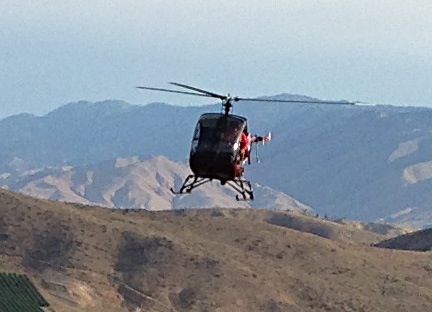
At 6:15 Friday morning, my coffee was brewing into my cup and I was scrambling eggs for Alex the Bird and Penny the Tiny Dog. I heard a helicopter in the area and assumed it was the same spray pilot I’d seen earlier in the week working an orchard across the canyon. But when I went to the door to take a look, the helicopter I saw was not outfitted with spray gear.

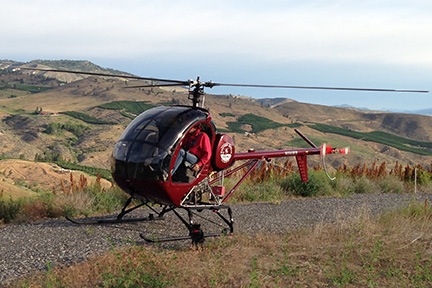
Schweizer 300
My friend Woody on approach for landing in his Schweizer 300.

It was a Schweizer 300 and I knew my friend Woody was at the controls.

I tried calling him on the phone. He answered but I couldn’t hear his voice and didn’t know if he could hear me. I talked anyway: “Land on the gravel driveway of the house next door and I’ll make you breakfast.”

Penny Greeted my Guest
Penny greeted my breakfast guest as soon as he was on the ground.

He circled. I didn’t know if he’d heard me. So I came out and started pointing at the intended landing zone. One way or the other, he got the message. Moments later, he was setting down at the top of the driveway, only a few feet from the edge of the canyon. Penny ran over to greet him, even before he’d shut the engine.

I waited until the blades had stopped spinning before greeting him myself. After assuring him that the helicopter was fine parked there — my neighbor was away and not expected back for a long while — I led him back to my RV, the “mobile mansion,” with a promise of coffee and breakfast. I gave him my untouched cup, just brewed, and he found room at the table. I started a second cup brewing, made Alex and Penny their eggs, and tidied up the table. Then I got out the bacon and some eggs and made us breakfast while we chatted.

Woody is working with me — well, sort of for me — on my cherry drying contracts. A client with a 90-acre orchard came online on Wednesday and I still have another 40 or so acres under contract throughout the area. If my big client called for a dry, it would take me more than 2 hours to finish his orchard, thus leaving the others to wait. That would not be acceptable to them so it was certainly unacceptable to me. So I put out my feelers and found Woody’s company, based in Arizona and willing to make the trip to Washington for just the 8 days of work I could offer. They managed to get a short contract before starting with me and, if they’re lucky, they’ll get another contract when I release them.

Woody and I took a quick look at the orchards he might be called to dry from the air on Monday. On Tuesday, when he and his companions joined me at a Pot Luck BBQ I hosted for a Meetup group in Walla Walla Point Park, I gave him GoogleMaps-generated location information for each orchard. But this morning, when he woke to cloudy skies, he thought it would be a good idea to scout them again from the air in case he got called today. He was scouting the orchard across the canyon from me when he decided to fly by.

And that’s how he ended up at my dining table, sharing bacon and eggs with fresh-brewed coffee with me at 7 AM.

We chatted through two cups of coffee, then headed out in my truck. I had to go to the property I’m buying in Malaga to fetch a large wooden pallet I’d left there for my bee hives. I decided that the pallet, covered with a rug, would make an excellent “deck” for my poor man’s hot tub. He wanted to see the property, so he came along for the ride. I think he was impressed. (Everyone who has seen the property has been impressed — with one notable exception that’s yet another indication of his poor judgement.)

Back at the mobile mansion, Woody helped me pull some nasty staples out of the wood and position the pallet beside the tub. He told me that he’d seen another hot tub like it at a skydiving place he used to spend a lot of time at. (I knew the idea wasn’t original.)

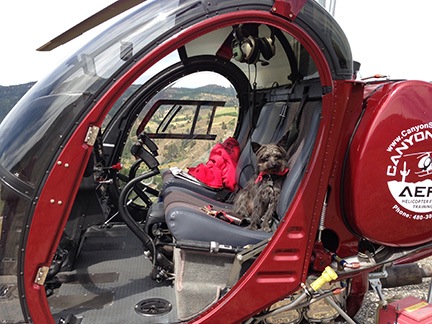
Penny in a Schweizer
Penny is comfortable in any helicopter.

We talked about going down to the Rocky Reach Dam later in the day with another friend. Something else to kill time. (We’d spent much of the previous day on my boat in the Columbia River.) I had some errands to take care of in Wenatchee — I wanted to experiment with a hive split — so he headed out. I walked him down to his helicopter and posed Penny in his seat for a photo before he climbed on board.

Penny and I moved back as he started up. I videoed his departure, amused that he did the same drop-off maneuver that I usually did when departing my landing zone 100 feet farther up the hill.


Woody’s departure from the hillside landing zone is remarkably like mine: dipping off the side and speeding away.

It was nice to have a friend drop in by helicopter — especially so unplanned. (I love spontaneity and surprises!) But I’ll be honest: it wasn’t the first time.

And I don’t think it will be the last.

Dear Julia

Dear Julia,

I was saddened — but not terribly surprised — to learn of your passing early this morning. After all, you’d reached that 90-year milestone and your health had never been very good throughout the 30 years I knew you. Both Mike and I were continuously surprised at your long life. “My mother is a force of nature,” he used to say.

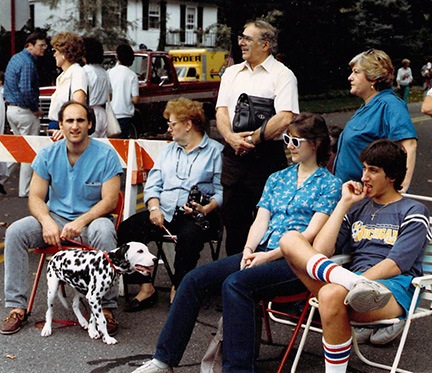
At the Parade
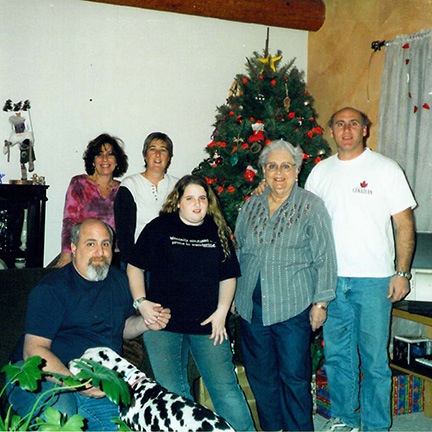
Do you remember this day, Julia? I think it was Memorial Day, perhaps the first year Mike and I lived in New Jersey. You and Charlie were there, along with my family, watching the parade at the end of our street. It was so long ago — Mike almost had hair!

As I think back on all those years — the first twelve or so while your husband was still alive, and the later years when you were left without him — my mind recalls various scenes in which you were a player. In the beginning, you were a minor character, but over time you took on a more starring role.

I often think of the night your husband died so suddenly. Of getting that terrible phone call in the middle of the night — the one no one wants to get — and being at the wheel of Mike’s car with him sitting in stunned disbelief beside me as we sped the 30 miles from our home to yours. Of seeing the New York City police officers milling about your living room. Of seeing your husband Charlie laid out so peacefully on a bed in the spare room with a blanket up to his chest as if he were just sleeping. Of the shock you must have felt looking at your dead husband while the space he’d occupied beside you in bed only a short time before was still warm from his body and love for you. That morning was incredible, fixed upon my mind like an etching in stone. You were so unprepared for his death. One evening, you’re having dinner with him and 14 hours later, you’re shopping for his casket and cemetery plot. I honestly don’t know how you did it. You showed a strength that day that I know I don’t have. But I suspect that in private you were far more tearful than I am right now, just recalling and writing about it. (Yes, the tears are running down my face now as they have so many times in the past year when I think back to things that once were.)

Christmas
Your family’s visit to our home at Christmas in 2005 was a bit trying, but not because of you.

Charlie’s death didn’t just change your life — it changed ours. It changed Mike’s role, forcing him to fill your husband’s shoes in caring for you. Charlie took such good care of you, handling all the little chores of life, that you could not manage so many basic things on your own. I clearly recall Mike and I teaching you how to write checks and balance your bank accounts. And the “honey do” lists you had for Mike! They were a bit of a joke — at least at first — and expected on every visit to your home. I have a clear image of you consulting a scrap of paper as Mike finished a task and asked you what was next. Oh, how he dreaded visiting right after the beginning or end of daylight savings time! All those clocks!

But Mike stepped up to the plate and did so many things for you — often without your knowledge. I did a few, too, but admittedly not as many as I could or should have.

Flying with Mike
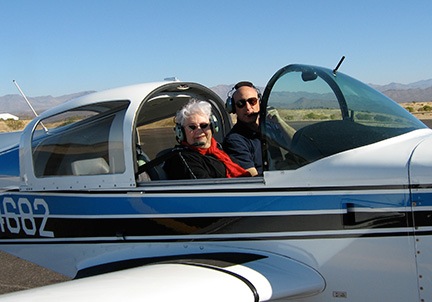
I was really proud of you the day you climbed into Mike’s plane with him. I didn’t think you could do it; I should have known better.

Indeed, Mike was “the good son” and you wanted me to be the good daughter-in-law. How I must have frustrated you! The engagement in 1984 should have been followed by a wedding soon after, but I just couldn’t go through with it. I loved your son deeply — I still do — but he was sometimes mentally abusive to me, embarrassing me in front of family and friends. This was so painful to me and didn’t seem right. I remember how his father used to tease you and the bickering that ensued and I suppose Mike thought that was standard operating procedure for a married couple. But I hated it — just as I hated the bickering at your house. Marriage is supposed to be a forever thing — surely you and Charlie knew that — and there was too much doubt in my mind about my relationship with Mike. If I married, I had to be sure I could make it last forever — and I simply wasn’t sure. I kept putting off marriage so long that after a while it seemed like a silly idea.

After all, it wasn’t as if I wanted children. I know that bothered you too — as it bothers my mother to this day. Most women of your generation were raised to want children and grandchildren; I was not. And it likely bothered Mike — although I told him straight out, before I finally got my tubal ligation in 1997, that if he wanted kids he needed to find a different woman. I was not interested in motherhood, so I failed to give you and my mother the grandchildren you wanted.

The marriage did come many years later, but it wasn’t for the right reasons. Both you and my mother were cheated out of the big wedding you likely wanted to see. Because of the reasons for our marriage, our anniversary date became a source of pain for me. I flat-out told my stepmother to stop sending cards. And years later, in my divorce filing, I’d even get the date wrong.

But yes, I was a disappointment to you. No matter how much you bragged to your friends about me and my achievements, I know I disappointed you. We just never connected the way you probably thought we should. Although I’m sorry about the disappointment, please understand that I could not change myself to make someone else happy. My mother knows this, too. So does your son.

Mildred and Julia
I’m ashamed to admit it, but I always wished that you were more like your friend Mildred: fun loving, independent, happy. I knew that her death would leave an empty space in your life and it made me so sad for you.

In the later years of my marriage to your son you became a source of friction between us. As you aged, you seemed to become more and more dependent on Mike to help you with the chores of life. Even after we moved to Arizona, you had him near you a full week (or more!) every month — he maintained a separate home there! Later, when he gave that up, he spent all of his vacation time going back to New York to visit you, using Vitec business as an excuse. You spoke on the phone multiple times each day — hell, he talked to you more than me!

Was I jealous? Perhaps. But also frustrated. I couldn’t understand why you needed him so much and why he was so willing to put our life together aside to accommodate you.

Las Vegas
Do you remember that trip to Vegas? We flew up in my helicopter for an overnight stay at the Bellagio. I sent you a photo book to remember it and show your friends.

This all came to a head during your visit to Wickenburg in 2012. We’d arranged for a wonderful apartment for you in town. When Mike went to get you and Paul at the airport, I went to the store to buy groceries and other supplies. I stocked your fridge and cabinets with the kinds of food I thought you’d like, along with lots of fresh fruit and veggies. I bought flowers for your table. I wanted you to feel happy and welcome and at home in this place. After all, Mike had led me to believe that you were considering a move to Wickenburg and I wanted you to like the place we’d found for you.

I didn’t expect you to be at our home every evening, sitting at the table, playing cards with my husband. I didn’t expect everything we did for the duration of your two-month visit to include you. And I certainly didn’t expect you to laugh when I asked and tell me that you had no intention of moving to Wickenburg. I felt lied to, betrayed, manipulated — by your son. It should have warned me of things to come.

When Mike lost his job during that visit, I saw an opportunity for the two of us to get away for a few days in the RV before he started his next job, the dream job. A trip to Death Valley for the spring wildflowers. Some time away from home and the apartment. Some time to regroup and work out the tension that had formed between us since my return from Washington the previous fall. He said he wanted to go, but he delayed getting the plans together. He said he would tell you that we’d be gone for five days, but even the day before our planned departure you still didn’t know. And then he carelessly lost our friend’s dog in the desert and I snapped.

I was tired of being so far down on his list of priorities. I was frustrated with his inability to get his life together and make things happen. I was sick of listening to his excuses and feeling that he was hiding things from me. I was also tired of seeing how he feared you and your response to something that you might not like.

Yes, your son was afraid of you — as he was afraid of me. I’m sure he’s afraid of the woman who has taken our place, too: his mommy/girlfriend.

If only you knew how many times he lied to you — to “protect” you, he said. I realize now that he was lying to me, too.

I wonder how much stress you put on his relationship with that woman. I hope it was at least as much stress as you put on my relationship with him.

I’ll admit that if your son and I were still together, your passing would come as a relief to me. But now, estranged from your whole family by lies, betrayals, and misunderstandings, I feel only sadness and a sort of emptiness deep in my soul. Yes, we had our differences and you drove me nuts, but I respected you and your love for your children and your granddaughter. I respected your sacrifices for your husband, spending so many years making him a home. You did what you knew how to do and you poured your heart and soul into it. You did what you thought was right — even if it did have consequences you didn’t understand or even know about. I respected you for that.

Julia
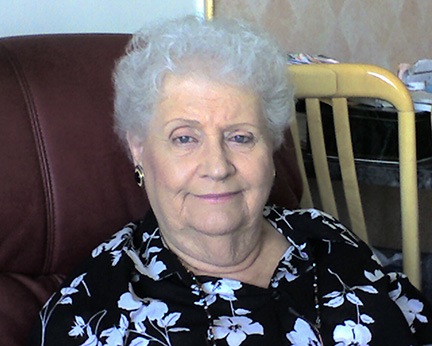
Julia Chilingerian, 1922 – 2013

I regret that I was unable to talk to you one last time. To explain what happened between me and your son. To ask you if you knew why he gave up a 29-year relationship with the woman he claimed to love as recently as your last birthday for a manipulative stranger who led him astray. To forgive you for driving that wedge between us, for contributing to the friction that made him grow to hate me.

This letter will have to do. If there is an afterworld — a heaven, perhaps — you’ll know the truth.

I’ll miss you, Julia, as I miss the life I had with your son — good and bad. Rest in peace. You deserve it.

With love,
Your daughter-in-law,
Maria

Bees: Installing Drone Frames

Trying natural varroa mite control.

I started my beekeeping hobby in June 2013 and have been blogging about it periodically. If you’re interested in reading the other posts in this series, follow the Adventures in Beekeeping tag. Keep in mind that the most recent posts always appear first on this blog.

Varroa mites are a real problem for beekeepers in the U.S. (and likely abroad). They breed on bee larva, sucking the “blood” out of their hosts and spreading throughout the hive. It’s impossible to prevent them from infesting a hive. The only thing you can do is try to minimize them and their damage.

A drone frame is a special brood frame with larger cells on the foundation. It’s part of a varroa mite control program. Theoretically, when the bees see these large cells they realize that they’re perfect for raising drones. Drones have only one purpose — to fertilize the queen — but they’re really not needed once the queen has been fertilized and is laying eggs. They’re larger bees and need larger cells to develop. They also take longer to develop, which is why varroa mites prefer infesting drone cells. So the idea is to encourage the bees to put only drone cells on one frame which, hopefully, will attract many of the mites in the hive. Then, before the drones hatch but after the mites have infested the drone cells, you pull the frame out of the hive and freeze it. This kills the drones (which, again, you really don’t need) and the mites. You then remove the caps from the drone cells and put the frame back into the hive where, hopefully, the process starts all over again once the bees have cleaned out the cells.

That’s the idea. I figured I’d give it a try, so I ordered two drone frames — so I could always have one in my hive, even when one was in the freezer. After getting the frames, however, I caught a swarm and started a second hive. So I’ve got one frame in each hive and need to get another pair to swap them out.

The photo below shows me inserting a drone frame into the bottom box of my first beehive. I pulled out a frame that was virtually untouched by the bees and moved that into the upper box in place of another untouched frame.

Adding a Drone Frame to a Bee Hive

I just hope I can fit the darn things in my freezer. Right now, I’m still living in my RV; eventually I’ll have my chest freezer out of storage and set up where I’ll have plenty of space.

I should mention here that using drone frames is part of an integrated pest management (IPM) system. I’ll use other control methods — such as a bottom board screen — when I settle my bees into their permanent home later this season.