Asian Ginger Salad Dressing

A refreshing break from bottled dressings.

I realized recently that I use too many bottled salad dressings with their mystery ingredients. It was time to start making my own dressing.

Today, I felt like ginger salad dressing, so that’s what I made. Surprisingly, I had all of the ingredients in the mobile mansion’s tiny pantry.

Here’s my version of the recipe; it’s quick and easy to make and tastes great over mixed lettuce (think bagged) with grape tomatoes. It would probably be good over cabbage salads, too, or perhaps a marinade for chicken.

Ingredients:

  • 3 tablespoons honey
  • 1/4 cup warm water
  • 3 cloves minced garlic
  • 2 tablespoons grated fresh ginger root
  • 3/4 cup olive oil
  • 1/3 cup rice vinegar
  • 1/2 cup soy sauce
  • 1/8 teaspoon freshly ground pepper

Instructions:

  1. In a 1-pint jar or dressing cruet, combine the honey and warm water.
  2. Swirl stir, or shake to melt the honey and combine.
  3. Add the remaining ingredients.
  4. Shake well.
  5. Chill at least 30 minutes to cool and combine flavors.
  6. Shake well before using.

Store unused portions in refrigerator.

Honey Barbecue Sauce

Excellent on tiny meatballs, better on smoked ribs.

I’m a member — well, the vice president, actually — of the North Central Washington Beekeepers’ Association. We meet twice a month: once for a formal “business and education meeting” and once for a “bee chat” at a restaurant.

President Steve encourages members to bring honey-based snacks to the business meeting. He usually tries to assign the snack to someone and the person who is supposed to bring it usually doesn’t. So after missing two meetings due to my two-month trip to California, I decided to make up for my absence by bringing a snack. I’d whip up a batch of honey barbecue sauce and slather it over tiny meatballs. Quick and easy to make, especially since I cheated and used frozen “Swedish style” meatballs from Fred Meyer.

They were well-received at the beekeeper meeting. (Of course, someone else brought two kinds of cake and honey-sweetened tea, too!)

Here’s the ingredients and instructions for the sauce. I’ve also had it over smoked ribs and it’s delicious!

Ingredients:

  • 3/4 c. honey
  • 1/2 c. ketchup
  • 1/4 c. butter (1/2 stick)
  • 1 tbsp. vinegar
  • 2 tsp. Dijon style mustard
  • 2 tbsp. brown sugar
  • 1 tbsp. soy sauce
  • 1 clove garlic, pressed

Instructions:

  1. Combine all the ingredients in a sauce pan.
  2. Bring to a boil and simmer gently for 5 minutes.
  3. Remove from stove and cool.

Yields:

About 1-1/2 cups sauce.

Flying with a Student Pilot

Dealing with questions about the R44 Raven I vs. Raven II and weight and balance, and instruction from a non-pilot.

Note to Visitors from Helicopter Forums:

I’ve been blasted on Facebook by a number of “readers” who obviously didn’t read this entire post before sharing their inane comments on Facebook and elsewhere. If you can’t be bothered to read something, you have no right to comment about it.

And here’s a special tip for the folks who like to read between the lines and find fault in what they’ve “read”: if you read and comprehend the actual words instead of your angry and cynical interpretation, you might just learn something.

Just saying.

The other day, I flew with a client who has been taking helicopter flight lessons for about a year. We’ll call him Don. I’m not a CFI, so I can’t train him. He’s flown with at least one CFI in R22s and R44s and, more recently, with an experienced ENG pilot now flying an R44 Raven I for other work.

Observations and Instructions

Don was the first of my two passengers to arrive for the flight. He climbed into the seat beside me as I was shutting down. For the first time, he really seemed to study the R44’s simple panel. He began pointing out the differences in what he saw: no carb heat control or gauge, mixture in a different place, Hobbs meter in a different place, etc. I attempted to explain that it wasn’t just the absence of carb heat that made the R44 Raven II different. The performance charts were also different. But not having the Raven I charts handy, I couldn’t really explain.

When the second passenger arrived, Don passenger insisted on putting him in the seat behind me — despite the fact that I always put the two men on the left side of the aircraft. They each weigh in at under 200 pounds, so balance is not an issue. But Don had learned that the larger fuel tank is on the left side of the aircraft, thus making that side naturally heavier. Someone had apparently “taught” him that it was better to put a second passenger behind the pilot to better balance the aircraft. For the record, it didn’t really matter to me — I’ve flown my helicopter in all kinds of balance situations. I admit that I was amused when he tried to justify his decision on takeoff by observing that it seemed more balanced when I lifted into a hover. I honestly didn’t notice a difference.

During the flight, Don made quite a few observations about the wind and weather conditions. None of them really affected the flight, although the wind did kick up and storm clouds moved in a little later on. (I had been monitoring the weather on radar while we were on the ground and they were in meetings.) But what kind of bugged me is when Don began telling me how to land in the off-airport landing zones that I’d landed in before. He explained that that’s how he’d done it when he was with the Raven I pilot he’d been flying with recently.

While I listened to his input, I did it my way, which, in some cases, was the same as he advised. After all, I am the pilot in command and I don’t blindly follow the instruction of non-pilots.

What his nearly constant string of advice told me, however, was that he trusted the other pilot’s judgement and guidance more than mine, despite the fact that I’d been doing charter flights for his company for two years and had obviously gained the trust of his boss, who happened to be the other man on board.

I held my tongue — after all, this was a client — but I admit that it really got under my skin after a while. Not only had he overridden my usual loading setup, but he was telling me how to fly. I ended the mission hours later with a bad taste in my mouth from the experience.

Setting Him Straight

Since I had already promised to send him my R44 weight and balance spreadsheet that would clearly show him how it was next to impossible to load an R44 out of CG laterally, I figured I’d address all of his concerns with one instructional email. The following is drawn from that email with names changed, of course, to protect my clients’ privacy. I think it might be helpful for student pilots trying to understand how what they’re learning applies in the real world — and why not all pilots do things the same way.

Don,

I just wanted to follow up on our discussion regarding R44 Raven I and R44 Raven II performance, as well as weight and balance.

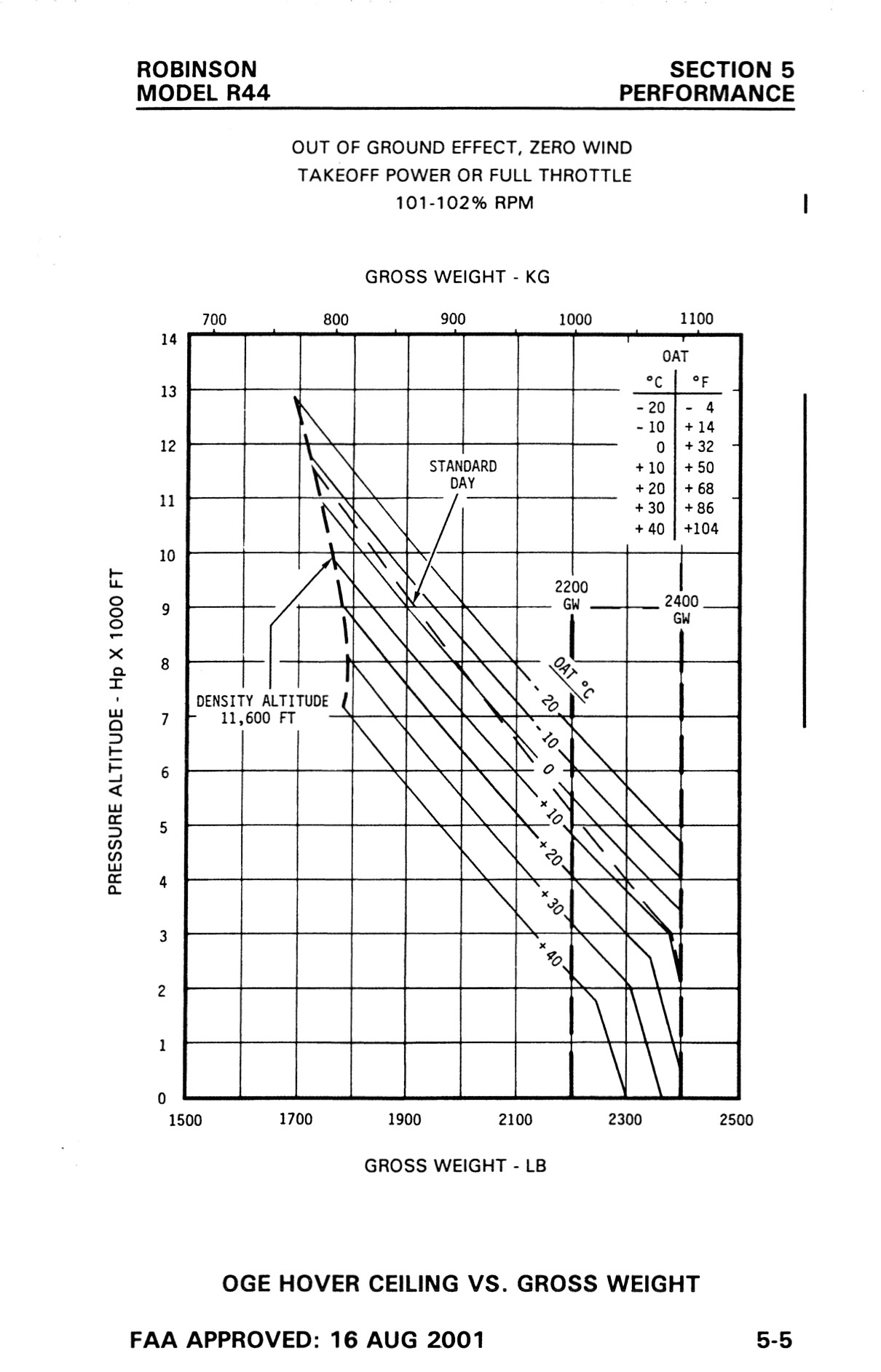
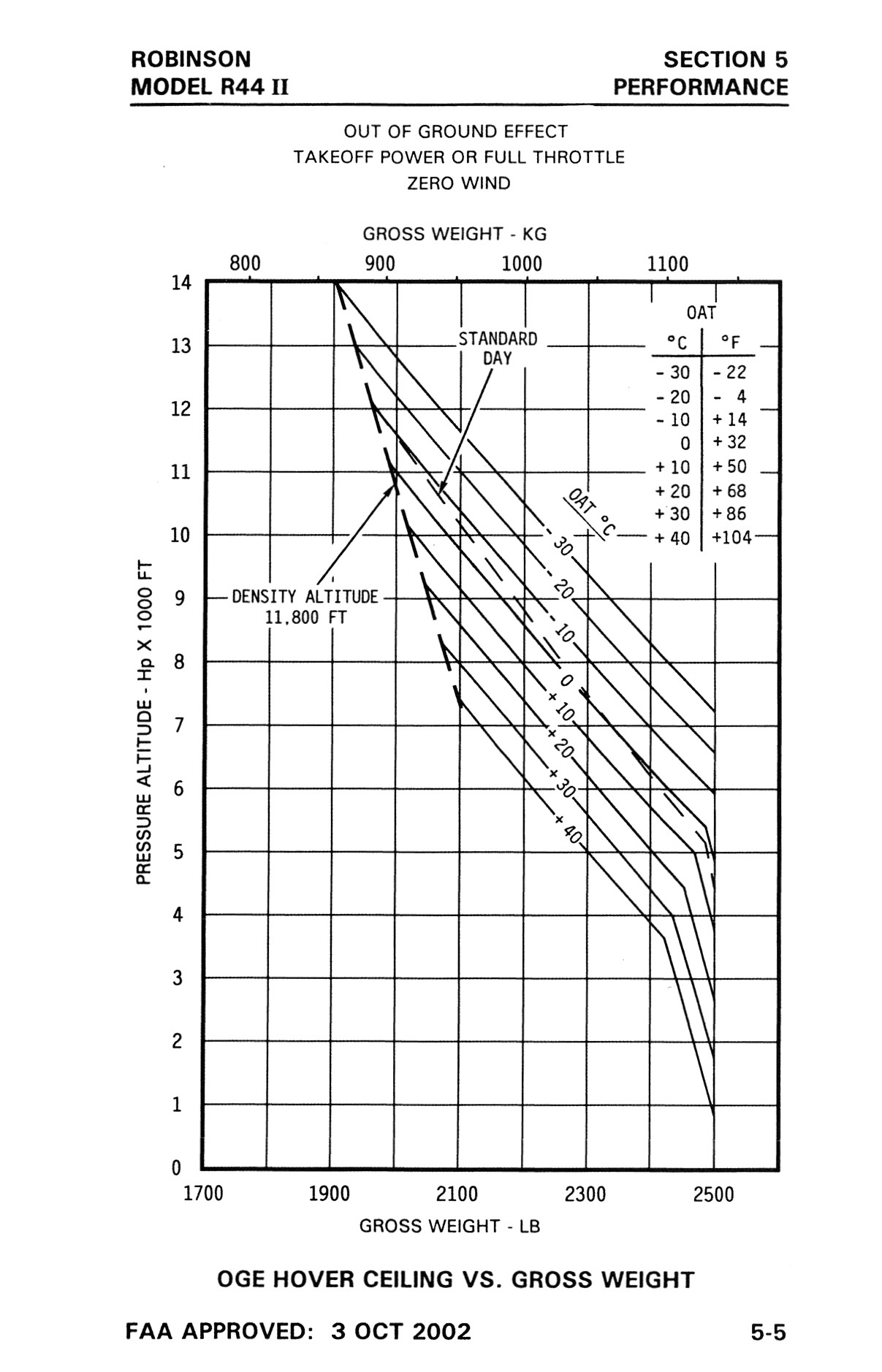
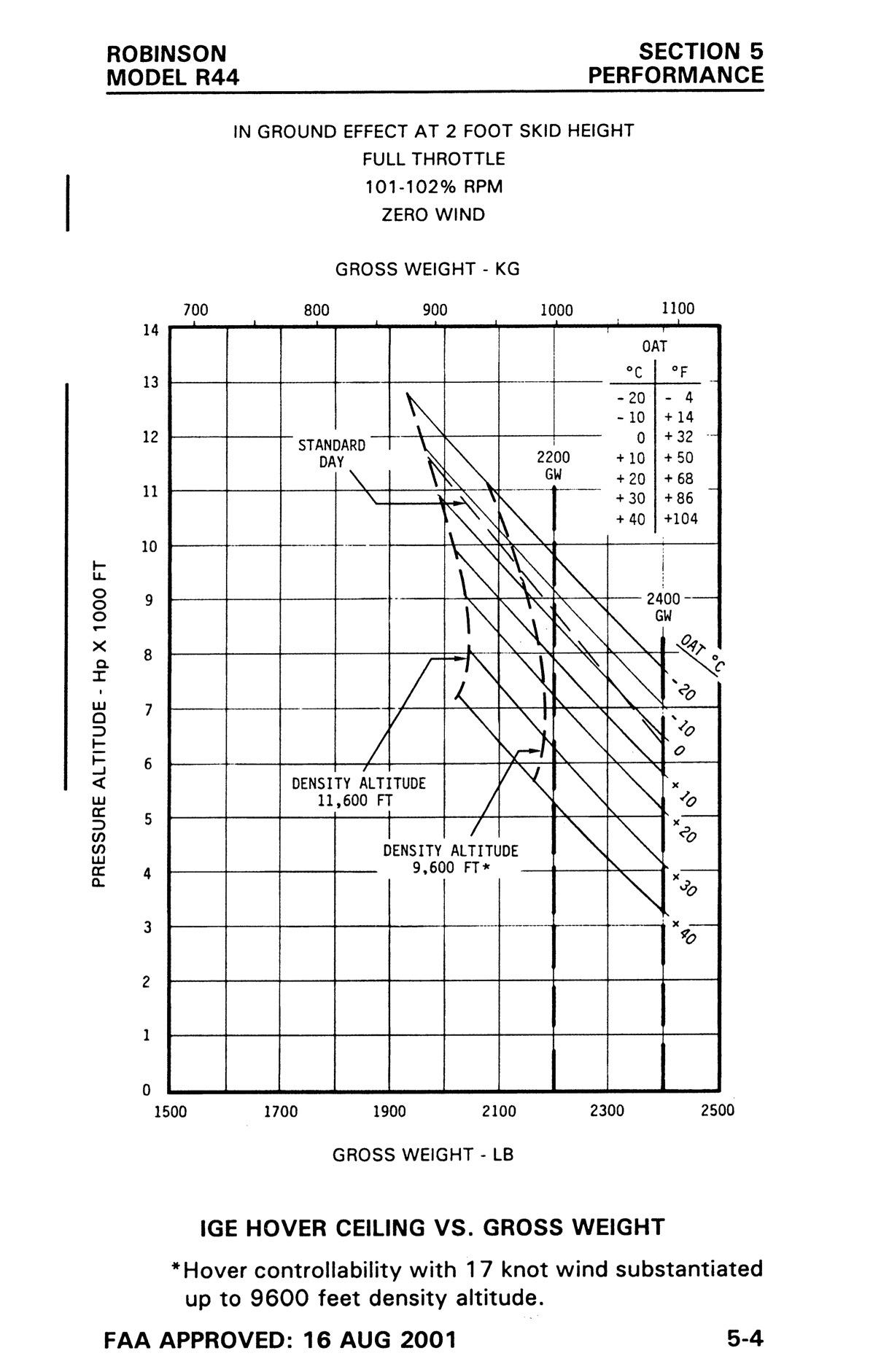
I’ve attached the performance charts for IGE and OGE hover ceiling for both models of R44 helicopter. As you can see, performance for the Raven II is far superior to that of a Raven II, especially out of ground effect. Frank Robinson designed the Raven II for better performance in high density altitudes, and that’s why I paid the extra $40K to buy one. In Arizona, I routinely operated at elevations above 5,000 feet and temperatures over 90°F. I recall one particular flight when I was able to take off from Grand Canyon Airport, elevation 6609, on a 86°F day at max gross weight. Another time, I was able to depart with 3 adults and some luggage on board — at an estimated weight of 2300 pounds — from Bryce Canyon Airport on a day when the AWOS reported density altitude over 10,000 feet. Both of those flights would have been impossible in a Raven I.

R44 I IGE Hover Chart R44 I OGE Hover
The hover ceiling charts for an R44 Raven I.

R44 II IGE Hover R44 II OGE Hover
The hover ceiling charts for an R44 Raven II.

Some of the kinds of flying I do for your company would be very difficult in a Raven I — particularly the confined space landings and departures with 2 or 3 passengers on board. As you know, a maximum performance takeoff makes a “ground run” impossible, putting the pilot on the left side of the power curve until clear of obstacles. On a day when carb ice is possible, additional power is robbed by carb heat in a Raven I. It would take a lot of pilot skill to avoid a low rotor horn (or worse) on a departure like that in a Raven I.

The Raven II also has an extra 100 pounds of payload. That’s what makes it possible for me to take you, Alex, and Walt together, since we often depart the airport at max gross weight for those flights.

So the difference between the two aircraft is considerable. While a Raven I is great for cherry drying, photo work (with one photographer on board), and other low-payload missions, I think the Raven II is more flexible and reliable for charter operations.

We also talked a little about weight and balance. I almost always put both of my passengers on the same side of the aircraft and I do so for a reason: so they both have the same view. I’ve witnessed the frustration of passengers on one side of the aircraft talking about something that they see that’s impossible for the person behind me to see. To avoid that frustration, I seat people together. This is especially helpful in hot loading situations where it’s impossible for me to keep an eye on both sides of the aircraft at once.

While it is true that the larger fuel tank is on the left side of the aircraft, making that side heavier, that additional 80 pounds of fuel weight does not make a significant difference when loading the aircraft. This can be confirmed with the W&B spreadsheet I created and use for my flights. You can play “what if” with it all day long and find that it’s extremely difficult to load an R44 out of CG laterally. I’ve attached the spreadsheet for your reference; I pre-entered the information for Wednesday’s flight with Walt sitting behind you. Putting him behind me simply shifted the weight to my side — in either case, the weight was about 1-inch off center. Now if you were both 230 pounds, things would have been different! Play with the spreadsheet and see for yourself.

Weight and Balance Example

I’m glad to see that you’re enthusiastically learning all you can about flying helicopters. It’s also great that you’ve had an opportunity to fly with so many pilots. You can learn from all of us, especially since we all have different backgrounds and experience. I hope you keep in mind the fact that I’ve put more than 1700 hours on my Raven II (and more than 1400 hours on other helicopters before it) and have a pretty good handle on how to load and operate it. I know how it will react in just about any circumstance. I hope you’ll continue to quiz me as you work toward your private pilot certificate. It’s my pleasure to help you learn!

Maria

What do you think? Did I get my point across without getting rude?

April 27, 2014 Update

Less than an hour after I sent the above email message to Don, I got an email back from him that was followed up by a phone call before I’d even read the email.

Don thanked me enthusiastically for sharing the information, including the spreadsheet. He told me that he’s flown with 6 different instructors in R22, R44 Raven I, and R44 Raven II helicopters over the past year. He’s so early into the training process that he hasn’t even practiced any autorotations yet. He confirmed from his own experience what he’s noticed about the power differences between R44 I and R44 II helicopters. He believes that working with so many instructors has been a good learning experience.

My point is, he took my message in the spirit in which it was intended: as a tool for learning. So I guess I did okay.

Learning to Fly Gyros

Tricky, but ultimately not as tough as I expected.

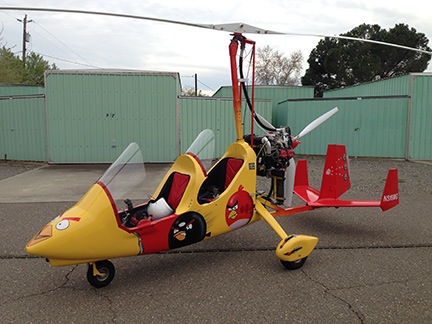
Angry Bird
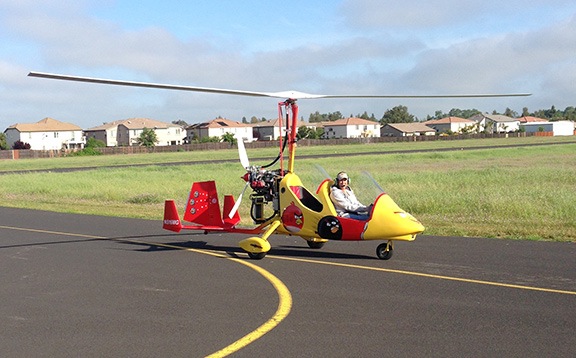
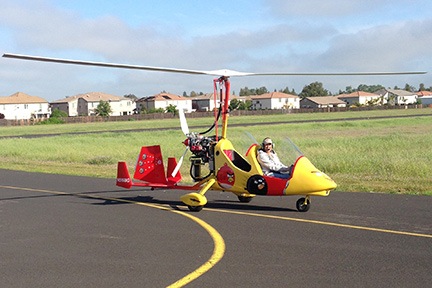
George’s angry bird, a Magni M-16 gyroplane.

Earlier this month, I learned to fly a gyroplane.

It actually came about quite suddenly. My friend George owns a Magni M-16 gyroplane. It’s a funky little plane with an Angry Birds themed paint job. (In George’s defense, he bought it that way.)

I met George when he was at the airport where I was living for my frost contract in the Sacramento area. He was teaching another pilot, Jason, how to fly his angry bird. George took me for a ride that demonstrated the full range of the aircraft: low flight, slow flight, power-off flight, long landings, short landings, etc. It was a lot of fun.

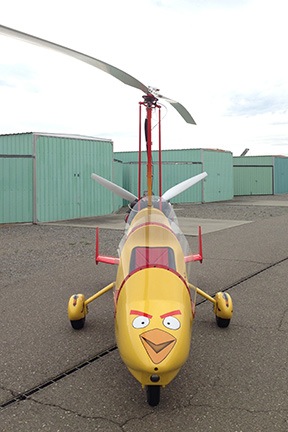
Angry Bird
Who paints this on a plane? Too fun!

And a hell of a lot cheaper to fly than my R44 helicopter.

George is a CFI with multiple ratings: gyro, airplane, and helicopter. When I voiced some interest in learning to fly the gyro — hell, I didn’t have any real work to do during the day — we cut a deal to swap a certain amount of gyro time for a certain amount of helicopter time.

Then George went to Alaska to teach a 17-year-old kid how to fly a Piper Cub. He didn’t provide a return date. And when a week had passed and my California departure date appeared on the current calendar page, I figured I’d missed my opportunity.

Until I got a text message from George with an arrival time at Sacramento Airport and a request for a pickup. I met him on Sunday and brought him to the airport where I was living to fetch his car. Flight training began the next day.

Understand that I’m a helicopter pilot. I have about 3,100 hours of flight time as I type this. Just about all of my time is in R44, R22, and B206L helicopters. I don’t fly airplanes.

Although my wasband had a plane and offered me the controls on more than one occasion, I had absolutely no interest in flying it. It was a get-there plane — a plane designed to get from point A to point B. That’s not the kind of flying I like to do. I like to fly low and slow and see the world around me. If he had a Cub or a Citabria, especially if it had big tires for off-airport landings, things might have been different. But it was a Grumman Tiger, a pampered hangar queen that likely never saw a gravel runway or cruised just above stall speed through a canyon.

To me, getting there was not the point of flying. The journey mattered more than the destination. That’s why I became a helicopter pilot.

Autogyro vs. Gyroplane vs. Gyrocopter

I learned to fly an autogyro or gyroplane. These terms are pretty much interchangeable. Gyrocopter, however, is a trademark of the Bensen Aircraft company. Gyro is a good general use term that, for some reason, doesn’t sound as antiquated as autogyro.

Like helicopters, gyros are categorized by the FAA as rotorcraft. After all, they do have those big rotor blades on top that provide lift. But unlike helicopters, those rotor blades are not driven by the engine. Sure, you use a clutch to get the blades spinning prior to takeoff. But then you disengage the clutch and the blades are kept spinning by the forward motion of the aircraft, which is propelled, in the case of the Magni, by a pusher engine. You can learn more about how gyros fly on Wikipedia.

First Lesson

George started by getting me into the pilot seat, explaining how everything worked, climbing into the passenger seat behind me (which has controls but no instruments), and taxiing out to the runway. The weather that Monday morning was perfect — clear blue skies and no wind — perfect for learning to fly any aircraft. There was no traffic in the pattern. I couldn’t ask for better learning conditions.

At the end of the runway, he explained how to engage the clutch to get the blades spinning. At 100 RPM, I moved the cyclic stick into a neutral position. As the blades spun up, I added power. At about 170 RPM, I released the parking break, and we entered the runway.

“Full throttle!” George’s voice yelled into my headset.

I pushed the throttle forward and we gained speed as George aimed us down the runway.

“Release the clutch at 220!”

I consulted the digital tachometer and I released the clutch on cue. The blades kept gaining speed.

“Cyclic back!”

This was completely opposite to taking off with a helicopter, which requires you to push forward to get through ETL. I pulled it back a bit.

“All the way back!” George yelled.

I obeyed and the nose lifted off. Then we were airborne, wiggling a bit from side to side.

“Hold it at 60!” I did my best to adjust our pitch with the cyclic to climb out at 60 miles per hour. We climbed upwind.

“Turn!”

Downwind
Flying the downwind leg at Watts-Woodland Airport.

Right cyclic put me into a tight bank to the right. I came all the way around into a close downwind.

“Level off at 500 feet!”

I leveled the nose abeam midfield. We gained speed.

“Throttle back!”

I pulled the throttle back a bit.

“Twenty-nine inches!” George advised.

I adjusted the throttle to 29 inches of manifold pressure. The speed leveled off at about 85 miles per hour. By then, we were abeam the end of the runway and it was time to descend. I reduced the throttle and started my descent, slowing down as I did so. After all, that’s how helicopters descend.

“Stick forward, stick forward!” George yelled.

I pushed the nose forward into what seemed like a dive.

“Reduce throttle!”

I pulled back the throttle to about 25 inches. I pushed the cyclic right to turn base and line up with the runway for final, pulling back the stick again to slow down.

“Nose down, nose down!” George screamed.

I felt him push the stick forward. We were speeding toward the runway in what seemed to me like a nosedive.

“Cut throttle!” he yelled.

Before I could do it, he’d throttled all the way back to the lowest power setting. We were diving for the runway with no power. We crossed the road only 50 feet above passing cars.

“Line up with the centerline!”

I tried to line us up with the centerline, using the cyclic stick.

“Left pedal! Right cyclic! Nose down!

I was overwhelmed. The runway was rushing up toward us. Once again, I tried to flare.

“Not yet!” George yelled, pushing the stick forward again. “Five feet!”

I felt his firm grip on the controls as we continued to dive, now over the threshold. Right when I thought it was too late, he pulled the stick back gently, bringing the gyro into level flight over the numbers.

“Let it settle!” he yelled.

We drifted down toward the ground, still moving at at least 60 miles per hour.

“Okay, now flare!”

He pulled the stick back some more, bringing the nose up so we’d touch down on the main gear. Then the nose wheel touched and we were on the ground.

“Full throttle, full throttle!”

I didn’t get a chance to enjoy that landing before we were speeding down the runway again.

So this was the “touch and go” that airplane pilots practiced all the time. Despite the rotors spinning over my head, this was all new to me.

Training Continues

Each traffic pattern we did went pretty much the same. We were turning them in about two minutes. This video from the afternoon of the second day gives you a (shaky) idea of the process.

My two biggest problems were pulling the cyclic back on takeoff and pushing it forward on landing. Both were completely opposite to what I do in a helicopter. What I’d been doing for 3,100 hours of flight time. It wouldn’t be easy to break those muscle memory habits.

Penny and Maria
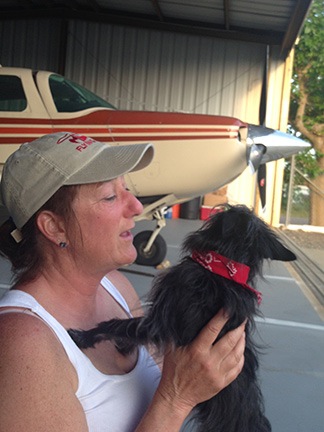
Penny and I relaxing at George’s hangar between flights. That’s George’s Mooney behind us.

My landings proved to be the biggest problem. You see, gyros can’t hover. (Well, they can hover if they’re in a strong enough headwind, but then again, so can an airplane.) They require forward speed to take off and land. And that’s where I was having the most trouble — landing while I was still moving. Remember, I’m a helicopter pilot and I’m generally not moving in any direction when I touch down on the ground. I wanted to flare, I wanted to bring the aircraft into a hover or at least slow down that forward movement before touching the ground. And I simply couldn’t stop myself from pulling the stick back.

We did a thorough preflight before the second flight on Monday. I learned what everything was, what it does, and how to check it for airworthiness.

We flew 2 hours on Monday, 2 hours on Tuesday, and 1.6 hours on Wednesday. The weather cooperated perfectly.

We took the helicopter to lunch on Monday to Nut Tree Airport and Wednesday to Sacramento Executive Airport. George flew. I even let him sit in the right seat. He was a good pilot and, even though I had the duals in, I felt no inclination to touch the controls. It was great to be a passenger in my own helicopter with a skilled, confident pilot at the controls.

Frustration and Breakthrough

Cache Creek Flyby
Cache Creek Flyby
Cache Creek Flyby
Cache Creek Flyby
Cache Creek Flyby
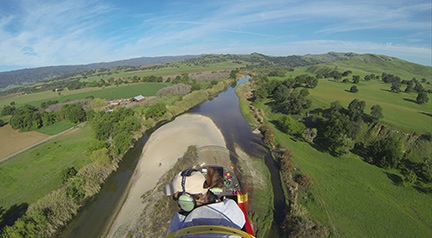
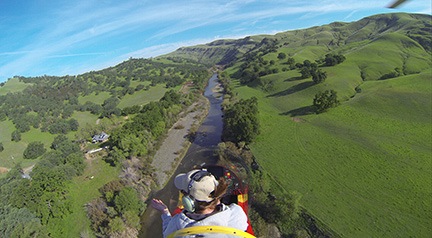
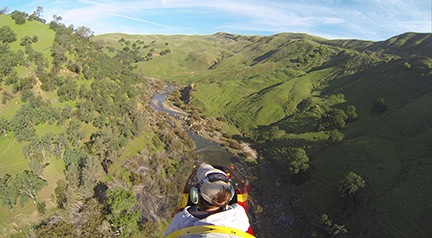
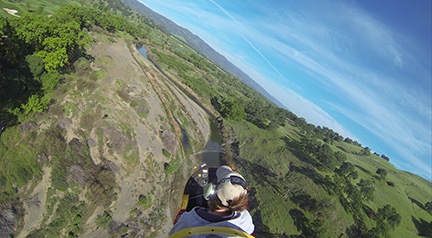
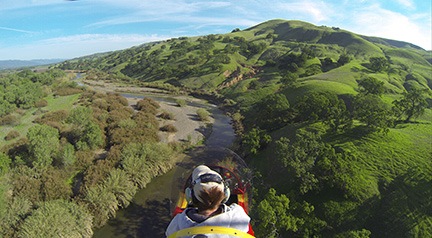
Some random still images from our gyro flight up Cache Creek. These are not cropped or retouched other than being resized for the web; it really was that green. I repeated the flight on Friday with my helicopter and got some stunning video.

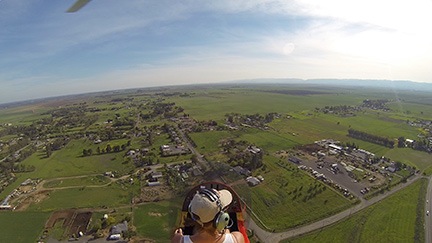
Wednesday morning, we took a break from traffic patterns and did a low-level flight up Cache Creek with the GoPro connected. The video is as shaky as above, but still shots from the flight came out pretty good. Then it was back to the airport for more pattern work.

Wednesday is also when we made the breakthrough. I was flying like shit that afternoon and George was at peak frustration. I just couldn’t get the landings right, mostly because he kept yelling so many instructions at me during the last 15 seconds of each flight: left cyclic, right pedal, nose down, watch your airspeed, right cyclic, left pedal, watch the centerline, nose down. The rapid fire commands were overwhelming me and my brain was shutting down.

After one particularly rough landing, George called it quits for the day. As we taxied back to the hangars, letting the rotor blades spin down, he suggested that maybe I just wasn’t going to get it.

Later, over dinner, I asked him whether I was the first helicopter-only pilot he’d trained. When he realized that I was, that all of his other students had been airplane pilots, he started to understand my problem. Gyros landed like airplanes and I simply didn’t know how to land an airplane.

I asked him to stop yelling so many commands at landing. I told him my main problem was knowing when to flare and asked him to concentrate on instruction for that.

The next day, he had some things to attend to in the morning and then had lunch with another pilot. When we taxied out to the runway in the gyro, I reminded him about what I needed. We took off and started pattern work again.

It was different that afternoon. George stayed mostly quiet, letting me do everything and occasionally commenting on my speed or power setting or other aspect of the pattern flight. He even threw out a few words of praise when I made a descent he liked or set the power just right. He focused his instruction on the proper time and amount to flare for landing — rather than also bugging me about the centerline and staying in trim. There was no yelling.

I relaxed. I got us lined up with the centerline. I kept us in trim. And I was able to make one decent landing after another. I had gotten over the hump. I was proving that I got it by demonstrating that I could do it on my own.

We flew for an hour. George was pleased. Later, at dinner, as he was updating my log book, he debated whether he should sign me off for solo flight. But I think he wanted me to solo in his aircraft with a few more takeoffs and landings right before the solo flight. So he held back on the endorsement.

The next day, Friday, I had business in San Francisco. I was visiting a friend that I’d met seven years before online and had never met in person. We were going for a dim sum lunch just off Market Street. I planned to fly the helicopter to Concord by way of Napa Valley and walk to the BART station, dropping Penny off for grooming and doggie day care along the way. A quick train ride into San Francisco, time spent with an old new friend, some shopping, and then a return to Woodland. The day went off as planned, but I didn’t get in until after 5 PM and I was exhausted after walking more than 5 miles on city streets.

George and I had dinner together when I got in. He came back to the mobile mansion to watch the video I’d shot with my GoPro’s nose mount. We tried to figure out why that video was rock solid while the video from the same camera mounted on his gyro’s mast was so shaky.

Solo Flight

Saturday morning, we headed out for another lesson. George was pretty quiet. I flew. When I made my third landing and began to throttle up, he pulled the throttle back.

“I’m going to get out,” he said.

I realized that solo time had come. “One more,” I begged. I pushed the throttle forward and I made yet another good takeoff, pattern, and landing. There was no excuse to put it off any longer. I taxied off the runway to the intersection and let the blades spin to a stop. George got out.

“Are you going to watch?” I asked.

“I’ll probably head back to the hangar,” he replied.

I taxied away, trying to remember everything I needed to know to spin up the blades, take off, do a pattern, and land. I was expected to do three patterns.

I made my radio call and launched down the runway. The gyro responded quite differently with just one person onboard, shooting into the sky quicker and easier than I thought possible. It wasn’t until the second pattern that I figured out how to set the power properly for solo flight.

I was high and hot when it came time for the first landing. I really did dive for the runway, cutting power to just above idle when I was over the road. Down, down, down — I caught myself pulling back on the stick and pushed forward again. I could see George still standing where I’d left him, watching me as I touched down remarkably smoothly. Then full throttle to take off for the second trip around the pattern.

The second landing was a bit rougher, but certainly acceptable. I’ll do better on the next, I told myself. And I did. I touched down lightly, right in the middle of the runway, at what seemed like a jogging pace. So slow, in fact, that I was able to exit the runway at the first turn.

I taxied toward where George was still waiting and he snapped a photo.

Solo Flight
George snapped this photo of me as I taxied off the runway after my first solo flight.

I’d soloed in a gyro after just 7 hours of training.

Ready for Rating

Because the gyro is a light sport aircraft and because I already have a rating for another aircraft in the same category (rotorcraft category, helicopter class), George says I can get a sport pilot rating for the gyro by taking a check ride with another gyro CFI. The trick is to find one of those. In the meantime, since George flew the helicopter down to San Carlos and back with me later that day, he owes me another 2 hours (or so) in the gyro. So I’ll need to come back to California to collect on that debt — if not in May, then perhaps in August or September. (With luck, I’ll overfly it and owe him some more helicopter time so he’ll have to come up and visit me to even things out.)

In general, George was a great instructor. Why? Because he barely touched the controls at all. He yelled instructions and I followed them to the best of my ability. He’d let me get in trouble and then yell commands for me to follow to get out of trouble. The only time I ever felt his hands on the controls was when I was in trouble so deep that I needed help getting out of it. And that was rare after our first two hours of training.

As for my outlook on fixed wing aircraft — well, that’s changed a bit. Now that I know how to land while I’m still moving, airplanes are a tiny bit more interesting to me. But what’s really interesting is this little bird. Maybe I’ll add a seaplane rating someday soon.

Home is Where the Heart Is

So good to be home.

I was away for about two months, on a frost contract in Woodland, CA near Sacramento.

When I moved my “mobile mansion” south in the middle of February, I was actually glad to be getting away from the Wenatchee area. I’d just spent my first winter back in a cold climate after about 15 Arizona winters. The short days combined with an amazing amount of fog — of all things — had made me kind of glum. Even though I’d was very comfortable with a house-sitting gig near my own home, I was ready for a break that included warm weather.

So when the frost control job in the Sacramento area materialized again this year with better standby pay coupled with the requirement to actually remain in the area for the duration, I jumped at it. I was heading south with my RV before the end of February and settled in at Watts-Woodland Airport by February 25.

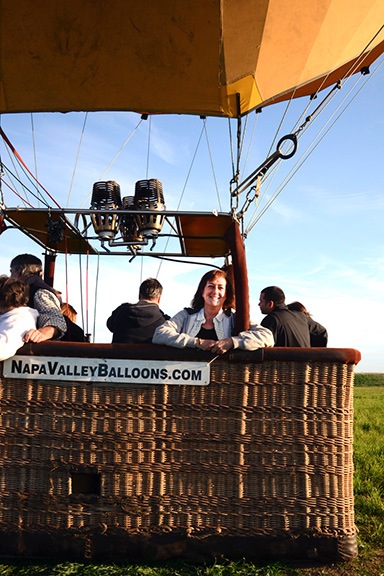
Me in a Balloon
My hot air balloon flight was a highlight of the trip.

I had a great time in the Sacramento area. Daytime temperatures ranged from 60°F to 84°F with nighttime temperatures seldom dipping below 40°F. We were only put on call for possible frost flying once in 42 days. If my contract had been the same as the one I had in 2013, I would have taken a financial hit. But this contract paid better for standby so I was actually better off if I didn’t have to fly. So it was a win-win.

In fact, in a way it was like an all-expense-paid vacation with a bonus at the end.

I did a lot while I was there — kayaking in the American River and Putah Creek, hiking in the hills and in Muir Woods, ballooning, joy-flying in the helicopter, wine tasting in Napa Valley, whale watching, hosting friends, making new friends, visiting San Francisco. I even learned to fly a gyroplane. I blogged a bit about some of these things (follow the links) but not as much as I would have liked to — I was just too darn busy to sit down and write much!

Gyro Solo
I learned to fly this gyro in 6 days, soloing after just 7 hours of flight time. I’m now thinking a bit more seriously about a fixed wing rating.

Still, before March month-end, my Wenatchee area clients started calling, asking when I’d be back. They had places to go, things to photograph. The damage to the Wanapum Dam and the draining of the lake above it had all the locals wanting to see the river from the air. There was flying to do when I got home.

There was also a home to be built. I’d been sitting on plans for what’ll basically be a custom garage with living space for more than a year and had given the green light to the builder before heading south. They were planning on an April 30 start date. Some earth work needed to be done and I wanted to be there for the entire process.

So by the first week in April, I was anxious to get home.

I said my farewells to new friends and headed out with the RV in tow on Sunday morning, April 13. By sunset, I was parked in a very nice campsite on the Columbia River in Maryhill State Park, enjoying a full hookup and a full moon.

The next day, I continued on to Wenatchee, less than 4 hours away. I dropped my RV off at the local RV fixit place — the gas furnace had been misbehaving and wound up needing a circuit board — and drove the rest of the way up to my 10 acres of view property in Malaga.

Everything was just as I’d left it. I offloaded my bees, setting them up on a palette near where they’d lived before our trip south and took stock of the things I’d need to do to finish moving back in.

Then I went down to the valley and ran errands until 6 PM, when the RV was ready. After a quick hook up, we made the 20-minute drive back up the hillside and down the 2 miles of improved gravel road to my lot. It took a few moves to get the RV back in place beside the septic system connection, where I’d left the water and power lines waiting for me. Within an hour — including time spent chatting with a neighbor — I had everything all hooked up.

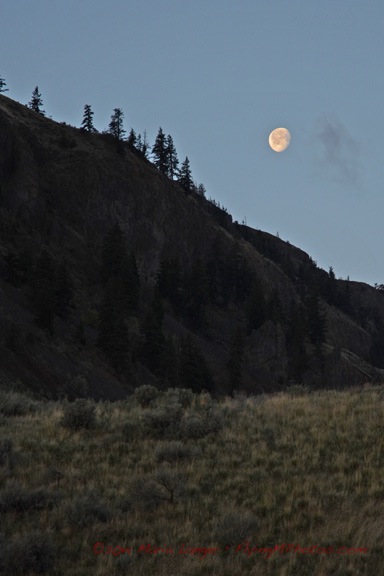
Moonset
I might have missed the eclipse Monday night, but I did catch the moon setting behind the cliffs from my home early this morning.

I really enjoyed seeing the lights of the city spread out before me that evening. It was mostly cloudy so I missed the eclipse, but I was too darn tired after my long trip and the setup to stay up anyway. I slept like a log.

The next few days were spent doing taxes — I always wait until the last minute — finishing setup, moving things in and out of storage, running errands, and meeting up with friends and contractors. Yesterday was overcast and rather cold — I could swear it was snowing up at Mission Ridge, which I can see from my place. I got home from errands by 6:30 and there was still plenty of light to watch a storm move in and the clouds descend over Wenatchee Heights and down toward Stemilt Hill. The sun broke through periodically, bathing the cliff walls north of me with a golden light.

Magic.

I lounged on the sofa with a book, relaxing with Penny on my lap. I think that’s when I first started to realize how good it felt to be home. And when I started to get really excited about the project ahead of me — building my dream home in a place I love.

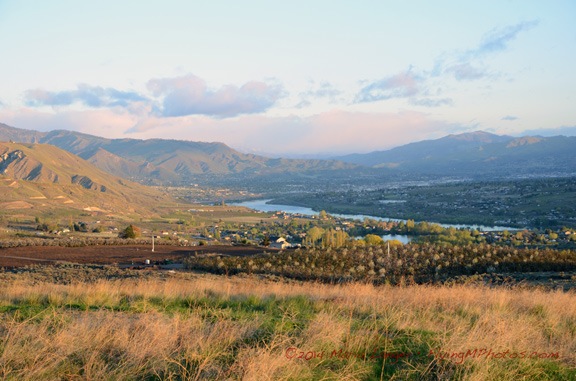
This morning dawned mostly clear with crisp, clean air on a strong breeze. As I sat at the table with my coffee, writing in my journal, I looked up to see the valley washed in the golden hour light. I stepped outside with my camera for a few shots.

Morning from Cathedral Rock
I shot this photo from the steps of my RV this morning with my Nikon. This is uncropped, shot with a zoom lens set to 46mm (per Photoshop). I can’t tell you how good it feels to know that I’ll be able to see something like this every day right from my home.

I started having second (or third or fourth or fifth) thoughts about where I was putting my building. The builder and I had set corner stakes in February, before I left. (The last time I positioned a building, I’d wished I’d done it differently. But that was supposed to be a temporary building; not the only building on the property. And it’s now pretty much abandoned, so I guess it doesn’t really matter.) I wanted to get it right because it couldn’t be changed once the construction began. So I walked out to the building site with my coffee cup in hand and stood on the ground beneath where one of my bedroom windows would be. I looked out over the valley, reminding myself that I’d be about 12 feet higher when I was looking through a window or standing on the deck that would soon be above me.

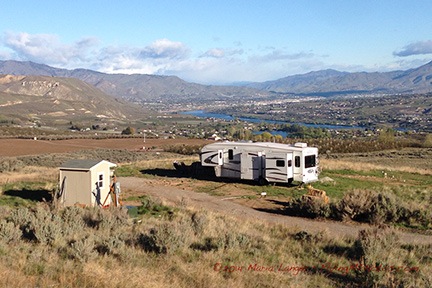
And I liked what I saw: a beautiful, unobstructed view down toward Wenatchee and the Columbia River, with nothing but orchards and grasslands and scattered homes and mountains as far as the eye could see.

Home Sweet Home
I shot this image with my phone as I drove off to meet a friend for breakfast this morning. My home will be built to the left of the shed, beyond the frame of this photo.

I went inside to finish my coffee and journal entry.

A while later, my phone rang. It was Bob, one of the friends who’d called and texted me repeatedly while I was gone, just to catch up. That morning, he was looking for a companion for breakfast out. I said yes (of course) and hurried to get dressed, thinking about the warm hug I’d get when I saw him.

It was good to be home.