The Joy of Flying with an Experienced Professional Videographer

Makes me wonder why I bother with the amateurs.

I had a great flight yesterday. A flight that should stand as a shining example of the kind of flying I love to do with the kind of professionals I like to work with. Let me tell you about it.

But first — because I can’t keep a short story short — some background.

Dealing with Amateurs

I feel the pain of professional photographers — folks who have invested thousands of dollars and years of their lives accumulating quality photography equipment, learning their craft, and practicing until they know how to make every shot count. These people are now competing with amateurs who buy DSLR cameras and call themselves “photographers.” These people use the “shotgun approach” to photography — they shoot dozens of images with the hopes that one or two of them will satisfy their client. They undercut the professionals in pricing because they simply don’t have as much invested in the business and, indeed, some might even have other jobs to support them. The professionals are losing jobs — and their livelihoods — because the amateurs are taking away their clients.

As a pilot providing aerial photography flights, I see this a lot. I get calls from photographers and videographers looking for a platform to get their aerial shots. If they don’t balk at my prices, they usually come in with a set time limit to minimize their flying costs. I can understand this — to a certain extent, anyway. Then they arrive for the shoot and immediately begin to show just how amateurish and unprofessional they are by:

  • Bringing the wrong equipment. I’m talking about consumer quality cameras and lenses, telephoto and long zoom lenses, DSLRs for video, and bulky camera bags full of equipment they will not need and likely cannot access anyway during the flight.
  • Ignoring my advice for seating. If they’re serious about getting good shots of a specific target, they should sit behind the pilot. That’s the only way the pilot can see what they see.
  • Bringing two photographers with two different missions. Usually it’s a still photographer brought along on a video flight. That simply isn’t going to be as cost effective as they think if they take my advice and put the primary photographer behind me.
  • Failing to communicate what they want or expect. I can’t fly the way they need me to if they don’t tell me what they want. They have a microphone next to their mouths. They need to use it. Without specific instructions, I can only assume that what I’m doing is what they want. They have no right to complain later if it isn’t.
  • Making unreasonable demands. I’m talking about expecting to fill all seats in the helicopter when the extra weight would seriously affect performance. (I no longer do photo/video flights with more than two passengers on board. Period.) I’m talking about expecting the pilot to fly at top speed from target to target and then stop “on a dime” if a good shot comes into view along the way. I’m talking about expecting the pilot to hover low-level, fly close to obstacles such as wires, and perform other maneuvers that simply aren’t safe.
  • Talking down to the pilot. I’ve seen this too many times. Amateurs with a bankroll have expensive equipment, no clue how to use it, and an attitude that makes me want to kick them in the teeth. They know it all — or think they do — and they feel a need to correct me every chance they get. I take guys like this just once, give them what they ask for, and never take them again. I don’t want clients like this.

I can think of at least two posts I’ve written that talk about the problems with specific amateurs: “Flying The 2010 Parker 425” and “Tips for Aerial Photographers.” You can get a better idea of the kind of crap I have to deal with by reading those.

Dealing with Professionals

But that’s not what this post is about. This post is about working with a seasoned professional who has lots of experience with aerial photography.

I started to get an idea of the level of professionalism I’d face before I even met the photographer. It was 7 AM and I needed to meet the client in Ephrata, WA at 8 AM. I was prepping the helicopter for the 20-minute flight. I wasn’t sure whether we’d have a single base of operations or if we’d be moving around. I needed to know whether I should remove doors before heading out.

The videographer, I’d been told, would be using a Tyler Minigyro. I’ve had experience with these before. They’re relatively flexible gyro-stabilized mounts that the videographer holds during flight. Because I wouldn’t be using my Moitek Mount, which needs to be installed in a specific seat, the videographer had three seats to choose from. Which door should I remove?

I called the client, coincidentally named Tyler. He was with the videographer. He asked the videographer what he thought. I heard his response through the phone: “The best seat is behind the pilot so she can see what I see.”
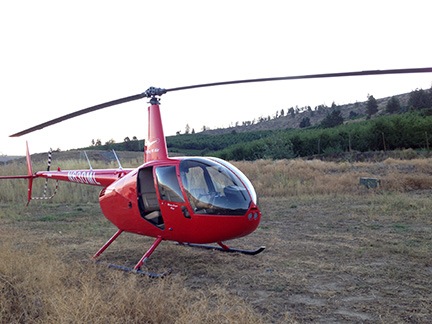
Rigged For Photo Flight
Here’s my helicopter yesterday morning, rigged for the photo flight with both back doors removed.

That was the exact right answer. “I like this guy already,” I told my client. I wound up removing both back doors in case lighting conditions made the videographer want to change seats. As it turned out, I didn’t need to do that and probably shouldn’t have — it caused additional wind to enter the aircraft during point-to-point travel. In all honesty, I probably could have left the doors on until meeting the client — and then stowed them in the client’s SUV.
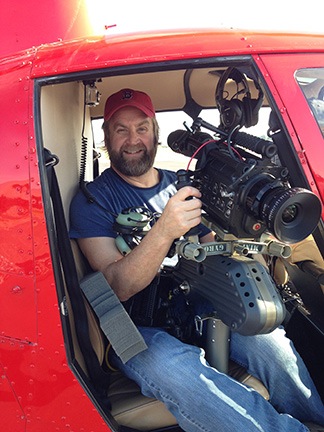
Jim
Here’s Jim, the videographer, almost ready to fly.

After picking up one client in Ephrata and flying down to Desert Aire in Mattawa, I met the other clients, including the videographer. The videographer was a burly bearded guy named Jim who was friendly and good-natured. He’d flown quite a bit with a pilot friend of mine in Idaho. He had a huge array of professional equipment, including the rented Tyler Minigyro, two enormous battery packs, an older RED camera with external hard disk, two lenses, a half dozen camera batteries, and a video monitor for the front seat observer. While this may seem like a lot of equipment, he only carried what he needed onboard; there were no extraneous camera bags and loose items.

After prepping most of the equipment, Jim told me he liked to start each shoot with a meeting to cover the expectations. Another sign of a professional. We chatted for a while about the targets we’d be shooting — mostly dams and recreational areas along the Columbia River — and the kinds of shots he was looking for. I told him what I needed from him — clear communication of what he wanted — and told him that I’d do what I could to get him in position for all of his shots. I assured him that the helicopter’s performance with just three people on board and 3/4 tanks fuel would be sufficient for most maneuvers.

We wound up taking off the front passenger door for the other client, who wanted to get some still images. (Of course.) Fortunately, for the duration of the flight I was not asked to put him into position to get his shots; he just shot what he wanted when he could get the right composition.

We lifted off and got to work around 9 AM, leaving Tyler behind to shoot on the ground. We immediately encountered some problems with the camera. First it was dropping frames and then it was locking up. Jim switched a battery in flight and we were able to get to work. His instructions to me were clear and easy to follow. I could tell that he’d flown with a lot of pilots before by the way he phrased his requests: “If you think it’s safe, can we…” It was obvious that he understood the limitations of helicopters and the potential danger of certain maneuvers. That comes from a lot of flying. (I’ve only had two other clients who clearly understood limitations: one had been a passenger in a helicopter for more hours than I’ve flown as a pilot and the other one is an airplane pilot.)

It wasn’t long before we ware working smoothly together, almost as if we’d worked together for a long time. He’d ask for maneuvers and I’d do my best to deliver them. He and the front seat passenger would ooh and aah when they saw a particularly nice shot in the viewfinder or monitor. He’d tell me when I was doing something right and when I wasn’t doing it quite the way he wanted. Communication was excellent — I don’t think I’ve ever worked with a better communicator.

The helicopter performed remarkably well, especially that morning when the temperatures were still cool. All flight sequences, including sideways “crabbing” flights at speeds up to 30 knots, were amazingly smooth. This was, in part, due to the fact that there was hardly a breath of wind. I couldn’t have asked for better flying conditions that morning, although I wish it was about 15 degrees cooler that afternoon.

We worked our way up the Columbia River, shooting the dams, boats on the river, cultural and recreational sites, bridges, cliffs, communities, and more. We refueled at Ellensburg and kept flying, always moving upriver. Time flew by. By the time we reached the Rock Island Dam just downriver from Wenatchee and Malaga, I was starting to feel fatigued and I think Jim was, too. After a quick stop at Quincy Airport to meet Tyler to swap out batteries, we got onto our last leg of the flight which took us to Euphrata and Moses Lake. We shot agricultural and industrial sites along the way.
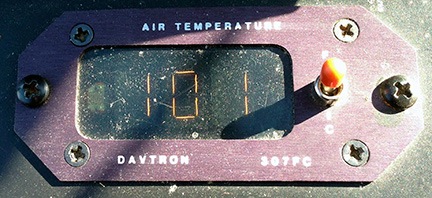
Unseasonably Warm
It’s been unseasonably warm this September in central Washington state.

By the time we landed at Moses Lake, I felt done — as in “stick a fork in me” done. The OAT gauge registered 101°F on the ramp. I was the only one with a door on the helicopter and was sweating up a storm by the time we touched down. Thank heaven for the folks at Million Aire; the girl who greeted us with a cart handed each of us an icy cold bottle of water that I really needed.
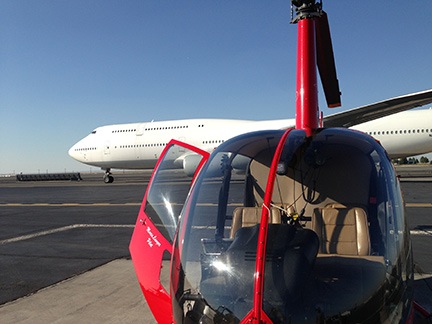
747
Jeez Louise! That’s a big plane!

By the time Tyler arrived and was escorted with the SUV out to the ramp, we’d unloaded most of the equipment from the helicopter. A Boeing 747 rolled in on the taxiway behind me and parked beside me; I don’t think I’ve ever been so close to a 747 on a ramp. (The damn thing is huge!) My clients stowed their equipment in the SUV and I fastened the door. I also let the FBO top off both tanks with fuel. Then my passenger and I were on our way back to Ephrata and, 15 minutes later, I was on my way home.

I got home around 4 PM. I’d spent 7.0 hours flying.

What Made this Great

I think it’s safe to say that this was one of the best aerial video gigs I’ve done in a long time. A few things made it so good:

  • The experience and professionalism of the videographer. He knew his stuff, he knew what worked, he never asked for anything I couldn’t or wouldn’t deliver. He was reasonable and extremely communicative. He was a real pleasure to work with.
  • The targets. The flight itself took us over some really nice scenery so point-to-point flying was a pleasure. The targets were interesting to see from the air and, in some cases, a bit challenging to shoot because of obstacles such as wires and cliff faces.
  • The length of the flight. It was refreshing to fly with someone who was more interested in getting the shot than minimizing flight time. More than once, we’d redo a shot just to make sure we got what the client needed. We also approached targets from a variety of angles and altitudes. This meant that we were in the air a long time. And I’ll be honest with you: I’d rather do one 7-hour video flight with no pressure to finish within a certain time than seven 1-hour video flights that must be done within an hour.

I really liked this client and hope I get more work with them in the future. And I hope they feel the same about me.

I suspect they might.

What Matters Most

A life lesson in a video.

Yesterday was my birthday. It was a bittersweet day for me — a year ago on my birthday was the day my husband called and told me he wanted a divorce.

What kind of sick bastard asks his wife for a divorce on her birthday? After living with her for 29 years? The kind of bastard I was stupid enough to marry.

Anyway, my bank — yes, my bank — emailed me a birthday message with a link to a video. The message said:

Just a friendly little birthday wish from us to you. We can’t send you a double-tiered chocolate cake (it won’t fit through the mail slot — we tried), but hopefully this little video will help brighten your big day.

Have an awesome b-day filled with fun, happiness and, of course, saving.

Enjoy many more, Saver.

Normally, I’d trash it as spam, thinking it was some kind of marketing ploy. If so, it would be pretty tacky. But INGDirect (now CapitalOne 360) is not your average bank. So I clicked the link.

Here’s the video:

I cried when I watched it, of course. I already understood the message — what happiness is really all about. In fact, I blogged about it earlier this month. What made me cry is that it clearly showed the difference in philosophy between me and my ex-husband.

You see, I understand that happiness is making life what you want it to be so you can look around yourself and be happy about what you see. I do work I like to do in a place I like to do it. I have what I need and not much more. I’m not interested in impressing anyone with showy possessions. I’d rather spend time and money and energy seeing and learning new things to make me a more rounded person than to piss it away on crap. I save for my future and avoid unnecessary debt. This enables me to keep my time flexible and to really enjoy life. That’s what it’s all about.

My ex-husband, however, apparently believes that happiness is about keeping up with the Joneses, working at an unfulfilling job to pay for an empty lifestyle that revolves around eating out with the same four or five people, watching television, and buying showy things like a costly second home, airplane he never flies, and Mercedes to show off to friends. He made his obsession with financial wealth pretty clear to me when he went after my business assets and money in the divorce, refusing to settle unless I gave him my half of our our paid-for house plus $50,000 in cash and paid off his debt in the home equity line of credit. His greed would have left me nothing to reboot my life and keep my business afloat — but he didn’t seem to give a damn about that. He forced me to spend tens of thousands of dollars on legal fees to defend what was rightfully mine. (We’ll see how that worked out for him soon.)

I cried mostly because he wasn’t always that way — at least I didn’t think he was — and I pitied him, as I so often do these days, for wasting his life away. For missing the point.

My friends have been telling me lately how glad they are to see me so happy after such a difficult time. I’m glad, too. I’m happy and will stay happy — because I know what matters most: spending your time doing things you like to do with the people you like to be with.

Bees: My First Hive Inspection

I open my new hive for the first time to see what my bees are up to.

I started my beekeeping hobby in June 2013 and have been blogging about it periodically. If you’re interested in reading the other posts in this series, follow the Adventures in Beekeeping tag. Keep in mind that the most recent posts always appear first on this blog.

I set up my first beehive and loaded bees into it on Tuesday, June 4. On Tuesday, June 11, I went back to inspect the hive.

Hive inspections are something beekeepers should be doing about once every 1-2 weeks during the productive summer months. The idea is to check the health of the colony, remove things that shouldn’t be in there, and get a general idea of what the bees are doing in their box(es).

Preparing for the Inspection

To prepare, I looked up a few checklists online. I wanted a guideline that would help keep me focused on what I needed to do so I could minimize the amount of time the hive needed to be open. I found two good ones:

  • Hive Inspection Sheet is a great one-page checklist to record information from an inspection. This is the sheet I wound up using, even though it includes many items that I didn’t need for this inspection.
  • Hive Inspection Checklist comes with 7 pages of information to help you understand what you’re doing and how to do it. Although I didn’t like the actual checklist format, I found the accompanying explanations extremely valuable.

I also made notes in a looseleaf book I’ve been using to keep track of things I need to remember. (Seriously: the memory loss that goes with aging and having a very busy life sucks big time.) I divided it into two parts:

Prep:

  • Hive body. I needed to put the second hive body in the Jeep so I wouldn’t forget to bring it.
  • Smoker setup. I wanted the smoker all set up with ignition paper and fuel so all I had to do was light it.
  • Food. Didn’t want to forget the sugar syrup I’d prepared.
  • Camera charged. I was bringing along my GoPro to document the inspection and I needed to make sure it was fully charged.

Tasks:

  • Light smoker. Seriously, I even need to remind myself to do something like this.
  • Open hive. Duh-uh.
  • Remove frames one by one and check:
    • Brood development. Are there larvae? Capped brood cells? The health of the colony depends on a constant inflow of new bees via hatching.
    • Eggs. Is the queen laying eggs?
    • Honey / Pollen. Are the bees making honey? Storing pollen? They should be!
    • Queen Cells / Drone Cells. These are brood cells for queens or drones. They are larger than regular brood cells. I didn’t expect (or want) to see queen cells — one queen is enough and the presence of queen cells indicates either an unhealthy queen or the possibility of swarming. Drone cells should be present, but not in great numbers.
    • How many frames are full? The bees should have filled out their original five nuc frames and begun work building out comb and filling it on the additional five frames I provided in their hive.
  • Add hive box on top. Only if they’d made good progress on the five new frames.
  • Close hive. Duh-uh.
  • Feed bees. I needed to refill their feeder with the sugar syrup.

My notes were the bold text. I didn’t need the explanations. (Those were for you, dear reader.) Not a huge amount to do or remember. Just right for this first time.

I also printed out the checklist. I’d fill it out when I was finished.

The Inspection

I had a great day on Tuesday. Very relaxing. I blogged about it here. By the time I got to Jim and Kriss’s house in Wenatchee, I was feeling good. Very mellow and relaxed. In no hurry. And I stayed that way. That’s really important when you’re working with at least 10,000 live bees.

Hive Inspection PhotoI arrived around 4 PM, when the temperature was around 70°F. A nice warm afternoon when many of the bees would be out foraging. I brought my gear into what I’ve come to think of as the “bee yard” and was happy to see bees coming and going through the hive entrance. I saw Jim and Kriss and Jim came in to keep me company. I lighted the smoker and suited up. Jim remained in plainclothes, but stood back as I got to work.
Rather than give you a blow-by blow of the inspection, I’ll let you watch the video. It’s 9 minutes long, edited down from 30 minutes of raw footage. It was shot with a GoPro camera on a tripod. (I’ll do this again in the future and talk more directly to the camera.) Throughout the video, you’ll hear Jim and me talking about what we’re seeing.

Here’s the video:

The long and the short of it is that I have a healthy hive with friendly bees. Did you notice how Jim gets closer and closer throughout the video until at one point, he sticks his bare finger right next to the hive? My bees didn’t mind. They’re mellow. Mellow yellow bees. Jim says his bees aren’t that nice.

We saw drones and I actually spotted the queen, which surprised me very much. Jim and I seemed to see her at the same time.

We did find one swarm cell — a queen cell near the bottom of the hive. They likely built this before the frames were put into the hive, thinking they were running out of space in the nuc (which they were). I removed it.

We didn’t see any eggs, but we did see plenty of developing larvae and capped brood cells. And tons of honey and pollen.

I got to scrape clean honey comb off the top of the inner box. I munched on it later in the car. Next time, I’ll bring a container just for my spoils. I’ll be leaving most of the honey for the bees this year — they’ll need the stores for the winter.

Next Inspection

My next inspection will be about 10 days after this one — sometime next week. I’ll do pretty much the same thing, but this time I have the challenge of working with two boxes full of frames.

I’ve been giving my frame setup a lot of thought. I’m thinking that I want to reconfigure the hive to have just one deep frame on the bottom and then mediums above it. I’ll still allot two hive bodies for brood, but I think that having medium bodies/frames above the hive will give me more flexibility for honey production while making the hives lighter overall. And I’ll still have the deep boxes on bottom for installing or creating nucs. Of course now that I’ve already put the deep box on top, I can’t really make any change until I get a second hive setup and either split the colony or use the occupied frames from the top box in a new hive. Neither is possible right now.

I’m also thinking of putting in a frame with beeswax foundation might be a nice way to harvest a single frame of honeycomb before winter. I think the bees can spare that for me — especially given the amount of sugar I’ve been feeding them.

More video — but shorter and more pointed — with the next inspection. As usual, your comments and feedback here is always welcome.

Photo/Video Flight: Parker 250

A last minute gig turns out to be a fun little adventure — that pays.

I was sitting at my computer at 1:15 PM on Friday, scanning and shredding documents for my paperless filling system, when the phone rang. Caller ID said it was Barry. I couldn’t remember who Barry was, but knew we’d been in touch in the past — hence his number in my phone’s address book — so I answered it with my professional voice: “Flying M, Maria speaking.”

Barry had the foresight to remind me who he was when he identified himself. He’s another helicopter operator out of Falcon Field in Mesa. I’d done a video gig for one of his clients back in 2009. He was supposed to use his Bell 206B JetRanger to do a video flight with a regular client out at the Parker 250 off-road race the next morning. Unfortunately, the JetRanger was due for scheduled maintenance and his 206L LongRanger was just not right for the job. Was I available to go out there today for a shoot starting at dawn?

The first time I flew the Parker 425 was in 2008. All of the aerial footage in this video was shot from my helicopter.

I’d been to Parker to shoot the Parker 425 several times in the past. It’s a weird little town at the edge of the Colorado River Indian Tribes (CRIT) reservation that attracts mostly snowbirds. There isn’t much there beyond a Casino resort and a Walmart. The airport is owned and operated by CRIT. Hotel accommodations in the area are limited, especially when there’s a race in town.

Lodging was my first concern. I’d stayed in some pretty crappy places there. Places so bad, I told myself that a sleeping bag in the airport terminal would be better.

“It depends on if I can get a place to stay,” I told him.

He laughed almost nervously. “Well, the clients have rented a house. They were going to give me and the pilot our own room to share. You can have that room.” He hesitated and then added: “It would be private.”

“Ground transportation?”

“Call them when you get to the airport and they’ll pick you up. The only thing is, you need to get there by 5 PM because that’s when the airport closes for fuel.”

I consulted my watch and did some quick calculations. If I left my house at 3 PM, I’d have plenty of time to load and prep the helicopter and get to Parker before 5. I thought about what was going on at home: nothing. With my soon-to-be ex-husband out of the picture, I wouldn’t have to deal with his disapproving glare and whining complaints when I told him I had accepted an overnight flying gig. (Even if I invited him to come along, he’d use it as an example of how I always do what I want — ignoring the fact that flying for hire was how I earned my living and I needed to take jobs when they came up.) The only question was Penny the Tiny Dog, and I did have several options for dealing with her.

“Sure,” I told him. “I can do it.”

“Great,” he said, sounding relieved. “Let me get them on the phone and confirm that it’ll work for them. I’ll call you back as soon as I get a green light.”

Prepping for the Trip

I hung up and called Bar S Animal Hospital. They’re our local vet and they do animal boarding. Penny’s stayed there twice. Yes, no problem. They could take her. I told them I’d be there by 3.

Then I pulled out my overnight bag and packed a change of clothes, including warm layers for the dawn flight. It would be around 31°F in Parker at dawn and although I planned to have just the door behind me off, I knew it would get cold in the helicopter. I didn’t want to repeat the previous week’s shivering cold flights.

I gathered together Penny’s stuff: her bed, a toy, and a bone. She knew something was up, but I played it cool and she lost interest.

Barry called again. He said he’d left messages for the clients. We talked money. He told me what to charge; it was slightly more than my regular rate. He didn’t want a cut. He was just glad I could do the work. He didn’t want to let the client down. I told him I was going to jump in the shower but I’d be expecting the launch call.

The call came after I was showered and dressed. It was one of the clients. He told me to come on out and give him a call when I got to the airport. As easy as that.

The Flight to Parker

A while later, around 3 PM, I was at Wickenburg Airport, prepping the helicopter. I’d dropped Penny off and prepaid for her stay. I preflighted the helicopter in the hangar, out of the cold wind that was blowing across the airport. I loaded my Bruce’s Custom Covers door storage bag and the rock climbing harness I offer photographers who want better range of motion than a seat belt allows. Then I tossed in my overnight bag and leather jacket, closed everything up, and dragged the helicopter out to the ramp.

By 3:35, the hangar was locked up and I was airborne, heading due west. Despite the wind, the flight was quite smooth. I headed toward Cunningham Pass, which cut through the Harcuvar Mountains, and then made a beeline to Parker. There was a whole lot of empty desert along the way — I flew over only 2 paved roads on the 74 NM flight. My only detour was to drop into the dry wash along the race route where folks had set up RVs to observe the race. I flew low level past them, returning their waves and smelling the burning wood of their campfires.

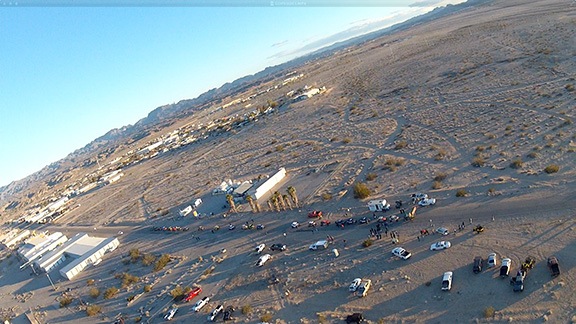
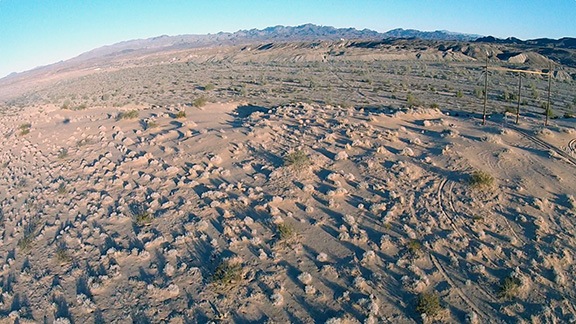
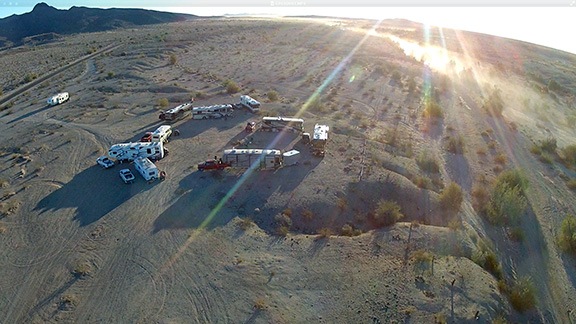
Typical Parker 250 Campsite
A typical Parker 250 campsite out in the desert. This was shot on raceday; the track is on the right, down in the wash.

There was a plane turning final as I crossed the runway at Parker and set down on the ramp. I shut down and pulled out my step stool and blade tie-downs. It was about 4:30 PM. I figured it would probably be a good idea to place a fuel order before I settled down.

Fuel Woes

P20toHII
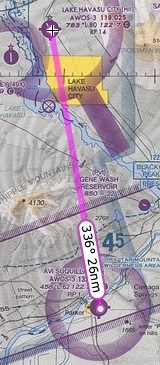
Although it’s tempting to follow the river, the fastest route between Parker and Lake Havasu City is over the mountains.

And that’s when I was reminded how badly the FBO at Parker airport is managed. There was just one person in the office: a woman who claimed to be a secretary. She told me that everyone else had gone home with the flu. There was no one to drive the fuel truck. No, I couldn’t drive it for her. And no, I couldn’t use the self-serve island. If I wanted fuel, I’d have to go to Lake Havasu City.

Lake Havasu City was a 26NM flight that would take me about 15 minutes. Each way. I called my client and told him what was up. I needed fuel for the next day; there was no doubt about that. I told him I’d be back in 45 minutes. Then I re-stowed all my gear, started up, and headed north.

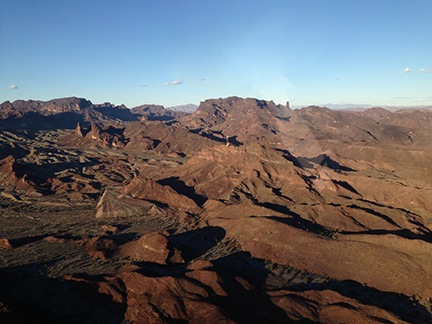
Mountains South of Havasu
A shot of the mountains I had to cross on a direct path between Parker and Lake Havasu City. I shot this with my iPhone from inside the helicopter; pardon the glare.

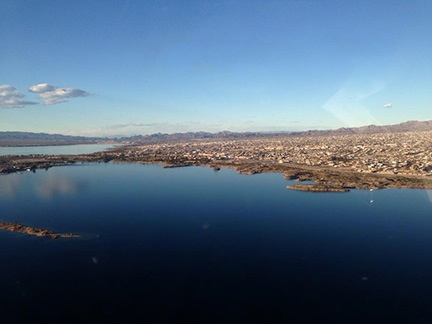
Lake Havasu
Lake Havasu City, shot from the air south of town; pardon the glare.

My route took me over some pretty rugged mountain terrain that was beautifully lit in the late afternoon sun. Once over the mountains, I had a clear view of Lake Havasu and the city beyond it. Compared to Parker, it was a thriving metropolis. I sped past London Bridge and covered the distance between town and the airport quickly. Since it was getting close to 5 PM, I called ahead to make sure a fuel truck would be available. Desert Skies, the excellent FBO there, told me to look for the truck. When I got close to the ramp, I saw it and landed nearby.

The fuel guy must have sensed my urgency, because he pulled into position as soon as my blades stopped. I helped him by grounding the aircraft and moving his stepladder for him. He gave me a ride back to the terminal to pay and I took the opportunity to use the ladies room. Then I was done, heading back to the helicopter, winding it back up, and heading south to Parker again.

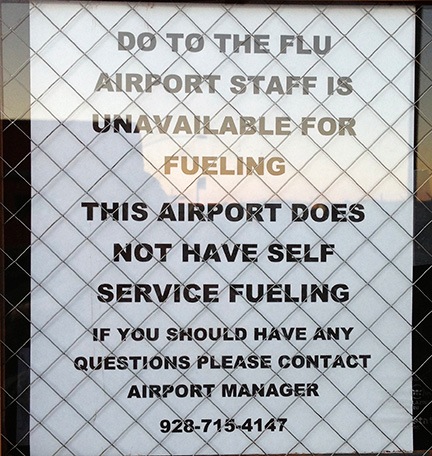
No Fuel
This sign was on the Pilot Lounge door when I returned to Parker from Havasu.

I touched down exactly 45 minutes after talking to my client. The sun would set in about 10 minutes.

I figured I had 2-1/2 hours of fuel on board before I’d have to go back to Havasu for more. And when I saw the sign on the pilot lounge door, I realized that CRIT would not be providing fuel the next day.

The Frat House

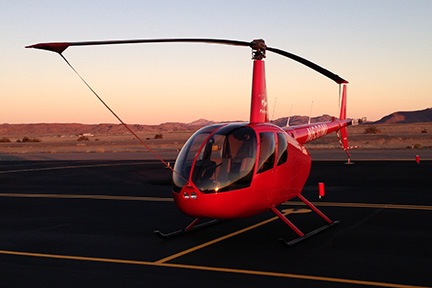
N630ML in Last Light
Here’s my helicopter parked on the ramp at Parker just as the sun was setting.

I had the blades tied down and was waiting outside the airport fence with my overnight bag, leather jacket, and bottle of oil (to keep warm overnight for easier pouring in the morning) when my client pulled up in a big, black van with vanity plates. I climbed in back with three members of the video crew, including the videographer I’d be flying with the next day. They all introduced themselves and I almost immediately forgot their names. (I am so bad with names and faces.) We drove to the house they’d rented in a small gated community on the Colorado River upriver from Parker, making one stop along the way.

The house was on a little canal with access to the river. It had four bedrooms, one bathroom, and a great room. A patio out back on the canal had a barbecue grill, table, chairs, and stairs down to the water. I asked where I’d be sleeping and was offered a small bedroom with a large — maybe California King? — bed, large closet, and television. There were teddy bears on the night tables. The bed was rumbled and I suspected someone else had slept in it the night before.

Turns out the house was owned by snowbirds who, for $2100/weekend, would vacate and rent to groups. Apparently most of the homes in the neighborhood were handled the same way; at least five of the race crews were camped out in nearby homes. Although the owners cleaned out most of their personal possessions, possibly locking them up in the garage and behind one locked door, there were still a few weird items around — like the teddy bears.

The group quickly expanded to eight guys ranging in age from around 20 to 50. They all wore black shirts, most of which had the company logo on it. They were nice guys and all introduced themselves to me. After a quick discussion about dinner, four of them took off in the van to pick up groceries. The rest of us sat around drinking beer or bottled water and eating Fritos and Ruffles chips.

No need to go into details on the evening, but I do recall thinking that this was the closest I’d ever get to living in a frat house. Somehow groceries got organized and beer got put away in the fridge. Burgers and brats got cooked, buns got toasted, and tubs of macaroni and potato salad got served out. My contribution was slicing the tomatoes and a red onion. I had a bratwurst with lots of mustard and some macaroni salad. I also polished off half a bottle of wine.

More guys showed up — this time from my client’s client — and I could tell they were trying to figure out where the only woman fit into the puzzle. When I introduced myself to one of the race team guys as the pilot, he nodded thoughtfully and looked around for the pilot, obviously thinking I said that I was with the pilot. Then his eyebrows rose and he looked at me. “You’re the pilot?” he asked. “The helicopter pilot?” I nodded and admitted that I was.

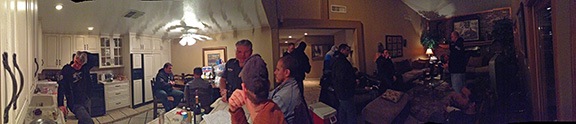
The Frat House
Here’s an iPhone 5 panorama of the “frat house” with most of the folks who showed up for dinner.

There was a lot of chatter about the next day’s plan. I’d be working with the videographer, who worked with a handheld RED camera, and a still photographer. When I told them I preferred the videographer to sit behind me so that I could see the car we were chasing, they agreed it was the best way to go. The photographer would sit on the opposite side of the helicopter and get his shots after the videographer was satisfied. We agreed to leave the house at 6:30 so we could be in the air by the race start time of 7:15 AM.

Somewhere along the line, they let me know that they might need me on Sunday, too. It all depended on whether their main target vehicle survived Saturday’s race. Was that okay with me? Although I was hoping to get home on Saturday early enough to rescue Penny from boarding, I was certainly not opposed to making a few extra bucks on a second day of flying. (Again, it was great not to have to call a hostile spouse to get approval.) So I told them it was fine with me.

I disappeared into my bedroom at around 10 PM. The guys were still talking loudly and the walls were paper thin. I was lying in bed, reading before shutting off the light when the crowd started thinning out. The house was quiet when I went to sleep.

The bed was comfortable and I slept well.

In the middle of the night, I woke to hear someone snoring next door. The walls were very thin.

Rise and Shine

I was up at 5 AM and figured I’d take the opportunity to use the bathroom before it became in high demand. It was weird to see an empty beer bottle on the vanity.

Frat house.

By 5:30 AM everyone was awake and stirring. About half of the guys had slept in the living room, sprawled out on sofas and an inflatable bed. Without blankets. But they were in remarkably good spirits. I suspect they’d dealt with worse conditions in the past.

I spent about 10 minutes cleaning up beer bottles, plates, and other garbage from the day before. I filled two trash bags. I considered loading the dishwasher but decided that would be too much like being a den mother. Let them deal with that.

They had excellent instant oatmeal cups with nuts and fruit and a coffee maker that I couldn’t get to work. I used the coffee maker that came with the house to brew a pot of Folgers. Only three of us drank it. There was no milk. By 6:10 AM, everyone was out of the house except the three of us who’d be in the helicopter.

I packed up all my things. I wasn’t sure whether they’d need me Sunday and I didn’t want to leave anything behind in case they didn’t. After all, while the race was going on, there was no way for me to get back to the house. Best to have my overnight bag with me.

It was dark when we stepped out of the house at 6:30 AM. Sunrise wasn’t until about 7:45. We weren’t sure why they expected us to be in the air when the race started a full half hour before sunrise. Although the RED camera could handle low light, our six target UTVs wouldn’t be starting until after all the motorcycles and ATVs had left. Still, we went to the airport and I prepped the helicopter for flight.

It was also cold. About 30°F.

I took care of the oil first, worried that it would get cold and thicken back up. Then removed the blade tie-downs. Then did a preflight inspection with a flashlight. Then removed two doors and put them away. And finally set up my GoPro nosecam.

I was disappointed about having to use the nosecam instead of the skidcam, but that was my fault. Although I put the RAM mount piece on the skid, I left the remaining mount components, including the GoPro housing, at home. So I couldn’t assemble the skidcam, which would have given me the same view as the videographer. Instead, I hooked up the nosecam with the remote back and set it up to turn it on/off with my iPhone in the cockpit. I’d shoot 1080p video until the SD card filled or the battery died.

The Flights

We were airborne by 7:15, with the videographer behind me and the still photographer beside me. The starting line was less than a mile from the airport, so we were there within seconds. I circled and we looked down at the action. The motorcycles were leaving, 30 seconds apart. It would be at least 15 minutes before our target vehicles left. We went back to the airport and sat idling on the ramp for a while.

When we took off to check again, the motorcycles were almost done starting, but the ATVs were behind them. We went back to the airport and shut down. No sense burning fuel we’d need later.

Barry called. We chatted about the job. I told him about the fuel situation and the possibility of a second day. He was as bugged as I was about the fuel and apologetic about the second day. “No worries,” I told him. Everything was under control.

One of the video crew members advised us that the target vehicles would likely be off the line in 30 minutes. We all got out to stretch our legs. The local medevac guy showed up and chatted with us. The King Air they fly turned up a while later and he got busy. By that time, we figured it was worth another try so I started back up and we launched again.

We spent about 10 minutes circling the starting line, waiting for them to launch the UTVs. They apparently waited more than just 30 seconds between the last ATV and the first UTV. The two camera guys got shots of the non-action.

Starting Line
The starting line with the UTVs lined up and waiting to go.

Our main target was about 10 cars back, but another target was first in line. When they released him, we took off after them. It was finally showtime.

Chasing desert racers is my absolute favorite kind of flying. I’m out over the mostly empty desert so I don’t have to worry about low flying causing a hazard to people or property on the ground. Although there are wires in the area, I quickly learn where they are. I focus on the vehicle and the instructions from my client. My goal is to get the helicopter into position for whatever kind of shot the videographer needs — without doing anything that could get us killed.

And when the vehicles are moving fast, I can get a pretty good rush.

We began in a 200-foot hover beside the starting line with the car on the videographer’s side of the aircraft and his camera focused on it. Then, when it was released, I pivoted while it made the first turn and then pushed the cyclic forward gently to get some forward movement. Without adjusting the collective, we began a descent, gathering speed along the way. When we were about 100 feet off the ground, I pulled pitch to arrest the descent while maintaining speed. And then I just chased the car, matching its speed, pulling in front of it or behind it as instructed and crabbing, if necessary, to give the videographer the best shot.

My focus was absolute; I was the autopilot. I wasn’t thinking about all the divorce crap that has been fucking up my brain for the past eight months. I was just thinking about the vehicle I was chasing, the instructions from the videographer, and the wires I knew were up ahead. The helicopter was an extension of my mind and body. It did exactly what I needed it to, without me having to give it much thought at all.

I was in the zone.

We chased that car for a while with it on our right side. Then, when the videographer was done, I popped over the top of the track and put the car on our left side for the still photographer. He got a bunch of shots. When he was done, I pulled up and around to go back for the next target.

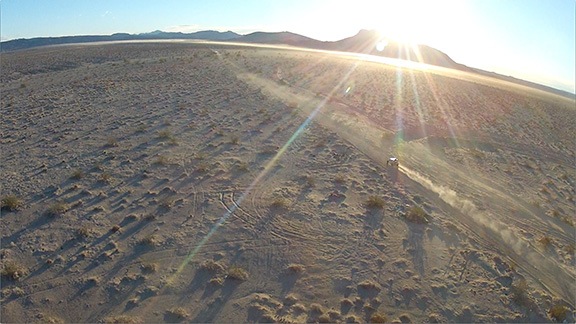
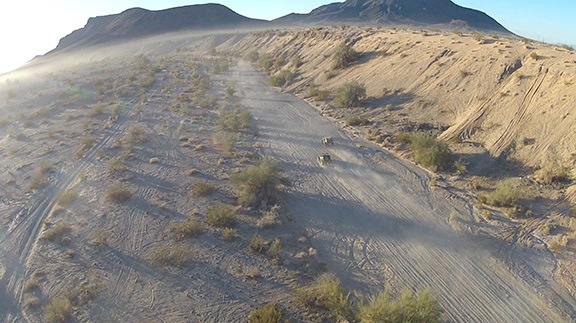
Chasing Cars
We’re chasing the car behind the one in this nosecam image. You can see the dust kicked up by the motorcycles and ATVs ahead of us on the track hanging low over the desert.

Turning
It’s not unusual to bank 45° to 60° at 50 knots or more while turning to pick up the next target. This is really aggressive flying, but done with smooth control inputs, the R44 handles it admirably. In this shot, we were probably 50 to 100 feet off the desert floor.

We did this repeatedly, one target after another. We found the first four targets without trouble and spent most of the time with the main target, shooting it from all kinds of angles. My clients really liked the look of the shots toward the sun where the dust was really illuminated. I did a lot of crabbing, hovering, and pivoting. The wind was calm and the air was cool so performance was not an issue at all — even with three of us on board and nearly full tanks of fuel. The same flying on a 90° day would have been impossible with our load.

Down in the Wash
Again, we’re chasing the car behind these. A good portion of the track runs in dry washes like this one.

Little by little, we made our way down the 80-miles of the track: flat desert, dry wash, more flat desert, powerline road, more flat desert, deep canyon, and more flat desert. The GoPro battery died less than an hour into the flight — I think that remote backpack drains the main battery because I know it was fully charged when I put it on the helicopter — so I don’t have any footage from the more interesting segments of the track.

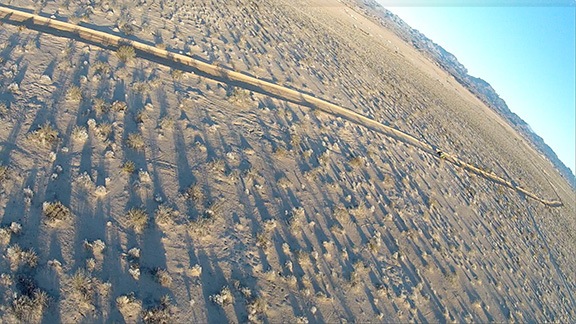
Wires
I did mention the wires, right? The track follows these powerlines to the edge of a wash and then dives down into the wash. It’s tempting to follow the vehicles down, but the wires don’t go down at the same angle, so you need to stay high to clear them when making the right hand turn.

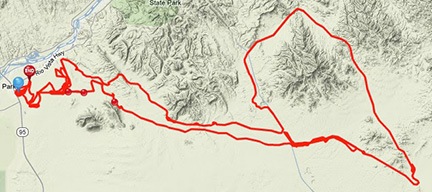
Track Log on a Map
Here’s the actual GPS track from our flight. You can also view an interactive version of this with photos.

We hopped from one vehicle to the next, back and forth on the track. Our main target vehicle broke an axle or something while we were videoing it; we got footage of the team getting out to check the damage. Another one of our targets got a flat tire; we captured one team member changing it. We picked up the last two targets on the return side of the track. We followed one of our targets — which turned out to be the leader — all the way into “the python,” a segment of track that winds around a sandy area near the airport, complete with banked curves and jumps.

And then we were done. The Hobbs meter showed I’d flown exactly 2.5 hours.

Warming Up, Heading Out

I flew back to the airport, which was only about a mile away, and landed. We fetched the doors and my overnight bag from my clients’ car and they prepped to move on to their ground base somewhere along the track. I locked up the helicopter and they dropped me off at McDonalds on their way out.

I got the last breakfast order in and took my food and orange juice to a booth in a sunny window to warm up. I made a few phone calls. I relaxed. Then I went back to the helicopter, which was parked facing south, and relaxed in the pilot seat, reading on my iPad. The cockpit was warm and cozy.

I realized how nice it was to just take it easy without having to be anywhere or answer to anyone.

A jet came in. The jet pilots came by to chat with me. Their passengers arrived at 1 PM — the same time I got a text from the client decision maker. They would not need me on Sunday. I was released.

I didn’t waste any time getting the helicopter started. A few minutes later, I was heading northeast along the Colorado River to Lake Havasu City. I’d have to refuel before heading back to Wickenburg.

While I waited for the line guy to fuel, I went into the BBQ place next to the FBO and got some ribs to go. I settled my bill at the FBO and walked back to the helicopter, swinging my take out bag beside me.

It was then that I suddenly realized that I really love my life. That’s something I need to blog about soon.

I checked the oil and the fuel caps, then climbed into the helicopter and started up. I was munching fried okra and sipping iced tea when I pointed the nose east for the 86NM flight back to Wickenburg. It was a long flight over remote terrain — I’d only cross two paved roads and one tiny settlement (the Wayside Inn) along the way. I’d be there 50 minutes later.

I put the helicopter away and pulled all my gear out of it. I totaled the billable flight time: 5.2 hours. Not bad for an unexpected, spur-of-the-moment gig.

I stopped at a friends hangar and spent some time chatting with a few people there. Then I fetched Penny and we went home. It felt good to get a hot shower and relax with a glass of wine in front of the fire.