Flying with a 1914 Curtiss Flying Boat

The challenging part of this photo flight wasn’t the photo flight.

It had been on my calendar for months: take a photographer to fly with a rebuilt 1914 Curtiss F Model Flying Boat, supposedly the only one in existence from the 300 originally built.

My friends Mark and Karen at Century Aviation had been working on it for over a year, restoring it for businessman and aviation enthusiast Bill Nutt from the few parts they had managed to acquire. I saw the start of their work at their annual hangar party in the summer of 2017. By June’s Aviation Day event at the airport, it was pretty much done and on display in one of the FedEx hangars.
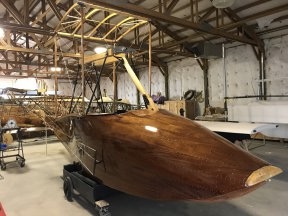
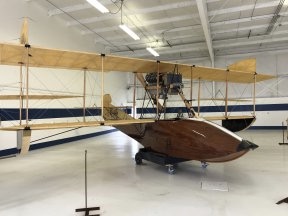
1914 Curtiss Flying Boat Under Reconstruction 1914 Curtiss Flying Boat Fully Restored
The Flying Boat project in August 2017 (left) and in June 2018 (right) when it was pretty much finished. Fun fact: There are more than 8,000 tiny screws holding the wood planks in place on the plane’s hull.

The great thing about this restoration is that the owner wanted a fully functional plane. That meant it had to fly. So they scheduled a test flight for July and contacted me about taking along a photographer to document the flight. Unfortunately, some engine issues caused a postponement and they had to work around the pilot’s schedule. He was next available in mid August so that’s when we rescheduled the flight.

The folks at Century had to disassemble the plane, stow it in a custom trailer built just to transport it, and tow it down to Moses Lake, which was where they planned to fly it. The plane does not have wheels or any landing gear at all; it’s a boat and can only take off and land in water. Although the Columbia River is right here, they felt that Moses Lake, about an hour away by car, would be better. Less possibility of crowds and boat traffic and no obstructions like overhead wires, bridges, or dams. They also needed a place to reassemble and launch the plane; they arranged with some folks who lived on the north end of the lake to use their property.

They drove down on Monday morning and spent the day working on the plane. The test flight was scheduled for Tuesday with the possibility of trying again on Wednesday if necessary.

Getting There

Spoiler alert: the most challenging part of the mission for me was just getting my helicopter to Moses Lake.

We’d decided that I’d go down on Monday so I was ready first thing in the morning to fly. I packed a tent and sleeping bag, all prepared to camp out in the yard. I also brought a cooler with ice and water and a bed for Penny.

I watched the weather all day. I wasn’t worried about storms — it was visibility that was an issue. For three weeks, we’d been dealing with smoke from various fires north of here. The smoke drifted into the Wenatchee Valley and settled in, thick enough to smell. I monitor air quality via an app and website and smoke was giving us “Unhealthy” and even “Hazardous” air. Visibility at the airport just four miles away had gotten as low as 3/4 of a mile. That day, it was hovering around two miles.

Wenatchee Pangborn Memorial Airport has class E airspace. That means that when visibility drops below 3 miles, I can’t fly there without a special VFR clearance. Trouble is, there is no tower at Wenatchee so to request my clearance I need to contact Seattle Center. And the problem I encountered that afternoon, as I idled at my landing zone in a deep valley, was that I simply couldn’t reach Seattle Center on the radio.

I could reach the local Flight Service Station, however, so that’s who I called. They relayed my request to Seattle and relayed the response back to me. There was a plane on approach and I couldn’t get my clearance until he was on the ground.

So I sat there, spinning, burning fuel, grateful that the helicopter has air conditioning. I listened in on Wenatchee’s radio frequency and heard the plane call 10 miles out. That kind of pissed me off because I had a 3-minute flight ahead of me and could have done it at least twice before he even entered the airspace. But okay. Whatever. I waited.

Then he was on the ground and a helicopter made a call. Shit. How did he get clearance before me?

I called Flight Service again to remind him that I was still waiting. He mentioned the helicopter and then told me to hold. I held. Eventually, he came back and gave me my Special VFR clearance to reposition to the airport. I wasted no time climbing out and heading across the river.

It had taken me about 20 minutes from startup to landing less than four miles away.

I ordered fuel, wondering how long it would take for me to get out and on my way to Moses Lake.

Fortunately, the wait to depart was much shorter. After topping off both tanks and checking the oil — hot dip stick! — on level ground, I started back up. This time, I called Seattle Center directly. They had me hold until a cargo plane that had just departed cleared the airspace to the west and then cleared me to depart Special VFR at or below 10,000 feet. Easy enough; I had no intention of losing sight of the ground.

Instead of flying direct, I departed the airport and descended down until I was about 400 feet over the river. The problem with the direct route is that it would take me right over the top of Lower Moses Coulee, which is a relatively wide canyon east of the airport. I worried that once I left the canyon’s west rim I might lose sight of the ground below me and the opposite rim. I don’t like to lose sight of anything when I fly and I wasn’t taking any chances.

I watched my position on Foreflight’s moving map and called Seattle Center to report clear of Class Echo when I was abeam the mouth of Lower Moses Coulee. By that time, I was low enough between the cliffs on either side of the river to have garbled communications with them. I thought I heard them ask for my altitude and heading so I reported both. Then I changed frequencies, eager to silence their nearly constant communications with airliners coming and going around Seattle.

I followed the river down to Crescent Bar and then climbed up over Babcock Bench before setting course for Moses Lake. The farms and orchards of Quincy emerged below me out of what looked like a fog. Visibility was slightly better than it had been in Wenatchee. The air was smooth and I was very surprised to discover, when comparing airspeed to groundspeed, that I I had about a 15 knot headwind. No turbulence at all. I turned on my radar altimeter — the $10K piece of equipment the FAA made me buy — because I was curious about how high up I was comfortable flying in the muck. 350 to 450 feet. I soon lost sight of the hills north of Quincy and had some trouble staying on course with nothing on the horizon to aim for. The radio, tuned into Quincy’s frequency and then Moses Lake’s, was eerily quiet.

My landing zone was on a piece of land three miles west southwest of the airport, within the Class Delta airspace. That meant talking to the tower. Fortunately, visibility there was four miles so a Special VFR clearance was not necessary. I told the controller where I planned to land and he cleared me for transition. I was just setting down when I reported landing assured.

On the Ground in Moses Lake

They had a sprinkler going in an area that would have been a good landing zone, but I didn’t know if they expected me to land there so I didn’t. Instead, I landed in a spot between a small orchard and some overhead wires. There was a burn pile nearby and I was so focused on that, wondering if I’d blow it away, that I was a bit surprised when my left skid touched down before my right one. There was a little slope to my landing zone, but not enough to be an issue. I set down, reduced the throttle to cool down RPM, and opened the door. I dropped Penny out to investigate while I finished shutting down.

One of my hosts, Lois, appeared moments later. When I shut down and got out, she greeted me. She immediately offered up a bed in the house. Faced with the choice of a bedroom near a bathroom or a tent in a smoky yard, I agreed to take the bed.

The plane was parked in front of Lois and Virgil’s garage, sheltered on one side by its big transport trailer and on the upwind side by a motorhome. It was tied down firmly at four points; it would be tragic indeed if the strong wind coming out of the east blew it over.
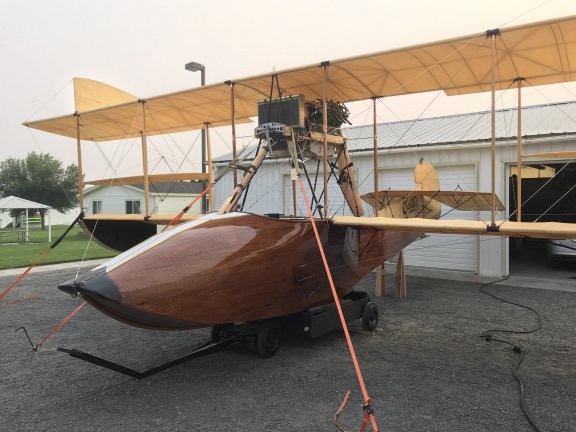
Curtiss Flying Boat in the Driveway
The plane was securely tied down in the driveway, sheltered from the wind on three sides.

Then Karen, Century’s co-owner, pulled up in her car and whisked Penny and me away to a Mexican restaurant in downtown Moses Lake. The Century crew, the plane’s owner (Bill), and a bunch of friends — I think there may have been 20 of us — sat a long table. We enjoyed drinks and huge portions of Mexican food, treated by Bill.

Afterwards, Penny and I hitched a ride back to the landing zone with Bruce, who was staying in the motorhome. (The others were staying in two rented houses in town.) That’s when he told me about flying helicopters in Vietnam and gave me a firsthand account of his participation ferrying people out during the fall of Saigon. He said that they had to toss the helicopters into the water because the helicopters waiting to land were running out of fuel and ditching and the rescue crews were working nonstop to pull people out of the water. (Seriously, kids: never pass up an opportunity to talk to an older person about the amazing things they were part of in their lives.) Now he flies freight in airplanes for a living, but he wished he’d gotten his civilian helicopter rating.

Back at the landing zone, a young guy in a uniform was hanging around by a pickup truck parked near the plane. Hired security. He’d be spending the night. I thought it was completely unnecessary — heck, you couldn’t see the plane from any road or the lake — but better safe than sorry, I guess.

I chatted with my hosts for a while before turning in. I’d been up since 4 AM, which is relatively common for me, and was tired. My bedroom was small — barely big enough for the queen sized bed! — but the bed was comfortable and the place was quiet. After feeding Penny some chicken and rice from my dinner — I’d forgotten to bring dog food which she probably wouldn’t have eaten anyway — I set up her bed on the corner of mine and turned in. I slept relatively well.

Fly Day

I woke around 4:30. This is one of the reasons I hate being a houseguest. I wake up very early and then I have to stay very quiet until other people wake up. So I did what I often do: read articles on the Web, visit Twitter, complete crossword puzzles. That took me to nearly 6 AM. By that time, it was daylight and I was ready to go outside. So I dressed, washed up quietly ,cleaned up the room, gathered my belongings, and slipped outside with Penny in tow.
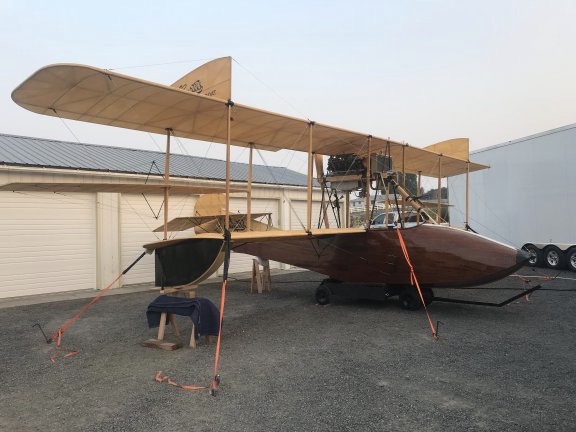
Curtis Flying Boat, Parked
The plane was safe and sound in the morning. On the right side of this shot, you can see part of the trailer it travels in.

The security guy was gone. Virgil was awake, doing stuff outside. I helped him pick raspberries from his garden for breakfast. We chatted, skirting around the issue of politics. He started to say something about liberals, thought better of it, and was likely relieved that he had stopped talking when I admitted that I leaned left. I said that I wished people would gather information from reliable sources and form their own educated opinions rather than latching on to the opinions of others. And we left it there.

Back in the house, Lois was making breakfast, which consisted of a lot of fresh fruit, oatmeal (the kind you cook, which is honestly the only kind worth eating), and meatless sausage and potato patties. There was no coffee, which I (mistakenly) thought wouldn’t be a problem. Virgil said grace before we put food on our plates. He had a lot to say to the Lord that morning, from thanks for the food to requests for good weather and a successful flight.

Other people started arriving after 7 AM. Bruce came in and joined us. Then some other folks. Soon we had a bunch of cars parked haphazardly around the place and people going in and out to use the bathroom. I thanked my hosts for breakfast and went back outside, where Penny was already giving hell to the three-legged dog from next door.

The crew got right to work on the plane. They had to check all the wire fasteners for tightness, add oil and fuel, and do countless other things I have no clue about. There were ladders all over the place. I managed to get a few interesting shots of the plane and its controls while they worked.
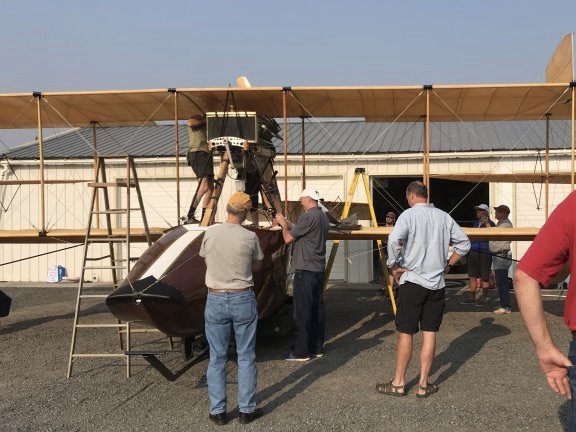
Working on the Plane
The crew works to prepare the plane for flight while others look on. That’s the pilot, Rob, in the black shorts.
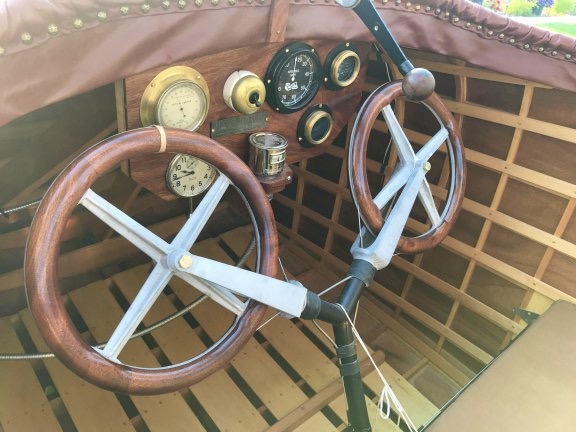
Cockpit of 1914 Curtiss Flying Boat
The cockpit is pretty simple. For this flight, they had the “everyday” fabric seat cushions in. The leather cushions they made will likely be installed when its on display.
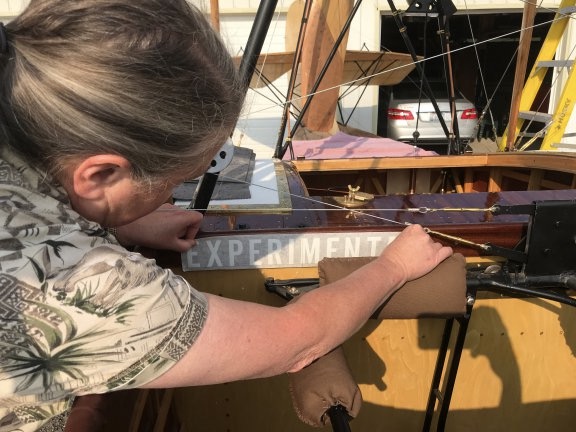
Experimental Label
Karen affixes the Experimental placard to the inside of the cockpit as required by the FAA.
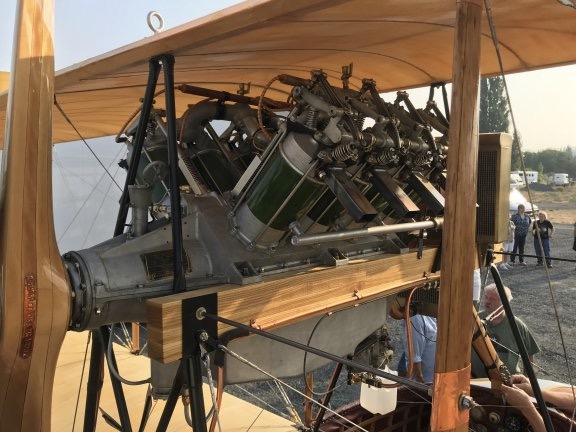
Curtiss Flying Boat Engine
A closeup of the Flying Boat’s engine with pusher prop. This is (obviously) not the original engine, but it was built specifically for this plane based on period designs. You can see Mark’s face framed by the engine supports just below the radiator.
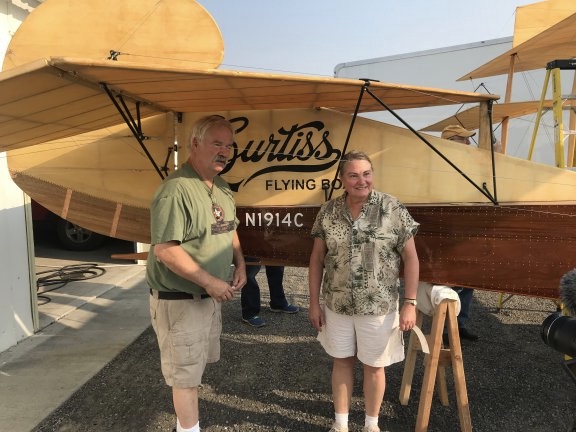
Mark & Karen
Mark and Karen pose by the plane’s tail for an interview by NCWLife, a local television channel.

First Try

We got all the cars moved out of the way and Virgil moved the motorhome. Mark did a briefing on what would happen next and they started moving the plane, on its cart, down to the water. I had my phone out with a battery pack on it and Periscoped the whole thing. It was long and, in more than a few parts, boring. That’s because it happened at the speed of real life, which tends to be slow. Mark and Karen weren’t taking any chances rushing through things.

Of course, I wasn’t there to put the event on social media. I was there to fly a photographer in my helicopter. That means I needed to be ready to fly when they were. At first, Mark asked me to get the helicopter going just before they started the engine, but when he realized how much I wanted to hear the engine, he said to do it right after they started. So I stuck with it, narrating and answering questions along the way. There weren’t many viewers until right around the time they started the engine. So instead of shutting it down, I handed it off to one of the other bystanders. Apparently, she wasn’t as dedicated as I was and eventually put the phone down without turning off the video. If you do watch it, have patience.

I’d already briefed the photographer, Steve, and told him he could keep shooting until after I got the helicopter started. So it was running when he joined me. I helped him with his life vest — I always supply flotation devices when doing photo flights over water — and made sure he was strapped in. Then I made a radio call to Moses Lake tower, telling the controller we’d be operating over the lake. They were already briefed about what we’d be doing and I’d likely be operating below the airport field elevation anyway. For the rest of the day, all I had to do was call when I took off and call again when I landed. It was automatically assumed that the Flying Boat would be operating at the same time.

When we took off, the plane was just taxiing into the lake. I formed up immediately with it, flying on its left (port) side. Steve is a smart guy who had no problem with my request to sit behind me for the flight. Doing so made it possible for me to see exactly what he saw and put him in position to get the best shots. I’ve dealt with too many stubborn photographers who expect me to get them into position when I can’t see what they’re looking at. I now require all photographers to sit behind me for air-to-air flights.

Rob took the plane down the lake, slowly building speed. We followed off his left shoulder. At first, I was kind of high — the water was glassy smooth and I really don’t like flying low over featureless surfaces. But I worked my way down, matching the speed of the plane below me at or below 100 feet over the water.

It wasn’t very eventful. He didn’t get very far. After a while, he killed the engine and the boat drifted to a stop.

I circled a few times as a boat with some of the crew on board motored over. Of course, I didn’t know what was going on. The Flying Boat didn’t have a radio and my cell phone was with Rita. When they came out with a jet ski and started towing it back to base, I headed back in and landed.

By the time I’d shut down and returned to lakeside, the plane was back. It turned out that there were multiple problems:

  • Water was getting into the boat’s hull. This was probably a combination of seepage and possibly a leak or two.
  • The engine wasn’t getting enough power to get the plane up to speed.
  • There wasn’t enough rudder to steer the plane properly.

Needless to say, we were all very disappointed. As I watched them bail out the plane with a small bucket, I started wondering if the whole thing was a failure.

Second Try

It was still early in the day and the place was crawling with mechanics and engineers so there really wasn’t any reason to give up. I went with one of the guests to a sporting goods store to buy a handheld pump to make it easier to get water out of the boat. Because I had a splitting headache likely caused by caffeine withdrawal, we stopped at an espresso stand for an iced latte. (It worked! Headache was gone before we got back!) Then Home Depot to get some hose.

While we were gone, they did something with the rudder cables to improve steering. Oddly, the design they’d worked with had a wooden block back in the tail; they had no idea what it was for but included it anyway. Apparently, it was to tie the cables in such a way that they wouldn’t rub against another part when the rudder was full left or right. So they were prepared for the fix. I imagined a mechanic back in 1912 having the same problem and solving it with that little wooden block.

Meanwhile, we had lunch — sandwiches with fresh tomatoes from the garden. Penny shared some of my turkey.

Then they were ready to try again. Steve and I headed out to the helicopter. This time we were airborne before they started the engine. We got to see Mark crank it — there was no electric start — and the prop start spinning. Then Mark climbed out of the way and Rob took his seat. As we circled about 200 feet up, he headed off into the lake.

This time, Steve and I paid closer attention to the way the plane moved in the water. We realized that spray from its movement was coming up under the rear horizontal do-dad — heck, sometimes I really wish I knew airplane parts! — and spraying up against the rudder. The hull seemed to ride low in the water. Although Rob seemed to have better steering control, he still didn’t get enough speed to take off. So he killed the engine again. The boat and jet ski moved in and I went in to land.

Third Try

One of the crew bailed out the boat with the hand pump while the others talked to Rob. It seemed that the steering problem. But the water getting in the boat was weighing it down and it seemed to be too low in the back. They decided to try ballast.

They filled two big black garbage bags with gravel and weighed them. I didn’t get the weights. They took one of the bags and secured it at the very front inside the plane’s hull. They were turning the plane around to face the lake when Steve and I headed back to the helicopter.

We launched and circled as they started it back up. It headed out to the lake. The tail was definitely riding higher in the water. Rob seemed determined to get it up to speed as quickly as possible — possibly to minimize water in the hull. He took it pretty far down the lake and I really thought he might take off. But then, suddenly, he killed the engine and let it drift.

It looked for a moment as if the wind might blow it to the opposite shore of the lake, but then the jet ski came out and attached the tow rope and they were headed back. I was back on the ground looking for chocolate chip cookies before they got back.

Fourth Time is the Charm

The verdict was that the weight in the front definitely helped but they needed more. So they secured the other bag of gravel. As they turned around the plane, Steve and I headed back to the helicopter. As I lifted off and called the tower, I said “Let’s hope fourth time is the charm.”

“Good luck,” he replied.

Again, we circled the plane as they started it up and Rob taxied it out. He headed down the lake, right into the wind, picking up speed quickly. He wasn’t messing around — he clearly planned to get it off the water if possible. I had a feeling that they’d all agreed that this would be the last try.

I dropped down as low as I dared, watching the plane the whole time. It looked light on the water.

“I see light under the tail,” Steve called out.

And then it lifted off the water and into the air. It was flying.

Flying Boat Floating
An aerial view of the Flying Boat flying over Moses Lake for the first time on August 21, 2018.

I keyed the mic; the radio was still tuned into Moses Lake tower. “The flying boat is flying,” I told them.

“Fourth try was the charm,” the controller replied. “Congratulations.”

Meanwhile, Steve was snapping photos like crazy. The plane kept moving and I kept moving along with it. It got about 50 feet off the water. It came down for a landing, skirted along the top of the water briefly, and came back up into the air. It flew for a while longer.

We’d gone well over a mile from base and were coming up on a bend in the river with a bluff ahead of us. Our FAA authorization limited the plane to straight and level flight, so it was time to come back down. Rob landed, turned around, and started motoring back on the water, moving fast. For a moment, I thought he might try a tailwind takeoff — the wind wasn’t blowing more than 10 miles an hour — but no, he was just in a hurry. He came all the way back, past base, and turned around. I got the feeling he was going to try another takeoff where onlookers could actually see him. He sped up a bit, crossed the lake, and pointed into the wind. He started moving quickly, but then shut down. I suspect that water in the hull was weighing him down again.

And that was it. We circled around a bit while the boat and jet ski moved back into position to bring him back. I landed and Steve got out while I cooled down the engine and shut down.

Winding Down

Needless to say the entire crew — and the onlookers — were euphoric. The day had started bad but ended great. The only thing that really disappointed the onlookers is that they hadn’t been able to see the plane actually fly; it was too far down the lake for them to see.

I gave helicopter rides to my host and his grandkids. Then I watched them pull the plane out of the water and tow it back up the driveway. I said goodbye to everyone, adding congratulations to Mark, Karen, Bill, and Rob. Then I loaded the helicopter back up, gave one last helicopter ride to the folks who had let us use their boat ramp, and headed home.

Visibility was much better; I didn’t need a clearance to get back into Wenatchee airspace. Still, I followed the river from Crescent Bar. The water was smooth as ice. I was almost disappointed to set it down at the end of the flight, but I had places to go and things to do and I was already late.
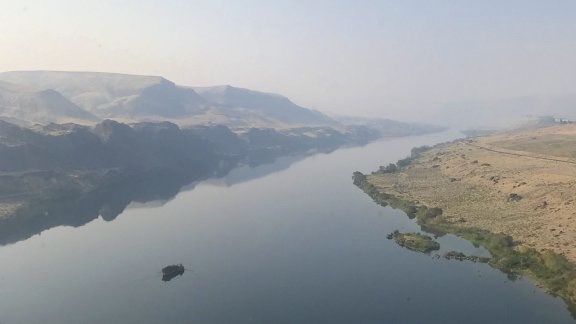
Columbia River Reflections
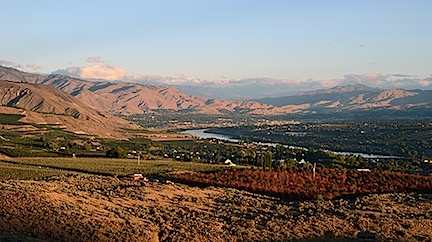
Just downriver from the mouth of Lower Moses Coulee, the water was glassy smooth.

I Live for This

I realized several times during the 24 hours I was part of the Curtiss Flying Boat crew in Moses Lake just how much I enjoy things like this. I live for opportunities to be part of something amazing and this restored plane was definitely that.

It reminded me a lot of another classic airplane project I’d been involved with back in the early 2000s, when I was still flying my first helicopter, an R22. Back then, it had been a replica 1919 Vickers Vimy, the world’s largest flying biplane at the time. That project predates my blog so I don’t have any posts about it. I can’t even find any photos of it, although I’m sure I have some somewhere. My involvement was several months long but ill-fated; I have a very low tolerance for incompetence and the project was very poorly managed when I was part of it. Still, it was fun flying in formation with a giant four-engine biplane and I did very much enjoy my one and only ride.

Life is short; we need to make the most of the time we have. For eight years out of college, I worked the nine-to-five grind and I pretty much hated it. I was living inside the box that society builds for most of us, the box my family clearly expected me to stay inside as I worked my way up a corporate ladder I had no real desire to be on. Surely there was more to life than an hour-long commute to sit in a cubicle before another commute to get home, repeated daily five times a week, 50 weeks a year.

I got a glimpse of just how much more was out there when I started my second career, as a freelance writer, and got to travel, see more of the country, and speak at computer conferences in San Francisco, Boston, New York, and Toronto. Traveling from hotel to hotel, setting up classrooms for training, teaching people what I knew, getting tastes of the cities I visited. Meeting with publishers and software developers. I enjoyed my behind-the-scenes participation as a computer trainer, speaker, and author.

Later, as my helicopter career began to grow, I got a chance to be involved with the kind of flying missions that most people never even imagine: multi-day helicopter excursions, raptor surveys, pipeline patrols, Grand Canyon tours, desert racing photo flights, cherry drying, frost control, air-to-air photo flights, cattle spotting, horse herding.

I cannot imagine a life without these fascinating kinds of work. A life where every day is the same as the day before it — and the day after it. How do people do it?

And it’s not just the work — it’s the people I meet along the way. People like a businessman who pays to restore classic aircraft to share them with the world. People like the aircraft restorers who can take a pile of scrap wood and fabric and turn it into a beautiful working airplane. People like a helicopter pilot who made 15 flights to help evacuate Saigon before he helped them push his helicopter off the ship. People like an airplane pilot who has flown several airplanes dating back to the early 20th century, when aviation was in its infancy.

Watch My Helicopter Videos on YouTube

Time for a shameless plug…

Flying M Air Logo

If you like helicopters, you’ll love the FlyingMAir YouTube Channel. Check it out for everything from time-lapse annual inspections to cockpit POV autorotation practice to a flight home from a taco dinner at a friend’s house — and more.

I have to add — because it was on my mind so many times on Tuesday — how sad I feel for my wasband, who could have been part of all of this if he hadn’t been so fearful of joining me in my life outside the box. The man I knew well — before he apparently lost his mind — would have really enjoyed the experience, even if he had been stuck on the ground for the flight attempts. He was an engineer, after all, and the plane is fascinating. I could almost imagine him talking to the mechanics, asking questions and learning about the plane’s idiosyncrasies. But I also know that if we’d stayed together, I’d likely miss out on so many of the opportunities I’ve had since our split. What’s sad for him is good for me. I’m sure he’s perfectly happy with his life inside his box. He’ll never know what he’s missing. Most people don’t.

But this is what I live for — experiences that make my life fuller and more interesting. And I’m always looking for the next opportunity.

Want More?

Watch this video produced by NCWLife:
A Few More Thoughts about my Stupid Pilot Trick

A response to some of the comments I’ve been getting, along with an update.

First of all, I want to thank the over 70 (so far) people who have taken the time to comment on my “Another Stupid Pilot Trick” post. It took me about a week to write it, mostly because I was embarrassed about what I’d allowed to happen to me, and I was feeling more than a little sensitive about that. I almost didn’t leave comments open on the post. But I’m so very glad I did. The outpouring of understanding and good wishes has been amazing. I didn’t get a single nasty or hurtful comment — which is pretty amazing given the percentage of low-life scum we all see bottom feeding on the Internet. You folks rock.

What’s really weird to me is how many people came to read the post. Apparently, it was picked up on Facebook or somewhere else and went a little viral. For two days in a row, it got more than 10,000 hits. So a lot of the comments I got were from complete strangers, including a lot of pilots.

The blog isn’t the only place I got feedback. I also got some on Twitter and a little on Facebook. I got a few email messages and even one phone call. Everyone was amazingly kind and made me feel good about my friends, acquaintances, and the pilot community.

Thank you.

Why “Stupid Pilot Trick”?

First, an explanation.

A friend of mine took some offense at the title of the blog post. She said:

I have to say I don’t like the title of your blog. It made me feel like you were hot dogging or pushing the helicopter to it’s limits.

Understandable. A lot of pilots use the phrase “stupid pilot tricks” to refer to that kind of behavior.

But as I explained:

“Stupid pilot trick” is the phrase I’ve always used to refer to accidents caused by pilot error. I’ve used it in discussing other accidents so I thought it appropriate to use it when discussing mine.

She seemed satisfied with that. I hope other readers are, too.

My Recovery

I’ve had some more time to recover both physically and mentally.

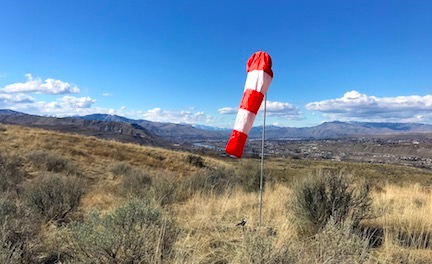
Windsock
One of my home projects was to replace my old, faded windsock with a bigger, brighter one. I even installed solar spotlights to illuminate it at night.

The bruises are almost gone — the one on my right leg, which my doctor says might take several months to disappear, is pretty much the only one left. (I’d include a photo of the way blood under my skin is now pooling on the right side of my right foot, but do we really need to see that? I don’t think so.) I had low-grade, nagging headaches for a while but they’re all gone now. I’d say I’m pretty much back to 100%, and that’s good. It’s springtime and I’ve got a ton of work to do in my garden and a long list of projects around the house to tackle.

Mentally, things are a bit weird. I think I’m suffering a bit from survivor guilt. You see, about three weeks before my mishap, a friend of mine was in a helicopter crash in eastern Washington state. He’d been doing some animal capture work with two biologists on board his Hughes 369 helicopter. One passenger died and my friend and the other passenger were seriously injured. No one knows what happened because no one can remember. My friend was in a coma for two weeks with a 10% chance of survival. He’s a young guy, though, and he came out of it. They did reconstructive surgery on his arms and legs. His wife recently sent me a photo of him in physical therapy. He’s got a long road ahead of him.

I didn’t want them to know about my crash mostly because I felt bad that I’d survived with very little injury and he’d very nearly died and will be working on his recovery for months (or more?) to come. But his wife found out — probably through the hoopla over the blog post. They’re okay with it — I mean, why wouldn’t they be? — and I know now that my survivor guilt is idiotic. I’m coming to terms with that slowly.

The gaps in my memory of the event are also bothersome. I still don’t remember anything from the time the helicopter went through the trees — which was very loud and seemed to take forever — to the time I was on the ground and realized I could get out. Somewhere in there, the helicopter hit the ground at least twice and turned 180 degrees but I don’t remember it at all. And no, I didn’t pass out; I had no head injury other than getting my brain rattled around a bit. I also don’t remember using the fire extinguisher, although I apparently did. And what did I do during the 30 minutes between when I texted another pilot right after getting out of the helicopter and finally calling 911? I remember parts of two telephone conversations I had during that time, but not 30 minutes worth of anything. I’ve never experienced memory gaps like that before and it continues to bug me that that time is missing.

I should stress that my memory beyond that is fine. My brain is back to functioning at 100% of whatever it was functioning at before the crash.

Counseling? No Thanks.

About two weeks after the crash, I got a letter in the mail from an organization that offers support to pilots after crashes. My response was to get angry. Very angry. So angry that I wrote an email to the guy who sent it, berating him for assuming that I needed help.

Fortunately, I didn’t send it. I grew to realize, with the help of some of my Twitter friends, that some pilots do need help getting past a crash and that the organization would probably be very helpful to them.

A lot of the comments I got from people about the crash assumed that I was seriously traumatized by it. But am I?

I don’t feel that I am and I think I know why.

You see, if you were to make a list of the traumatic things in my life and rank them by how traumatizing they were, this crash would actually appear pretty far down the list. I don’t want to share the list — jeez, why would I want to revisit all the things that have traumatized me throughout my life? — but I will offer one example: the man I lived with for 29 years, who I loved and trusted with my life, cheated on me (with a woman old enough to be my mother!), lied to me (and a judge, under oath), and then tried (and failed) to ruin me financially through a long, drawn-out divorce battle. You don’t think that’s pretty traumatizing? A helicopter crash I walked away from with just scrapes and bruises is nothing compared to that.

(So yes, my crazy divorce prepared me for a helicopter crash. Thanks, honey!)

It’s all relative.

If you remember nothing else from this post, remember this: When you live life, shit happens. The more you live, the more shit happens. I’d rather deal with the shit that’s a byproduct of life than to have no life at all.

‘Nuff said.

Getting Back in the Saddle

I don’t need counseling. What I need is to fulfill my desire to get back into the cockpit and go flying.

No, I’m not afraid to fly now — although I admit I have no interest at all in flying at night. (Other than the “Moonlight Dinner Tours” I did in Phoenix between 2005 and 2011, I never really enjoyed flying at night.) Knowing what caused the crash — distracted flying at night — and what I can do to prevent it from happening again — pay attention, idiot! — takes away any fear I might have of flying again. After all, I really am a decent pilot — a “good stick,” I’ve been told. I flew my R44 like most people drive their car — or maybe even better. (Actually, probably better considering the way some people drive.) I’ve learned my lesson and am eager to get back in the cockpit.

Of course, that means getting another helicopter. I’m working on it. The week after the crash, I put in an offer on a helicopter in Canada, but the guy’s price, which I thought was high, was firm and he wasn’t interested in helping me get it into the U.S. And then there’s all kinds of paperwork to deal with when bringing an aircraft down and I’m simply not interested in dealing with any of that. So I’ve scratched all Canadian helicopters off my list.

I’ve also rethought my strategy on buying a new helicopter. Rather than getting one in the same condition as the one I lost — jeez, it was just a year out of overhaul! — I figured I’d buy one that needs an overhaul in two to five years and get the overhaul done when the time came. That meant I could buy a helicopter for cash using the insurance proceeds and save up for the overhaul. Without a helicopter loan, saving up would be possible. After all, I did it in 2013-16 after paying for a divorce, buying land, and building a home. (I do make a decent living as a pilot and still earn royalties on some of my writing work.) Then, in overhaul, I could get it fixed up to be more like the one I lost.

With that in mind, there are three candidates I’m considering. The closest is in Phoenix and I’ll likely check it out within the next week or so. I’m hoping we can go for a test flight.

I will admit one thing here: not long after the accident, when I first started thinking about buying another helicopter, there was a fleeting moment when I considered taking the insurance money, putting it in the bank, and not buying a helicopter at all. I’m a little young for retirement — although I consider myself semi-retired since I only work half the year — but financially, I’m secure enough to call it quits now if I want to. And I could still manage my cherry drying contracts every summer for a little side income. It would be an easy way out of the inconvenient mess I put myself into. But there’s no challenge in easy and I’ve come to believe that I live for challenges.

And I’m not ready to give up yet.

On Bravery

A lot of the people who commented about my blog post or contacted me other ways told me I was brave to tell my story. I’m having a little trouble wrapping my head around that.

You see, I don’t consider telling my story about what happened “brave.” It happened because I was dumb and let it happen. It’s embarrassing, but not something I could (or should) hide.

Last Photo of N630ML
This is the last photo of N630ML in one piece. I was one of a team of three frost control pilots. This was shot in the hangar we were based in at Yolo County Airport.

Like it or not, I have a bit of a public persona. Part of it dates back to my writing days when I did a lot of public appearances. Part of it is because of this blog and my general outspokenness. There was no way in hell that I could crash a helicopter and prevent people from finding out. After all, one day, I’m flying a beautiful red helicopter with my initials in the N-number and a few months later I’m flying something completely different. And it isn’t as if pilots don’t read the NTSB reports. I do.

And why should I hide it? I did something dumb. If I could admit it and other people hear about it and that prevents them from doing the same dumb thing, I might save lives. Why wouldn’t I do that?

It’s not bravery that has me writing about this. It’s common sense. It’s caring about the pilot community and the passengers that pilots carry. It’s wanting to use my experience as a teaching moment for others.

And let’s face it: I’m in my mid 50s, approaching the end of my flying career. I’m self-employed and am not going to lose my job by admitting I did a dumbass thing that could have killed me and totaled my helicopter. I’m not worried about future employment because I’ve already come to terms with this fact: very few employers would consider hiring a middle aged, outspoken and set-in-her-ways woman with only 3700 hours of helicopter flight time for any flying job that would really interest me.

So what’s so brave? I’ve got nothing to lose by speaking out.

Dealing with the FAA and NTSB

Some pilots reading this might want to know what it’s like to deal with the FAA and NTSB after an accident. Let me fill you in.

First, I have to stress how lucky we all are. First, I survived with very little injury and a decent memory of what happened. I’m not in denial about what happened and why it happened. I’m not interested in hiding the facts. No one other than me was involved in the crash. There was no property damage — other than the trees I “trimmed” on my way to the “landing zone.” (Humor does help.) The crash was never even reported in the local news. The only photos that exist are the ones taken by police — I assume; I haven’t seen any — me, and my friend Sean who was there for the recovery. All this makes it a lot easier for everyone concerned.

The NTSB was the first to get in touch. Their local guy called while I was still in the hospital. (I was in the hospital for less than 3 hours.) I think he got my number from the police. I gave him a verbal account of what I remembered over the phone. He was very kind and polite. And relieved, it seemed. By simply surviving and telling him exactly what happened I was making his job very easy. In fact, the NTSB didn’t even come out to the accident site. They got a lot of information from the police, I guess. They released the helicopter for recovery within 3 hours of the crash. It was removed by noon the same day.

The FAA’s Sacramento office got in touch three days later. I was at Heli Expo in Las Vegas by then. I spoke for about 15 minutes on the phone with an inspector, telling him pretty much the same thing I’d told the NTSB. He asked if I’d be interested in doing a presentation at a WINGS safety seminar in my area. Sure, I told him. I want other people to know how easy it is to let complacency kill you. He recommended that I get back in the cockpit and start flying as soon as possible, perhaps with a CFI. (Another one worried about my state of mind.) He asked me to send him a summary of the crash in writing via email and I took down his email address. The next day, I sent him the same stuff I’d sent my insurance company.

About a week after the crash, an NTSB investigator from Washington called. I gave him the same information. He said he’d send a report I needed to fill out and warned me that I’d have 10 days to complete it and send it back. It got lost in email and was resent and the 10-day clock started when I confirmed receipt. Then I forgot about it. I remembered it six days later and spent about an hour filling it out. It was pretty straightforward, asking for basic information about the aircraft and my logged flight time, as well as a narrative about the crash. There were full pages I was able to skip because there were no other aircraft involved and no other crew members or passengers.

Along the way I had to tell my Part 135 POI that the helicopter no longer existed. He asked me to write an email officially asking to remove it from my Part 135 certificate. That was a 10-minute job.

And that’s it, so far. Although the FAA might ask me to do a special check ride with them, no one has asked yet. I don’t think there’s any doubt that I know how to fly safely. I was very forthcoming with the dumb thing I’d done that caused the accident. I do my Part 135 check flight in June anyway and I bet it would take them that long to schedule a special flight.

So my dealings with the FAA and NTSB have been pretty worry-free and very professional. I’m happy with the way they all actually seemed to care about me and my wellbeing. There were no accusations or unfair finger-pointing. After all, how could there be? I blamed myself because it’s my fault.

Why Deny the Truth?

And that’s another weird thing that I’ve realized: too many pilots won’t take blame for accidents that are their fault.

I know a good example. A few years back a pilot was flying a Schweizer 300 on a cherry contract. He had full fuel and another pilot on board so they were pretty close to max gross weight. He came in over a cherry orchard at high speed and made an aggressive turn that involved coming to a stop and descending. The helicopter went right into the trees. He claimed that the engine lost power but the NTSB, which took the wreckage in for investigation, could find nothing wrong with the engine. Instead, they reported that the accident had been caused by the maneuver he’d used to come in over the orchard: descending at a near stop had likely caused him to settle into his own downwash. Settling with power.

While it’s true that the pilot may really believe that the engine lost power, it’s more likely that he’s in denial of what really happened and his part in the cause of the accident. After all, when you get into settling with power, pulling pitch just makes it worse. It might seem as if there’s an engine problem. But we’re trained to avoid, recognize, and recover from settling with power and he was a flight instructor so he should understand what happened.

I’ve met this pilot and years after the accident he was still defiant, claiming the NTSB had gotten it wrong. As if the NTSB, which exists to investigate transportation related crashes, doesn’t know what it’s doing.

Now suppose I was in denial about my part in this accident. Suppose I claimed that the helicopter had lost power in flight and I’d found myself flying into trees. All of a sudden, the case isn’t cut-and-dry. The NTSB would have to take possession of the wreckage and perform all kinds of tests on the engine to see if it had lost power and why that might have happened — all on the taxpayer’s dime. (And yes, I’m a taxpayer and I care about how the government spends our money. Don’t get me started on $30K dining room sets, please.) Robinson would get involved. Reports would be delayed, I’d be questioned over and over. All this would still be going on now — and likely for months.

At what benefit?

Isn’t it better when a pilot honestly reports what happened and takes blame when he/she is to blame?

As far as I’m concerned, this chapter in my life is nearly closed; I’m already moving forward with the things I need to do to replace the helicopter and continue my work. That wouldn’t be possible if I didn’t recognize and admit what really happened and work with the authorities to help them quickly get the facts they need to complete their investigation.

On my Well-written Account

A few folks have commented about how “well-written” my blog post about the accident was. I appreciate the praise but, in all honesty, this one makes me giggle.

While lots of people know me as a helicopter pilot, what they may not know is that I became a helicopter pilot and bought a helicopter by building up a 20+ year career as a writer. Yeah — I wrote for a living. A good living. I think that says something about my writing skills. Somebody who can’t write can’t earn enough money as a writer to pay for helicopter flight training and buy a helicopter.

I wrote boring stuff. Books about how to use computers. Step-by-step instructions with lots of screenshots and captions and sometimes even callouts. I wrote it all and I often even did the layout. I wrote for numerous publishers, some of which you may have heard of: Peachpit Press, McGraw-Hill, Macmillan, Brady, Sybex, Microsoft Press, etc, etc. Some of the later books, which I’ve self-published, are about more interesting topics. If you’re interested in numbers, the count so far is 86 books.

I also write for magazines, both print and online. I wrote for computer magazines in the old days (pre 2012) and now write for aviation magazines. The most recent issue of Vertical included an essay I wrote, right near the beginning.

I started this blog in 2003 as an outlet to write stuff I found interesting — mostly stuff from my life, including my flying life. I use it to record and save information I want to share or consult later, like recipes. I use it to vent when something pisses me off or heap praise when something makes me happy.

I’ve also been working on a book about my first ten years as a helicopter pilot. It’s about halfway done. If I get a little more motivated to work on it, I hope to have it finished by this summer. (And yes, I know I’ve been promising that for a while now.) Will it include this accident? No. I’ll save that for Book II, which will cover the next 10 years.

So to those of you who think my accident account was well written, thanks. It better be.

That’s All for Now

And that’s pretty much everything on my mind in response to the comments I’ve gotten on my accident blog post, in email, and by phone. Once again, I want to thank all of the folks who took the time to reach out. You really made me feel good.

It also brings the situation up to date as far as my plans for a new helicopter and dealing with the authorities. I’m sure some of you were curious. This should satisfy that curiosity.

Any new comments or questions? Use the comments link for this post and I’ll try my best to address them — hopefully individually this time.

Freedom Day Comes and Goes without Notice

If I didn’t have it on my calendar, I’d likely forget its significance entirely.

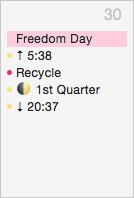
Freedom Day
You can see how I missed it; it’s just a tiny note on the calendar.

It was Tuesday, July 30, 2013 that my very favorable divorce decision came through. Although I thought at the time that it would be the end of the bullshit my wasband was sending my way during our crazy divorce, it was just the beginning of a new chapter. Some people are seriously delusional and make all kinds of bad decisions based on their delusions. My wasband is a textbook case of this for the period starting around January 1, 2012 through (likely) today.

I called it Freedom Day because I was finally free of sad sack old man who was holding me back from moving forward with life. I didn’t realize how much I’d been held back until I was free to make my own decisions without having to compromise or, worse yet, wait for a risk-adverse “partner” to provide input. In the four years since, I not only bought the land for my new home — which I did the very next day — but built a custom home to my specifications on it, doing much of the interior work myself. I’ve tripled the amount of contract work I do each year, building my flying business far beyond I ever thought I could. I’ve met new people, made new friends, and traveled to new places.

In short: I’ve accomplished far more in the past four years than I had in the previous 10.

I’ve since settled into the kind of laid back and flexible lifestyle I always imagined having in my later years of life, free to do what I want with my time. I’m living life on my terms and if that isn’t freedom, what is?

Freedom Day is on my calendar as a recurring annual event. I put it there back in 2013 because I was so happy to finally have my poisonous relationship behind me. But unlike other people who hold significant dates close — often too close — to their hearts and minds, my Freedom Day is little more than that calendar reminder. This year it came and went without me even noticing it.

And I think that speaks volumes about where I am in my life today.

Cheat Codes for the Game of Life

One of the best things I’ve read online in a very long time.

I normally wake up very early — think pre-dawn — and start my day lounging in bed. After checking the day’s weather and any text messages that might have come in overnight, I head over to Twitter to see what’s going on.

Most of the folks I follow tweet about politics and I have to admit that I’m getting very tired of it. We generally agree on things, but reading about Trump’s conflicts of interest or golf outings or outrageous tweets gets old after a while. That might explain why I limit my Twitter time to early mornings, late evenings, and the occasional break in the middle of the day.

But this morning there was a treat in my Twitter newsfeed: a link to an article by Mark Manson. Eager to read anything that wasn’t related to the GOP’s attempt to deny healthcare to millions of Americans or the insanity of yet another presidential election with a right-wing nut job on the ballot, I clicked and read.

I don’t know who Mark Manson is, although his blog identifies him as ” Author. Thinker. Life Enthusiast.” Sounds like a guy I’d really like. Apparently he’s written a lot about psychology and life in general. At the end of the article was a link to sign up for a newsletter and get an ebook; I might do that. Why? Well because the article I read was so well written, wise, and completely on point.

I don’t want to rehash what he wrote here. I want to urge you to read it for yourself. It’ll take you about 15 minutes and it isn’t the least bit dull. In fact, it’s a somewhat fun read, written with a sense of humor that I can really appreciate.

I will give you a teaser, though. There are two things I took away from this that I hadn’t thought of before:

  • Five levels to the game of life. This reminds me a lot of Maslow’s hierarchy of needs, which I mentioned in this blog post from 2016 about making things happen for yourself. In fact, when you finish Mark’s post, you might want to come back and read what I wrote there.
  • Solutions vs. Distractions. All I have to say about this is wow. Mark is 100% right about this; why didn’t I see it that way? This has the potential to be life changing for me — and it might be for you, too.

The one thing he did discuss at some length that I already know very well is how you are responsible for yourself.

If there’s one thing I detest is how some people complain about stuff they can control and blame their problems on others. For 29 years, I lived with a man who never admitted (or apologized for) his mistakes or took responsibility for his failures. All he did was blame others. And the older he got, the more blame he threw around. He was his own worst enemy. By the time we parted ways, he was an angry old man, blaming me for his dead-end life when he had plenty of opportunities to make his life better. It’s been nearly five years and he’s probably still blaming me for everything that went wrong with his life. I can’t help but feel sorry for him.

Unfortunately, there are many people just like him. People who hold themselves back in the game of life because they refuse to take responsibility for their own situation. They point fingers at everyone except themselves. They somehow expect the people they blame to stop their own lives and fix theirs.

Of course, that doesn’t usually happen because it isn’t usually possible.

Seriously, you need to read this. Even if you’re on top of your game, you will learn something from it. Better yet, you’ll realize, like I did, that it’s a great piece for anyone who might be floundering on Level 3 — or one of the lower levels. Something you’ll want to share on Twitter or your Facebook feed to make someone else’s life better.

After all, isn’t it better to share something that can actually help people than the same old angry and hateful political crap circulating around?

Go read it now.

Thriving in Midlife

Tired of my tips? Take some from the folks at NPR.

[Note: How weird is this? I was going through a list of unfinished and unpublished blog posts on my desktop computer in November 2017 and found this post from September 2016. It sure looks finished to me — why didn’t I publish it? I’m not sure, but I think it has something to teach so here it is, slotted into the blog chronology with its original date.]

8 Tips from author Barbara Bradley Hagerty

Want an idea of what the article says? Here’s the gist; I refer to these points throughout this blog post. I recommend reading it and thinking about how it might apply in your life.

  1. Aim for long-term meaning.
  2. Choose what matters most.
  3. Lean into fear, not boredom.
  4. Always be a rookie at something.
  5. Add punctuation to your life.
  6. A few setbacks are what the doctor ordered.
  7. Don’t left boredom and neglect threaten a marriage.
  8. Happiness is love.

This is a quick blog post to showcase an article posted by NPR — that’s National Public Radio — on its website.

I’m a big NPR listener (and supporter) and usually have the radio tuned in at home when I’m working around the house or in my shop/garage. Conservative Americans will tell you that NPR is a left wing propaganda machine, but I think they do a good job of staying in the center — too good, at times. But beyond politics — which are difficult to get away from these days — NPR offers a lot of programming on general topics of interest. I especially recommend All Things Considered, which airs in the afternoons here.

The article I want to recommend came out way back in March 2016. I missed it then but, for some reason, NPR tweeted a link to it the other day and I caught it. Titled “8 Ways You Can Survive — And Thrive In — Midlife,” It’s a brief piece with numbered tips. I can’t tell you how absolutely on target this article is.

But I’ll try.

This List and My Life

As regular readers know, I went through an extremely difficult time in my life back in 2012 and 2013. The short version is that the man I’d spent 29 years of my life with and had made the mistake of marrying back in 2006 lost his mind, left me for a woman old enough to be my mother, and attempted to use the divorce court to separate me from everything I’d worked hard for my whole life. He dragged us through an ugly and expensive divorce and then — believe it or not — an appeal. Along the way, he harassed me regularly with legal action and unreasonable demands and made a lot of stupid decisions that made him look like a selfish idiot. In the end, I won (twice) and got to keep what was mine. That’s the short version.

Out My Window
How can I not be happy when this is outside my window every day?

They say that what doesn’t kill you makes you stronger and I can vouch for that. I came away from a really crazy and sometimes painful experience feeling better than ever about myself. I rebooted my life in a new place with lots of new friends. And because I was now fully in charge of my destiny, I made decisions that enabled me to build a home that was perfect for me in a place I loved and to grow my flying business bigger than I ever thought possible. I now have the lifestyle I’d once envisioned for myself and my wasband — I tend to business responsibilities five months a year and play/travel the rest of the year. I started my seven month “vacation” on August 1 this year and don’t need to get back to work until late February.

A few more words about my crazy divorce…

Although I listened to divorce-related advice from friends and family members, I also consulted with my lawyers and made decisions that made good legal sense. And despite the abuse my wasband and his old whore threw my way, I didn’t lower myself to their level and give them a few doses of the same. I did blog a lot about what was going on, but even then I minimized what I shared.

After a while, their harassment became a real source of amusement for me, my family, and my friends — especially when they did idiotic things like trying to get an injunction against harassment on me (which I fought in court alone and won; I still wonder how many thousands of dollars they wasted on a lawyer for that) or sent a private investigator to photograph my neighbor’s home under construction, claiming it was mine and I’d lied about it in court (more money comically wasted).

After all, it wasn’t my goal to make them suffer; once I realized my wasband was a lost cause I only cared about keeping what was rightfully mine and getting on with my life. Even today, more than four years after it all started, I don’t hate them. Instead, I pity them — especially my wasband, who could have shared the amazing life I’ve made for myself. And how can you not pity an old woman who uses 30-year-old lingerie photos to seduce men she meets online? Another reason to pity my wasband, perhaps?

I’ve written numerous times in this blog about my thoughts and feelings related to my success, most recently here. I’m proud of myself and what I’ve achieved and I want readers who visit this blog to see how they can succeed, too. I believe that each person is in charge of his or her own destiny; our decisions and efforts will mold our lives and futures. One stupid decision can really screw things up; I’m sure you know at least one person who will regretfully agree. My mistake was getting married and it cost me dearly. I was able to pull myself back up from what seemed at the time like an abyss because I was financially secure, had a decent brain in my head, and was able to make decisions and take actions that moved me in a positive direction.

That’s where some of this NPR article’s advice comes into play. I wasn’t looking just at the short-term goal of ending my marriage quickly with minimal financial loses. I was also looking at the big picture: my next home, my new friends, the future of my business. Long-term meaning? I’d been thinking about that since 2008 when my friend Erik got sick. That’s when I started planning for the future — a future that originally included my wasband, fueled with his input and promises. Fortunately, I was able to salvage and rebuild those plans when he left my life and the crazy started in 2012.

I also realized that what matters most is my time. Other people will say family, but I have no kids and my family, which is small, lives on the other side of the country. My friends are important — some more than others — but I’ve learned that friends come and go and even the ones you thought were good friends sometimes change and fall from your life. But time — well, that’s a valuable commodity. Being able to spend as much of my time doing the things I wanted to do became a real driving force in how I shaped my work and business. A perfect example: starting in 1998, I wrote Quicken: The Official Guide for Osborne/McGraw-Hill. It was a bestseller and, along with another bestseller I wrote around that time, helped me put a lot of money away for retirement and invest in my future career as a helicopter owner/operator/pilot. The book was revised annually and became, over the years, a bit of a frustrating grind. After the 11th edition, I threw in the towel and asked them to find another author, which they did. The simple truth is that I wanted my summers back. And on a micro level, ask my wasband what I often wanted for my birthday when I spent summers at home; if he’s honest (which is unlikely), he’ll admit that I wanted the day for myself, to do whatever I wanted to do. (He never did understand that.)

If there’s anything on the NPR article’s list that really pops out for me, it’s the third and fourth points, which talk about getting out of your comfort zone and exploring new things. I think I began doing this when I first struck out as a freelancer in 1990, leaving a good-paying job in corporate America for an uncertain career as a writer. Talk about leaving your comfort zone! It would have been easy to stick with that job and continue my climb up the corporate ladder, but I wasn’t happy. Making the change was risky and tough, but I did it better than I expected. As for learning new things, well, I’m often accused of being an overachiever (as if that’s a bad thing) and a lot of people notice my hobbies, like beekeeping and photography. I’ve been fiddling these days with up cycling glass, making wine and cider (and possibly more potent potables), mushroom hunting, astrophotography, and dying fabric using natural materials like lichen and flower petals. I’m a rookie at all of these things and I love learning from them from the ground up! Maybe that’s part of the punctuation referred to in the sixth point, too? The courses I take to learn about mushrooms and photography and wine? The dance lessons I took last year? Soloing in a gyro two winters ago even though I know I’ll never own one?

Setbacks are what make life interesting. Obviously, my divorce was a huge setback, especially with the amount of time and money it took to finally conclude. But as I said earlier, what doesn’t kill you does make you stronger. Working through setbacks help us learn to work with others and solve problems. They also help us appreciate the days when we don’t have troubles clouding our world.

And it’s pretty clear that I failed completely at the seventh point. My marriage went downhill almost from the moment we exchanged vows. After 23 years together, did he really expect things to change? For me to settle down and be the homebody wife and mommy he apparently wanted and needed? I didn’t want a change; hell, I didn’t even want to get married. (Long story there.) In any case, there was plenty of boredom and neglect on both sides. I felt as if I was perpetually in a holding pattern, waiting for him to keep promises he’d made to me to move forward in our future together. He likely felt that I was neglecting him by going off to my summer job in Washington every year. I’ll never know, though, since he lacked the courage to talk to me about it, even after the marriage counsellor he wanted us to see recommended it. Honest conversation probably could have saved what was once an amazing relationship, but some people respect the value of truth and others don’t. Enough said.

Happiness is love. Hmm. Not sure what that’s supposed to mean. I do know that I’m happier now than I have been in a very long time. There’s no new love in my life and frankly, after all I’ve been through, I don’t think I want one. Some people are meant to be part of a pair and others aren’t. Unless I find someone with the same outlook in life that I have — a real love of the outdoors, a desire to try and learn new things, an understanding of the value of time, and a willingness to drop everything for a spur-of-the-moment adventure — I’ll stay single and be very happy that way. I’ve learned that I’d much rather be single than in a relationship with the wrong partner. I’ll take the happiness; you can keep the love.

If there’s one thing on this topic I’ve learned in my life, it’s this: Happiness might be love, but love isn’t necessarily happiness.

Now Look at Your Life

But I didn’t share this article to talk about my life. I shared it to help you — the people who read this blog, many of whom have contacted me privately to tell me how I’ve inspired them. (A special thanks to Meghan, who emailed me just past weekend to tell me I was “rad.” You’re rad, too; work hard and smart and you’ll be even radder.) It’s within your power to survive and thrive not only your midlife years, but the years leading up to them and those beyond.

Read the article. It’s short. Or better yet, read the book it’s extracted from, Life Reimagined: The Science, Art, and Opportunity of Midlife. Think about how its advice might apply to your life. Make the changes you might need to move forward and be happy.

It’s not always easy, but it is so worth it.

And if you get a chance, use the comments to share how the tips listed above might apply in your life to make you happier. I’m sure we could all learn from your experience, too!