Where I Live Now and Why

A video that tells part of the story.

I’m extremely proud to be a small part of the team that created this Wenatchee Valley Chamber of Commerce video. Created by the talented folks at Voortex Productions, this promotional movie combines ground and aerial footage, narrative, and original music to show and tell what Wenatchee is all about. Watch it and you’ll see why I made the move here from the dying Arizona town I lived in.

We are Wenatchee from Voortex Productions on Vimeo.

All of the aerial footage was shot from my helicopter. It required quite a bit of tricky flying. Because the videographer sat in the seat behind me shooting out the door, certain shots — such as the downtown flight — required me to fly sideways at about 30 knots. The final reveal from behind Saddle Rock required a smooth vertical climb with gentle but noticeable wind currents in the canyon behind the peak.

The air-to-air footage of Miss Veedol was challenging but fun. It required me to keep up with the plane as it flew around Wenatchee, putting the videographer in the position he wanted: above, below, in front of, behind. I’m amazed by how well the shots that day came out and tickled that my property in Malaga can be seen behind the plane in one long sequence.

Many thanks to the folks at Voortex Productions for giving me the opportunity to prove how great aerial video can make a production even better than it might otherwise be. I especially appreciate their understanding of the safety and performance aspects of the helicopter, enabling us to keep the ship light so these shots were possible.

My Life as a Migrant Farm Worker

Well, it’s not quite what you might be thinking.

It’s true. I’ve become a migrant farm worker.

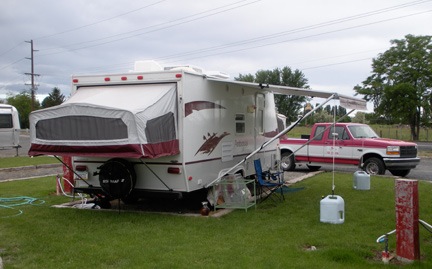
Original RV
My original setup was pretty pitiful. I didn’t realize then how much time I’d be spending on the road.

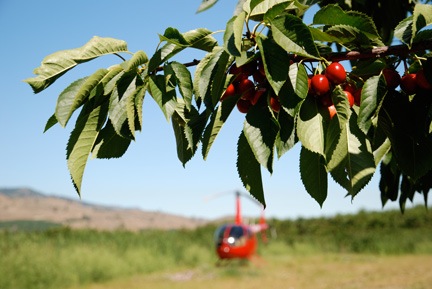
It all started back in 2008 when I made my first annual migration from Arizona to Washington state to do agricultural work: cherry drying. I’d learned about the work two years before, but it took that long to be assured of a contract after the long migration. And one thing was for sure: I wasn’t about to move my helicopter, truck, and trailer 1200 miles (each way) without some guarantee of work on the other end.

It was a win-win situation for me. Escape Arizona’s brutal summer heat while earning some money with my helicopter, which would likely be parked most of the summer anyway. How could I turn it down?

The first season was only seven weeks long and I only flew 5 hours on contract. It was barely worth the travel time and expense.

Cherry Drying Parking
In 2009, I picked up late season work in Wenatchee Heights.

But the next year was 11 weeks under contract and I’ve managed to get about the same every year. I’ve also managed to add contracts to the point where I now bring a second pilot in for 5 weeks and a third pilot in for about 10 days. Fly time varies, as you’d expect, with the weather. My goal is to have two pilots (including me) for at least 10 weeks and a third for a month.

The Work

The work situation is unusual. I’m required to stay in the area for the entire length of the contract, on call during daylight hours seven days a week. No days off, no going home on weekends. On nice, clear days with 0% chance of rain, I can wander a bit from base, as long as I keep an eye on weather forecasts and radar. Still, day trips to Seattle (150 miles away) or off-the-grid locations were pretty much out of the question. Heck, I couldn’t even hike in parts of Quincy Lakes, less than 5 miles from my base, because there was no cell signal there.

One pilot I know was in Seattle when he saw the weather coming in on radar. He hopped in his truck and sped east. I don’t think he planned to have the truck break down an hour away. He hitchhiked in and got started on his orchards about the same time I was refueling to finish up mine. Not sure if he learned his lesson. He was back the following year playing the same risky games.

When rain is possible, things are different. I stay close — often at my base all day. If radar shows rain coming, I’ll go out and prep the helicopter for flight — make sure its full of fuel, preflight it, and take off the blade tie-downs or hail covers (whichever it’s wearing). If radar shows rain on one of my orchards, I’ll suit up and wait in my truck beside the helicopter. Then, when the call comes, I can be in the air in less than 5 minutes.

Cherry Drying
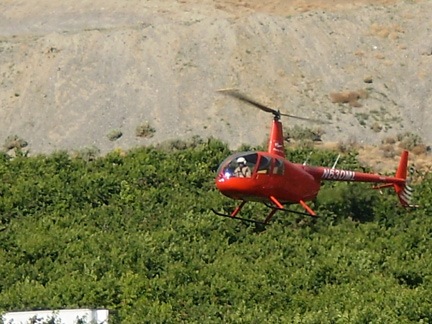
Cherry drying is all about flying low and slow.

The work itself is dangerous and requires good hovering skills in all conditions. I’m hovering just over the trees at low speed, firmly inside the Deadman’s Curve. If the engine quits, a crash through the trees is assured. Some orchards are hilly, others have obstacles like buildings and poles and wires. I can be called out as early as predawn and can be flying after sunset — I’ll fly as long as I can see a horizon.

The summer days in Central Washington State are long, with sunrise around 5 AM and sunset around 9 PM on the summer solstice. Because the night is only 8 hours long and I never really know whether I’ll be flying at dawn, there’s no alcohol, even at the end of a long day — remember: “eight hours from bottle to throttle.”

But the standby pay is good, compensating me not only for getting my helicopter into the area but keeping it there and assuring it’s available when called. It used to bother me when I got calls from tourists in Arizona wanting to see the Grand Canyon in July and I couldn’t take them because I was 1200 miles away. Then I realized that I was being paid for my time in Washington and knew that it was nicer to be paid to sit around and wait than to fly cheap midwesterners — who else visits Phoenix in July? — to a place I visited more times than most people can imagine.

Maria and Penny
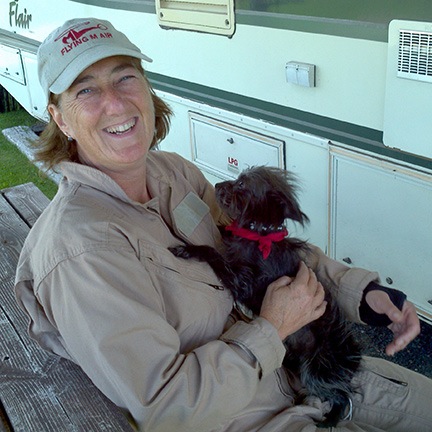
Here I am with Penny the Tiny Dog last year after a cherry drying flight.

I did all the work myself: prepping the helicopter, flying, refueling, putting the helicopter to bed. I’d take the truck to the bulk fuel place in Ephrata or Wenatchee and fill my 82-gallon transfer tank with 100LL so I always had some on hand. I’d move, park, and move the RV as needed, dealing with all the hookups, including the often nasty sewer line. I’d handle propane tank refills and minor repairs. I’d also tend to the truck, making sure it got its oil changed with Rotella (as requested), even though it meant a trip to the Walmart in Chelan, 60 miles away. In the meantime, I handled all the client relations stuff, including getting clients signed up, visiting their orchards so I knew where hazards were, invoicing, and collecting fees.

In between, I managed to have a nice, easy-going life, making lots of friends and doing fun (albeit local) things.

The Logistics

The logistics of being a “migrant” worker were daunting. Each May I needed to get my helicopter and RV from Arizona to Washington. Each August or September, I needed to get them both back to Arizona. That meant a total of three round trips.

Logistics
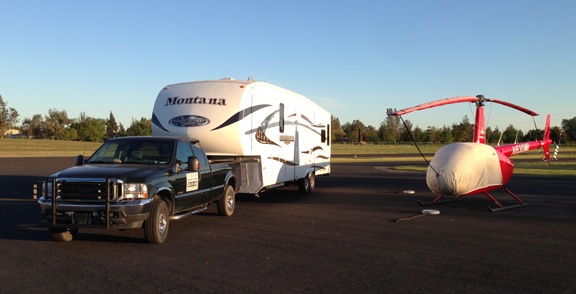
Here are all of Flying M Air’s assets: our helicopter, 1-ton diesel Ford Truck, and a 35-foot fifth wheel RV. It takes two trips for me to move them to a worksite.

I usually brought the helicopter north first, leaving it in Seattle for maintenance. Then I’d fly home on an airliner, hook up my RV to a truck, and make the 2-3 day drive north with my parrot, Alex the Bird. (Alex is gone now; he has a new home.) Then I’d take a flight from Wenatchee to Seattle and pick up the helicopter. With luck, I had decent weather and could come east through one of the passes: Snowqualmie or Stevens.

One time I had rotten luck and, after several aborted attempts to get over the Cascades, wound up flying all the way down to Portland and following the Columbia River through the Gorge. That was a costly ferry flight.

Later, I skipped the Seattle maintenance — saving a ton of money not only on ferry flying but maintenance itself; my Phoenix area mechanics seemed to be able to do the same work for a lot less money.

Bird Nest in Fan Scroll
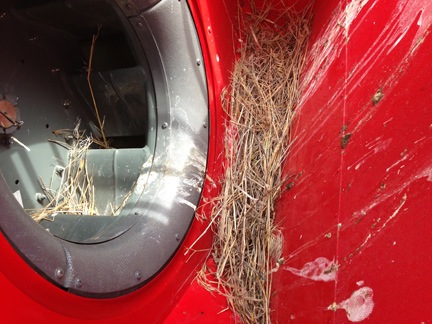
It was not fun cleaning this out of my helicopter.

The last time I left the helicopter behind while fetching the RV, during the week I was gone some birds built a nest in my helicopter’s fan scroll and engine compartment. That was quite a mess to clean up.

The drive up was an adventure, too. I tried all kinds of routes. The fastest was Route 93 from Wickenburg, AZ (where I lived at the time) to Twin Falls, ID and then Route 84 to the Tri-Cities area of Washington and back roads from there. It was a long drive. If I made it to Jackpot NV on the first day — 679 miles from home — I’d have a shorter drive the next day. But most times, I couldn’t do it on my own.

Once, I arrived at my Washington destination after sunset and faced the task of parking a 35-foot long fifth wheel trailer in a parking spot between two railroad ties. I still don’t know how I did it in the gloomy light after driving more than 600 miles that day.

In August or September, I did the same thing in reverse. Take the RV home with my parrot, then fly back on an airliner to fetch the helicopter.

In 2009, my wasband and our dog Jack accompanied me on the return RV drive. My wasband was between jobs and it seemed like a great opportunity to enjoy a late summer trip — we so seldom had real vacations together. We went east to Coeur d’Alene, ID, where a friend of mine lives, then kept going and visited Glacier National Park. We camped there and in Yellowstone. Then, for reasons I can’t quite comprehend, my wasband was in a big hurry to get home, cutting the vacation short by at least a week over what we could have done.

My wasband also occasionally accompanied me on the helicopter flight. I think he did it twice with me. Once, we flew from Seattle to Page, AZ. Another time, we flew from Seattle down the coast until the marine layer forced us inland. I thought he enjoyed those flights, but apparently he considered them “work” — during our divorce trial, he claimed he was working for me to fly the helicopter back. Not likely, since he wasn’t a commercial pilot and wasn’t legal to work as one. Maybe if I’d charged him for the opportunity to build flight time — as I charged every other pilot who flew that trip with me — he would have seen it differently. To me, however, it was just another helicopter “road trip” with the man I loved.

Silly me.

I wonder who’s helicopter he’s flying these days.

Today’s Migrant Farm Work

I started frost control — another kind of agricultural work — last year.

Cosmo View
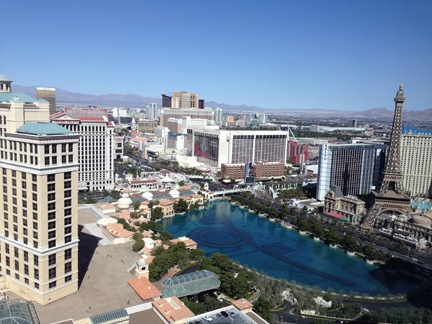
I went to HeliExpo last year in Las Vegas during frost season and stayed at the Cosmopolitan, with an excellent view of the strip from my room.

My contract required me to put my helicopter in California, but didn’t require me to stay with it. Instead, I’d be paid generously for callouts and standby time. I moved it to the Sacramento area in late February and spent the following two months traveling between Phoenix and Sacramento, Wenatchee, and Las Vegas, spending most of my time in Arizona packing up my belongings for my move to Washington later in the year.

The contract terms weren’t good unless there was frost — and there wasn’t any last year. I just about broke even when you consider my investment in additional lighting for the helicopter and the cost of repositioning it and my RV. But at least I got my foot in the door as a frost pilot and got to see what it was like flying over almond trees in the dark.

Can’t say I liked it.

I moved to Washington in the spring, when the divorce proceedings were over and I’d relinquished exclusive use of my house to my wasband and his chief advisor — the woman who’d apparently convinced him to spend more than $100K to go after my money. (Seriously. I can’t make this shit up.)

I was still “migrant” for a while — I started in Quincy and moved to Wenatchee Heights, just as I’d done the previous five years. But when that late season contract was over, I moved to my future home, a 10-acre parcel of view property overlooking the Columbia River Valley and Wenatchee. It looked as if my migrant farm worker days were over — I could commute from my new home to my clients’ cherry orchards.

Almond Trees
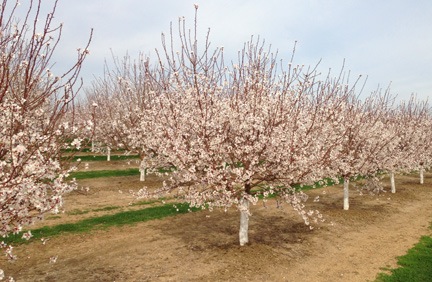
The almond trees are beautiful when they’re blooming — and they smell nice, too!

I had no intention of doing frost control work under the same contract as last year. But I didn’t have to. I got a much better contract — one that paid better if I didn’t fly. With winter dumping snow on my home in Washington, I moved the RV and later the helicopter down to the Sacramento area again, setting up camp at a small local airport in a nice farming community. With rent at a startlingly low rate of only $200/month with a full hookup, the season would be very profitable even if I didn’t fly.

Best of all, I like the area: the weather was warm, the town was full of great restaurants (and even a beekeeper supply place), there was a nice dog park for Penny the Tiny Dog, and Sacramento was only 20 minutes away. I had a friend in Carmichael, only 30 minutes away, and more friends in Georgetown and Healdsburg, each only 90 minutes away by truck — or 30 by helicopter.

Frost is different from cherries. With frost work, you seldom fly during the day. Instead, you fly any time between 2 AM and 8 AM — most often right around dawn when it’s coldest. That means you have the whole day to do anything you like — hiking, bicycling, kayaking, wine tasting, whatever. As I write this, I’m planning a spa day in Geyserville, a trip to San Francisco, and at least one wine tasting trip to Napa Valley. I’ve joined a few local meetup groups and will be hiking and kayaking with new friends. All while “working” — or at least being paid to stand by in case it gets cold.

It’s almost like a paid vacation — with the added bonus of being able to build night flying time.

It’s a Living

My agricultural work has been very good to me. It saved my business from failure and has made it possible for me to save up enough money for the helicopter’s overhaul.

Once my home is built and my possessions are stored away inside it, I can go back to a modified version of my earlier plan: eight months out of the year flying frost and cherries in in the Sacramento and Wenatchee areas and four months goofing off. But instead of hanging around my old house in an Arizona retirement community with a bunch of seniors, I’ll travel and actually see some of the world on my own terms.

It’s the semi-retired lifestyle I’d expected at this stage of my life, delayed about two years by my wasband’s inexplicable greed and stupidity, and enjoyed without the company of a sad sack old man.
More about Drones

Once again, no one is thinking about helicopters.

An aviation friend of mine, Rod, posted a note on Facebook titled “The Drone Industry Should Play by the Rules, or Help Change Them.” I’m not sure if you need to be logged into Facebook to read what he posted, so I’ll just echo it here; I do urge you to read and comment on it there if you can and have something to add to the discussion:

Look folks, I’ve got no problem with drones operating outside the National Airspace System. (i.e. below 400 feet.) 

But if this innovative industry wants to conduct business in the NAS, you should have to play by the same rules as manned systems and certify the operators, the components, and the systems to the standards required by law.

If you don’t like the regulations that currently govern how the NAS is managed, help get the laws changed and deregulate aviation.

If you, like Rod, think that the national airspace system starts at 400 feet AGL, you need to read “Busting Myths about the FAA and Unmanned Aircraft” on the FAA website.

I asked where the 400-feet number comes from, pointing out that I’m authorized by the FAA to operate under Part 135 as low as 300 feet with passengers on board. He linked to an article on Politico about a lawsuit pending by the FAA against an “aerial anarchist” who uses a styrofoam plane for commercial aerial photography. From that article:

The FAA has never officially regulated model airplanes or small drones. The closest it has come was an “advisory” issued in 1981 that created a set of voluntary guidelines for model aircraft: stay within the line of sight, do not fly within three miles of an airport, do not fly a model airplane higher than 400 feet.

The article makes interesting reading, although it entirely misses the point of my problem with the kind of RC aircraft that are becoming more and more prevalent among amateur “drone pilots.” My problem has to do with the operation of these devices in areas where I fly, which can be within 400 feet of the ground, causing a nearly invisible hazard to me and my passengers.

As a helicopter pilot, I have no minimum flight altitude for my Part 91 operations — including aerial photography/videography, cherry drying, frost control, animal herding, wildlife survey — the list goes on and on. Part 91 allows me to fly as close to the ground as I need to (as long as I don’t create a hazard to people and property on the ground, of course). These are legitimate and legal low-level helicopter missions that often keep me within 100 feet of the ground. As previously mentioned, even my Part 135 operations allow me to operate as low as 300 feet above the ground.

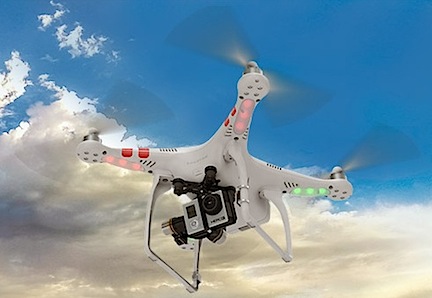
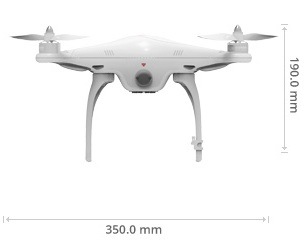
Phantom with GoProThe Phantom 2 Quadcopter with a GoPro Hero attached. This aircraft can weigh nearly 3 pounds. How’d you like to get hit on the head with that dropping from 400 feet?
Imagine this scenario: I’m drying a cherry orchard and a local photo hobbyist decides to take out his Quadcopter with GoPro to get some footage of me or another cherry drying pilot in action. He keeps a respectable distance but is not prepared when one of us suddenly lifts up away from the trees and moves to another orchard. We don’t see him — we’re focused on our work and the location of other helicopter traffic — and one of us flies right into him. The helicopter’s cockpit bubble is smashed or the main rotor blades are damaged or, worse yet, the tail rotor is taken out and the aircraft crashes to the ground. Who’s right or wrong here? The drone is operating under 400 feet and at least 3 miles from the airport, so he’s “legal.” The helicopter pilots are performing a mission that we’ve been doing for years, relying on proven safety measures and radio communication to avoid obstacles and other traffic. Are we supposed to keep an eye out for amateur RC aircraft operators, too?

My aviation friend, Rod, suggests that drone operators should “help get the laws changed and deregulate aviation.” Does he really want aviation deregulated? Does he really want a free-for-all by anyone with a few hundred dollars to spend on an RC aircraft to fly it wherever they like for whatever purpose they desire?

Doesn’t he realize that it’s only a matter of time before they stray up into his previously safe airplane altitude?

Quadcopter
The Phantom Quadcopter is small and white, less than 14 inches wide. I’ve seen birds bigger than that.

And what are helicopter pilots supposed to do? How do you think I feel worrying that any one of my flights could be ended by a collision with an RC aircraft piloted by a hobbyist with a new toy who doesn’t care about the rules or safety? Someone who mistakenly thinks it’s my responsibility, while cruising at 80 knots, to keep an eye out for his toy? Something that might not much larger than a Frisbee?

And make no mistake about it: an impact on a main rotor blade or tail rotor could disable my helicopter and cause a crash.

What would I like to see? Here are a few suggestions for the operation of unmanned radio or computer controlled aircraft:

  • Limit amateur/hobbyist operations to designated RC aircraft fields that are marked on aeronautical charts.
  • Require professional/commercial operators to receive training and pass tests established and overseen by the FAA.
  • Require professional/commercial operators to publish NOTAMS whenever an operation outside an RC aircraft field is conducted.
  • Require all operations to be conducted with a spotter to keep an eye out for full-sized aircraft operating in the area.
  • Limit all operations to altitudes below 300 feet AGL.

I firmly believe that these aircraft, when operated by amateurs, are a danger not only to other aircraft but to people on the ground. There have been numerous crashes in populated areas, including one in Manhattan, and even a death attributed to a crash. How long will the FAA wait before it steps in and properly regulates these aircraft? These aircraft are proliferating at an alarming rate. As a pilot and property owner, I’m starting to get tired of worrying about the consequences of a careless operator’s actions.

And no: deregulating is not the answer we need.

February 26, 2014 Update: The FAA has spoken.

Scavenging in a Landing Zone

Sunflower seeds, right from the source.

The other day, I had a helicopter charter from Wenatchee to Ephrata. My landing zone was a harvested sunflower field.

Parked at the Sunflower LZ
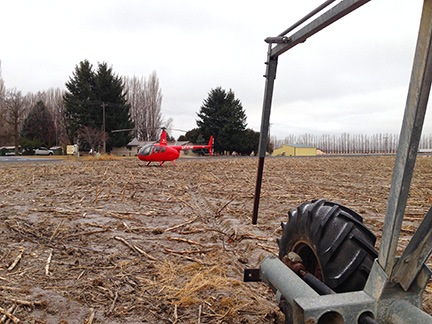
I parked not far from the end of the irrigation pivot for the field.

The ground was rough but frozen hard. I landed with my skids perpendicular to the furrows where the plants had been lined up during the growing season. Thick dried stalks littered the field and, as I came in for my landing, I wondered how many would become airborne and whether they’d cause me any problems. Some did stir while other pieces of the harvested plants got airborne in my downwash as I neared the ground. But there was no danger. I settled down so softly, my passengers even commented on it.

“Smooth,” one of them said as he unbuckled his seatbelt.

My two passengers climbed out as I began the cool down procedure. They walked around the front of the helicopter, well beneath the spinning blades, and met the men they’d come to see alongside the road. I watched them cross the street and disappear down a driveway.

It didn’t take long to cool down the engine. It was 1°C outside. I brought the blades to a stop and climbed out to survey my surroundings and take another look at the ground near my skids. It’s a habit I have on off-airport landings — checking the skids to make sure they’re free of objects or terrain that could cause a dangerous pivot point later when it was time to leave. And, of course, I took a few pictures; I always photograph my landing zones.

That’s when I found out what I’d landed on. From the air, I’d assumed it had been corn. But there were quite a few big, round structures in the field and it didn’t take long to figure out what they were: the seed heads of sunflowers.

The Seed Heads

The Sunflower LZ
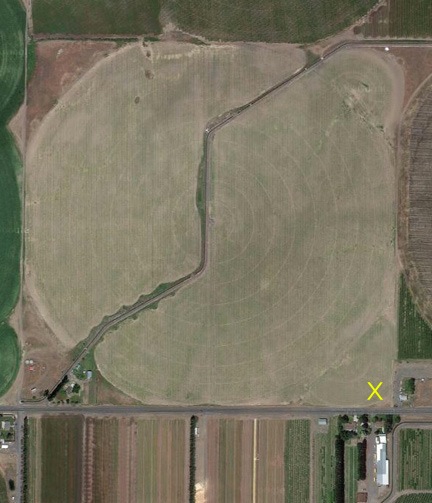
This Google satellite view tells the story of a big round field with a draw running through it and a smaller field in the corner where I’d parked.

This part of Washington is farm country. While they mostly grow tree fruit and grapes in the Wenatchee area where I live, out toward Quincy and Ephrata and Moses Lake they grow a lot of row crops. The corner of this huge field had its own little irrigation pivot. I don’t know what they grew in the rest of the field, but this corner had been sunflowers, and lots of them. I could only imagine how beautiful they must have looked in bloom.

Now there were just scattered seed heads lying around. Like any machine-harvested field, some crops are left behind.

I got to thinking about those sunflowers and all the seeds that were embedded in them. Hundreds in each seed head. They obviously didn’t want them. If I grabbed a bunch, pulled the seeds off, and scattered the seeds around my 10 acre lot in Malaga, there’s a good chance I’d get a few sunflowers for very little effort. My bees would be very pleased indeed for the late season pollen and nectar source.

I started gathering seed heads. They were dry but dirty. The stalks on some were quite long. I pulled out my pocket knife and sawed them off.

I’d gathered four of them and had stowed them under one of the back seats when I got a text message from my client.

“You can come in if you want,” it said.

Usually, I sit out at the helicopter and read while I wait for my passengers. But usually, it isn’t 1°C outside. I realized I was cold. I closed up the back seat, put my knife away, grabbed my iPad, and traced their steps across the street and into the lobby of the nursery/packing house they were visiting. After explaining who I was, I settled down on one of the chairs there, took off my coat, and read.

The Seeds

I brought the seed heads home from the airport after our flight and stowed them in a big shoebox in the garage. (Now I know why I saved that box.) I wasn’t sure how wet they were and I didn’t want bugs in the house or mice among the seed heads.

Today, I took them out for a better look. They were quite beautiful in an old, post-harvest kind of way. They were brown — not black, as we’re so accustomed to seeing in snack packaging. I’m not sure if they were brown because of the dirt or because of the type of sunflower.

Sunflower Seed Heads
Seed heads in a shoebox.

Sunflower Seeds
Harvested sunflower seeds beside the largest of the four seed heads I brought home.

I picked one up and, holding it over the box, rubbed it roughly with my thumb. The seeds began to dislodge and fall off into the box. About ten minutes of rubbing cleared them off the three smaller seed heads. I figured I had about 2,000 sunflower seeds. The final seed head would likely add another 1,000 or so.

The plan is to let them dry indoors in the box. When I’m sure they’re good and dry — and I honestly think they already are — I’ll put them in a bag. In February, before I leave for my frost gig, I’ll scatter them all over my property, keeping about 100 or so to manually plant alongside my vegetable garden.

But before I do any of that, I’ll likely soak a few of these to make sure they sprout. After all, there is a chance that they’re hybrids grown for some specific purpose — oil, seeds, etc. — and that the seeds themselves aren’t fertile. I’ll know soon enough.

3,000 free sunflower seeds. Not bad for a bit of scavenging.

Today’s 5:44 AM Phone Call

A drawback of having just one phone for business and personal use.

Early MorningThe phone rang at 5:44 AM.

I was still in bed, but awake and reading. I’d slept great, hitting the sack at about 10:00 the night before and sleeping soundly until about 5:30 — close to eight hours of uninterrupted rest! My “morning routine” starts in bed, reading and sometimes doing a crossword puzzle on my iPad until it starts getting light outside. I was in the reading phase of that routine when the phone rang.

No one likes getting a phone call “in the middle of the night.” Now I know it wasn’t the middle of the night, but it was early enough to make me wonder what was important enough to call someone when they’re likely to be sleeping — obviously an emergency.

The phone said the call was from “Palmdale Area.” I only know one Palmdale, and it’s in California. In the seconds before answering, I consulted the database in my brain, trying to think of who in California would be calling me so damn early. One of my frost clients, maybe?

“Flying M, Maria speaking.” That’s the way I answer the phone when the call is either from a known client or an unknown caller.

The person on the other end seemed mildly surprised that I’d answered. “Is this Maria? Did I get you up?”

“Yes, it’s Maria but no, you didn’t get me up. Who is this?”

“Oh, this is Joe. I’m in Wickenburg right now.”

Joe is the name of the man who was gracious enough to offer me his house for the winter while he went to Arizona. (Well, it isn’t really Joe, but neither was the caller’s name. I’m hiding their identities for privacy sake. The names were the same.) Wickenburg was the town I used to live in in Arizona. Although it didn’t really sound like the Joe I know, I assumed it was him and that he’d come to Wickenburg and needed something from me, a former resident.

Of course, that assumption quickly evaporated as the caller hurried on. “I understand you used to run the FBO here. I emailed you the other day. I need a helicopter here.”

I remembered his email. Like most of the other email I get from people who have contacted me from Flying M Air’s website — where it clearly says I no longer operate in Arizona — I’d deleted his message. My bad.

“I don’t operate in Arizona anymore,” I said, starting to lose my patience. (How much patience do you have at 5:44 AM, less than 10 minutes after you’ve woken up?) “I don’t know of any operator in the area who can help you.”

I was ready to hang up but he wasn’t.

“Well, I need a helicopter here and was hoping you could refer me to someone who has one.”

“I was the only commercial helicopter operator in Wickenburg,” I told him. “I never had enough work to support my business there. I doubt whether anyone else would be stupid enough to start another helicopter charter business in that town.”

“Yeah, but maybe an ag ship? Something like that that I might be able to get my hands on?”

I might have laughed into the phone. “There are no ag ships in that area. There’s no agriculture in Wickenburg.”

“Yeah, I didn’t think so.”

I wanted to get off the phone and, at about this point, I started thinking about just hanging up on him. Seriously: I was that annoyed. But I really don’t want to be rude to people.

“You might try one of the operators down in Phoenix,” I told him.

“Yeah, I guess I could do that.” A pause, then: “Hey, did you hurt your foot about six years ago?”

Convinced I hadn’t heard him right, I said, “Excuse me?”

“Did you hurt your foot about five or six years ago?”

“No,” I replied.

“Okay.” Another pause. “Well cherry drying work must be doing pretty good for you up there.”

I couldn’t believe it. This guy called me at a quarter to six in the morning and was trying to have a conversation with me. “It’s fine,” I told him. I sat up in bed. Nature was making its first call of the day. I wanted to be off the phone. “Listen,” I said, “Do you realize that it’s a quarter to six in the morning?”

“Well, I’ve been up for two hours.”

“Maybe you might want to wait until at least eight before calling people?”

“Yeah, but I’m Florida and I run on east coast time. It’s nine o’clock there.”

I thought to myself: Who the hell cares what time zone you operate on? You called someone in Washington. But I said: “I really can’t help you. Sorry.”

“Okay. Goodbye.”

I heard him disconnect before I was able to push the end button.

I guess it’s time to revisit the Do Not Disturb feature on my phone.