An early morning charter.
Earlier in the week, I took a reservation for a 7 AM flight out of Scottsdale with a photographer, his assistant, and their client. The job was a photo shoot in the Camelback Mountain area. The idea was to catch the early morning light shining on the mountain with the city of Phoenix in the background.
It was a great idea, but there was one minor problem: a cold front moved through the area yesterday and temperatures in Phoenix are actually getting down near freezing. The coldest part of the day is right before dawn. The sun was scheduled to rise at 7:18 AM. And when we do a photo flight, we fly with at least one door off.
But I’m getting ahead of myself here.
What I really wanted to write about was my flight down to Scottsdale.
I left my house at 5:30 AM. It was 27°F outside. And dark. Very dark.
I drove to the airport, parked my Jeep in front of the hangar, and pulled the hangar door open. It was only slightly warmer inside the hangar. I had to turn on the light in there to see what I was doing — normally I get plenty of light through the two skylights on the roof. I’d preflighted the helicopter the afternoon before, so it was ready to go. Only thing I still needed was fuel.
I pulled the helicopter out onto the ramp, closed the hangar door, and pulled it up to the fuel island. I was wearing my brown leather flight jacket, which I don’t get a chance to wear very often here in Arizona. I was also wearing my O.J. gloves. Those are the brown leather gloves that are so tight, every time I pull them on, I say to myself, “If the gloves don’t fit, you must acquit.” Sheesh. And I didn’t watch a minute of the trial.
I fueled in the dim light shining over the fuel island. Although the airport was deserted, there was a lot of noise coming from the industrial park on the other side of the runway. They must start work early at one of the manufacturing places over there.
I disconnected my tow equipment and drove it over to the airplane parking area, where I left it for the day.
It took two tries to start the helicopter. My helicopter simply does not like cold weather. I ran the starter for a while to give it every opportunity to start on the first try, but it wasn’t going to cooperate. I had to give it a second priming. Then it started right up.
While the engine warmed up, I turned on the runway and taxiway lights. Wickenburg, like most airports, has pilot controlled lighting (PCL). It enables a pilot to turn on the runway and taxiway lights by clicking the push to talk button on his radio. I tried 5 clicks. The runway lights came on. Then I tried 7. The taxiway lights came on, too.
I let the engine warm for about 10 minutes. The whole time, I waited for my cell phone to ring. The client had until 6:15 AM to cancel. That was my estimated departure time. If he canceled after that, I would charge him a cancellation fee to cover my cost of flying all the way down to Scottsdale for nothing. The helicopter wasn’t ready to go until 6:20. No call from the client, so I brought the engine RPM up to 102% (a Robinson thing), picked it up to a hover, scooted sideways away from the fuel island, turned, made my radio call, and took off along the taxiway parallel to Runway 5.
The sky to the east was beginning to glow reddish orange, but it was still very dark in Wickenburg. So dark that I flew over the taxiway all the way to the end, just in case the engine decided to go back to sleep. If I was going to have an emergency landing, I wanted that landing to be somewhere I could see. Those nice blue taxiway lights made it pretty obvious where the pavement was. Not so as I turned to the southeast and flew over the homes of Wickenburg.
I climbed to about 3000 feet — that’s 1000 or so feet off the ground southeast of Wickenburg — so I wouldn’t have to worry about hitting any granite clouds. I could see the lights of Phoenix far out in the distance. I could also see some mountains on the horizon that looked like Four Peaks but much closer. It turned out that they were Four Peaks. Not only was it cold out, but it was incredibly, beautifully clear. Not a cloud in the sky. The sky above me was a deep, dark blue that got lighter to the southeast until it blended with the red and orange glow of the sun beneath the horizon. And scattered in front of me were millions of city lights.
Sights like these simply cannot be photographed — at least not while flying a helicopter. It’s too dark for a good exposure. And even if the shot did come out without blur or windscreen glare, the foreground would be featureless blackness — not the gently rolling hills and small mountains that I could see beneath me. I wish I could share the view with readers using more than just words, but although the images of the flight are imprinted on my mind, they can’t be reproduced as images here. My words will have to do.
I had programmed Scottsdale into my GPS and a direct flight would take me over Deer Valley Airport, which is only 9-1/2 miles west. I normally fly around Deer Valley. The airport is usually so busy with flight training aircraft on its two runways that the controllers don’t want helicopters transitioning over the top. I listened to the ATIS (Automated Terminal Information System; a recording of airport conditions) and learned that the wind was out of the northeast at 6 knots and the altimeter setting was an amazing 30.49 (it would later get up to 30.54 — the highest pressure reading I’d ever seen). The Tower frequency was pretty quiet as I approached. I listened to the tower tell an inbound airplane to make a straight in landing, then requested my transition. It was immediately granted. A few minutes later, I was flying over the airport at about 2500 feet. Channel 15’s helicopter was flying low over route 101 nearby. When the controller pointed him out, I acknowledged that I’d seen him. Then the controller told me to contact Scottsdale and cut me loose.
I almost always approach Scottsdale from the northwest, so approaching from almost due west was weird. It was still nighttime — at least as far as I was concerned — and the area around the airport was a sea of lights. By this time, however, the sky was much brighter. The smooth water of the CAP canal that wound just north of the airport reflected the sky, looking like a bright, blue-gray ribbon.
I called Scottsdale tower and was told to report a half mile out. Channe1 15’s helicopter was still following the 101, now toward Scottsdale. I was at least 500 feet above him and now south of his position. I started my descent. A few times, I lost my bearings — so many lights! But I recognized Scottsdale Road and Greenway as I crossed the intersection. I made my 1/2 mile call and was told to land at my own risk — the usual thing for helicopters at towered airports.
At Scottsdale, the ramp was full of private and fractional jets. They were crammed into parking spots, obviously towed there. I flew along the ramp behind them, lined up with a row of parked planes, and set down in front of the terminal. It didn’t take long for the helicopter to cool down. It was 6°C on the ramp.
The photo flight a while later went well. The sun rose while I was giving the safety briefing and reviewing the flight path with my passengers. We took off a while later, crossed the runway, and headed toward Falcon Field, another airport in Mesa. When we were almost due east of Camelback, I turned and headed west. The photographer wanted the helicopter close to the mountain, but he had a huge lens on the camera and I knew we’d be too close. We made four passes of Camelback and Squaw Peak, each time moving a little farther away. The last time, we were almost in Scottsdale’s airspace.
All the time we flew, the photographer’s door was off. His camera lens was so long that I had to slow down so he could shoot the pictures — otherwise there was just too much wind when he put the camera lens out in the slipstream. The poor guy was freezing. I sat up front in reasonable comfort beside their client with the heat on full. My right hand was cold — my O.J. gloves are too tight to wear on my right hand when I grip the cyclic — but the rest of me stayed pretty warm.
As we made our passes, I kept a sharp eye out the cockpit and on my GPS’s traffic display for the aircraft that were flying past. We were listening to Sky Harbor’s north tower frequency, but since we were out of their airspace, I wasn’t talking on it. I heard the controller point me out to another airplane in the area once, so I know he saw us on his screen. I saw more than a few planes flying past.
The view was beautiful. The heavy winds the day before had blown most of the smog out, so the city was crystal clear. The low-lying sun cast an orange-yellow light on the mountain sides, leaving the northwest sides in shadow while illuminating the city’s tall buildings in the background. The last pass of Camelback and the third pass of Squaw Peak were probably the best.
The photos will be used for an advertisement about the Valley Metro light rail system Phoenix is finally installing. Unlike New York, which I’m quite familiar with, Phoenix has a really crappy mass transit system. That’s one of the reasons there’s so much traffic and smog. These photos will be used for “before” and “after” shots. “Before” will be a photo touched up to look really smoggy, like a normal Phoenix morning. “After” will be a photo touched up to remove the smog we saw that day — which really wasn’t nearly as bad as usual. The ad will try to convince people to take mass transit to clean the air.
I won’t offer my opinion on the ad strategy but I do like the idea of the photos. And it’ll be neat to see them, knowing that they were taken from my helicopter today.
We returned to Scottsdale by 8:15 AM.
I had two meetings with other potential clients. I had coffee with one of them and breakfast with the other. Then I made some inquiries about office space in Scottsdale at the airport, bought a few things at the pilot shop, and left.
By that time, it was late morning. All the magic of the predawn flight was a dim memory.

 Well, it’s about time. Finally, a James Bond who is believable. I’m not just talking about the actor, I’m talking about the characterization. This bond is not perfect in almost every way. He’s vulnerable and makes more than a few mistakes.
 If you’ve been reading this blog for a while, you know that I’m particularly fond of words. It probably has a lot to do with writing for a living. The way I see it, words are my tools and the more tools I’m comfortable using, the better I can get my job done.
 This is a 2004 remake of the 1955 movie of the same name starring Alec Guinness and Peter Sellers (among others). This newer version starred Tom Hanks. Like the Da Vinci Code, this was a complete waste of Mr. Hanks’s acting talent. But in this case, the acting wasn’t the problem — he did quite a job acting out the character of a rather wacky and over-educated caper mastermind. The problem was the movie. It was so bad that it wasn’t worth his efforts. In fact, his acting was probably the best thing about it.
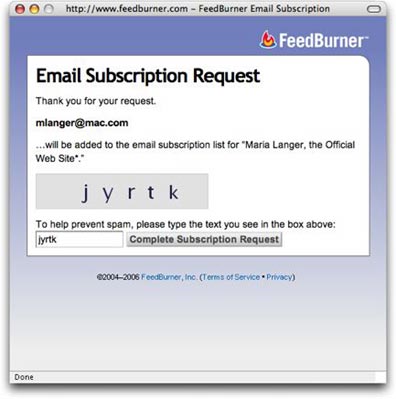 The service, which is full automated, works with the E-Mail Notification form that appears on the site’s Home page. A person who wants to subscribe enters his e-mail address and clicks Subscribe. A window opens with a form that prompts him to enter characters in a box. When he clicks Complete Subscription Request, Feedburner generates a confirmation e-mail message and sends it to his e-mail address. That prevents people from subscribing others to this service when they might not want it. He must click the link in that message when he receives it (normally within about a minute) to start the subscription. If he doesn’t click the link, the subscription does not start.