Lights at Night

I don’t get it.

One of the things I’ve always liked about Wickenburg, where I live, is the dark night skies. But as time goes on, that darkness is getting ever lighter.

Streetlights

We live on the edge of town where the homes are spread out and there’s lots of space between them. There’s no real “road” to get to our home. Instead, there’s an easement that neither the county nor the town want to maintain for us. It’s a steep, dirt road that is best climbed at at least 15 mph or, if you’re in a pickup truck, with 4WD turned on. There are only three homes that use the road and, unfortunately, not all of the occupants or visitors understand how to get up the hill without spinning their wheels. As a result, the road is usually full of mounds and ditches and can be quite a challenge to negotiate with a low slung car, like my little Honda S2000. Periodically, one of my neighbors, who owns a Bobcat, grades the road to make it smooth again. This is a good thing because the vast majority of traffic goes to his house.

Anyway, because we live on the edge of town in a place that used to be outside of town limits, and because we don’t have a real road, we also don’t have streetlights. That’s a great thing. Streetlights are a huge waste of resources and a nuisance to dark-sky lovers. Although they might be appropriate in downtown areas or areas where houses are snugged in close together, there’s really no reason for them beyond that.

If you’re a city dweller reading this, you probably think I’m nuts. You look at streetlights as a way to cut down crime, to keep the streets safer at night. But in Wickenburg — at least so far — crime is not a serious problem and we don’t worry about muggers and rapists lurking in the dark. Besides, very few people walk the streets at night and, if they do, they usually carry a flashlight. Of course, Arizona is also an open carry state, so quite a few of us honest citizens might just be carrying guns for self-protection. (I have a concealed weapon permit and a gun that could easily fit in my purse or pocket, should I decide to carry it.)

Some of the newer neighborhoods in town have installed streetlights. That’s unfortunate because it just adds to the overall glow of the town against the night sky. One of the newer neighborhoods in town chose street level lighting instead of overhead lighting. That’s a pretty good compromise. The lights are installed behind glass blocks in consistently designed decorative boxes at the end of each driveway. The boxes include the house number and mailbox. The lights aren’t very bright, but they do offer an easy to follow pathway down the road for anyone who happens to be on foot after nightfall. They also make it easy to find a specific house in the day or night.

Business Lights, Park Lights

There was a huge outcry in town years ago when a new gas station on the main road installed bright lights over its pumps. The lighting was poorly designed and shined not only down, but up. It was like walking into a 7-11 (or Circle K, depending on where you live) at night — except all that brightness was outside. You could see the gas station from quite a distance away because of its glow. The complaints did some good because the lighting was redesigned and adjusted. It’s not as bad anymore, although it’s still pretty bright.

Another new gas station on the other side of town is painfully bright, but since I no longer read the local paper, I don’t know if people have been complaining about it.

Wickenburg has several parks, each of which has at least one ball field. The lights over the fields are high and bright. That’s a good thing, if there’s a night game going on. In most cases, the lights are only turned on when there’s a game going. I think they might be on a timer to turn off automatically after a certain amount of time, because I’ve never noticed them on very late at night. That’s a good thing, too. Lighting like that must cost a fortune to operate, and townspeople already piss away enough tax dollars on wasteful spending by our Mayor and Council. (Don’t get me started about the pink sidewalks or man-made tourist attractions.)

Airport Lights

The airport, of course, has night lighting. There are a bunch of overhead lights around the ramp and hangar area. They’re the old kind that shine down until you need them — then they apparently overheat and go out for a while, leaving you in shadows. When you’re done fumbling in the semidarkness, the nearest light goes back on. These lights are on a timer and, like most lights on timers, when there are power outages, the timers get screwed up and don’t work at the right time. When I ran the airport FBO, I discovered that the lights were going on about 3 hours later than they should have and staying on well past the time they should have been turned off. I whined to the town and eventually they sent someone to fix it. They’ve made some changes to the airport lighting since then and I hope they put them on a light sensor.

The airport also has a rotating beacon on a tower that has recently be adorned with cellular antennas. (I still wonder how they got that one past the FAA.) It has a green light on one side and a white light on on the other. It rotates, sending off a flash of white and a flash of green at a predetermined interval, which I probably should know but don’t. It’s triggered by a light sensor, so it automatically goes on at night and off in the morning. I love the way the rotating motor sounds in the predawn hours when I sometimes come to the airport to fly.

The runway lights are handled differently. It’s pilot controlled lighting (PCL) that works by pressing the mike button while tuned into Wickenburg Airport’s frequency. I think it’s supposed to be 3 clicks for low intensity, 5 clicks for medium, and 7 clicks for high. I’m not sure if it really works this way; it seems to me that 3 clicks is never enough to get them going and with 5 clicks, the taxiway lights don’t always come on. The airport’s runway lighting was improved when the runway was lengthened. They start out white on the approach end, then turn yellow about midway down the runway and are red near the end. It really helps pilots get a feel for the runway length. Very nice.

This photo by Jon Davison, is a cool night shot from the back seat of my helicopter as I landed, with Mike beside me, at Wickenburg Airport not long after sunset.

One of my favorite things to do when I fly at night is to approach the airport and get within 2 or 3 miles before turning on the lights. I love to watch the runway light up. I know airline pilots who play the same game on cross-country trips. Seven clicks on the right frequency must make a good show from 35,000 feet.

One annoying thing about the new runway lighting is the strobe lights on either end. Called Runway End Identifier Lights (REILs), they provide “positive identification of the approach end of a particular runway.” (I looked that up in the Aeronautical Information Manual; you can find it in section 2-1-3.) The trouble is, they’re designed for airplanes, which don’t have a particularly good view of the ground. A helicopter pilot, with a wide open view of everything in front of the helicopter, gets those flashes of light right in the eyes when landing at night. Good thing I don’t make as shallow an approach as airplane pilots do; I’d probably be blinded if I came in on the glide slope.

The people who buy homes at either end of the runway — where Wickenburg’s decision makers have stupidly allowed homes to be built — will have these flashing lights blinking in their bedrooms or kitchens or living rooms every time a plane lands or departs at night. To paraphrase Mr. T, “I pity the fool” who buys a home at the runway end.

House Lights

But the kind of lighting I really don’t understand is the outside lights many people have on their homes. Yes, it’s nice to have a light over your garage or front door for when you come in late at night. And it’s nice to have a light in your backyard, for when you barbeque or let the dog out. But come on, guys. Do you need all those damn lights turned on all night long?

One of my neighbors is an example. They live high on a hill and have three bright lights that I can see from my home. These lights are on all night long. How do I know? I’m sometimes up in the middle of the night and I can clearly see them from my front window: three spots of yellowish light, shining into the night. Why?

A closer neighbor also illuminates his house all night long, but at least there’s some sensibility to his setup. He’s got adjustable motion-sensitive lighting. When nothing’s moving, the lights are at a dim setting — just enough to see the house. When something moves by a light, it goes bright. While this makes more sense than keeping bright lights on all night long, my question is this: if there’s nothing moving outside, what’s the sense of having any lights on at all? And it does nothing to explain the bright light over his garage that’s also on all night.

Lights at Night
I took this shot last night, at about 8 PM. These are homes of my closest neighbors. In the original shot — not downsized for the Web — you could see the pinpoints of stars in the black sky.

A new house in the neighborhood that’s on an adjacent hill had a very bright light that pointed right at our house. It was on every night right after the electricity was turned on, even though no one yet lived in the house. It was so bright at our house that it cast shadows inside our house. I was on the verge of introducing myself and asking them to do something about it when they suddenly stopped using it. Now, there’s another new house between that one and ours, on the same hill. I wonder how they’ll like that bright light when it’s turned on. But they had their porch lights on all last night, illuminating the hill in a spray of light. I wonder how long that’ll last.

Our house is usually so dark at night that if you came down our easement road and didn’t know the house was here, you wouldn’t see it. We have two motion-controlled spotlights: one over the garage and one by the front door. They go on and off at night when it’s windy; I think the swaying saguaro cactus sets them off. They’ll also go on if an animal, like a coyote or javelina or mule deer, wanders into the yard. Oddly enough, they seem a bit sluggish when we walk outside at night. But eventually they go on to do their jobs, ensuring that no one can approach or depart without being illuminated. When nothing’s moving, they’re dark.

Think about Energy Use!

One of the things we all should be thinking about these days is energy use. Let’s face it: if you have a light on all night, it’s using energy all night. And do you really need to be throwing away energy (or energy dollars) when you’re not using the light?

So it’s not just the loss of dark night skies that concern me. It’s the excessive use of energy for no good reason.

How is your home or town illuminated at night? What lights can you turn off or replace with motion sensor lights? How much energy or money do you think you could save? What have you already done or observed? Your comments and insights are welcome. Use the Comments link or form for this post to share your thoughts.
Moments to Remember

A drive through the desert on a starlit night.

Ever have one of those moments you wish you could remember for the rest of your life? I’m not talking about simple recall here. I’m talking about remembering with the detail you need to relive the experience in your mind.

I had one of those moments [again] on my way home from Phoenix last night. I’d driven down in the afternoon to pick up my husband, Mike, who had driven his Honda down that morning to pass it on it its new owners. I took my Honda S2000, which is a convertible, and because the weather was so perfect yesterday, I had the top down. After dealing with traffic on the afternoon drive through Phoenix, I finally connected with Mike on Chandler Avenue (or it is Boulevard?) in Ahwatukee. From there, we headed back into Phoenix, to one of our favorite restaurants: Tarbell’s on 32nd Street (I think) and Camelback. After a wonderful meal full of interesting flavors and textures, presented with perfect service, we climbed back into the Honda and headed northwest for home.

Tarbell’s is probably about 60 miles from Wickenburg. We took Camelback west to the 51, followed that north to the 101, and took that west to the 17. Then north to Carefree Highway and west to Grand Avenue and northwest to Wickenburg. I had my iPod plugged in, playing just below distortion volume on my Honda’s very disappointing stereo system. (The 2003 model year did not include speakers behind the headrests; what were they thinking?) I’m used to the less than satisfactory sound quality competing with road and wind noise, so I enjoyed the classic rock — mostly 70s and 80s — that I made Mike listen to. (The rule is, the driver chooses the music.)

The drive north on the 51 at night is always interesting. On most nights, you can see the landing lights of the jets on their way in from the north to Sky Harbor Airport just southeast of Phoenix’s downtown area. Last time I took this route home, I’d spotted at least eight aircraft, lined up into the distance. But last night, there were never more than four.

We stopped for gas at Carefree Highway — last gas for about 30 miles. My Honda gets between 25 and 30 miles per gallon, depending on how I drive. Because I don’t drive it very often, I tend to drive in a way that gets me lower mileage. (Hey, girls just wanna have fun, right?) But on a long highway drive, if I keep my speed down near the speed limit, I can go far more than 300 miles on a 13-gallon tank of gas.

Then came the part of the trip I’d like to store in my brain for periodic detailed recall: the drive west on Carefree Highway. It was about 7:30 PM, and even though it was a Friday night and Carefree Highway is a favored route for the Phoenix to Las Vegas crowd, there weren’t many people on the road. Once I passed the new Game and Fish Building (with its deplorable new traffic light) and rounded the bend at Lake Pleasant Road, I brought the car up to speed, set the cruise control, and drove while classic rock blared out into the night.

It was dark out there — it usually is at night — and a slim crescent moon hung in the sky, bright side down. I say “bright side” because the sky was so dark, you could clearly see the entire moon, even though most of it wasn’t illuminated. The crescent hung there in front of us, surrounded by stars, sinking ever lower into the sky. Above us, the sky was black as — well, black as night, to use an appropriate cliche. There were more stars than a city dweller could imagine; so many, in fact, that it was difficult to pick out the standard patterns of the Big Dipper, Orion’s Belt, and the Pleiades among them. And being that the sky was perfectly cloudless, those stars stretched in every direction.

What I should have done was pull over to a safe spot off the road, killed the headlights, and spent some time just looking up. Because frankly, when you’re driving 65+ miles per hour on a two-lane road in the middle of the desert at night, you really can’t steal too many glances at what’s directly above you. What’s in front of you is far more important to monitor.

Yes, it was cold — probably in the low 50s. Although the top was down, Mike had his window up and the heat was on. And yes, I hate the cold. But the cold was part of the entire experience: dark night, fun car, open roof, loud music, crescent moon, countless stars, cold wind.

The moon dipped behind a hill as we got onto Grand Avenue and drove the last ten miles to Wickenburg. In town, the carnival at the Community Center offered a bright contrast to the otherwise dark night. Town was surprisingly empty at 8 PM on Wickenburg’s big Friday night of the year.

I drove home, coming down from the kind of high you can only get from having real fun.

Defining "Tragedy"

More humor from the ‘Net.

Here’s another funny I got from a friend. I don’t know where he got it, but if this belongs to someone who doesn’t want it shared, let me know and I’ll pull it down.

George Bush and Dick Cheney, while visiting a primary school class, found themselves in the middle of a discussion related to words and their meanings.

The teacher asked both men if they would like to lead the discussion of the word “tragedy.” So Mr. Cheney asks the class for an example of a “tragedy.”

One little boy stood up and offered: “If my best friend, who lives on a farm, is playing in the field and a runaway tractor comes along and knocks him dead, that would be a tragedy.”

“No,” said Mr. Cheney, “that would be an accident.”

A little girl raised her hand: “If a school bus carrying 50 children drove over a cliff, killing everyone inside, that would be a tragedy.”

“I’m afraid not,” explained Mr. Bush. “That’s what we would call a great loss.”

The room goes silent. No other children volunteered.

Mr. Bush searched the room. “Isn’t there someone here who can give me an example of a tragedy?”

Finally at the back of the room little Johnny raises his hand. In a stern voice he says, “If a plane carrying the President and Vice President of the United States were struck by a missile and blown to smithereens that would be a tragedy.”

“Fantastic!” exclaimed both men nearly in unison. Mr. Cheney continued “That’s right. And can you tell me why that would be a tragedy?”

“Well,” says little Johnny, “because it sure as hell wouldn’t be a great loss, and it probably wouldn’t be an accident either.”

The Rise of Idiot America

Why the Internet might save us all.

Two days ago, I took a considerable amount of time out of my day to read an article in Esquire by Charles P. Pierce, “Greetings from Idiot America.” The article, which was published in October 2005, was long, well researched, and well written. It used lots of multi-syllable words, which I’ve grown unaccustomed to reading. It shamed me, in fact, that I had to slow down and read certain passages more than once to get the full meaning.

When I finished reading, I felt a mixture of emotions: sadness, outrage, relief. I was sad because, for the past three or four years, I’ve been thinking hard about the topics Mr. Pierce covers in his article and I agree with most of what he says. It isn’t good news. I felt outraged because what he outlines and exposes is a planned attack against knowledge and science by those seeking money or power (or both).

This paragraph sums it all up for me:

The rise of Idiot America is essentially a war on expertise. It’s not so much antimodernism or the distrust of intellectual elites that Richard Hofstadter deftly teased out of the national DNA forty years ago. Both of those things are part of it. However, the rise of Idiot America today represents — for profit mainly, but also, and more cynically, for political advantage and in the pursuit of power — the breakdown of a consensus that the pursuit of knowledge is a good. It also represents the ascendancy of the notion that the people whom we should trust the least are the people who best know what they’re talking about. In the new media age, everybody is a historian, or a preacher, or a scientist, or a sage. And if everyone is an expert, then nobody is, and the worst thing you can be in a society where everybody is an expert is, well, an actual expert.

But I also felt relief — relief that there were people out there who were thinking and could see what was happening, and could put those thoughts and observations into words in a place where others could find and read them. People like Mr. Pierce. Words like this article. Places like highly respected magazines and the Internet.

What It’s All About

“Greetings from Idiot America” starts with a discussion of the Creation Museum and the scene on the day when its “charter members” each paid $149 to see exhibits that included dinosaurs wearing saddles. These people came from as far away as Canada. They came with their home-schooled children as a “field trip.” They came to view exhibits that would legitimize their belief that the Bible’s book of Genesis is an absolute fact.

I’ve never been the the Creation Museum and never plan to go. I don’t want to support it with my money — money I’ve earned through logical thinking and sharing my knowledge by writing books and articles. But John Scalzi visited it not long ago. And his written discussion and photo tour are highly recommended reading and viewing. While Mr. Pierce writes about the museum before it was completed two years ago, Mr. Scalzi brings us up to date with a complete picture of the finished product. Dinosaurs with Adam and Eve are only part of the situation.

Mr. Pierce goes on to discuss various events in recent political history that support his theory. He ticks off point after point. A thinking person can’t help but be amazed that things like this have happened in our country, in our government, in the 21st century. It becomes clear why school systems can be conned into believing that Intelligent Design might just be another valid theory — even though evolution has mountains of real evidence to back it up. Or why America has slipped from being a leader in science — when we’re more interested in Britney’s custody battles or the latest American Idol.

In his article, Mr. Pierce reminds us:

Americans of a certain age grew up with science the way an earlier generation grew up with baseball and even earlier ones grew up with politics and religion. America cured diseases. It put men on the moon. It thought its way ahead in the cold war and stayed there.

I’m in that age group. I watched Neil Armstrong step out onto the surface of the moon. I was eight years old and I didn’t fully understand the significance of what was going on. I recall watching a scene that included the leg and ladder of the lunar module sitting on the surface of the moon. The picture was black and white and not very good. We waited a long time for something to happen. There was static with the voices, along with a lot of weird, high-pitched beeping. It was boring. It was late. I wanted to go to sleep. But my mother made me and my sister sit up and watch it. It was history in the making. It was proof that America was a country of great thinkers and doers. In less than ten years, we’d accomplished the goal the late President Kennedy had set for us.

Sadly, our current president won’t set any goals for us at all.

Mr. Pierce interviewed Professor Kip Hodges at MIT:

“My earliest memory,” Hodges recalls, “is watching John Glenn go up. It was a time that, if you were involved in science or engineering — particularly science, at that time — people greatly respected you if you said you were going into those fields. And nowadays, it’s like there’s no value placed by society on a lot of the observations that are made by people in science.

“It’s more than a general dumbing down of America — the lack of self-motivated thinking: clear, creative thinking. It’s like you’re happy for other people to think for you. If you should be worried about, say, global warming, well, somebody in Washington will tell me whether or not I should be worried about global warming. So it’s like this abdication of intellectual responsibility — that America now is getting to the point that more and more people would just love to let somebody else think for them.”

Pierce goes on to say:

The rest of the world looks on in cockeyed wonder. The America of Franklin and Edison, of Fulton and Ford, of the Manhattan project and the Apollo program, the America of which Einstein wanted to be a part, seems to be enveloping itself in a curious fog behind which it’s tying itself in knots over evolution, for pity’s sake, and over the relative humanity of blastocysts versus the victims of Parkinson’s disease.

I see the truth and tragedy in this. Do you?

On Flying Spaghetti Monsters

I should probably mention here that I’ve also begun following the blog, Church of the Flying Spaghetti Monster (CotFSM). According to Wikipedia:

The Flying Spaghetti Monster (also known as the Spaghedeity) is the deity of a parody religion called The Church of the Flying Spaghetti Monster and its system of beliefs, “Pastafarianism”. The religion was founded in 2005 by Oregon State University physics graduate Bobby Henderson to protest the decision by the Kansas State Board of Education to require the teaching of intelligent design as an alternative to biological evolution.

In an open letter sent to the education board, Henderson professes belief in a supernatural creator called the Flying Spaghetti Monster which resembles spaghetti and meatballs. He furthermore calls for the “Pastafarian” theory of creation to be taught in science classrooms.

One of the features of the CotFSM blog is the reprinting of “love mail” and “hate mail” received by Mr. Henderson. I read a bunch of posts the other day.

The love mail is an interesting mix from atheists (which you’d expect) and religious people who “get it.” All agree that neither Intelligent Design nor Creationism should be taught in schools. In fact, they all agree that religion should not be part of a public school education at all.

The hate mail is amazing. I really can’t describe it any other way. The majority of it consists of angry tirades penned by religious fundamentalists. Some of them seem to realize that the CotFSM is a joke or parody while others apparently believe that the CotFSM has real believers — in other words, they just don’t “get it.” Either way, they’re united in their belief that supporters of the CotFSM will go to hell. (Not surprising, I guess. What else is there for “sinners”?)

But what bothers me about some of the hate mail is the complete lack of literacy. Here’s a recent example:

wow you people are crazy i pray to my LORD jesus christ that you people wake up God created man in his own image and im sorry but if you look like noodles with meatballs growin out your BUTT you need to go back to SPACE or get back in the pan where you’ll be somebodys dinner!

people will believe anything!!

i am verryyy happy i was well homeschooled becuase i would be in jail for punching a teacher in the face when she tried to tell me about this so called spagetti monsterr!

i hate to be the breaker of bad news but when you look around when u die u wont be with your master meatball you’ll be burning in the pits of HELL and i am a REAL christian and that hurts to know that so many people are gonna be in hell! over a random guy that started a joke and has nothing better to do besides make up some god for fun then see how many people are loving this idea.
God bless you wacked out meatball loving freaks!
-christy

Wow, this person is illiterate. I guess grammar, punctuation, capitalization, and spelling are optional in the home where she was schooled.

And this is what worries me about the future of our country. As more and more people pull their kids from school in favor of home schooling or pressure their school systems to teach non-science “theories,” the average intelligence of our population drops. Christy (assuming she spelled her own name right; I’m making an educated guess on the capitalization) might be an extreme example of the problem, but she’s out there. How many others like her are building and populating Idiot America?

Read it and Weep

If you’re concerned about America and what’s been happening to it for the past decade or so, you owe it to yourself to read “Greetings from Idiot America.”

But don’t stop there. Get your thinking friends to read it. Discuss it. Blog about it. Get these issues out into the open.

It took me more than two years to stumble upon this article. Why? Could it be that I’ve been sucked into Idiot America, too?

But thanks to the Internet, it was still out there, waiting for me — and you — to find it.

On Customer (and Peer) Relations

Or why I changed my flight school.

Yesterday, I dropped out of one flight school and signed up with another one.

For those of you who don’t know me from this blog or elsewhere, I’m a commercial helicopter pilot with close to 2,000 hours of flight time. The vast majority of that time is in Robinson R22 and R44 helicopters — in fact, I have more time in Robinson helicopters than most flight instructors doing training in them. I owned a 1999 Robinson R22 Beta II from 2000 through 2004 and have owned a 2005 Robinson R44 Raven II since January 2005. My other helicopter time is in Bell 206L LongRangers at the Grand Canyon during a summer job.

On Robinson Helicopters

I like Robinson helicopters. I think Frank Robinson has done a fine job designing, building, and selling helicopters that are comfortable, have good performance, and are easy to own and operate. They also give you the most “bang for the buck.” The Robinson is probably the least expensive helicopter to operate when calculated on a per seat basis.

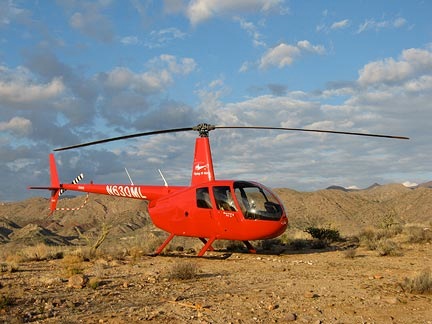
N630MLAlthough my passengers have occasionally commented on the small size of my R44, they’ve never been disappointed with its comfort or the smoothness of the ride. In fact, I’ve had plenty of comments from people who say that the ride was a lot smoother than they expected. (I’d like to think that at least some of that comes from pilot skill.)

No doubt about it: the R22 is a squirrelly little aircraft. It’s a challenge to learn to fly. Other than the electronic governor, there’s no mechanical assistance to make flying easier. The controls are sensitive and unforgiving. Some people think that’s bad. Other people point out that if you can fly an R22, you can fly any helicopter. I can confirm that I had no trouble transitioning from an R22 (max gross weight 1470 lbs, if I recall) to a turbine-powered, hydraulically controlled LongRanger (max gross weight 4200 lbs). In fact, I used to transition from one to the other on a daily basis.

I’m not willing to say that Robinsons are the best helicopters out there for two main reasons: (1) I’ve only had time in one other make/model so how can I know? (2) No helicopter is “best” at all missions. I’m also not willing to say my Robinsons have been perfect for me in every way — no aircraft (or car or fill-in-the-blank mode of transportation) is perfect. But I am certainly proud to say that I’m extremely pleased with my R44 and confident that I made the right purchase decision.

Why am I telling you this? Well, it’s important in the story that follows.

Finding a Flight School

I decided in the spring that I wanted to get an instrument rating.

If you’re not a pilot, let me explain. An instrument rating is a pilot certificate that authorizes you to fly by instrument flight rules (IFR) in instrument meteorological conditions (IMC). It requires you to learn how to fly the aircraft — in my case, a helicopter — without visual references outside the cockpit. Training covers attitude flying (so you don’t get disoriented and crash) and navigation using a variety of radio and satellite based navigation tools: VOR, DME, GPS.

An instrument rating makes a pilot more valuable, especially if they plan to fly in an area where weather could be an issue. I want to get a summer job in Alaska. I’ve been there and I saw that weather is indeed an issue. So I want the rating to make myself more valuable to potential employers and to help prepare me in the event that I do inadvertently lose visibility and need to rely on instruments for part of a flight.

My aircraft is only partially set up for IFR operations. That’s unfortunate because it means that I can’t use it for training. So I have to find a flight instructor who is a CFII (certified flight instructor for instruments) who has access to an IFR trainer aircraft. That means a flight school.

The trouble with helicopter flight schools these days is that they all want to take students through “the program.” This is a soup to nuts approach to learning to fly and it assumes that you want to learn to fly as part of a career.

When I learned, career flying wasn’t on the horizon for me; it was going to be a hobby. Things change. While I do fly for hire now, flying isn’t my full-time career. (I’d starve.) I got my training — private and then commercial ratings — piecemeal or “a la carte” when it was still widely available that way.

It’s tougher now to find flight school that will take a pilot for just one phase of training. Still, I located four candidates: three in Arizona and one in Florida. After deciding that I didn’t want to be away from home for an intensive two weeks of training in Florida, I was left with three choices in Arizona. Let’s call them A, B, and C.

A was really expensive. Although I talked to a flight instructor about the program, I never got the call back I was promised. A fellow pilot had some mildly negative things to say about A, so I decided not to pursue them.

B, which specializes in “the program” was willing to make an exception for me, primarily because of other business we do together. I’d been in a dialog with B for at least six months and we’d come up with a price structure for my lessons. They were very affordable, since they had a simulator I could use for up to 20 hours of my “flight” time, thus saving a whopping $340/hour over their aircraft flight time. I was sold.

Unfortunately, just when I was ready to start, there was an ownership change that caused a reorganization. Things went into flux. I was called down to the flight school to “get on the schedule” and, once there, told that we’d have to have a meeting the next day with the General Manager to review everything. They’d call to let me know when.

I was deeply POed. The flight school is an hour drive — each way — from where I live. They’d lured me down there on false pretenses — doing paperwork, getting on the schedule — and, instead, had wasted my time with a 5-minute meeting that accomplished nothing. And now it wasn’t even certain that I could get my training there.

If there’s one thing I value, it’s time. Wasting my time is a good way to get on my shit list. The new chief flight instructor at B was at the top of that list.

To make matters worse, I never got a call for the meeting he said we needed. Three weeks passed without getting that call.

In the meantime, I found C. C was at the same location as B. They were a much smaller organization that did a lot of charter work with LongRanger helicopters. They also fly Enstroms — two or three place piston helicopters. That’s what they used for their modest training operation.

I’d never flown an Enstrom, but I’m always interested in getting experience in different aircraft. Although they didn’t have a simulator, the Enstrom IFR trainer would be much cheaper per hour than the R44 IFR trainer at B. So I wouldn’t be paying that much more and would get all 30+ hours of flight time that I needed in a real aircraft.

Still angry at B and uncertain of the future due to the reorganization there, I signed up with C.

At the Flight School

I went for my first lesson at C last Friday. The company is based in a big hangar that houses all of its aircraft — turbine helicopters and airplanes — and provides space for its flight training operations. The layout for flight training wasn’t very practical, but I think there was only one other student there while I was there. I have no problem with small flight schools — I think they offer better personalized instruction. So that was not a problem.

My flight instructor was a great guy. Very nice, very understanding. Best of all, he had more flight time than I did, and had even spent a season at the Grand Canyon flying LongRangers. We’ll call him Joe.

Joe and I took care of paperwork and I handed over a check for my first 11 hours of flight time: $2,300 (which didn’t include the instructor time). We covered a plan of action for my self study — I was hoping to save money on ground school by learning as much as I could with home study aids — then discussed what we’d do in our flights together. He patiently explained how a VOR works — which is something I was supposed to learn as a private pilot but never did (and never needed to, as each of my aircraft was equipped with a GPS). Then we went outside, where the Enstrom was waiting, to fly.

Joe and I went through the startup checklist together and he made me start the helicopter. Starting was similar to the R44 Raven II because the Enstrom had fuel injection. I got it started on the second try. But there were significant differences in the rest of the procedure. Clutch activation is done with a weird handle that requires more strength than I have in my right arm — I had to use two hands to pull the darn thing up. And all the time we were on the ground, the whole helicopter was shaking and rattling and Joe was adjusting the mixture to lean it out properly. The whole idea of leaning was stressing me out, since Robinsons generally aren’t leaned at all. (If you lean an aircraft too much in flight, the engine may quit. Helicopters are damn near impossible to restart in flight.) The aircraft’s cyclic also needed to be trimmed using a little “hat” button on top.

Joe and I picked it up into a hover. He tried to trim it out but was not successful; the trim button wasn’t working. It was also running hotter than it should have been. He decided he wanted a mechanic to look at it. I hovered us back into our parking spot — we’d drifted forward — and set it down as gently as I could. It thumped and rattled and I immediately thought of ground resonance, which is something a helicopter with a fully articulated rotor system like the Enstrom is more likely to get than anything I’d ever flown. But we were okay. We cooled down the engine and shut down.

By now, I was having second thoughts about my decision to go with the Enstrom. It was so different from what I’d flown in the past that I was worried the differences would distract me. Perhaps I’d need more than 30 hours of dual to get the instrument skills I needed.

But 30 hours was a long time. Surely I’d get used to the Enstrom quickly — probably within my first 5 hours. And getting stick time in something so different would be good for my development as a pilot.

So before I could talk myself out of it, I’d talked myself back into it.

Things Take a Wrong Turn

Joe talked to the mechanic on the way in. We went to the schedule book and set up two dates for training the following week — the first week in January. Joe promised the helicopter would be ready. We chatted for a short while. I really liked Joe and looked forward to working with him.

On the way out, he introduced me to C’s new operations guy. Turned out, I already knew him from another company in the Phoenix area. He’d moved to C but wouldn’t get specific on why he’d left his former employer. We’ll call him John.

As Joe left us, John began an animated, one-sided discussion about his big plans for C. And that’s when he said two things that really got under my skin.

The first thing he said, numerous times, was that Robinson helicopters were “a joke.” Apparently, that wasn’t just his opinion. He said the owner of C felt the same way.

Now I’ve already reported my feelings about Robinson helicopters. I don’t think they’re a joke. I do think that his criticism of Robinsons — when he knew damn well that I own one — was incredibly rude, insensitive, and just plain stupid.

I didn’t counter with what I was thinking about Enstroms: that they’re rattletraps and that I’d be embarrassed to put paying passengers into one.

The second thing he said was that he planned to “take over” the Phoenix area tour business by offering flights in C’s Enstroms. “We put people into them and fly low and fast over the trees and they love it!” he exclaimed.

Apparently, FAA safety regulations don’t come into the equation. I know that my minimum altitude for Part 135 flights is 300 feet and I know that there aren’t any 250-trees anywhere in the Phoenix area. I also know what the height-velocity diagram looks like for most helicopters. But heck, who cares about safety when there’s money to be made, right?

That was his attitude. And it was also insensitive since he knows damn well that I’ve been working hard to build a helicopter tour business in the Phoenix area. I don’t have a big operation with multiple helicopters and pilots and an unlimited marketing budget. I don’t treat my passengers like cargo, either. But he could easily attract far more business than I could by simply undercutting my prices. It’s cheaper to fly a 3-place Enstrom than a 4-place Robinson, and that’s all people care about. And that’s what he was bragging to me about.

I started to get seriously POed. I started wondering why I’d just handed over a check for $2,300 to an organization which obviously thought so little of me and my aircraft and my business. I started wondering why I was helping to fund this guy’s efforts to put me out of business.

I held my temper. I managed to escape out into the sunshine without trying to wring his neck.

What Happened Next

On the long drive to my next destination across Phoenix, I managed to talk myself into ignoring John. He was a jackass, an idiot. I wouldn’t be dealing with him. I’d be working with Joe. Joe was a good guy. I was lucky to have such an experienced and knowledgeable flight instructor.

But when Wednesday morning came along, Joe called. The helicopter still wasn’t fixed. We’d have to postpone our lesson until the next day.

And he called to say the same thing on Thursday.

And I started thinking that maybe the stars and planets were moving together to give me a second chance, a way out of my arrangement with C.

You see, I was still deeply offended by John’s comments and couldn’t get them off my mind.

I called my main contact at B. After a bit of telephone tag, we had things settled. The pricing we’d discussed was fine. He didn’t care how I paid or when I started. He was extremely supportive. And he got the Chief CFI at his location to call me back. I could get training at B after all. I’d start on Monday.

I called Joe. “Did you folks cash that check yet?”

“No,” he told me.

“I have to ask you not to,” I said. I told him I’d changed my mind about training there. I assured him, in no uncertain terms, that it had nothing to do with him. I told him it was a combination of two things. First, I thought flying a ship as different as the Enstrom might distract me from my instrument training. Second, that I’d been seriously annoyed by comments made by John during our discussion. I got specific. I told him how these comments made me feel and how it was difficult for me to support an organization that thought so little of me, my aircraft, and my business.

Joe understood. He told me that his boss, the chief flight instructor there, might give me a call. I told him that was fine. I also told him that I had no trouble paying for the time we’d spent together the previous Friday. Just send me a bill. But please don’t cash that check.

A New Beginning

So that’s where I stand today. After a false start, I’m ready to begin training at the flight school I’d originally chosen.

But I feel better about this flight school than the one I’d tried. Why? Because my main contact understands good customer relations. Even if hr doesn’t really give a damn about me or need my business, at least he’s pretending that he does.

And when I get ready to hand over close to $10K of my hard-earned money, I want to feel good about who I hand it to.