Two More Video Camera Accessories

One for sound, one for video.

HandyCam.jpgAbout a year and a half ago, I bought a Sony HDR-CX12 Handycam. It’s a mid-range consumer model that shoots in full 1080i HD. I bought it to fill in the gaps of the video needed to finish up a video project and, since then, have been using it on and off to shoot stock video footage. The quality of the video is amazing for such a compact and relatively inexpensive device. These days, you can get something even smaller and less costly that does the same thing.

I shot all of Cherries: From Tree to Truck with this camera. Once you get past the inconvenience inherent with the AVCHD format and have the right tools to edit, it’s really a pleasure to work with. One feature that few people talk about is the ability to archive the 4GB Memory Stick PRO Duo cards to DVDs. You can later mount up a DVD and import media into your computer, just as if you’d attached the camera or inserted a card into a card reader.

Last year I started a project that required me to do some interviews. I used a friend as a guinea pig (so to speak), interviewing him outdoors in front of his helicopter, using my camera on a tripod and a wireless microphone clipped onto his shirt. The result was disaster. The sound was gawdawful, rendering the “talking head” video completely worthless. Clearly, I needed a better sound solution.
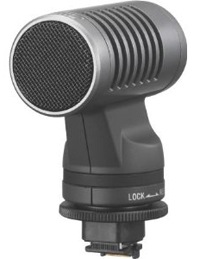
Sony ECM-HST1Of course, the camera is a consumer model and is extremely limited in compatible accessories. But today I poked around on the Sony Web site and tracked down a stereo microphone that might do the job — if I keep the camera out of the wind. It’s a Sony ECM-HST1 microphone, which fits into the camera’s hot shoe and draws power directly from the camera. It’s not what I really wanted — I wanted a lapel mic — but it’ll have to do.

Opteka OPT-SC37FEWhile I was surfing around for the best price, I stumbled upon this little gem: the Opteka OPT-SC37FE Ultra Fisheye Lens for Digital Video Camcorders. I already have a wide-angle lens for my camcorder, but there’s nothing like a very wide angle lens to get interesting effects or get up close and personal with your subject matter. The video clip on Opteka’s Web site certainly makes it look like a useful and fun accessory. Since I owed myself a birthday present anyway, I sprung for that, too.

What’s all this for? Well, in addition to finally getting to the big project I started nearly two years ago, I have a smaller, related project in mind. Both of these tools will help me capture the video I need to do it.

At least that’s what I keep telling myself. We’ll see.
Cherries: From Tree to Truck

A mini-documentary.

I need to start off by saying that I didn’t do a mini-documentary about the cherry harvest process because I felt the world had a need for such information. I did it as an exercise, as practice using my video camera and Final Cut Pro. I wanted to see if I had the ability to put together a documentary. This 5-minute video is the result.

This was my second summer experiencing the harvest process at one of the orchards I dry. The Schroeders are great people, friendly and a pleasure to work with. I dried their orchard four times this year. Being present for part of the harvest gave me an opportunity to see whether the work I’d done made a difference. It did.

The Schroeders were kind enough to let me walk the orchard and packing shed area with my Sony Handycam for a total of about 8 hours over two days. I also stopped in around sunset one evening to take some of the establishing shots with the soft “golden hour” light. They and their workers explained the process to me. I shot a total of about an hour of video footage. That that was barely enough. I still wish I’d gotten better shots of some parts of the process.

I found the cherry harvest fascinating — and I think you might, too. We’re all spoiled — we go into the supermarket in the summertime and find cherries waiting in the produce section, already bagged and ready to take home. But how many of us consider how the cherries get from the tree to the supermarket? It’s a complex process that requires hundreds of people and specialized equipment. This video shows part of the story, following the cherries from the trees in one orchard as they’re picked, gathered, chilled, and packed into a refrigerator truck. Take a moment to see for yourself:

Done? Not bad for a first serious effort.

From this point, the cherries go to the processing plant in Wenatchee, WA. They’re run through more cold water and lots of custom equipment before they’re picked through by several lines of people who toss out the bad ones. Then they’re sorted by size, run through more clean water, and eventually bagged and boxed up by even more people for shipment. I was fortunate enough to get a tour of that facility (and five more pounds of fresh cherries) a few days after I shot the video for this one. I may do a video of that facility and its process next year.

The amazing part of all this: the cherries are normally ready to ship to stores the same day they are picked.

More amazing stuff: the cherries I saw at the packing facility were headed for Korea and would be there within 18 hours of my tour. Whoa.

The point of all this is that there’s a lot that goes into getting fresh food into stores. Cherries are unlike many fruits — they have a very short shelf life. With proper care, they might last a week. That’s why everything is rushed and why so much effort is put into keeping them cool as soon as they’re picked.

I hope you enjoyed this. Comments are welcome.

Annual Inspection Blues

It might not just be cosmetic.

My helicopter’s annual inspection was started yesterday. My old Robinson mechanic from Prescott came down with a knowledgeable assistant to do the job in my Wickenburg hangar.

Just for fun, I set up my old Canon G5 camera on a tripod with my Pclix timer and created a time-lapse movie of the job. The shots were taken 30 seconds apart and then compiled into a movie at 6 frames per second. Here’s the resulting movie:

Kind of fun, huh?

For those who aren’t familiar with the inspection requirements for aircraft in the U.S., here’s a quick summary:

  • Every year, the aircraft is required to have an annual inspection. This inspection requires an A&P mechanic to remove various panels and inspect parts normally hidden from view. It also includes an oil change, various filter changes, and a bunch of other stuff. It’s a calendar-based inspection.
  • Commercially operated aircraft are also required to have 100-hour inspections. These are virtually the same as annual inspections — in fact, its common for aircraft owners to substitute an annual inspection for a 100-hour inspection if it doesn’t appear that they will fly another 100 hours before the annual inspection is due. My helicopters have always been operated commercially, so I’ve always gotten these inspections.
  • Other time-based inspections or maintenance. These are things like oil changes (every 25 or 50 hours), magneto inspections/rebuilds (every 300 hours), gearbox oil changes, belt changes, avionics tests, etc.

The cost of an inspection or maintenance item varies depending on the age and condition of the aircraft, the type of inspection, and the mechanic’s knowledge and ability to get the job done quickly but thoroughly. The cost of an inspection can also rise considerably if the mechanic actually finds something that needs attention.

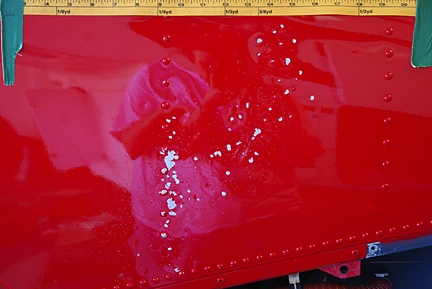
Dented TankIf you read about my trip to the Parker 425 this year, you may recall a certain incident involving an unbuckled seatbelt. I thought the problem was simply cosmetic — a job for a paint shop. But my mechanic believes it might be beyond just cosmetic. He thinks a few of the tiny dents may have compromised the integrity of the fuel tank behind those dents.

Keep in mind that I’ve flown the helicopter at least 6 hours since the event. No fuel leaks, no indication of a problem. The fuel tanks are nearly full right now — and have been full three times since then. No leaks.

But that doesn’t mean the dinged tank might not develop a crack or a leak. At least that’s what I’ve been told.

A new one from the factory will cost $3,700. Plus paint. Plus installation.

Take my advice: be a pilot but not an owner.

Randi on Chemotherapy

Know someone with cancer? Show them this.

I just wanted to take a moment to share this video with folks facing cancer or chemotherapy. It’s a six-minute discussion by James “the Amazing” Randi about his recent experiences. It’s uplifting (in a Randi kind of way) and should help people make the right decision about treatment.

Best wishes to Randi for his continued recovery and good health.

A side note here: I was unable to view this video on my main production Mac and I have no idea why. I was able to view it on my MacBook Pro with either Firefox or Safari. If you have problems with viewing this, please use the comment link to tell me. Perhaps we can troubleshoot the problem together.

Office Cleaning Time-Lapse

It had to be done. Again.

Yesterday, I spent the entire day cleaning my office. It was a disaster.

This is a time-lapse of the process. I used a 10.5mm fisheye lens to get my whole office in the picture. I shot one frame every 30 seconds, then compiled them at 15 frames per second in QuickTime. The result compresses about 8 hours of time into 1 minute.

NOW I can get back to work!